Skip to Content Facebook Feature Image

Aidoptation Receives Approval for First Fully Autonomous Driving Tests on Highways in the European Union

Business

Aidoptation Receives Approval for First Fully Autonomous Driving Tests on Highways in the European Union
Business

Business

Aidoptation Receives Approval for First Fully Autonomous Driving Tests on Highways in the European Union

2026-07-09 14:32 Last Updated At:14:40

SINT-TRUIDEN, Belgium--(BUSINESS WIRE)--Jul 9, 2026--

Aidoptation BV, the autonomous vehicle technology company headquartered at DronePort in Sint-Truiden, has received official approval from the Federal Public Service Mobility (FOD) and Transport and the Flemish Agency for Roads and Traffic (AWV) to conduct fully autonomous driving tests on public highways. The permit covers 100 km on the E313 and E314 highways in the province of Limburg, and marks the first time a Level 4 fully autonomous driving system will be tested at highway speeds on public roads in the European Union.

This press release features multimedia. View the full release here: https://www.businesswire.com/news/home/20260708112110/en/

Within the global automotive industry, Level 4 is defined as autonomous driving capable of performing all driving tasks and monitoring the environment without any human intervention. This level of autonomy is distinct from the Advanced Driver Assistance Systems (ADAS) that have been tested by several automakers (OEMs) in the European Union, including Tesla FSD, which is classified as Level 2 requiring constant driver supervision; the human driver remains legally liable for the vehicle's actions. The testing will be conducted using the Maserati GranTurismo Folgore electric vehicle platform, which Aidoptation has equipped with LiDAR, radar, and camera sensors, as well as robotics hardware, to enable full autonomous driving at highway speeds.

The permit approval is a decisive step in Aidoptation’s mission to develop life-saving autonomous driving technology for the most severe category of road accidents: high-speed crashes on motorways, where at 120 km/h a vehicle covers more than 50 meters in the 1.5 seconds it takes an average driver to react. Accidents at such speeds are rare but often result in death or severe injuries, roadway closures, and loss of property and infrastructure. Safely managing obstacles and crash-avoidance maneuvers, known as “edge-cases” at highway speeds, remains a key step toward unlocking the full potential of autonomous driving technologies.

Aidoptation and EdgeDrive

Aidoptation was founded in 2025 as a commercial spin-off of the Indy Autonomous Challenge (IAC), the world’s first autonomous racing competition based in the United States. The company’s engineering team set the world autonomous speed record of 318 km/h (197.7 mph) at the Kennedy Space Center in Florida using a production Maserati MC20 with no human driver on board. Aidoptation’s first commercial product, called EdgeDrive, is a Level 4 fully autonomous driving platform built specifically for highway operation at speeds of 120 km/h and above (where speed limits allow). It provides consistent and safe autonomous driving operations when it is most beneficial, where human reaction time, vehicle stability, and low tire grip conditions can reach their limits, dramatically increasing the risk of an accident. EdgeDrive uses first-principles-based deterministic models to reliably handle safety-critical scenarios: emergency maneuvers, sudden obstacle avoidance, and high-speed hazard response. With no AI involved in decision-making, driving results are fully traceable and auditable, ensuring transparency for regulators and insurers. Adaptation will offer EdgeDrive as a separate, or integrated, proven safety module to automotive OEMs and robotaxi customers seeking to expand their ODD (Operational Design Domain) for Level 3 and Level 4 autonomous vehicles to highways.

The importance of real-world testing

Testing on public highways is a critical step in the development of safe and reliable autonomous driving systems. To prepare for and secure a permit, Aidoptation has spent a year conducting extensive real-world testing of its high-speed autonomous driving technology across a wide range of weather and driving conditions at multiple sites in Belgium, including Ford Lommel Proving Grounds, DronePort runway, Circuit of Spa-Francorchamps and Circuit Zolder. The permit to test on highways in Belgium enables Aidoptation to validate its autonomous driving technology, including EdgeDrive, in real-world traffic conditions, complementing the extensive ongoing testing at proving grounds and tracks. Testing will be conducted in a phased approach under strict operational and safety protocols agreed with the Belgian authorities, which includes a human safety driver supervising who is able to take control of the vehicle at any time while testing. The project is insured by Ethias, one of Belgium’s leading insurers, whose support underpins the safe and responsible conduct of testing on public roads.

“Being the first to test fully autonomous Level 4 technology on EU highways is a milestone moment for Aidoptation, the Belgian innovation ecosystem, and the broader autonomous driving industry. Autonomous driving has enormous potential to improve safety and mobility, but commercial adoption will depend on demonstrating safe performance in the most demanding highway scenarios. Testing on public highways will generate invaluable real-world data, validate our technology, and advance our mission of reducing fatalities and making highways safer for everyone.” – Paul Mitchell, CEO of Aidoptation

As a Belgian insurer and partner to thousands of public institutions, local authorities and emergency services, we see every day just how essential safety and mobility are to society. That is why we invest in companies such as Aidoptation. Its technology has the potential to make our roads safer and help prevent road casualties. At the same time, Aidoptation demonstrates how Belgium can develop new areas of economic strength in advanced mobility technology. In this way, we combine social impact with investment in the future of our country.” – Philippe Lallemand, CEO of Ethias

“Innovation on our roads must first and foremost contribute to greater safety and economic progress. With companies such as Aidoptation, Flanders not only possesses strong expertise and technological ingenuity, but we are also putting that knowledge into practice on the road. By enabling testing under real-world conditions, we are developing concrete solutions that can save lives while strengthening our position as a European leader in smart mobility.” –Matthias Diependaele, Minister-President of Flanders

"Autonomous driving is no longer science fiction. Around the world, we are reaching a tipping point, and Flanders should not merely follow; it should lead. We have the expertise, the companies, and the ambition to be at the forefront. The fact that Aidoptation can now conduct testing on the E313 and E314 motorways demonstrates that Flanders is a place where innovation does not remain confined to ideas, but finds its way into real-world application." Annick De Ridder, Minister for Mobility of Flanders

About Aidoptation

Aidoptation BV is a Belgian autonomous vehicle software company, founded in 2025 as a commercial spin-off of the Indy Autonomous Challenge. Based at DronePort Sint-Truiden, the company develops EdgeDrive, an autonomous driving software platform designed to make high-speed highway driving safer. Aidoptation is backed by LRM, SFPIM, Ethias Ventures, and Belfius Bank.

www.aidoptation.com
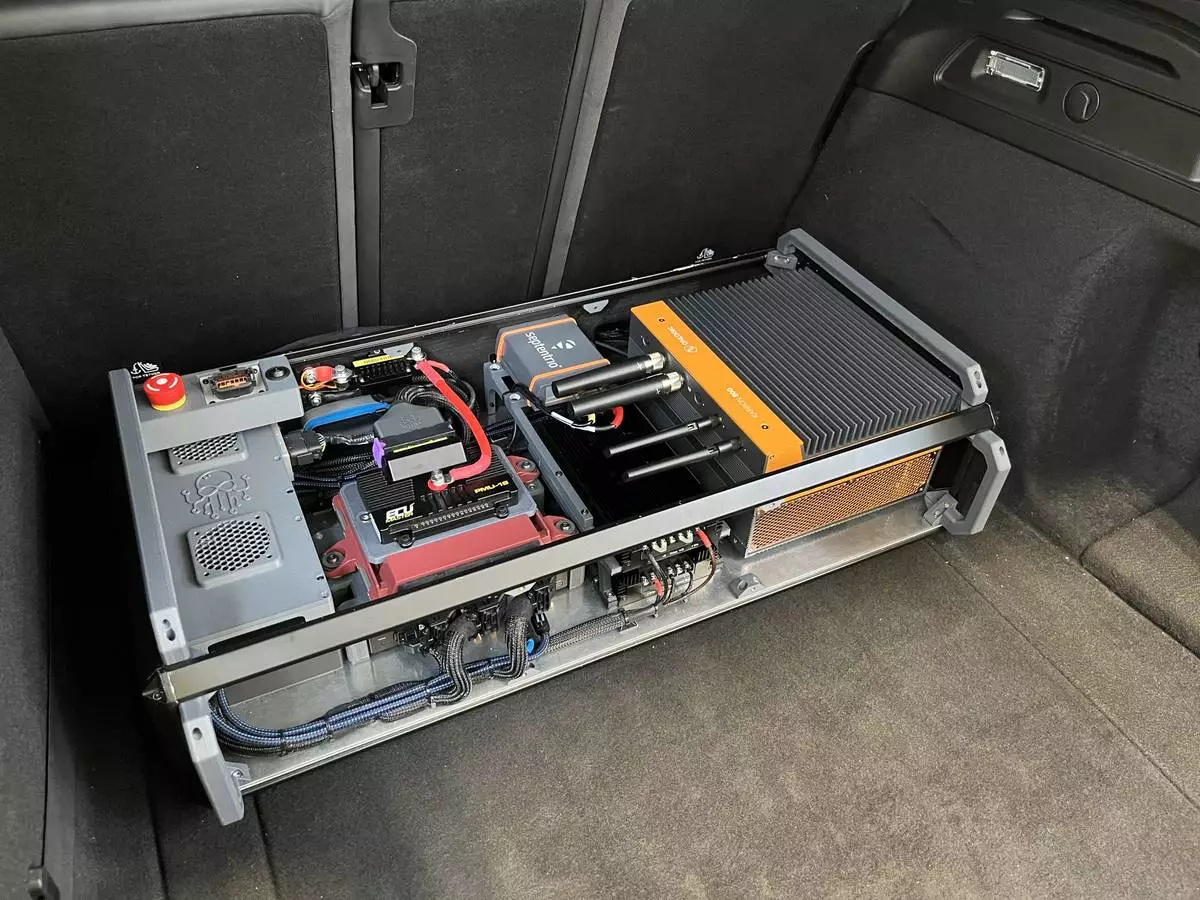
The autonomy box kit contains the computing units and ECUs necessary to run the autonomous driving software and control the autonomous vehicle. In the unit are a power management safety and safety stage, the high level computer and actuators control ECU. Additionally, sensor collection and routing is done in the autonomy box.
The autonomy box kit contains the computing units and ECUs necessary to run the autonomous driving software and control the autonomous vehicle. In the unit are a power management safety and safety stage, the high level computer and actuators control ECU. Additionally, sensor collection and routing is done in the autonomy box.

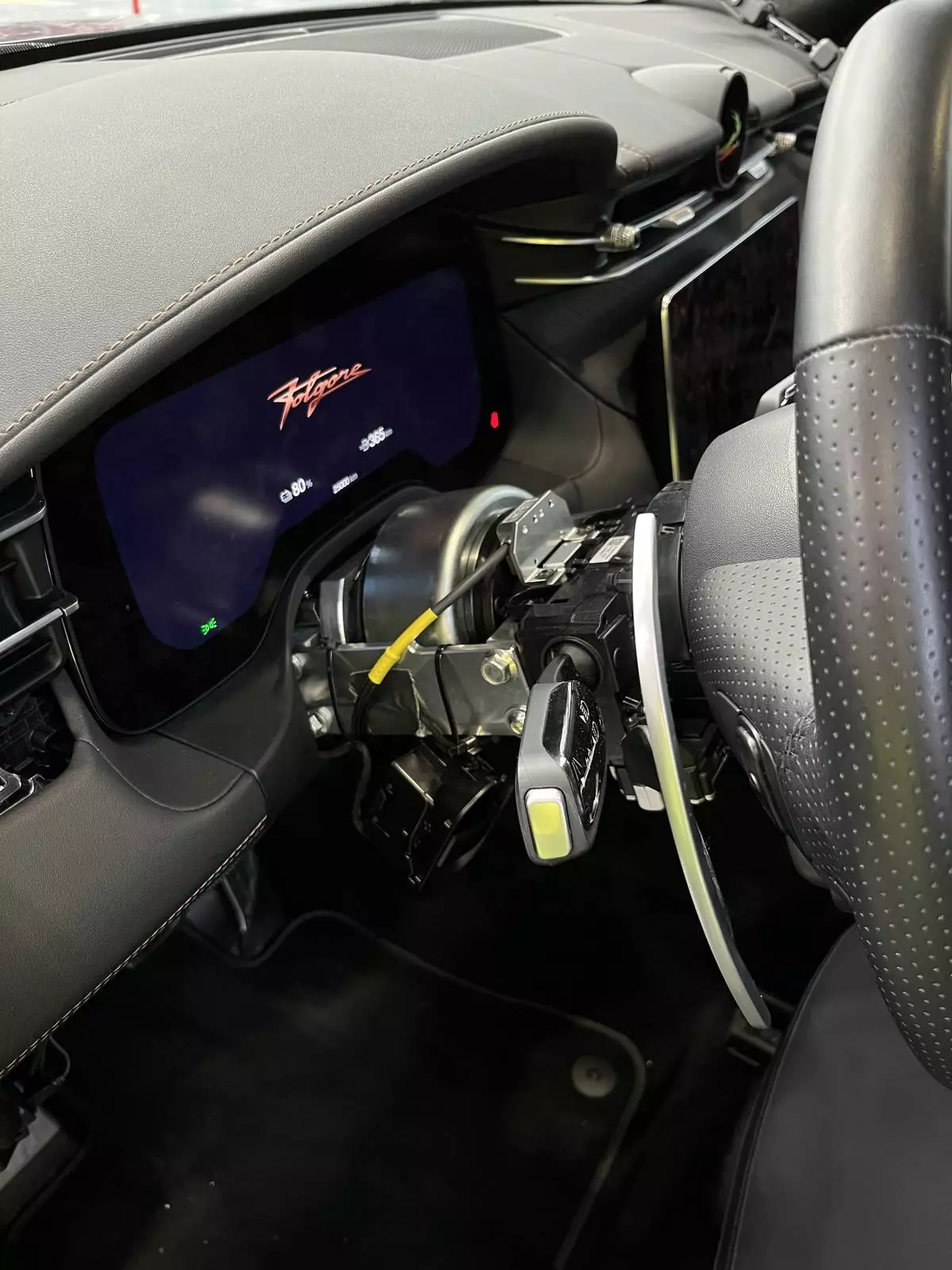
The actuator in the picture is a specifically developed steer actuator featuring a direct drive motor and custom integration. The actuator is capable of providing the required steering torque to safely drive the car at the limit. The system allows to drive the car manually when disengaged with no external resistance.

The actuator in the picture is a specifically developed steer actuator featuring a direct drive motor and custom integration. The actuator is capable of providing the required steering torque to safely drive the car at the limit. The system allows to drive the car manually when disengaged with no external resistance.

Our car driving on the highway (in manual mode).

Our car driving on the highway (in manual mode).

DUBAI, United Arab Emirates (AP) — The United States launched new airstrikes against Iran early Thursday, and Tehran responded by targeting Bahrain, Kuwait and Qatar in crossfire that again threatened an interim deal intended to help end the war in the Persian Gulf.

The strikes came hours after U.S. President Donald Trump said recent Iranian attacks on ships in the Strait of Hormuz signaled the end of the fragile ceasefire. The U.S. struck a variety of military sites and port facilities early Wednesday after Iran targeted several merchant vessels off the coast of Oman, sparking Iranian fire then as well.

But Thursday’s attacks appeared bigger all around, with sirens sounding at least twice in Bahrain, home to the U.S. Navy’s 5th Fleet headquarters. There was no immediate word of damage in the three Gulf Arab countries from attacks claimed by Iran’s military.

The U.S. military's Central Command said it hit some 90 targets across Iran, releasing black-and-white footage of what appeared to be strikes on an airport runway and missile launchers.

“U.S. forces remain vigilant, lethal, and prepared to execute operations directed by the Commander in Chief,” it added.

The U.S. says the strikes were intended to “further degrade” Iran’s ability “to threaten freedom of navigation” in the strait, through which a fifth of the world’s traded oil and natural gas passed before the war began with U.S. and Israeli attacks on Feb. 28.

Iranian state media reported explosions in several locations, including Bushehr, home to Iran’s nuclear power plant complex, and the southern port cities of Chabahar, Konarak, Bandar Abbas and Sirik.

In Iran's southwestern Khuzestan province, at least three people were killed, state media reported. In Iranshahr, authorities said a strike had killed a firefighter at an airport. Those fatalities followed at least nine people being killed in Wednesday's strikes in Iran.

For the first time since April, it also appeared the U.S. strikes targeted Iranian bridges. State media reported a strike on a railway bridge in Iran’s northeastern Golestan province, and the Revolutionary Guard said two bridges had been attacked on the route to Mashhad, where officials plan to bury the late Ayatollah Ali Khamenei on Thursday. But it wasn’t clear if the Golestan attack was the same one mentioned by the Guard.

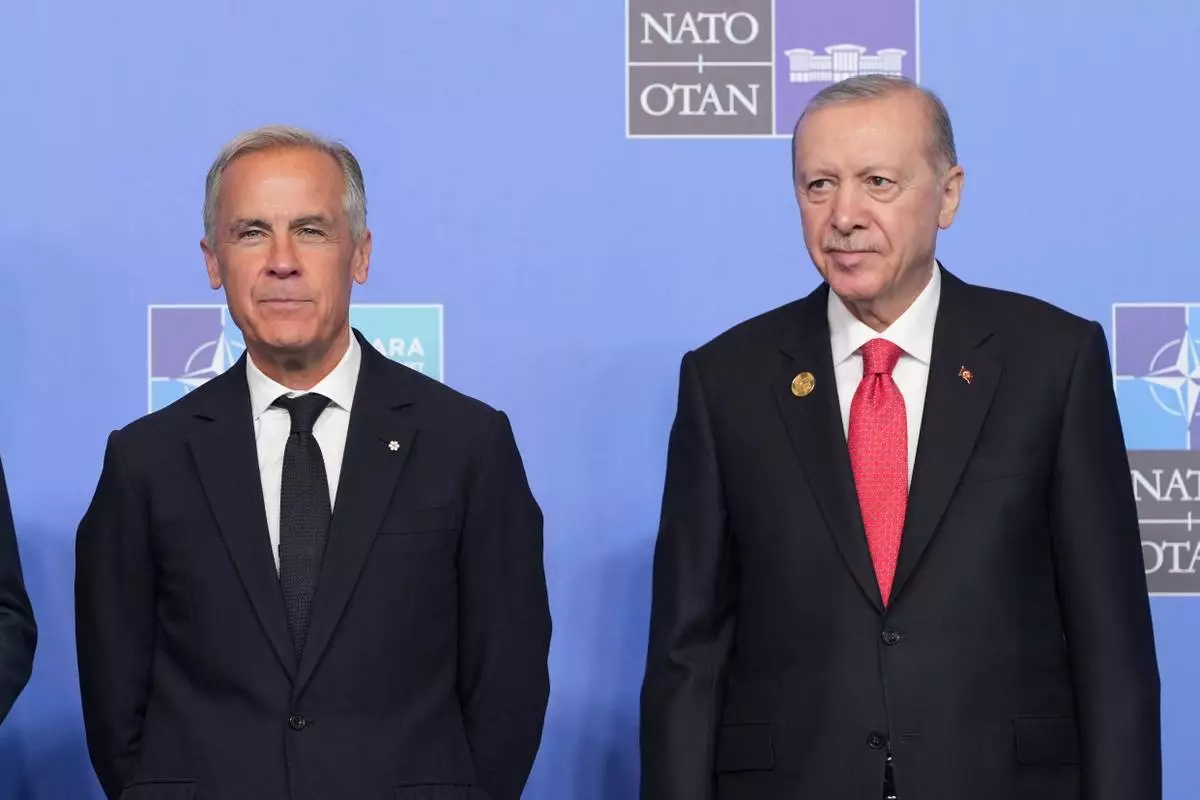
After leaving a NATO summit in Turkey, Trump posted several videos on his social media site of what he said were explosions in Iran and issued another warning to the Islamic Republic.

“This is in retribution for yesterday’s bombing of ships by Iran. If it happens again, it will get much worse!” Trump wrote.

Trump had said earlier in the day that the latest back-and-forth fighting would not result in “long-term” military action.

“Anything that happens is going to happen very fast,” Trump said, though he also suggested the U.S. military might “just finish the job.”

Trump also renewed his past threats to hit Iran’s civilian infrastructure, including electric plants and desalinization plants, and to seize the oil-production hub of Kharg Island.

After three tankers were hit Tuesday, the U.S. launched strikes on Iran, and Iranian forces retaliated by targeting American military sites in the Persian Gulf.

Iran has asserted that the interim ceasefire deal gives it the right to manage traffic through the strait. Parliament Speaker Mohammad Bagher Qalibaf, a key negotiator in talks seeking a permanent end to the war, was defiant in a post on X on Thursday morning: “America still hasn’t learned that bullying and breaking promises are no longer cost-free. Let me put it plainly: if you strike, you’ll get hit.”

Trump fueled concerns that the war could restart by saying the interim agreement to pause fighting was “over,” although he added that he would allow negotiations to continue.

Attacks have repeatedly threatened the shaky ceasefire, but Trump’s comments added new uncertainty, and oil prices shot up after he spoke. A renewed conflict could engulf the wider Middle East and would likely again halt energy shipments through the strait.

“For me, I think it’s over,” Trump said when asked about the status of the ceasefire. He added that U.S. representatives can continue negotiations, but he cast doubt on the outcome. “They can talk, but I think they’re wasting their time,” he said.

Iranian Deputy Foreign Minister Kazem Gharibabadi, also a top negotiator, retorted on X that Trump’s remarks “are not a sign of power but an admission of the failure” of U.S. policy toward Iran.

Trump has made other threats to seize Kharg Island, including last month, when he also questioned whether the U.S. “has the stomach for it.” Some 90% of Iranian oil exports pass through the island.

The new attacks on ships in the strait, despite the negotiations, could reflect a divide among Iran’s leadership. Hard-liners seek lasting control over the waterway, which is a globally important conduit for fuel shipments and has become a critical lever in confronting the West. Pragmatists want a permanent peace deal to lift international sanctions and provide desperately needed economic relief.

Negotiations to reach a final deal were due to start after the funeral for Khamenei, who was killed Feb. 28 in the war’s first moments. The funeral, which ends Thursday, was supposed to be a period of lower tensions.

The talks are meant to focus on the toughest matters, including fully reopening the strait and rolling back Tehran’s disputed nuclear program.

The flower petal-covered coffin of the late Iranian Supreme Leader Ayatollah Ali Khamenei is carried above mourners reaching out to touch it outside the Imam Hussein Shrine in Karbala, Iraq, early Thursday, July 9, 2026. (AP Photo/Khalil Hamra)

The flower petal-covered coffin of the late Iranian Supreme Leader Ayatollah Ali Khamenei is carried above mourners reaching out to touch it outside the Imam Hussein Shrine in Karbala, Iraq, early Thursday, July 9, 2026. (AP Photo/Khalil Hamra)

The coffin of the late Iranian Supreme Leader Ayatollah Ali Khamenei is carried through a crowd of mourners at the Imam Hussein Shrine in Karbala, Iraq, early Thursday, July 9, 2026. (AP Photo/Khalil Hamra)

The coffin of the late Iranian Supreme Leader Ayatollah Ali Khamenei is carried through a crowd of mourners at the Imam Hussein Shrine in Karbala, Iraq, early Thursday, July 9, 2026. (AP Photo/Khalil Hamra)

A mourner holds a portrait depicting Iran's Supreme Leader Ayatollah Mojtaba Khamenei, top, and his late father, Ayatollah Ali Khamenei, as mourners wait for the funeral procession for the elder Khamenei outside the Imam Hussein Shrine in Karbala, Iraq, Wednesday, July 8, 2026. (AP Photo/Khalil Hamra)

A mourner holds a portrait depicting Iran's Supreme Leader Ayatollah Mojtaba Khamenei, top, and his late father, Ayatollah Ali Khamenei, as mourners wait for the funeral procession for the elder Khamenei outside the Imam Hussein Shrine in Karbala, Iraq, Wednesday, July 8, 2026. (AP Photo/Khalil Hamra)

Children wade in the water with cargo ships at anchor in the background and a fisherman nearby, in the Strait of Hormuz off Bandar Abbas, Iran, Tuesday, June 30, 2026. (Amirhosein Khorgooi/ISNA via AP)

Children wade in the water with cargo ships at anchor in the background and a fisherman nearby, in the Strait of Hormuz off Bandar Abbas, Iran, Tuesday, June 30, 2026. (Amirhosein Khorgooi/ISNA via AP)

The coffin of the late Iranian Supreme Leader Ayatollah Ali Khamenei is carried through a tightly packed crowd as mourners jostle to reach and touch it outside the Imam Hussein Shrine in Karbala, Iraq, early Thursday, July 9, 2026. (AP Photo/Khalil Hamra)

The coffin of the late Iranian Supreme Leader Ayatollah Ali Khamenei is carried through a tightly packed crowd as mourners jostle to reach and touch it outside the Imam Hussein Shrine in Karbala, Iraq, early Thursday, July 9, 2026. (AP Photo/Khalil Hamra)

Recommended Articles