Skip to Content Facebook Feature Image

Australia-Nepal conservation partnership strengthened through new leadership appointment

Business

Australia-Nepal conservation partnership strengthened through new leadership appointment
Business

Business

Australia-Nepal conservation partnership strengthened through new leadership appointment

2026-07-09 14:35 Last Updated At:14:55

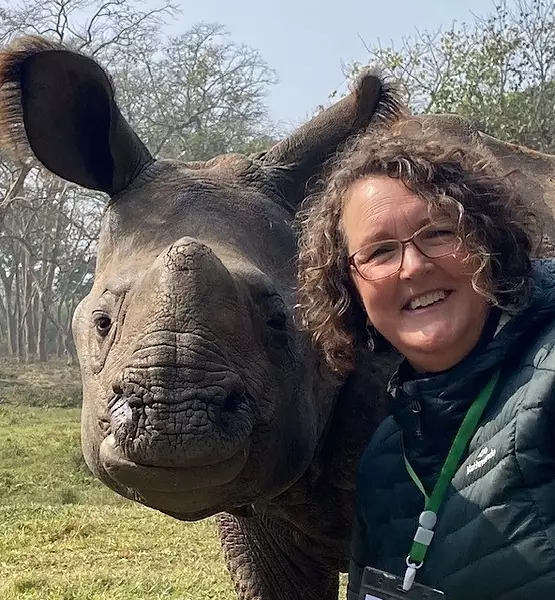
BALLARAT, Australia, July 9, 2026 /PRNewswire/ -- A decade-long partnership between Nepal's National Trust for Nature Conservation (NTNC) and Federation University Australia is entering a new chapter, with Australian conservation scientist Professor Wendy Wright appointed to the NTNC Governing Board of Trustees.

The appointment recognises more than 10 years of collaboration between Nepal and Federation University, Australia's first co-operative university, where partnerships with industry, community and organisations are embedded into learning, research and student experiences.

Federation University's commitment to global collaboration was recently recognised in the Times Higher Education Impact Rankings, where it was ranked 61st in the world for United Nations Sustainable Development Goal 17: Partnerships for the Goals. The ranking recognises the University's partnership-driven approach to education, research and community engagement through its co-operative education model, which connects students, industry and communities to create meaningful local and global impact.

Professor Wright joins the Board as one of only two international members, supporting NTNC's ongoing efforts to advance biodiversity conservation, sustainable development and environmental resilience across Nepal.

The partnership has delivered significant outcomes for both organisations, including collaborative research into human-wildlife conflict, wildlife conservation, community-based natural resource management and species discovery. It has also created opportunities for Nepali researchers and students to engage with international academic networks.

Since first visiting Nepal in 2015, Professor Wright has worked closely with NTNC researchers, conservation specialists and local communities. Together, they have explored some of Nepal's most pressing environmental challenges, including conflicts between rural communities and wildlife such as tigers and elephants.

"Nepal presents some of the most important and fascinating conservation challenges in the world," Professor Wright said.

"Many communities live in close connection with forests and wildlife, and finding ways to support both people and conservation outcomes is critical. It has been a privilege to work alongside NTNC and local communities over the past decade."

The collaboration has generated research with practical impacts, including advocacy for improved support for farmers affected by wildlife-related losses and studies examining the role of women in Nepal's forest management systems.

The partnership has also contributed to significant scientific discoveries. Federation University PhD researcher Santosh Bhattarai identified five previously unknown gecko species in Nepal, while collaborative research led by Federation Associate Professor Fiona Hogan and Professor Wright identified a new genetic lineage of pangolins in the country.

The relationship has also fostered educational exchange between Australia and Nepal. Since 2019, almost 100 Federation University students have participated in immersive study tours in Nepal, gaining hands-on experience in wildlife and habitat monitoring while learning about local culture, conservation practices and rural communities through homestays and field-based learning.

Professor Wright said the exchanges have strengthened understanding between the two countries while creating new opportunities for collaboration.

"Working with NTNC has shown our students the remarkable commitment that Nepali communities have to conservation and environmental stewardship," she said.

"The relationships built through these programs have also opened pathways for Nepali students to undertake higher degree research with Federation University and contribute to international conservation research."

During her five-year term on the Board, Professor Wright will support NTNC's mission to protect Nepal's unique biodiversity while strengthening international partnerships that contribute to conservation outcomes across the region.

Media Contact: Stephanie Charalambous | +61351226110 | media@federation.edu.au 

** This press release is distributed by PR Newswire through automated distribution system, for which the client assumes full responsibility. **
Australia-Nepal conservation partnership strengthened through new leadership appointment


Australia-Nepal conservation partnership strengthened through new leadership appointment

Global research of 2,711 stakeholders identifies six structural friction points in the transition from higher education to work, and provides Indonesian institutions a practical framework to strengthen graduate employability and IKU 1 outcomes.

JAKARTA, Indonesia, July 9, 2026 /PRNewswire/ -- Pearson (FTSE: PSON.L), the world's lifelong learning company, and Amazon Web Services, Inc. (AWS), an Amazon.com, Inc. company, revealed at a report launch in Jakarta today that more than half of employers worldwide cannot find graduates with the AI skills they need. At the same time, nearly four in five university leaders believe they are meeting employer expectations — a gap the research traces to how fast the workplace has changed.

The report, AI Readiness: Building the Bridge from Higher Education to Work, surveyed more than 2,700 students, educators, and employers across six countries. It identifies six structural friction points — in curriculum pace, governance, faculty readiness, education-employer alignment, and hands-on AI experience — that compound across the path from classroom to career. Pearson and AWS presented the findings at the Pearson Higher Education Forum at the JW Marriott Jakarta.

For Indonesia, the timing is pointed. Graduate unemployment rose to 6.23 percent in early 2025 even as the national rate fell, and Universitas Indonesia researchers estimate tens of thousands more graduates have stopped looking for work altogether. Under the Merdeka Belajar framework, the IKU 1 metric ties university funding to graduate employment. Globally, entry-level postings are shrinking as AI takes over junior tasks — even as the World Economic Forum projects a net 78 million new jobs by 2030 for economies whose graduates are ready to fill them.

"As AI transforms the way we work, the skills that set people apart are becoming even more human. Clear communication, critical thinking, collaboration and adaptability remain essential – and AI can help learners develop them. Combined with English proficiency, these capabilities give people the confidence to participate in a global workforce and succeed in a rapidly changing world."
— David Lyons, Pearson's Head of Institutional Language Learning, APAC

The study's central tool is the AI Readiness Friction Framework, which lets a university find which of the six frictions — Pace, Connection, Capability, Governance, Experience, and Skills — bite hardest on its own campus. It comes with a self-assessment and concrete fixes for institutions and employers alike.

"The gap is not in access to tools. It is in the support that turns access into capability. The framework shows university leaders in Indonesia exactly where to act — and that is where the work begins."
— Eklavya Bhave, Pearson's Head of Higher Education, APAC

"The universities and employers that build credentialling bridges together now will define what workforce-ready means in this region for the next decade."
— Craig McFarlane, Pearson's Enterprise Learning & Skills Leader, APAC

The Jakarta launch is the first of a series, with country-level reports, and a Southeast Asia edition to follow. The full report and self-assessment are available at  www.pearson.com/power-of-learning/ai-readiness.html.

You may download the photos with captions from the event here.

About Pearson

At Pearson, our purpose is simple: to help people realize the life they imagine through learning. We believe that every learning opportunity is a chance for a personal breakthrough. That's why our c. 18,000 Pearson employees are committed to creating vibrant and enriching learning experiences designed for real-life impact. We are the world's lifelong learning company, serving customers in nearly 200 countries with digital content, assessments, qualifications, and data. For us, learning isn't just what we do. It's who we are. Visit us at plc.pearson.com.

** This press release is distributed by PR Newswire through automated distribution system, for which the client assumes full responsibility. **

53% of Employers Can't Find AI-Ready Grads. New Study Maps Six Ways Forward for Indonesia

53% of Employers Can't Find AI-Ready Grads. New Study Maps Six Ways Forward for Indonesia

Recommended Articles