FOXBOROUGH, Mass. (AP) — France did it to Morocco again at the World Cup.
For the second straight tournament, Morocco was ousted by the French 2-0 — this time in the quarterfinals on Thursday at Gillette Stadium, four years after losing by the same score in the semifinals.
Click to Gallery
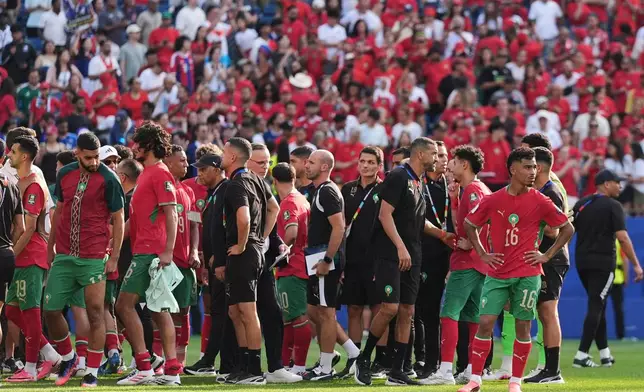
Morocco team and staff walk off the pitch after the World Cup quarterfinal soccer match between France and Morocco in Foxborough, Mass., near Boston, Thursday, July 9, 2026. (AP Photo/Stephanie Scarbrough)
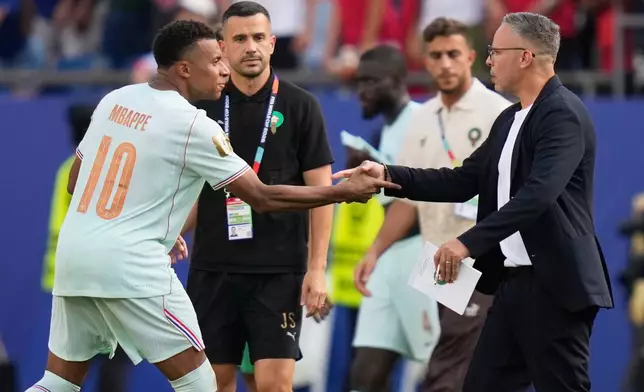
France's Kylian Mbappe (10) greets Morocco head coach Mohamed Ouahbi after France won the World Cup quarterfinal soccer match between France and Morocco in Foxborough, Mass., near Boston, Thursday, July 9, 2026. (AP Photo/Charles Krupa)
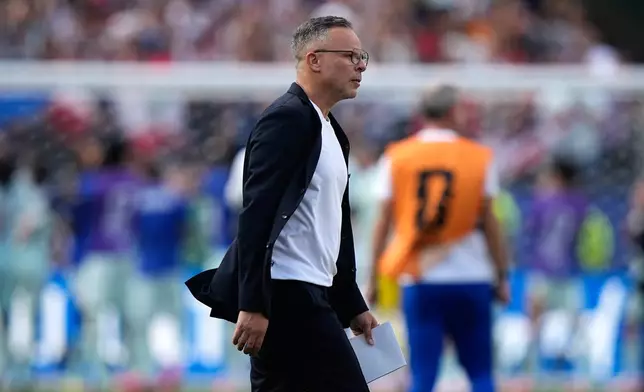
Morocco head coach Mohamed Ouahbi walks across the pitch at the end of the World Cup quarterfinal soccer match between France and Morocco in Foxborough, Mass., near Boston, Thursday, July 9, 2026. (AP Photo/Matt Slocum)
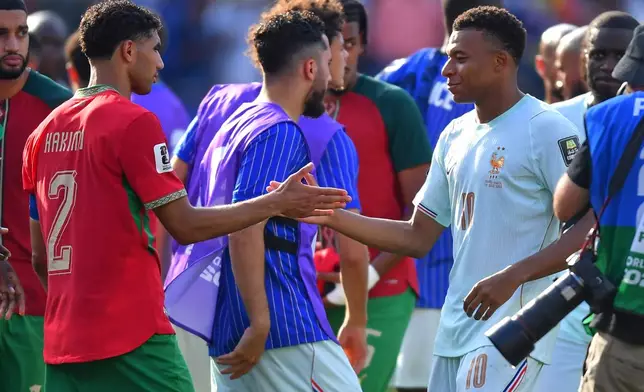
Morocco's Achraf Hakimi (2) and France's Kylian Mbappe (10) greet each other after the World Cup quarterfinal soccer match between France and Morocco in Foxborough, Mass., near Boston, Thursday, July 9, 2026. (AP Photo/Steven Senne)
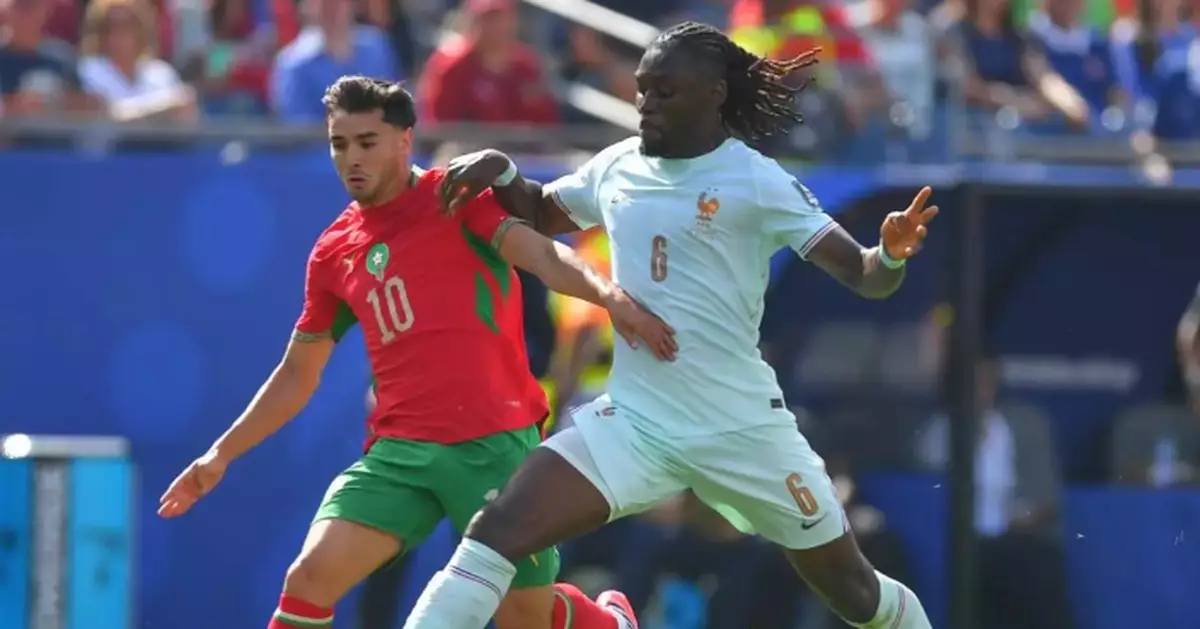
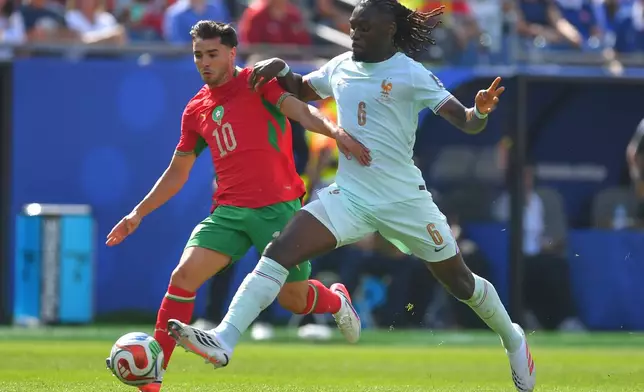
Morocco's Brahim Diaz (10) and France's Jules Kounde (5) fight for the ball during the World Cup quarterfinal soccer match between France and Morocco in Foxborough, Mass., near Boston, Thursday, July 9, 2026. (AP Photo/Steven Senne)
With very few attacking chances, Morocco landed only one shot on goal, and that came in the 82nd minute while already trailing by two goals.
It was the same ending as in Qatar, when the Atlas Lions became the first African team to reach the semifinals at a World Cup.
“The future will be bright if we continue like this, but that doesn’t mean we didn’t want to win today. Of course, we wanted to win today,” Morocco coach Mohamed Ouahbi said through a translator. “We did everything we could to win, but we faced a very difficult opponent. It’s a disappointment, of course, but we’ll keep working for the future.”
The Atlas Lions' best chance came when midfielder Azzedine Ounahi had a shot from the edge of the box but goalkeeper Mike Maignan made a diving stop, knocking the ball away and, essentially, ending the hopes of Morocco.
“They had no real forwards using their speed in the wide areas,” France coach Didier Deschamps said. “We were possessing the ball, they had no way to be dangerous to us.”
It wasn’t like Morocco didn’t make a hard push at this year's World Cup. They recruited talented 18-year-old Ayyoub Bouaddi, who could have been playing with France's youth teams. He was born in Senlis, an hour north of Paris, and after representing France in every age group possible, he switched allegiance.
“We know we represent more than just one country,” Ouahbi said. “We represent the Moroccan people, and many countries across Asia and Africa. Many people see themselves in this team, and we’ll keep working to win titles in the future.”
Morocco’s best opportunity in the opening half came just before the halftime whistle when Achraf Hakimi sent a free kick from just outside the box past the right post.
“The first half was very complicated. France was very good with the ball,” Ouahbi said. “They caused a lot of problems on the sides with their players, and also in the center. When we had ball possession, our transitions were not so great, so we had to run a bit more and they ended up being in a comfort zone.”
AP World Cup: https://apnews.com/hub/fifa-world-cup
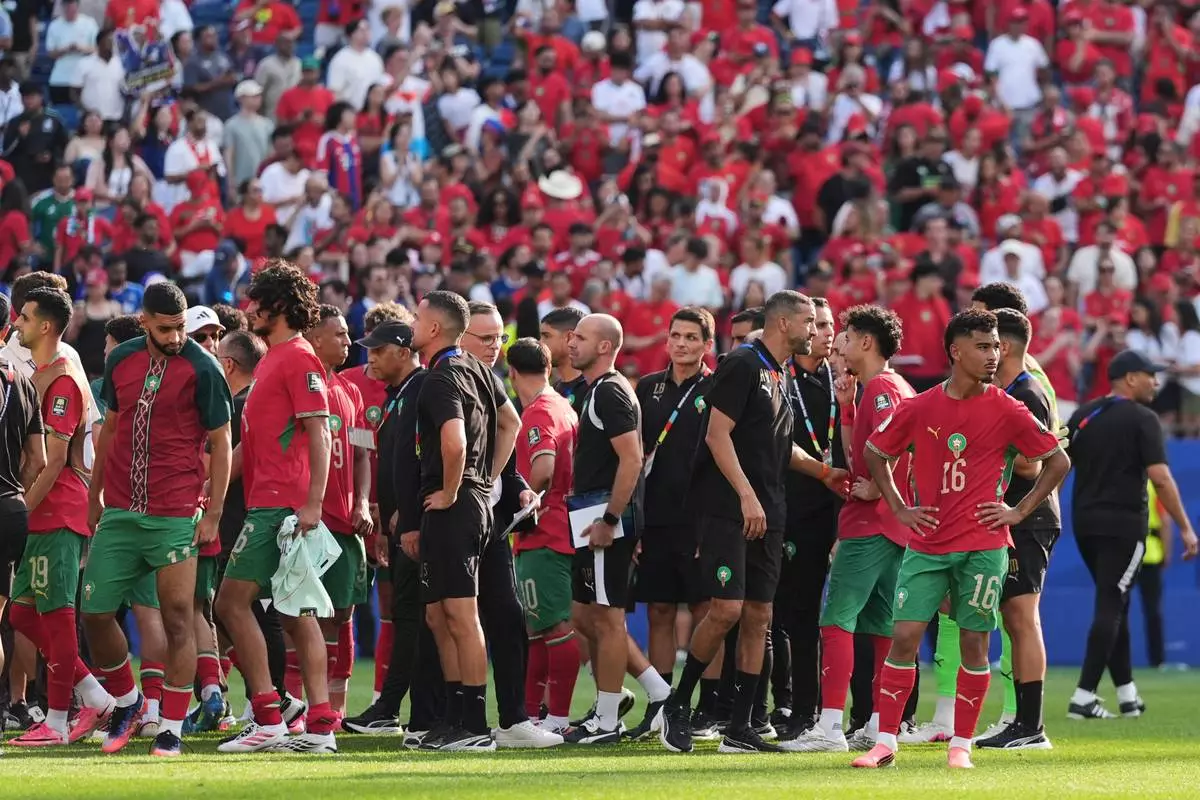
Morocco team and staff walk off the pitch after the World Cup quarterfinal soccer match between France and Morocco in Foxborough, Mass., near Boston, Thursday, July 9, 2026. (AP Photo/Stephanie Scarbrough)
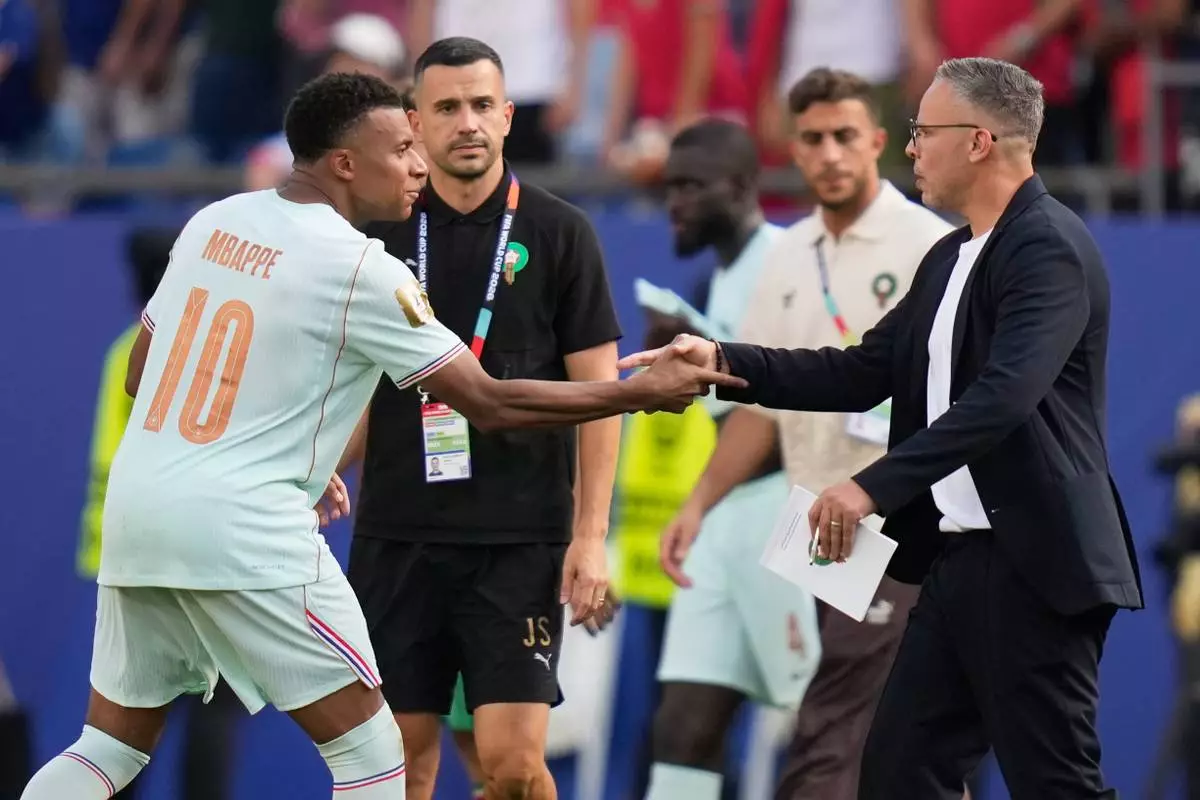
France's Kylian Mbappe (10) greets Morocco head coach Mohamed Ouahbi after France won the World Cup quarterfinal soccer match between France and Morocco in Foxborough, Mass., near Boston, Thursday, July 9, 2026. (AP Photo/Charles Krupa)
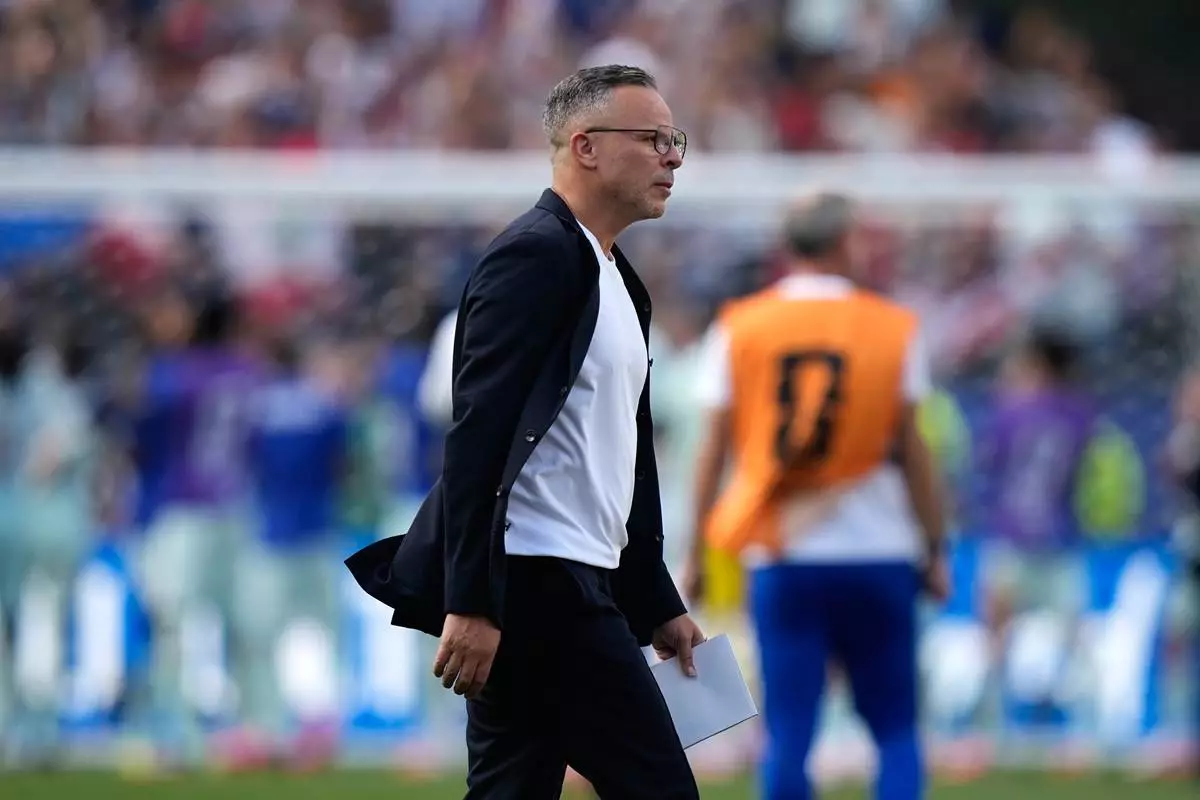
Morocco head coach Mohamed Ouahbi walks across the pitch at the end of the World Cup quarterfinal soccer match between France and Morocco in Foxborough, Mass., near Boston, Thursday, July 9, 2026. (AP Photo/Matt Slocum)
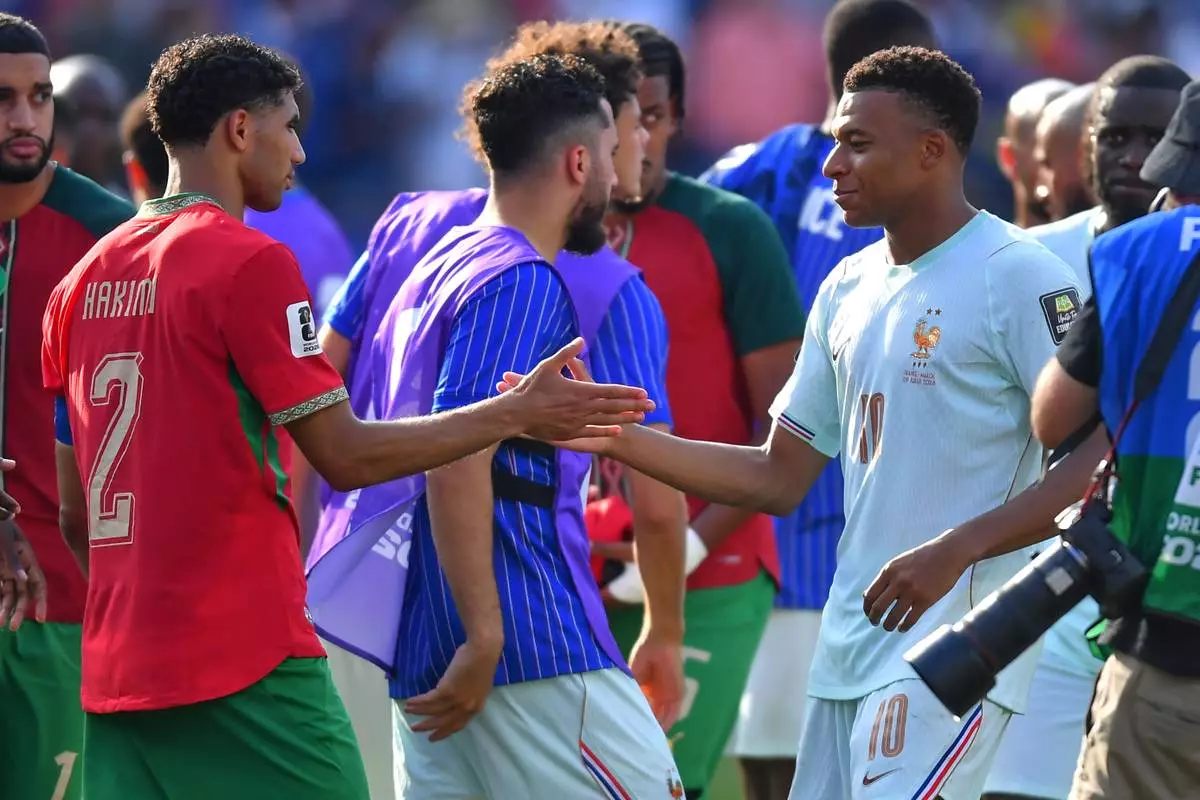
Morocco's Achraf Hakimi (2) and France's Kylian Mbappe (10) greet each other after the World Cup quarterfinal soccer match between France and Morocco in Foxborough, Mass., near Boston, Thursday, July 9, 2026. (AP Photo/Steven Senne)
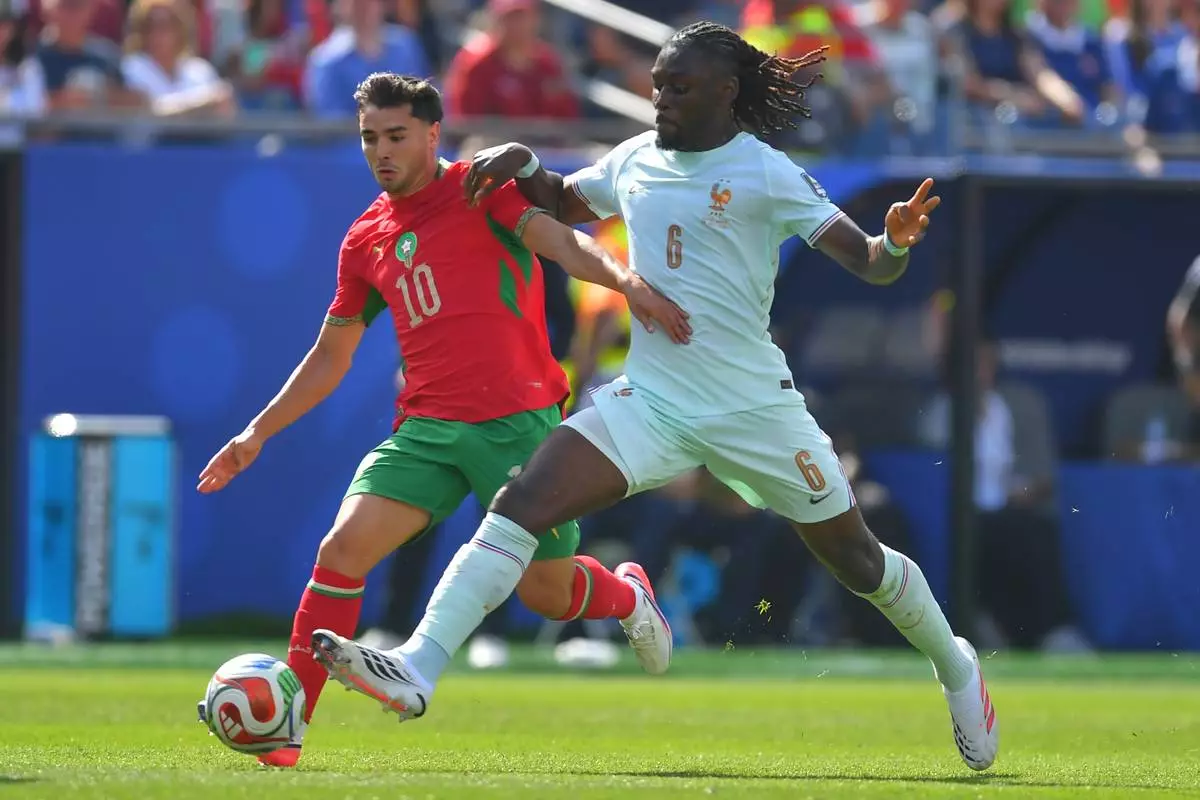
Morocco's Brahim Diaz (10) and France's Jules Kounde (5) fight for the ball during the World Cup quarterfinal soccer match between France and Morocco in Foxborough, Mass., near Boston, Thursday, July 9, 2026. (AP Photo/Steven Senne)
NEW YORK (AP) — Elina Svitolina and Gael Monfils have both gone far but never all the way to the U.S. Open title. Maybe the married couple can finally win a trophy together.
The spouses made quite a pair on the court Tuesday, becoming the first team into the mixed doubles semifinals by edging Katerina Siniakova and Henry Patten 5-4 (6), 4-5 (3) (10-8).
Serena Williams and Carlos Alcaraz won their first-round match and needed another victory later in the day to return Wednesday, when the winning team will earn $1 million.
That would be quite a payday for Monfils to share with his wife in his final Grand Slam tournament before retiring.
“Happy wife, happy life,” Monfils said in their postmatch interview after a kiss and hug on the court after match point.
Williams and Alcaraz beat Erin Routliffe and Lloyd Glasspool 5-3, 4-1 in Williams' first match at the U.S. Open since 2022. Williams, the 23-time Grand Slam singles champion, and two-time U.S. Open champion Alcaraz advanced to face the team of Belinda Bencic and Flavio Cobolli.
“It’s always such an amazing place to be here," Williams said. “I never expected to be back on this court, so it was just a really cool moment. I never thought this would happen.”
Williams and Alcaraz began their opening match just as the two-time defending champions were eliminated. Mirra Andreeva and Andrey Rublev saved a match point and outlasted Sara Errani and Andrea Vavassori 1-4, 4-1 (11-9). The 19-year-old Andreeva revealed afterward that she used to have a crush on her partner and fellow Russian, who is 28.
The U.S. Open tinkered with the format of the tournament this year to allow more doubles specialists back in, but it was the singles players who had the upper hand throughout much of the day.
Monfils, who will turn 40 on Sept. 1, reached the U.S. Open semifinals in 2016. Svitolina, who is eight years younger, got to the final four in Flushing Meadows in 2019.
Now it's another semifinal — and an unlikely one — after they outlasted a team featuring the No.-1 ranked players in men's and women's doubles.
Monfils, who is from France, was given a wild card into the singles tournament. He and Svitolina, who is from Ukraine, were given wild cards to compete in mixed. They were married in 2021 and daughter Skaï was born the next year.
Because they were unsure at first they would be in the field in New York, Svitolina said they entered with no expectations, having not even worked on their tactics until Monday.
“I mean, we practice quite a lot together back at home or on the tournaments. Only yesterday we worked on few things for doubles,” Svitolina said.
“When we warmed up this morning, yeah, I told my coach it would be amazing if we can win just few games.”
Karolina Muchova and Jakub Mensik also reached the semifinals with a 4-1, 5-3 victory over American pair Emma Navarro and Tommy Paul. Mensik texted Muchova on the eve of the tournament so they could coordinate outfits, and both wore pink tops and maroon bottoms.
“It’s definitely one of the most important things, to look good on the court, as well,” Mensik said.
Siniakova and Patten ousted Aryna Sabalenka and Novak Djokovic 1-4, 4-2 (10-2) in the first round. Siniakova ended the match with an ace while serving to Djokovic.
The tournament was overhauled last year in an effort to get more top singles players to compete. It was moved to a two-day event well before the singles main draw begins, with a scoring format that guarantees quick matches that shouldn't tax the players too much.
The matches in the first three rounds feature sets to four games, with a tiebreaker at 4-all and a 10-point tiebreaker instead of a third set. Only the final on Wednesday night will resemble a regular match, with traditional sets to six games.
“I will say if we play until basically regular rules, until six games, will be much more difficult,” Mensik said.
Sabalenka, the two-time defending U.S. Open women's champion, and 24-time Grand Slam champion Djokovic are exactly the types of players the U.S. Tennis Association was seeking. They had the No. 1 seed based on the lowest combined singles ranking of any team, but their loss was far from an upset.
Doubles specialists such as Siniakova and Patten were shut out of the U.S. Open last year, when teams qualified directly based on the two players' singles rankings, or were given wild cards by the USTA. Errani and Vavassori, who had won the title in 2024, were the only doubles players in the field after they were given a wild card to return, and went on to defend their title.
An eight-team qualifying tournament was added this year, giving two teams, composed mostly of regular doubles players, the chance to earn their way into the main draw.
Svitolina and Monfils routed Alex Eala and Felix Auger-Aliassime 4-1, 4-1 in their opening match. Muchova and Mensik edged Kristina Mladenovic and Marcelo Arevalo 4-1, 2-4 (10-7) in their opener.
See AP’s full tennis coverage here
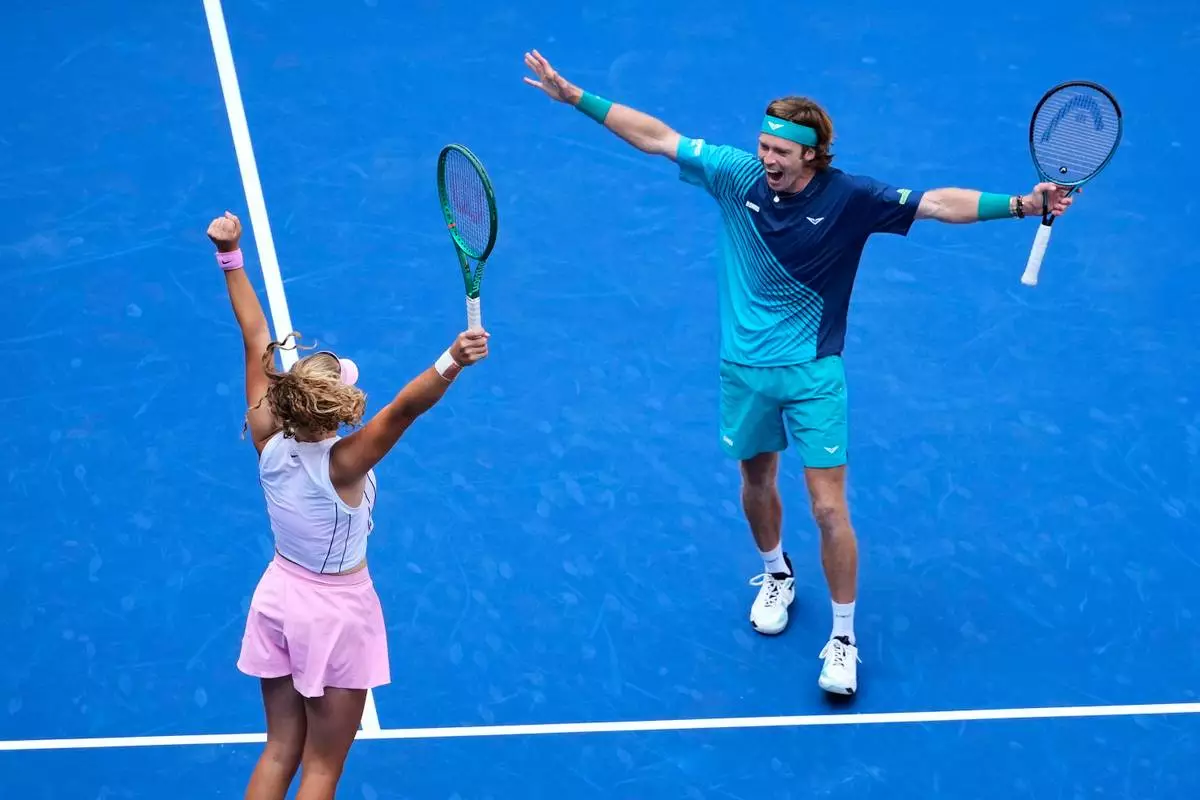
Mirra Andreeva, of Russia, and Andrey Rublev, of Russia, react after winning a mixed doubles match at the U.S. Open tennis championships, Tuesday, Aug. 25, 2026, in New York. (AP Photo/Yuki Iwamura)
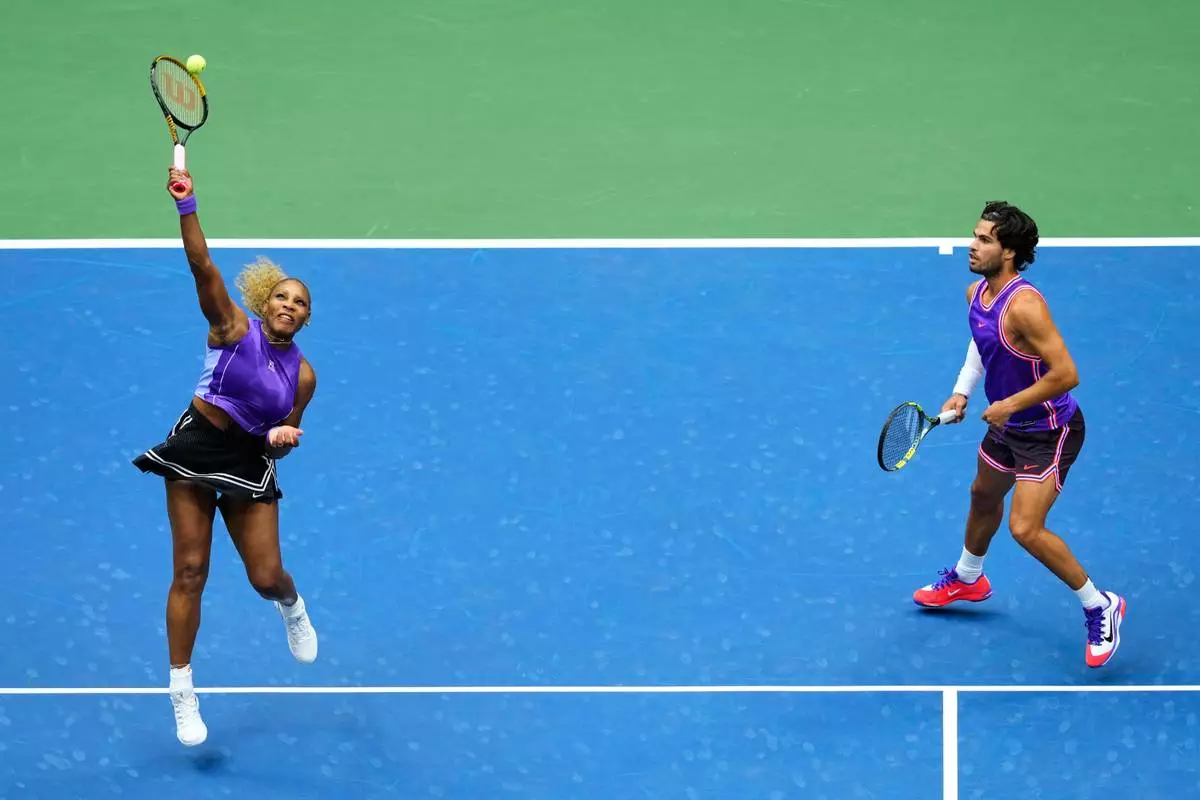
Serena Williams, of the United States, and Carlos Alcaraz, of Spain, return the ball during a mixed doubles match at the U.S. Open tennis championships, Tuesday, Aug. 25, 2026, in New York. (AP Photo/Yuki Iwamura)
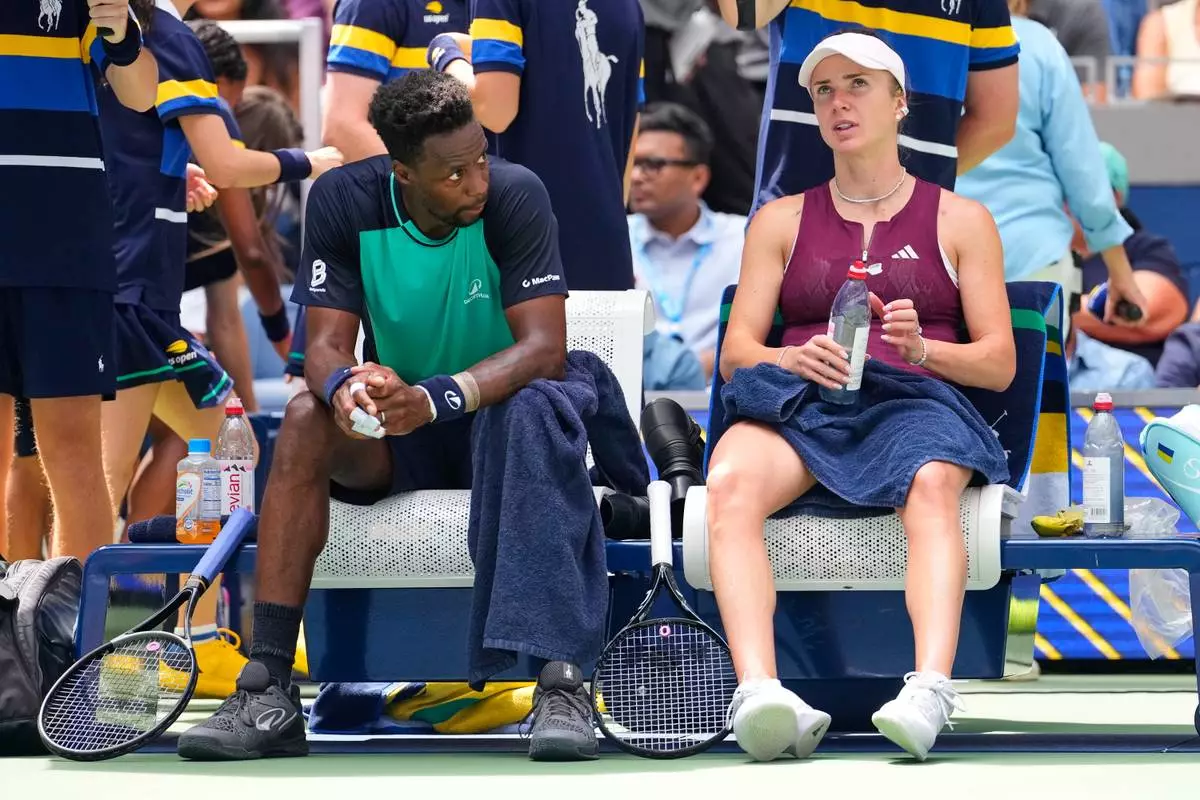
Gael Monfils, of France, left, and Elina Svitolina, of Ukraine, sit courtside during a mixed doubles match at the U.S. Open tennis championships, Tuesday, Aug. 25, 2026, in New York. (AP Photo/Yuki Iwamura)
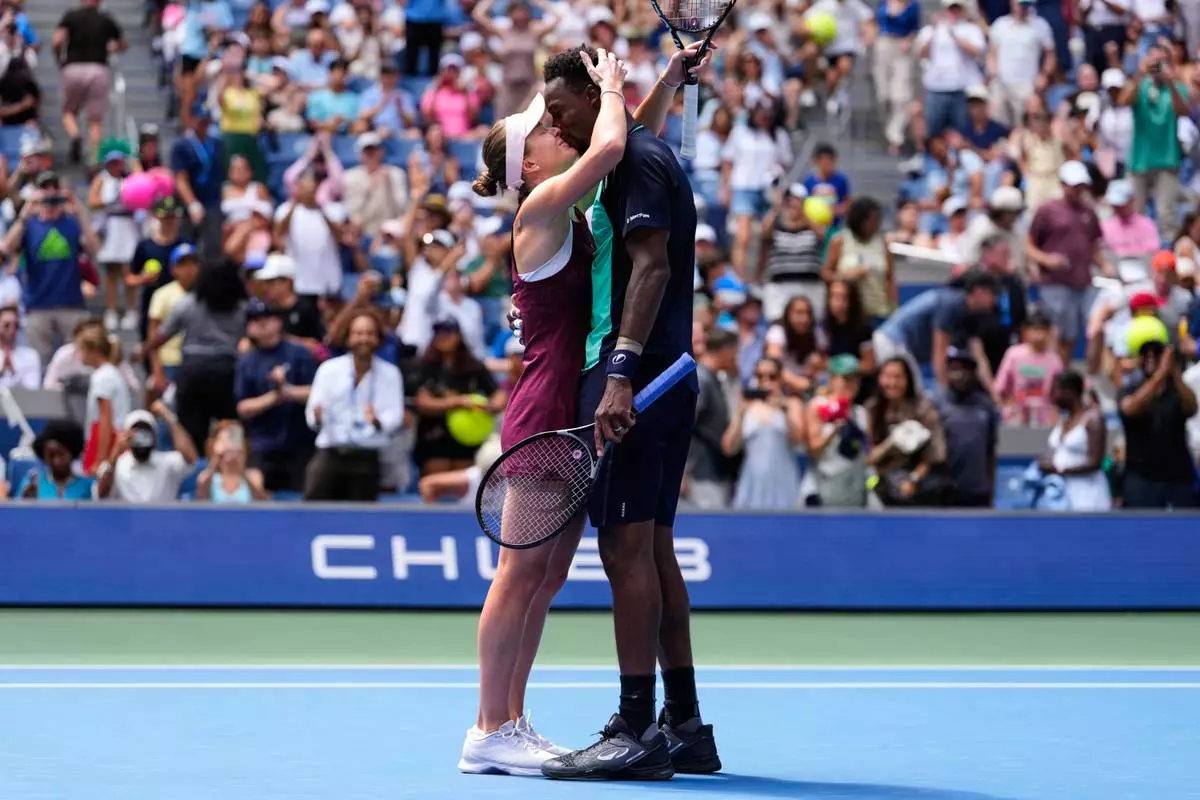
Elina Svitolina, of Ukraine, left, and Gael Monfils, of France, kiss after winning a mixed doubles match at the U.S. Open tennis championships, Tuesday, Aug. 25, 2026, in New York. (AP Photo/Yuki Iwamura)
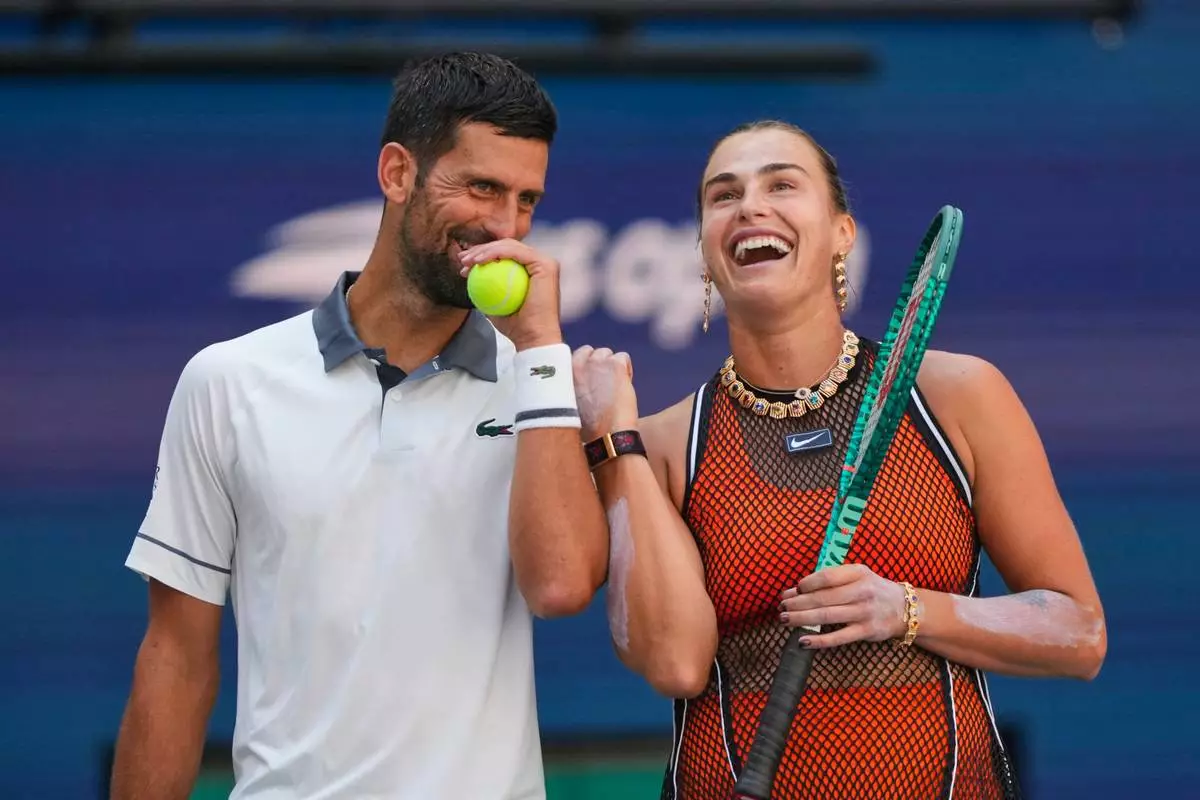
Novak Djokovic, of Serbia, left, and Aryna Sabalenka, of Belarus, share a laugh during a mixed doubles match at the U.S. Open tennis championships, Tuesday, Aug. 25, 2026, in New York. (AP Photo/Yuki Iwamura)
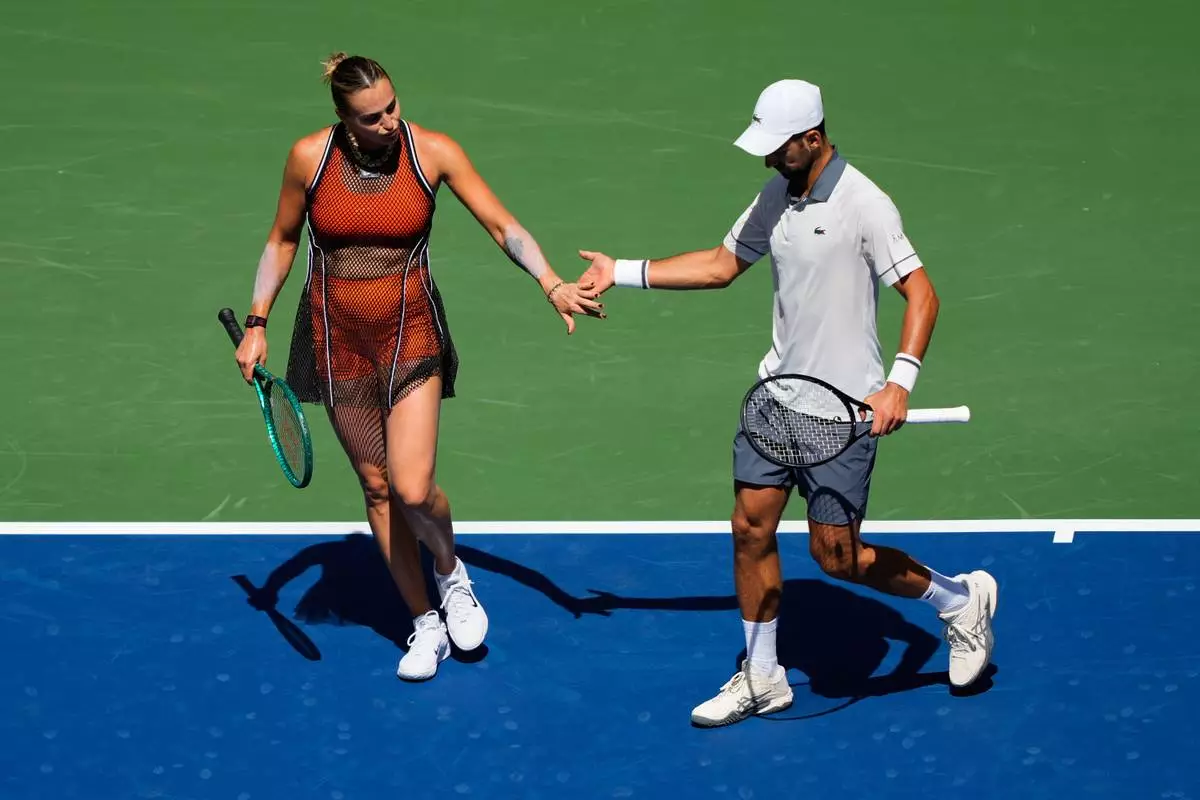
Aryna Sabalenka, of Belarus, and Novak Djokovic, of Serbia, high-five during a mixed doubles match at the U.S. Open tennis championships, Tuesday, Aug. 25, 2026, in New York. (AP Photo/Yuki Iwamura)
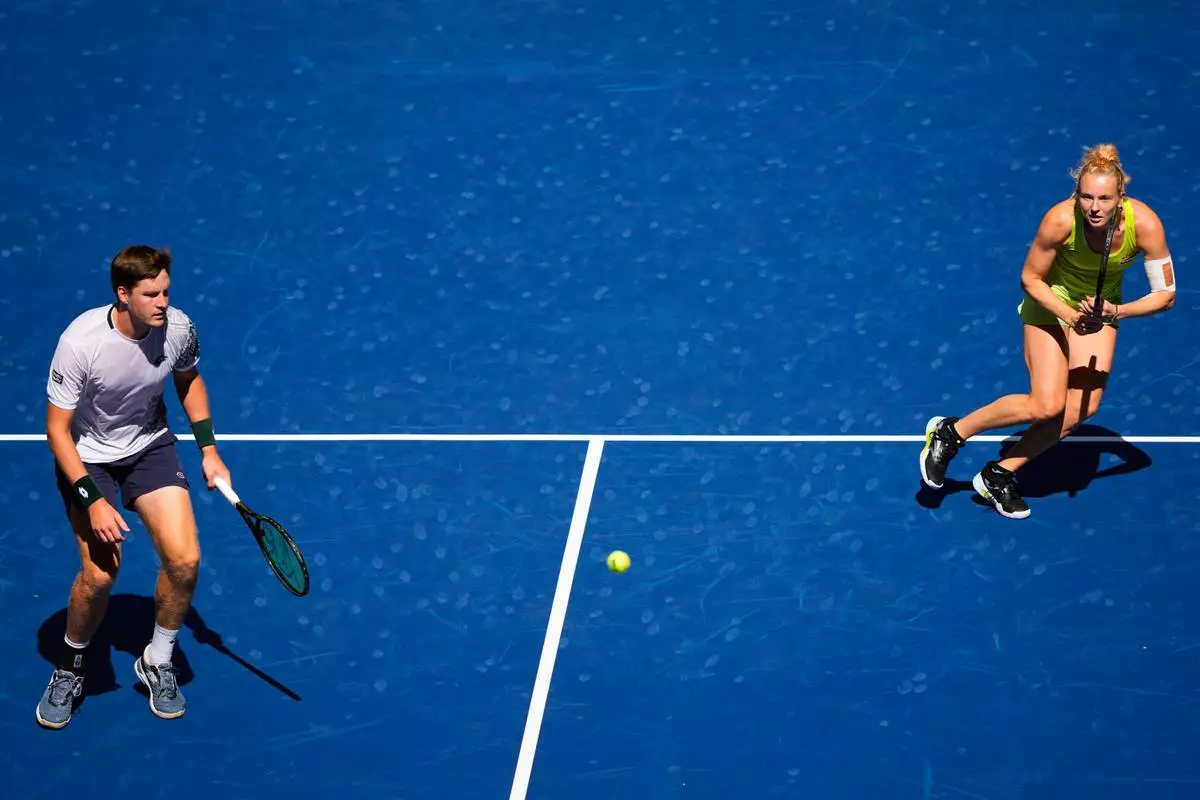
Henry Patten, of Britain, left, and Katerina Siniakova, of the Czech Republic, during a mixed doubles match at the U.S. Open tennis championships, Tuesday, Aug. 25, 2026, in New York. (AP Photo/Yuki Iwamura)
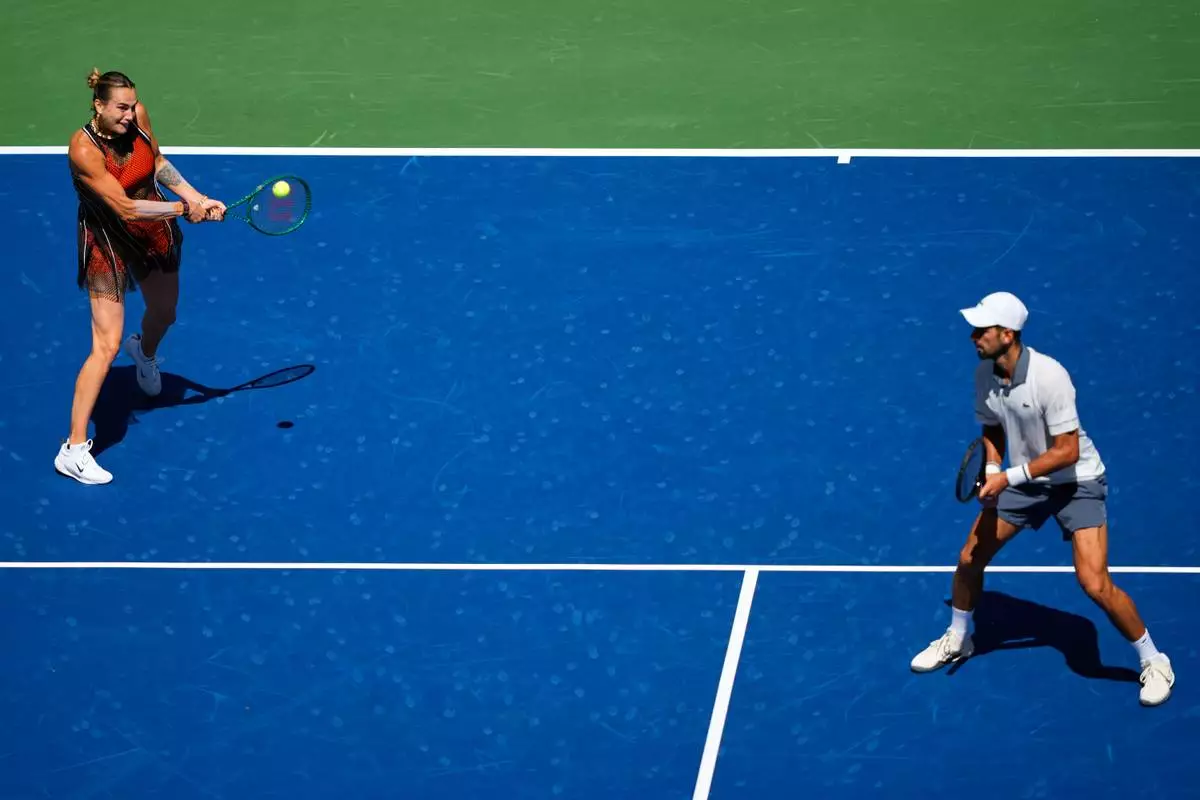
Aryna Sabalenka, of Belarus, and Novak Djokovic, of Serbia, during a mixed doubles match at the U.S. Open tennis championships, Tuesday, Aug. 25, 2026, in New York. (AP Photo/Yuki Iwamura)