NEWCASTLE, Australia (AP) — Ireland coach Andy Farrell has made nine changes to his starting side to face Japan in a Nations Championship match on Saturday, with Tadhg Beirne set to captain the team for the first time.
Only six players from the Irish team's 33-31 victory over Australia in Sydney last week kept their place for the match at the neutral venue of Newcastle, about an hour's drive north of Sydney.
Click to Gallery
Italy's Tommaso Menoncello, right, with his teammate Malik Faissal, left, tackle Japan's Kippei Ishida during the Nations Championship rugby match between Japan and Italy in Tokyo, Saturday, July 4, 2026. (AP Photo/Shuji Kajiyama)
Japan's Ryunosuke Ito kicks the ball during the Nations Championship rugby match between Japan and Italy in Tokyo, Saturday, July 4, 2026. (AP Photo/Shuji Kajiyama)
Ireland's coach Andy Farrell speaks to an Irish coach as he watches his players warm up ahead of the Nations Championship rugby international between Australia and Ireland in Sydney, Saturday July, 4, 2026. (AP Photo/Mark Baker)
Ireland's Tadhg Beirne celebrates after the end of the Nations Championship rugby international between Australia and Ireland in Sydney, Saturday July, 4, 2026. (AP Photo/Mark Baker)
They are backs Stuart McCloskey, Jamie Osborne and Jimmy O’Brien and forwards Tom O’Toole, James Ryan and Jack Conan.
Back-row forward Sean Jansen will start for the first time at No. 8, with provincial teammates Billy Bohan and Sam Illo also set for debuts off the bench. Flanker Bryn Ward was also included in the match-day squad for the first time.
“Really excited about this one for all sorts of reasons,” said Farrell. “Obviously, it’s always a special occasion when you give one person a debut, never mind four."
For Japan, coach Eddie Jones, returning from a four-match suspension, has kept university student flyhalf Ryunosuke Ito in his starting lineup.
Ito made his international debut in Japan’s 27-10 win against Italy in Tokyo last week and the 21-year-old impressed Jones enough to keep his place alongside halfback partner Naoto Saito.
“He’s a young 10, he’s going to have his ups and downs but we’ve got a team that’s going to support him,” said Jones. “Those guys will help look after him and we just want him to be himself.”
Taira Main replaces Kippei Ishida on the left wing in Japan’s only change for Saturday’s match.
Teams:
Ireland: Jamie Osborne; Jimmy O’Brien, Robbie Henshaw, Stuart McCloskey, Jacob Stockdale; Ciarán Frawley, Craig Casey; Tom O’Toole, Rónan Kelleher, Thomas Clarkson, Tadhg Beirne (captain), James Ryan; Jack Conan, Nick Timoney, Sean Jansen; Reserves: Tom Stewart, Billy Bohan, Sam Illo, Cormac Izuchukwu, Bryn Ward, Nathan Doak, Harry Byrne, Bundee Aki.
Japan: Takuro Matsunaga; Kazuma Ueda, Dylan Riley, Yuya Hirose, Taira Main; Ryunosuke Ito, Naoto Saito; Takato Okabe, Mamoru Harada, Shuhei Takeuchi, Harry Hockings, Warner Dearns (captain), Ben Gunter, Kanji Shimokawa, Jack Cornelsen. Reserves: Hayate Era, Sojiro Otuska, Keijiro Tamefusa, Michael Stolberg, Michael Leitch, Tiennan Costley, Itsuki Kamimura, Sam Greene.
AP rugby: https://apnews.com/hub/rugby
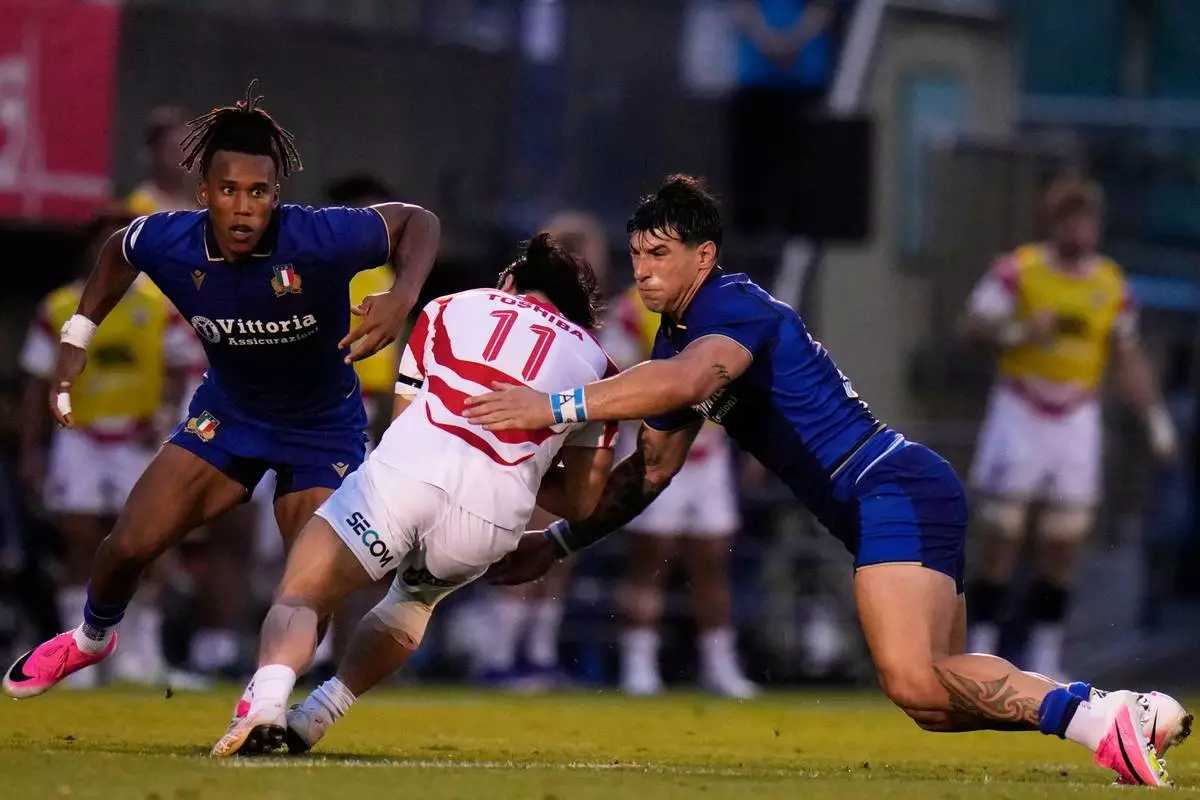
Italy's Tommaso Menoncello, right, with his teammate Malik Faissal, left, tackle Japan's Kippei Ishida during the Nations Championship rugby match between Japan and Italy in Tokyo, Saturday, July 4, 2026. (AP Photo/Shuji Kajiyama)

Japan's Ryunosuke Ito kicks the ball during the Nations Championship rugby match between Japan and Italy in Tokyo, Saturday, July 4, 2026. (AP Photo/Shuji Kajiyama)

Ireland's coach Andy Farrell speaks to an Irish coach as he watches his players warm up ahead of the Nations Championship rugby international between Australia and Ireland in Sydney, Saturday July, 4, 2026. (AP Photo/Mark Baker)

Ireland's Tadhg Beirne celebrates after the end of the Nations Championship rugby international between Australia and Ireland in Sydney, Saturday July, 4, 2026. (AP Photo/Mark Baker)
RISHON LEZION, Israel (AP) — Marking the coordinates on a handheld GPS, an Israeli diver threw an anchor into the water as another quickly chucked an orange buoy beside it. Cramped on the boat's bow, the first team assembled their gear, put on wet suits and tested oxygen tanks before jumping in.
But after hours of combing the Mediterranean seabed in search of yellow-painted mock mortar shells, the divers surfaced empty-handed.
It was the team's fifth diving trip in the yearslong experiment to help prepare Israel to clear part of the sea from unexploded grenades and other munitions in order to return beach area to residents. But on this day in June, the divers couldn't find the dummy mortar and artillery shells they'd planted months prior, foreshadowing the challenges that lie ahead.
“It’s really hard to find things in the sea,” said Roy Jaijel, a researcher in the marine geology and geophysics department at Israel’s National Institute of Oceanography, as he emerged from a dive.
Jaijel co-leads a project aimed at returning some 2 kilometers (1.2 miles) of shoreline to people living in Israel's central city of Rishon LeZion, an area that's been used as a firing range for decades. The initiative, the first of its kind in Israel, coincides with a global push to better protect the world's waters as demand increases for the use of seas and oceans for shipping, energy and recreation.
Experts say the clearance of underwater munitions has received more attention in recent years in part because of the boom in artificial intelligence, which requires millions of kilometers of underwater fiber-optic cables to allow for global connectivity.
Munitions can end up dumped into waters after wars, fall into seas during conflict or, in the case of Rishon LeZion, accumulate from firing practice. Erosion from seawater can lead toxic and explosive chemicals, along with heavy metals, to seep from the munitions, causing environmental contamination. There's also the risk of objects exploding if people step on them or children play with them, thinking they're toys.
Two years ago, Europe launched a project to better detect and clear non-military unexploded ordnance, such as from industrial or commercial sites. In a separate initiative in 2024, Germany piloted a program to recover and dispose of military waste from the North and Baltic Seas, where some 1.6 million tonnes of unexploded munitions from two world wars lie, according to the German government.
Still, there's been less focus on clearing waters in the Middle East, such as the Mediterranean, which historically hasn't been the site of large dumps compared with Europe.
Leaders of the Israeli project say it's one of the first to focus on clearing smaller munitions in complicated underwater terrain, which is why many countries have avoided it.
“It's like looking for a needle in a haystack,” said Israel Faintuch, head of the Maritime Division at Israel's Ministry of Defense National Mine Action Authority as he checked his oxygen tank and suited up to go underwater.
The government says nearly half the country's 194-kilometer (120-mile) coastline is off limits to civilians, used for commercial ports, power plants, desalination facilities, military bases and firing zones.
Since the country's founding nearly 80 years ago, 7 kilometers (4.3 miles), nearly the entire length of Rishon LeZion's shoreline, has been used as a firing range, launching grenades as well as small and large mortars, leaving hundreds of thousands of people crammed into a narrow strip of beach.
Launched last year, the joint research project funded by Rishon LeZion's municipality is being led by Israel’s National Mine Action Authority and researchers from the National Institute of Oceanography. It aims to localize the most impacted areas, mapping the pattern of munitions to determine how far offshore and how deep to go before the clearance team steps in.
In order to gather data, divers place various sizes of fake munitions — some equipped with motion sensors — at depths of 5, 10 and 15 meters (16, 33 and 59 feet) and up to 1.2 kilometers (0.75 miles) offshore. After several months, they retrieve the munitions, analyze the data and plant new ones.
In June, Associated Press journalists accompanied the team underwater as they placed new munitions for the next round of tests and attempted to find ones they'd left in January. Divers descended using a string, or measuring tape, to navigate the seabed. Tapping each other under the water, they'd point in different directions to search, rubbing their hands over the seafloor.
“You have limited air supply when you go with the divers and you have limited time in the water," said Dafna Eliahu, a graduate student at the University of Haifa working on the project. "So with actual live munition I expect it to be very difficult, very hard to locate and to actually be able to find them,” she said.
While the information, including from the sensors, is still being processed, preliminary findings show that the munitions moved less than expected, which means there might be less area that needs clearing, she said.
Israel's Defense Ministry wants to have enough data to start clearing by the end of next year and expand the shoreline by an initial 150 meters (492 feet) within a few months. Completing the project will take years and cost tens of millions of dollars. It's already been delayed due to Israel's multiple wars with Hamas in Gaza, Hezbollah in Lebanon and Iran as divers can't work when missiles are falling and could land in the sea.
During the current war that the U.S. and Israel launched against Iran as well as the 12-day war last June between Israel and Iran, the army said missiles aimed at larger cities like Rishon LeZion fell into the sea but wouldn’t specify how many.
Israel says no one has been injured or killed by unexploded sea ordnance, but there have been about a dozen sightings of devices in the last 20 years where the police and army were called. Most have been found on or near shore.
While the goal of the project is to expand parts of the shoreline, Israel also hopes its findings will yield new insights on clearing munitions from this part of the world, where there are threats but overall less is known.
According to the Geneva International Centre for Humanitarian Demining, more than half of global incidents related to unexploded ordnance, such as sightings or drifting mines, were recorded in the Middle East between 2014 and 2023, with most occurring in the Red Sea off the coast of Yemen and the Bab-el-Mandeb Strait, largely a result of Yemen's civil war.
Pedro Basto, research and innovation program manager with the group, said it is important to keep interest high in removing underwater explosives given the increasing dependence on the seas.
“Both renewable energies based on the sea (wind turbines and harnessing water currents) and the global connectivity that most of the world relies on every minute of every day, depend massively on underwater cable laying,” he said.
As Israel's project advances, residents in Rishon LeZion say they're looking forward to being able to use more land.
Moria Malka, head spokesperson for the city's municipality, said the clearance will triple the area’s coastline and much of it will become a nature reserve as well as a residential area near the sea. For beachgoers like Mark Kostman, that is great news.
“Holidays and Saturdays, all of this place is completely crowded and too dense to even have fun,” said Kostman as he played volleyball with his children next to the firing zone. “Having it as public space for leisure and sport ... it's wonderful."
Associated Press reporter Natalie Melzer contributed from Nahariya, Israel.
The Associated Press’ climate and environmental coverage receives financial support from multiple private foundations. AP is solely responsible for all content. Find AP’s standards for working with philanthropies, a list of supporters and funded coverage areas at AP.org.
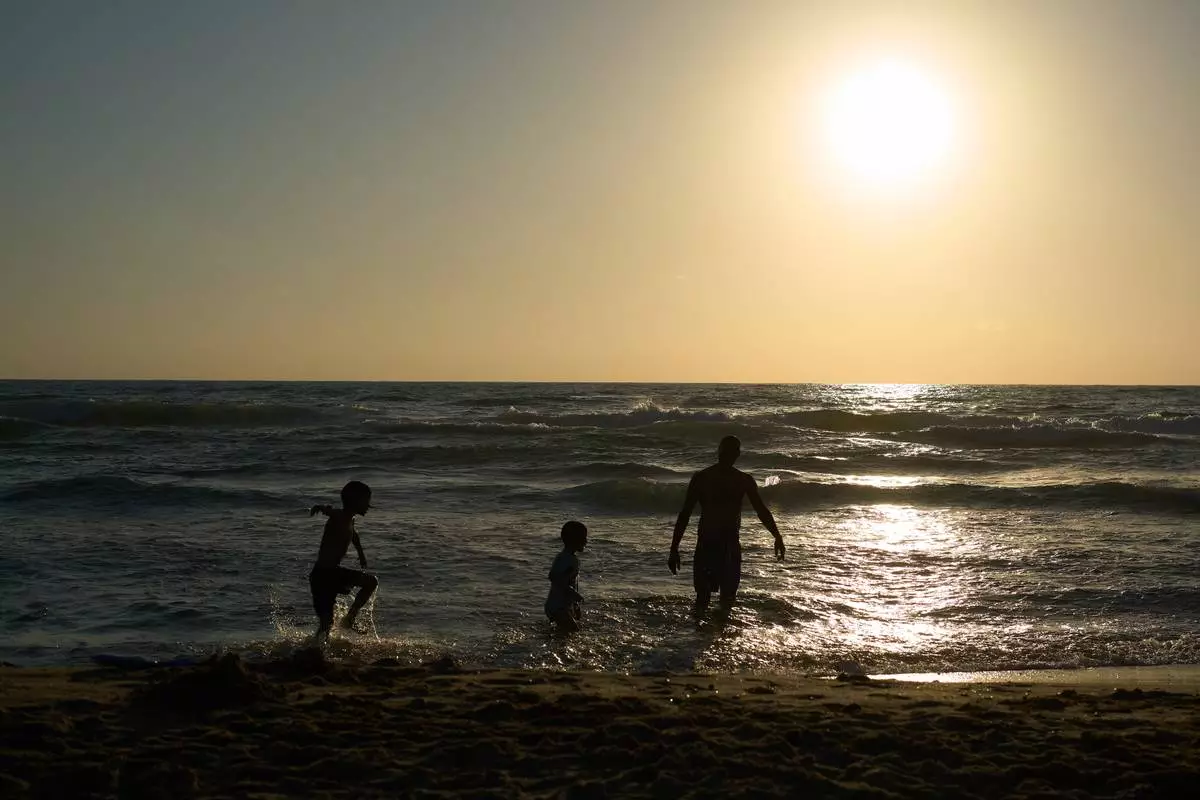
A family enjoys part of the Mediterranean Sea that is near a military firing range that is slated to be cleared in Rishon LeZion on Tuesday, June 23, 2026. (AP Photo/Ariel Schalit)
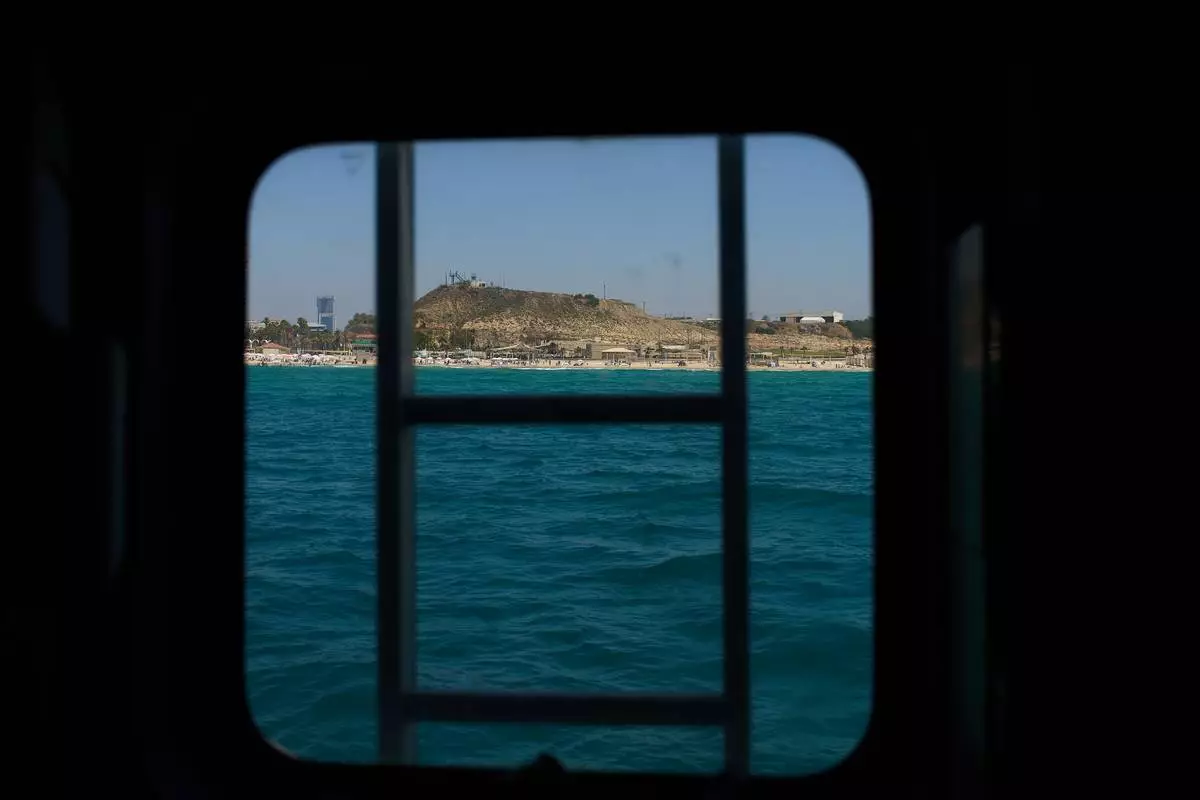
A military firing range that had been used for decades and is slated to be cleared and opened for public use, is visible through a boat in the Mediterranean Sea in off the coast of Rishon Lezion, Israel, Sunday, June 21, 2026. (AP Photo/Ariel Schalit)
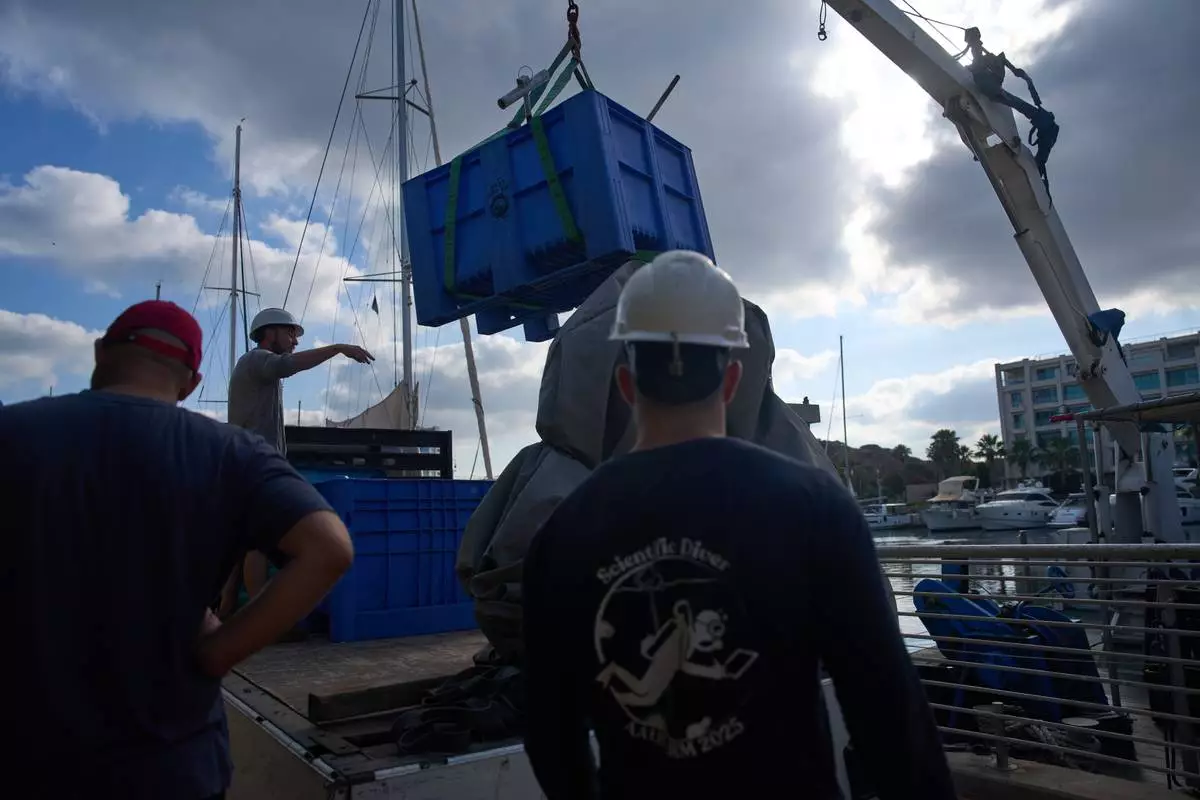
Divers load gear and mock munitions to be placed on the floor of the Mediterranean Sea off the coast of Rishon LeZion, Israel, Sunday, June 21, 2026. (AP Photo/Ariel Schalit)
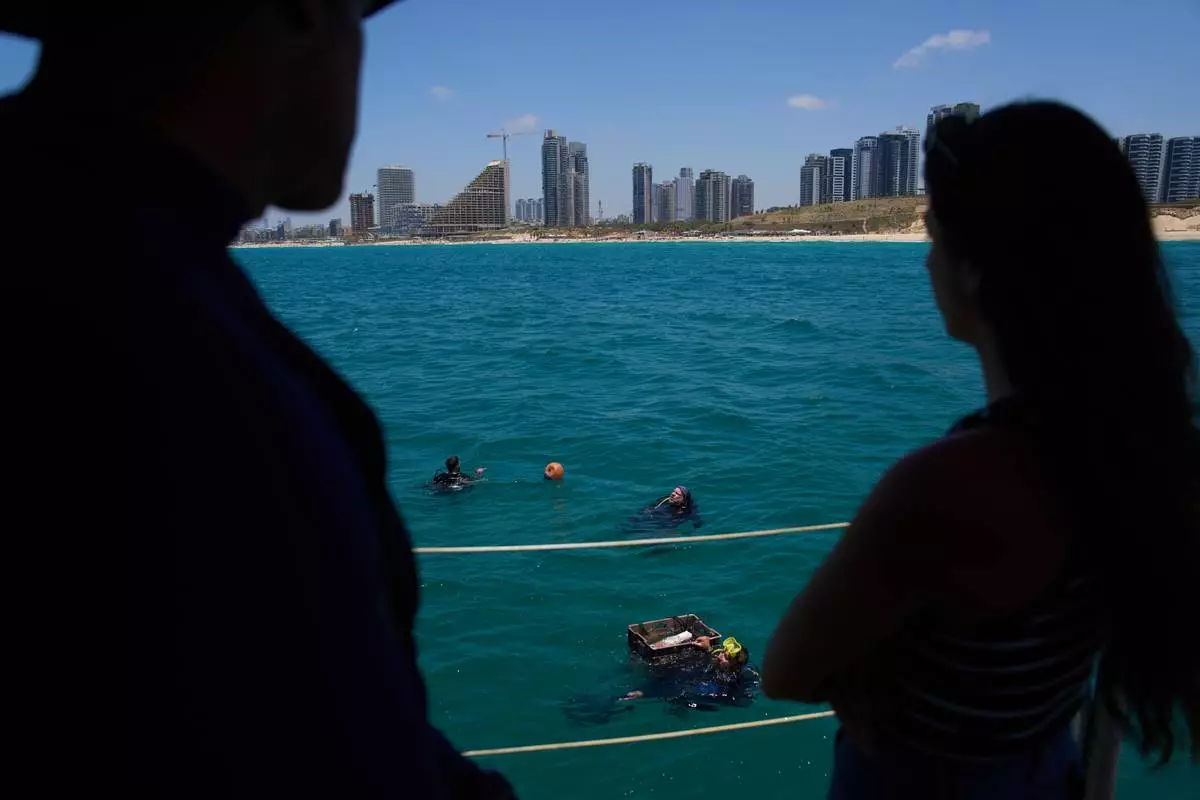
Divers place mock munitions on the floor of the Mediterranean Sea off the coast of Rishon LeZion, Israel, Sunday, June 21, 2026. (AP Photo/Ariel Schalit)
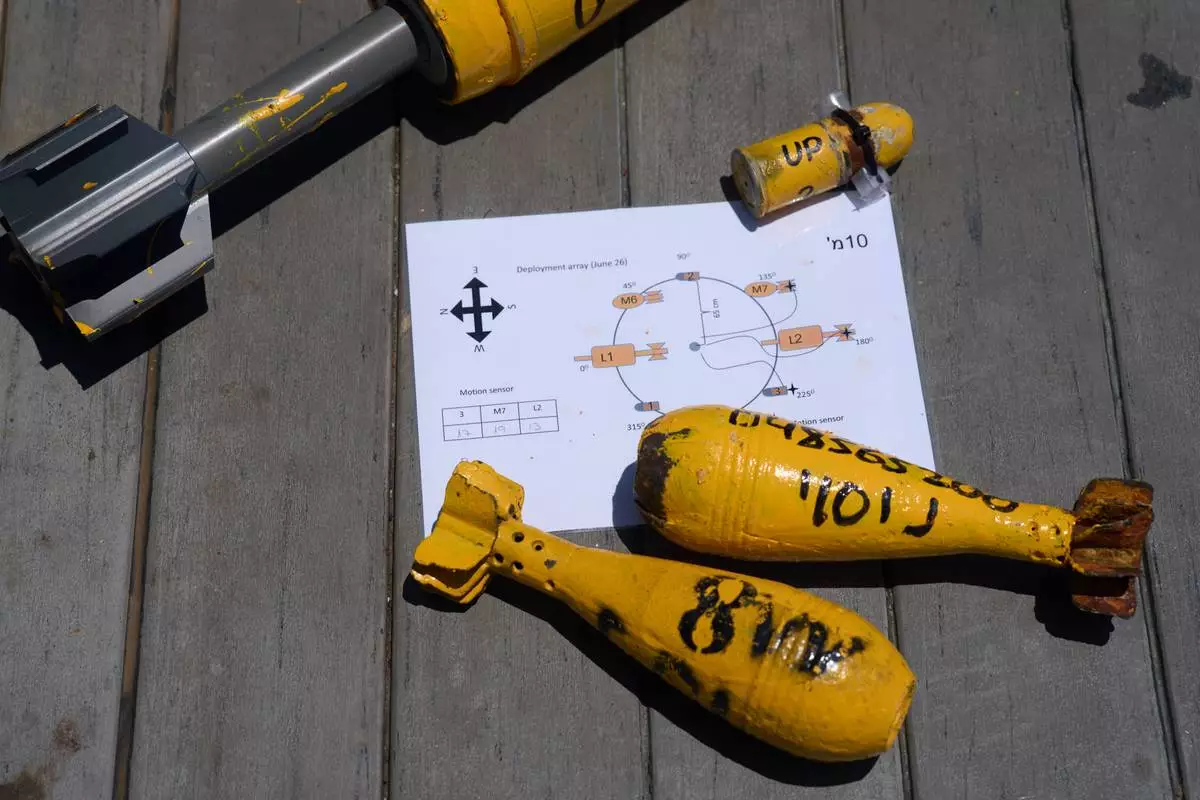
Mock munitions, to be placed by divers on the floor of the Mediterranean Sea, are displayed off the coast of Rishon LeZion, Israel, Sunday, June 21, 2026. (AP Photo/Ariel Schalit)
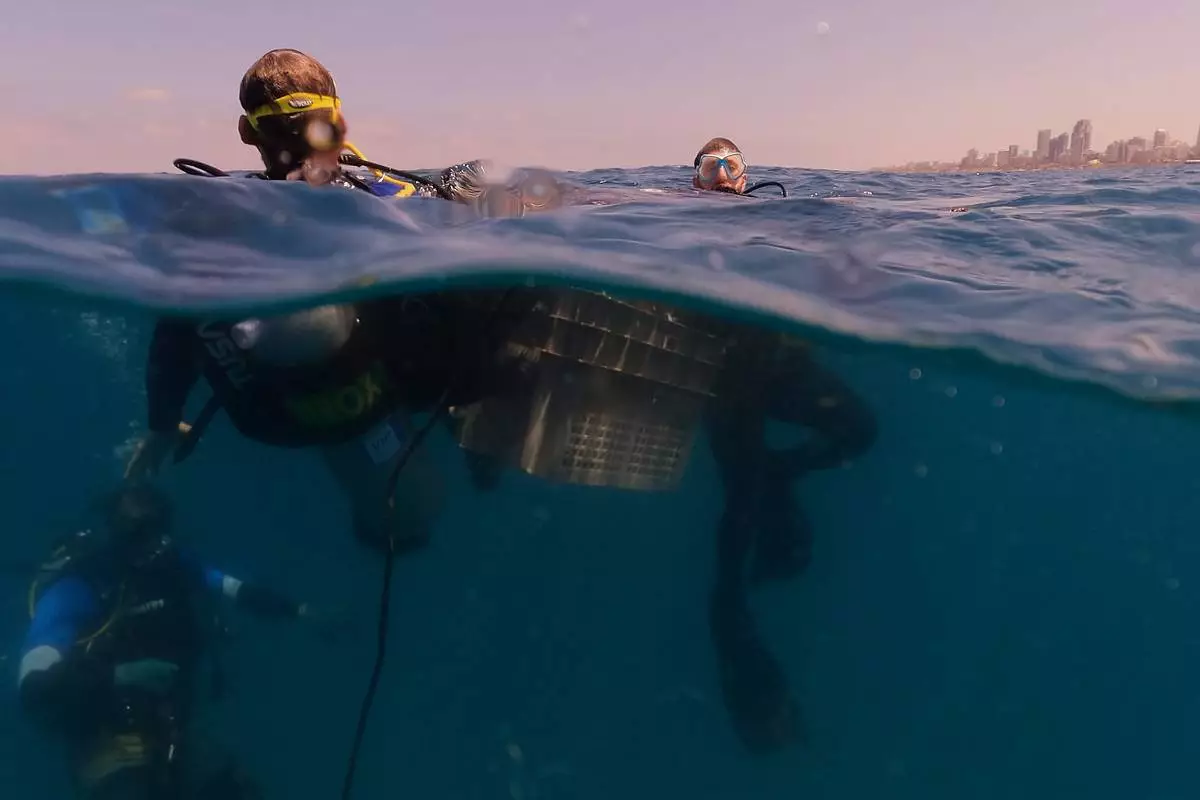
Divers descend to place mock munitions on the floor of the Mediterranean Sea off the coast of Rishon LeZion, Israel, Sunday, June 21, 2026. (AP Photo/Ariel Schalit)
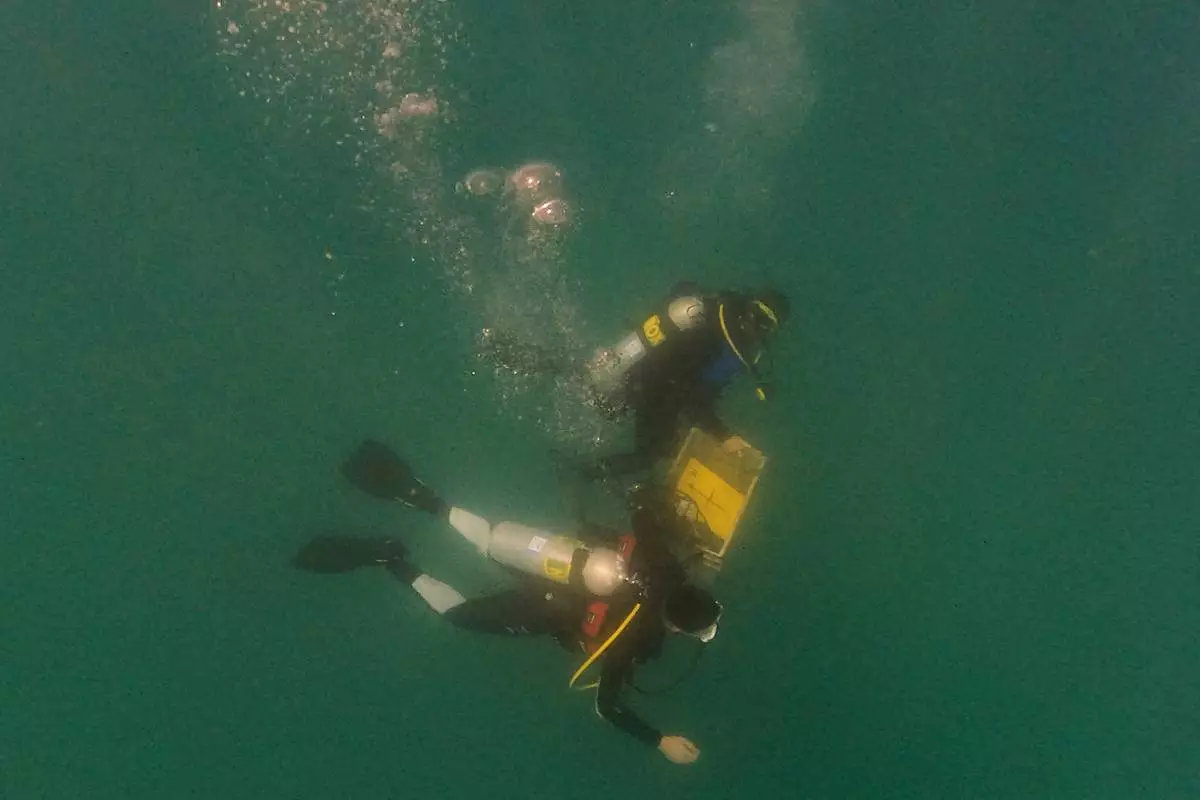
Divers place mock munitions on the floor of the Mediterranean Sea off the coast of Rishon LeZion, Israel, Sunday, June 21, 2026. (AP Photo/Ariel Schalit)
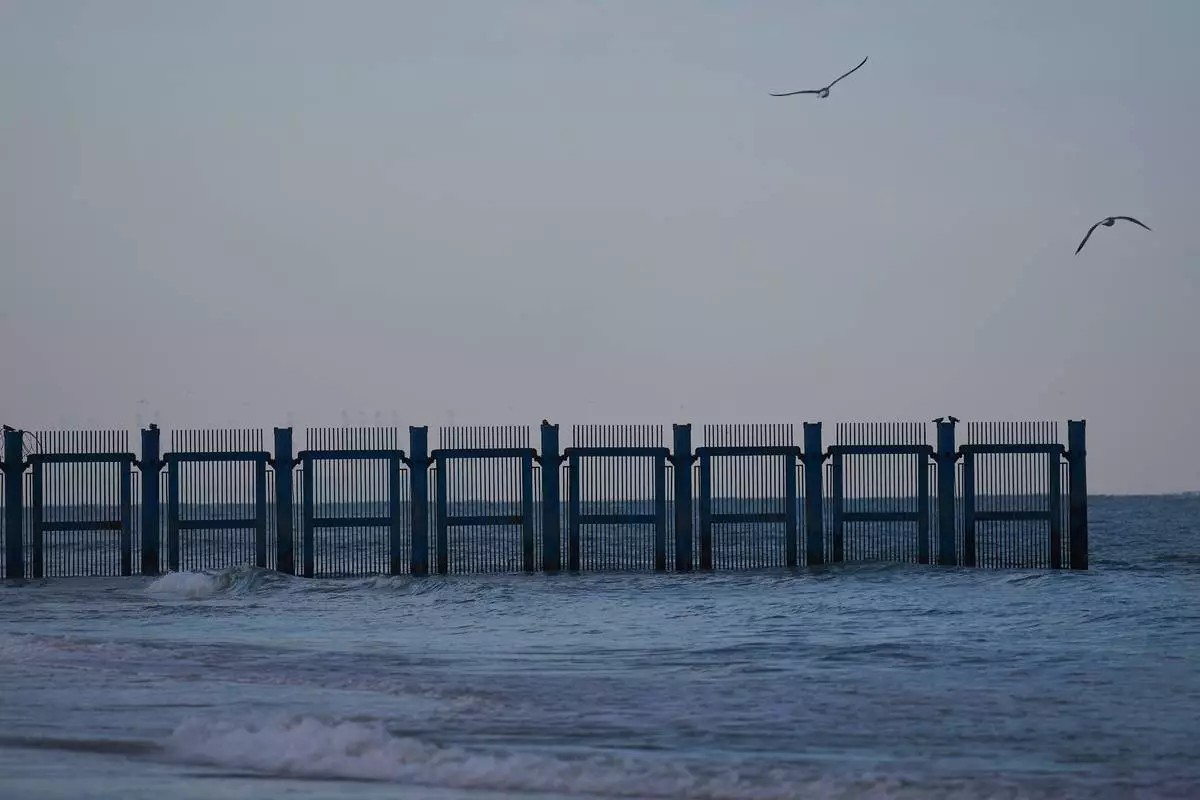
Seagulls fly past a barrier of a military firing range that had been used for decades and is slated to be cleared and opened for public use, in the Mediterranean Sea in Rishon LeZion, Israel, Saturday, Jan. 17, 2026. (AP Photo/Ariel Schalit)
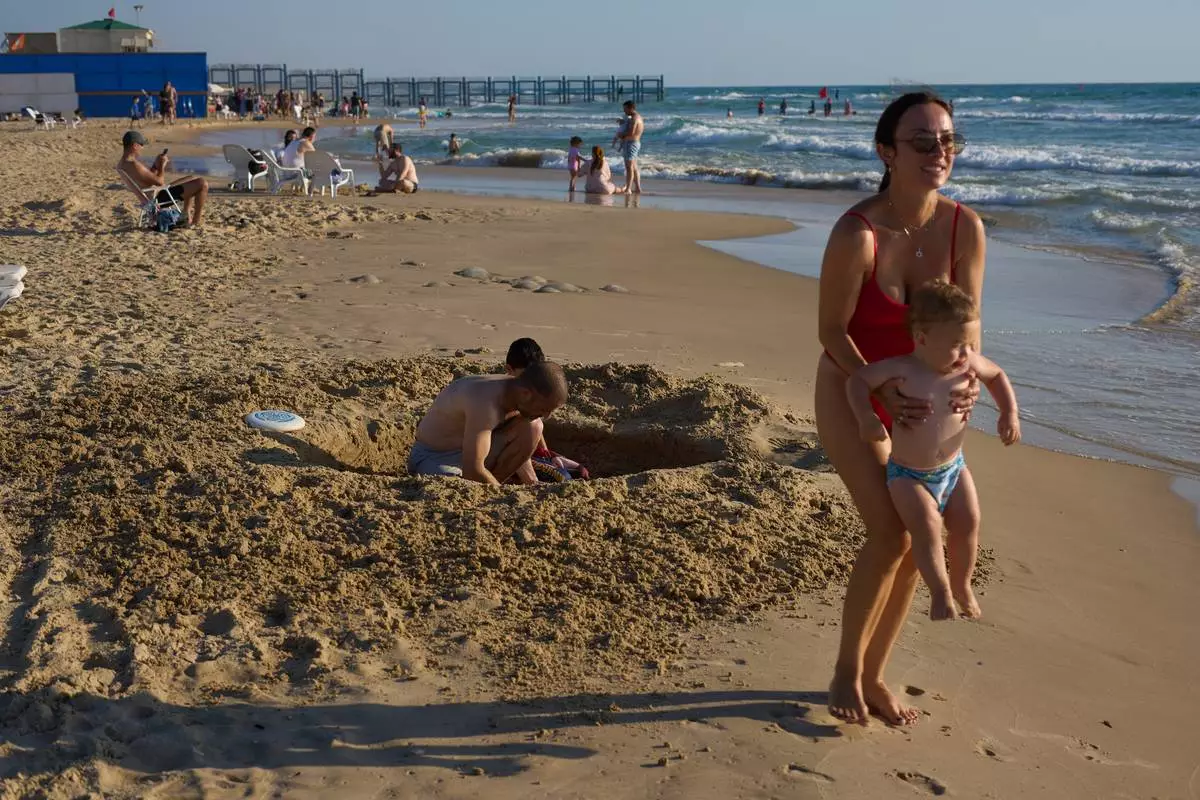
A family enjoys the Mediterranean Sea in Rishon LeZion, Tuesday, June 23, 2026. The beach is located near a military firing range that had been used for decades and is slated to be cleared and opened for public use. (AP Photo/Ariel Schalit)
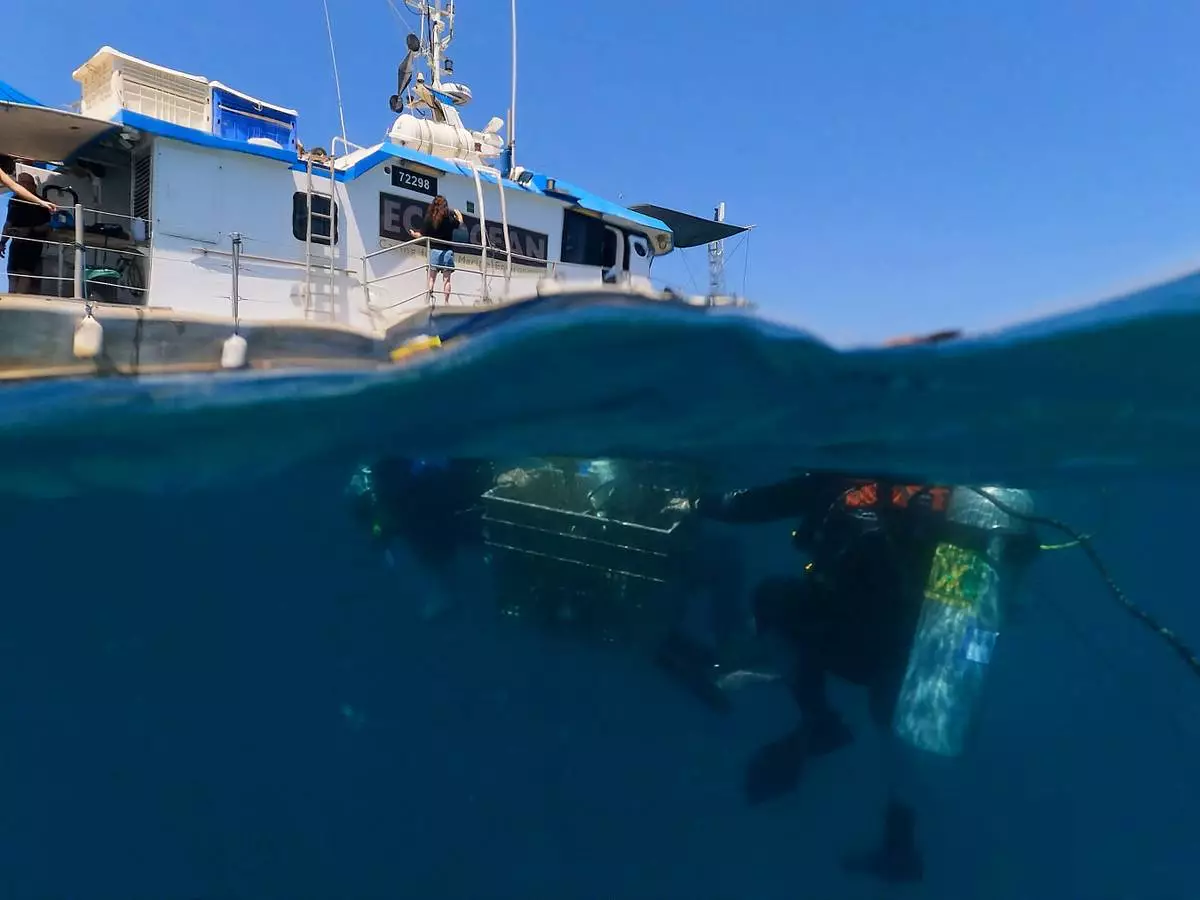
Divers descend to place mock munitions on the floor of the Mediterranean Sea off the coast of Rishon LeZion, Israel, Sunday, June 21, 2026. (AP Photo/Ariel Schalit)
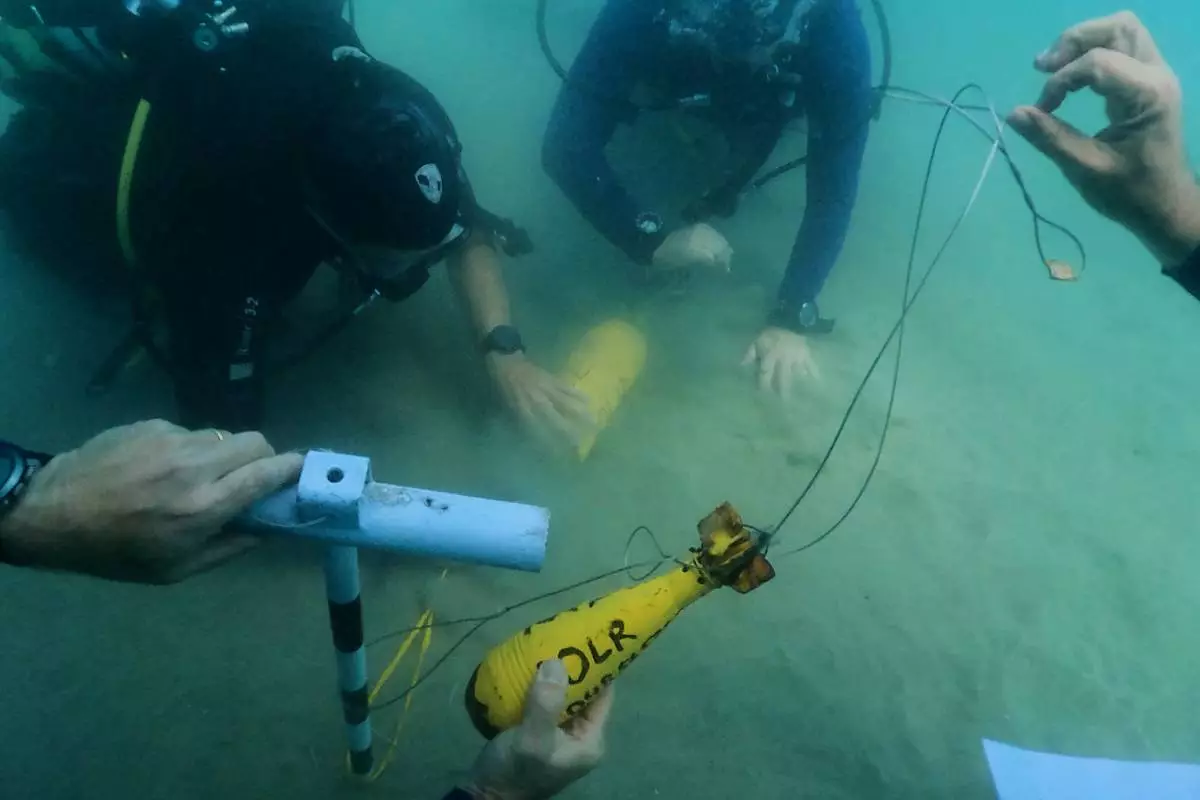
Divers place mock munitions on the floor of the Mediterranean Sea off the coast of Rishon LeZion, Israel, Sunday, June 21, 2026. (AP Photo/Sam Mednick)