MIAMI (AP) — Otto Lopez hit a two-run triple to back a strong five-inning outing by Janson Junk and the Miami Marlins beat the Seattle Mariners 8-4 on Thursday night to extend their winning streak to six.
Griffin Conine homered to help Miami complete a three-game sweep.
Click to Gallery
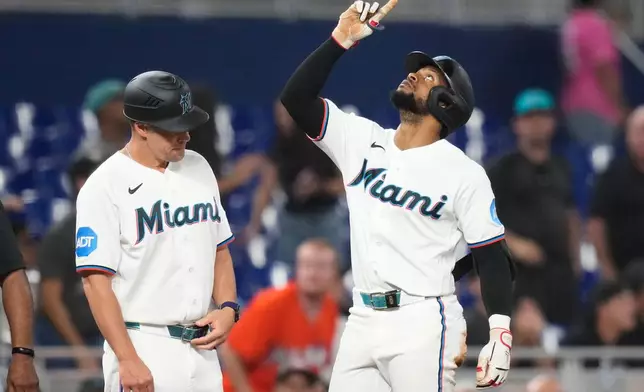
Miami Marlins' Otto Lopez, right, reacts after hitting a triple to break a franchise record with the most hits before the All Star break during the fourth inning of a baseball game against the Seattle Mariners, Thursday, July 9, 2026, in Miami. (AP Photo/Lynne Sladky)
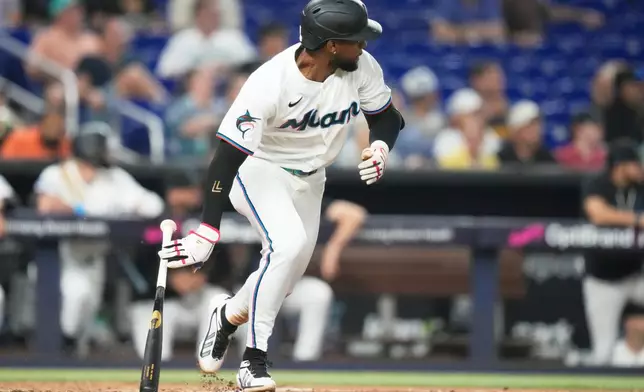
Miami Marlins' Otto Lopez runs after hitting a triple to break a franchise record with the most hits before the All Star break during the fourth inning of a baseball game against the Seattle Mariners, Thursday, July 9, 2026, in Miami. (AP Photo/Lynne Sladky)
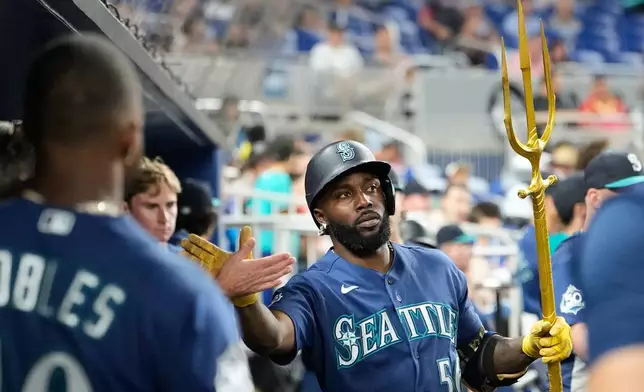
Seattle Mariners' Randy Arozarena (56) is congratulated in the dugout after hitting a solo home run during the fifth inning of a baseball game against the Miami Marlins, Thursday, July 9, 2026, in Miami. (AP Photo/Lynne Sladky)
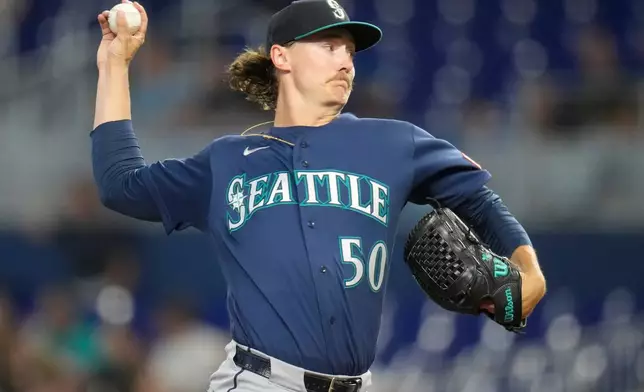
Seattle Mariners starting pitcher Bryce Miller (50) throws during the first inning of a baseball game against the Miami Marlins, Thursday, July 9, 2026, in Miami. (AP Photo/Lynne Sladky)
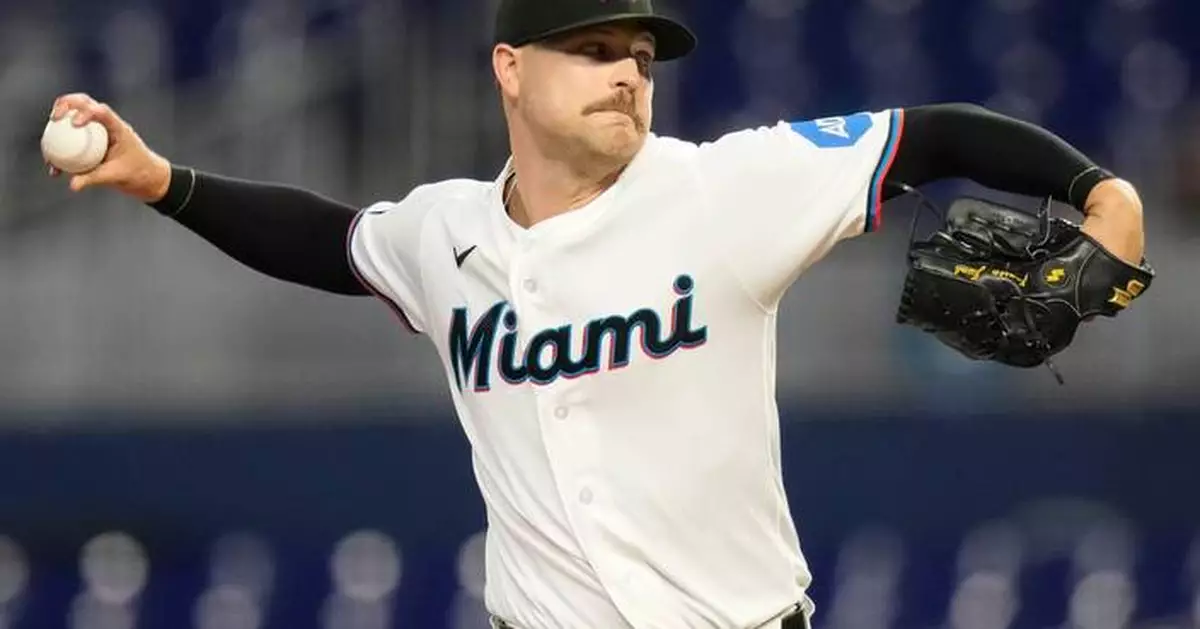
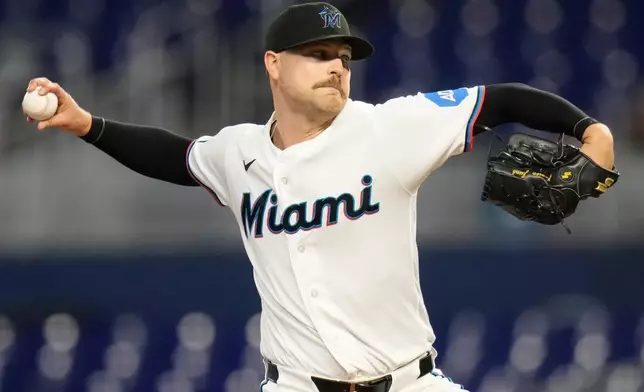
Miami Marlins starting pitcher Janson Junk throws during the first inning of a baseball game against the Seattle Mariners, Thursday, July 9, 2026, in Miami. (AP Photo/Lynne Sladky)
The Marlins are 52-42 and 10 games above .500 for the first time since completing a three-game sweep of the Washington Nationals on June 18, 2023.
Lopez, whose .345 average leads the majors, went 1 for 3 and walked twice. He has a club-record 127 hits before the All-Star break — one more than Luis Arraez had in 2023.
Junk (4-5) allowed two runs — one earned — on three hits in his first start since May 25 after landing on the injured list with right shin bone inflammation. He struck out five and walked four.
Conine hit the first pitch from Bryce Miller (4-3) in the bottom of the second inning to tie it 1-1. Jakob Marsee singled and scored on a two-out double by Liam Hicks for a 2-1 lead.
Lopez's triple came in a four-run fourth, capped by Kyle Stowers' RBI single for a 6-1 lead.
Josh Naylor singled in the second and stole two bases, scoring Seattle's first run when Junk threw wide at third base after Naylor took off early. Randy Arozarena hit his 10th homer to cut it to 6-2 in the fifth. Dominic Canzone hit his 15th homer — a two-run shot off William Kempner in the eighth.
Miller gave up six runs — four earned — on nine hits in five innings with four walks. He issued five walks through his first nine starts and had faced 96 hitters in a row without issuing one before Lopez walked in the first.
Mariners RHP Luis Castillo (3-7, 4.79 ERA) starts Friday in Florida opposite Rays RHP Nick Martinez (7-2, 2.61).
Marlins RHP Sandy Alcantara (10-4, 4.00) starts Friday at home against Guardians LHP Parker Messick (7-5, 2.80).
AP MLB: https://apnews.com/hub/mlb
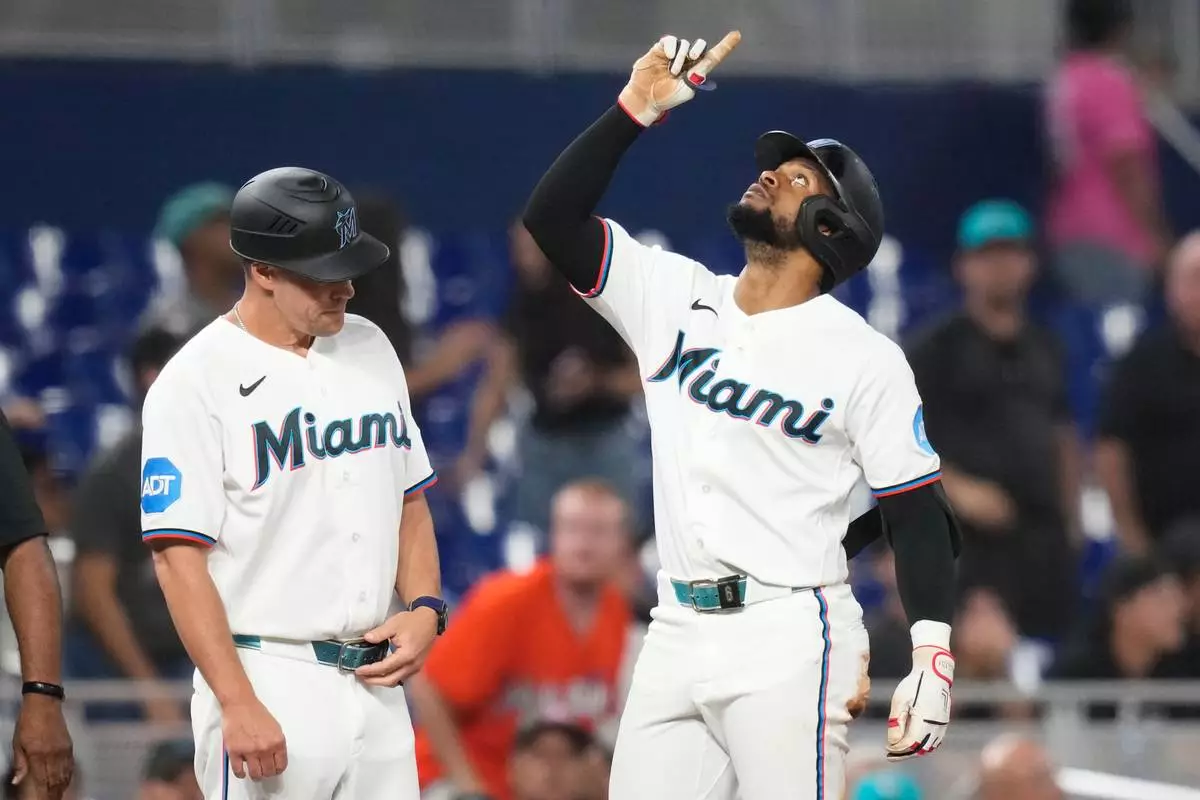
Miami Marlins' Otto Lopez, right, reacts after hitting a triple to break a franchise record with the most hits before the All Star break during the fourth inning of a baseball game against the Seattle Mariners, Thursday, July 9, 2026, in Miami. (AP Photo/Lynne Sladky)
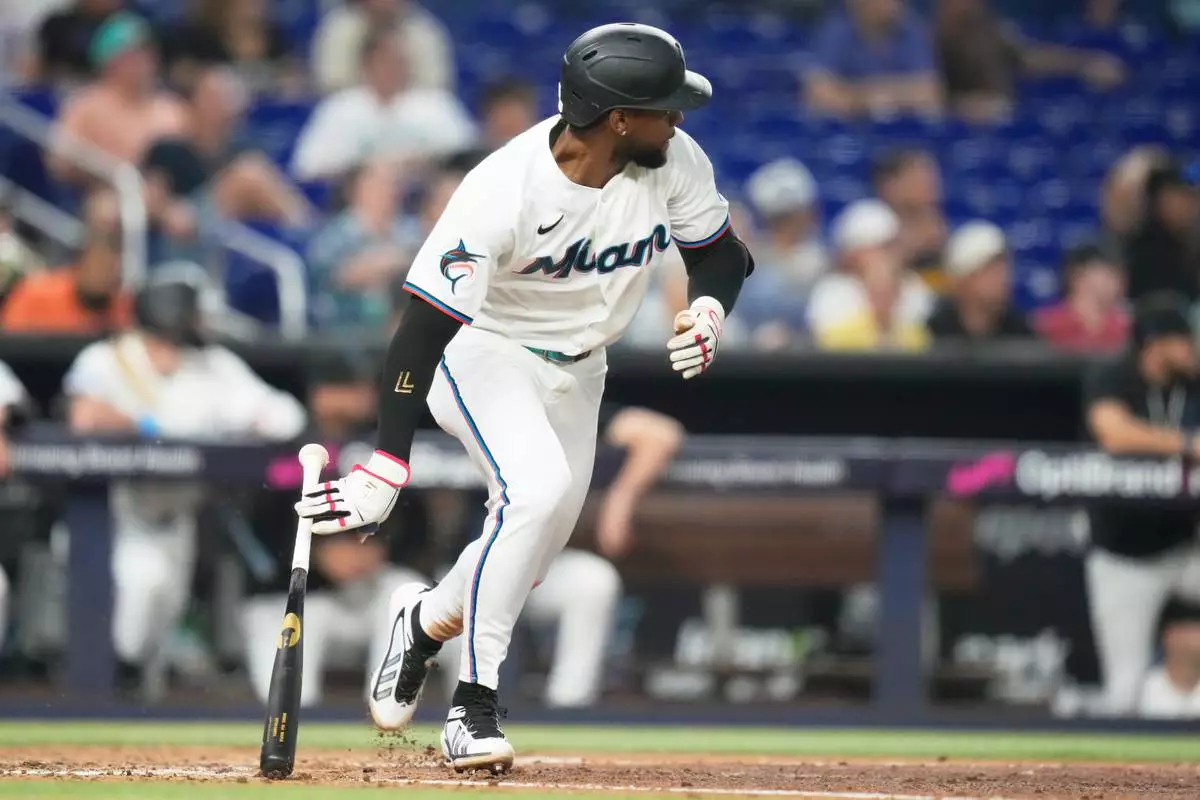
Miami Marlins' Otto Lopez runs after hitting a triple to break a franchise record with the most hits before the All Star break during the fourth inning of a baseball game against the Seattle Mariners, Thursday, July 9, 2026, in Miami. (AP Photo/Lynne Sladky)
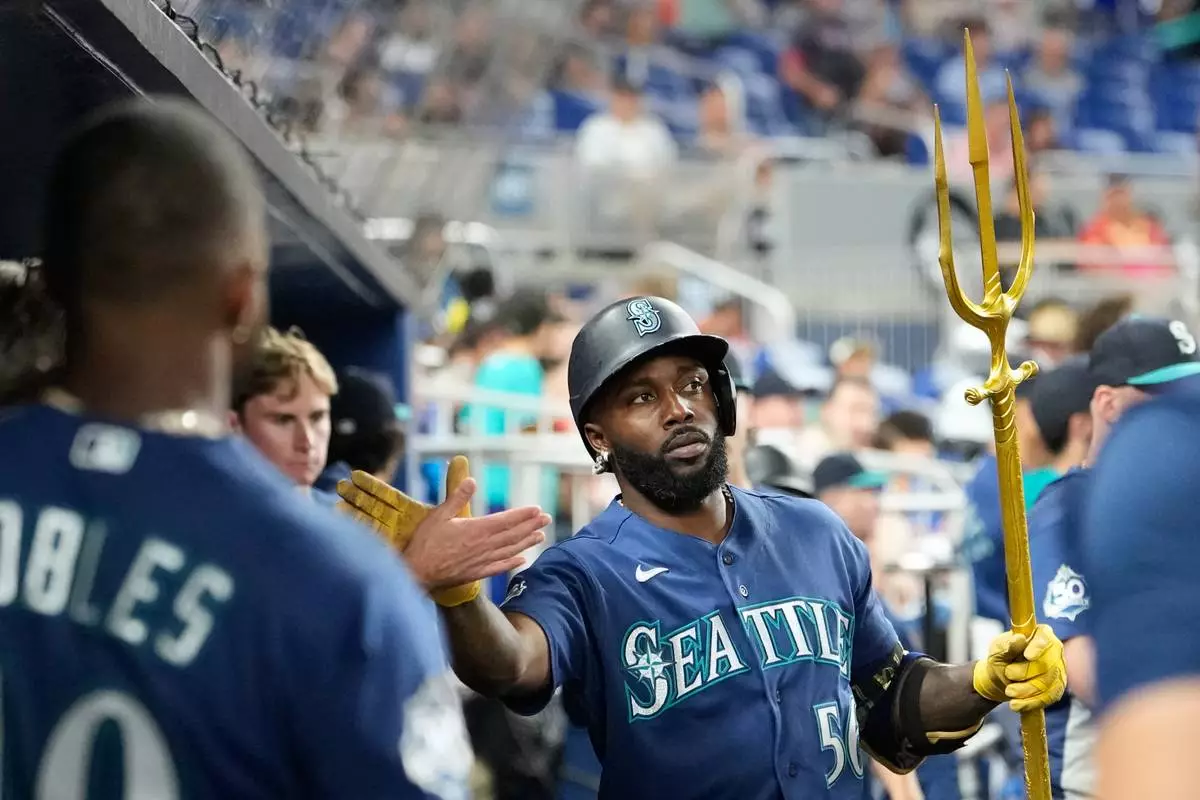
Seattle Mariners' Randy Arozarena (56) is congratulated in the dugout after hitting a solo home run during the fifth inning of a baseball game against the Miami Marlins, Thursday, July 9, 2026, in Miami. (AP Photo/Lynne Sladky)
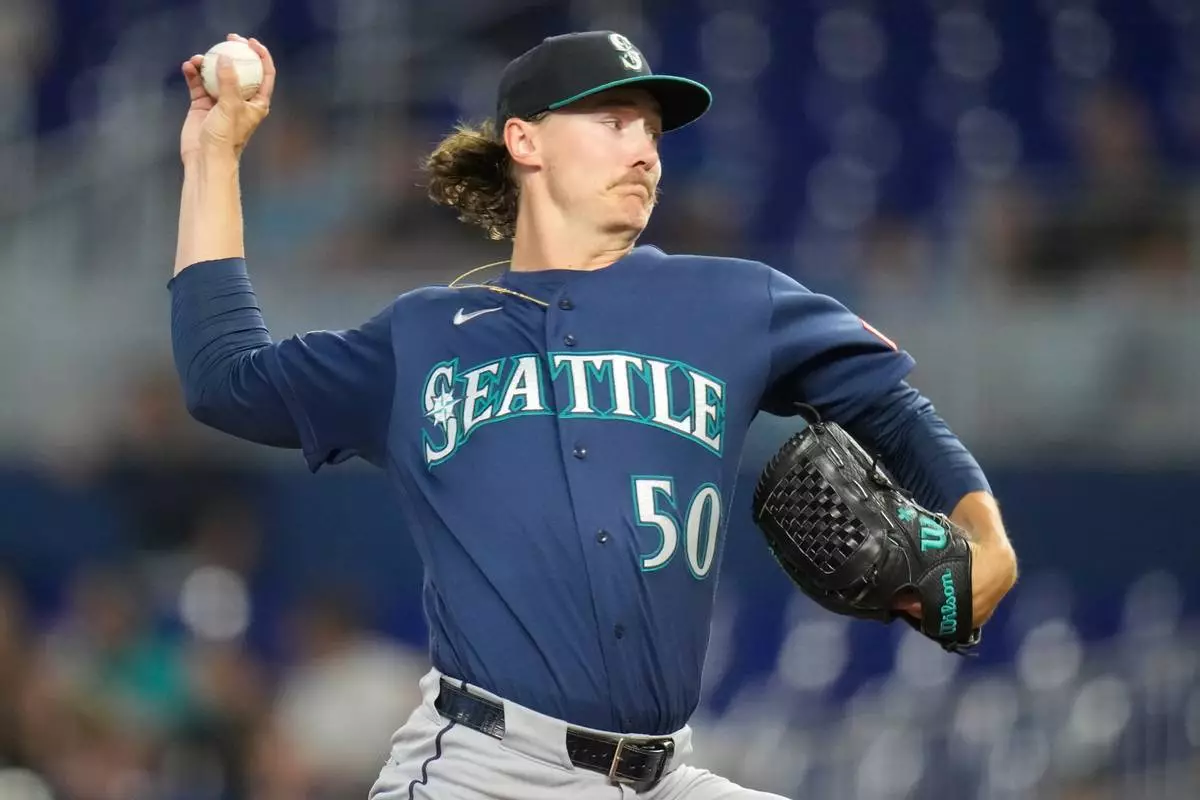
Seattle Mariners starting pitcher Bryce Miller (50) throws during the first inning of a baseball game against the Miami Marlins, Thursday, July 9, 2026, in Miami. (AP Photo/Lynne Sladky)
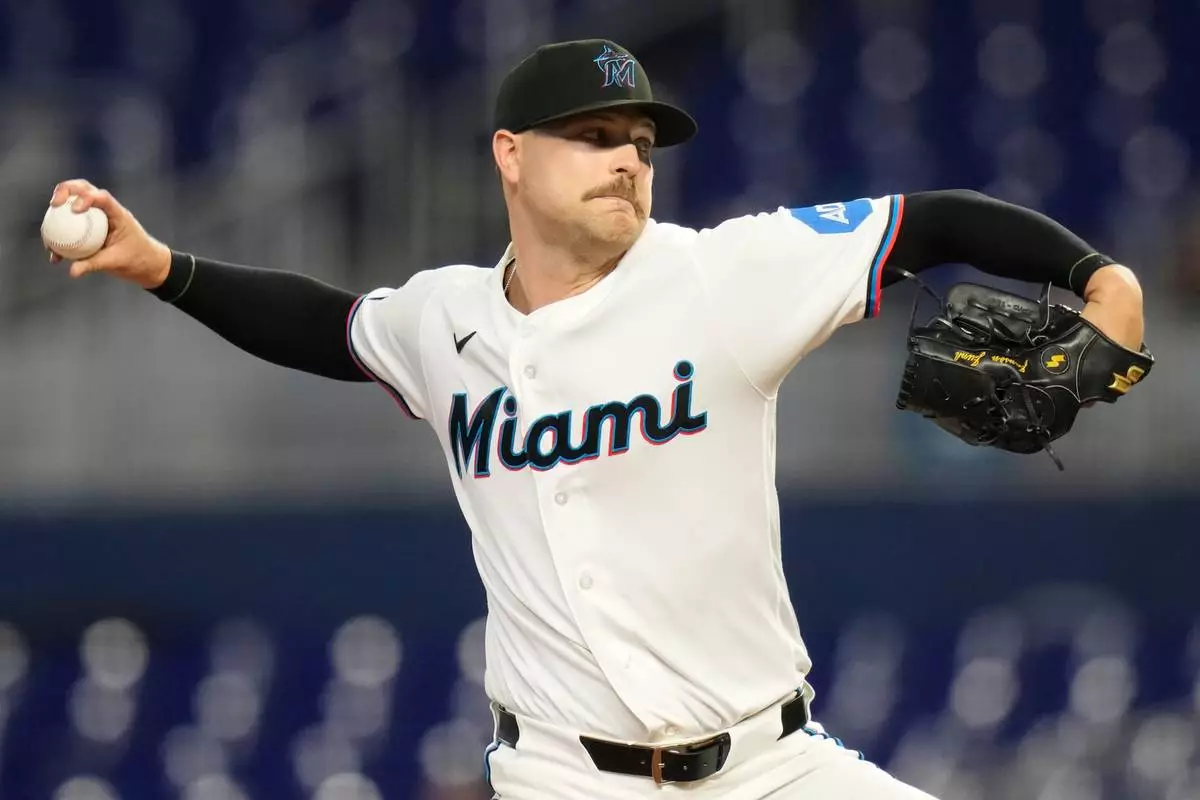
Miami Marlins starting pitcher Janson Junk throws during the first inning of a baseball game against the Seattle Mariners, Thursday, July 9, 2026, in Miami. (AP Photo/Lynne Sladky)
MIAMI (AP) — Ashleigh Hallam teaches English as a second language at her local library in Indiana. Soccer is now teaching her Spanish as a second language.
For her, this World Cup couldn't make more sense.
Hallam is among a sizable number of English-speaking people in the U.S. who are doing something these days that might be considered a bit surprising: They're watching broadcasts of World Cup matches in Spanish on Telemundo, even though they have little idea — or in some cases, no idea — what the announcers are saying.
“I can’t really understand everything they’re saying on Telemundo because they’re speaking in Spanish,” Hallam said. “But you understand what’s going on.”
The math is simple. Census figures show that about 20% of the U.S. is Hispanic, yet Telemundo points to Nielsen ratings to show that roughly half the World Cup viewers in the U.S. have watched at least some portion of some matches in Spanish. Every match of the tournament has been available for U.S. viewers in English on Fox or FS1, on Telemundo or Universo in Spanish, and there are streaming options such as Fox One or Peacock.
Among the reasons commonly cited by viewers who spoke with The Associated Press in recent days: A fascination with famed broadcaster Andrés Cantor's “¡goooooool!” call. Telemundo doesn't cut away for commercials (as Fox does) during the much-maligned hydration breaks. The broadcasts, some simply find, are more entertaining. And in other cases, it's a cost-based decision: Peacock, which includes Telemundo, is lower-priced than Fox One.
Jackson Braunius is a Michigan native who watched a U.S. game last week from a bar seat at a steakhouse in Miami Lakes, Florida. He said he speaks almost no Spanish — “I know ‘cerveza,’” he said, tapping his beer glass — but didn't mind watching on Telemundo whatsoever.
“I figured out the science here,” Braunius said. “When they’re not talking too loud, nothing is happening. When they get loud, there’s a chance. When they get real loud, it’s probably going to be a goal.”
Comedian Trevor Noah has been hosting World Cup watch parties on YouTube. He's made the switch to Spanish-language feeds, and the hydration break issue was a huge part of that decision.
“We’re seeing the players on the pitch discussing what’s happening. You see which coach is more stressed. Some players are tapping each other on the back. This is part of the game,” Noah said on one of his YouTube streams. “I feel like when you cut to ads, you lose this — you lose the stress, you lose the joy, the anticipation. So, shout out again, Telemundo: Really, really amazing coverage.”
Telemundo is hearing the praise, and has thanked English-speakers — as well as Noah directly — for lauding its coverage.
The good news for everyone is this: There seems to be more than enough viewers to go around right now. And the success of this tournament could lead to a bidding war for the 2030 World Cup, with some reporting the rights for English-speaking and Spanish-speaking television will be packaged together in that deal. That wasn't the case for this World Cup.
Fox Sports said that Monday night's Belgium-U.S. match saw a peak viewership total of around 41 million at one point, making it the “most-watched soccer telecast in U.S. history,” the network said. In other words, the final U.S. game in this World Cup had more viewers than anything in this country since the Super Bowl — with at least 45 million viewers, on average, between Fox (33 million) and Telemundo (an estimated 12 million). The most recent Super Bowl drew an average of about 125 million viewers, according to Nielsen data.
William Kennedy of Miami is married to a Colombian woman, whose native language is Spanish. He says he knows only enough Spanish to be able to order meals in restaurants. And yet, he finds himself often watching World Cup matches on Telemundo.
If Colombia was on, the Kennedy house was watching Telemundo. If Colombia — which was ousted in penalty kicks by Switzerland on Tuesday — isn't on, Kennedy finds himself usually making his way to Telemundo anyway.
“When the American commentators are doing the game, I don’t know what game they’re watching. I just don’t,” Kennedy said. “I’d rather get the excitement in Spanish because essentially what happens is they’re talking, and then they’re talking really, really fast, and then they’re getting loud and your brain is just like, ‘Oh, something’s happening — even if I don’t know what’s happening.’”
Hallam — who finds the World Cup has been a great way to bond further with her Spanish-speaking students — only became a big soccer fan a few years ago, when her daughter decided she wanted to play in a recreational league for elementary kids. The league needed coaches, so Hallam literally checked out a “coaching for dummies” book and began teaching herself the game.
She kept coaching her daughter all the way through high school. Now, she's hooked on soccer and hooked on Spanish-speaking broadcasts — and plans to keep watching, even when the World Cup ends.
“It’s just very comforting,” Hallam said. “We're really enjoyed it and I hope we get to continue. The next World Cup, we’re going to watch it just like this.”
Lamy reported from Indianapolis.
See more of AP’s World Cup coverage here
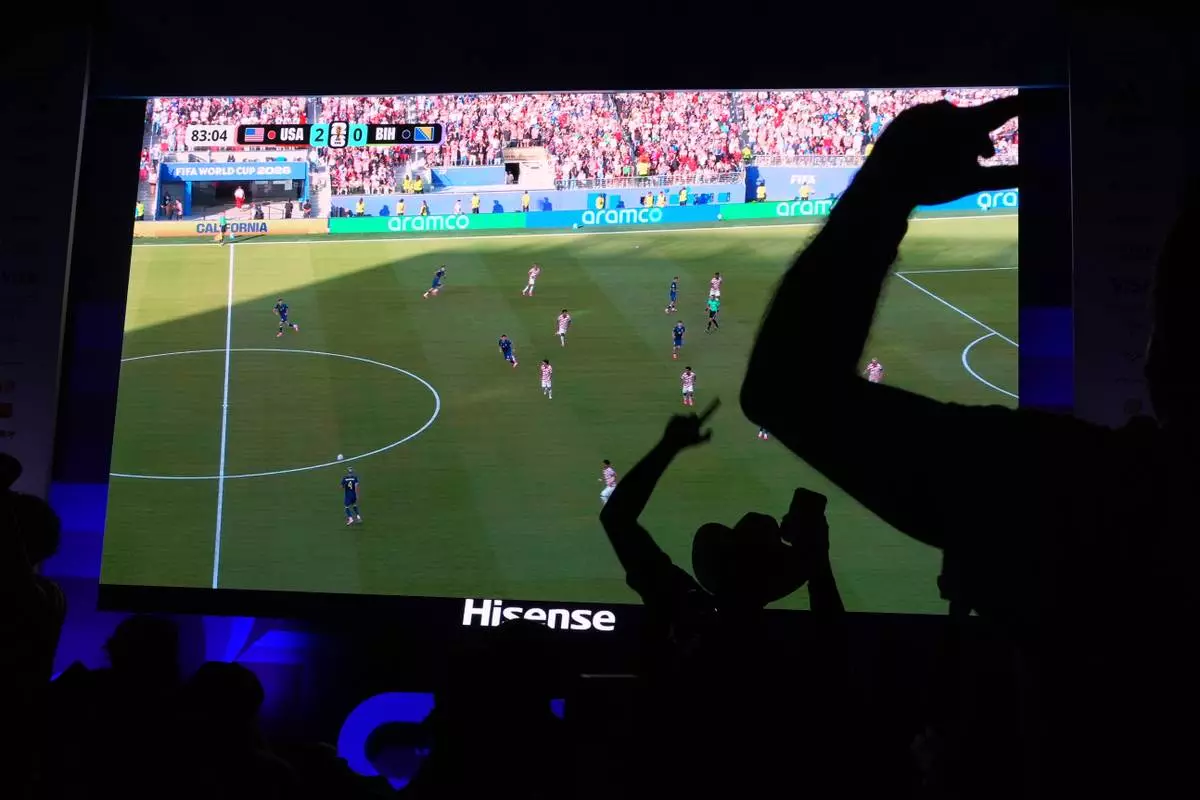
Soccer fans, including Caleb Triana, wearing a cowboy hat, celebrate the U.S. scoring its second goal as they watch a live broadcast of the World Cup round of 32 soccer match between the United States and Bosnia, Wednesday, July 1, 2026, at an official fan fest in downtown Miami. (AP Photo/Rebecca Blackwell)

Fans watch the World Cup round of 16 soccer match between the United States and Belgium, at a watch party at the Rockefeller Center fan village, Monday, July 6, 2026 in New York. (AP Photo/Adam Gray)
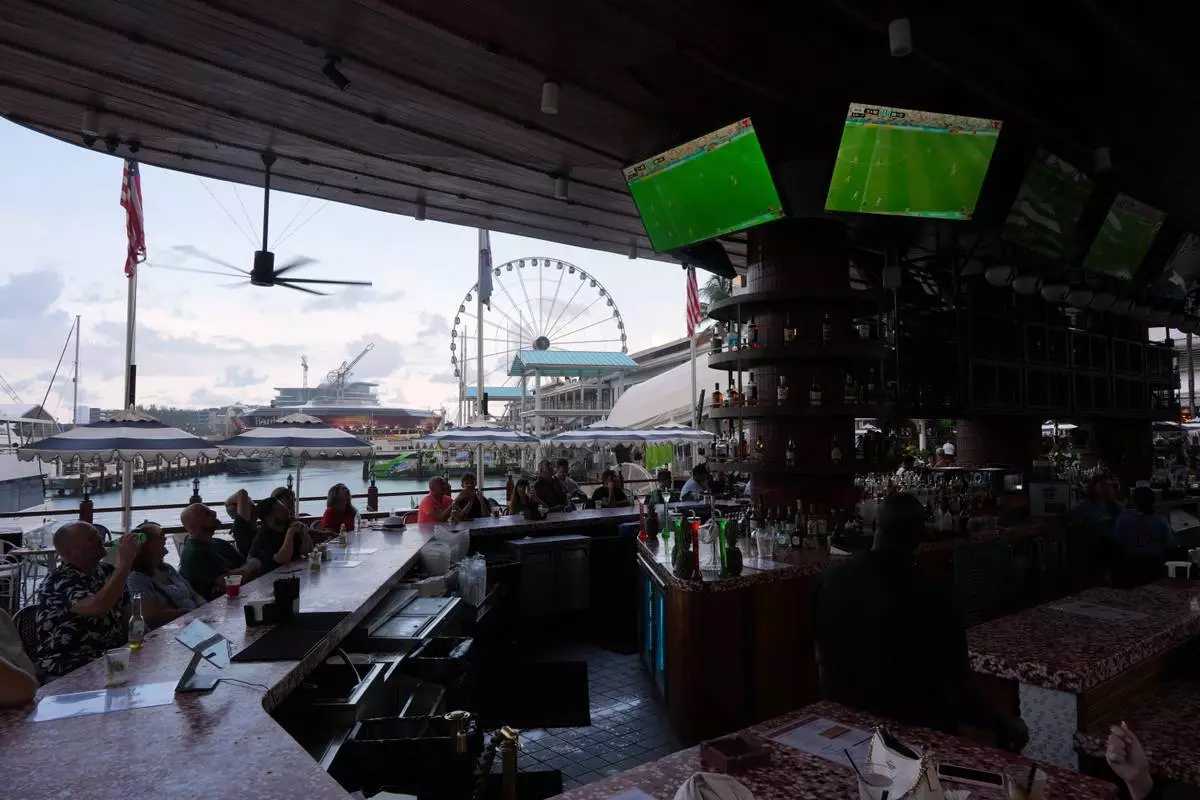
Soccer fans watch TV screens playing a World Cup round of 32 soccer match between Belgium and Senegal, at Bayside Marketplace in downtown Miami, Wednesday, July 1, 2026. (AP Photo/Rebecca Blackwell)