Former Admissions Officer Topher Bordeau shares insights on the AI-packaging trap across Bangkok, Kuala Lumpur, Hong Kong and Shanghai tour.
HONG KONG, July 10, 2026 /PRNewswire/ -- As generative AI becomes more widespread and academic systems across Asia grow increasingly standardised, the selection criteria at the world's top universities are undergoing a significant shift. In 2026, the number of "perfect-score" applications submitted by Asian students to Ivy League institutions reached a new high — yet admission rates at these institutions remain stubbornly low, hovering between just 4% and 7%. [1] [2]
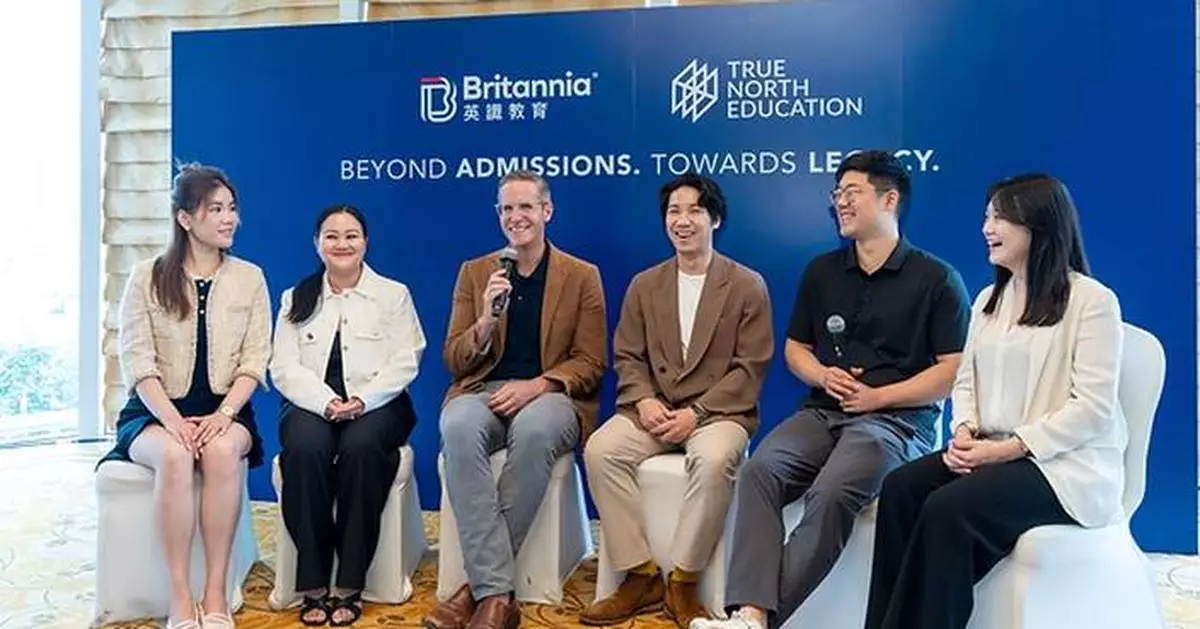
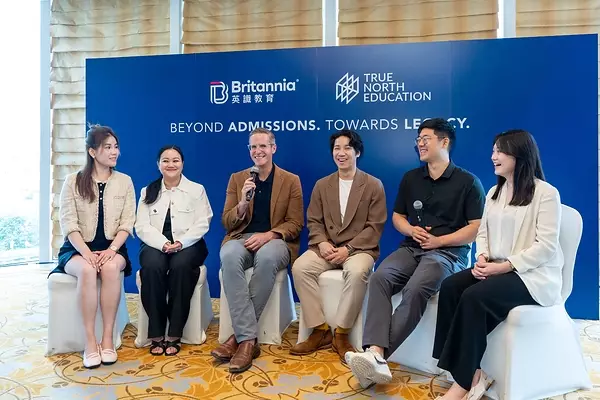
The Asia Road Show, organised by True North Education and spanning four hubs—Bangkok, Kuala Lumpur, Hong Kong, and Shanghai—has concluded, drawing over a thousand parents and students across the four cities.
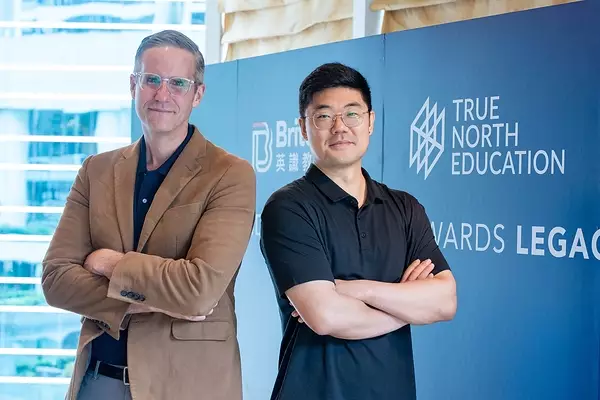
True North Education invited Mr Topher Bordeau, a former senior Ivy League admissions officer with 20 years of experience who has personally reviewed over 15,000 application files, to deliver the keynote address.
During the tour, Bordeau shared a candid assessment: roughly 95% of applications are rejected largely because they rely too heavily on AI-polished, formulaic packaging. This level of over-standardisation can strip an application of a student's individuality. In the eyes of admissions officers, these carefully engineered "perfect resumes" often read as impersonal and interchangeable — one reason many high-achieving students face rejection despite strong academic records.
Addressing a Common Blind Spot: The Overlooked Power of Recommendation Letters
Edward Lee, Managing Partner at True North Education, addressed a specific blind spot common among Hong Kong students. He noted that in planning their applications, Hong Kong students often devote the vast majority of their energy to academic scores while overlooking the strategic value of strong recommendation letters.
"Secondary school teachers in Hong Kong are often stretched thin, which means local recommendation letters tend to rely on rigid, generic templates. Admissions officers read hundreds of these letters a day, and generic praise carries little weight," Lee said.
"Our senior consulting team encourages students to take the initiative — to proactively build genuine, organic relationships with teachers and mentors. This is one of the most effective ways to stand out among tens of thousands of files."
Standing Out in the AI Era: The Power of Authentic Voice
During the panel discussion, Bordeau and Lee examined the impact of generative AI on personal statements in 2026.
Bordeau noted that admissions officers can easily detect AI-assisted writing, since it tends to sound generic and lacks the texture of real personal experience. He emphasised that strong personal essays are built on authentic voice and lived experience. For example, broad, sweeping topics like "solving climate change" routinely fall flat, while a narrower, more specific focus — such as a genuine fascination with a particular battery technology — is far more likely to capture an admissions officer's attention.
When "Flawless" Isn't Enough: The Cost of Conformity for Hong Kong Families
Reflecting on this shift in Ivy League admissions standards, Samuel Chan, Managing Partner at True North Education and Founder of Britannia, who has worked with thousands of Hong Kong families, observed: "Many middle-class and elite Hong Kong families hold onto the belief that a resume must be engineered around a single, outcome-driven track. Children are pushed toward competitions and grades from an early age. The cost of this approach can be significant."
"Parents invest considerable resources — financial and emotional — often unaware that these highly engineered, formulaic resumes can come across as impersonal to Ivy League admissions officers," Chan added.
According to data previously disclosed from the National Centre for Education Statistics and the Harvard University litigation[3], 40% to 50% of all Asian applicants to top-tier universities rank in the top 1% to 2% nationally in standardised test scores (SAT/ACT).
"When everyone has a perfect score, perfect scores lose their screening value," Chan supplemented, noting that applicants relying solely on academic perfect scores face an ultimate acceptance rate of less than 8%. Asian applicants are frequently rated lower on subjective traits such as leadership, courage, humour, or empathy — largely because their essays are overly polished and formulaic, lacking authentic personal voice.
Regional Perspectives: Southeast Asia and Mainland China
Addressing the Southeast Asian and East China markets covered in the tour, True North Education's regional partners offered localised analysis.
Ronald Mak, Managing Partner at True North Education, overseeing the Thailand and Malaysia markets, noted that while enthusiasm for Ivy League admissions among elite families is at a historic high, their strategic approach often carries a specific bias: "Bangkok and Kuala Lumpur have well-established, top-tier international school networks, and students there tend to have strong bilingual capabilities and global exposure. But local families often view Ivy League admission as a status symbol, leaning too heavily on school prestige and conventional extracurricular frameworks."
"Parents often overlook opportunities to nurture their child's intrinsic interests, or to translate Southeast Asia's distinct cultural context into a genuine personal advantage in university applications. This remains a missed opportunity in the current admissions cycle. Thai and Malaysian families should recognise that Ivy League universities are looking for original thinkers — not simply high-achieving students who fit a familiar international-school mould."
Amond Chun, Managing Partner of Britannia, dissected the extreme realities and shifting paradigms within Shanghai and other mainland Chinese cities:
"The competition within the Gaokao and domestic higher education has reached a white-hot, zero-sum bottleneck. Concurrently, according to the latest industry data, a staggering 94% of overseas Chinese students choose to return to mainland China for employment and career development post-graduation."
"Faced with domestic enterprises demanding increasingly stringent credentials and backgrounds, returnee talents can no longer coast simply on a foreign degree. In the past, parents blindly piled up grandiose research projects or multinational internships; today in 2026, admissions officers and top corporate recruiters alike have long developed aesthetic fatigue toward this." Chun analysed.
Own Your Narrative, Not Your Imperfections
Families navigating the Ivy League admissions process shouldn't let fear of imperfection drive their strategy. True North Education moves away from cookie-cutter formulas and is instead committed to helping every student uncover and tell their own genuine story.
During this critical window of university planning, rather than shaping children into formulaic applicants, families are far better served by professional guidance that helps spark real curiosity and passion in their child. This is the most effective path to the world's top academic institutions.
| [1] 'Ivy Leagues Complete 2026 Overview for Students and Parents', https://www.scholaro.com/db/News/ivy-leagues-complete-2026-overview-for-students-and-parents-253 |
| [2] Harvard College Admissions Data, https://college.harvard.edu/admissions/admissions-statistics |
| [3] 'Supreme Court Opinion: Students for Fair Admissions v. Harvard', https://www.supremecourt.gov/opinions/22pdf/20-1199_hgdj.pdf |
[1] 'Ivy Leagues Complete 2026 Overview for Students and Parents', https://www.scholaro.com/db/News/ivy-leagues-complete-2026-overview-for-students-and-parents-253
[2] Harvard College Admissions Data, https://college.harvard.edu/admissions/admissions-statistics
[3] 'Supreme Court Opinion: Students for Fair Admissions v. Harvard', https://www.supremecourt.gov/opinions/22pdf/20-1199_hgdj.pdf
About Britannia
Founded in 2013, Britannia StudyLink is a leading UK education consultancy providing comprehensive, one-stop advisory services for students pursuing studies in the United Kingdom. Its services cover school selection, applications, entrance exams, interviews, visa arrangements, and pre-departure support.
Representing over 300 UK primary and secondary private schools and covering nearly 80% of UK boarding schools, Britannia has become a trusted partner for families in Hong Kong, with one in every two Hong Kong students attending UK boarding schools applying through the consultancy. The organisation maintains close ties with UK institutions and served as a key communication bridge during the COVID-19 pandemic. In 2021, it became the first and only education consultancy to receive both the "Hong Kong Service Brand" and "Hong Kong Premier Service Brand" awards. Headquartered in Hong Kong, Britannia operates offices across Asia and Europe.
Website: www.britannia-study.com
About True North Education
True North Education, co-founded by Samuel Hwang and Danny Hwang, is a premier US and UK admissions consultancy backed by strategic investment from Gaw Capital. With over 15 years of expertise in elite admissions and talent development, the team has guided students to Ivy League, Oxbridge, and Top 30 U.S. universities, achieving a 95% admissions success rate.
The organisation combines admissions consulting with research mentorship, leadership training, and holistic development programs for students from primary through university level. With offices across Asia and Europe, and the founding of True North International School in Hanoi. True North is committed to nurturing globally minded future leaders.
Website: https://truenorth-edu.com
CONTACT:
| Jessica Lai | Ben Wan |
Jessica Lai
tel:9500 6379
support@britannia-study.com
Ben Wan
tel:5500 3655
info@truenorth-edu.com
** This press release is distributed by PR Newswire through automated distribution system, for which the client assumes full responsibility. **
Beyond the Perfect Score: Why Elite Asian Applicants Are Being Overlooked by Ivy League Admissions
Beyond the Perfect Score: Why Elite Asian Applicants Are Being Overlooked by Ivy League Admissions