Global transport and logistics leader DSV expands its Asia-Pacific headquarters in Hong Kong
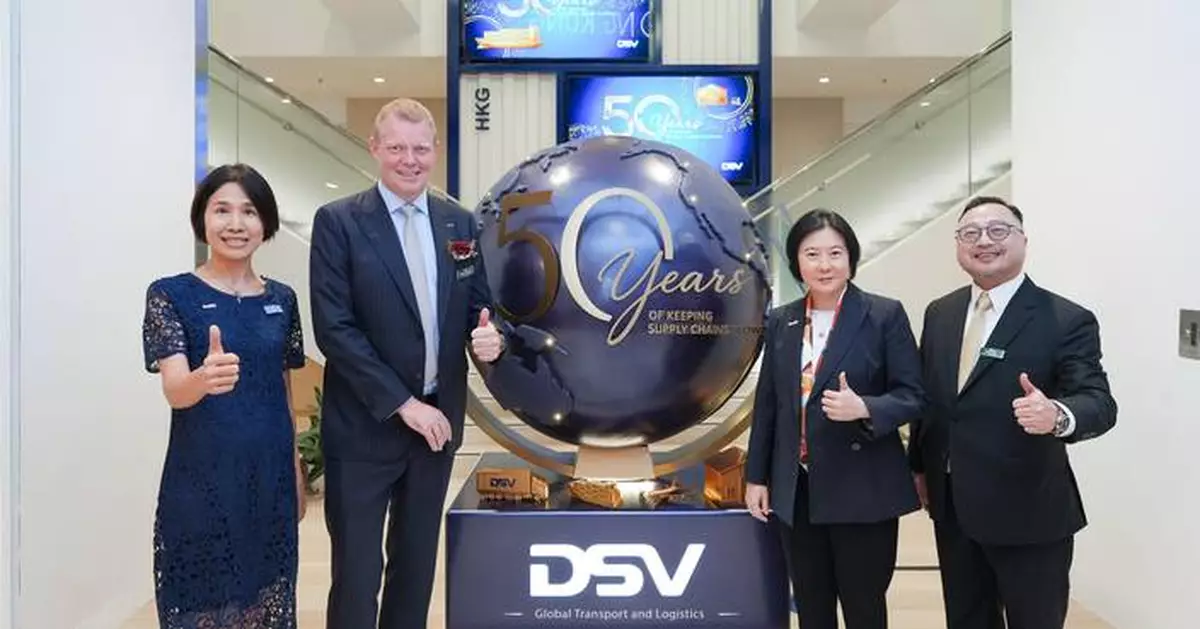
Invest Hong Kong (InvestHK) today (July 10) announced that global transport and logistics leader DSV has completed the expansion of its Greater China and Asia-Pacific regional headquarters in Hong Kong. Marking its 50th anniversary today, the Danish company's expanded operations - bolstered by its acquisition of DB Schenker last year - now feature a scaled-up workforce of over 1 000 employees across 14 operating locations in the city, further reinforcing Hong Kong's role as a world-class logistics gateway and a vital "super connector" linking the Chinese Mainland with global markets.
The Director-General of Investment Promotion, Ms Alpha Lau, said, "Strategically located, Hong Kong seamlessly connects global logistics with the manufacturing powerhouse and vast consumer base of the Guangdong-Hong Kong-Macao Greater Bay Area, allowing businesses to manage complex, time-sensitive supply chains with unmatched efficiency. Beyond this world-class connectivity, our robust trade financing, legal systems, and intellectual property protections offer vital value-adds that enable cross-border commerce to thrive like nowhere else in the world."
The Chief Executive Officer of Air & Sea in Asia Pacific at DSV, Mr Jakob Jeppesen, said, "Hong Kong's world-class infrastructure, free port status, and strategic proximity to the Chinese Mainland make it an ideal logistics gateway for Asia-Pacific expansion. Looking ahead, DSV is committed to advancing automation by harnessing the power of AI and robotics to drive efficiency and productivity, while investing in talent development to nurture the next generation of logistics professionals in Hong Kong."
InvestHK has been an important partner in DSV's expansion in Hong Kong. In addition to connecting the company with local and overseas industry stakeholders, InvestHK provided advisory services on regulatory procedures and market integration, helping DSV connect smoothly to a larger logistics ecosystem.
DSV is a global leader in transport and logistics, moving millions of shipments each year by air, sea, road and rail. Following its acquisition of DB Schenker - completed in 2025 and the largest transaction in its history - DSV has close to 160 000 employees over 90 countries/regions, with a clear commitment to achieving net-zero emissions by 2050. In Hong Kong, its operations have evolved into a regional headquarters supporting Greater China and Asia Pacific, expanding beyond traditional air and sea freight into multimodal solutions, less-than-container load services and specialised logistics, including its new cold chain facility in Fanling.
For more information about DSV, please visit www.dsv.com.
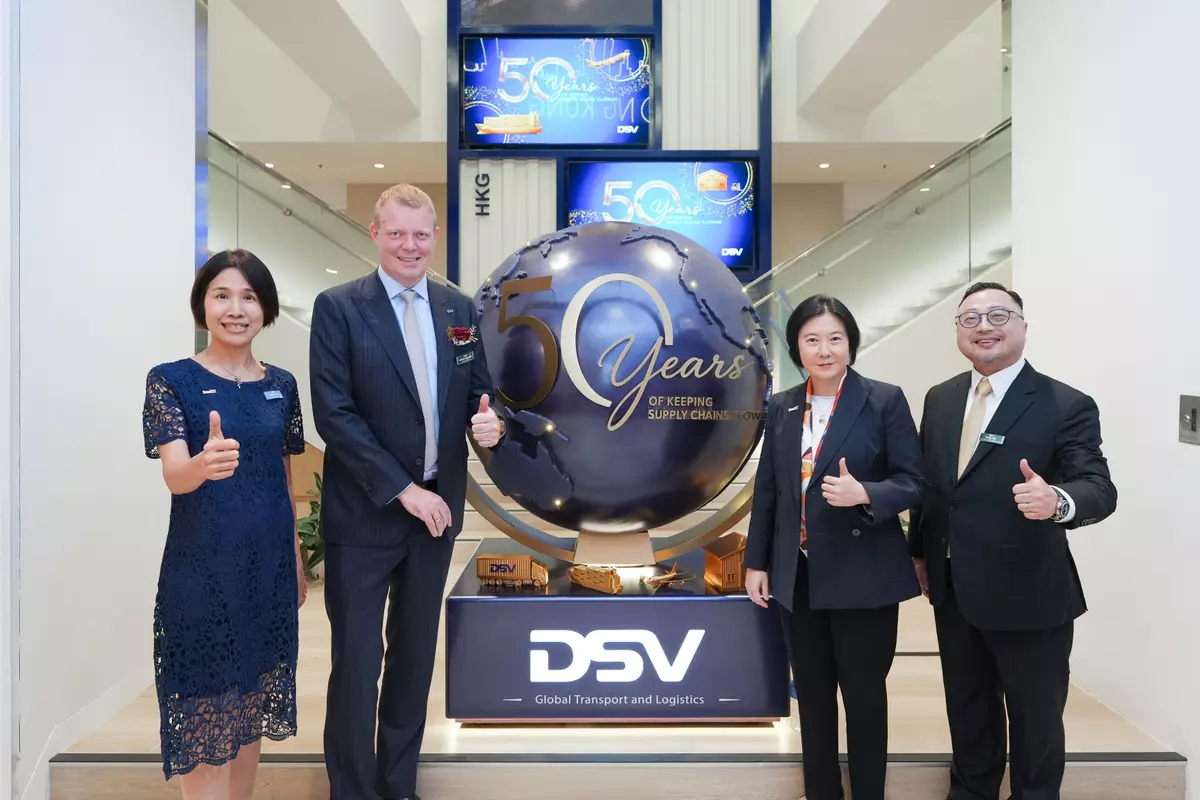
Global transport and logistics leader DSV expands its Asia-Pacific headquarters in Hong Kong Source: HKSAR Government Press Releases
DH investigates hospital-acquired case of Legionnaires' disease
The Centre for Health Protection (CHP) of the Department of Health (DH) said today (July 10) it is investigating a nosocomial (i.e. hospital-acquired) Legionnaires' disease (LD) case, and reminded the public of the importance of using and maintaining properly designed man-made water systems, adding that susceptible groups should strictly observe relevant precautions.
The case involves an 89-year-old male. He has been hospitalised at Hong Kong Sanatorium & Hospital (HKSH) since April 1 for his underlying illnesses, during which he occasionally experienced symptoms such as sputum production and shortness of breath. His shortness of breath worsened on July 6, prompting hospital staff to collect a respiratory specimen on the same day. The specimen collected tested positive for Legionella pneumophila (non-serogroup 1) by the Public Health Laboratory Services Branch under the CHP. The patient's condition improved following antibiotic treatment and is currently in stable condition.
Since the patient was hospitalised at HKSH throughout the incubation period (from June 26 to July 4), the CHP considered that this is a nosocomial case and conducted an environmental investigation at the hospital in order to determine the source of the infection.
A preliminary investigation revealed that, the patient had been admitted to a single-occupancy room in the general ward during the incubation period. The CHP collected 10 water samples and six environmental samples from the water tanks of the concerned building and the patient's ward. The results of laboratory testing are pending.
The CHP has instructed HKSH to suspend the use of the shower rooms in the ward concerned, thoroughly disinfect the water supply systems of the concerned ward and install bacterial filters as soon as possible. The CHP has also provided the hospital with health advice and medical surveillance recommendations, and will continue to closely monitor the implementation of these measures.
In addition, the CHP is arranging for other patients who were hospitalised on the same floor as the patient during the same period to undergo medical surveillance. No additional LD cases have been identified among them so far.
The CHP's investigation and follow-up work are ongoing.
Men, people aged over 50, smokers, alcoholics and persons with weakened immunity are more susceptible to LD. Some situations may also increase the risk of infection, including poor maintenance of water systems; living in areas with old water systems, cooling towers or fountains; using electric water heaters, whirlpool spas or hot water spring spas; and recent stays in hotels or ships.
Legionellae are found in various environmental settings and grow well in warm water (20 to 45 degrees Celsius). They can be found in aqueous environments such as water tanks, hot and cold water systems, cooling towers, whirlpool spas, water fountains, humidifiers and home respiratory devices that support breathing. People may become infected when they breathe in contaminated droplets (aerosols) and mist generated by artificial water systems, or when handling garden soil, compost and potting mixes.
Immunocompromised persons should:
- Use sterile or boiled water for drinking, tooth brushing and mouth rinsing;
- Avoid using humidifiers, or other mist- or aerosol-generating devices; and
- If using humidifiers, or other mist- or aerosol-generating devices, fill the water tank with only sterile or cooled freshly boiled water, and not water directly from the tap. Also, clean and maintain humidifiers/devices regularly according to manufacturers' instructions. Never leave stagnant water in a humidifier/device. Empty the water tank, wipe all surfaces dry, and change the water daily.
The public should observe the health advice below:
- Observe personal hygiene;
- Do not smoke and avoid alcohol consumption;
- Strainers in water taps and shower heads should be inspected, cleaned, descaled and disinfected regularly or at a frequency recommended by the manufacturer;
- If a fresh-water plumbing system is properly maintained, it is not necessary to install domestic water filters. Use of water filters is not encouraged as clogging occurs easily, which can promote growth of micro-organisms. In case water filters are used, the pore size should be 0.2 micrometres (µm) or less and the filter needs to be changed periodically according to the manufacturer's recommendations;
- Drain and clean water tanks of buildings at least quarterly;
- Drain or purge for at least one minute infrequently used water outlets (e.g. water taps, shower heads and hot water outlets) and stagnant points of the pipework weekly or before use;
- Seek and follow doctors' professional advice regarding the use and maintenance of home respiratory devices and use only sterile water (not distilled or tap water) to clean and fill the reservoir. Clean and maintain the device regularly according to the manufacturer's instructions. After cleaning/disinfection, rinse the device with sterile water, cooled freshly boiled water or water filtered with 0.2 µm filters. Never leave stagnant water in the device. Empty the water tank, keep all surfaces dry, and change the water daily; and
- When handling garden soil, compost and potting mixes:
- Wear gloves and a face mask;
- Water gardens and compost gently using low pressure;
- Open composted potting mixes slowly and make sure the opening is directed away from the face;
- Wet the soil to reduce dust when potting plants; and
- Avoid working in poorly ventilated places such as enclosed greenhouses.
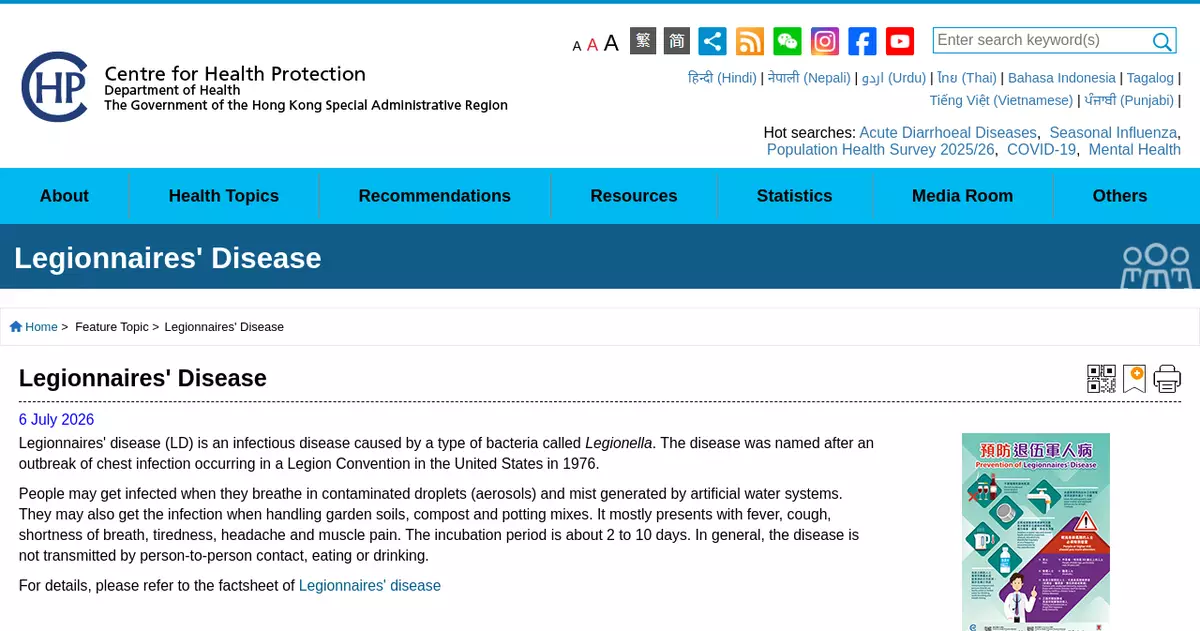
The public may visit the CHP'sLD page, theCode of Practice for Prevention of LDand theHousekeeping Guidelines for Cold and Hot Water Systems for Building Managementof the Prevention of LD Committee, and the CHP'srisk-based strategyfor prevention and control of LD.
Additionally, as smokers and alcoholics are more susceptible to LD, the Government urgesmembers of the public to quit smoking and avoid drinking. Members of the public may call the DH Integrated Smoking Cessation Hotline at 1833 183, which is answered by registered nurses who provide professional counselling and referral to a wide range of free smoking cessation services. The public may also visit the smoking cessation thematic website (www.livetobaccofree.hk) for more information on smoking cessation. The DH has also developed and promulgated the Alcohol Screening and Brief Intervention tool to primary healthcare service providers to facilitate the early identification and management of at-riskdrinkers. For information on alcohol-related harm, please visit the DH'sChange for Health website.
Source: AI-found images