CHICAGO (AP) — Athletics slugger Nick Kurtz, who was set to start at first base for the American League at next week's All-Star Game, went on the 10-day injured list Saturday with a right thumb sprain.
The move is retroactive to Friday. Kurtz did not play in the Athletics' 14-1 loss to the White Sox in Chicago.
In a corresponding move, the Athletics recalled catcher Brian Serven from Triple-A Las Vegas before Saturday's game against the White Sox.
Neither Kurtz nor Athletics manager Mark Kotsay was available to speak to reporters.
Kurtz is batting .266 with 20 home runs, 66 RBIs and a league-leading 76 walks. The 23-year-old was the AL rookie of the year last season, when he batted .290 with 36 homers and 86 RBIs.
He landed on injured list for the second time in his career after being sidelined with a strained left hip flexor in May 2025.
Across parts of four seasons, Serven is a career .188 hitter with six home runs and 20 RBIs. In 55 games with Las Vegas this year, Serven is hitting .308 with 18 doubles, seven home runs and 41 RBIs.
AP MLB: https://apnews.com/hub/mlb

Athletics' Nick Kurtz walks to the dugout after striking out during the fourth inning of a baseball game against the Miami Marlins, Sunday, July 5, 2026, in West Sacramento, Calif. (AP Photo/Scott Marshall)
DUBAI, United Arab Emirates (AP) — U.S. and Iranian leaders traded threats on Saturday as the interim deal to end the war buckled under crossfire in the Middle East and efforts continued to keep talks going.
President Donald Trump overnight on social media threatened further missile attacks against Iran, after the funeral of Supreme Leader Ayatollah Ali Khamenei saw open calls for the U.S. leader’s killing.
Later, Iranian Supreme Leader Mojtaba Khamenei vowed that Iranians would continue to avenge his father's death. Such revenge “is the will of our nation and must certainly be carried out," he said in remarks carried by state television. He still has not been seen publicly since the war began on Feb. 28 with strikes that killed his father.
The exchange of threats followed days of U.S. airstrikes targeting Iran, sparked by Iran's attacks on three ships in the strait, and Iranian retaliatory fire targeting Arab nations in the region.
Tehran has insisted that the strait remain under its control and that it be allowed to charge ships moving through it, a stance it took after the war began. Senior U.S. officials have demanded that Iran make a public statement saying the Strait of Hormuz is open and ships won’t be attacked.
Iranian Foreign Minister Abbas Araghchi on Saturday said he met with his counterpart in Oman, located on the other side of the strait, to discuss the waterway and “appropriate mechanisms for ensuring the safe passage of ships.” Oman said it and Iran agreed to keep talking “at the technical and political levels.”
Trump has declared the ceasefire over but said the U.S. would continue negotiations.
A thousand “missiles are Locked and Loaded and aimed at the Islamic Republic of Iran, with thousands more to immediately follow, should the Iranian Government act on its threat,” Trump wrote on his website.
He said he was responding to threats “to assassinate, or attempt to assassinate” him. During Khamenei's funeral, mourners held posters or banners calling for Trump to be killed along with Israeli Prime Minister Benjamin Netanyahu. Iran buried Khamenei, 86, this week.
Trump added that the U.S. military would “completely decimate and destroy all areas of Iran — PRAISE BE TO ALLAH!”
Trump has repeatedly invoked the name of God in Arabic, and threatened to destroy Iran’s very civilization. The Council on American-Islamic Relations, an advocacy group, has criticized Trump’s “deranged mocking of Islam.”
Iran's foreign minister accused the U.S. of violating the interim deal by ending waivers allowing Iran to sell crude oil on the open market in U.S. dollars. Washington ended them in response to the attacks on ships in the strait.
“Reality check: There can only be mutual compliance,” Araghchi wrote on X.
The world for decades has considered the strait an international waterway. The U.S. now urges mariners to transit on a southern route through Oman’s territorial waters. Iran has said the strait must be under its sole control and that vessels should begin paying fees to Tehran.
About a fifth of all traded oil and natural gas passed through it before the war began. Iran’s grip on the strait during the war led to a global energy crisis, though oil prices have sharply dropped since wartime highs of $120 a barrel.
Tehran's diplomat at the United Nations said on Friday that any activity in the strait, including its opening or demining operations, “rests exclusively with Iran.”
U.S. officials, speaking on condition of anonymity about the current situation with Iran, said the resumption of strikes this week came after what they described as a rogue faction of Iranian hard-liners tried to sabotage the ceasefire.
However, Iran has insisted its theocracy is unified under the new supreme leader.
After the U.S. wrapped up its latest strikes on Thursday, more attacks reportedly hit Iran, raising questions about who else may be targeting the Islamic Republic.
Israel didn't claim them, meaning the Gulf Arab states may have launched them, likely as a means to deter Iran from attacking them again. Iran on Thursday retaliated for U.S. strikes by targeting Bahrain, Jordan, Kuwait and Qatar.
The strikes in Iran over two days killed at least 17 people and wounded 115 others, Iranian Health Ministry spokesperson Hossein Kermanpour said.
Price and Weissert reported from Washington. Associated Press writer Sam Metz in Ramallah, West Bank, contributed to this report.
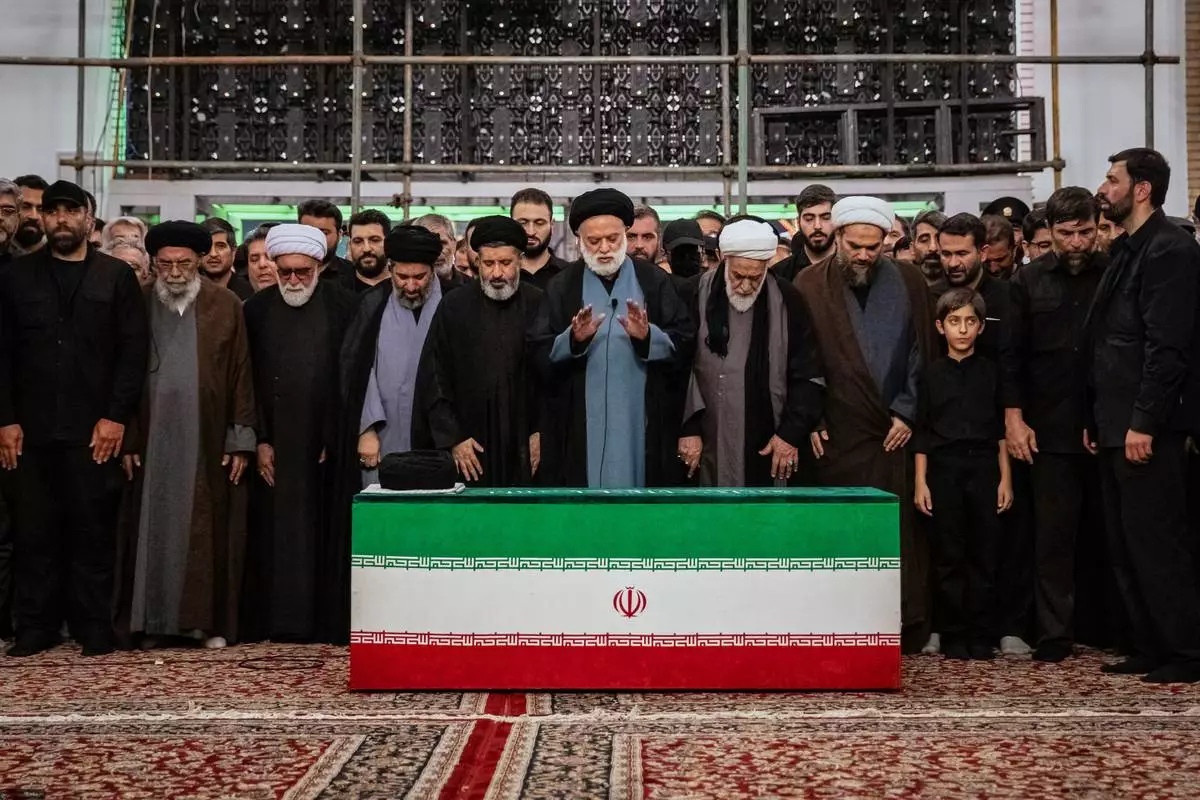
Mostafa Khamenei, center, brother of Iran's new Supreme Leader Mojtaba Khamenei, leads a prayer over the coffin of his late father, Iranian Supreme Leader Ayatollah Ali Khamenei before his burial at the Imam Reza Shrine in Mashhad, northeastern Iran, Thursday, July 9, 2026. (Office of the Iranian Supreme Leader via AP)
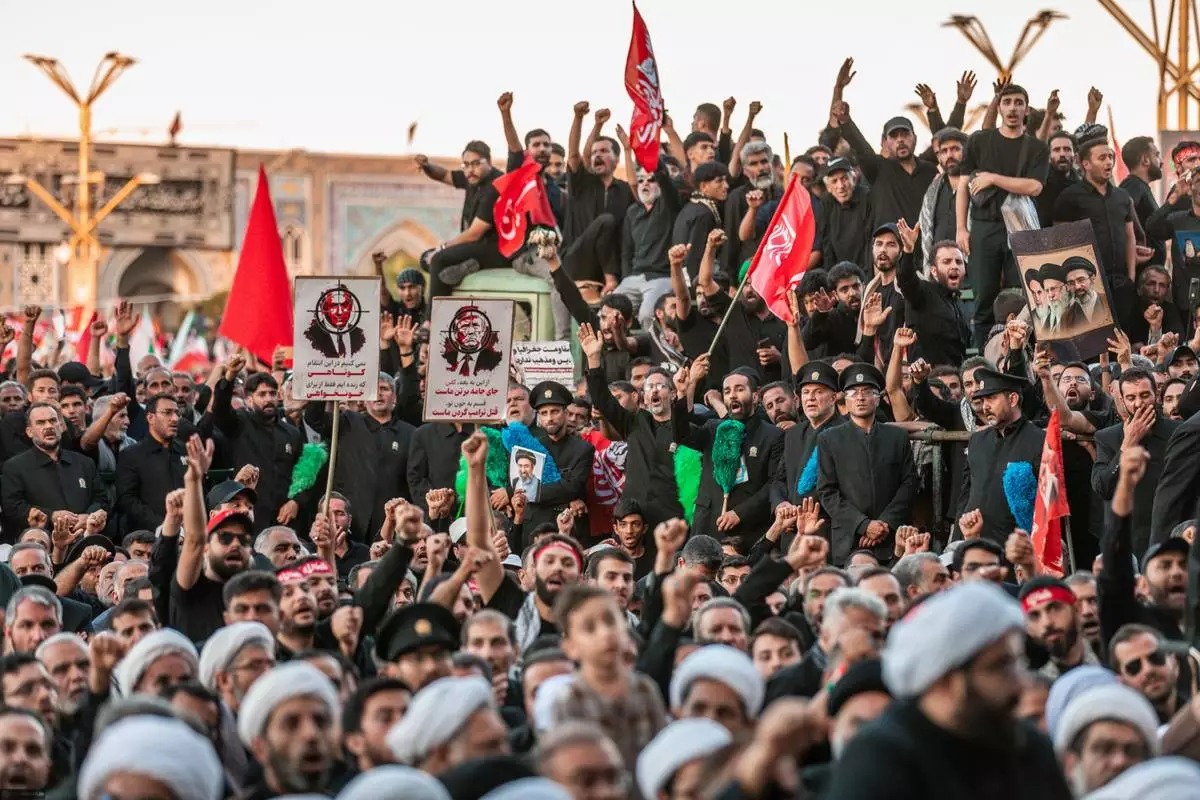
In this photo released by Iran's Supreme Leader's office, mourners chant and raise their fists during the final funeral ceremony for the late Iranian Supreme Leader Ayatollah Ali Khamenei at the Imam Reza Shrine before his burial in Mashhad, northeastern Iran, Thursday, July 9, 2026. (Office of the Iranian Supreme Leader via AP)
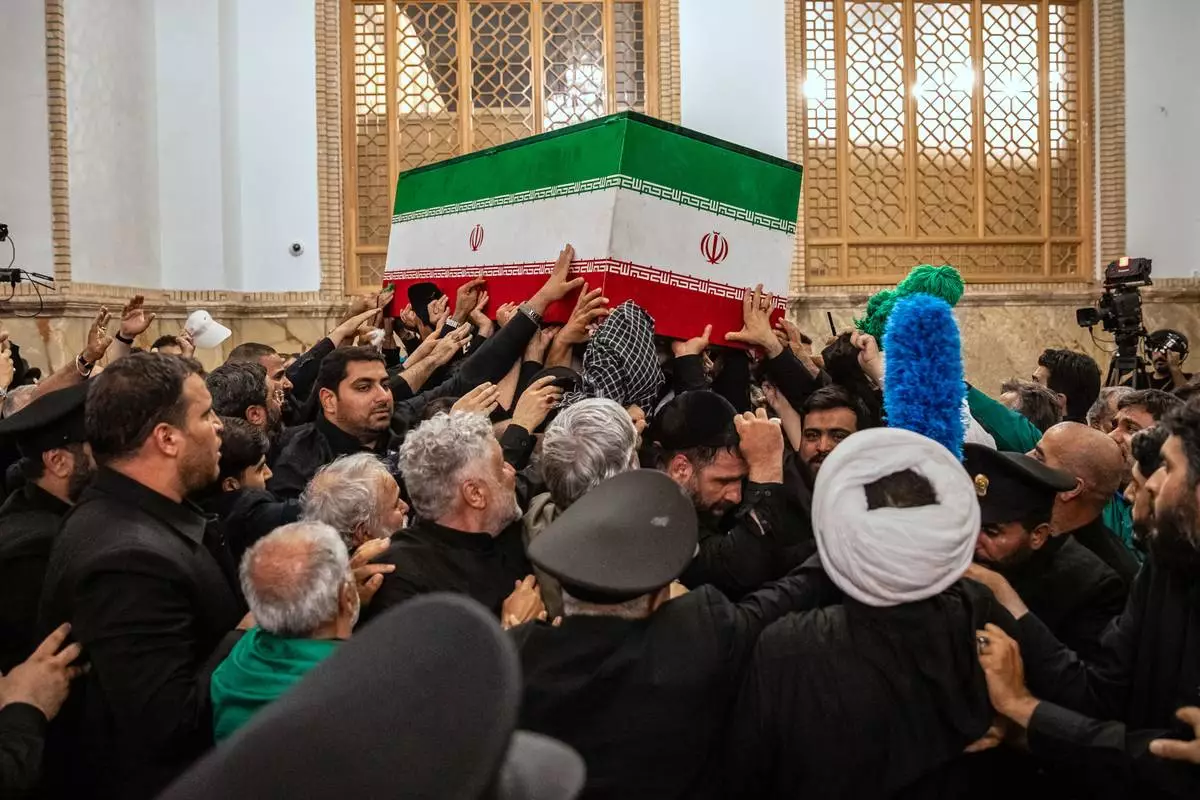
In this photo released by Iran's Supreme Leader's office, mourners carry the coffin of the late Iranian Supreme Leader Ayatollah Ali Khamenei above the crowd for the final prayer before his burial at the Imam Reza Shrine in Mashhad, northeastern Iran, Thursday, July 9, 2026. (Office of the Iranian Supreme Leader via AP)