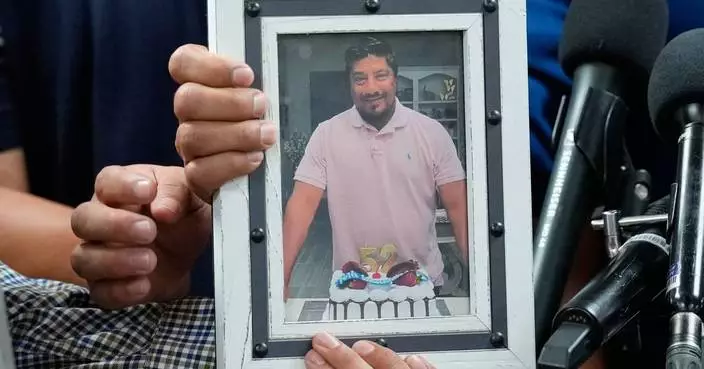
MIAMI (AP) — Rebecca Blackwell is an AP photojournalist based in Miami. Before moving to South Florida in 2021, she spent seven years working in Mexico and a decade in West Africa. She has covered multiple World Cups and Olympics for The Associated Press, as well as major news stories in the U.S. and internationally.
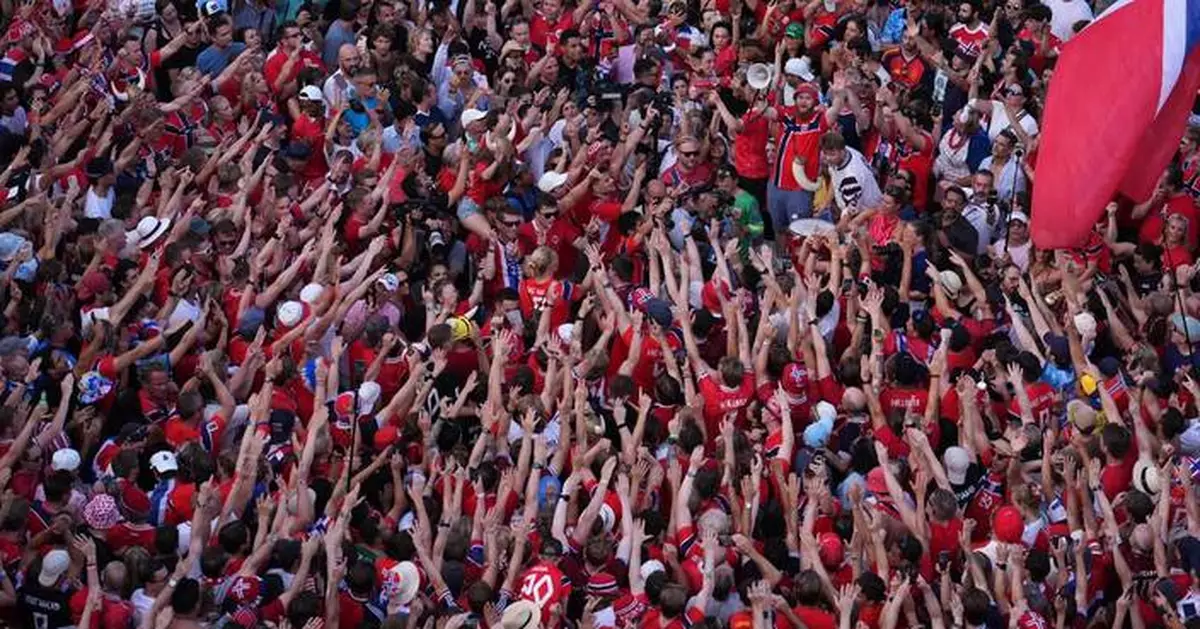
One of the most fun aspects of covering a World Cup for me is witnessing the jovial and inclusive celebrations by fans from so many different countries. With my own country being a host nation, it’s been great to see more Americans getting to join in and appreciate the unique vibe that makes the World Cup such a special experience. The Norway fans are one of the groups that have really become a sensation with their Viking row performed by dozens or hundreds of red-clad fans at once. As soon as I knew Norway was going to play in Miami, I started watching social media for any sign of a planned gathering. When an announcement popped up about two Viking rows in Miami Beach the day before Norway's quarterfinal loss Saturday to England, I knew I wanted to cover it.
I wasn’t really sure what to expect, but I knew it would likely be crowded and chaotic. I packed two cameras and a variety of prime lenses, ranging from a 14mm to a 135. The first row of the day was attended by Miami Beach officials. The crowd was dense, particularly with spectators, but I was able to climb up on a city fire truck to get wide shots of fans rowing along with the mayor.
After the afternoon row, I stuck around a few hours for the evening row, hoping it would give me a chance for different shots and maybe some nice evening light. As the time approached, the crowd got tighter and tighter without it being clear where the center would be. With hundreds of Norway fans ready to participate and hundreds of spectators crushing in around them with cellphones raised, I realized it was going to be a struggle to get a position on the ground where I could make a picture that conveyed the scale of the crowd or put them in the context of Miami Beach.
As the chanting began, I decided my other strategy was the better option, and slowly worked my way back out of the dense crowd, circling around to a building I had spotted earlier. Some fans who were staying there let me go up to the roof with them and from there I was able to shoot wide shots, showing the fans filling Ocean Drive, with palm trees and the beach behind, as well as tighter shots of them performing their chants and rows.
This image works because of how tightly packed the crowd is, the sea of similar red shirts, and especially the moment of so many people having their arms outstretched simultaneously, pointed toward the drummer and the man with the megaphone leading the chant.
See more of AP’s World Cup coverage here
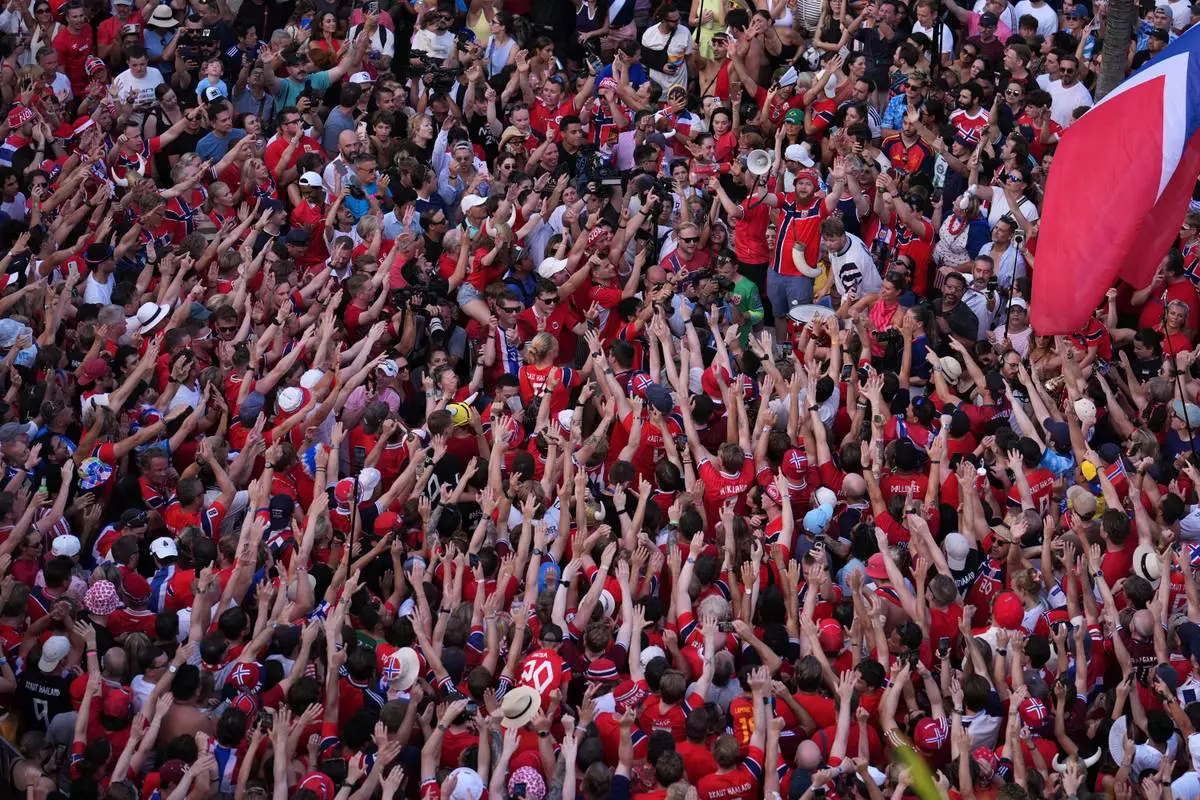
Norway soccer fans chant as they gather to show support on Ocean Drive in Miami Beach, Fla., Friday, July 10, 2026, on the eve of Norway's quarterfinal World Cup soccer match against England. (AP Photo/Rebecca Blackwell)
DUBAI, United Arab Emirates (AP) — Iran said the Strait of Hormuz was closed once again after a warning shot fired by its military struck a vessel using an unauthorized route in the critical waterway, further jeopardizing the already tenuous ceasefire agreement with the United States.
U.S. Central Command said a short time later that its forces began a third round of strikes against Iran. There were explosions in Bandar Abbas and Sirik, two towns along the shores of the strait, Iran state media reported.
“The United States is imposing a heavy cost by continuing to degrade Iran’s ability to attack civilian mariners and commercial ships freely transiting the strait,” the American military said.
A Cyprus-flagged container ship was hit by Iran and suffered “significant engineroom damage” and a civilian crew member is missing, U.S. Central Command said.
Senior U.S. officials had previously said in Washington that negotiations to further cement last month's deal to end the war will be unable to progress without the strait being secure — and even said they wanted Iran to offer public statements to that effect.
Instead, the Revolutionary Guards Corps said multiple vessels "disregarded our warnings and instructions to correct their course and proceed along the approved route.” One of them “was struck by a warning shot and brought to a stop.”
Iran said that the strait would remain closed “until further notice” and said it would consider targeting “additional enemy bases in the region” if it faced more attacks.
A little more than an hour later, the U.S. announced its own new round of strikes.
“Iran made a poor choice. Now they pay,” Defense Secretary Pete Hegseth posted on social media.
The latest flurry of shots from both sides followed Iran and Oman’s foreign ministers meeting on Saturday to discuss the strait that lies between them, after days of Iranian attacks on ships and U.S. retaliation that dealt a blow to the interim deal to end the war.
Iran’s new supreme leader, still unseen since the war began, also vowed in his first statement since the funeral of his father, Ayatollah Ali Khamenei that Iranians would avenge his killing in the war’s opening strikes on Feb. 28.
Such revenge “is the will of our nation and must certainly be carried out,” Supreme Leader Mojtaba Khamenei said in a statement carried on state television, hours after President Donald Trump threatened more missile attacks.
Oman said it and Iran agreed to keep talking about the Strait of Hormuz “at the technical and political levels.”
Iranian Foreign Minister Abbas Araghchi said before the new round of strikes that he met with his counterpart in Oman to discuss “appropriate mechanisms for ensuring the safe passage of ships.”
The world for decades has considered the strait an international waterway. Iran has insisted that the strait now remain under its control and that it be allowed to charge ships moving through it, a stance it took after the war began. The U.S. urges mariners to transit on a southern route through Oman’s territorial waters.
About a fifth of all traded oil and natural gas passed through the strait before the war began. Iran’s grip on it during the war led to a global energy crisis, though oil prices have sharply dropped since wartime highs of $120 a barrel.
Iran's top diplomat also accused the U.S. of violating the interim deal by ending waivers allowing Iran to sell crude oil on the open market in U.S. dollars. Washington ended them in response to the attacks on ships in the strait.
“Reality check: There can only be mutual compliance,” Araghchi wrote on social media.
Trump said he's personally been the target of an Iranian plot, and he said the U.S. military would automatically retaliate if he was killed.
He wrote on social media early Saturday that “1000 Missiles are Locked and Loaded and aimed at the Islamic Republic of Iran, with thousands of more to immediately follow, should the Iranian Government act on its threat.”
However, such retaliation would have to be ordered by Vice President JD Vance, who would become commander-in-chief if Trump were to be killed.
Trump said he was responding to threats “to assassinate, or attempt to assassinate” him. During Khamenei's funeral, mourners held posters or banners calling for Trump to be killed along with Israeli Prime Minister Benjamin Netanyahu.
The U.S. president has declared the ceasefire over but said the U.S. would continue negotiations.
U.S. officials, speaking Friday on condition of anonymity about the current situation with Iran, said the resumption of strikes even before the latest round came as a result of what they described as a rogue faction of Iranian hard-liners who were trying to sabotage the ceasefire.
Iran has insisted its theocracy is unified under the new supreme leader.
After the U.S. wrapped up strikes on Thursday, more attacks reportedly hit Iran, raising questions about who else may be targeting the Islamic Republic.
Israel didn't claim them, meaning the Gulf Arab states may have launched them, likely as a means to deter Iran from attacking them again. Iran on Thursday retaliated for U.S. strikes by targeting Bahrain, Jordan, Kuwait and Qatar.
The strikes in Iran over two days — and prior to the ones in the wake of the warning shot — killed at least 17 people and wounded 115 others, Iranian Health Ministry spokesperson Hossein Kermanpour said.
Weissert reported from Washington. Associated Press writer Sam Metz in Ramallah, West Bank, contributed to this report.
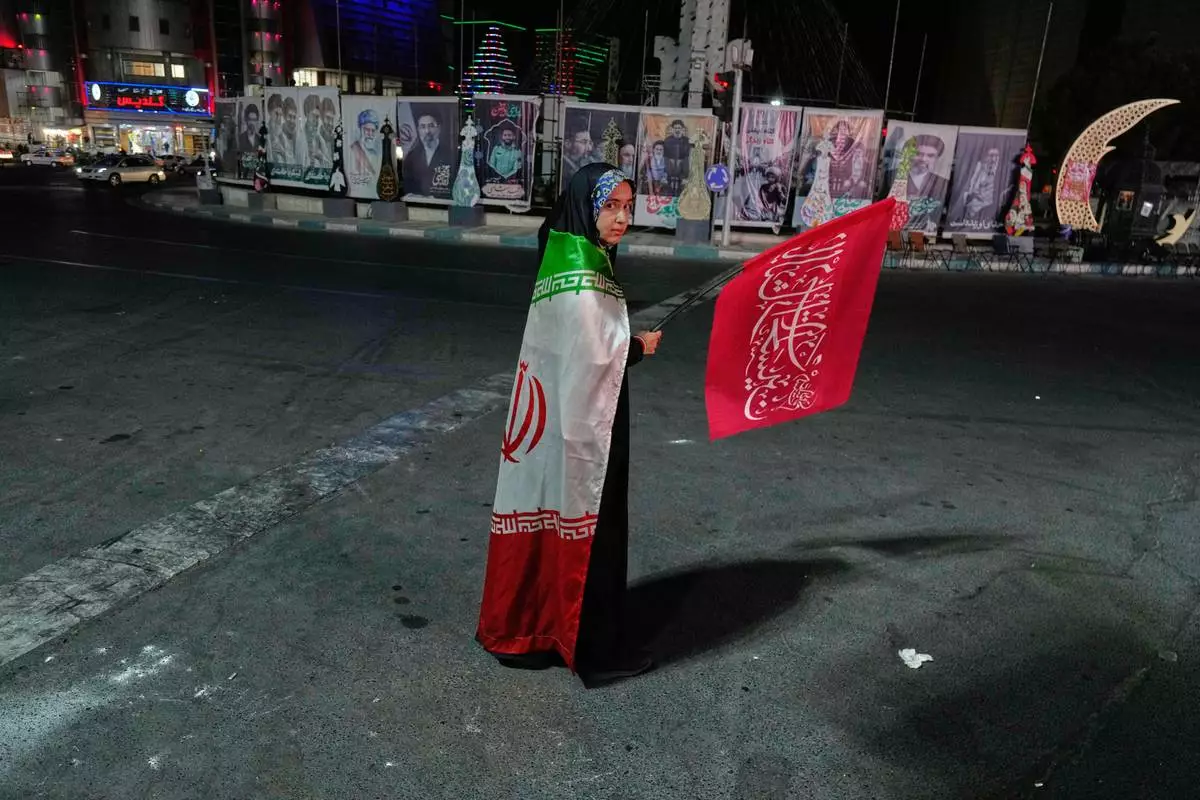
A pro-government demonstrator wears an Iranian flag as she waves a religious flag in a gathering commemorating the late Iranian Supreme Leader Ayatollah Ali Khamenei at a square in Tehran, Saturday, July 11, 2026. (AP Photo/Vahid Salemi)
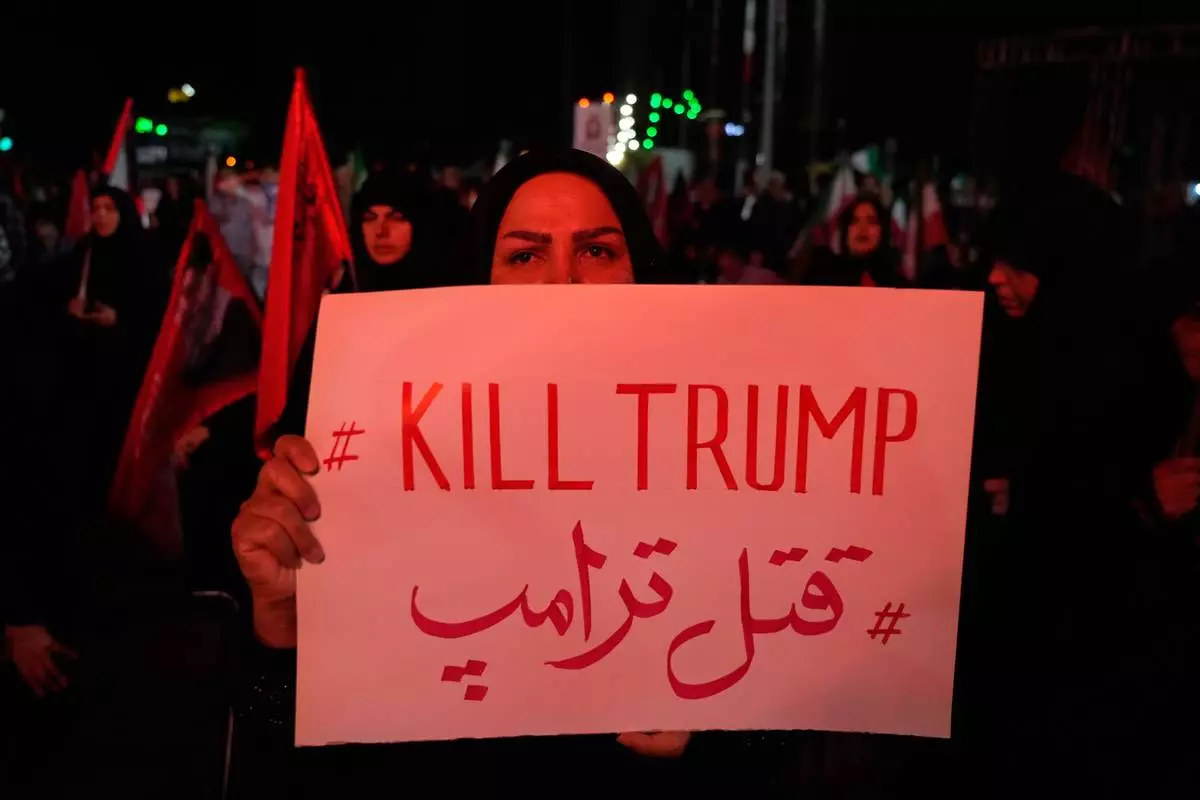
A pro-government demonstrator holds an anti-Trump placard in a gathering commemorating the late Iranian Supreme Leader Ayatollah Ali Khamenei at a square in Tehran, Saturday, July 11, 2026. (AP Photo/Vahid Salemi)
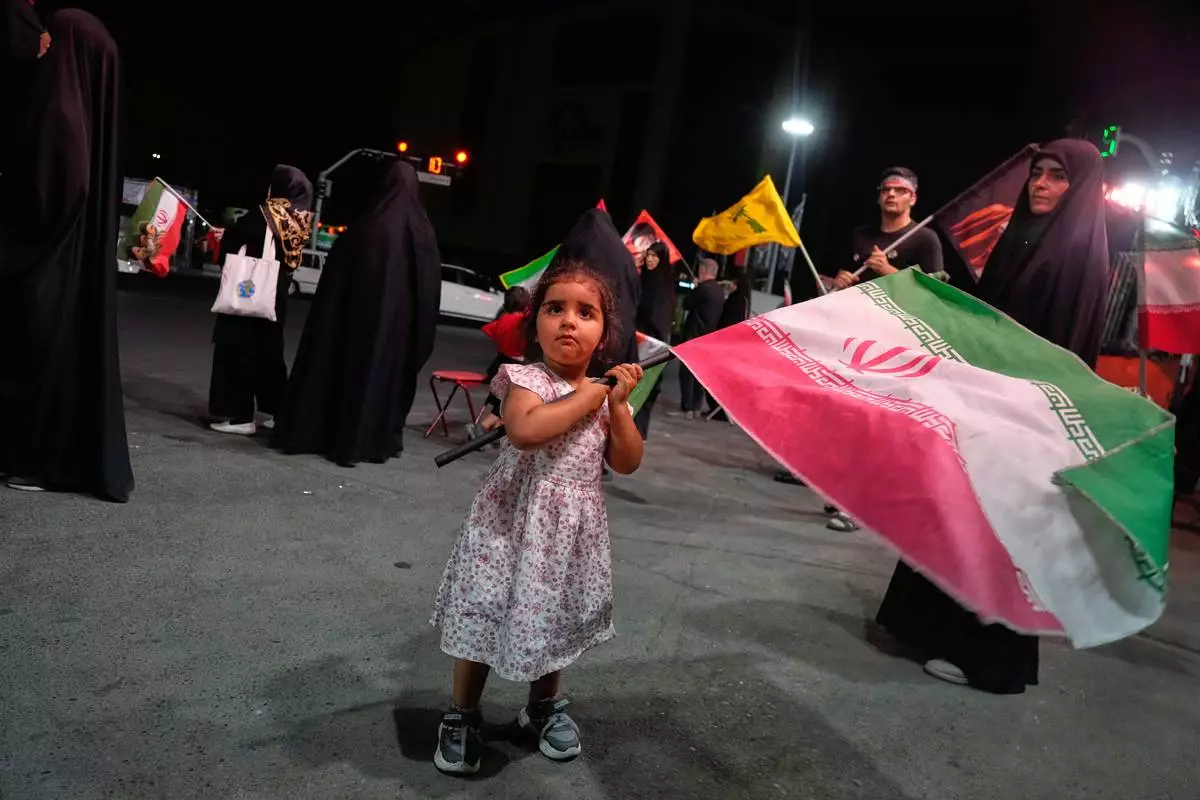
A girl waves an Iranian flag in a pro-government gathering commemorating the late Iranian Supreme Leader Ayatollah Ali Khamenei at a square in Tehran, Saturday, July 11, 2026. (AP Photo/Vahid Salemi)
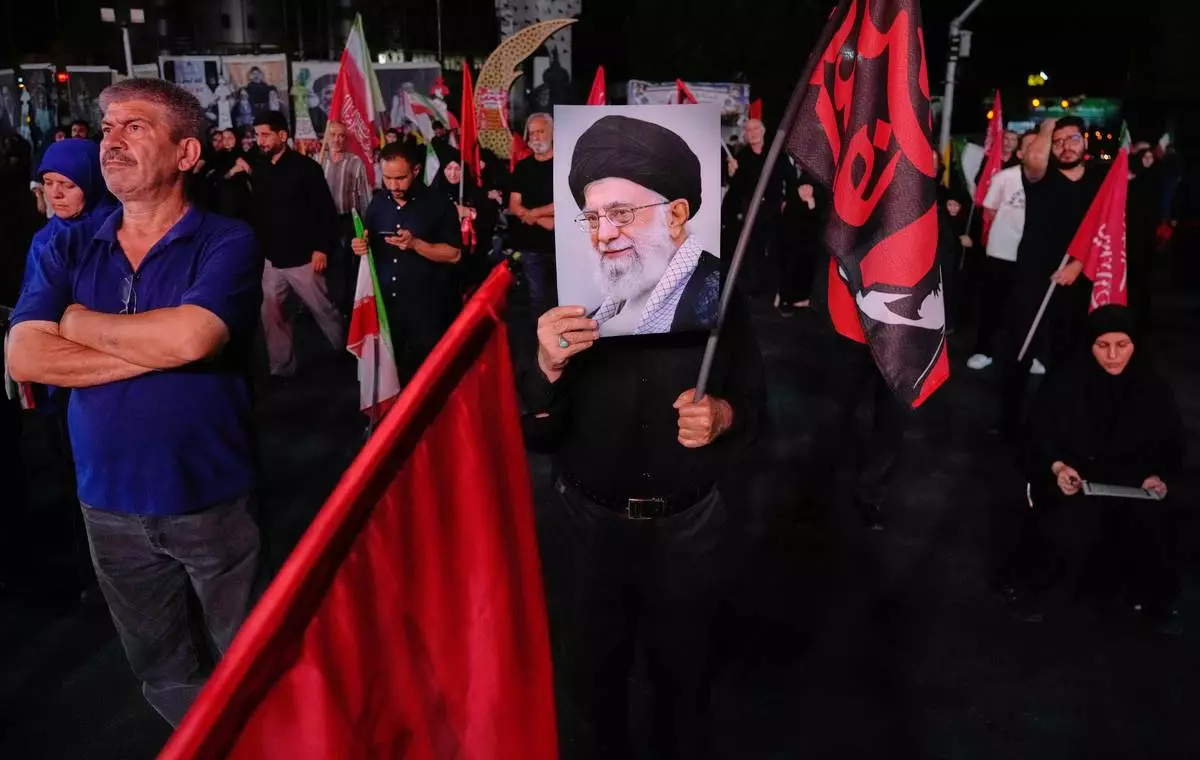
A man holds a poster of the late Iranian Supreme Leader Ayatollah Ali Khamenei in a gathering commemorating him at a square in Tehran, Saturday, July 11, 2026. (AP Photo/Vahid Salemi)
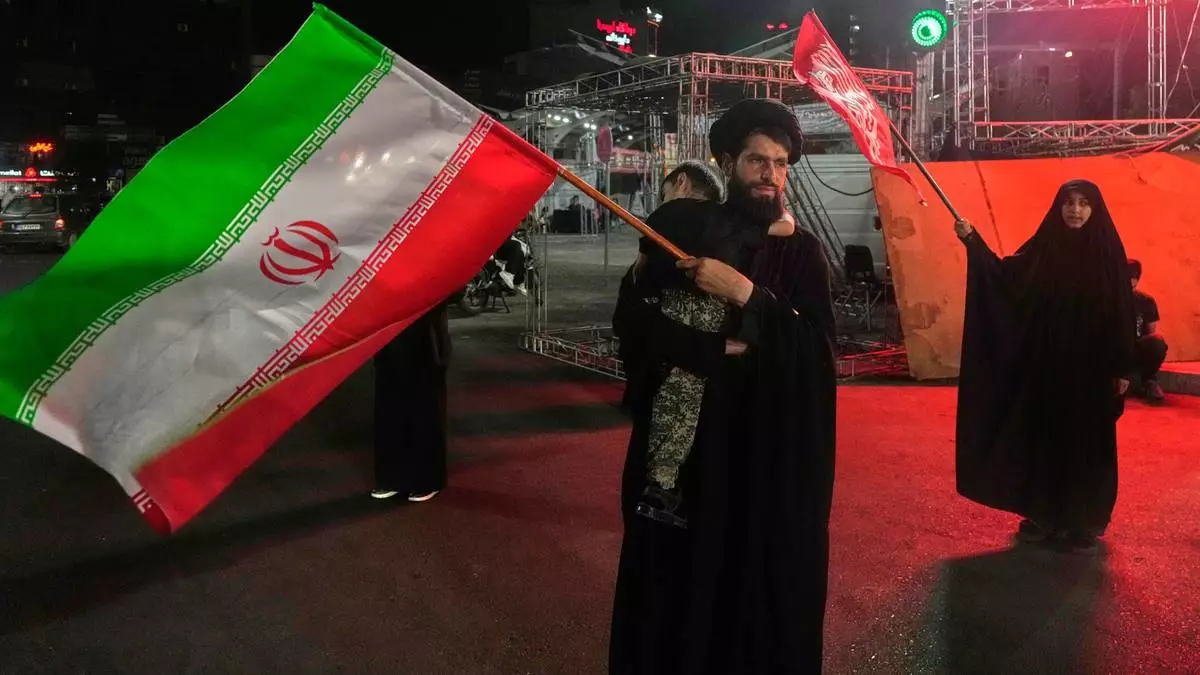
A cleric waves an Iranian flag while holding a child as a woman waves a religious flag in a pro-government gathering commemorating the late Iranian Supreme Leader Ayatollah Ali Khamenei at a square in Tehran, Saturday, July 11, 2026. (AP Photo/Vahid Salemi)
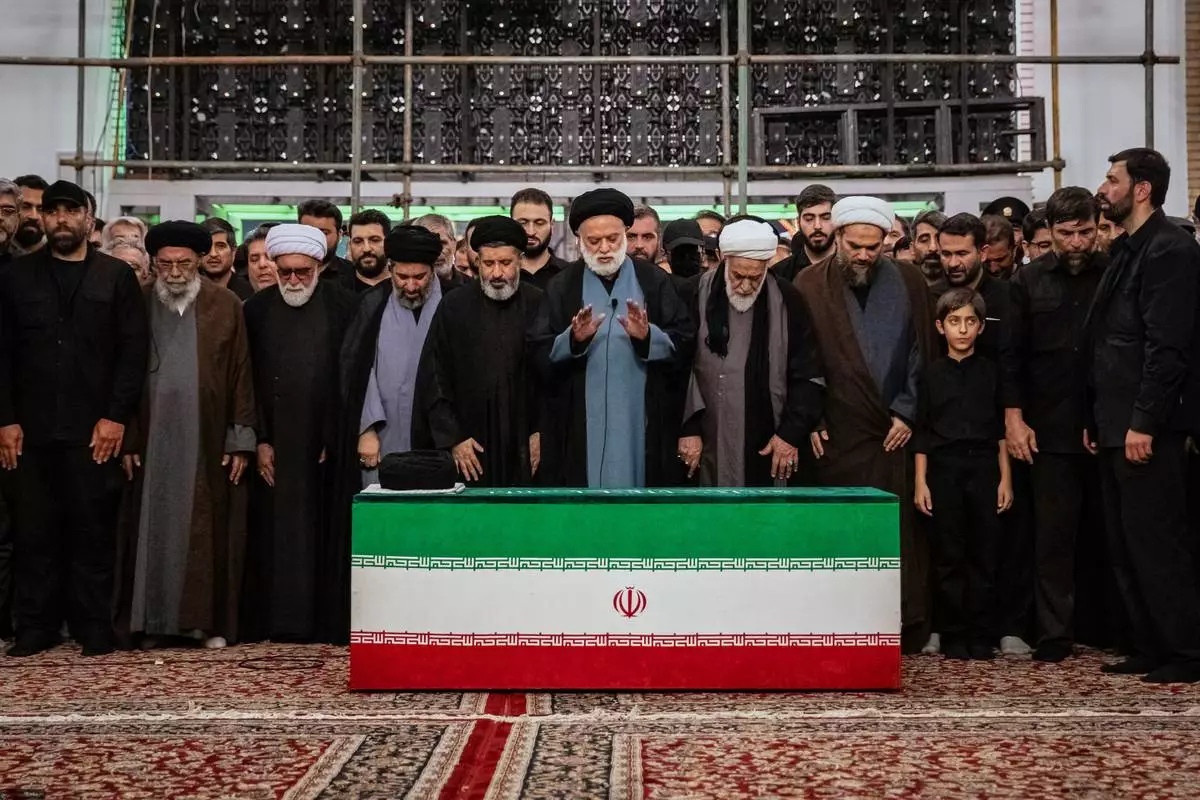
Mostafa Khamenei, center, brother of Iran's new Supreme Leader Mojtaba Khamenei, leads a prayer over the coffin of his late father, Iranian Supreme Leader Ayatollah Ali Khamenei before his burial at the Imam Reza Shrine in Mashhad, northeastern Iran, Thursday, July 9, 2026. (Office of the Iranian Supreme Leader via AP)
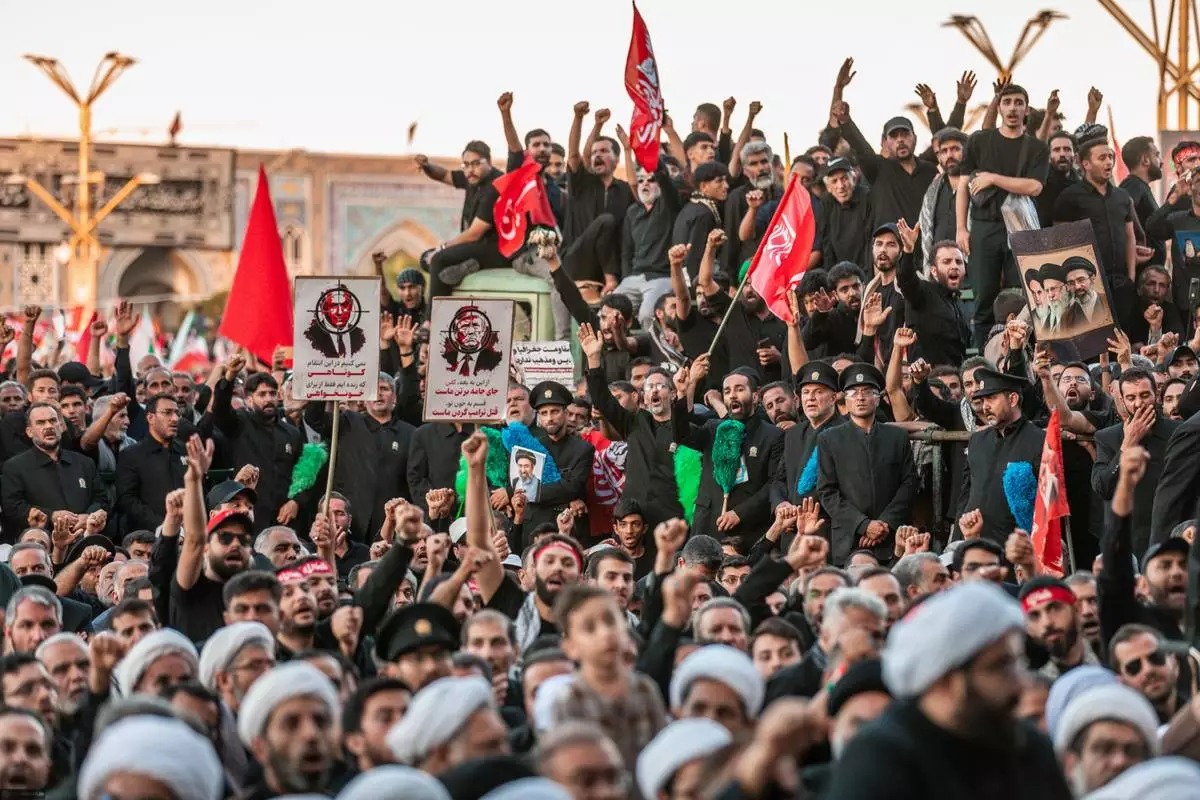
In this photo released by Iran's Supreme Leader's office, mourners chant and raise their fists during the final funeral ceremony for the late Iranian Supreme Leader Ayatollah Ali Khamenei at the Imam Reza Shrine before his burial in Mashhad, northeastern Iran, Thursday, July 9, 2026. (Office of the Iranian Supreme Leader via AP)
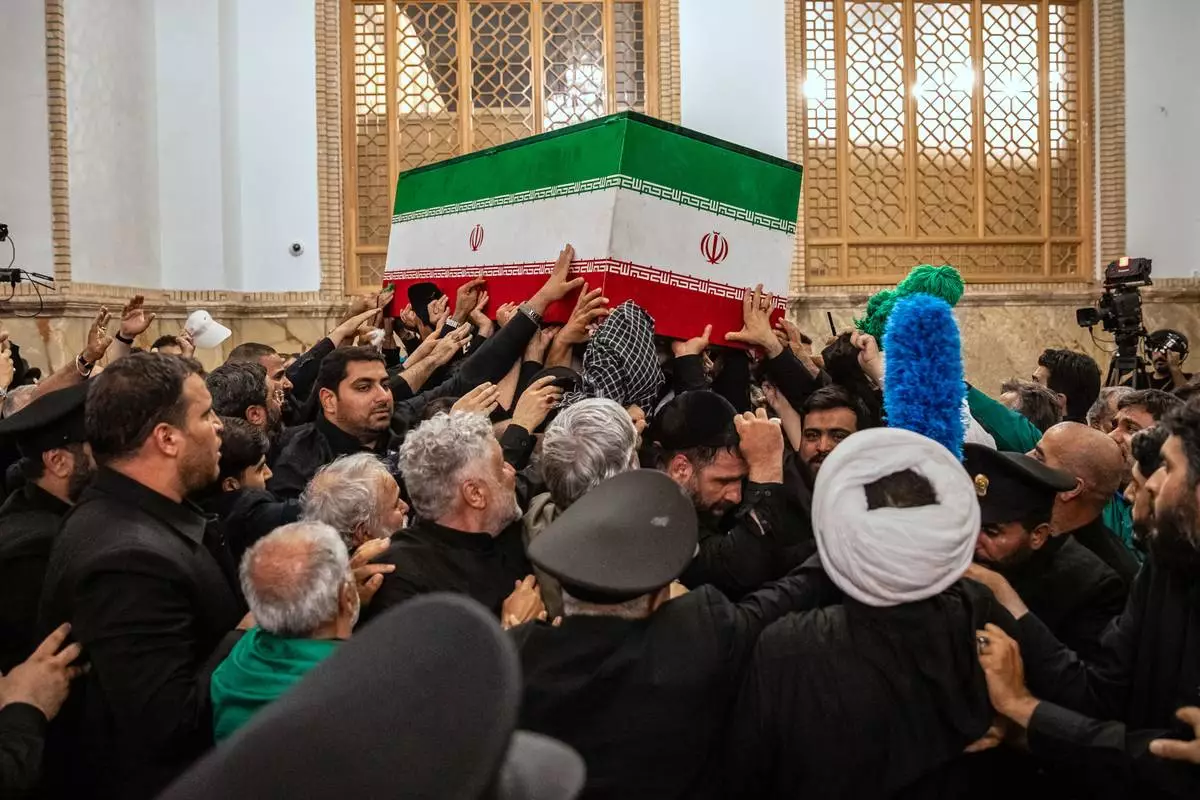
In this photo released by Iran's Supreme Leader's office, mourners carry the coffin of the late Iranian Supreme Leader Ayatollah Ali Khamenei above the crowd for the final prayer before his burial at the Imam Reza Shrine in Mashhad, northeastern Iran, Thursday, July 9, 2026. (Office of the Iranian Supreme Leader via AP)