NAIROBI, Kenya (AP) — Africa’s biggest clean energy challenge is shifting from building projects to building the institutions, markets and regulatory systems needed to deliver them at scale, experts say.
That challenge is emerging even as clean energy reaches a historic milestone globally. Renewables generated 34% of the world’s electricity in 2025, overtaking coal’s 33% share. Together with nuclear power, renewables are expected to provide half of global electricity by 2030.
As industrialization, artificial intelligence and electrification push demand higher, experts say the bottleneck in transitioning to cleaner energy has shifted from technology to the systems supporting it, including funding. Overcoming such obstacles is vital for securing access to power for the 600 million people in Africa who are yet to be connected.
“Clean energy is now cheaper than fossil fuels in virtually every part of the world,” former New York City Mayor Michael R. Bloomberg, the U.N. Secretary-General’s Special Envoy on Climate Ambition and Solutions, said in late June while announcing a new $285 million Bloomberg Philanthropies initiative to strengthen clean energy industries in emerging and developing economies.
“But fixable obstacles are still slowing down deployment, and with energy demand rising at an unprecedented speed, we can’t allow those obstacles to continue standing in the way,” he said.
Rather than financing solar farms or wind projects directly, the initiative will invest in strengthening market design, regulatory capacity, technical expertise and industry institutions, areas increasingly viewed as essential for attracting private investment and accelerating use of renewable energy.
It reflects a growing consensus that Africa’s energy transition is constrained less by a lack of renewable resources or viable technologies than by the institutional capacity needed to turn those advantages into financially viable projects and electricity on the grid.
Many projects remain delayed by weak market design, limited grid planning, slow permitting processes and fragmented regulatory systems.
“What has been missing is not the potential, but the institutional infrastructure and capabilities to unlock it,” said Saliem Fakir, executive director of the African Climate Foundation. “Philanthropy that targets those gaps directly is the kind of intervention that can shift the trajectory of a continent’s energy system.”
Across Africa, renewable energy costs have fallen sharply while investment appetite continues to grow. However, investors say policy uncertainty, slow permitting processes and limited regulatory capacity are hindering projects.
Wangari Muchiri, founder and chief executive of RE.Think Energy, said the commitment signals that “the next phase of the energy transition is not about proving clean energy works, it’s about removing the barriers preventing it from scaling fast enough.”
The Bloomberg initiative is looking beyond ambitious renewable energy targets to focus on helping projects attract long-term investments and connect to national grids.
“The next chapter of Africa's renewable energy story will not be only by the projects it builds, but the institutions that make these projects possible,” Muchiri said.
The Associated Press’ climate and environmental coverage receives financial support from multiple private foundations. AP is solely responsible for all content. Find AP’s standards for working with philanthropies, a list of supporters and funded coverage areas at AP.org.
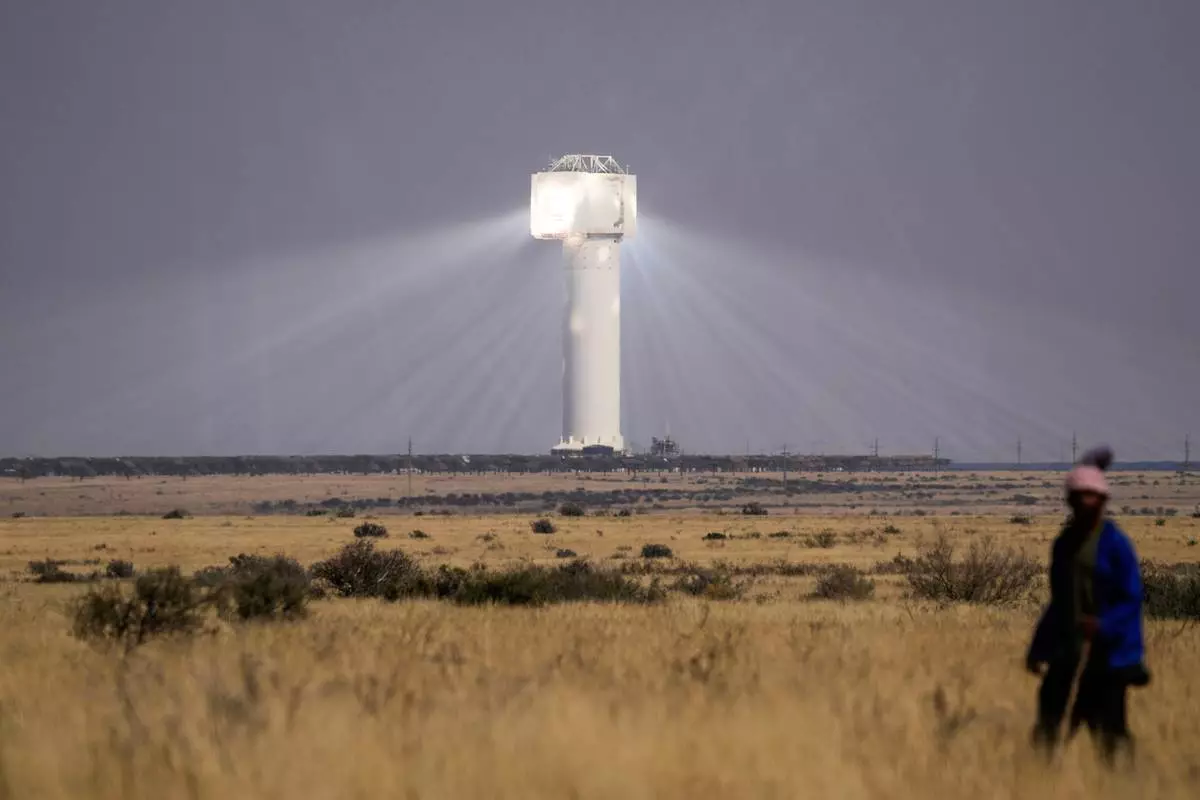
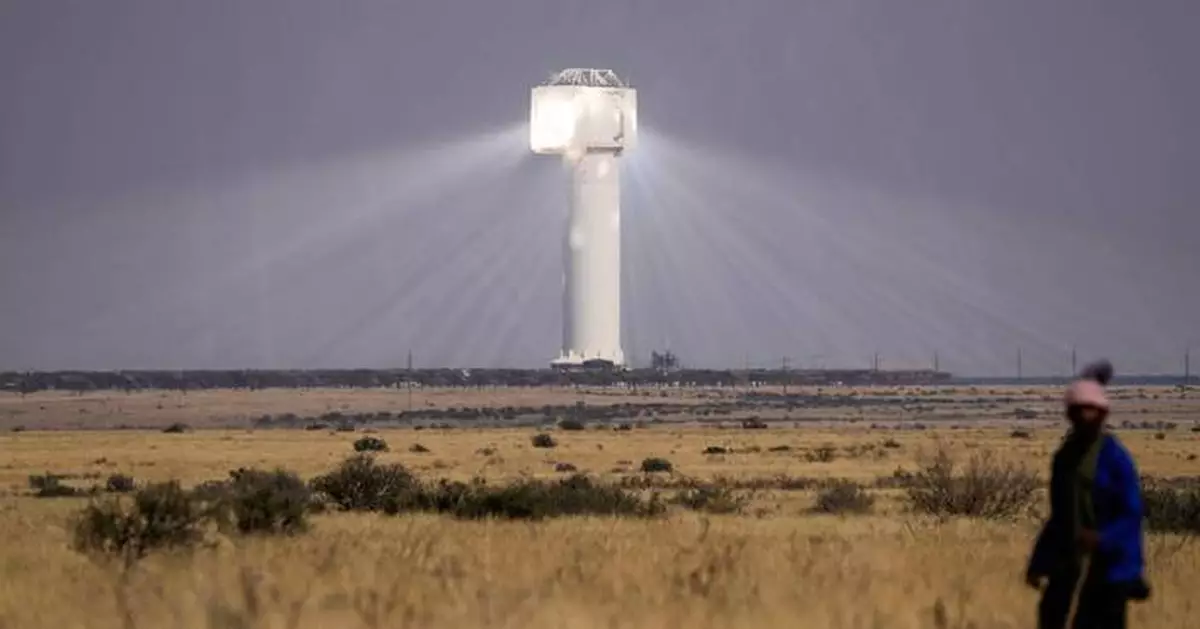
FILE - A shepherd watches livestock near Khi Solar One, a solar thermal plant that converts the sun's light energy into electricity, outside Upington, South Africa, in the Northern Cape province, Aug. 29, 2025. (AP Photo/Themba Hadebe, File)
KANSAS CITY, Mo. (AP) — Switzerland forward Breel Embolo was sent off in the second half of its World Cup quarterfinal loss to Argentina on Saturday night, a controversial decision following a video review that is certain to fuel those who believe referees have been biased toward the reigning champion throughout the tournament.
Dan Ndoye had just tied the game at 1-all in the 67th minute when Argentina's Leandro Paredes was shown a yellow card following a tackle on Embolo. But video showed that the Swiss player was falling before Paredes made contact with him, so Embolo was given a yellow card under the “mistaken identity” protocol that's being used at the World Cup.
Embolo also had received a yellow card earlier in the match, so he was sent off and the Swiss were left to play with 10 men the rest of the way.
Switzerland managed to get the game to extra time, and was trying to survive to a shootout. But then Julián Alvarez scored from long range in the 112th minute, and Lautaro Martínez added another goal a few minutes later, sending Argentina to a 3-1 victory.
“We were punished because of a rule that in my opinion is completely unacceptable,” Swiss coach Murat Yakin said. “It's very painful that we were eliminated that way. I don't think we deserve that today, and in my opinion, my boys are the real heroes. They put all their heart and their passion into their performance. I am very proud. They are very proud.”
Yakin wasn't done with his criticism of Portuguese referee João Pinheiro, though.
“The referee made the wrong decision,” Yakin said. “It was in my opinion a harmless foul, if it even was a foul. I know they will protect their referee but this rule destroyed our game today, and it's very painful, and to be eliminated in that way hurts a lot.”
Argentina coach Lionel Scaloni acknowledged that “luck was on our side because one of their players was sent off.”
It was the second time a yellow card was overturned using the “mistaken identity” protocol at the World Cup. The relatively obscure rule allows the video assistant referee to intervene when an incorrect player is shown a yellow or red card.
“I think the red card changed our game,” Swiss captain Granit Xhaka said. “This decision was difficult to accept now after the game because the dressing room was very quiet, disappointed.”
Earlier this week, the Egyptian Football Association said it “cannot remain silent” after what it believed was biased officiating in its 3-2 loss to Argentina in the Round of 16. Egypt coach Hossam Hassan and several players had criticized the officiating after the defending champion scored three unanswered goals to pull off one of the biggest comebacks in World Cup history.
“Nobody can question the integrity of the FIFA World Cup match officials,” FIFA’s chief of refereeing Pierluigi Collina said in response Wednesday. “When this happens, it may provoke reactions that lead to threats against them and their families. This is not right.”
Yakin stopped short of saying Argentina was being favored by World Cup referees. But he also did not hold back about an incident that he believes changed the complexion of Saturday night's match.
“We were punished by a referee's mistake,” he said. “I didn't know this rule before. It was a very harmless situation, and then a yellow card was awarded. The VAR interfered. It was a very meaningful moment for us, and it was decisive in the outcome of the match.”
See more of AP’s World Cup coverage here
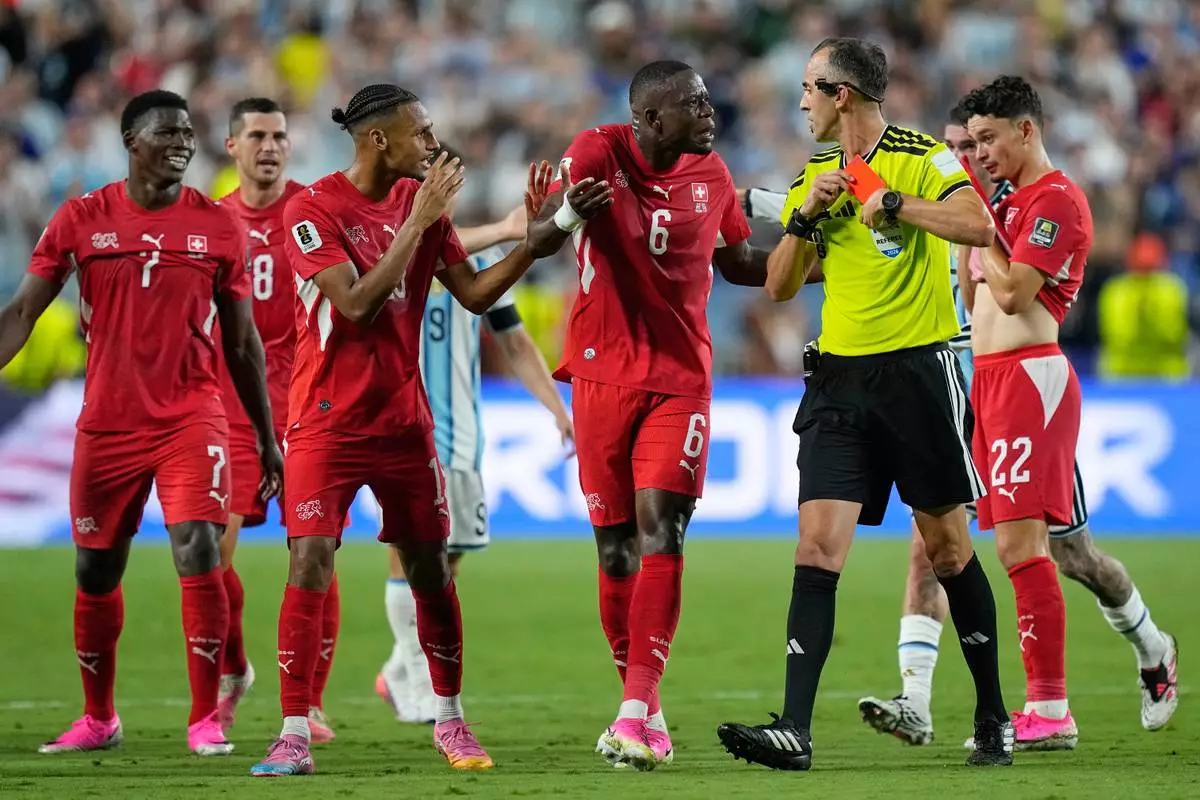
Swiss players remonstrate with referee Joao Pinheiro, of Portugal after teammate Breel Embolo (7) was given a red card during the World Cup quarterfinal soccer match between Argentina and Switzerland in Kansas City, Mo., Saturday, July 11, 2026. (AP Photo/Ashley Landis)
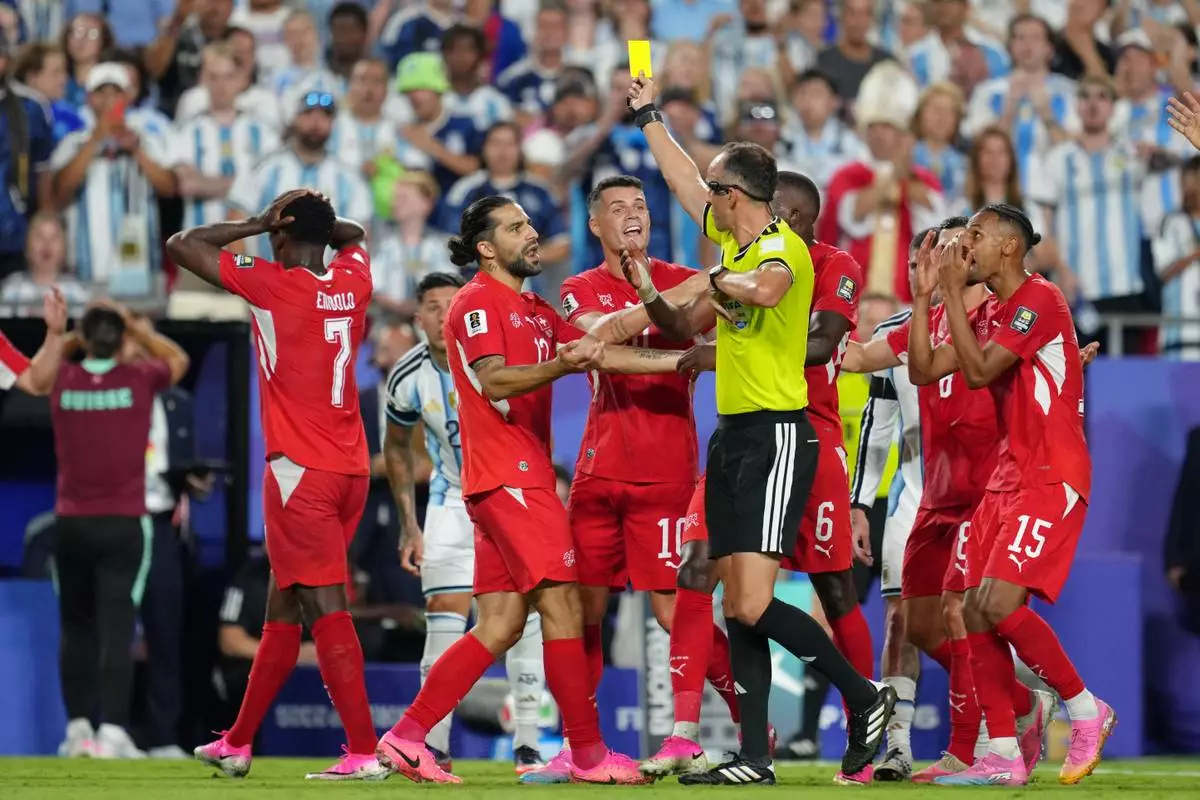
Switzerland's players argue referee Joao Pinheiro, of Portugal, gives a second yellow card to Breel Embolo (7) during the World Cup quarterfinal soccer match between Argentina and Switzerland in Kansas City, Mo., Saturday, July 11, 2026. (AP Photo/Ed Zurga)
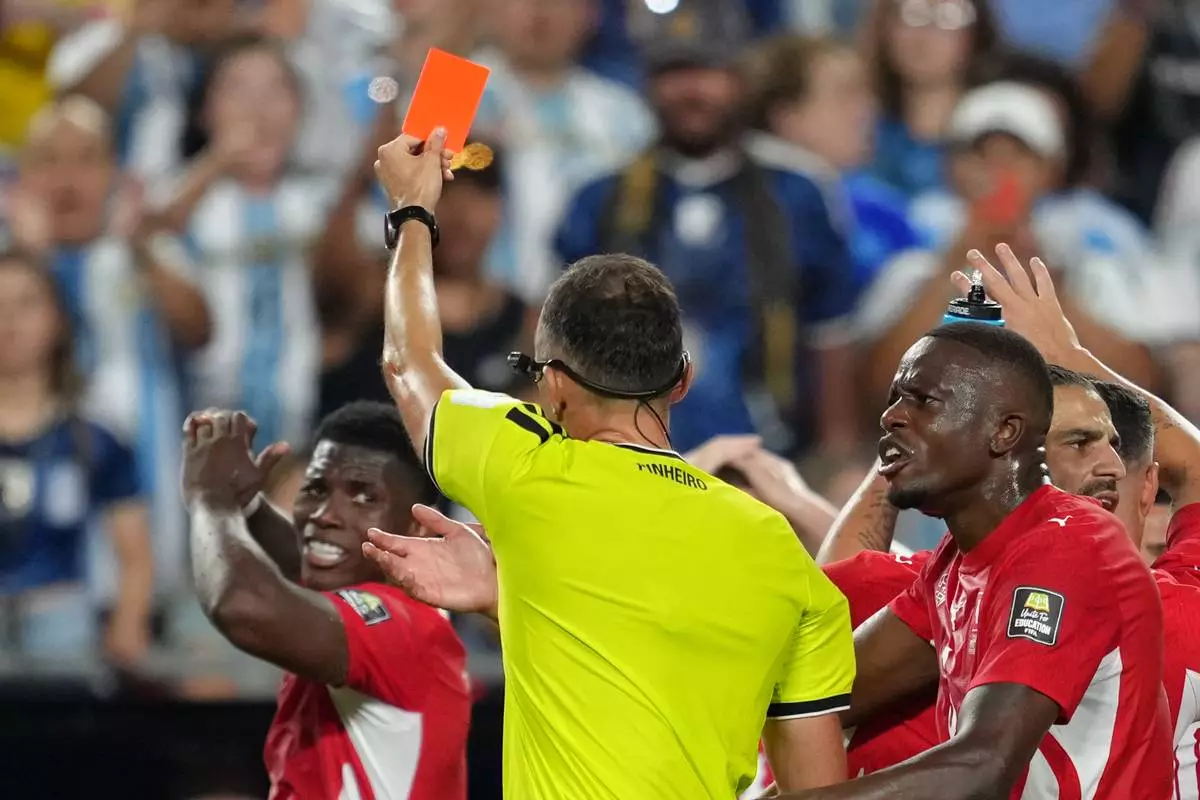
Referee Joao Pinheiro, of Portugal, gives a red card to Switzerland's Breel Embolo (7), left, during the World Cup quarterfinal soccer match between Argentina and Switzerland in Kansas City, Mo., Saturday, July 11, 2026. (AP Photo/Ed Zurga)
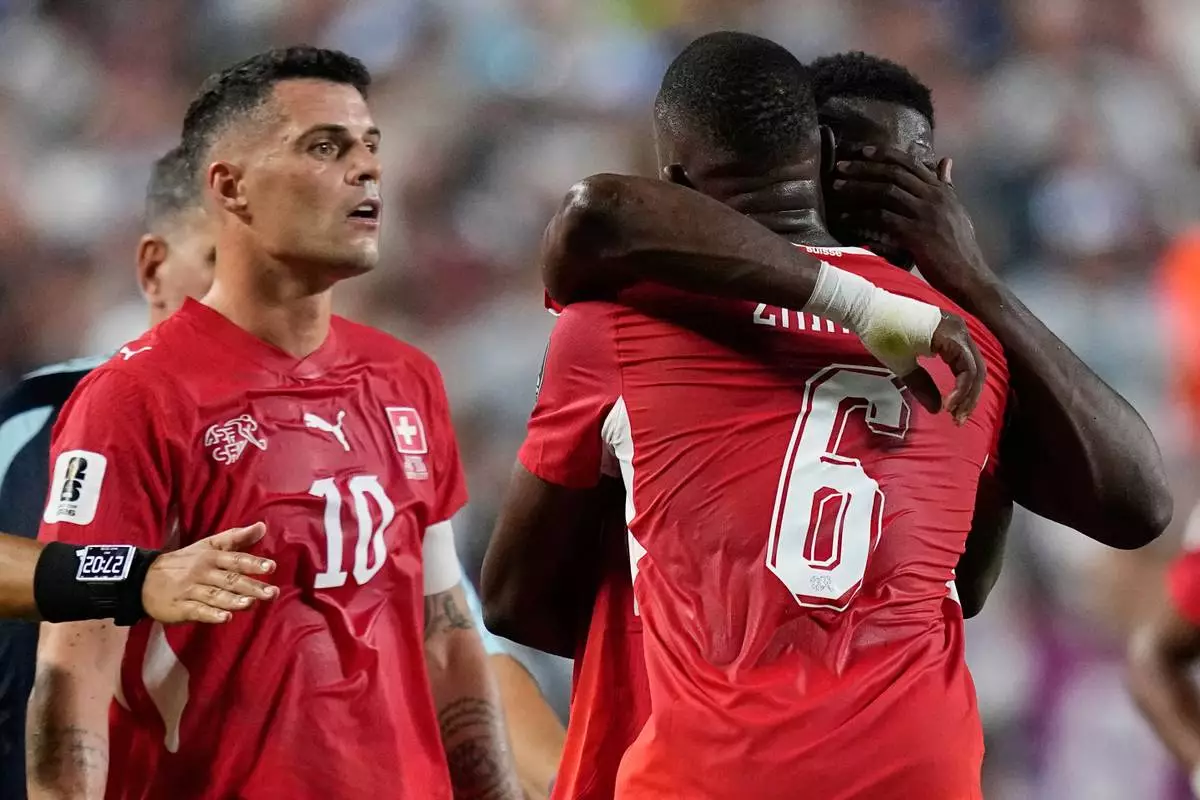
Switzerland's Breel Embolo, right, is consoled by teammate Denis Zakaria (6) after he was given a red card during the World Cup quarterfinal soccer match between Argentina and Switzerland in Kansas City, Mo., Saturday, July 11, 2026. (AP Photo/Ashley Landis)
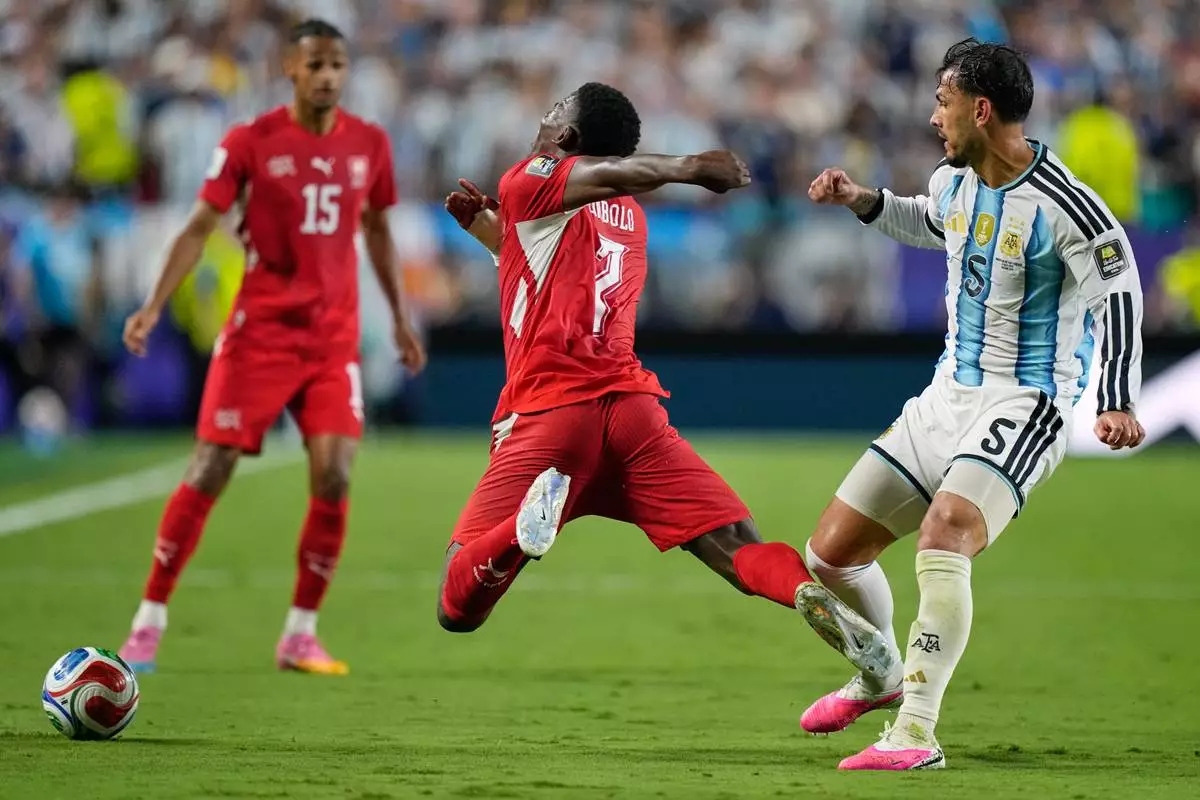
Switzerland's Breel Embolo (7) reacts as he dives in a challenge from Argentina's Leandro Paredes (5) for which he got a second yellow card during the World Cup quarterfinal soccer match between Argentina and Switzerland in Kansas City, Mo., Saturday, July 11, 2026. (AP Photo/Ashley Landis)