COLUMBIA, S.C. (AP) — Lindsey Graham’s sister, Darline Graham, has been named as his temporary replacement in the U.S. Senate after his unexpected death over the weekend.
South Carolina Gov. Henry McMaster announced at a news conference at the Statehouse on Monday that she will serve the remaining months on Graham's current term, which expires in January. Senate Majority Leader John Thune said afterward that she will be sworn in Tuesday afternoon.
Click to Gallery
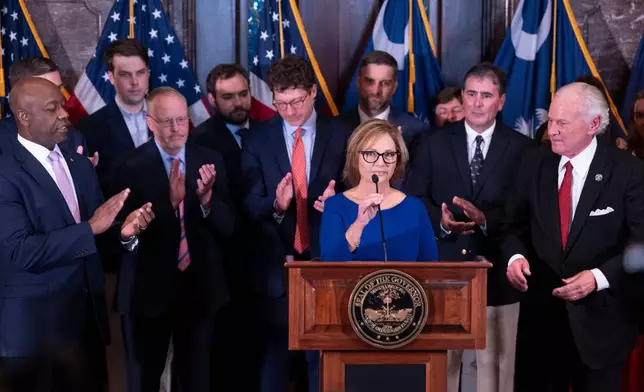
Newly appointed U.S. interim Senator, Darline Graham Nordone, with South Carolina Gov. Henry McMaster, right, and Sen. Tim Scott (R-SC), left, speaks to members of the press after being appointed to fill the vacancy created by the passing of her brother, U.S. Senator Lindsey Graham, at the statehouse Monday, July 13, 2026, in Columbia, S.C. (AP Photo/Sean Rayford) CORRECTION: Corrects senator Scott's first name.
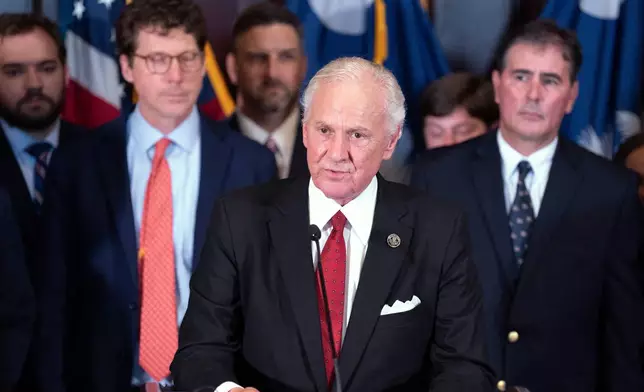
South Carolina Gov. Henry McMaster speaks to media to announce the appointment of Darline Graham Nordone to fill the vacancy created by the passing of her brother, U.S. Sen. Lindsey Graham, at the statehouse Monday, July 13, 2026, in Columbia, S.C. (AP Photo/Sean Rayford)
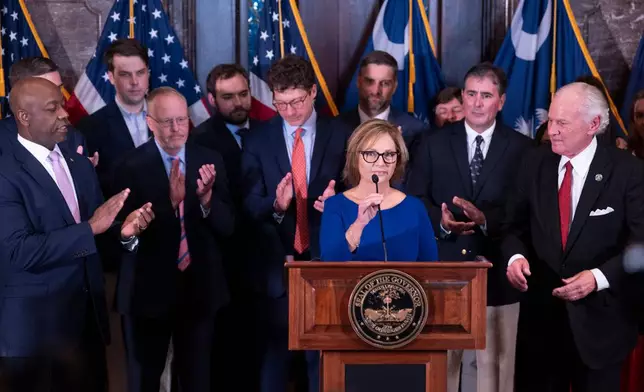
Newly appointed U.S. interim Senator, Darline Graham Nordone, with South Carolina Gov. Henry McMaster, right, and Sen. Time Scott (R-SC), left, speaks to members of the press after being appointed of to fill the vacancy created by the passing of her brother, U.S. Senator Lindsey Graham, at the statehouse Monday, July 13, 2026, in Columbia, S.C. (AP Photo/Sean Rayford)
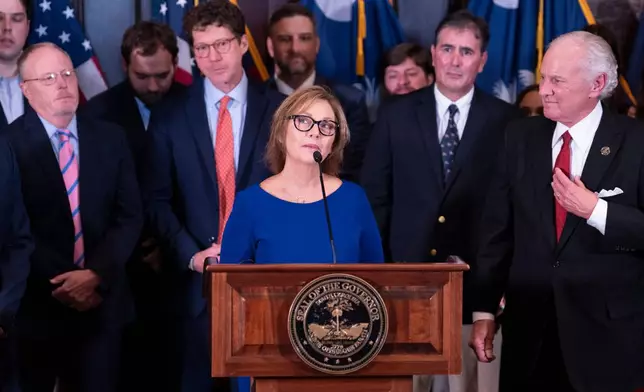
Newly appointed U.S. interim Senator, Darline Graham Nordone, with South Carolina Gov. Henry McMaster, right, speaks to members of the press after being appointed of to fill the vacancy created by the passing of her brother, U.S. Senator Lindsey Graham, at the statehouse Monday, July 13, 2026, in Columbia, S.C. (AP Photo/Sean Rayford)
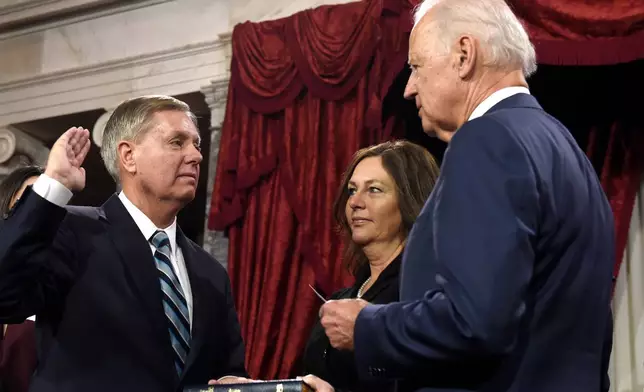
FILE - Vice President Joe Biden, right, administers the Senate oath to Sen. Lindsey Graham, R-S.C., left, as Graham's sister Darline Graham looks on during a ceremonial re-enactment swearing-in ceremony, Jan. 6, 2015, in the Old Senate Chamber on Capitol Hill in Washington. (AP Photo/Susan Walsh, File)
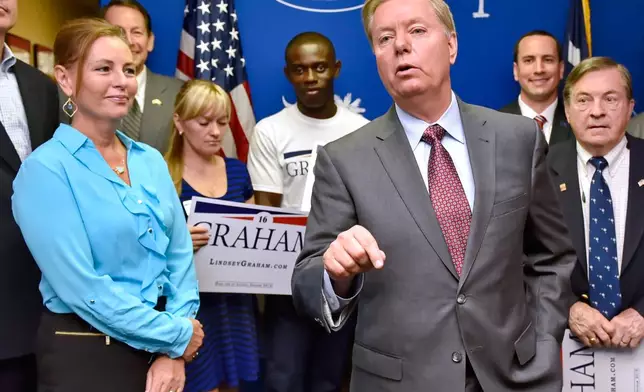
FILE - Republican presidential candidate, Sen. Lindsey Graham, R-S.C., accompanied by his sister Darline, left, speaks at the GOP headquarters in Columbia, S.C., Sept. 1, 2015, where he filed for the South Carolina Presidential Primary. (AP Photo/Richard Shiro, File)
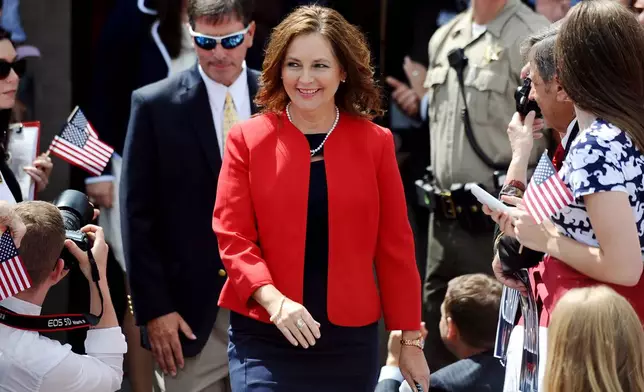
FILE - Darline Graham Nordone, sister of Sen. Lindsey Graham, R-S.C., walks to the stage before his announcement for presidency on Monday, June 1, 2015, in Central, S.C. (AP Photo/Rainier Ehrhardt, File)
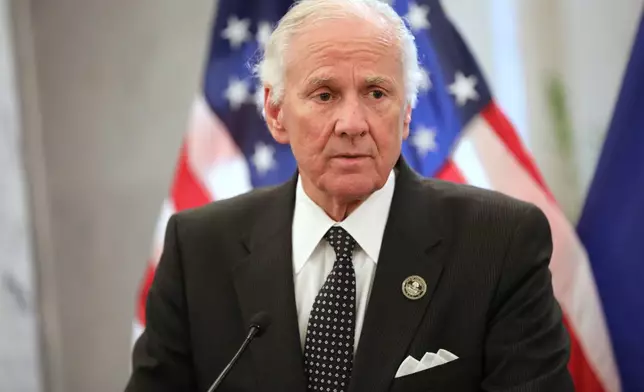
FILE - South Carolina Gov. Henry McMaster speaks to reporters, May 5, 2026, in Columbia, S.C. (AP Photo/Jeffrey Collins, File)
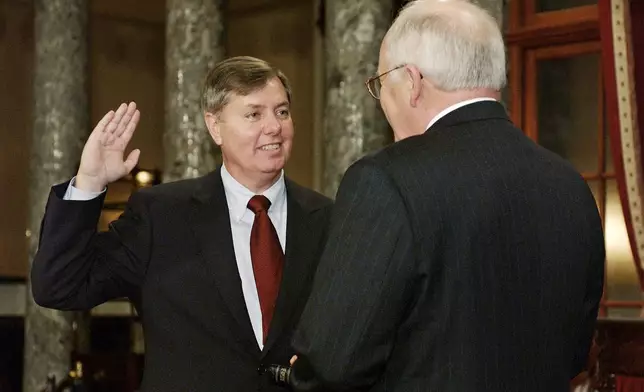
FILE - Sen. Lindsey Graham, R-S.C., takes the oath of office with Vice President Dick Cheney, right, during a re-enactment swearing-in ceremony in the Old Senate Chamber on Capitol Hill in Washington, Jan. 7, 2003, following his election to the Senate. (AP Photos/Evan Vucci, File)
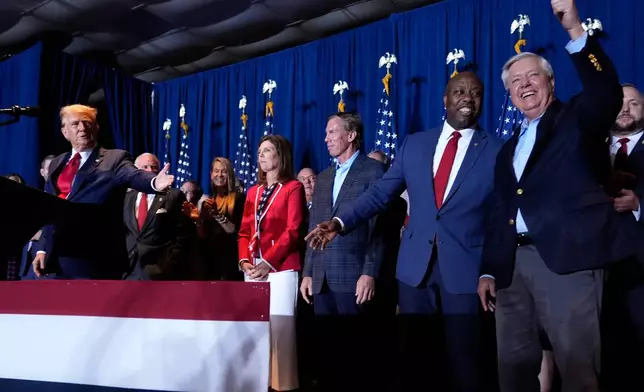
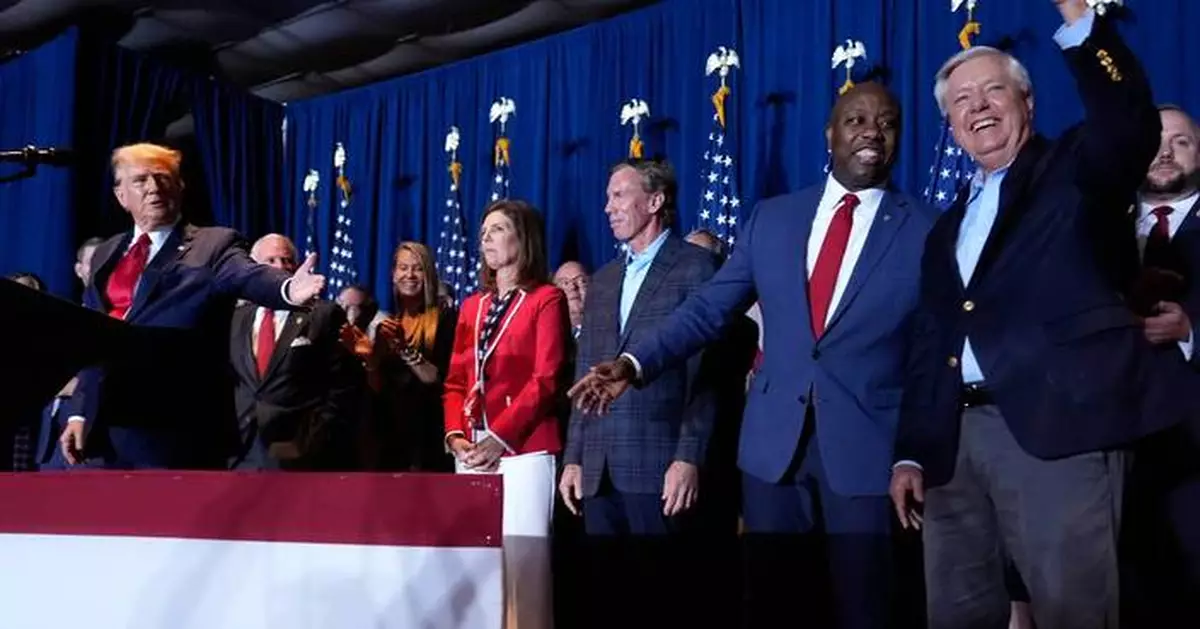
FILE - Republican presidential candidate former President Donald Trump speaks as Sen. Tim Scott, R-S.C., and Sen. Lindsey Graham, R-S.C., listen, at a primary election night party at the South Carolina State Fairgrounds in Columbia, S.C., Feb. 24, 2024. (AP Photo/Andrew Harnik, File)
She will be the first woman to represent the state in the Senate.
“It is such an honor,” Darline Graham said as dozens of her brother's staffers and campaign advisers stood behind her, some with eyes glassy from welling tears. “Lindsey has always been there for me. And now, I will be there for him.”
Graham died on Saturday at age 71. He never married or had a family of his own, but his sister was often by his side for the political touch points of his career, speaking at events and appearing in some of his campaign ads.
After their parents died at a young age, Graham was left to raise his sister, for whom he later became legal guardian. They were very close, and she was there as he filed reelection paperwork earlier this year, along with her children and grandchildren.
“To Lindsey, I miss you more than I can even put into words," she said, emotion rising in her voice. "But I'm going to do this. I got it.”
Introducing her, McMaster said the two had spoken “in the wee hours of Sunday morning” after Graham's death, and he asked her to serve.
“I had wondered what you would say, and I was humbled by your quickness to see the duty that you had to serve,” McMaster said. He added that President Donald Trump “thought it was a great idea” when he later told him of his pick. Trump announced his support for Nardone to fill the seat earlier Monday.
Darline Graham has worked as an optician and at various state agencies, including the South Carolina Commission for the Blind and the Department of Employment and Workforce. She lives in Lexington, is a graduate of the College of Charleston and has a master’s degree in rehabilitation counseling.
A special election will be held next month to pick a new Republican nominee in the general election for Lindsey Graham’s seat. He had been seeking a fifth term this year.
The rare open Senate seat has ignited a scramble among South Carolina’s most ambitious conservatives, who have been eager to climb the political ladder.
Republicans just finished a sprawling and bruising contest to figure out their nominee for succeeding McMaster, who is wrapping up his second term. State Attorney General Alan Wilson won the nomination, overcoming a field that included Lt. Gov. Pamela Evette, Rep. Nancy Mace and Ralph Norman — all of whom are now eyeing Graham’s seat following his death over the weekend.
According to South Carolina law, a one-week filing period for a special primary election begins on the second Tuesday after the candidate’s death, or July 21.
The special primary election would be held on the second Tuesday after that filing period closes, or Aug. 11. Any necessary runoff would follow two weeks after that, or Aug. 25.
From that point, the new nominee would have just over two months to campaign for the general election on Nov. 3.
All of this is problematic according to federal law, which requires military and overseas ballots to go out 45 days before any federal election. For the special election primary, that would have been June 27. Federal Election Commission officials didn’t immediately return a message seeking clarity about the process.
Graham died on Saturday night, and a preliminary medical examiner report said he suffered a tear in his aorta, known as an aortic dissection.
In the hours after Graham's death was announced, South Carolina’s Republican circles were already swirling with rumors about possible replacements.
Evette, who has served nearly eight years alongside McMaster and received his endorsement in the governor's race, is one possibility. She lost the June 23 runoff to Wilson.
Mace and Norman could run in the special primary as well. Neither of them are running for reelection to their House seats.
But another Republican from the state, Rep. Russell Fry, could be a possibility. The two-term lawmaker represents the growing area around Myrtle Beach, and he's been a top Trump ally.
Businessman Mark Lynch, whom Graham defeated in the primary, may jump into the race. So could Mark Sanford, the state's former governor who served two separate stints in the House.
Treasury Secretary Scott Bessent, who lived in South Carolina before joining the Trump administration, has fielded calls about potentially replacing Graham but doesn’t have interest in the role and enjoys working for the president, according to a person who insisted on anonymity to describe private conversations.
No Democrat has won a Senate seat in South Carolina in decades, and Republicans in recent history typically take statewide seats by double digits. When Graham last ran in 2020, he defeated his Democratic opponent, Jaime Harrison, by a 10 percentage point margin.
So while history suggests that Graham was en route to a fifth term, Republicans are carefully surveying the landscape.
Charleston pediatrician Annie Andrews won the Democratic nomination last month and has raised more than $8 million in the race, and she had just under $3 million cash on hand at the end of May, according to federal filings. Graham had taken in $6 million, with just over $4 million on hand.
In a statement Sunday, Andrews called on South Carolinians to join her “in setting partisanship aside and offering gratitude" to Graham for his service.
Harrison, noting that he and Graham “had our share of political disagreements,” wrote on social media that he “always appreciated that even in our fiercest political battles, we could still share a conversation, a laugh, and a mutual respect for South Carolina and the institutions we were both privileged to serve.”
Associated Press writer Fatima Hussein in Washington contributed to this report.
Kinnard reported from Charleston, South Carolina, and can be reached at http://x.com/MegKinnardAP.
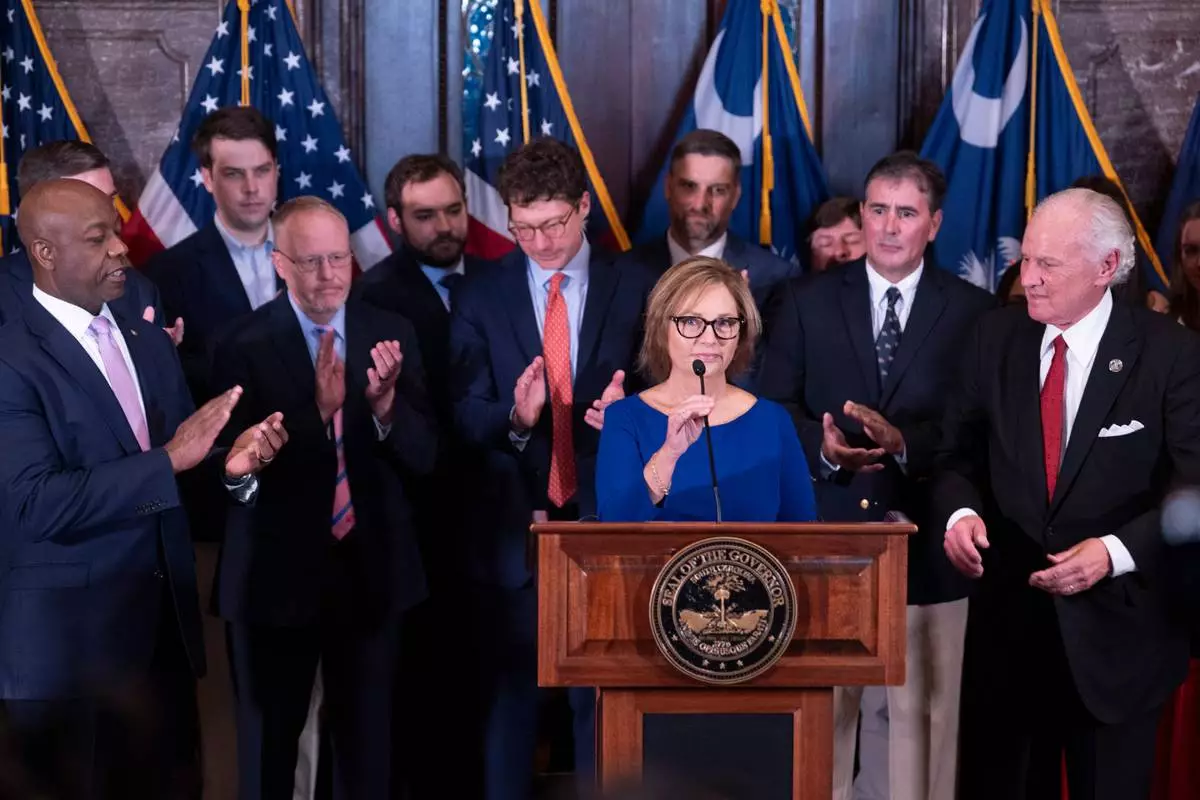
Newly appointed U.S. interim Senator, Darline Graham Nordone, with South Carolina Gov. Henry McMaster, right, and Sen. Tim Scott (R-SC), left, speaks to members of the press after being appointed to fill the vacancy created by the passing of her brother, U.S. Senator Lindsey Graham, at the statehouse Monday, July 13, 2026, in Columbia, S.C. (AP Photo/Sean Rayford) CORRECTION: Corrects senator Scott's first name.
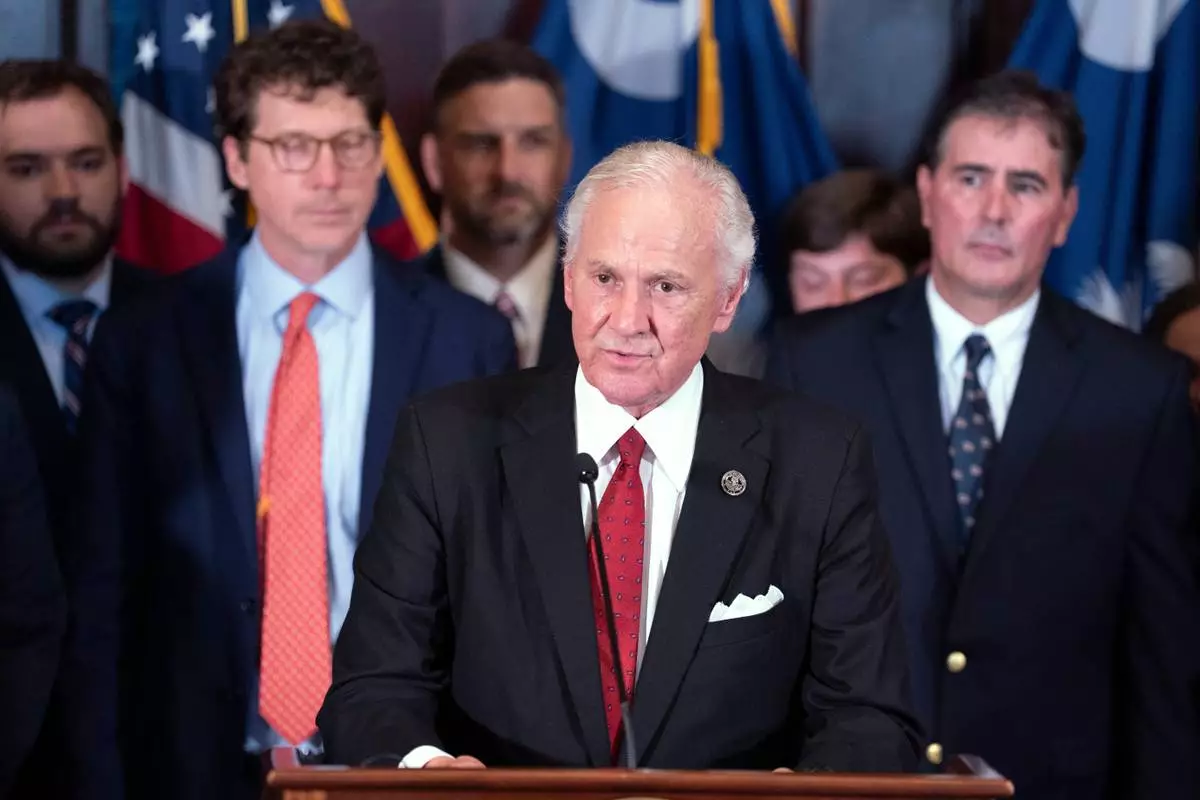
South Carolina Gov. Henry McMaster speaks to media to announce the appointment of Darline Graham Nordone to fill the vacancy created by the passing of her brother, U.S. Sen. Lindsey Graham, at the statehouse Monday, July 13, 2026, in Columbia, S.C. (AP Photo/Sean Rayford)
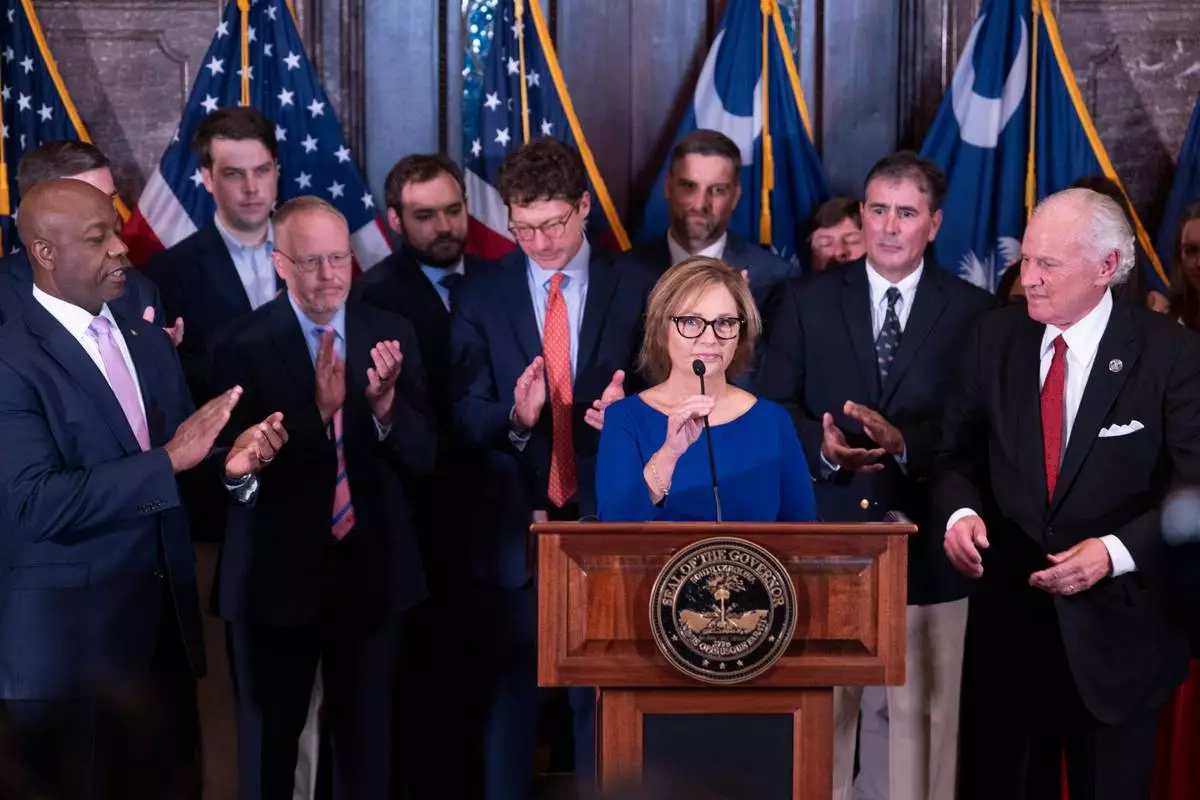
Newly appointed U.S. interim Senator, Darline Graham Nordone, with South Carolina Gov. Henry McMaster, right, and Sen. Time Scott (R-SC), left, speaks to members of the press after being appointed of to fill the vacancy created by the passing of her brother, U.S. Senator Lindsey Graham, at the statehouse Monday, July 13, 2026, in Columbia, S.C. (AP Photo/Sean Rayford)
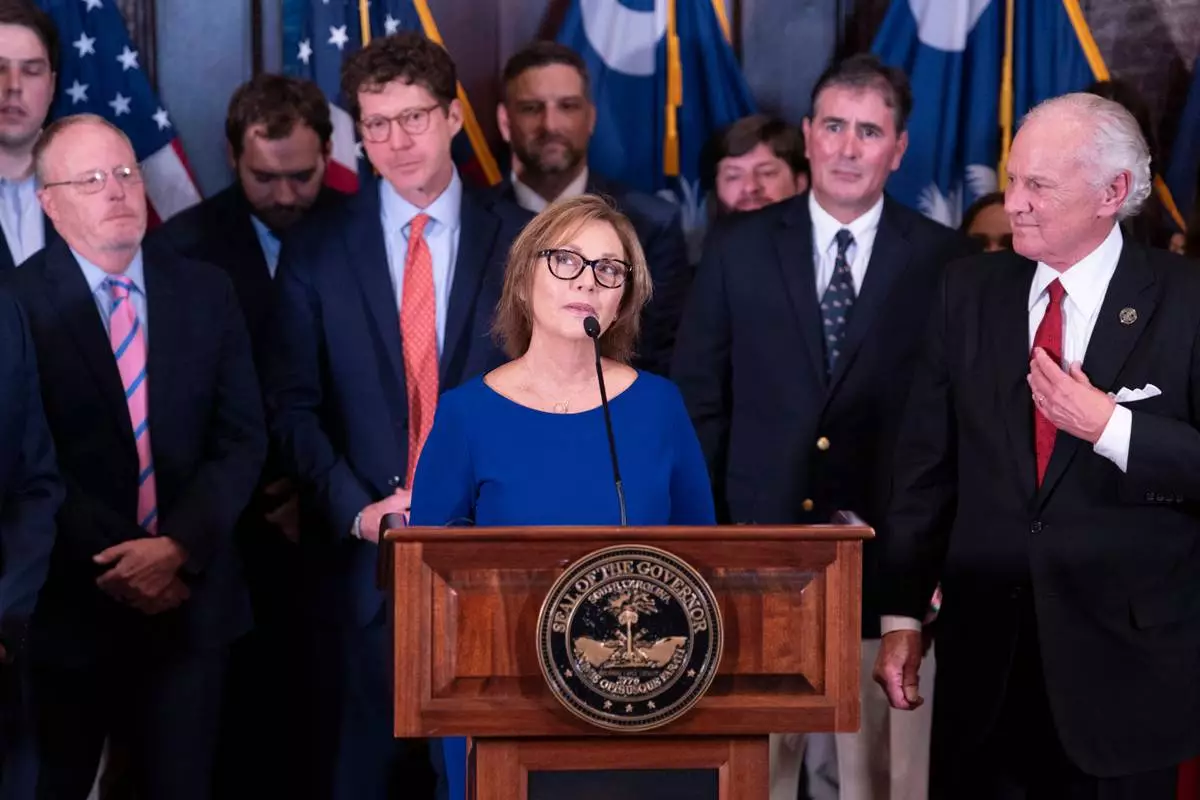
Newly appointed U.S. interim Senator, Darline Graham Nordone, with South Carolina Gov. Henry McMaster, right, speaks to members of the press after being appointed of to fill the vacancy created by the passing of her brother, U.S. Senator Lindsey Graham, at the statehouse Monday, July 13, 2026, in Columbia, S.C. (AP Photo/Sean Rayford)
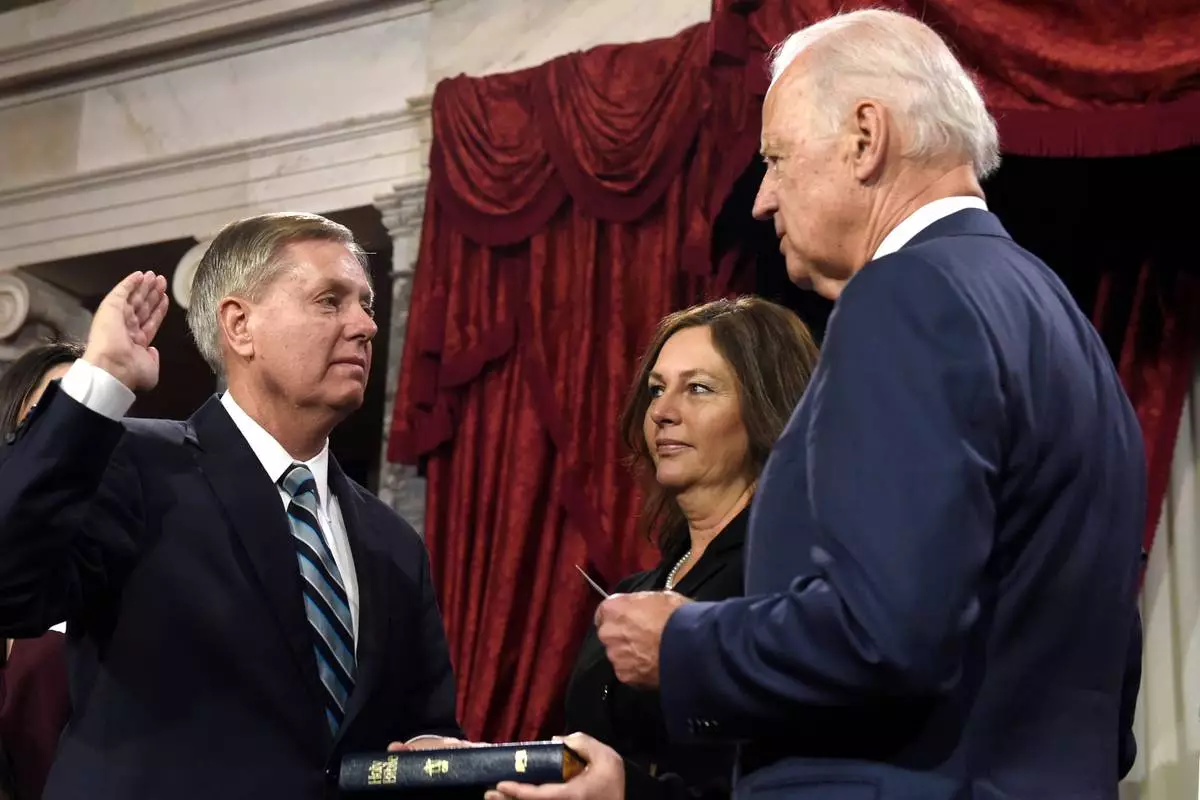
FILE - Vice President Joe Biden, right, administers the Senate oath to Sen. Lindsey Graham, R-S.C., left, as Graham's sister Darline Graham looks on during a ceremonial re-enactment swearing-in ceremony, Jan. 6, 2015, in the Old Senate Chamber on Capitol Hill in Washington. (AP Photo/Susan Walsh, File)
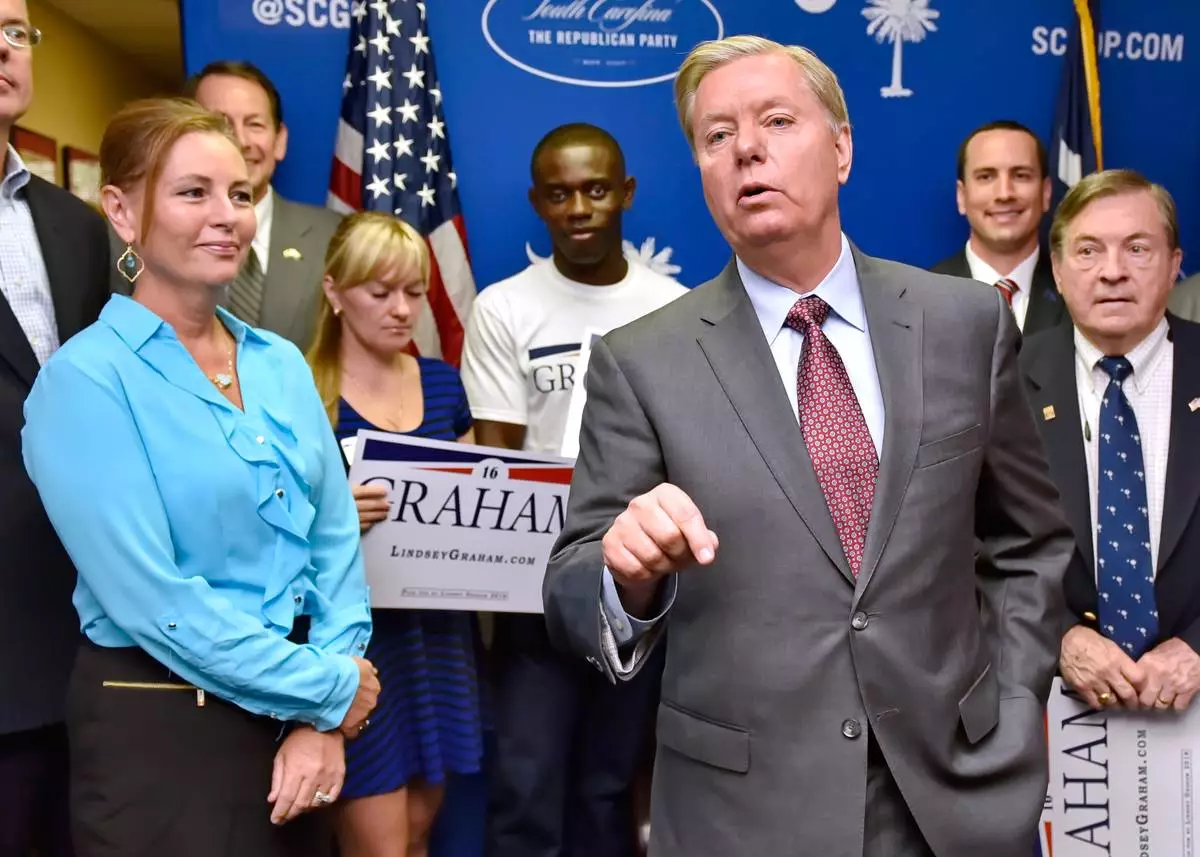
FILE - Republican presidential candidate, Sen. Lindsey Graham, R-S.C., accompanied by his sister Darline, left, speaks at the GOP headquarters in Columbia, S.C., Sept. 1, 2015, where he filed for the South Carolina Presidential Primary. (AP Photo/Richard Shiro, File)
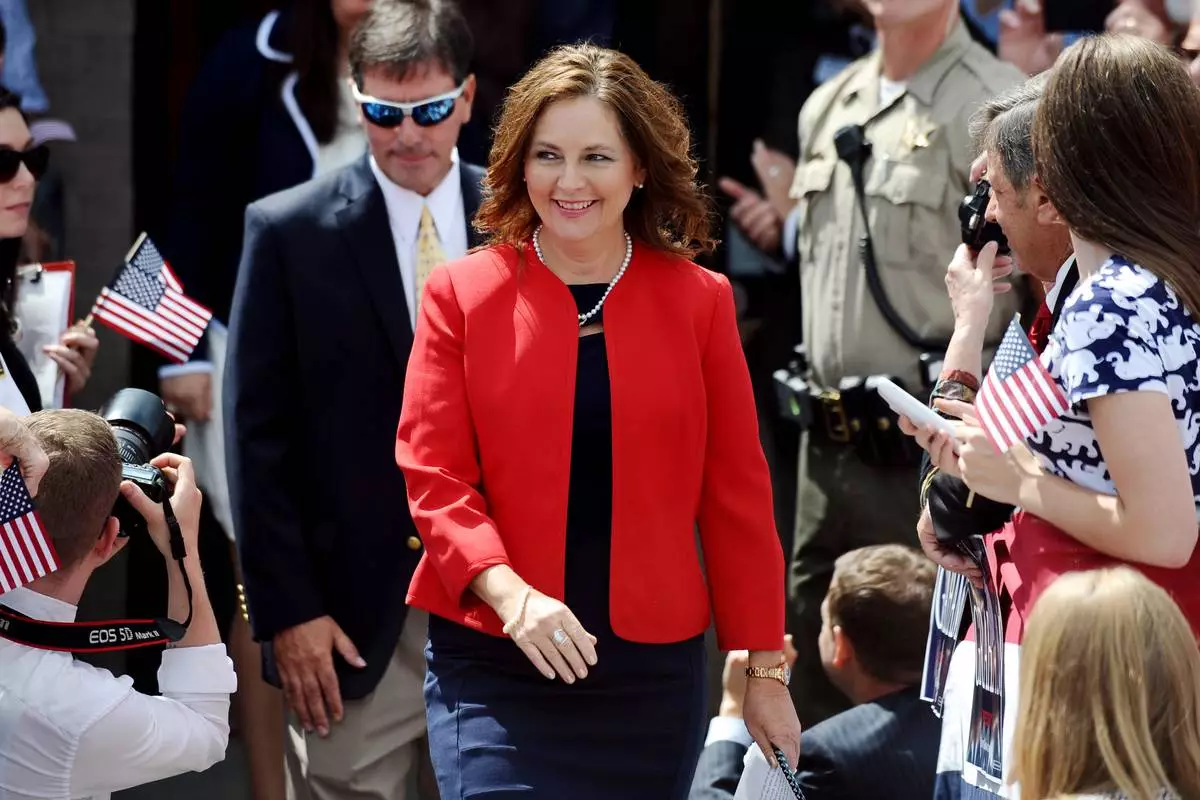
FILE - Darline Graham Nordone, sister of Sen. Lindsey Graham, R-S.C., walks to the stage before his announcement for presidency on Monday, June 1, 2015, in Central, S.C. (AP Photo/Rainier Ehrhardt, File)
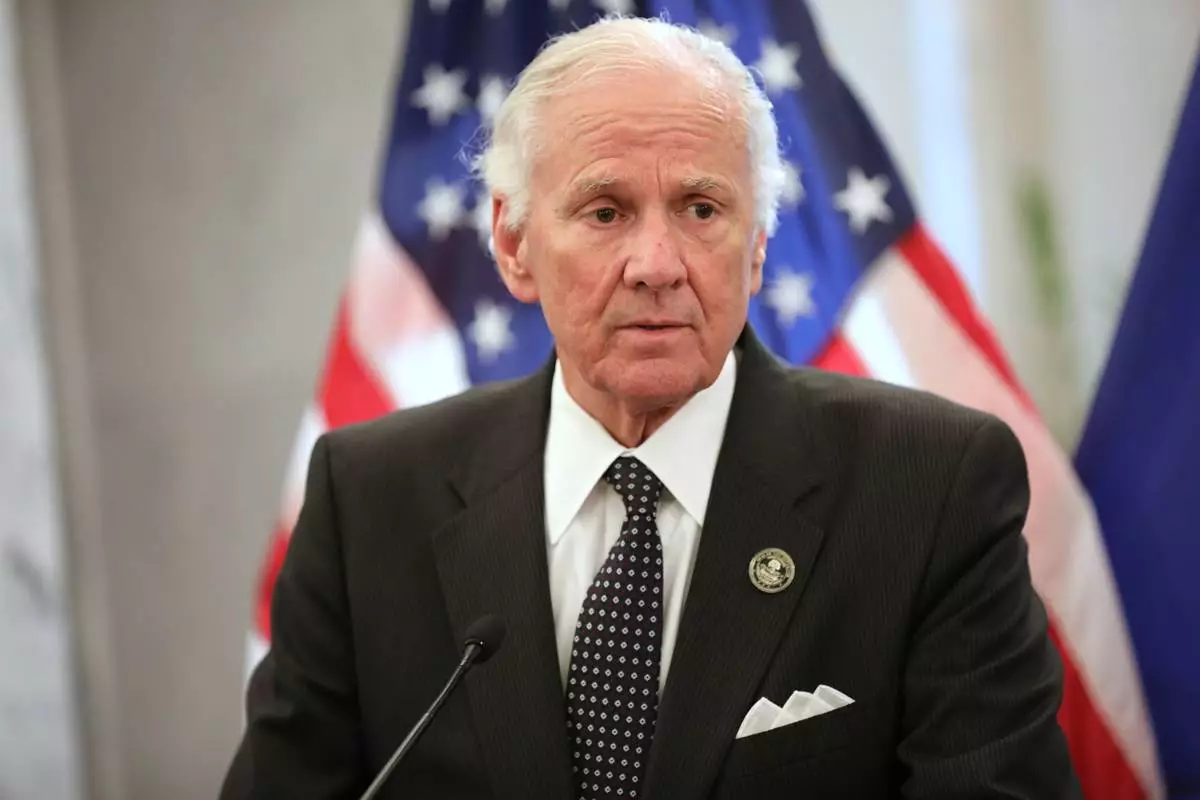
FILE - South Carolina Gov. Henry McMaster speaks to reporters, May 5, 2026, in Columbia, S.C. (AP Photo/Jeffrey Collins, File)
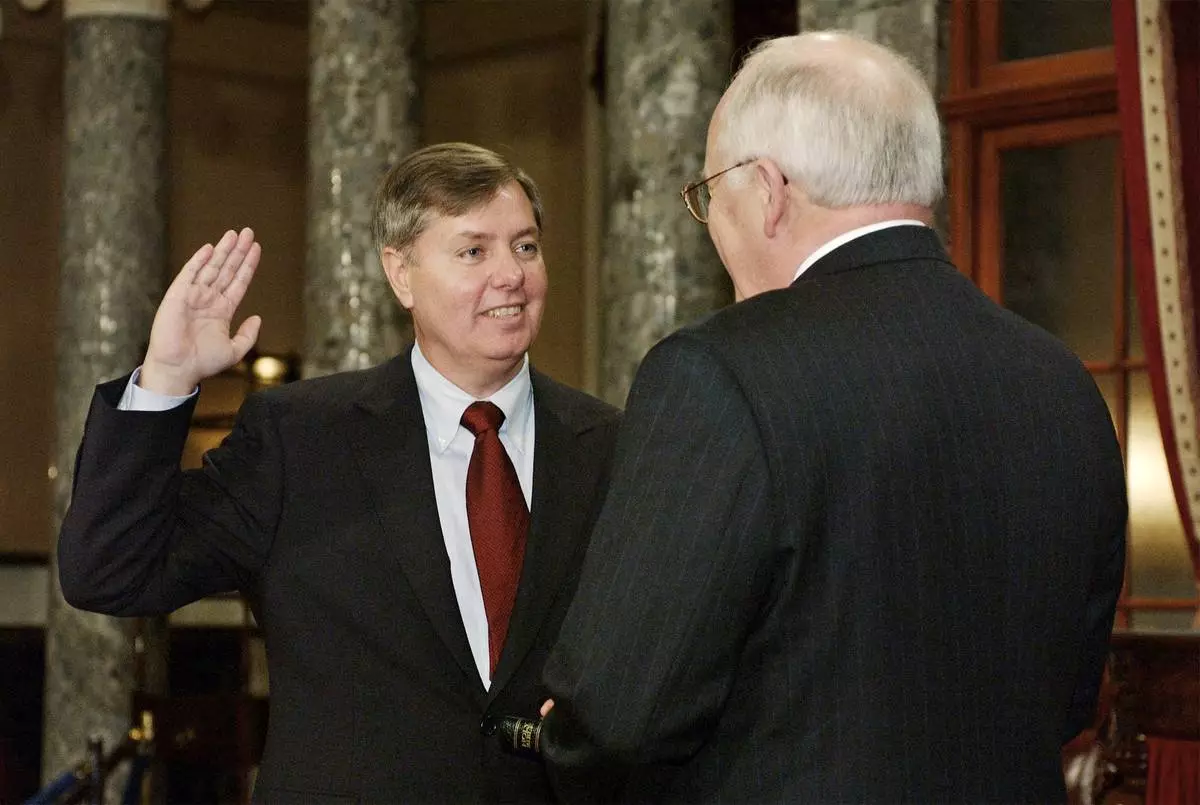
FILE - Sen. Lindsey Graham, R-S.C., takes the oath of office with Vice President Dick Cheney, right, during a re-enactment swearing-in ceremony in the Old Senate Chamber on Capitol Hill in Washington, Jan. 7, 2003, following his election to the Senate. (AP Photos/Evan Vucci, File)
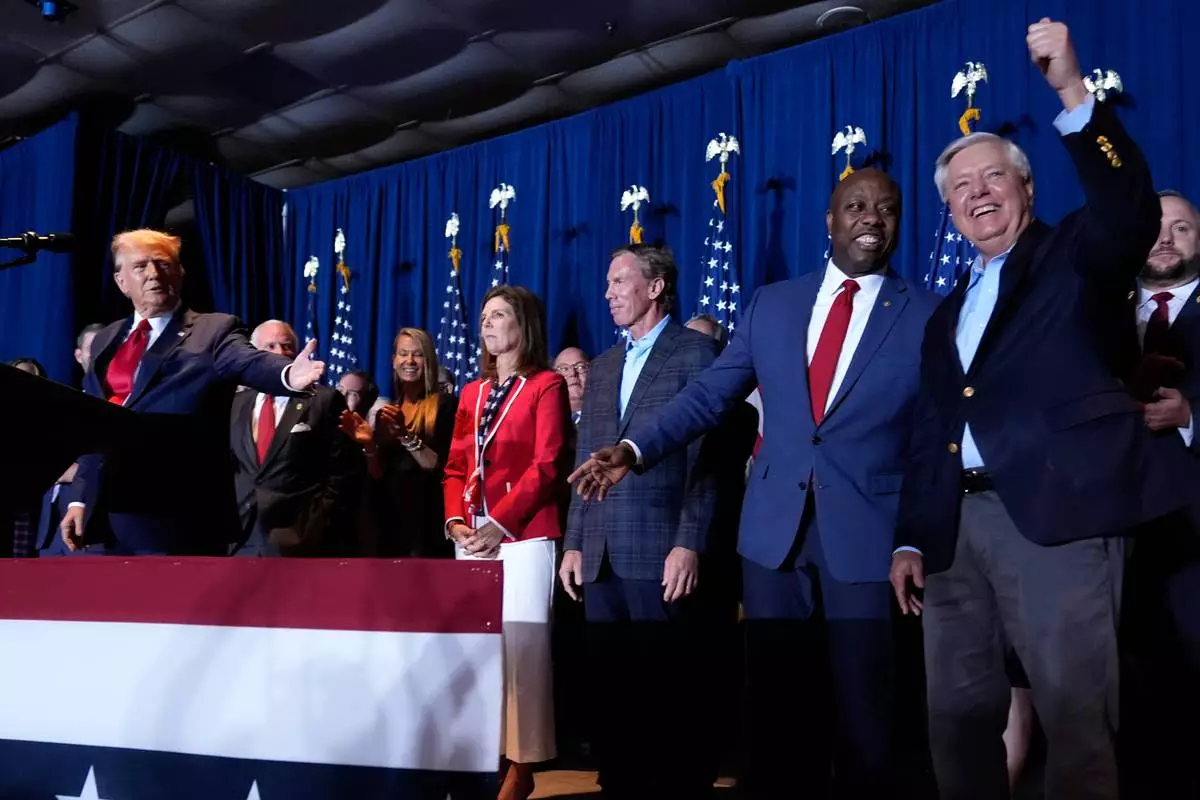
FILE - Republican presidential candidate former President Donald Trump speaks as Sen. Tim Scott, R-S.C., and Sen. Lindsey Graham, R-S.C., listen, at a primary election night party at the South Carolina State Fairgrounds in Columbia, S.C., Feb. 24, 2024. (AP Photo/Andrew Harnik, File)