Support for Israel is a key component of the religious identity of many Jewish adults ages 45 and older in the United States, but younger Jewish adults are more likely to prioritize other forms of connection, like celebrating Jewish holidays, according to a new AP-NORC poll.
That suggests the generational divide on Israel’s actions since the Hamas-led Oct. 7, 2023, attack that triggered the war in Gaza extends beyond politics to religious identity.
“I pray for people in the land of Israel. I don’t need to pray for the state,” said Cameron Bernstein, a 27-year-old medical student in New Orleans. She was raised with strong ties to Israel, where she celebrated her bat mitzvah, but said that now “it doesn’t play a role in my life, more than another country with people I love.”
The survey of 1,022 Jewish adults from The Associated Press-NORC Center for Public Affairs Research shows that this split on support for Israel is particularly apparent among adults like her who identify as religiously Jewish. Jewish adults who are religiously unaffiliated but identify as Jewish in other ways tend to have less of an emotional connection to Israel in general.
Among the religiously Jewish adults — who make up 68% of Jewish adults overall — about 6 in 10 say that being Jewish is “extremely” or “very” important in their life, regardless of their age.
But about half of older religious Jewish adults say that supporting Israel is “extremely” or “very” important for their Jewish identity, similar to the percentage who say that about celebrating Jewish holidays. By contrast, only about 4 in 10 younger religious Jewish adults emphasize support for Israel, while about 7 in 10 say celebrating Jewish holidays is highly important.
Susan Boyer, 72, from Southern California, equates supporting Israel with supporting the right of the Jewish people to have a homeland in the Middle East.
Like many other Jewish Americans, the retiree believes Israel is an essential refuge against the possible repetition of large-scale massacres of Jewish people, like the Holocaust, especially as concern about antisemitism rises among Jewish adults.
“I’ve been defending myself as a Jew since I was a child ... getting mugged by girls in my classes for being a Jew,” Boyer said. “It’s invasive into your daily living that you have to constantly, constantly be defending yourself as a Jew, constantly making sure that nobody is redefining you or nobody is like insulting your land.”
To Ari Pollack, a 30-year-old arts fundraiser in Wisconsin, Israel’s military operations — especially in the last few years — provide fodder for antisemitism and thus make everywhere less safe for Jews.
“I’m personally pretty opposed to basically everything Israel’s doing these days,” said Pollack, who grew up attending religious school. “A source of a lot of frustration that I have for the Jewish establishment is that sort of dogmatic teaching of pro-Israel ideas that I’ve had to unlearn as an adult. And it’s part of what’s kept me away from, you know, attending regular synagogue services.”
Like about 3 in 10 religious Jewish adults under 45, Pollack says that Israel has committed genocide during the war in Gaza, a charge that Israel has vehemently denied. That’s compared with about 2 in 10 Jewish adults ages 45 and older.
The poll suggests that other elements of Judaism remain important to many younger Jewish adults. Americans under 45 who identify as religiously Jewish are more likely than older Jewish adults to say that marking or celebrating Shabbat or avoiding certain foods, like pork or shellfish, are highly important to their Jewish identity.
Phoebe Wapnitsky, a 32-year-old in Connecticut, also strongly opposes Israel’s military actions, which she perceives as unaligned with Jewish values.
“Standing against oppression, promoting social justice — those are the roles that Judaism plays in my life,” she said, adding that she felt disconnected from Israel even before the Oct. 7 attack.
Brian Ebarb, a 47-year-old attorney in Louisiana, also says his Jewish identity was about “action and community” — but those include supporting Israel.
“When the government makes mistakes, it should be criticized,” he said, but added that shouldn’t become an excuse for attacking an entire people. “The existence of the state of Israel is so precarious that we have to be careful and not allow criticism of Israel to become criticism of Jews worldwide.”
Associated Press religion coverage receives support through the AP’s collaboration with The Conversation US, with funding from Lilly Endowment Inc. The AP is solely responsible for this content.
The AP-NORC poll of 3,040 adults was conducted June 11-17 using a sample drawn from NORC’s probability-based AmeriSpeak Panel, which is designed to be representative of the U.S. population. The poll included interviews with 1,022 Jewish adults. The margin of sampling error for adults overall is plus or minus 2.8 percentage points and the margin of sampling error for Jewish adults is plus or minus 5 percentage points.
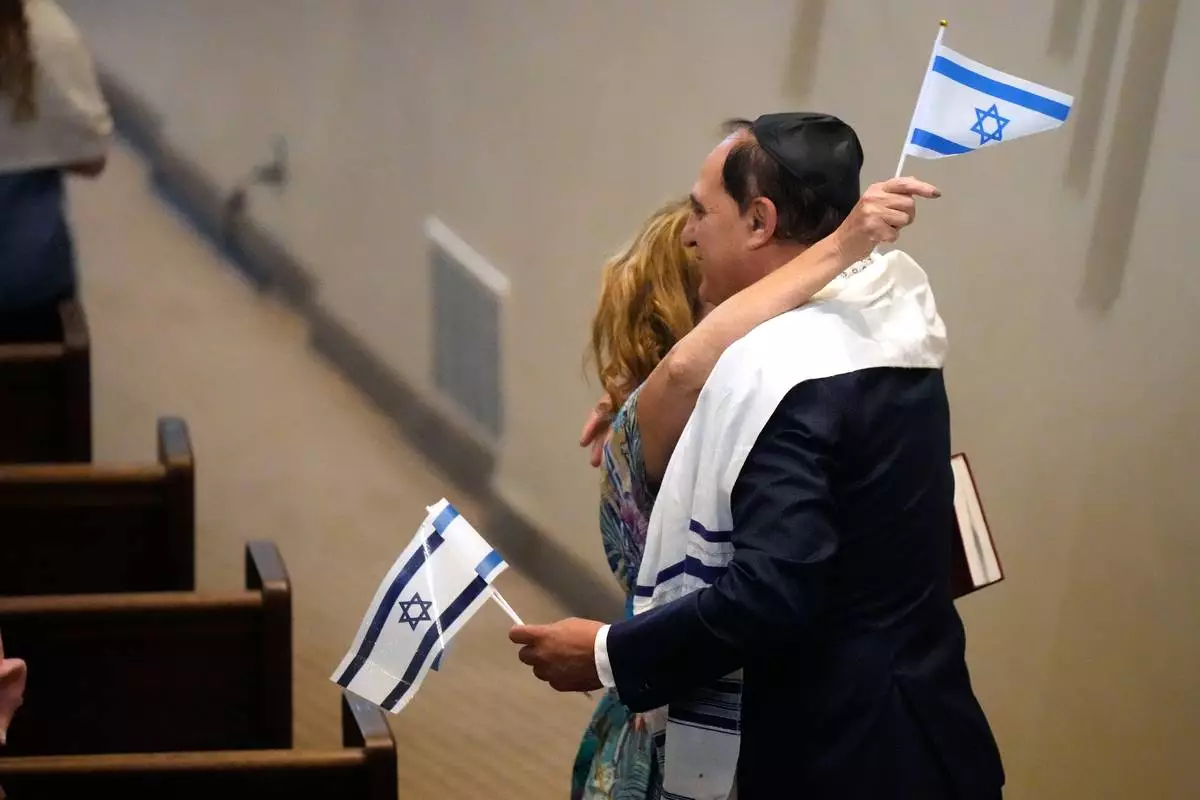
FILE - People hold Israeli flags as they hug during Shabbat Services at The Sinai Temple in Los Angeles, Oct. 14, 2023. (AP Photo/Damian Dovarganes, File)
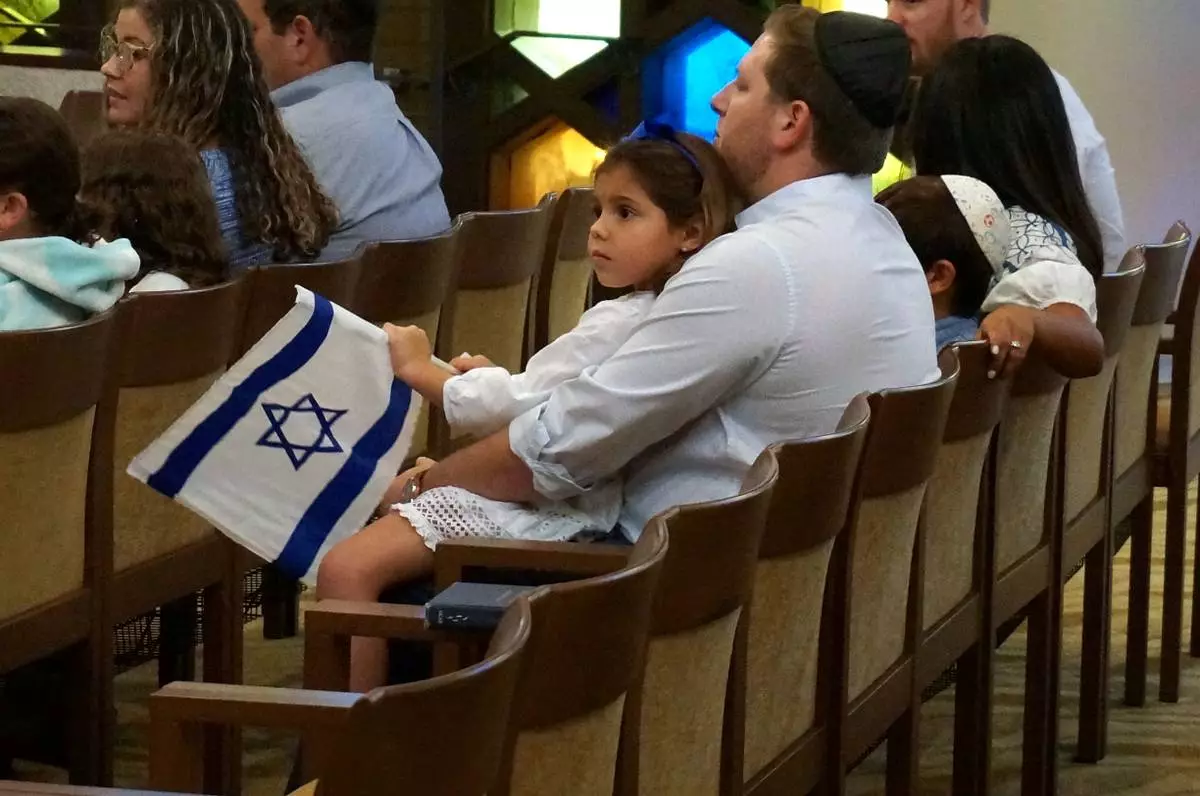
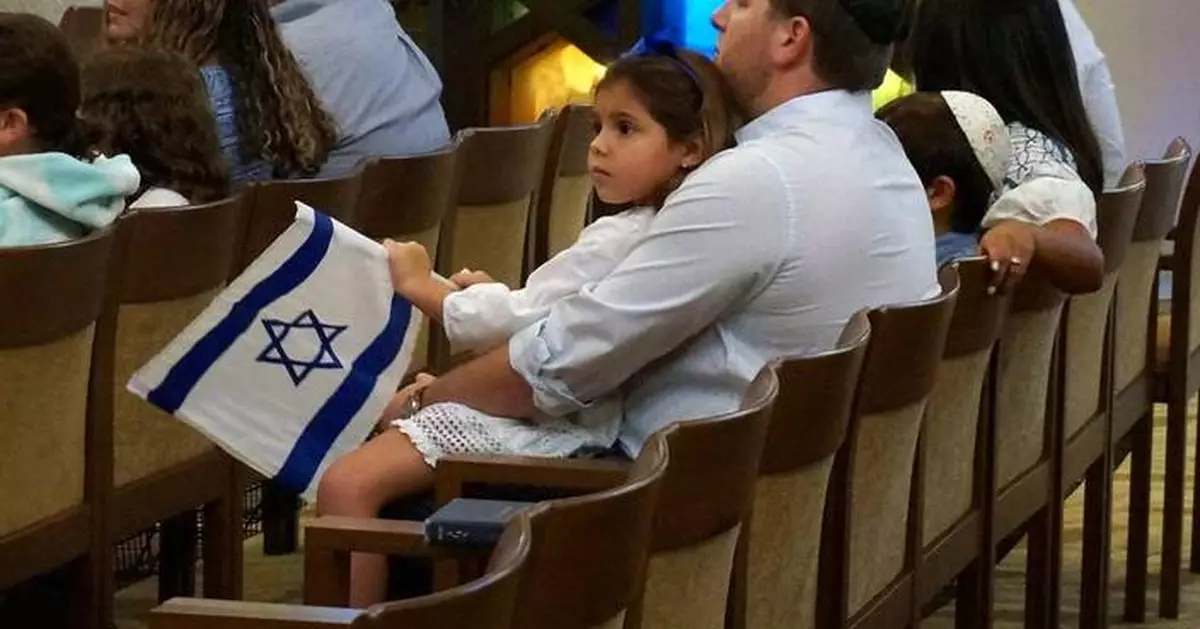
FILE - A family with Israel flags attends Shabbat services at Temple Beth Sholom in Miami Beach, Fla., Oct. 13, 2023. (AP Photo/Giovanna Dell'Orto, File)
DUBAI, United Arab Emirates (AP) — The United States and Iran each asserted Monday they controlled the Strait of Hormuz after a weekend of attacks stretching across the wider Middle East, further threatening any diplomacy to end the war.
The attacks, sparked by Iran striking a container ship Sunday in the strait off the coast of Oman, again underlined that the waterway that once saw a fifth of the world's traded crude oil and natural gas pass through it remained the key issue in negotiations. The narrow mouth of the Persian Gulf has seen shipping disrupted since the start of the war as Iran maintained a chokehold on it by attacking commercial vessels around it, intimidating shippers.
Iran and the U.S. are nearly at the midway point of the 60-day period of an interim deal that was supposed to set up talks for a permanent end to the war. Instead, it has devolved into a series of attacks over the strait and its future, worrying world leaders the Iran war fully could resume.
“A return to full-scale hostilities would have catastrophic consequences,” United Nations Secretary-General António Guterres said in a statement.
The U.S. military’s Central Command described its forces as hitting dozens of sites in the strikes Monday, including air defense systems, radar sites, missile and drone equipment and small boats.
“The Strait of Hormuz is a vital maritime corridor for global trade,” Central Command said. “Iran does not control it.”
The European Union’s top diplomat, Kaja Kallas, also called for the strait to be open as it was before the war.
“The Strait of Hormuz has to be opened, freedom of navigation has to be respected,” she said.
Iran's paramilitary Revolutionary Guard, a key power center in the country's theocracy that controls its ballistic missile arsenal, sharply rejected America's statement.
“The Strait of Hormuz is our territory, and we will not allow a rogue and child-killing army from the other side of the world to continue its illegal interference in it,” the Guard said.
Missile alert sirens sounded three times Monday in Bahrain, home to the U.S. Navy’s 5th Fleet, and Kuwait said it was intercepting hostile fire. There was no immediate word on damage in either country.
In Jordan, the kingdom's military said it shot down four Iranian missiles in an incident that "resulted in zero casualties or material damage.” Jordan also hosts U.S. military forces and aircraft.
In Iran, authorities reported attacks in Hormozgan, Khuzestan and Markazi provinces and at least two people were killed, according to state-run IRNA news agency. Semiofficial Iranian media also reported strikes on Sistan and Baluchestan province as well.
Iranian attacks on Sunday stretched Bahrain, Kuwait, Qatar, Jordan and even Oman — whose territorial waters with Iran make up the strait. Oman, which long has been an interlocutor between Tehran and the West, summoned an Iranian diplomat to criticize the attack.
Meanwhile Monday, a base belonging to the armed wing of the Kurdistan Freedom Party, an Iranian Kurdish opposition group based in Iraq’s semiautonomous northern Kurdistan region, came under drone attack. Rebaz Sharifi, commander of the Kurdistan Militia Corps, said the strikes targeted the group’s Chamshar base, without giving details on casualties or damage. No group immediately claimed responsibility.
The U.S. military early Sunday said it hit some 140 targets, including missile and drone launch sites, ammunition dumps, communication equipment and other sites — a far-heavier set of attacks than in two previous rounds of strikes in the last week.
“We bombed the hell out of them last night,” U.S. President Donald Trump told NBC’s “Meet the Press.”
Iran retaliated by attacking nations in the region hosting U.S. military forces, while insisting it alone must control the strait and potentially charge vessels for traveling through it.
Iran described the strait as being closed, while the U.S. military and Trump asserted that the strait remained open.
Iran’s chokehold on the strait, however, has loosened as the U.S. military provided support to vessels moving along a southern route hugging the coastline of Oman. That new route has angered Iran, which launched repeated attacks on ships using it.
Iran’s grip on the strait led to a global energy crisis, though oil prices have sharply dropped since wartime highs of $120 a barrel.
Iran’s Foreign Ministry spokesperson Esmail Baghaei blamed Washington for the chaos gripping the Mideast.
“Considering the memorandum of understanding’s fourteen clauses, the Americans have, in this brief period, in one way or another, slaughtered its various components,” Baghaei told journalists Monday.
Baghaei also said Iran wouldn't agree to visits by the International Atomic Energy Agency to Iranian nuclear sites bombed in 2025 by the U.S., where Tehran's stockpile of highly enriched uranium is believed still to be.
Trump suggested last week that the interim deal in the war was “over.” But mediators, including Pakistan, Qatar and Egypt, have continued efforts to reach a final agreement to end the war.
A regional official involved in mediation, speaking on condition of anonymity to discuss talks, said efforts to shore up the ceasefire continued Sunday. Pakistan said its foreign minister spoke by phone with Iran’s top diplomat and urged “de-escalation” on both sides.
Iran’s new supreme leader, Ayatollah Mojtaba Khamenei, unseen since the war began, on Saturday vowed in his first statement since the funeral of his father, Ayatollah Ali Khamenei, that Iranians would avenge his killing.
Associated Press writers Munir Ahmed in Islamabad and Stella Martany in Irbil, Iraq, contributed to this report.
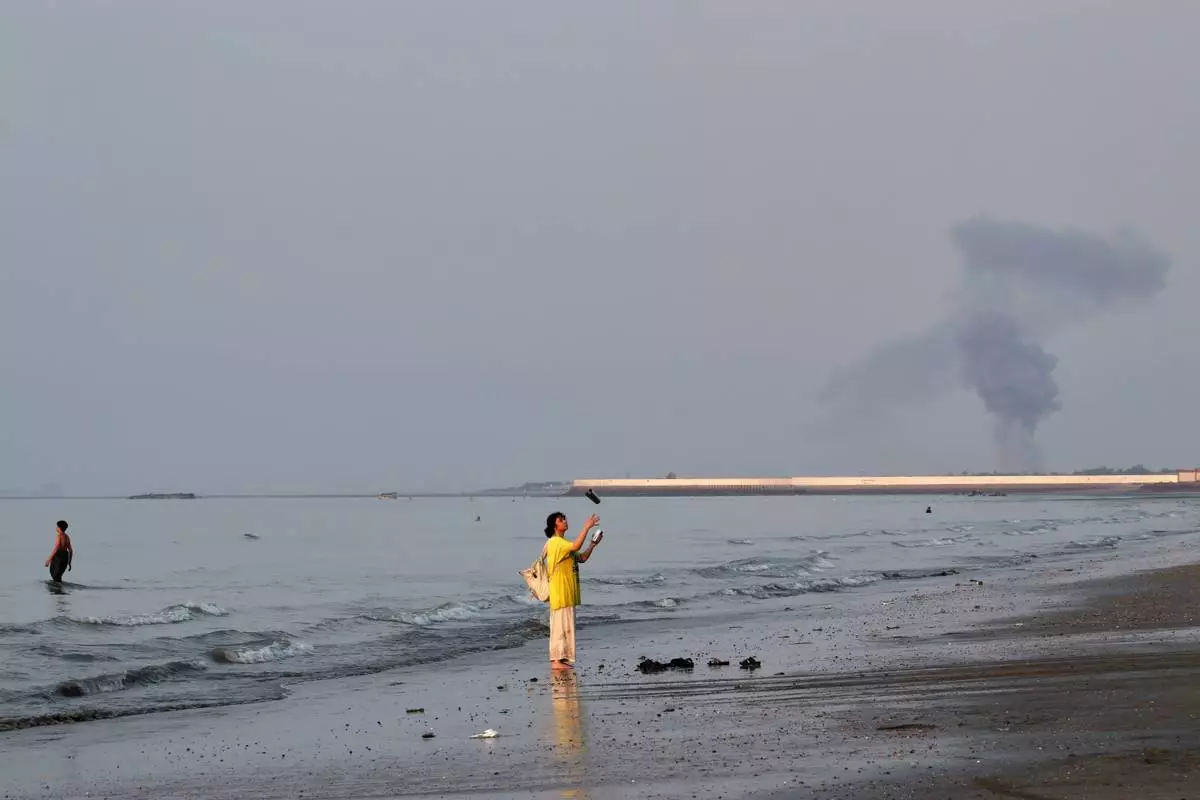
A woman stands at the water's edge along the Strait of Hormuz as a plume of smoke rises in the background following an explosion, off Bandar Abbas, Iran, Monday, July 13, 2026. (Razieh Poudat/ISNA via AP)
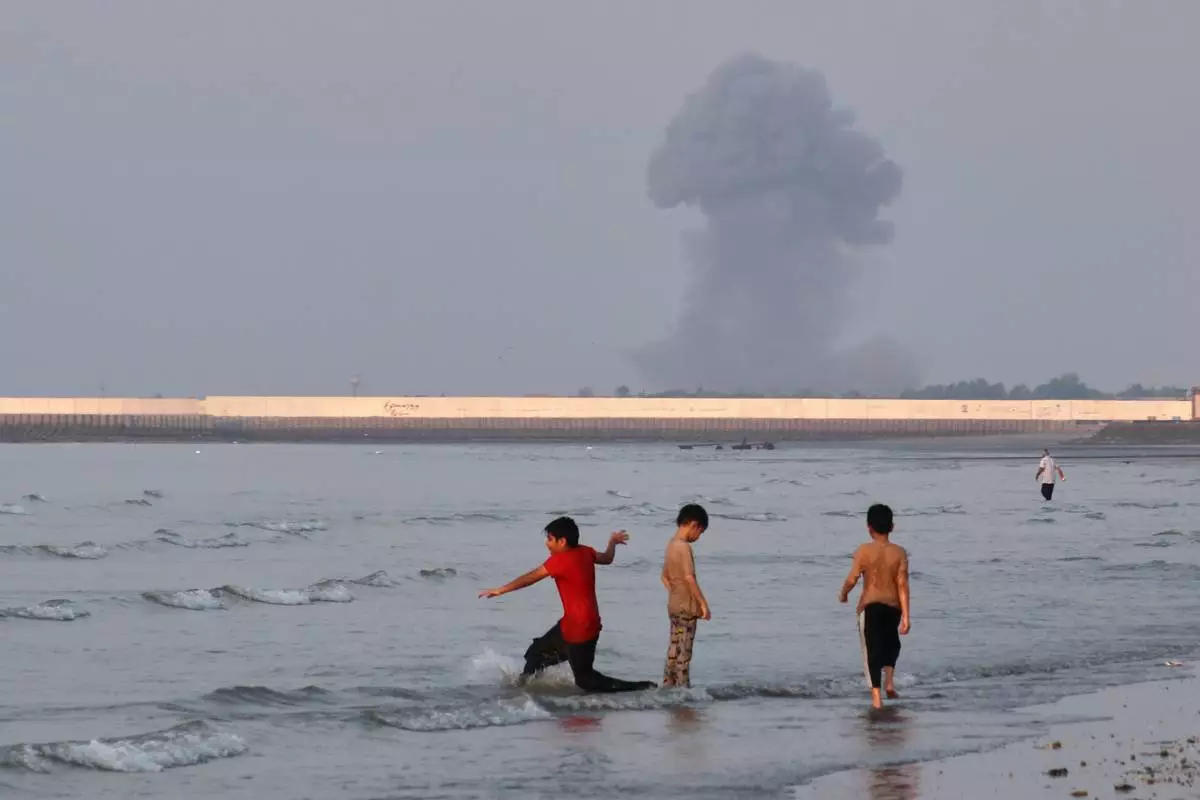
Three boys play in the shallow waters of the Strait of Hormuz, as a plume of smoke rises from an explosion in the background, off Bandar Abbas, Iran, Monday, July 13, 2026. (Razieh Poudat/ISNA via AP)
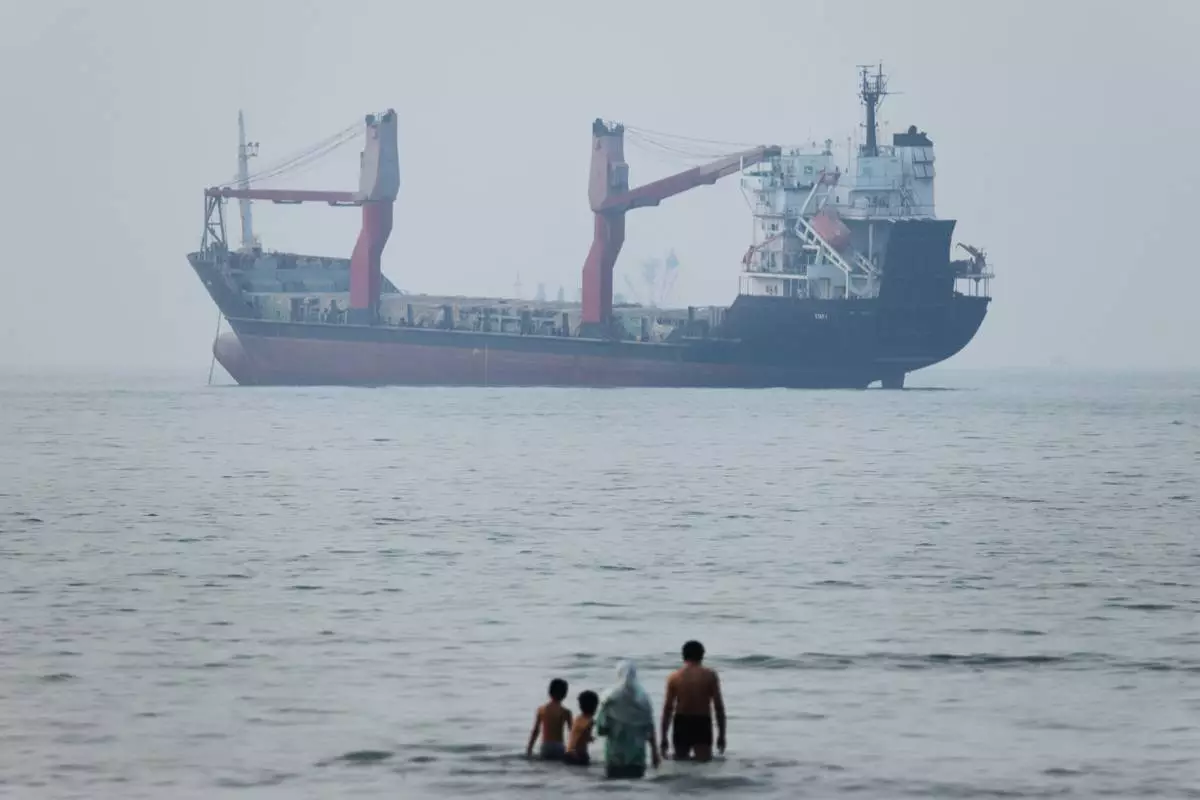
A group of people stands in shallow water as a cargo ship appears anchored in the Strait of Hormuz off Bandar Abbas, Iran, Tuesday, June 30, 2026. (Amirhosein Khorgooi/ISNA via AP)
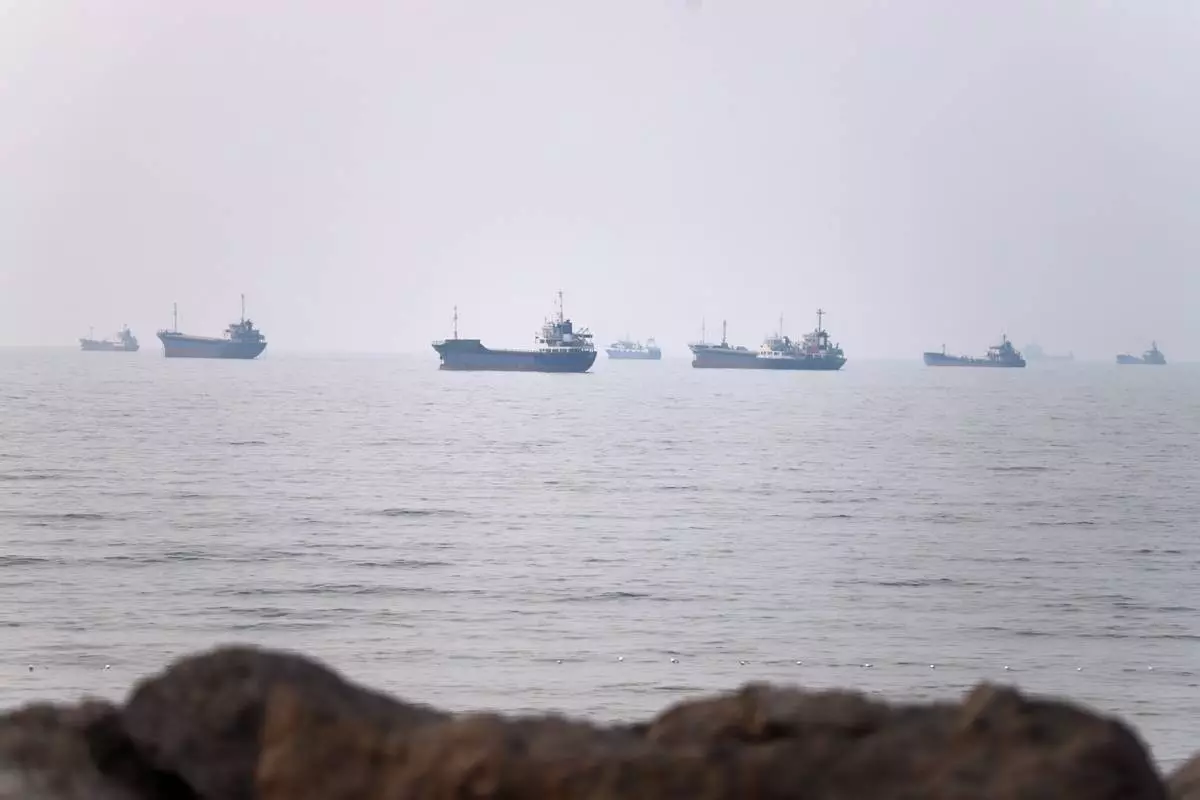
Commercial vessels are seen in the Strait of Hormuz off Bandar Abbas, Iran, Tuesday, June 30, 2026. (Amirhosein Khorgooi/ISNA via AP)