- Provides non-destructive 3D analysis of the location, morphology, and depth profile of internal defects in glass substrates
- Introduces TAMI, a dedicated 3D analysis software platform that connects R&D analysis with production-line review
- Accelerates root-cause analysis and yield learning for glass substrates, a key material for next-generation advanced packaging
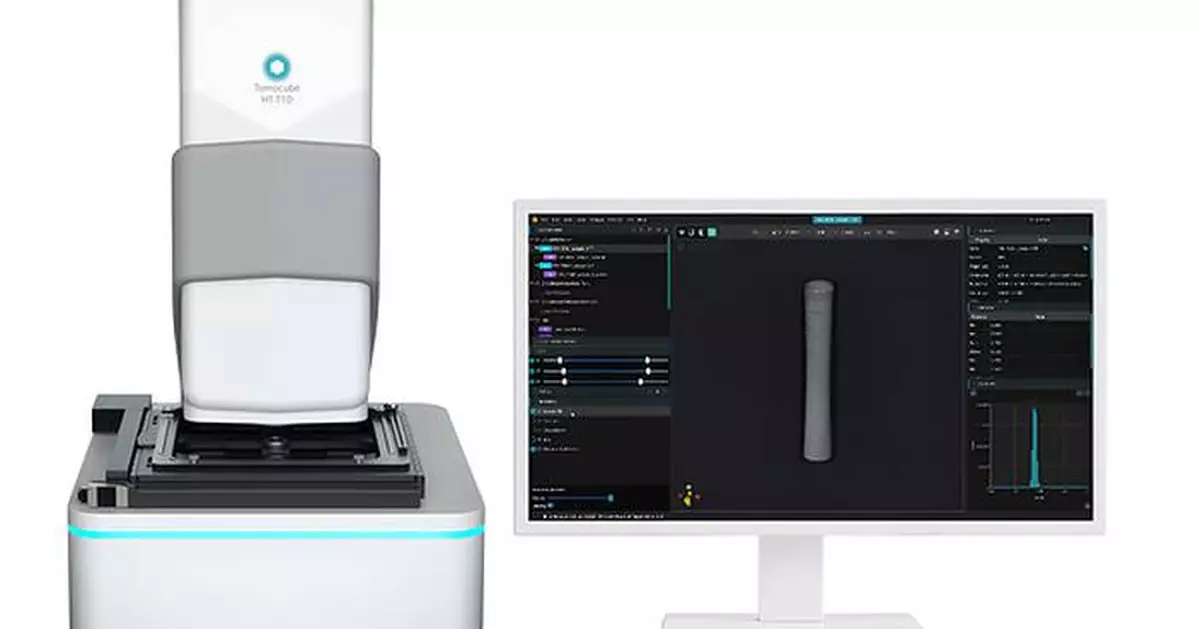
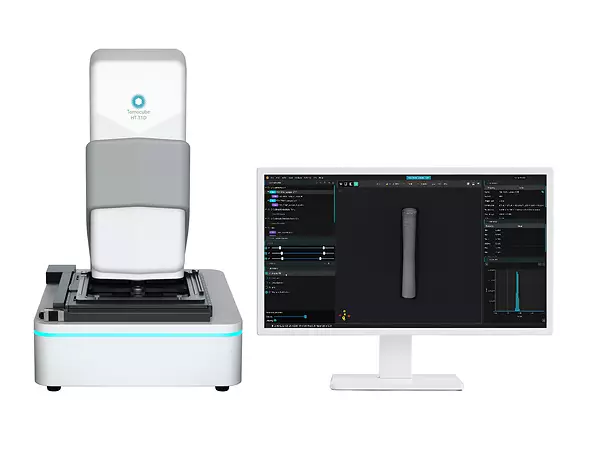
DAEJEON, South Korea, July 13, 2026 /PRNewswire/ -- Tomocube, a 3D non-destructive inspection and metrology company, today announced the launch of HT-T1 Desktop (HT-T1D), a desktop holotomography system for high-resolution 3D defect analysis of glass substrates used in next-generation semiconductor packaging.
HT-T1D is optimized for glass-substrate inspection and metrology workflows. When conventional in-line panel inspection tools, such as automated optical inspection (AOI) systems, flag a potential defect, HT-T1D takes the corresponding coordinates and reconstructs the interior of the glass substrate in three dimensions, resolving the location, morphology, and depth-wise characteristics of defects that surface inspection alone cannot reveal.
Glass core substrates and glass interposers are drawing growing attention as key enabling materials for AI accelerators, high-bandwidth memory (HBM), and other advanced packaging applications. As these substrates move toward mass production, however, manufacturers face mounting challenges in identifying the root causes of micro-defects introduced during complex process steps such as laser drilling, etching, metallization, and singulation. A single critical defect can scrap an entire unit. As a result, the ability to quickly turn inspection data into process improvements has become critical to production-line stability.
HT-T1D applies Tomocube's visible-light holotomography to visualize the three-dimensional refractive-index distribution inside glass with a refractive-index sensitivity of 10⁻⁴. Because the measurement is non-destructive, the same location can be measured repeatedly across successive process stages, allowing users to track when and how a defect forms, propagates, or enlarges. The system is expected to shorten defect-analysis cycles that have traditionally depended on destructive failure analysis, reducing analysis time from days or weeks to minutes in applicable workflows and supporting earlier intervention ahead of high-cost downstream steps.
Alongside the hardware, Tomocube also introduced TomoAnalysis MI (TAMI), a dedicated 3D analysis software platform for metrology and inspection. TAMI quantitatively analyzes 3D refractive-index volume data and generates structured reports for engineering review. It also processes data from HT-T1M, Tomocube's planned in-line module for deployment through system integration partners, in the same format — providing a unified workflow from R&D investigation through production-line review.
"Glass substrates are emerging as a critical material for next-generation semiconductor packaging, but true competitiveness in mass-production will depend on how quickly manufacturers can understand defects and translate that understanding into process improvements," said YongKeun Park, Chief Executive Officer of Tomocube. "HT-T1D goes beyond defect detection, helping customers identify root causes and refine process conditions. We believe it will become an essential metrology platform for accelerating yield learning in glass-substrate manufacturing." He added, "The same platform can also address glass photonic integrated substrates for co-packaged optics (CPO), where the refractive index itself directly affects device performance. This expands its applicability beyond defect analysis to areas that require functional metrology."
With the launch of HT-T1D, Tomocube will engage glass-substrate manufacturers, advanced-packaging companies, and system integration partners to support 3D defect analysis, process review, and yield-learning workflows for glass-substrate manufacturing. The company will also continue to expand its glass-substrate inspection and metrology portfolio, including future in-line deployment through system integration partners, as it addresses the growing demand for defect-analysis and yield-learning solutions in advanced semiconductor packaging.
About Tomocube
Tomocube (www.tomocube.com) develops non-destructive 3D inspection and metrology solutions based on holotomography. Building on optics and three-dimensional imaging expertise established in bioimaging, the company is expanding into industrial markets including semiconductor packaging, displays, and glass substrates.
Forward-Looking Statements
This press release contains forward-looking statements, including statements regarding expected product capabilities, potential customer applications, future in-line deployment, market opportunities, and Tomocube's business plans. These statements are based on current assumptions and expectations and are subject to risks and uncertainties that could cause actual results to differ materially. Tomocube undertakes no obligation to update any forward-looking statements, except as required by applicable law.
DAEJEON, South Korea, July 13, 2026 /PRNewswire/ -- Tomocube, a 3D non-destructive inspection and metrology company, today announced the launch of HT-T1 Desktop (HT-T1D), a desktop holotomography system for high-resolution 3D defect analysis of glass substrates used in next-generation semiconductor packaging.
HT-T1D is optimized for glass-substrate inspection and metrology workflows. When conventional in-line panel inspection tools, such as automated optical inspection (AOI) systems, flag a potential defect, HT-T1D takes the corresponding coordinates and reconstructs the interior of the glass substrate in three dimensions, resolving the location, morphology, and depth-wise characteristics of defects that surface inspection alone cannot reveal.
Glass core substrates and glass interposers are drawing growing attention as key enabling materials for AI accelerators, high-bandwidth memory (HBM), and other advanced packaging applications. As these substrates move toward mass production, however, manufacturers face mounting challenges in identifying the root causes of micro-defects introduced during complex process steps such as laser drilling, etching, metallization, and singulation. A single critical defect can scrap an entire unit. As a result, the ability to quickly turn inspection data into process improvements has become critical to production-line stability.
HT-T1D applies Tomocube's visible-light holotomography to visualize the three-dimensional refractive-index distribution inside glass with a refractive-index sensitivity of 10⁻⁴. Because the measurement is non-destructive, the same location can be measured repeatedly across successive process stages, allowing users to track when and how a defect forms, propagates, or enlarges. The system is expected to shorten defect-analysis cycles that have traditionally depended on destructive failure analysis, reducing analysis time from days or weeks to minutes in applicable workflows and supporting earlier intervention ahead of high-cost downstream steps.
Alongside the hardware, Tomocube also introduced TomoAnalysis MI (TAMI), a dedicated 3D analysis software platform for metrology and inspection. TAMI quantitatively analyzes 3D refractive-index volume data and generates structured reports for engineering review. It also processes data from HT-T1M, Tomocube's planned in-line module for deployment through system integration partners, in the same format — providing a unified workflow from R&D investigation through production-line review.
"Glass substrates are emerging as a critical material for next-generation semiconductor packaging, but true competitiveness in mass-production will depend on how quickly manufacturers can understand defects and translate that understanding into process improvements," said YongKeun Park, Chief Executive Officer of Tomocube. "HT-T1D goes beyond defect detection, helping customers identify root causes and refine process conditions. We believe it will become an essential metrology platform for accelerating yield learning in glass-substrate manufacturing." He added, "The same platform can also address glass photonic integrated substrates for co-packaged optics (CPO), where the refractive index itself directly affects device performance. This expands its applicability beyond defect analysis to areas that require functional metrology."
With the launch of HT-T1D, Tomocube will engage glass-substrate manufacturers, advanced-packaging companies, and system integration partners to support 3D defect analysis, process review, and yield-learning workflows for glass-substrate manufacturing. The company will also continue to expand its glass-substrate inspection and metrology portfolio, including future in-line deployment through system integration partners, as it addresses the growing demand for defect-analysis and yield-learning solutions in advanced semiconductor packaging.
About Tomocube
Tomocube (www.tomocube.com) develops non-destructive 3D inspection and metrology solutions based on holotomography. Building on optics and three-dimensional imaging expertise established in bioimaging, the company is expanding into industrial markets including semiconductor packaging, displays, and glass substrates.
Forward-Looking Statements
This press release contains forward-looking statements, including statements regarding expected product capabilities, potential customer applications, future in-line deployment, market opportunities, and Tomocube's business plans. These statements are based on current assumptions and expectations and are subject to risks and uncertainties that could cause actual results to differ materially. Tomocube undertakes no obligation to update any forward-looking statements, except as required by applicable law.
** This press release is distributed by PR Newswire through automated distribution system, for which the client assumes full responsibility. **
Tomocube Launches HT-T1 Desktop for 3D Glass Substrate Defect Analysis in Advanced Packaging