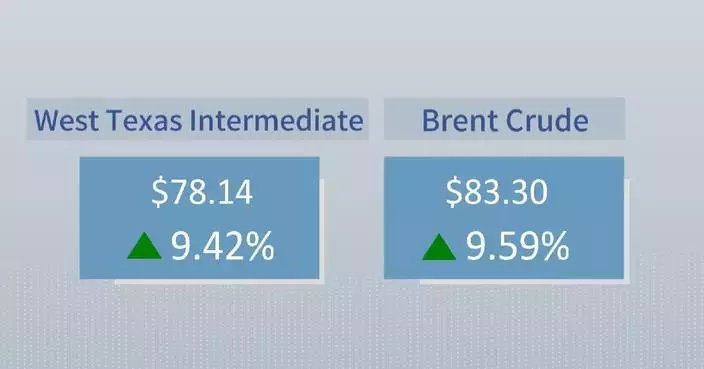
U.S. stocks ended lower on Monday to open a highly anticipated trading week, as a military escalation between the United States and Iran pushed global energy prices higher and reignited core-inflation anxieties.
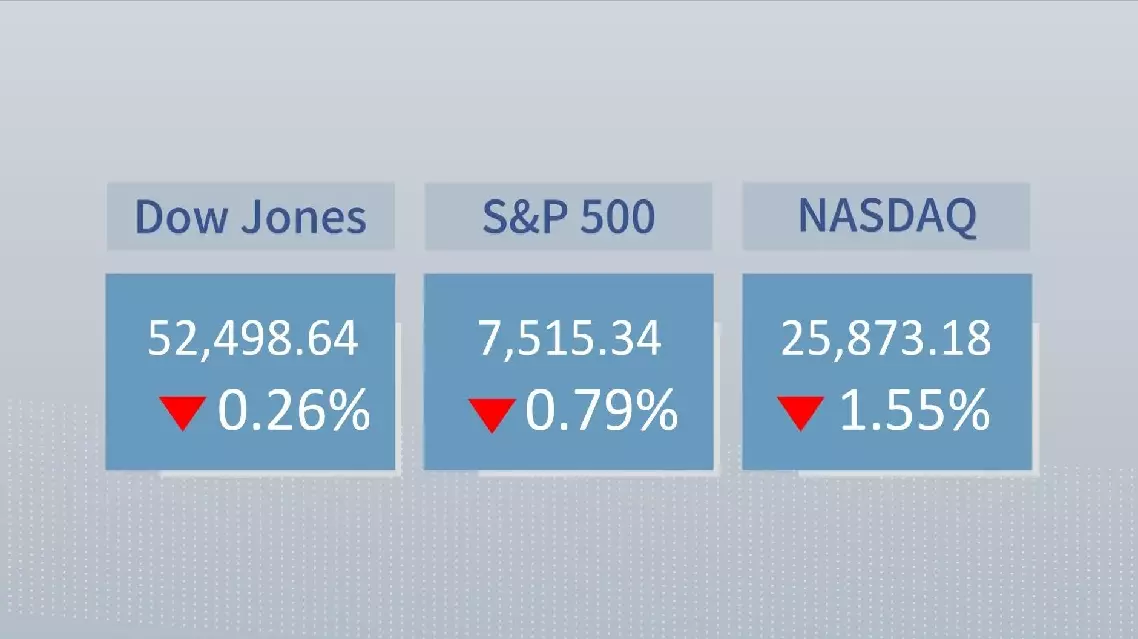
The Dow Jones Industrial Average fell by 138.37 points, or 0.26 percent, to 52,498.64. The Standard and Poor's 500 sank 60.05 points, or 0.79 percent, to 7,515.34. The Nasdaq Composite Index shed 408.43 points, or 1.55 percent, to 25,873.18.
Six of the 11 primary Standard and Poor's 500 sectors ended in the green, with energy and utilities leading the gainers by going up 3.16 percent and 0.67 percent, respectively. Technology and communication services led the laggards, falling 2.07 percent and 0.98 percent, respectively.
Market sentiment deteriorated rapidly over the weekend. The escalation threatened to completely derail active bilateral diplomatic negotiations, with U.S. President Donald Trump warning that he now considers the previous ceasefire to be "over." Adding to the maritime friction, Trump announced that the United States intends to levy a 20-percent transit tariff on all cargo passing through the Strait of Hormuz, heightening global anxieties over commercial passage rights.
In the technology sector, despite a highly celebrated Nasdaq debut on Friday, South Korean memory giant SK Hynix plummeted 9.32 percent on Monday. Competitor Micron Technology was down 4.32 percent, while SanDisk fell 12.63 percent and Western Digital shed 4.64 percent. Seagate Technology Holdings also plunged more than 5 percent as institutional investors locked in profits amid rising concerns over potential oversupply in the high-bandwidth memory market by late 2027.
Meanwhile, in public remarks delivered to the New York Association for Business Economics on Monday, Federal Reserve Governor Christopher Waller warned that the U.S. central bank may be forced to implement an interest rate hike "in the near term" if upcoming macroeconomic data indicates that core price pressures are broadening throughout the economy. "We're building off of basically almost, you know, five to six months of 'higher, higher, higher, higher,' on inflation readings," Waller said. "If I get another higher one, I'm going to treat that as signal, not noise."
The hawkish warning from the Fed governor comes at a highly sensitive time for fixed-income markets, as Wall Street prepares to digest two vital inflation updates later this week: the June consumer price index on Tuesday and the producer price index on Wednesday.
Financial market participants are also bracing for the unofficial kick-off of the second-quarter corporate earnings season, which begins later this week with highly anticipated quarterly disclosures from major financial institutions, including JPMorgan Chase, Goldman Sachs, and Bank of America.
U.S. stocks drop on Middle East escalation