SANTA CLARA, Calif. & GOTHENBURG, Sweden--(BUSINESS WIRE)--Jul 14, 2026--
ECL and PowerCell Group AB (publ) today announced a strategic partnership to deploy industrial-grade hydrogen fuel cell power across ECL's AI data center platform. The agreement comprises a firm purchase order for PowerCell PS190 fuel cell systems, alongside a separate non-binding memorandum of understanding between ECL and PowerCell for approximately 300 MW of additional hydrogen fuel cell capacity as ECL expands its FlexGrid data center footprint. The partnership is underpinned by PowerCell's industrial partnership with Bosch, its manufacturing partner and largest shareholder, which provides the manufacturing foundation to deliver at industrial scale.
This press release features multimedia. View the full release here: https://www.businesswire.com/news/home/20260714813440/en/
Initial deployment begins at ECL's 35MW CSC-1 campus in Santa Clara, California, where containerized PowerCell fuel cell systems will integrate into ECL's FlexGrid microgrid architecture alongside grid power, natural gas and battery storage. The deployment expands on an existing PowerCell deployment at ECL's MV-1 facility in Mountain View, California, where hydrogen has been used as the primary power source for more than two years.
“We evaluated multiple fuel cell technologies under real operating conditions over two years at our MV-1 facility before selecting PowerCell and Bosch,” said Yuval Bachar, founder and CEO of ECL. “This is not a pilot or a proof of concept. We are deploying these PowerCell PS190 units with the operational data to back it up, and we are signing an MOU for an additional 300 MW because the demand from AI operators for power in constrained markets far exceeds what any single grid connection can deliver.”
PowerCell, which spun out of the Volvo Group, brings more than 25 years of fuel cell experience and over one million hours of field data across automotive, marine and stationary power applications. Bosch, PowerCell's largest shareholder and strategic manufacturing partner, provides large-scale production capability and U.S.-based service infrastructure to support ECL deployments.
“ECL is among the very few operators who not only run hydrogen in production but understand how to orchestrate it intelligently alongside storage and other energy sources as one integrated system,” said Richard Berkling, CEO of PowerCell Group. “Our firm order for PowerCell PS190 systems, alongside our broader non-binding MOU, sends a clear signal that hydrogen-powered AI data centers are moving from first-of-kind toward industrial scale.”
Bosch supports this scalable approach by providing the industrial manufacturing foundation. The company also delivers the local North American service needed to integrate these hydrogen systems into core data center infrastructure. “Bringing hydrogen fuel cells to industrial scale requires more than strong technology; it requires manufacturing discipline, predictable quality and dependable lifecycle support,” said Thilo Müller, Senior Vice President Fuel Cell Business at Bosch. “Bosch is proud to bring that industrial foundation to the partnership with PowerCell and ECL. Our goal is to turn promising technology into reliable, long-term infrastructure.”
PowerCell's Distributed Master Controller platform will integrate with ECL's Lightning real-time management system to manage dynamic load balancing across fuel cells, batteries, the grid, and natural gas at each FlexGrid site.
ECL is accepting tenant inquiries for AI infrastructure deployments in 2027-2028. Prospective tenants can contact ECL directly through www.ecldc.com.
About ECL
ECL is a next-generation data center company focused on building high-density, AI-ready facilities that can be deployed where traditional power infrastructure falls short. ECL's FlexGrid microgrid architecture and ECL Lightning real-time management platform combine grid power, natural gas, batteries and hydrogen fuel cells to deliver resilient, efficient power tailored to AI and inference workloads. ECL introduced the world's first operational hydrogen-powered AI data center at its MV-1 site in Mountain View, California, in 2024 and is scaling its FlexGrid architecture across U.S. and international markets. Backed by Molex Ventures and Hyperwise Ventures, ECL enables scalable, low-carbon compute for AI, high-performance and edge workloads. For more information, visit www.ecldc.com.
About PowerCell
PowerCell is a world leader in hydrogen electric solutions with unique fuel cell stacks and systems. With decades of experience, it uses its expertise to accelerate the transition to an emission-free, more sustainable world. The company targets industries such as aviation, marine, power generation, rail, off-road and on-road. PowerCell is headquartered in Gothenburg, Sweden, with sales globally and is listed on Nasdaq Stockholm. To read more, visit www.powercellgroup.com.
About Bosch Power Solutions
The Power Solutions division is part of the Bosch Mobility business sector. It offers integrated powertrain solutions from a single source, spanning e-mobility, gasoline and diesel injection, as well as hydrogen fuel-cell and internal combustion technologies. The division's goal is to make mobility as clean, economical, and efficient as possible for passenger cars, commercial vehicles, and off-highway applications. With its global manufacturing and R&D footprint, Bosch develops innovative software and hardware architectures that shape the future of sustainable drive systems.
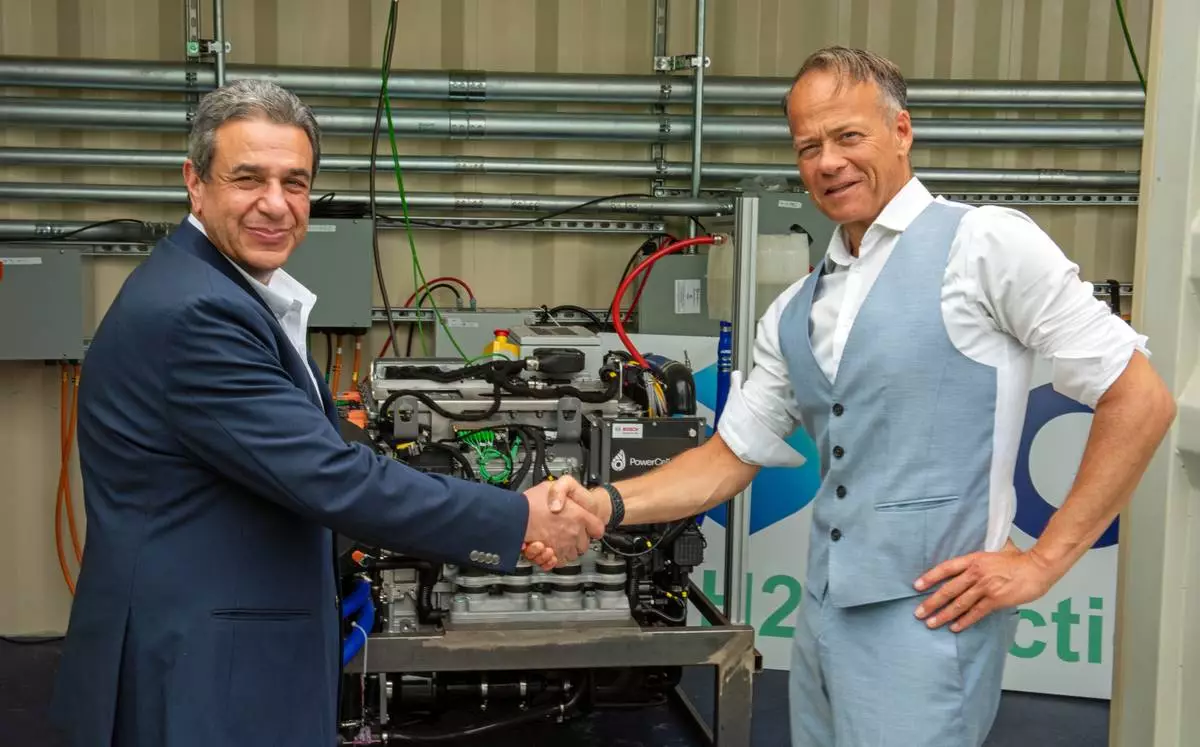
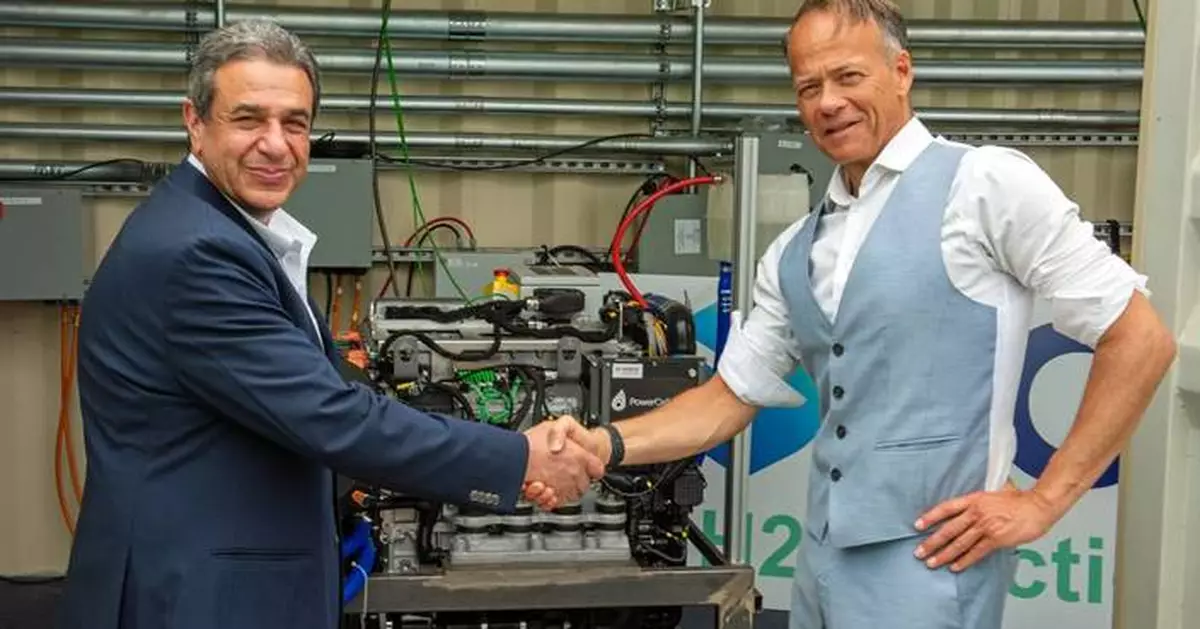
Yuval Bachar, founder and CEO of ECL (left) and Richard Berkling, CEO of PowerCell Group (right), shake hands upon the completion of a strategic partnership to deploy industrial-grade hydrogen fuel cell power across ECL's AI data center platform. The agreement comprises a firm purchase order for PowerCell PS190 fuel cell systems, alongside a separate non-binding memorandum of understanding between ECL and PowerCell for approximately 300 MW of additional hydrogen fuel cell capacity as ECL expands its FlexGrid data center footprint. A PowerCell hydrogen fuel cell currently deployed in production at ECL's MV-1 data center in Mountain View, Calif. is in the background.

JUNEAU, Alaska (AP) — Alaska voters are choosing candidates for November’s general election in a series of primary contests Tuesday, including a U.S. Senate race that will be among the most closely watched in the nation this fall.
The campaign featured over a dozen contenders in each of the top races — for Senate, U.S. House and governor. Under Alaska’s open primary system, all candidates appear on the same ballot, and the four who receive the most votes qualify for the ranked vote general election.
Tuesday's ballot also included state legislative candidates and a ballot initiative that would reimpose campaign contribution limits in state and local elections.
The highest-profile candidates in a field of 16 were two-term Republican Sen. Dan Sullivan and Democratic former U.S. Rep. Mary Peltola.
The race, which could help determine control of the Senate, has drawn significant attention from outside groups, with Republican and Democratic campaign organizations identifying it as a top target. Peltola shook up her campaign leadership days before the primary, letting her campaign manager go and elevating a deputy to that role. In a statement, the campaign described the changes as “staffing updates as we transition into the general election.”
Sullivan, a veteran and ally of President Donald Trump, has campaigned on supporting the military, opening more land for oil and gas extraction, and voting for Trump's signature tax and spending law. He accused Peltola of being aligned with Lower 48 “liberals.”
Peltola leaned into the “fish, family, freedom” slogan that first got her elected in 2022, and criticized a political system she said is rigged by special interests and allows politicians to enrich themselves.
But it was a third candidate, a Republican also named Dan Sullivan, who garnered much of the attention.
Dan J. Sullivan won a legal fight to appear on the ballot despite claims by the senator and GOP allies that he was a sham candidate running at the behest of Democrats with the intent of causing confusion. Dan J. Sullivan, a retired teacher from the island community of Petersburg, denied that and said frustration with the incumbent prompted him to run.
He appeared on the ballot as Daniel J. Sullivan Jr., with no party affiliation — a decision that a state elections official said was intended to minimize possible confusion. Meanwhile, the senator was listed as Dan S. Sullivan, Republican and incumbent. No other candidate seeking reelection has the “incumbent” label.
The drama involving the dueling Dan Sullivans caught the attention of Trump. In a social media post reiterating his support for the senator days before the primary, Trump called the other's candidacy an attempt to trick voters and urged his followers to vote for “SULLIVAN, DAN S.”
Dan J. Sullivan criticized the senator for embracing Trump's endorsement, calling the president “more interested in raising tariffs on our allies than in lowering the cost of groceries, housing and energy” and “more interested in punishing his enemies than bringing Americans together.”
The Senate race was a focal point for a number of voters casting their ballots Tuesday.
Jeri Kissner said Congress must do more to push back against Trump.
“I’m so disappointed in our Congress to acquiesce to the president and his minions,” Kissner said. She favored Peltola in the Senate race because she did not like the other options.
Giap Nguyen said he wants lawmakers who are willing to change the status quo and make decisions. Nguyen said he felt he had a lot of candidates to choose from, though “I don't know if I can consider them good choices, but we shall see.”
Tom Dienst, who voted early and described himself as an “extremely staunch Reagan Republican,” said Trump needs allies to help carry out his agenda.
“When you look at all of the good Trump policies that will help the state, there’s just no doubt. We have to continue with Sullivan,” he said.
In the race for Alaska's only U.S. House seat, the most prominent candidates were Republican Rep. Nick Begich, seeking a second term, and independent Bill Hill, a fisherman and former educator from a small southwestern village.
Progressive Democrat Matt Schultz suspended his campaign last month but remained on the ballot. His campaign said Schultz would withdraw as a general election candidate if he makes the primary's top four.
Schultz urged support for Hill, who leaned into concerns about affordability. Begich, who was endorsed by Trump, cast himself as hardworking and effective in his role. House Speaker Mike Johnson appeared at a rally for Begich in a conservative part of the state this month, though the event was closed to news media.
The campaign for the state’s top executive office was an open race this year because Republican Gov. Mike Dunleavy was barred by term limits from seeking a third consecutive stint.
Two Democrats hoped to emerge from a crowded, largely Republican field: former state lawmakers Jonathan Kreiss-Tomkins and Tom Begich, who is Nick Begich's uncle. If either wins in November, he would become Alaska's first Democratic governor since Tony Knowles left office in 2002.
Republicans in the race included Bernadette Wilson, a businessperson and conservative activist; Click Bishop, a former state labor commissioner and lawmaker; Dave Bronson, former mayor of Anchorage; and Adam Crum and Treg Taylor, two former members of Dunleavy's Cabinet.
Former Gov. Bill Walker, an independent, also was on the ballot.
The lone ballot measure in the primary asked voters to reimpose campaign contribution limits, five years after a divided federal appeals court struck down a number of caps.
The measure proposes a $2,000 limit on how much individuals can give to candidates in state and local elections and a $5,000 cap on what they can give to political parties. It also would limit spending by groups other than political parties, and limit what individuals and groups can give to joint campaigns for governor and lieutenant governor.
Supporters say such limits are needed to prevent outsize influence by special interests and wealthy donors. Opponents say the measure would favor candidates with name recognition and restrict the free expression rights of contributors.
Political spending by wealthy people has become a flashpoint in races in Alaska and elsewhere. In 2025 in Wisconsin, billionaires Elon Musk and George Soros helped push spending in a state Supreme Court campaign past $100 million, the most ever for a court race in the U.S.
Sen. Dan Sullivan, R-Alaska, who is seeking a third term, flashes a thumbs up after a passing motorist honked during a sign waving event at an intersection on primary election day in Anchorage, Alaska, Tuesday, Aug. 18, 2026. (AP Photo/Mark Thiessen)
U.S. Sen. Dan Sullivan, R-Alaska, speaks at a get out the vote event held at farm in Palmer, Alaska, on Monday, Aug. 17, 2026. (AP Photo/Mark Thiessen)
FILE - Alaska Republican U.S. Rep. Nick Begich walks down a corridor in the state Capitol before giving a speech to Alaska lawmakers, March 10, 2026, in Juneau, Alaska. (AP Photo/Becky Bohrer, File)
FILE - Alaska U.S. House candidate Bill Hill, an independent, speaks with people at a campaign fundraising event in Juneau, Alaska, June 4, 2026. (AP Photo/Becky Bohrer, File)
FILE - Dan Sullivan, a candidate in Alaska's U.S. Senate race who shares his name with the incumbent seeking reelection, talks with a reporter, July 3, 2026, in Petersburg, Alaska. (AP Photo/Becky Bohrer, File)
FILE - Sen. Dan Sullivan, R-Alaska, speaks to reporters at the Capitol in Washington, June 30, 2025. (AP Photo/Mark Schiefelbein)
FILE - Alaska U.S. Senate candidate Mary Peltola, a Democrat, speaks during a campaign rally on May 14, 2026, in Juneau, Alaska. (AP Photo/Becky Bohrer, file)