The term weaponized vehicle has become commonplace at news conferences and in statements released by federal officials during the Trump administration's immigration crackdown.
Federal authorities initially used that language Monday when talking to state officials about the actions of a Maine driver who was fatally shot by immigration officers. In public statements, Department of Homeland Security officials shifted their description to say officers fired into the vehicle “fearing for public safety.”
It was the second time in a week that federal immigration authorities shot and killed someone behind the wheel of a car, initially accusing the driver of attempting to ram into immigration officers.
But while the weaponization of a car is often used to justify the use of deadly force against a driver, the legal definition is a lot less clear cut.
In numerous state and federal courts, judges have agreed that vehicles can be considered weapons when they are used to inflict harm. But many of those cases have been considerations of whether enhanced charges such as aggravated assault with a deadly weapon can be levied against a person after an injury or death was already caused by a vehicle.
Many state laws that address assault with a vehicle are designed to enhance manslaughter or other charges against people violating traffic laws or driving requirements. Judicial opinions have largely focused on crimes of negligence, road rage or driving while intoxicated, and in rare instances, cases where someone purposefully drove their car into a crowd of people.
They rarely deal with the question faced by police or federal law enforcement officials of when a moving vehicle should be considered a dangerous weapon, and when that allows for the use of deadly force.
Many law enforcement departments and agencies weigh the potential for unintended harm heavily when instructing officers or agents on when it's acceptable to fire a weapon at a moving vehicle.
Many department policies tell officers to move out of the way of a vehicle rather than shoot because of the potential harm to bystanders who could be struck by unintended gunfire or by a careening vehicle if the driver is incapacitated.
Policies often say a suspect fleeing is not enough justification for using deadly force. Some require another weapon such as a firearm being used as a threat from the person in the vehicle to establish a clear threat to public or officer safety.
Exceptions exist in many use-of-force policies for what became a familiar scene abroad and at times in the U.S. — a person driving a vehicle into crowded public streets to inflict as much damage as possible.
But, experts say those exceptions have been used as a defense in situations where a person was not posing the same level of threat.
They say officers and juries should consider factors such as the speed of the vehicle, whether there are large gatherings of people on the sidewalks or nearby, and the reason for the initial police interaction. For example, a person fleeing an armed robbery at a bank might pose a higher danger than someone fleeing a traffic stop.
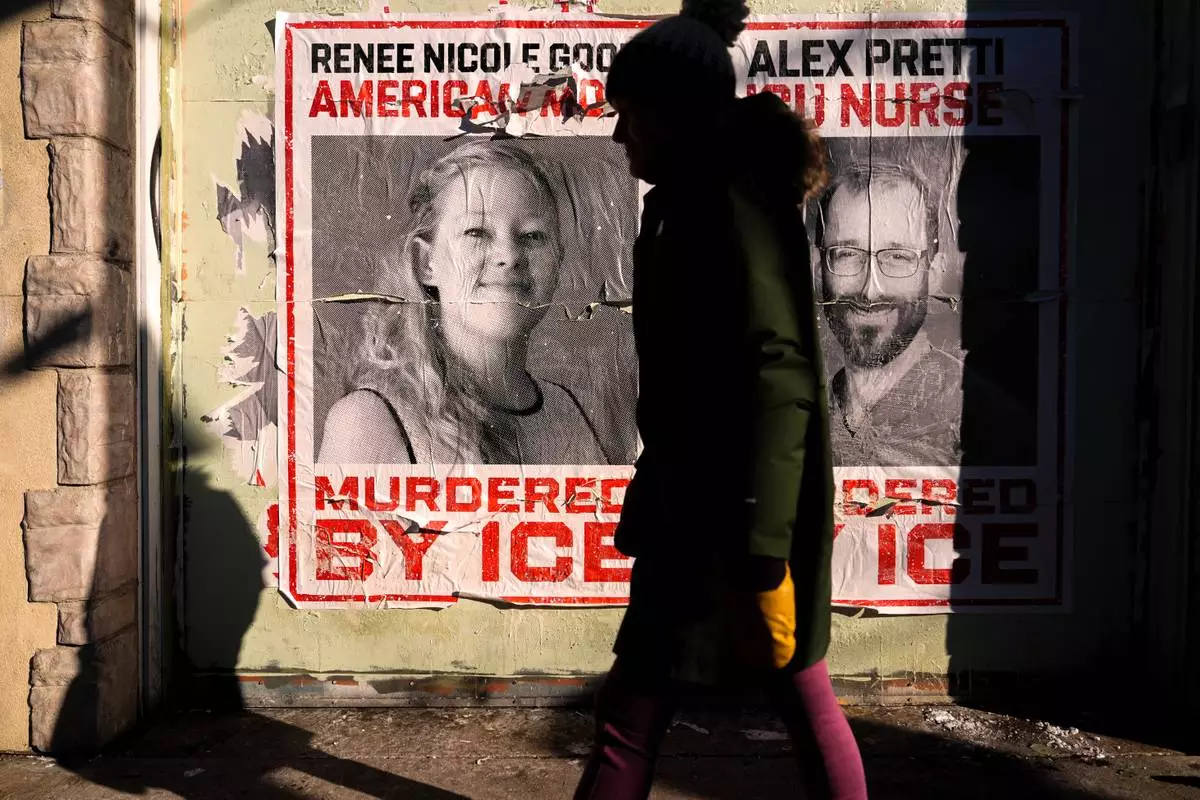
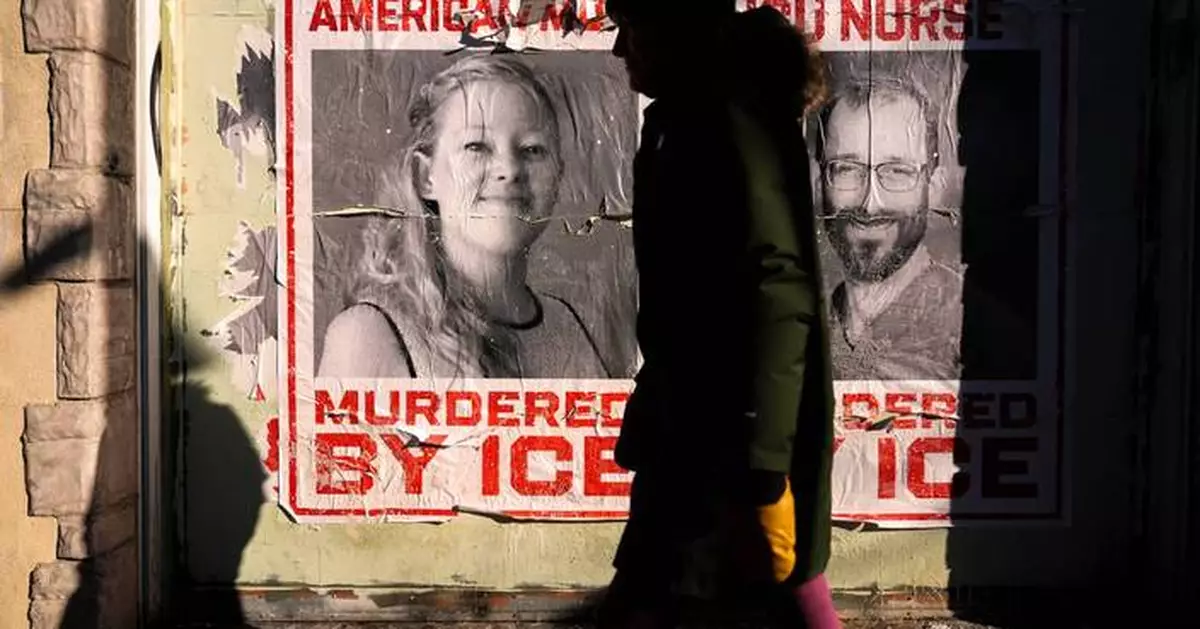
FILE - A woman walks by posters of Renee Good and Alex Pretti during a solidarity bike ride for Pretti, Jan. 31, 2026, in Minneapolis. (AP Photo/Julia Demaree Nikhinson, File)
WASHINGTON (AP) — Supreme Court Justice Amy Coney Barrett told lawmakers Tuesday that a sharp increase in threats targeting her and other justices is increasingly encroaching on their personal and family lives.
During a rare appearance by justices before Congress, Barrett said she had to wear a bulletproof vest home a few years ago, something she struggled to explain to her 12-year-old son.
“I didn't expect that performing this service would put me in the position of explaining to my children what a bulletproof vest was, why I had to wear one,” she said.
She and Justice Elena Kagan testified before a House appropriations panel in support of a request to increase security funding for members of the nation’s highest court.
Judges around the country have seen a rise in threats of violence and intimidation. Barrett's home was also targeted by a fake swatting call to police in May.
The hearing comes two weeks after the conservative-majority court finished handing down a series of major opinions, including a decision that increased President Donald Trump’s power over federal regulatory agencies and another that rejected his wide-ranging tariffs, sparking harsh personal criticism.
It's the first time justices have testified before Congress since 2019, and the two justices are faced wide-ranging questions about the court's work.
The Supreme Court requested a total of $228 million for next fiscal year, a roughly 10% increase over the year before. About $18 million of that is for maintaining the building and grounds.
Much of the requested increase, $14.6 million, would go to expanding personal protection for justices, with six more agents for each.
An additional $2 million would fund an off-site residential security post aimed at making emergency responses faster, as well as increasing the number of Supreme Court police officers.
The U.S. Marshals Service, responsible for protecting judges, reported 564 threats in the government fiscal year that ended in September, an increase from the year before.
That total includes threats to the hundreds of federal judges around the country, though the nine-member Supreme Court has not been immune.
In May, Barrett’s security detail worked with police to quickly deal with the call determined to be swatting, or a fake 911 call designed to provoke a police response. Last year, her sister was the victim of a bomb threat in Charleston, South Carolina, police said. No bomb was found.
In 2022, shortly after the leak of a draft opinion overturning the Roe v. Wade abortion decision, a would-be assassin was arrested near the home of Justice Brett Kavanaugh with weapons and zip ties. Threats to the Supreme Court increased after that leak, and have continued to grow, Kagan said.
Chief Justice John Roberts has condemned the threats to all U.S. judges, saying during a speech in March that criticism of judicial opinions is understandable, but personally directed hostility is “dangerous, and it’s got to stop.”
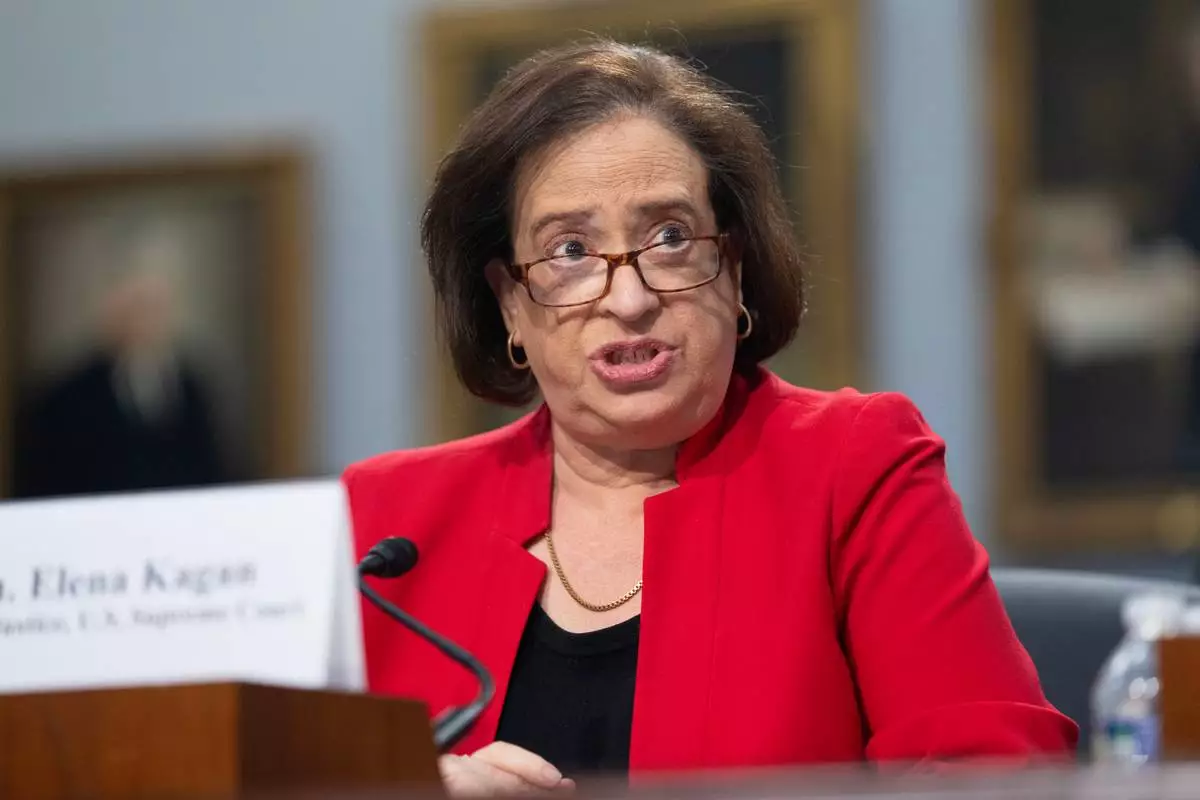
Supreme Court Justice Elena Kagan testifies during a House Appropriations subcommittee hearing, Tuesday, July 14, 2026, on Capitol Hill in Washington. (AP Photo/Nathan Howard)

Supreme Court Justice Amy Coney Barrett testifies during a House Appropriations subcommittee hearing, Tuesday, July 14, 2026, on Capitol Hill in Washington. (AP Photo/Nathan Howard)
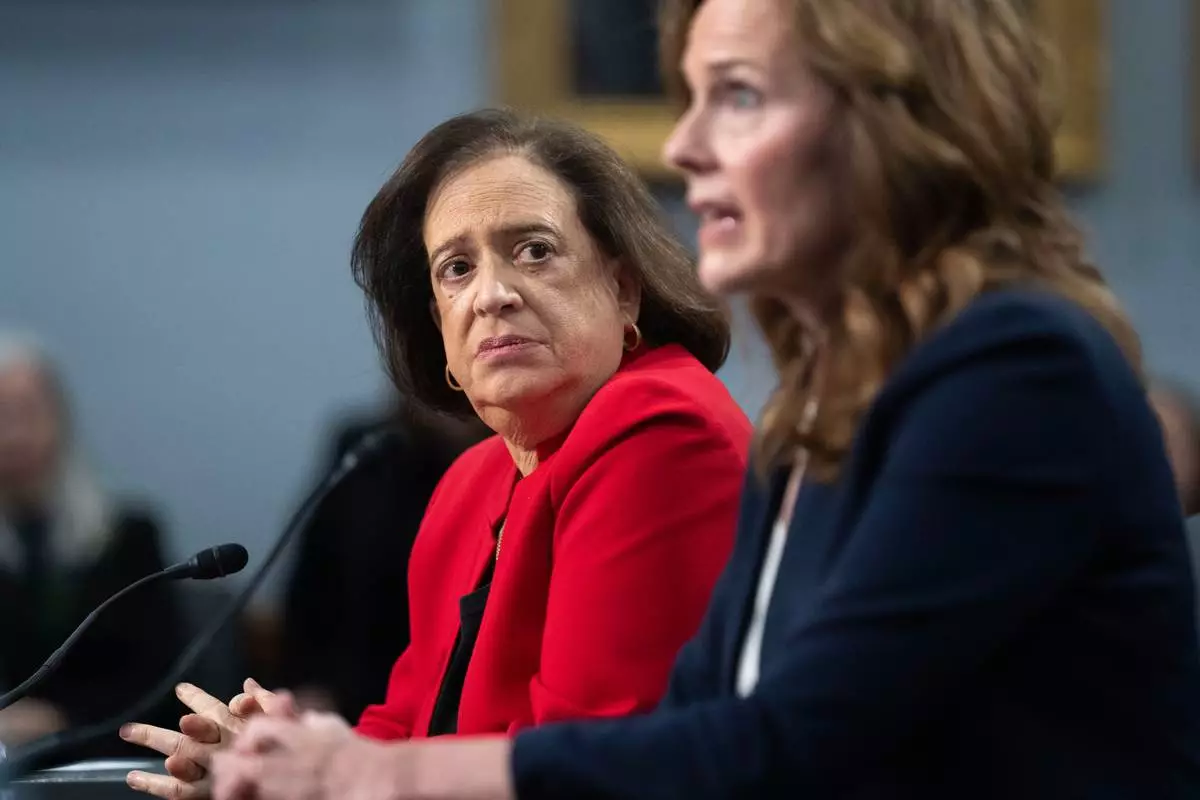
Supreme Court Justices Amy Coney Barrett, right, and Elena Kagan testify during a House Appropriations subcommittee hearing, Tuesday, July 14, 2026, on Capitol Hill in Washington. (AP Photo/Nathan Howard)
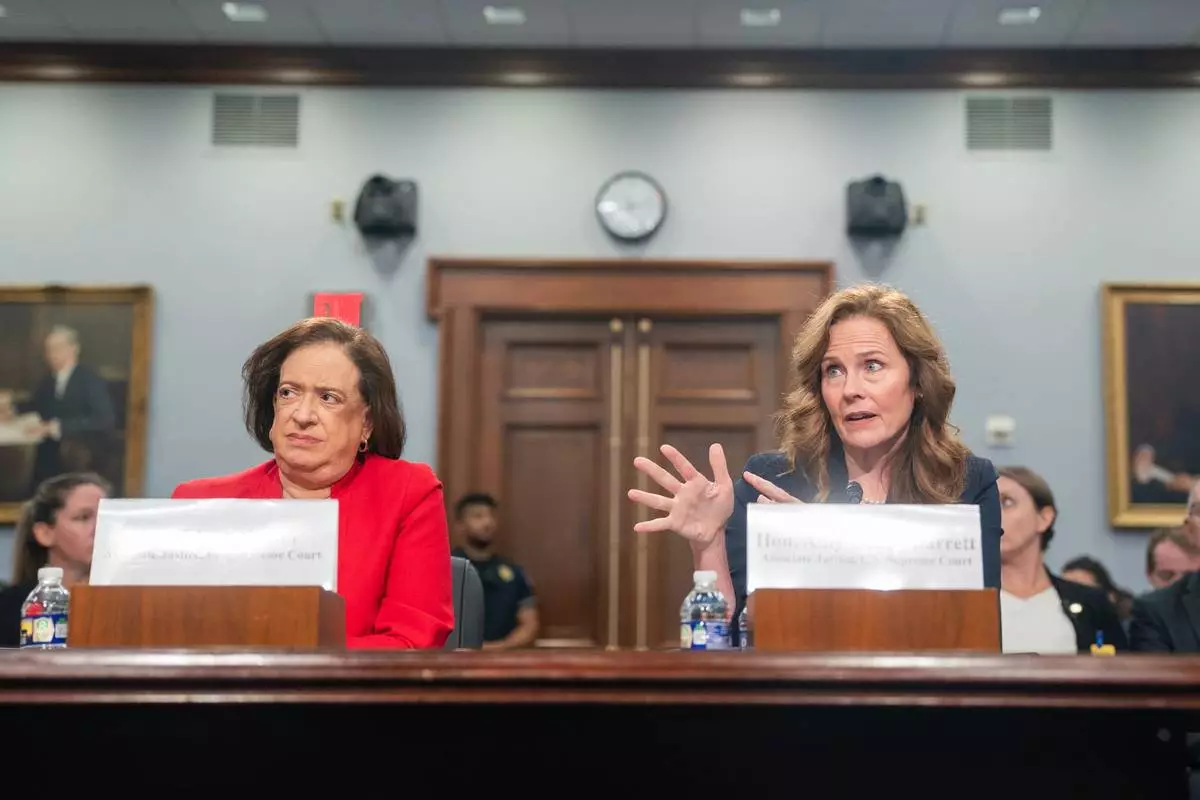
Supreme Court Justices Amy Coney Barrett, right, and Elena Kagan testify during a House Appropriations subcommittee hearing, Tuesday, July 14, 2026, on Capitol Hill in Washington. (AP Photo/Nathan Howard)
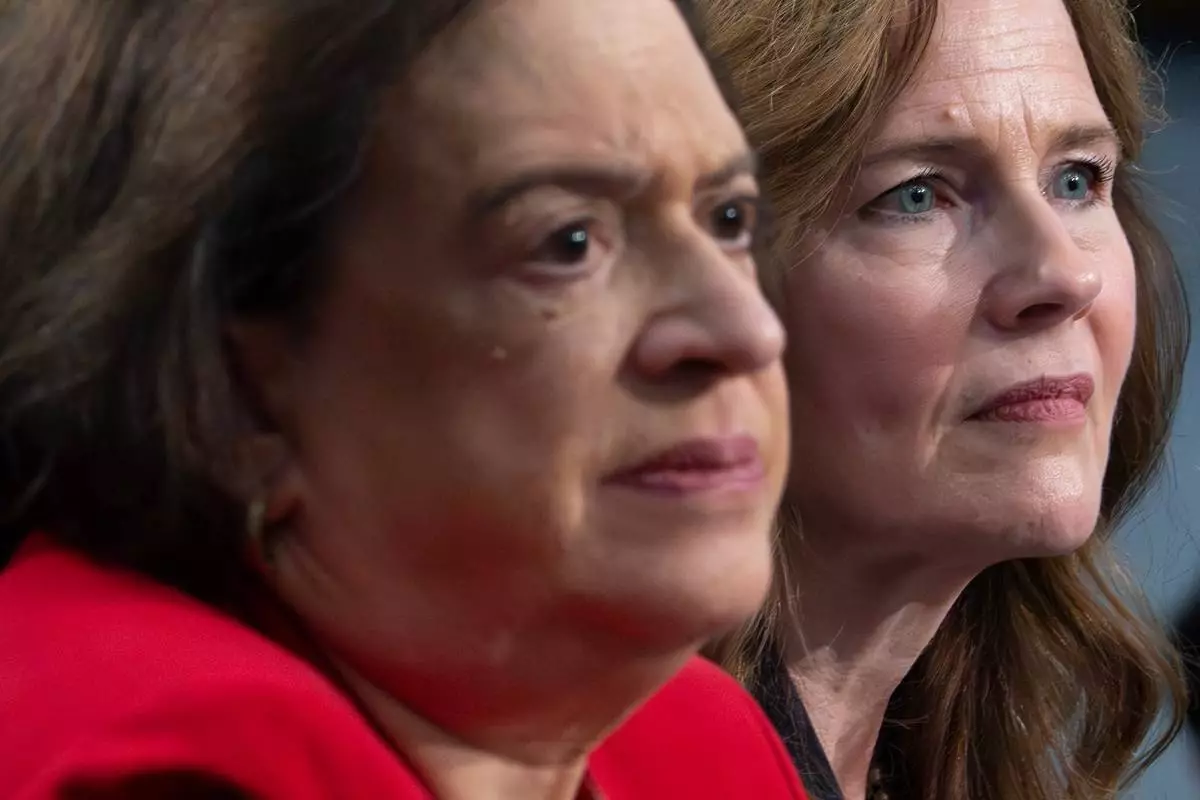
Supreme Court Justices Amy Coney Barrett, right, and Elena Kagan testify during a House Appropriations subcommittee hearing, Tuesday, July 14, 2026, on Capitol Hill in Washington. (AP Photo/Nathan Howard)
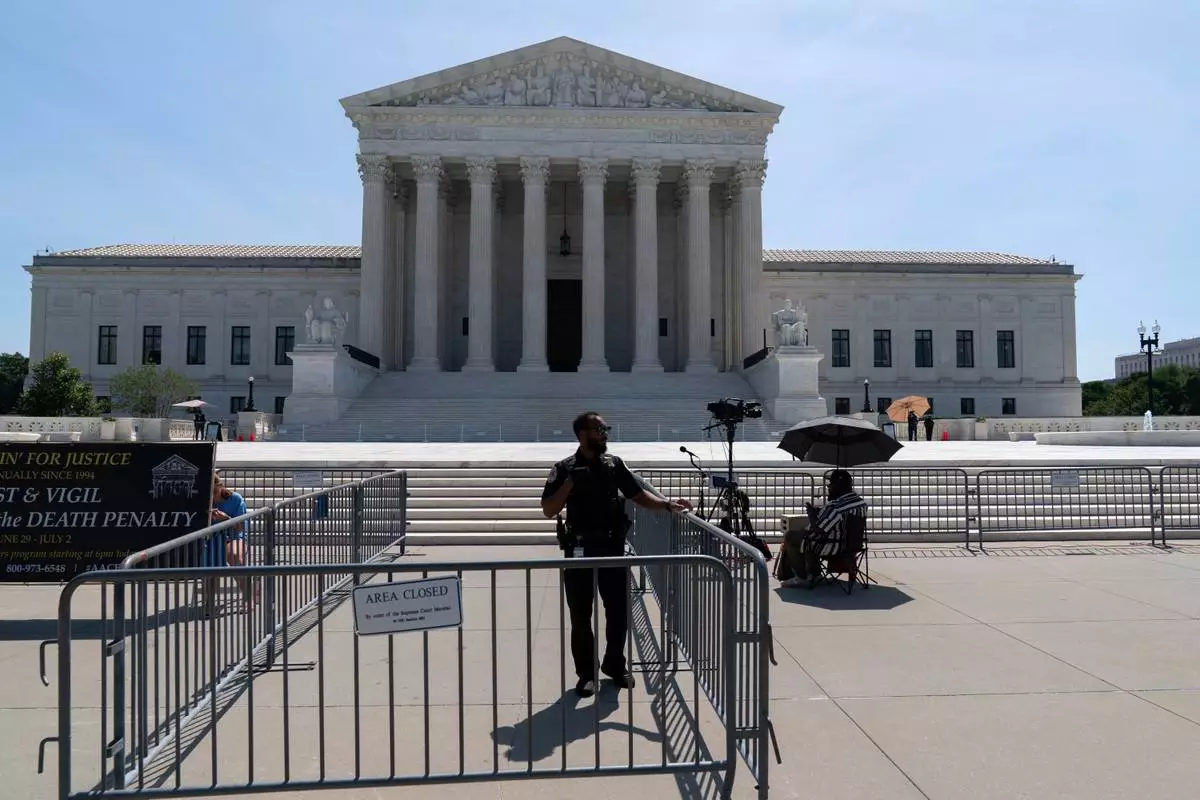
The Supreme Court is seen Tuesday, June 30, 2026, on Capitol Hill in Washington. (AP Photo/Jose Luis Magana)