Eighty percent of new Ebola cases in eastern Congo are emerging from unknown chains of transmission, the World Health Organization said Tuesday, a sign the outbreak is spreading faster than health officials can track despite an expanding response.
Congo has been battling an outbreak of a rare type of Ebola since May, with no approved treatment or vaccine. The Africa Centres for Disease Control says it is the fastest-growing Ebola outbreak on the continent.
“Perhaps the most alarming finding is that many of the newly reported deaths are people who died in their communities without ever reaching a health facility and without receiving care,” Chikwe Ihekweazu said after returning from Bunia, in Ituri province, one of the worst-hit cities. “And as of today, 80% of new cases are outside our contact lists and so are coming to us from unknown chains of transmission.”
People who die outside the health system cannot be isolated, treated or have their contacts traced promptly, increasing the risk of further transmission.
The outbreak, Ihekweazu said, “continues to outpace the response efforts.”
As of Monday, at least 1,926 people have been infected, of whom 702 have died, in three provinces in Congo from the rare Bundibugyo virus, Congolese authorities said. Cases have also been confirmed in neighboring Uganda.
Ihekweazu told reporters in Geneva that his visit to Bunia had been “quite encouraging on many fronts, but also deeply concerning.”
Treatment capacity in Bunia is now close to 800 beds, with capacity increasing every week, and lab capacity has grown from 1 to 14 labs, an effort the emergency chief lauded.
However, Ihekweazu said that despite “our best efforts ... we have not caught up in the race.”
A funding gap, attacks on health centers, an ongoing conflict in eastern Congo, and mistrust among local communities have hampered the response.
Dozens of healthcare workers at an Ebola virus treatment center in northeast Congo went on strike over unpaid salaries and bonuses on Monday. On Tuesday, they agreed to resume work under the condition that the government pays them within 72 hours.
“Just one day of strike action has already caused damage. Patients were unable to access the center," the striking health workers said in a statement. “We hold the government solely responsible for any loss of life if the site closes after this ultimatum.”
The Congolese authorities declared a fresh Ebola outbreak on May 15 after the disease had been transmitting for weeks without official detection, according to the WHO. Clinical trials for treatment began last week after researchers launched a highly anticipated study in the hope of fighting the virus.
The U.S. Centers for Disease Control and Prevention said on July 11 that a U.S. citizen working for a humanitarian organization in Congo has tested positive for the Ebola virus, without providing further details.
Associated Press writer Geir Moulson contributed to this report from Berlin.
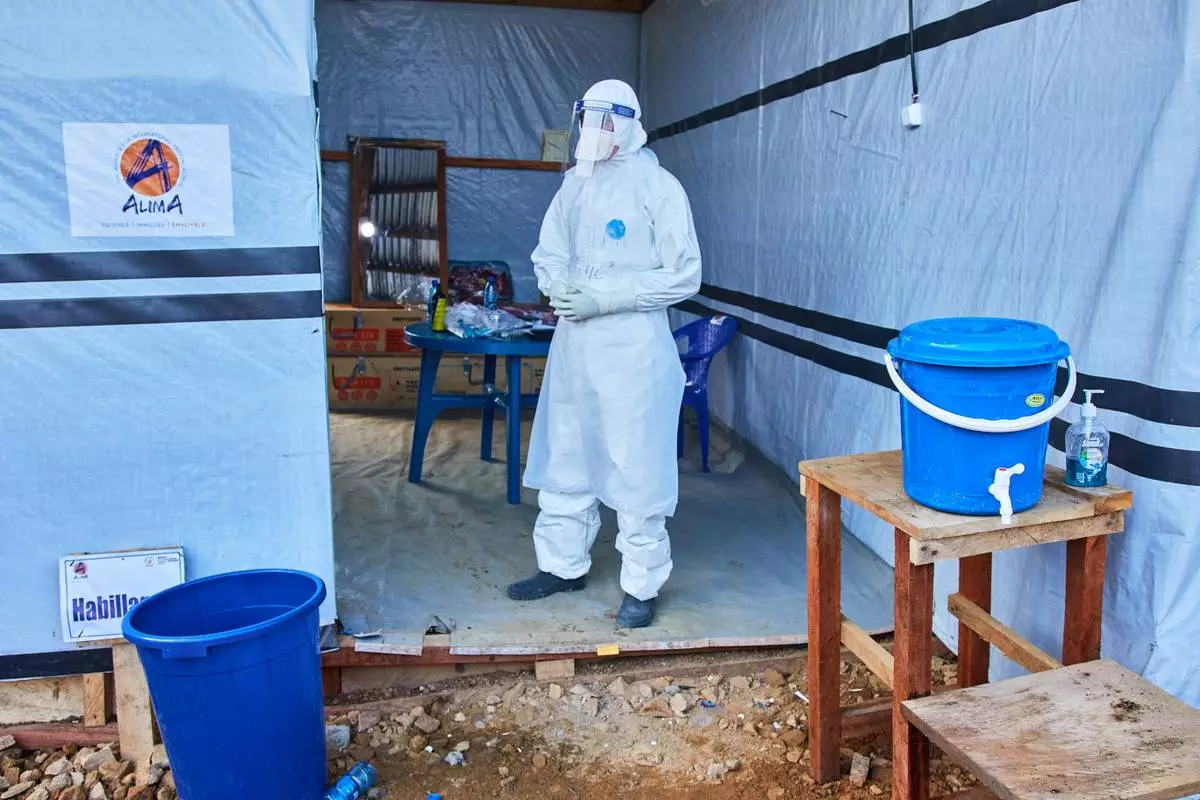
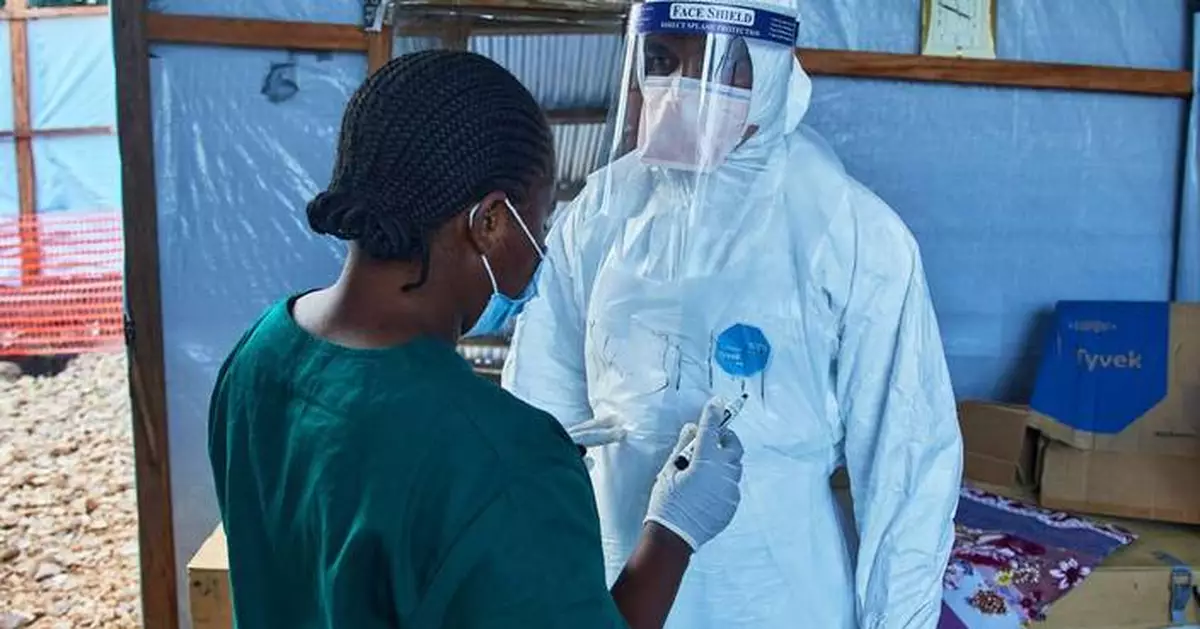
A health worker stands at the Evangelical Medical Center, in Bunia, eastern Congo, Friday, July 3, 2026, where Ebola clinical trials are scheduled to take place. (AP Photo/Dirole Lotsima Dieudonne)
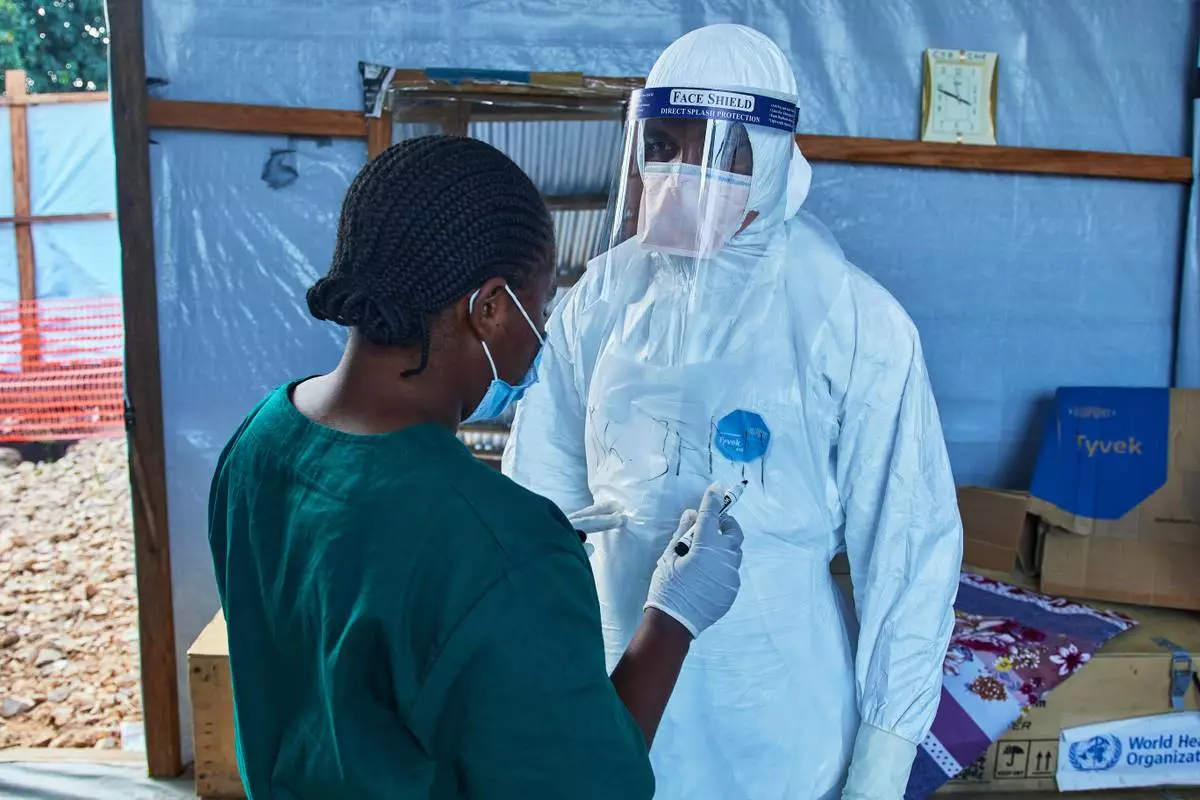
Health workers interact at the Evangelical Medical Center, in Bunia, eastern Congo, Friday, July 3, 2026, where Ebola clinical trials are scheduled to take place. (AP Photo/Dirole Lotsima Dieudonne)
WASHINGTON (AP) — Supreme Court Justice Amy Coney Barrett told lawmakers Tuesday that a sharp increase in threats targeting her and other justices is increasingly encroaching on their personal and family lives.
During a rare appearance by justices before Congress, Barrett said she had to take a bulletproof vest home a few years ago, something she struggled to explain to her 12-year-old son.
“I didn't expect that performing this service would put me in the position of explaining to my children what a bulletproof vest was, why I had to wear one,” she said.
She and Justice Elena Kagan testified before appropriations panels in the House and Senate in support of a request to increase security funding for members of the nation’s highest court.
Judges around the country have seen a rise in threats of violence and intimidation, including fake 911 swatting calls and pizza deliveries in the name of a judge's murdered son.
Kagan condemned political rhetoric that turns up the temperature.
“Whatever political figure says them, whatever party that political figure is a member of, these statements are really unhelpful," she said. “They’re dangerous in terms of individual justices' security."
The hearings came two weeks after the conservative-majority court finished handing down a series of major opinions, including a decision that increased President Donald Trump’s power over federal regulatory agencies and another that rejected his wide-ranging tariffs, sparking harsh personal criticism.
It was the first time justices have testified before Congress since 2019, and the two justices are faced wide-ranging questions about the court's work.
The justices also fielded questions about the high court's emergency
The Supreme Court requested a total of $228 million for next fiscal year, a roughly 10% increase over the year before. About $18 million of that is for maintaining the building and grounds.
Much of the requested operating-budget increase, $14.6 million, would go to expanding personal protection for justices, with six more agents for each.
An additional $2 million would fund an off-site residential security post aimed at making emergency responses faster, as well as increasing the number of Supreme Court police officers.
The U.S. Marshals Service, responsible for protecting judges, reported 564 threats in the government fiscal year that ended in September, an increase from the year before.
That total includes threats to the hundreds of federal judges around the country, though the nine-member Supreme Court has not been immune.
In May, Barrett’s security detail worked with local officers to deal quickly with a swatting call after her teenage son opened the door to find the street full of police cars responding to a fake 911 call. Last year, her sister was the victim of a bomb threat in Charleston, South Carolina, police said. No bomb was found.
In 2022, shortly after the leak of a draft opinion overturning the Roe v. Wade abortion decision, a would-be assassin was arrested near the home of Justice Brett Kavanaugh with weapons and zip ties. Threats to the Supreme Court increased after that leak, and have continued to grow, including an expected 38% increase this year, Kagan said.
Chief Justice John Roberts has condemned the threats to all U.S. judges, saying during a speech in March that criticism of judicial opinions is understandable, but personally directed hostility is “dangerous, and it’s got to stop.”
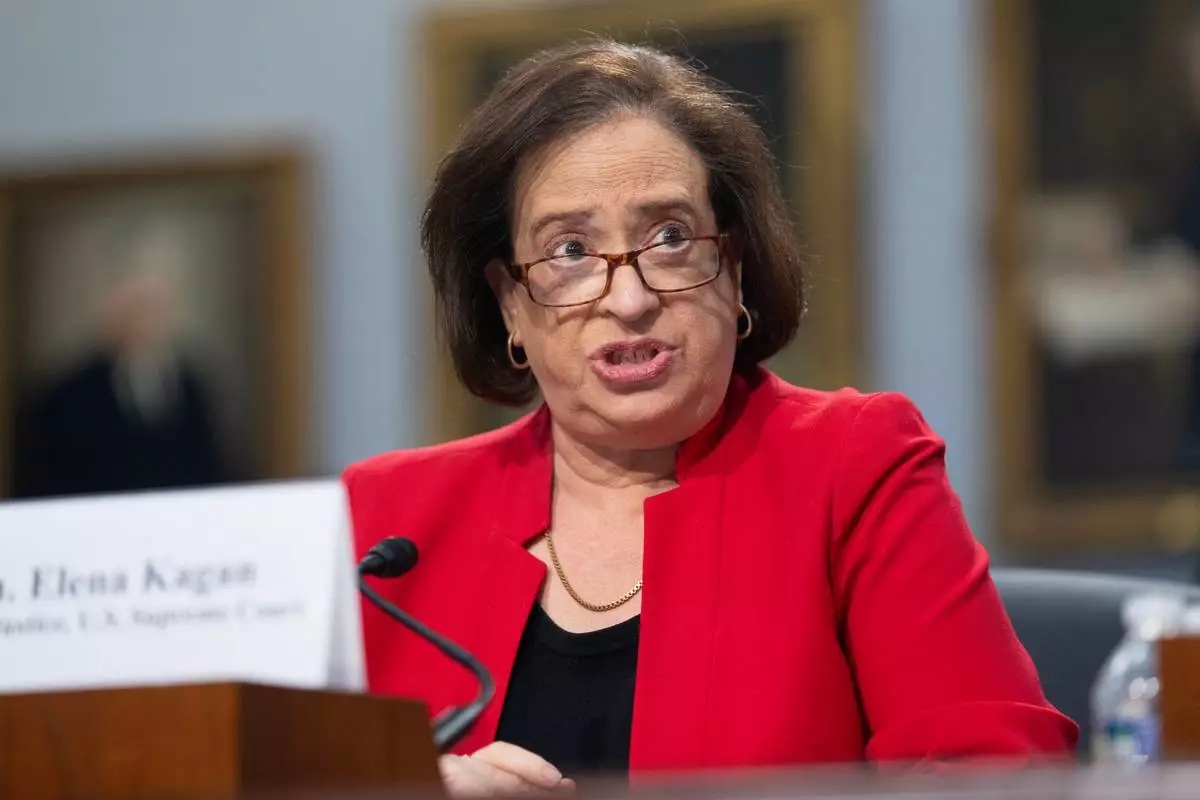
Supreme Court Justice Elena Kagan testifies during a House Appropriations subcommittee hearing, Tuesday, July 14, 2026, on Capitol Hill in Washington. (AP Photo/Nathan Howard)

Supreme Court Justice Amy Coney Barrett testifies during a House Appropriations subcommittee hearing, Tuesday, July 14, 2026, on Capitol Hill in Washington. (AP Photo/Nathan Howard)
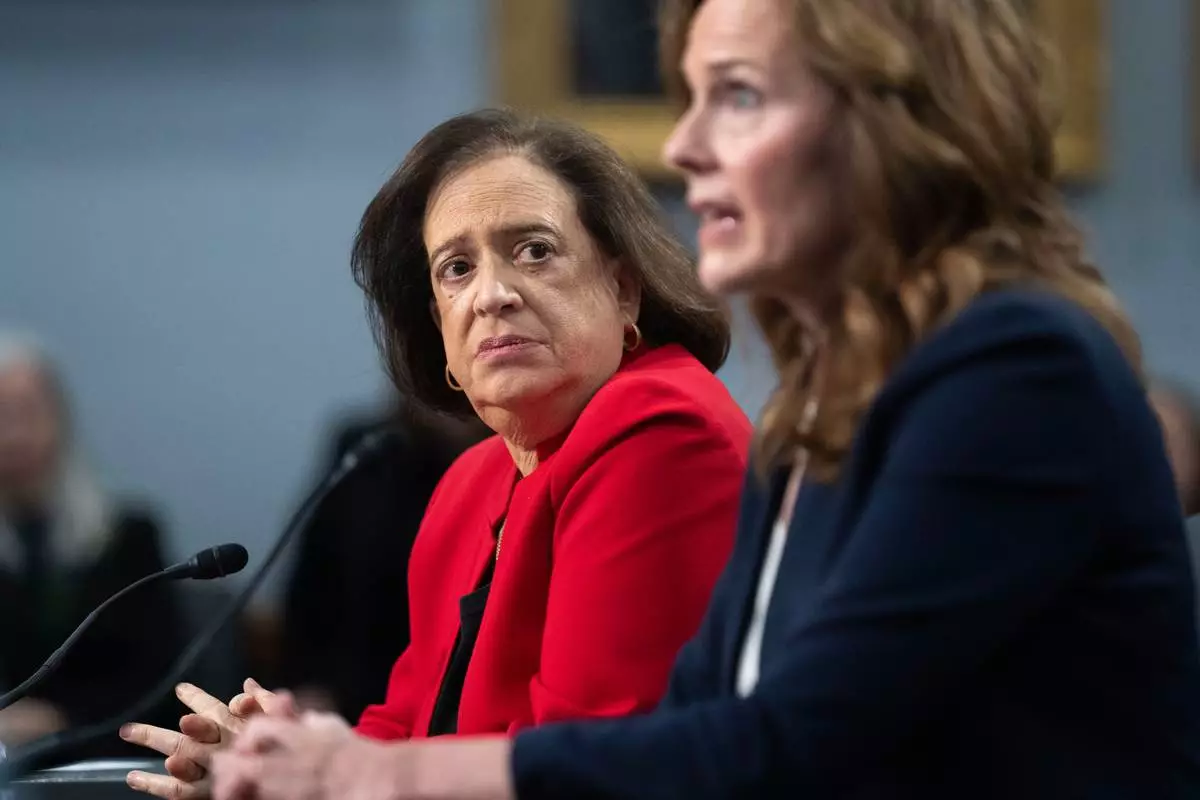
Supreme Court Justices Amy Coney Barrett, right, and Elena Kagan testify during a House Appropriations subcommittee hearing, Tuesday, July 14, 2026, on Capitol Hill in Washington. (AP Photo/Nathan Howard)
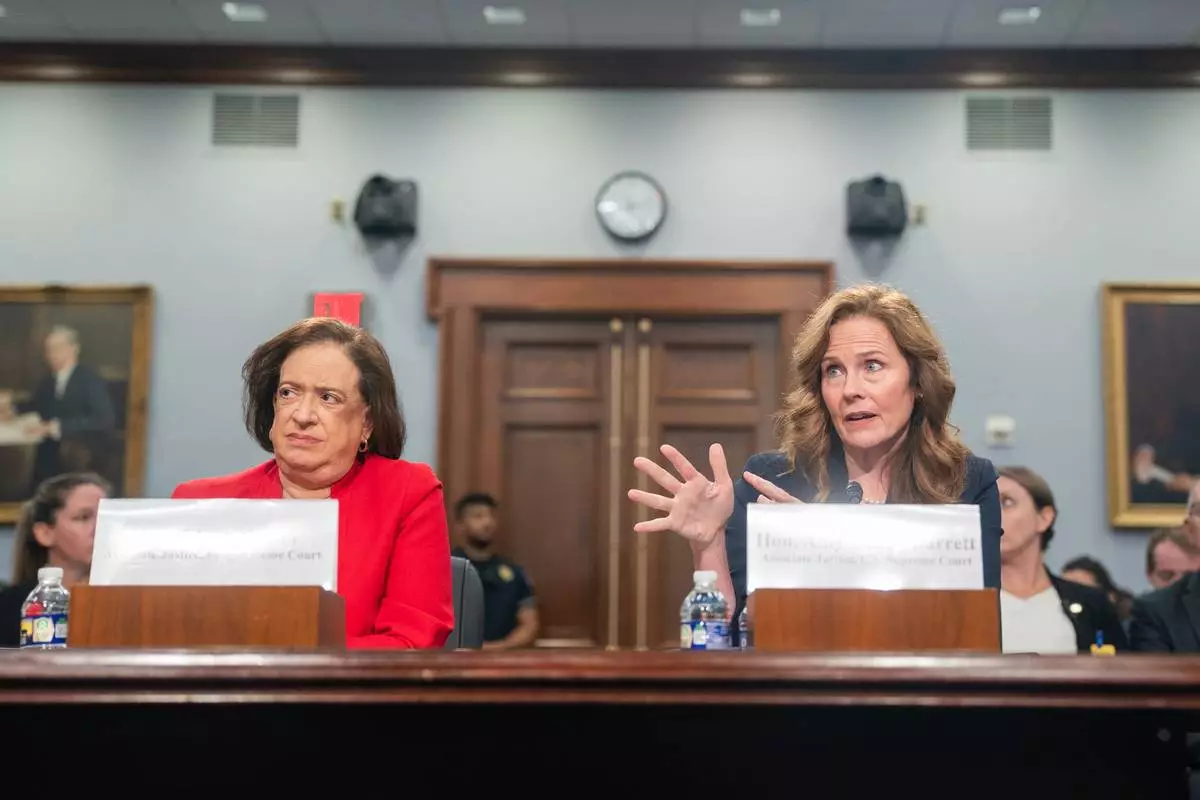
Supreme Court Justices Amy Coney Barrett, right, and Elena Kagan testify during a House Appropriations subcommittee hearing, Tuesday, July 14, 2026, on Capitol Hill in Washington. (AP Photo/Nathan Howard)

Supreme Court Justices Amy Coney Barrett, right, and Elena Kagan testify during a House Appropriations subcommittee hearing, Tuesday, July 14, 2026, on Capitol Hill in Washington. (AP Photo/Nathan Howard)
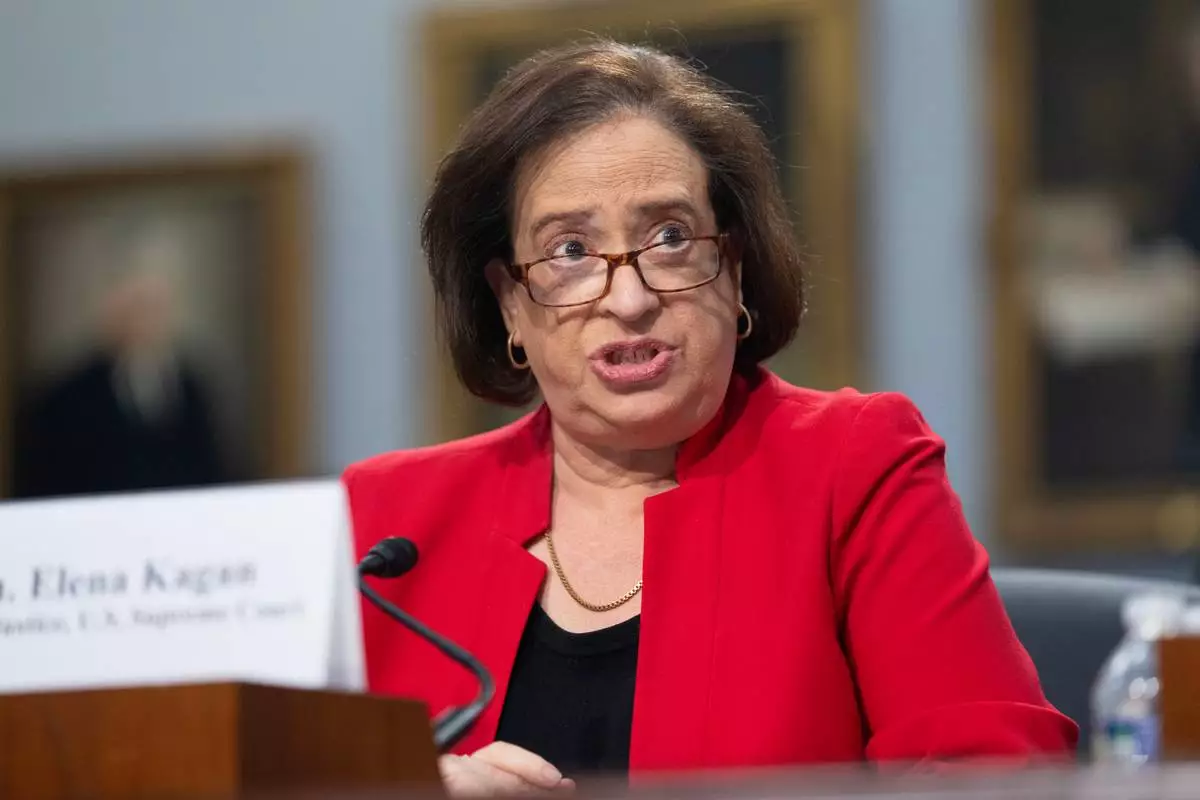
Supreme Court Justice Elena Kagan testifies during a House Appropriations subcommittee hearing, Tuesday, July 14, 2026, on Capitol Hill in Washington. (AP Photo/Nathan Howard)

Supreme Court Justice Amy Coney Barrett testifies during a House Appropriations subcommittee hearing, Tuesday, July 14, 2026, on Capitol Hill in Washington. (AP Photo/Nathan Howard)
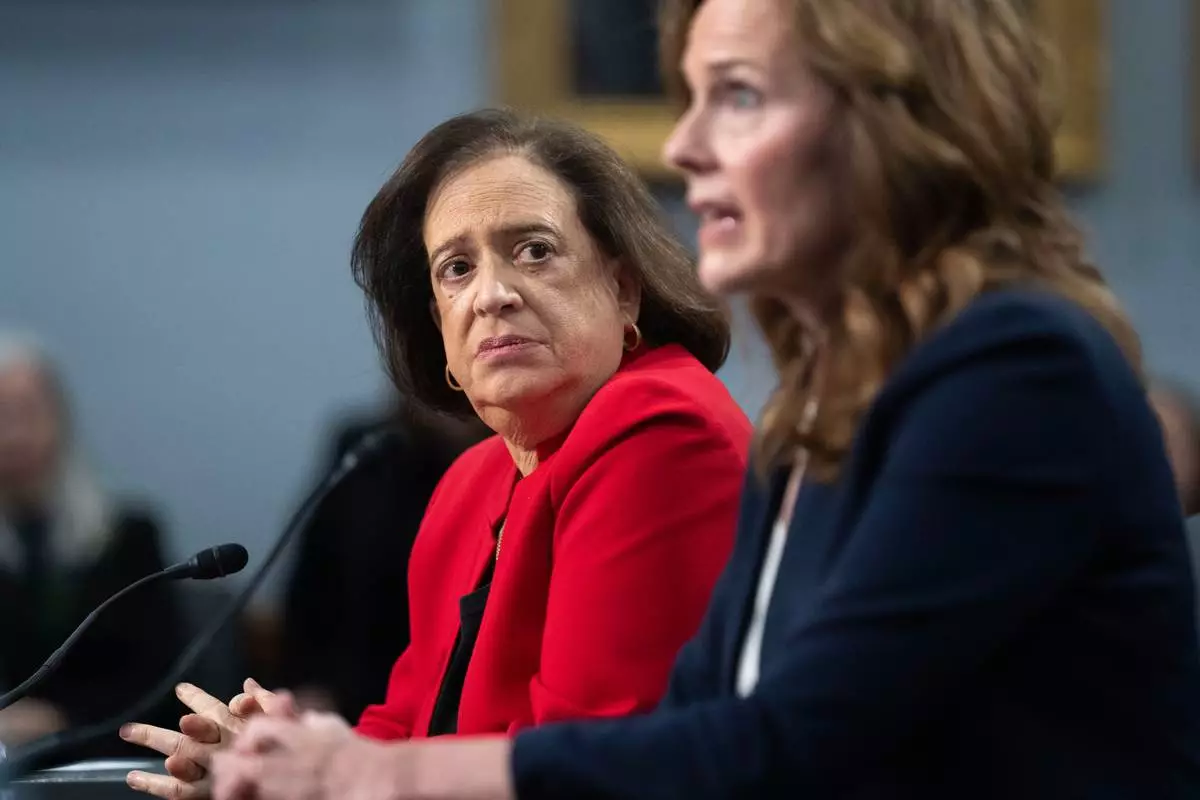
Supreme Court Justices Amy Coney Barrett, right, and Elena Kagan testify during a House Appropriations subcommittee hearing, Tuesday, July 14, 2026, on Capitol Hill in Washington. (AP Photo/Nathan Howard)
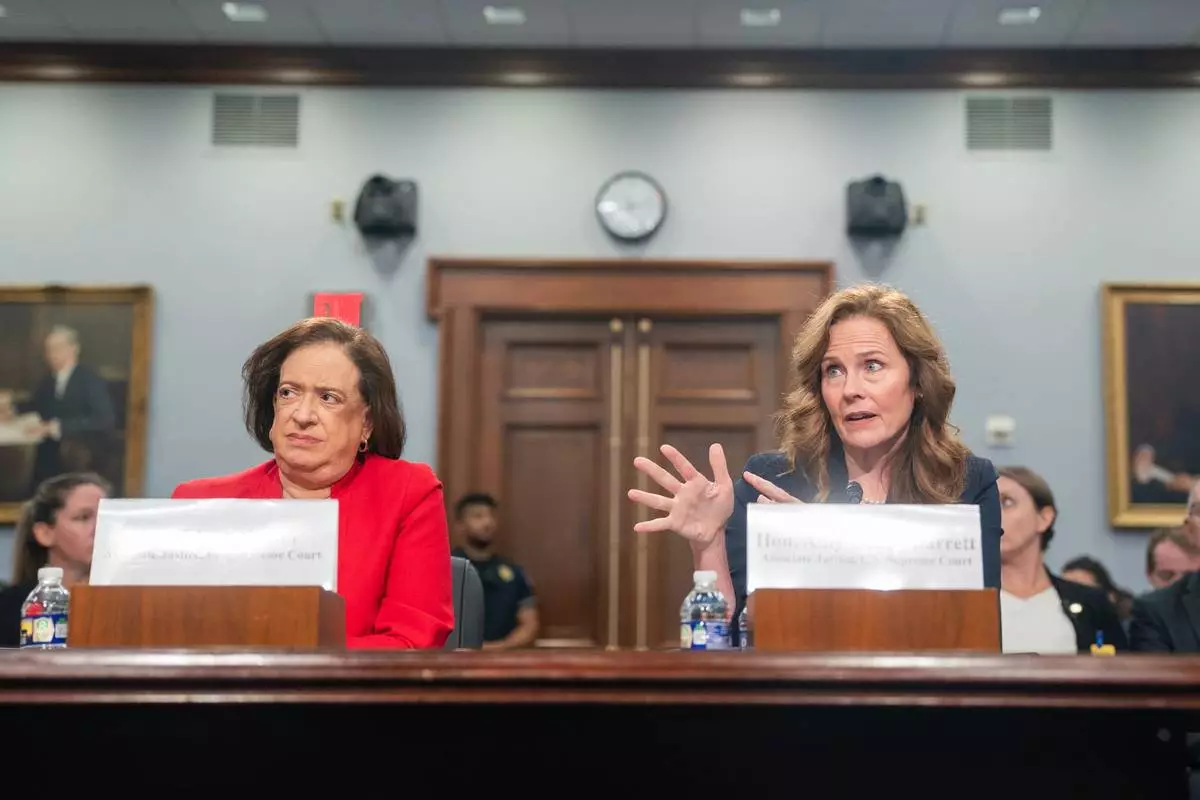
Supreme Court Justices Amy Coney Barrett, right, and Elena Kagan testify during a House Appropriations subcommittee hearing, Tuesday, July 14, 2026, on Capitol Hill in Washington. (AP Photo/Nathan Howard)

Supreme Court Justices Amy Coney Barrett, right, and Elena Kagan testify during a House Appropriations subcommittee hearing, Tuesday, July 14, 2026, on Capitol Hill in Washington. (AP Photo/Nathan Howard)
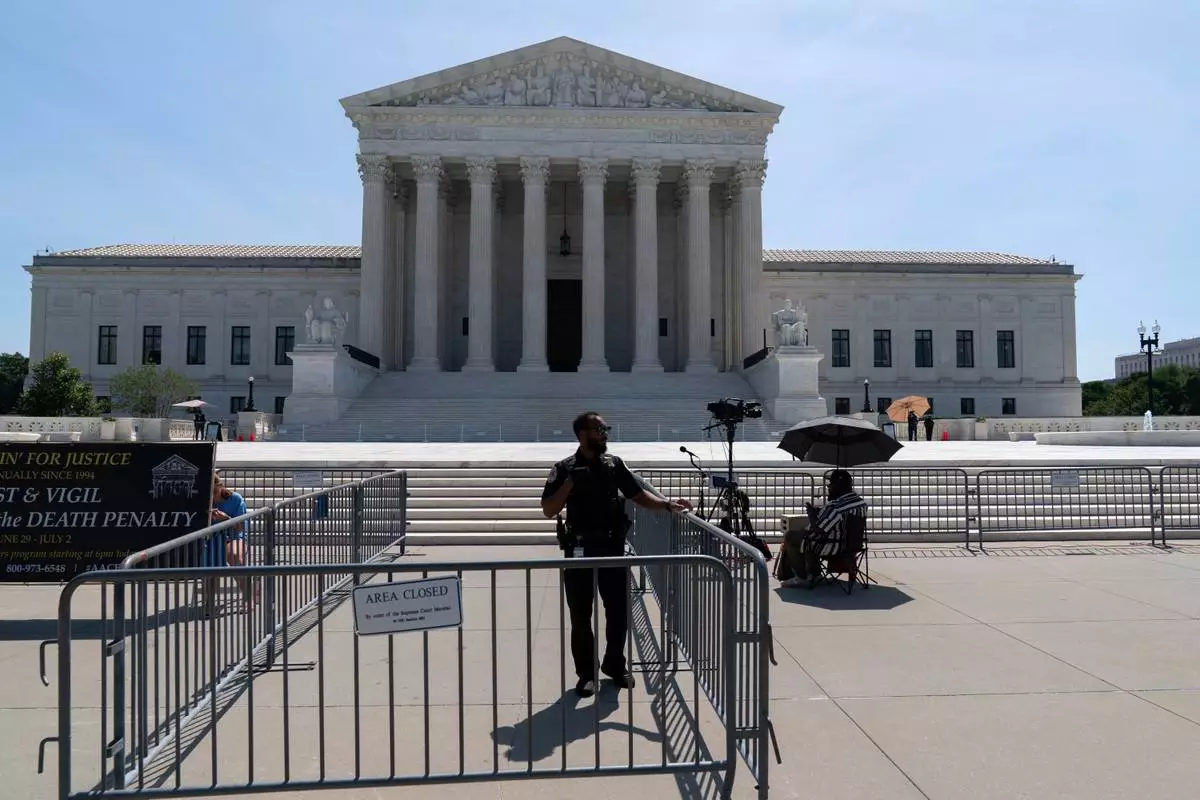
The Supreme Court is seen Tuesday, June 30, 2026, on Capitol Hill in Washington. (AP Photo/Jose Luis Magana)