Skip to Content Facebook Feature Image

Senate Democrats block $1 trillion defense bill in protest over Iran war

News

Senate Democrats block $1 trillion defense bill in protest over Iran war
News

News

Senate Democrats block $1 trillion defense bill in protest over Iran war

2026-07-15 04:14 Last Updated At:04:30

WASHINGTON (AP) — Senate Democrats blocked a $1 trillion annual defense bill Tuesday, refusing to advance the bipartisan package that would substantially increase Pentagon spending, including a pay raise for the troops, in protest of President Donald Trump's war against Iran.

Senate Democratic Leader Chuck Schumer announced his opposition and other key Democrats said they could not support the annual bill, known as the National Defense Authorization Act, as the war drags into a fifth month with no clear endgame in sight. The tally was 50-46, failing largely along party lines to reach the threshold needed.

“The NDAA cannot become a permission slip for that recklessness that we see occurring in Iran,” Schumer, of New York, said ahead of voting.

“Donald Trump does not get to drag the American people deeper into a war he cannot explain and does not know how to end—and then demand that Congress look the other way.”

The Senate vote comes a day after the White House formally notified Congress that it had resumed bombing strikes against Iran, effectively undoing the fragile ceasefire in the U.S.-Israel led conflict that has resulted in economic disruptions, including volatile gas prices ahead of the midterm elections.

Congress has tried repeatedly to slap guardrails on the administration, voting more than 10 times on various war powers resolutions that would halt hostilities. But those efforts have not succeeded, and most Republicans in the House and Senate majorities back Trump.

Senate Majority Leader John Thune called the defense package a good bill and implored his colleagues to provide the resources to ensure the U.S. is kept safe.

“We have an obligation here in Congress to ensure that they have everything they need for whatever the mission may be,” he said.

After the bill failed to advance, Thune switched his vote in a procedural move that will allow the leader to bring it back up for consideration again later.

For decades, Congress had made sure to approve the annual defense bill each year, setting the policy and direction for the department and authorizing the funds that would later be allocated to carry out its investments in systems, supplies and missions.

This year, the 66th annual NDAA is running into a double-whammy of opposition. Lawmakers are fuming over Trump's military action against Iran and resisting the White House request to substantially increase Pentagon spending to $1.5 trillion, up from about $900 billion last year.

The sizable boost of funds aligns with the White House's 2027 budget request as the Trump administration seeks a generational investment to modernize the Defense Department, which it refers to as the Department of War under Secretary Pete Hegseth.

Hegseth was scheduled to meet later Tuesday evening with House Republicans as Congress considers providing additional money through a separate budget reconciliation bill the party can pass on its own, overpowering the opposition from Democrats.

The White House has requested $350 billion from Congress under the budget reconciliation process, but House GOP leaders have indicated it is likely to be a much smaller amount, more in line with $87 billion the White House requested last month as supplemental funding for Iran.

But Republican deficit hawks are skeptical of the big budget numbers, despite support for the war within their ranks.

The extra defense funding comes on top of the additional $150 billion Republicans already provided the Pentagon last year under Trump’s big tax breaks bill that some say has not been spent or fully accounted for.

At the same time, senators want to impose restraints on Hegseth if he fails to comply with their demands for more information about department procedures and accounts.

The Senate bill would block the secretary's travel funds unless he provides reports they have requested, including on a deadly Iran school strike at the start of the war.

Democrats, however, are pushing for further limits in line with a war powers resolution that would force the cessation of military actions.

Sen. Tammy Duckworth, D-Ill., a veteran who flew helicopter combat missions in Iraq, said she would oppose the bill unless it included her amendment to end the war.

“Simply throwing more money at an out-of-control military operation is not strategy. It’s a recipe for a forever war.”
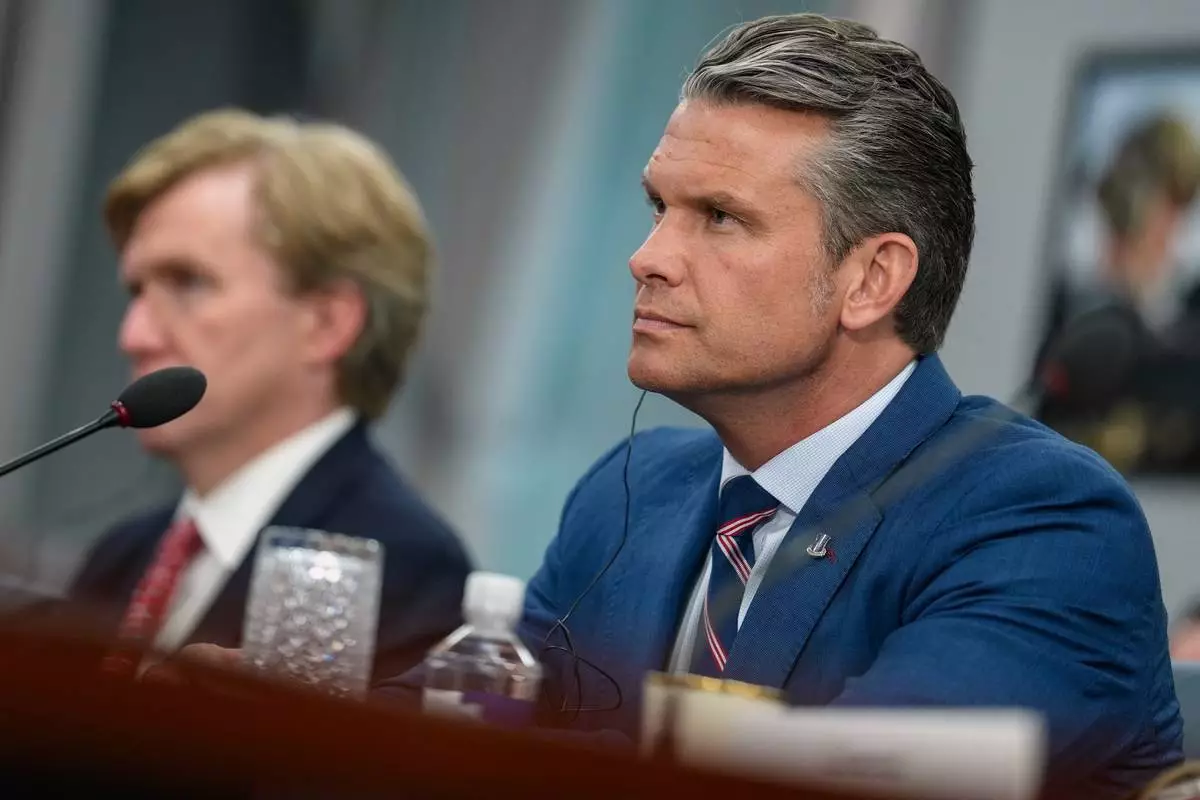
Defense Secretary Pete Hegseth listens during a meeting with Iraq's Prime Minister Ali al-Zaidi at the Pentagon Tuesday, July 14, 2026, in Washington. (Al Drago/Pool via AP)

Defense Secretary Pete Hegseth listens during a meeting with Iraq's Prime Minister Ali al-Zaidi at the Pentagon Tuesday, July 14, 2026, in Washington. (Al Drago/Pool via AP)

NEW YORK (AP) — Palestinian activist Mahmoud Khalil is suing the federal government and several private groups, alleging they were part of a conspiracy to suppress criticism of Israel through a coordinated campaign to dox, jail and ultimately deport student activists.

The civil rights suit, filed in federal court Tuesday, names the Heritage Foundation, a conservative think tank, as the architect of what it describes as an ongoing conspiracy to silence members of the pro-Palestinian movement by smearing them as antisemites.

Those efforts were aided by Canary Mission and Betar, two pro-Israel groups that maintain online lists of Israel's critics, often alongside unsubstantiated claims that they are affiliated with Hamas, according to the lawsuit.

Activists placed on those lists “were nearly automatically targeted by the Federal Defendants for arrest and removal," the suit claims, adding that the "process of nomination to punishment was frictionless.”

Lawyers for Khalil argue this “public-private partnership” could violate the Ku Klux Klan Act, a Reconstruction-era law that sought to restrict government coordination with vigilante groups. Their suit seeks unspecified damages and a judicial order to end the conspiracy.

Inquiries to the Heritage Foundation, Canary Mission and Betar were not immediately returned on Tuesday.

Abigail Jackson, a White House spokesperson, did not comment on the lawsuit, but said in an email that the executive branch “has the lawful authority to take actions that will protect the public and to ensure the integrity of our immigration system.”

The suit comes as Khalil’s deportation case appears headed to the U.S. Supreme Court.

At a news conference on Tuesday, Khalil described the purpose of the latest filing as “exposing the network of organizations, particular actors and institutions that work together to criminalize solidarity with Palestine and to make an example of those who refuse to stay silent.”

“If constitutional protections can be cast aside under political pressure today, they can be cast aside tomorrow against anyone,” he added.

A former graduate student at Columbia University, Khalil gained prominence as a spokesperson and leader for student activists protesting against Israel and its actions in Gaza.

He was arrested in March 2025 by U.S. Immigration and Customs Enforcement agents in his campus apartment and quickly became the face of the Trump administration crackdown on pro-Palestinian demonstrators.

Khalil then spent 104 days in a Louisiana immigration jail, missing the birth of his first child, before a federal judge in New Jersey ordered his release.

Soon after his arrest, both Canary Mission and Betar boasted of their role in flagging Khalil's noncitizen status to the government.

Betar — an Israeli company that claimed to use facial recognition software to identify masked protesters — also claimed it had compiled a longer list of names and given it to the Trump administration. The group has since agreed to dissolve its nonprofit status, following a lawsuit filed by New York Attorney General Letitia James accusing its members of harassing Palestinians.

Khalil's lawsuit traces the origins of the alleged conspiracy to a blueprint from the Heritage Foundation, entitled “Project Esther,” which called for the expulsion of noncitizens who joined protests against Israel.

The report also suggested, without evidence, that participants in those protests should be seen as part of a “highly organized, global Hamas Support Network.”

In May, as the Trump administration ramped up its crackdown on pro-Palestinian activists, one of the report’s authors, Robert Greenway, appeared to acknowledge the foundation's influence, saying that it was “no coincidence that we called for a series of actions to take place privately and publicly, and they are now happening,” according to the suit.

Greenway, a former adviser to Trump, did not reply to a request for comment.

Khalil, meanwhile, has forcefully denied that his criticism of Israel amounts to antisemitism. While government officials — along with Canary Mission and Betar — have linked him to Hamas, they have offered no evidence to support the claim.

“My beliefs are not wanting my tax money or tuition going toward investments in weapons manufacturers for a genocide,” Khalil previously told The Associated Press. “It’s as simple as that.”

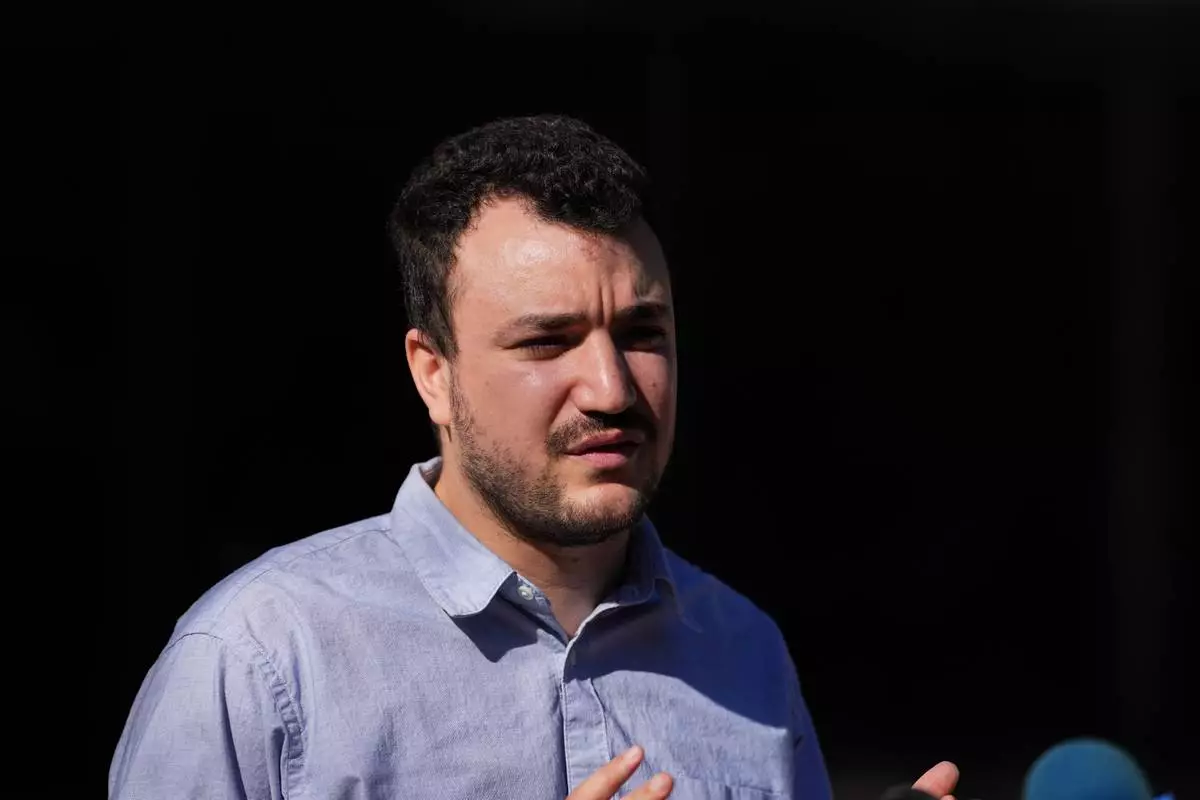
FILE - Palestinian activist Mahmoud Khalil holds a news conference outside Federal Court on Oct. 21, 2025 in Philadelphia (AP Photo/Matt Rourke, File)

FILE - Palestinian activist Mahmoud Khalil holds a news conference outside Federal Court on Oct. 21, 2025 in Philadelphia (AP Photo/Matt Rourke, File)

Recommended Articles