CHATTANOOGA, Tenn.--(BUSINESS WIRE)--Jul 14, 2026--
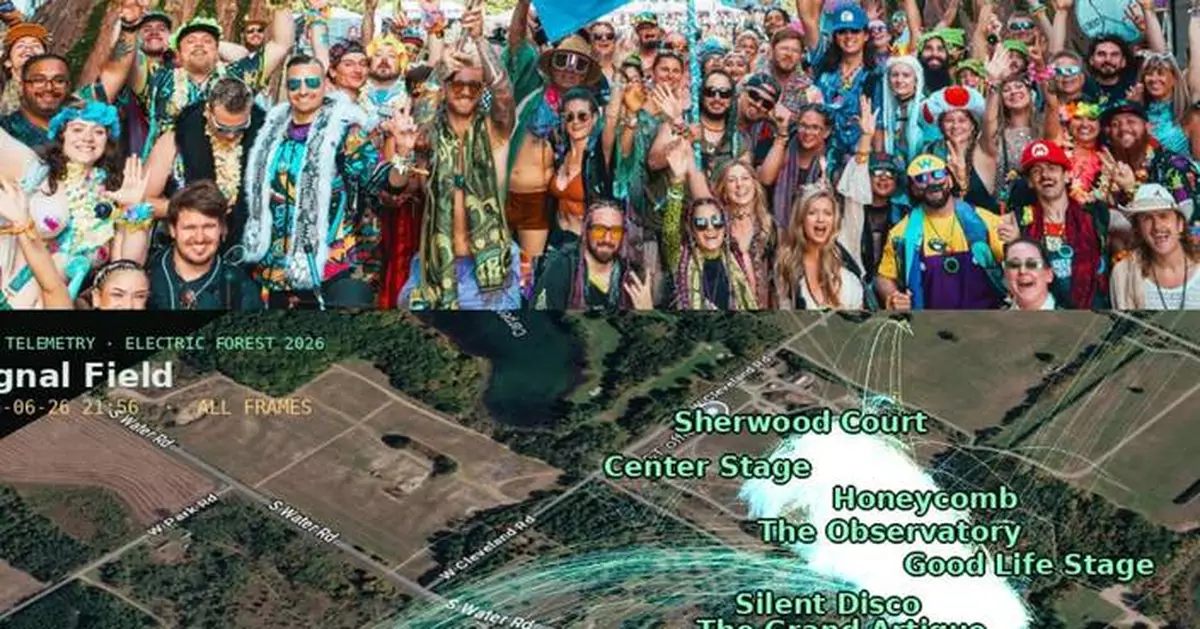
Totem, Inc. today announced a major technical milestone following Electric Forest 2026, where Totem Compasses helped attendees stay connected across the massive Double JJ Resort.
This press release features multimedia. View the full release here: https://www.businesswire.com/news/home/20260709357810/en/
The four-day festival presents a challenging real-world environment for a communication mesh network. Unlike more concentrated festival environments, Electric Forest attendees spread across an unusually large and dynamic venue, with users straying over 1km from their groups —a 40% increase in distance compared to previous major festivals like EDC Las Vegas.
Despite the increased dispersion, Totem delivered its strongest peer-to-peer navigation performance to date, powered by the company’s new Version 4.3 firmware and a record-breaking 25-hop mesh network.
“Electric Forest was the ultimate proof of concept for our latest software optimizations,” said Carter Fowler, Founder and CEO of Totem. “With Version 4.3, we saw our mesh network reach a record-breaking 25 hops, up from our previous peak of 14. We plan to push that even further in the months to come as we seek a world-record hop-count for a communication mesh.”
The milestone marks a major step forward for Totem’s Unity Mesh Network, the company’s custom-built peer-to-peer communication system designed specifically for dense, complex real-world environments like music festivals.
Unlike traditional LoRa-based mesh systems, which are generally optimized for lower-frequency messaging, Totem’s network was built for frequent location updates across crowded, constantly shifting environments. At Electric Forest, that architecture helped the network reach arecord-breaking 25 hops —more than three times the hard maximum of 7 hops supported by Meshtastic, a widely used open-source LoRa mesh platform, and far above its default setting of 3.
That distinction becomes especially important at festival scale, with Meshtastic’s published guidance noting that networks with more than roughly 60 devices in close proximity can experience delayed delivery and congestion.
The Electric Forest milestone comes on the heels of growing third-party validation for the Totem Compass. Music industry tastemaker The Festive Owl recently published a positive Totem Compass review on Reddit after field-testing the device with his group at Bonnaroo Music & Arts Festival. Summarizing the experience as “mostly good, very little bad, and zero ugly,” he noted that Totem “came in handy more than once,” saved him “a lot of time — and phone battery,” and helped his group reconnect “every time” when cell service got spotty or friends wandered off.
Totem's growth continues to accelerate, with the company surpassing $4 million in revenue and raising over $3 million from global investors. The brand has built an audience of more than 600,000 followers across social media, generating more than 700 million organic views reaching more than 5% of the world’s population.
About Totem:
Totem, Inc. is a Tennessee-based startup building the world’s largest self-sustaining communication network. Since launching in early 2024, Totem has rapidly grown from an idea into a bona fide global movement. Founded on the belief that no one deserves to be lost, Totem is guided by four core values—Love, Unity, Simplicity, and Beauty—as it seeks to usher in a new era of human connection around the world.
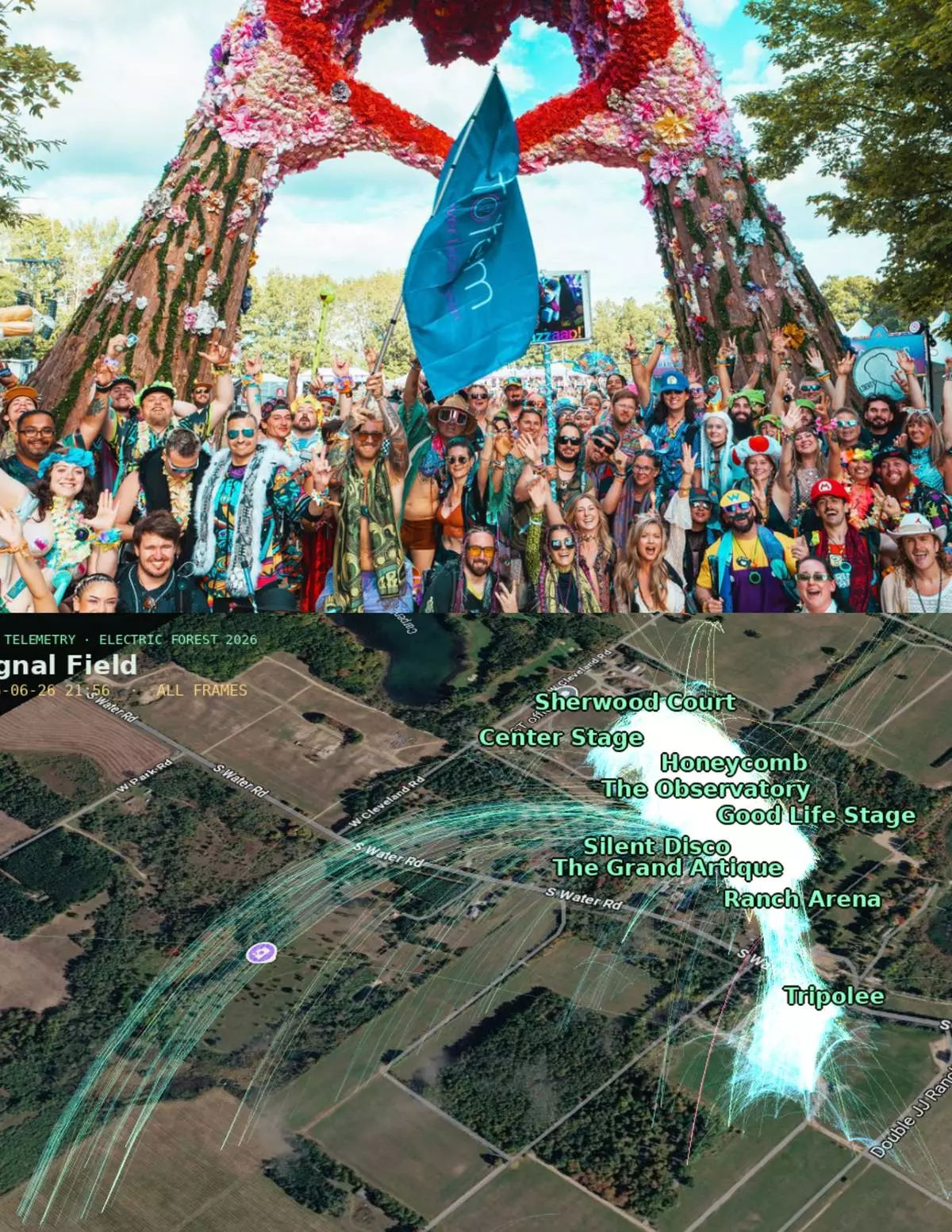
Electric Forest marked one of the company’s strongest real-world performances to date, with incredible community adoption and record-breaking mesh network distance.
BIDDEFORD, Maine (AP) — In the minutes after an immigration officer opened fire in a small coastal city in southern Maine, a now-familiar story began to unfold: another person had been shot and killed inside a moving vehicle during an immigration enforcement operation.
The Department of Homeland Security later said the officer fired his weapon when the man they were pursuing attempted to flee the scene, threatening “public safety.”
It’s a narrative that has been repeated again and again since the Trump administration’s immigration crackdown began, with federal officers confronting drivers then saying they opened fire when their vehicles became a danger. That's despite decades of warnings from policing experts that shooting into moving cars presents a danger of its own and should almost always be avoided.
The Embassy of Colombia identified the man killed Monday in Biddeford, roughly 15 miles (24 kilometers) southwest of Portland, as Johan Sebastián Durán Guerrero, a 26-year-old Colombian national. Some friends, neighbors and an advocacy group have spelled his name “Joan.”
He is the ninth killed during immigration operations since the start of the Trump administration’s mass deportation campaign. At least four of those deaths involved people in vehicles, including one last week in Houston, a trend so troubling U.S. Sen. Susan Collins said Tuesday she urged DHS secretary Markwayne Mullin “to cease all non-urgent vehicle stops.”
A person familiar with the matter told AP Tuesday that administration officials told immigration officers to suspend most vehicle stops. Some policing experts say Immigration and Customs Enforcement should never have conducted traffic stops.
“They’re saying that all these cases are justified because the officers were in danger,” said John Sandweg, who was acting director at ICE, which is part of DHS, during the Obama administration. “But then why the hell are we putting the officer in danger by asking them to execute traffic stops?”
Sandweg, who estimates there have been roughly 18 traffic-stop shootings during the immigration crackdown, noted there are many other places to make arrests, from homes to workplaces.
“It becomes a much more risky and dangerous situation once you start to pursue someone,” said John Gihon, an immigration lawyer who was an attorney at ICE from 2008 to 2014. “That’s going to escalate.”
Gihon said that during his tenure at ICE he regularly trained deportation officers about vehicle stop policies. He said officers were advised they have discretion on whether to pull over someone they are trying to arrest. But if that person refuses to get out of their car and drives away, the guidance is to let them go and track them down another day.
“If they refuse, you are not pulling them out of the vehicle, you are not putting yourself in front of their car,” he said. “This policy is for everyone’s safety.”
But fatal vehicle stops keep happening during Trump’s second administration.
There was Ruben Ray Martinez, a 23-year-old U.S. citizen, shot during a late-night traffic stop in South Texas in March 2025, and Renee Good, a mother of three shot and killed in January as she drove her car through the streets of a Minneapolis residential neighborhood amid growing anti-crackdown protests.
Last week, it was Lorenzo Salgado Araujo, a Mexican builder shot and killed as he drove his crew to a worksite in Houston, where he had lived and worked for decades.
Each time, officials insisted the federal officers had fired because they feared they or someone else could be killed by the vehicles.
“Many of you have been told this law enforcement officer wasn’t hit by a car, wasn’t being harassed, and murdered an innocent woman,” Vice President JD Vance wrote on X after Good was killed. “The reality is that his life was endangered and he fired in self defense.”
That shooting was captured on multiple bystander videos that contradicted the administration’s narrative and prompted widespread anger and protests against the officers' use of deadly force.
Much remains unknown about the others.
Officers were not wearing body cameras in the Salgado Araujo or the Durán Guerrero killings, despite DHS announcing months ago that it would outfit all officers with cameras.
Geoffrey P. Alpert, an expert on policing at the University of South Carolina, said without video evidence, investigators must rely on witness statements.
“There’s certainly a pattern, a practice, a trend that is disturbing,” Alpert said, adding that police departments decades ago began prohibiting officers from shooting into moving cars because if the driver is injured or killed, they can lose control, turning the vehicle into “an unguided missile,” threatening anyone nearby.
“Every bullet needs to be understood: why was it fired. Every time an officer pulls the trigger, we need to know why,” Alpert said. “We talked about that last time, and we’ll talk about that the next time.”
Doubts are already swirling about the official story the administration told about the fatal shooting of 52-year-old Salgado Araujo in Houston.
DHS officials said in a statement that the Mexican national ignored commands and was trying to evade arrest, then attempted to ram his car into an officer, who opened fire in self-defense.
Rep. Sylvia Garcia said she visited the facility where the men who were in the vehicle with Salgado Araujo are being held and spoke to two of them, raising “many alarming questions” about the administration’s claims.
“Here’s the deal. I visited with them separately, and their stories were consistent, and paint a totally, totally conflicting version of the events,” Garcia said. They said that at no time were any of the ICE officers in front of the vehicle. Instead, they told her the officers were on the passenger side and shot Salgado Araujo, who was driving, through the passenger side window. The window had been open because the vehicle’s air conditioning was broken.
What exactly led to the deadly shooting in Maine remains unclear. Officers were in Biddeford, surveilling an address for a person with a final order of removal from the country, then tried to stop a vehicle driven by someone coming from that address, DHS said.
Maine U.S. Sen. Angus King said DHS Secretary Mullin told him the officer opened fire after the man tried to use his vehicle as a weapon against officers.
But nearly 12 hours after Durán Guerrero was killed, that story shifted: DHS issued a statement saying the “vehicle attempted to flee the scene and, fearing for public safety, an officer discharged his weapon.”
When asked about the contrasting statements, King told CNN an investigation would reveal the truth.
The state’s Office of the Attorney General announced it would investigate the shooting in coordination with federal authorities, promised transparency and encouraged witnesses to come forward.
On Tuesday, hundreds of protesters gathered near an ICE facility in Scarborough, Maine. They held up a large banner reading “No more ICE killings” and signs saying “stop the murder” and “end this terror.”
“We need to never see this happen in the streets of Biddeford, Maine, and in this country,” said Democratic state Sen. Mattie Daughtry, said during the protest. “Never forget the human toll of what has happened here in Maine, in Minnesota, in Texas.”
Santana reported from Washington, D.C., Sullivan from Minneapolis and Galofaro from Louisville, Kentucky. Associated Press reporters Valerie Gonzalez in McAllen, Texas, and Jack Brook in New Orleans contributed.
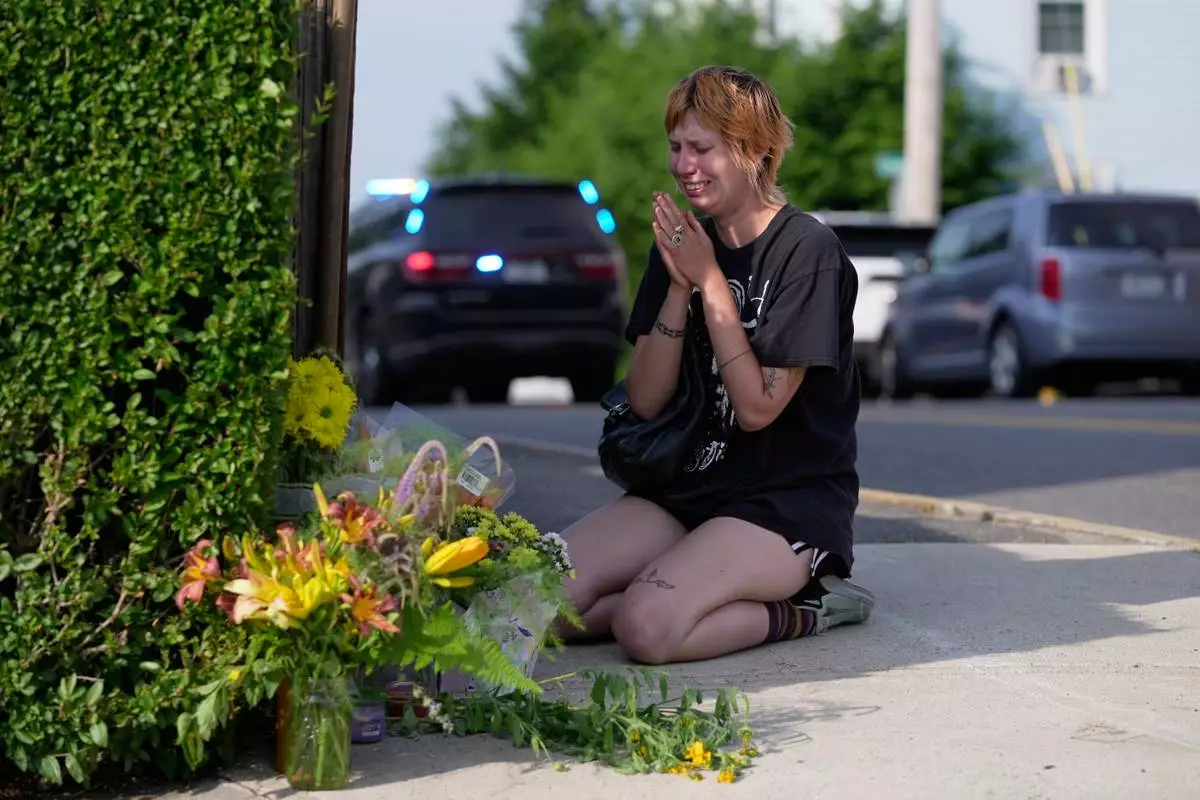
A woman prays after leaving flowers near the scene where a man was shot and killed by U.S. Immigration and Customs Enforcement on Monday, July 13, 2026, in Biddeford, Maine. (AP Photo/Robert F. Bukaty)
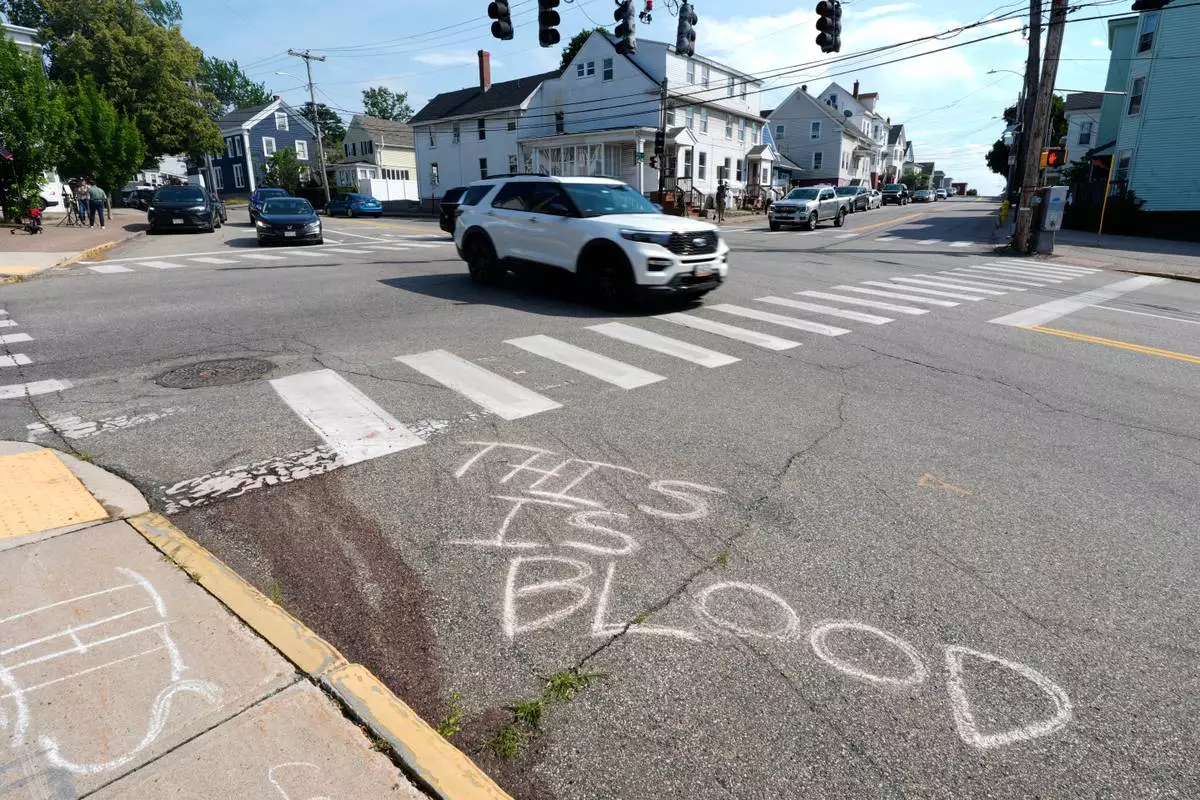
Blood is seen on the pavement near the scene of a shooting involving U.S. Immigration and Customs Enforcement, Monday, July 13, 2026 in Biddeford, Maine. (AP Photo/Robert F. Bukaty)
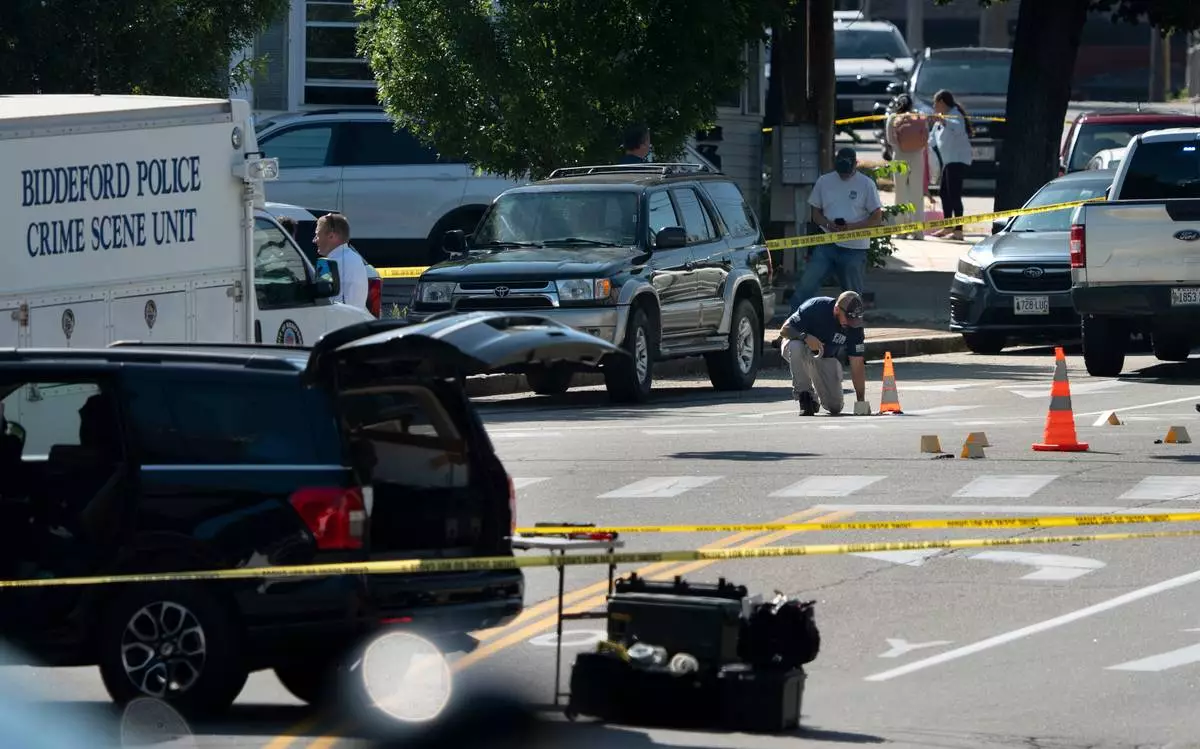
An FBI official places an evidence card where a man was reportedly killed in a shooting involving U.S. Immigration and Customs Enforcement agents, Monday, July 13, 2026 in Biddeford, Maine. (Gregory Rec/Portland Press Herald via AP)