WASHINGTON (AP) — A blood test may predict if apparently healthy older adults are likely to develop Alzheimer’s symptoms in the next five or 10 years, researchers reported Wednesday.
That information could be reassuring or terrifying, but for now it's a potential tool to speed drug development by helping to identify and enroll high-risk people into studies of possible Alzheimer's treatments or preventive strategies.
Already large clinical trials are testing if certain drugs could prevent or at least delay the disease — and if any of those pan out, doctors will need an easy way to tell who should try them.
The scientists behind the new study stress that it’s too soon for healthy people to seek out the so-called p-tau217 test, which is currently used to help diagnose whether people experiencing cognitive problems have Alzheimer’s or another disorder.
“Wait and get tested when you can potentially do something about it,” stressed Dr. Reisa Sperling of the Mass General Brigham Neuroscience Institute, the study’s senior author. “At this point it wouldn’t change what I would tell someone to do. I’d still tell them to eat well, sleep well, exercise a lot and stay engaged.”
The new findings showed that symptom-free older adults who harbored very high levels of p-tau217 had a 38% risk of developing cognitive impairment over five years. That risk grew to 78% by 10 years.
The research was published in JAMA and presented at the Alzheimer’s Association International Conference in London.
It’s not clear exactly what causes Alzheimer’s, but its telltale markers are brain-clogging amyloid plaques and neuron-killing tau tangles. The p-tau217 test measures a form of tau that correlates with how much plaque buildup someone has and gives a hint about tangles, Sperling said.
The Mass General Brigham team analyzed data from 2,684 older adults who were healthy when they’d joined some long-running Alzheimer’s studies, receiving the p-tau217 blood test at enrollment and yearly cognitive checkups. Between the earliest enrollment in 2004 and last year, about 478 had developed cognitive impairment.
Study participants with very low p-tau217 levels likewise had a low risk of developing cognitive impairment over the five- to 10-year period.
There’s a conundrum in predicting Alzheimer’s: Lots of people harbor high levels of amyloid plaques yet never get dementia. A leading theory is that at some point amyloid buildup triggers an abnormal type of tau to form tangles, leading to symptoms.
Sperling said the blood test data offers some new clues. While different intermediate levels of p-tau217 signaled progressive risk, only the very highest level seemed to correlate with other evidence about that tipping point.
“This is a gradual process where amyloid and tau build up in the brain and this blood-based biomarker is telling you how far you are in that process,” she said.
Scientists not involved in the study praised it but also offered some reasons to be cautious. One is that only a small fraction of study participants had been tracked for a full decade, so there's less confidence in the 10-year risk estimate than the five-year risk estimate.
Also, the predictions could be clouded by other factors — older people may be at risk of dying from something else, or have heart-related problems that can cause vascular dementia rather than Alzheimer’s, noted Drs. Suzanne Schindler of Washington University in St. Louis and David Wolk of the University of Pennsylvania in a commentary published in JAMA.
The blood tests “are not yet precise enough to guide individualized prognosis,” wrote Schindler, who also studies p-tau217’s prognostic potential, and Wolk. Still, they said the new work has “provided a crucial piece of the puzzle.”
Already “we have people coming saying, ‘I want this blood test. I have a family history of Alzheimer’s disease,’” said Jessica Langbaum of the Banner Alzheimer’s Institute in Phoenix, something she strongly discourages — for now.
“These findings are quite strong,” Langbaum added, and a predictive blood test would be “really important” — but only if ongoing studies eventually find a drug that could help people before symptoms begin.
The Associated Press Health and Science Department receives support from the Howard Hughes Medical Institute’s Department of Science Education and the Robert Wood Johnson Foundation. The AP is solely responsible for all content.
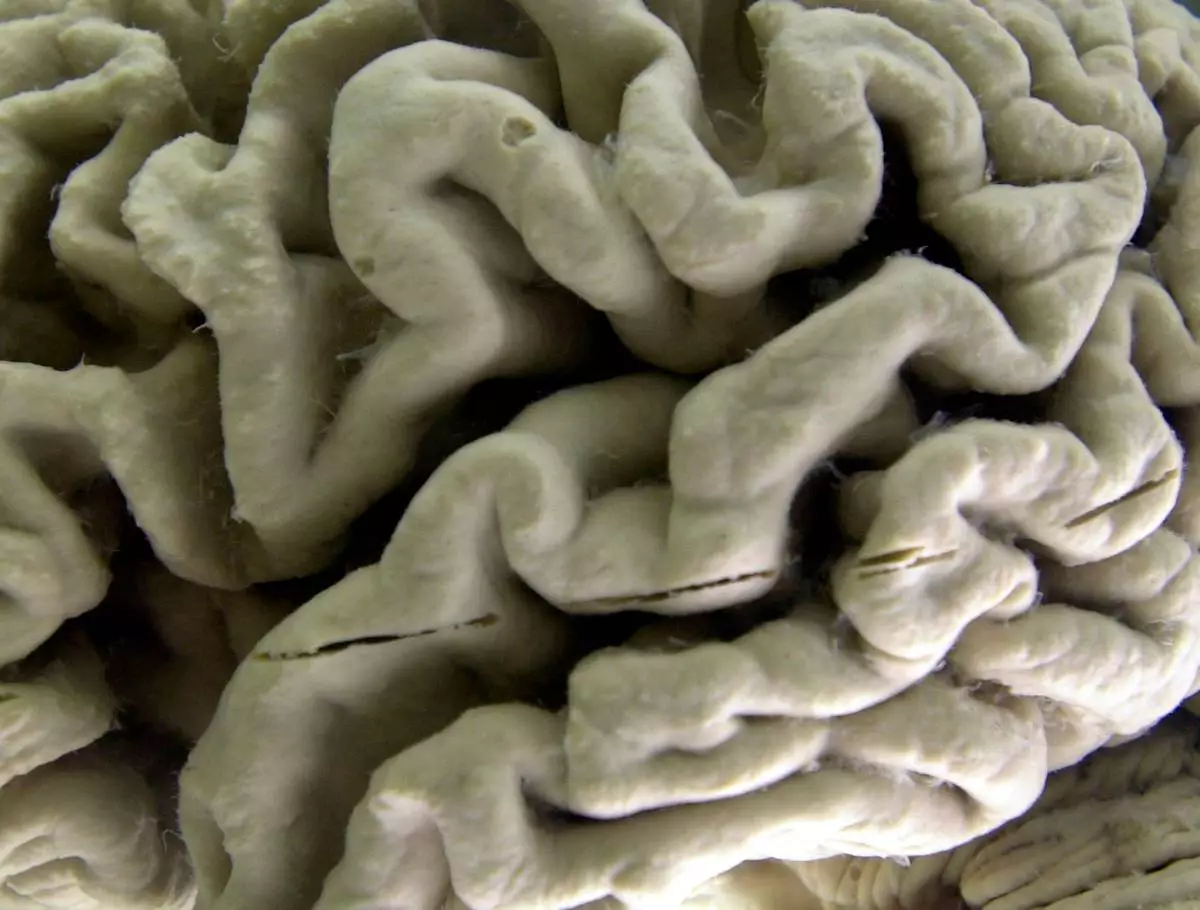
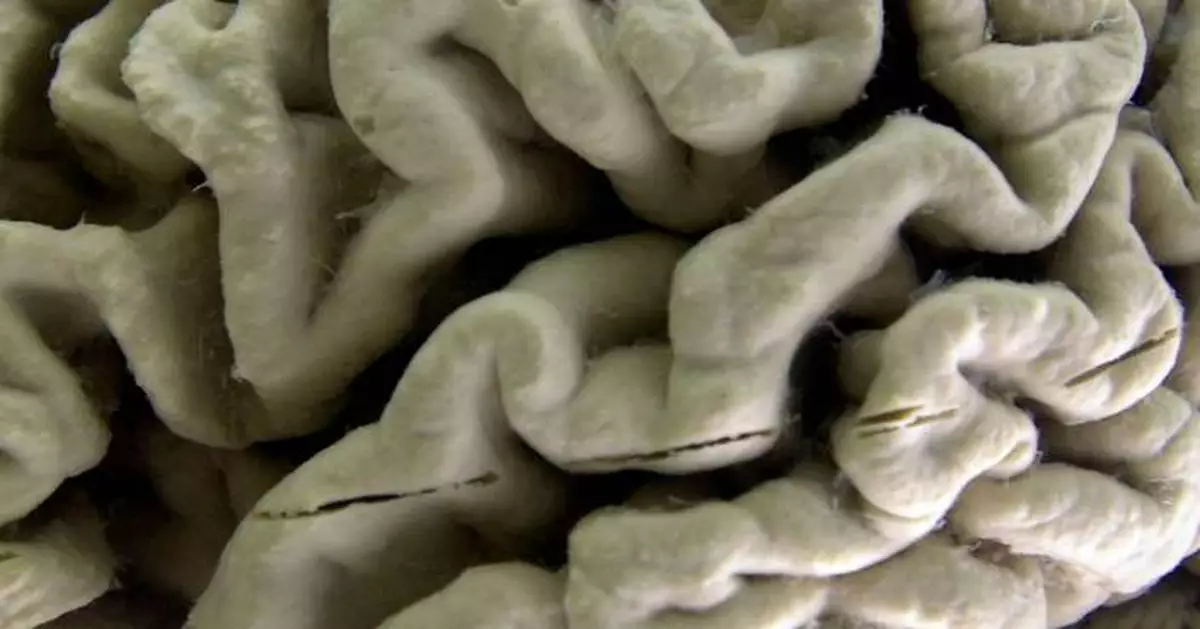
FILE - A human brain affected by Alzheimer's disease is displayed at the Museum of Neuroanatomy at the University at Buffalo in Buffalo, N.Y., on Oct. 7, 2003. (AP Photo/David Duprey, File)
KATHMANDU, Nepal (AP) — Rescuers rushed Monday to reach workers believed to be trapped in tunnels at hydropower sites buried in mud after catastrophic flooding in Nepal and China, as the death toll continued to rise and increasingly desperate families search for their loved ones.
The combined deaths in Nepal and China surpassed 900, with more than 4,700 people missing, and a private-sector association representing power companies said at least 900 workers have been unaccounted for from 12 hydropower projects damaged by the floods in Nepal’s Rasuwa and Nuwakot districts.
Mohan Kumar Dangi, president of the Independent Power Producers’ Association, Nepal, or IPPAN, said there’s an estimation of at least 500 of the 900 missing workers trapped in the tunnels, although authorities have provided varying numbers and said several foreign teams were assisting Nepali rescuers.
At least one expert said the tunnels offered enough space for people to take refuge and that some workers could have access to oxygen. But others warned that the chances of finding survivors were diminishing.
Dangi said some workers had managed to make contact and call for help when the disaster struck last Wednesday, and some others who managed to flee reported to authorities and relatives that many of their colleagues were still in the tunnels. But he said that, six days after the disaster, fears grew that some might have suffocated.
“We are working in search and rescue of the stranded people from hills, settlements and river areas,” said Brig. Gen. Raja Ram Basnet, Nepal’s army spokesman.
Nepal’s disaster agency said Monday that 903 deaths had been counted in that country, with 4,247 people, including 592 foreigners, missing. As of Sunday, Chinese authorities reported 16 deaths and 546 missing, and Chinese state media said 261 of the missing were foreigners, including over a hundred Nepalis.
Workers shoveling mud from a flood-ravaged power station in Dhading, Nepal, told The Associated Press that the station is a key node for providing power to over 20,000 people in the region. The workers cleaning the power station said they hope that it is not rebuilt near the river.
Rescue efforts are focused on people trapped in the gigantic tunnels built for controlling the waterflow to produce hydropower.
“The tunnels are built to access hydropower infrastructure and to divert water — an essential step to generate energy. These tunnels are big enough to drive trucks through,” said Jakob Steiner, a geoscientist at the University of Graz in Austria, who is currently based in Dhaka, Bangladesh. “There is enough place for people to take refuge safely inside and from what we understand they have managed to get oxygen to some of those stuck inside and are trying to rescue them now. It’s a race for time though as people need food and water."
In the Upper Trishuli-1 Hydropower Project, in the hard-hit Rasuwa district, at least 576 were missing, Dangi said, adding that around 300 of them were believed to be trapped inside the project’s tunnel. Rescuers have been trying to find survivors for days, working through the rain.
On the Chinese side, rescue and recovery efforts included rebuilding the road leading to Gyirong Port at the border between China and Nepal.
Trucks carried giant rocks as workers tried to repave a portion of the road, state broadcaster CCTV showed Monday, next to rapidly rushing waters, which have been made more powerful by rains in the past couple of days. The road is now under some 2 to 3 meters (6.6 to 9.8 feet) of water, hampering rescuers' ability to reach the border. The repaving effort was just a little over a kilometer (.62 miles) from the border, CCTV said.
Although some rescue teams have managed to reach the border, that represented only a portion of the force.
Chinese state media coverage has focused largely on the official response, highlighting the deployment of firefighters, the People's Liberation Army as well as the instructions from top leaders. Little is known about victims on the Chinese side.
Two days after the disaster, Maraval Nagappan traveled to Nepal to search for his son, who was among the missing. He visited rescue centers and morgues and went as far as 40 kilometers (25 miles) from where his son was believed to have been, but found no sign of him.
His son, Sathya Narayan had been leading a group of 49 Indian devotees who were returning from Mount Kailash — a sacred site in southwestern Tibet. The group has been missing since floodwaters swept through a Chinese immigration complex where they were waiting to cross into Nepal.
Nagappan, who owns the Chennai-based travel company that organized their pilgrimage, and said the group had been expected to complete immigration formalities and leave for Nepal within about two hours. Instead of making the crossing, they were caught in the flood, Nagappan said.
The pilgrimage had begun Aug. 14. “I haven’t heard from my son since then. I don’t know whether he is alive or dead,” he told AP, but he said he hadn't given up on hearing from his son.
Surveillance footage showed water surging through the immigration complex at the border as people scrambled to escape. Nagappan said some of those seen fleeing were members of his son’s group and were identified by the clothes they were wearing.
Wednesday’s flash floods started after a glacial collapse high in the Himalayan region. Scientists who studied satellite images said bedrock underneath a glacier high in the Himalayan region had collapsed, taking part of the glacier with it. The rockfall was so extreme that it registered as a magnitude 5.2 seismic event.
The rocks and melted water then swelled the rivers in the valleys below, causing a torrent of water that swept buildings, bridges and earth downstream in Tibet and Nepal.
Wu reported from Bangkok. Associated Press writers Aijaz Hussain, Sheikh Saaliq in New Delhi, Victoria Milko in Dhading, Nepal, and Sibi Arasu in Bengaluru, India, contributed to this report.
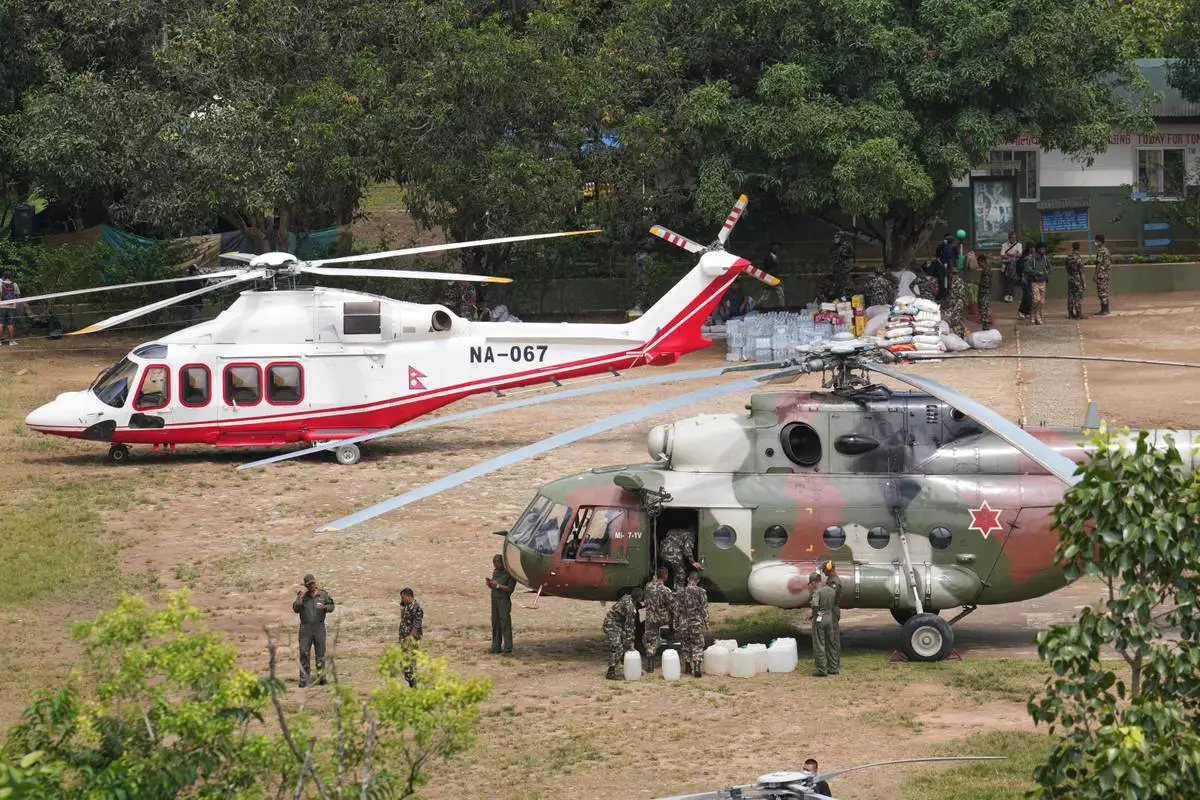
Private and military helicopters are deployed to rescue people stranded in areas cut off by flash flooding in Nepal's Nuwakot district, Monday, Aug. 31, 2026. (AP Photo/Rajesh Kumar Singh)

Relatives console Muna Khadka, center, who lost her son Aayush Khada, in flash floods, during mass burials in Chitwan, Nepal, Monday, Aug. 31, 2026. (AP Photo/Dar Yasin)
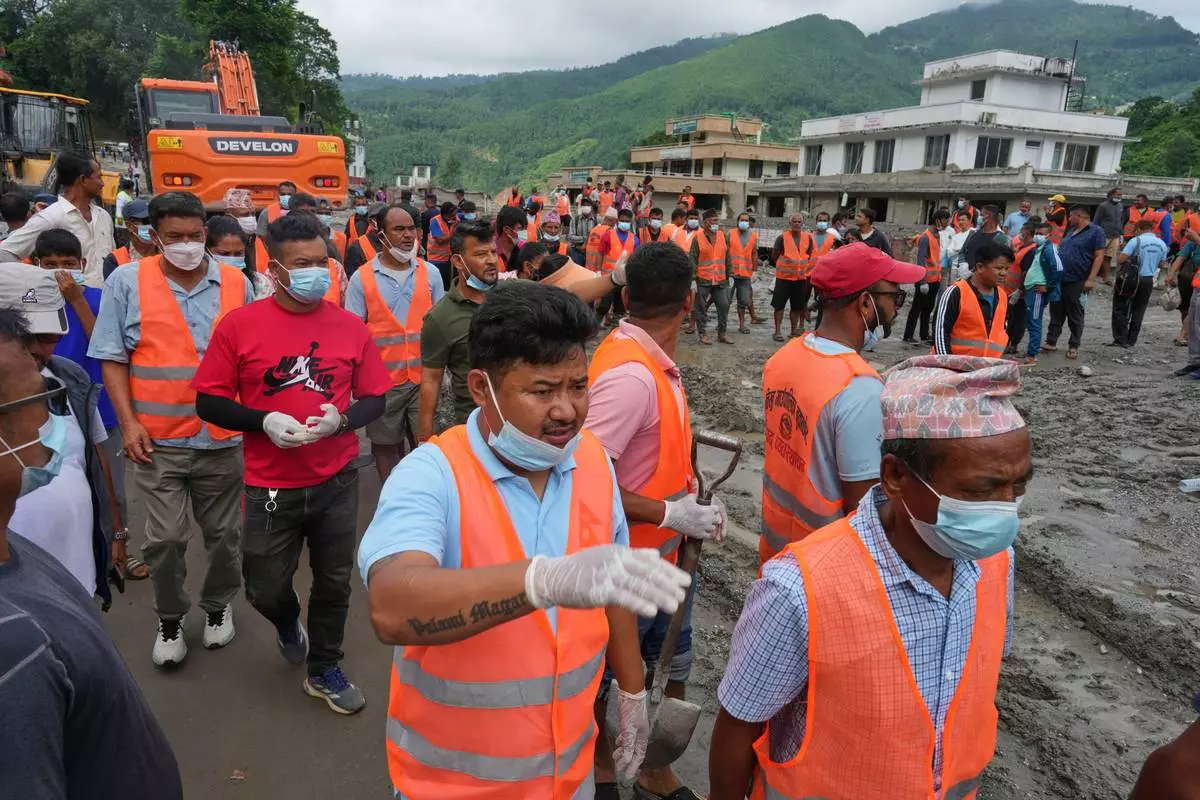
Rescuers arrive at a village affected by flash flooding in Nepal's Nuwakot district, Monday, Aug. 31, 2026. (AP Photo/Rajesh Kumar Singh)
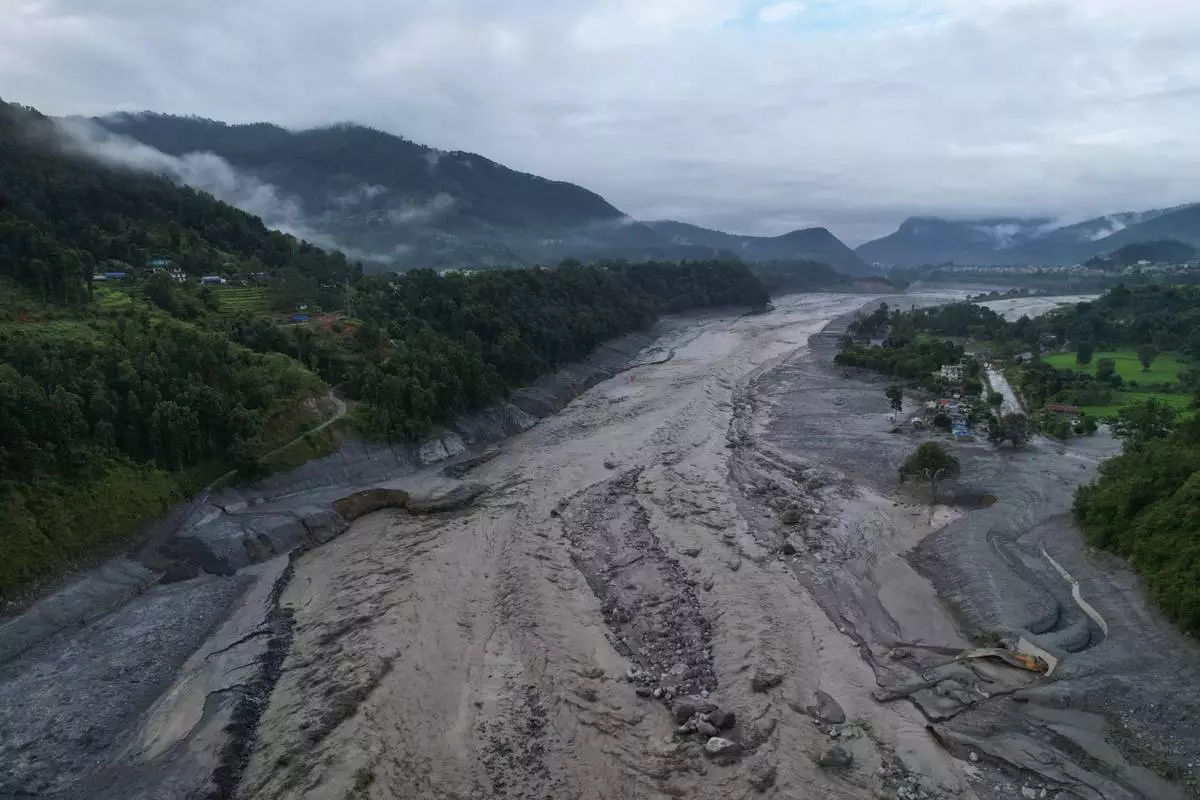
A drone view shows a major section of Pasang Lhamu highway washed away along swollen Trishuli river by recent flash floods cutting off Rasuwa district from Nuwakot area, Nepal, Monday, Aug. 31, 2026. (AP Photo/Rajesh Kumar Singh)
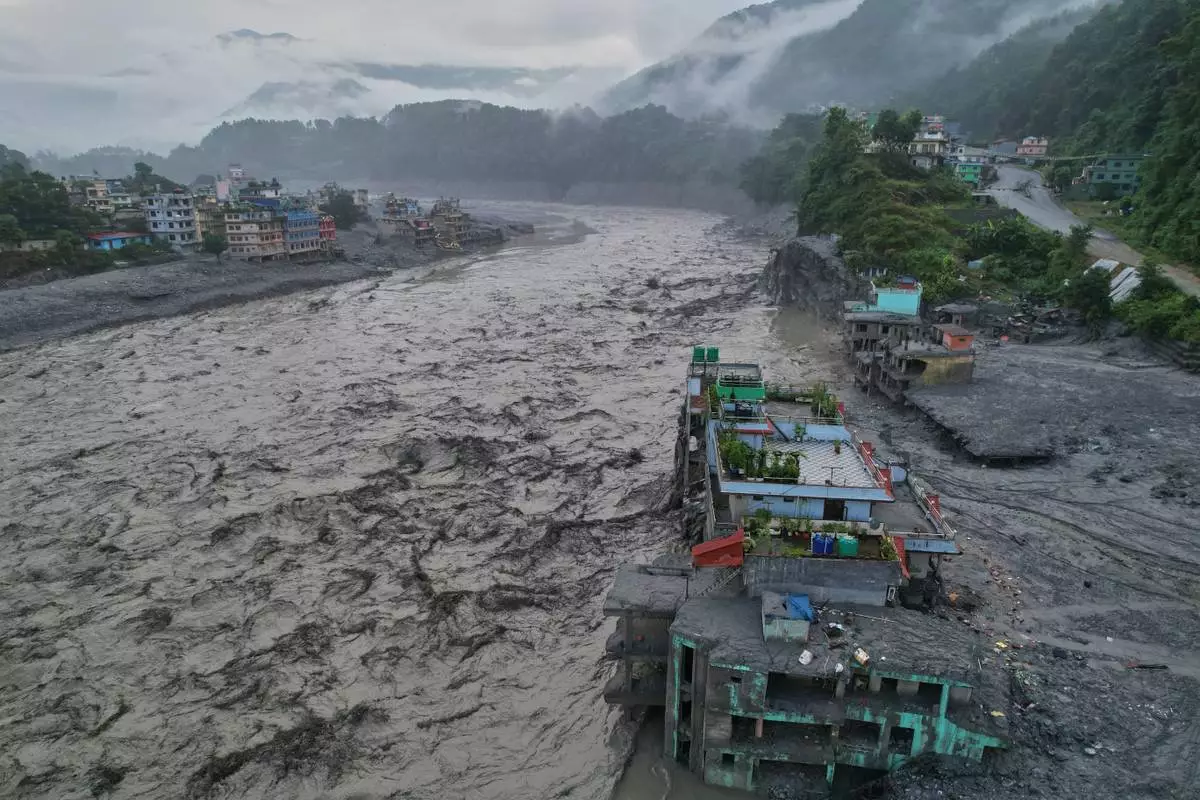
A drone view of the aftermath of flash flooding along the Trishuli river amidst fresh water surge warning in the Trishuli Bazaar area of Nuwakot district, Nepal, Sunday, Aug. 30, 2026. (AP Photo/Rajesh Kumar Singh)
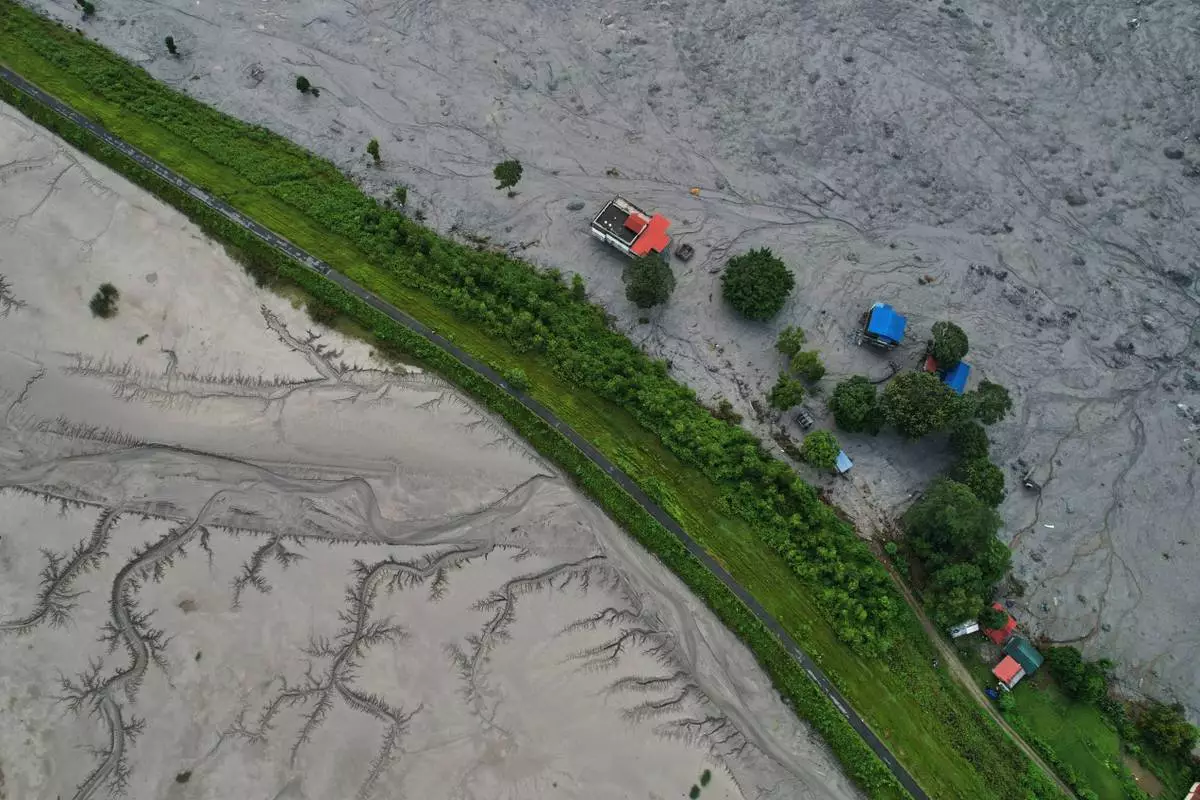
A drone view shows a major section of Pasang Lhamu highway washed away along swollen Trishuli river by recent flash floods cutting off Rasuwa district from Nuwakot area, Nepal, Monday, Aug. 31, 2026. (AP Photo/Rajesh Kumar Singh)