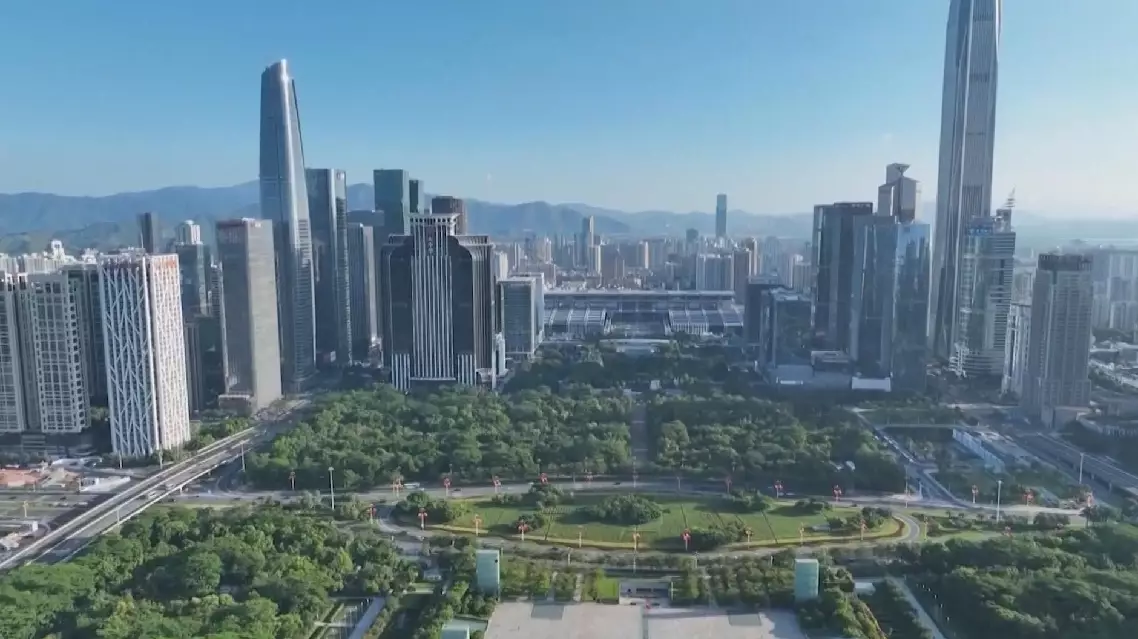
China's gross domestic product (GDP) grew 4.7 percent year on year in the first half of 2026, data from the National Bureau of Statistics (NBS) showed Wednesday.
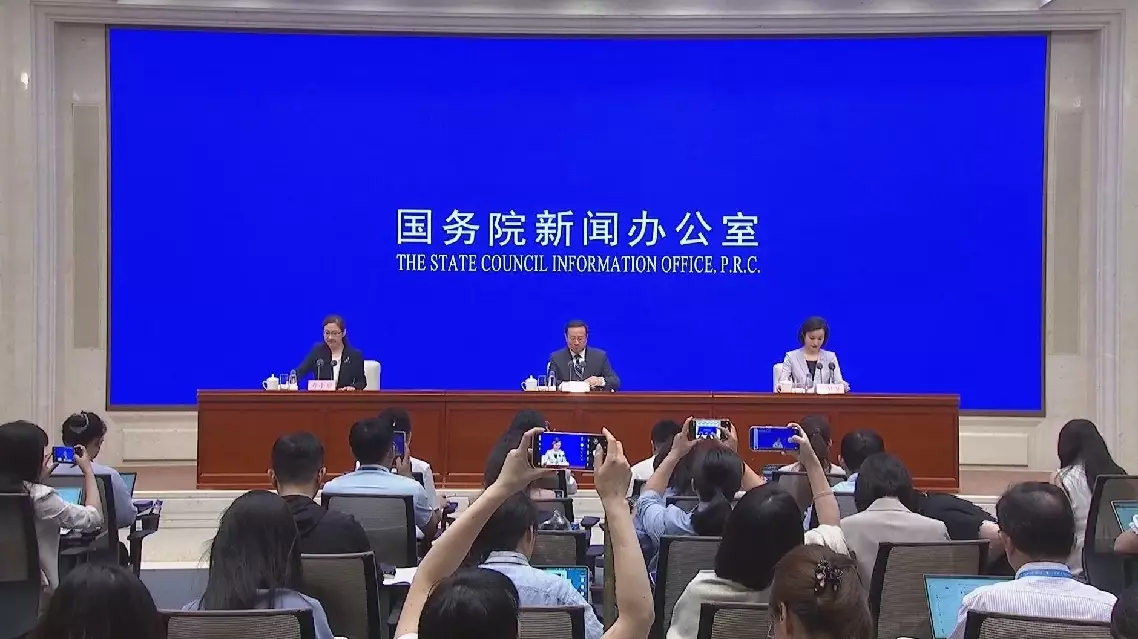
The world's second-largest economy generated more than 69.57 trillion yuan (about 10.25 trillion U.S. dollars) in output during the period, Mao Shengyong, deputy head of the NBS, told a press conference in Beijing.
"In the first half of the year, China's economy withstood the pressure to keep its performance within an appropriate range. Production and supply grew rapidly; employment remained generally stable; prices rose moderately; foreign trade showed good growth momentum; new growth drivers developed rapidly; people's well-being was vigorously and effectively guaranteed; and the development continued to demonstrate strong resilience. Preliminary calculations show that the GDP for the first half of the year was 69.5704 trillion yuan, up by 4.7 percent year on year at constant prices," Mao said.
In the second quarter, China's economy expanded 4.3 percent year on year, the data showed.
China's GDP expands 4.7 pct in H1
Artificial intelligence is reshaping the world at an unprecedented pace, from production and office work to daily essentials. For young people, AI is not merely a tool but also a companion, though it carries hidden risks.
On the eve of the 2026 World Artificial Intelligence Conference (WAIC), voices from the streets reveal a generation grappling with where the red lines of AI development lie.
Many young people see AI as an invaluable partner in daily life. They praise its efficiency in handling repetitive tasks and its ability to deliver quick, reliable results.
"I think it's a best colleague, especially for some low-efficiency, repetitive things. It can help you achieve relatively high returns in a very short time. I think the current AI is already quite high-level, and it can be rated as a fairly outstanding colleague," said Xu Yuanchun, a Shanghai resident.
"I think it's a best workmate, because in my daily life now, the AI user experience is quite good. Sometimes, for example, when I travel, I'd ask it to make an itinerary. Also for medical matters that I don't understand, I ask and it gives feedback. It's much more convenient than before," said Jin Yichun, another Shanghai resident.
When asked about the most important red line that AI development must hold, Yuan Luming, a student at the School of International Relations and Public Affairs at Fudan University, emphasized that AI is ultimately a technology, and technology must serve humanity.
"I think AI is ultimately a technology, so technology must ultimately serve people. The connections, communication, and emotions between people are things that AI cannot replace. So I think technology cannot ultimately replace human beings, and people must not fade away amid technological development. I think we must firmly uphold the bottom line of putting people first," she said.
Regarding the governance cooperation outcomes expected from this year's WAIC, Zhao Tongyang, founder and chief executive officer of Yuanmeng Intelligence, expressed hope for two key results.
"For this artificial intelligence conference, regarding new global AI governance, the outcomes I most hope for are, first, how to achieve multilateral win-win and create a better co-creation and symbiotic ecosystem. The second is that the cross-border inclusive benefits of AI can be better realized under a cross-platform open-source governance structure, so that a new mechanism will be established to encourage innovation while developing new standards along the way," she said.
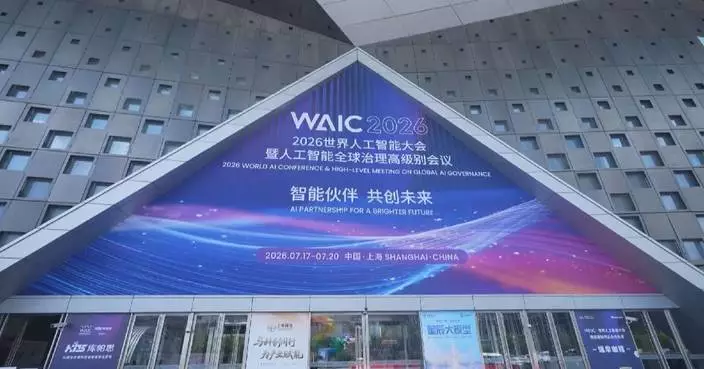
2026 World AI Conference and High-Level Meeting on Global AI Governance will be held in Shanghai from Friday to Monday.
Themed "AI Partnership for a Brighter Future," the event will include more than 140 forums, bringing together 1,400 guests from home and abroad, while featuring six sections: Conferences and Forums, Exhibitions and Showcases, Awards and Competitions, Application Experiences, Innovation Incubation, and Talent Attraction.
AI development should embrace future while holding bottom-line: young people