LUXEMBOURG--(BUSINESS WIRE)--Jul 15, 2026--
SES, a space solutions company, jointly with Airbus Netherlands B.V. signed a ground lease agreement with the Dutch municipality of Noordwijk for a plot at the NL Space Campus, next to the European Space Agency’s (ESA) technical center ESTeC. The facility will host a dedicated optical ground station (OGS) to communicate with the EAGLE-1 satellite and receive quantum safe keys via laser technology.
This press release features multimedia. View the full release here: https://www.businesswire.com/news/home/20260714786947/en/
The station, to be built by Airbus for SES, will consist of a control room, alongside a dome housing an ultra-precise telescope to track satellites, required for the laser link. To ensure the precision of the laser connection, the station will be equipped with advanced optics allowing it to correct real-time atmospheric distortions, such as turbulence caused by air movement or temperature fluctuations.
“The optical ground station will serve as the primary ground connection for the EAGLE-1 system managed by SES in a public-private partnership with ESA and the European Commission (EC). Once operational, the system will allow early adoption of the quantum-safe technology by users such as government and banking sector, enabling next-generation cybersecurity,” said Xavier Bertran, SES’ Chief Product and Innovation Officer.
Through the EAGLE-1 project, Europe will receive its first satellite to demonstrate end-to-end ultra-secure communication based on quantum technology. Comprising a satellite, a ground network, and advanced laser connection, EAGLE-1 is the first and major step in developing a European system for Quantum Key Distribution (QKD). Unlike traditional satellites using radio frequencies, the EAGLE-1 satellite link utilizes laser beams to transmit security keys, establishing an optimally secure connection over long distances.
Delivered by the prime contractor TNO, also responsible for advanced optics, the station’s technical implementation will leverage the expertise of other specialized partners, including FSO Instruments for delivering the sensor, Airbus Netherlands for the real-time control system, Officina Stellare for the telescope and dome, and Celestia STS, responsible for the optical digital modem.
Follow us on:
LinkedIn | Facebook | YouTube | Twitter | Instagram
Read our Blogs >
Visit the Media Gallery >
About SES
At SES, we believe that space has the power to make a difference. That’s why we design space solutions that help governments protect, businesses grow, and people stay connected—no matter where they are. With integrated multi-orbit satellites and our global terrestrial network, we deliver resilient, seamless connectivity and the highest quality video content to those shaping what’s next. Following our Intelsat acquisition, we now offer more than 100 years of combined global industry leadership—backed by a track record of bringing innovation “firsts” to market. As a trusted partner to customers and the global space ecosystem, SES is driving impact that goes far beyond coverage. The company is headquartered in Luxembourg and listed on Paris and Luxembourg stock exchanges (Ticker: SESG). Further information is available at: www.ses.com
About Airbus
Airbus pioneers sustainable aerospace for a safe and united world. The Company constantly innovates to provide efficient and technologically-advanced solutions in aerospace, defence, and connected services. In commercial aircraft, Airbus designs and manufactures modern and fuel-efficient airliners and associated services. Airbus is also a European leader in space systems, defence and security. In helicopters, Airbus provides efficient civil and military rotorcraft solutions and services worldwide.
Forward-looking Statements
This press release contains certain“forward-looking statements” within the meaning of the safe harbor provisions of the U.S. Private Securities Litigation Reform Act of 1995. Forward-looking statements can be identified by words such as “will”, “to be” and “enabling”.
Forward-looking statements are not assurances of future performance and are subject to inherent uncertainties and risks that are difficult to predict. Factors that might cause such a difference include those discussed in our filings with the US Securities and Exchange Commission, including our Form 20-F, such as risks relating to changes in technology or the satellite communications industry; risks relating to operations, systems, and ground infrastructure; and risks associated with strategic investments. The forward-looking statements included in this press release are made only as of the date hereof and we undertake no obligation to publicly update or revise any forward-looking statements, whether as a result of new information, future events or otherwise.
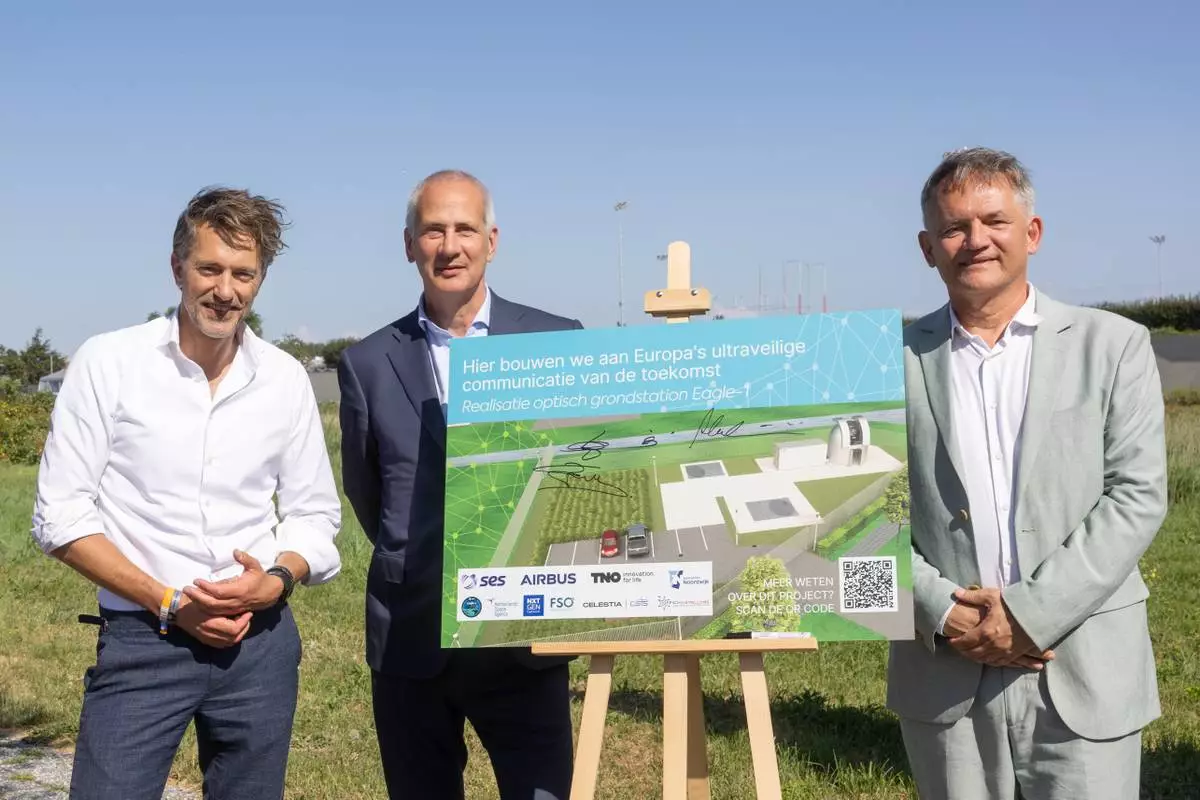
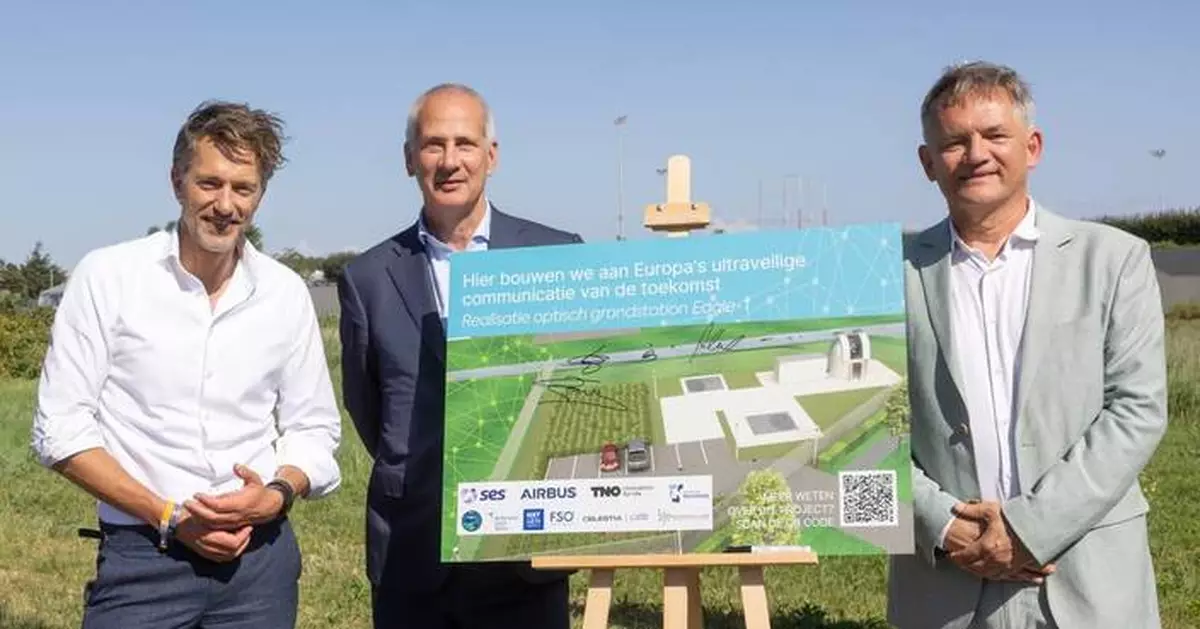
Breaking the ground of the EAGLE-1 Optical Ground Station, Municipality of Noordwijk, the Netherlands. Pictured left to right: Pim van Strien, Alderman for the Municipality of Noordwijk; Rob Postma, President and Managing Director, Airbus Netherlands; Alan Kuresevic, Managing Director, SES Techcom, SES.
DUBAI, United Arab Emirates (AP) — U.S. airstrikes targeting Iran have killed more than 30 people in “recent days,” an Iranian government spokesperson said Wednesday.
The comment from Fatemeh Mohajerani came as a Health Ministry spokesperson said more than 260 people had been wounded in overnight strikes in Iran.
It wasn’t immediately clear what time period Mohajerani was referring to.
Iran during the war with the United States and Israel has only sporadically offered full casualty statistics.
THIS IS A BREAKING NEWS UPDATE. AP’s earlier story follows below.
DUBAI, United Arab Emirates (AP) — The U.S. military early Wednesday reimposed a blockade on Iranian ports over Tehran’s attacks on ships trying to pass through the Strait of Hormuz, sparking new strikes on nations hosting American forces as an interim deal to end the war further unraveled.
Days of retaliatory strikes across the Middle East by Iran — and both nations’ attempts to assert control of the waterway through which a fifth of the world’s oil and natural gas trade passes during peacetime — threaten to push the region back to all-out war.
In Iran, more than 260 people were wounded in this round of overnight strikes alone, according to the Health Ministry, suggesting an intensification in the bombing.
The U.S. first imposed the blockade in mid-April and then lifted it in mid-June, a day after signing the interim deal that set a 60-day period for negotiations over issues like Iran’s nuclear program, but talks have stalled as fighting over the strait has intensified.
Iran’s paramilitary Revolutionary Guard threatened Wednesday to halt all energy exports from the Middle East over the blockade.
“The export of oil and gas from the region will be either for everyone or for no one,” it said.
When U.S. President Donald Trump announced the return of the blockade Monday, he also said he would impose a 20% fee on ships passing through the strait. But he dropped the plan to collect fees hours before resuming the blockade, citing requests from allies in the Persian Gulf.
The U.S. carried out another wave of strikes as it reimposed the blockade, striking dozens of targets over seven hours, the U.S. military’s Central Command said Wednesday.
Hossein Kermanpour, a spokesperson for the Health Ministry, gave Wednesday's casualty figure, without specifying how many people had been killed. Kermanpour's figures reported far more people injured than in any other round of recent violence between Iran and the U.S.
Authorities offered no immediate explanation, though initial local reports suggested a significant strike hit Iran's southeastern Sistan and Baluchestan province on the Gulf of Oman.
Missile alert warnings went out in Bahrain and Kuwait early Wednesday morning as they faced incoming Iranian fire, something that’s been a daily occurrence, further straining a ceasefire in the war. Jordan also said it shot down three incoming Iranian missiles. Iran claimed attacks on the three nations.
U.S. Navy Adm. Brad Cooper, who leads Central Command, said in a statement that Iran had launched dozens of missiles and drones at neighboring Gulf Arab countries.
“U.S. forces are holding Iran accountable for unwarranted aggression that continues to endanger innocent lives,” Cooper said.
There are at least 19 U.S. warships in the Arabian Sea, including two aircraft carriers and an amphibious assault ship with more than 1,000 Marines aboard. Central Command also said in a social media post that there are “hundreds of military aircraft operating across the Middle East.”
When the U.S. and Israel launched the war on Iran on Feb. 28, Tehran effectively shut the passage by attacking and threatening ships. That sent the price of oil, fertilizer and other goods soaring.
Iran has more recently attacked ships moving through the strait on a route near Oman overseen by the U.S. military that is outside Tehran’s control, setting off the recent violence. The U.S. has threatened to reopen the strait by force — but experts say that would require a much bigger armada if not tens of thousands of ground troops.
Iran’s ambassador to the United Nations, Amir Saeid Iravani, criticized America’s ongoing attacks targeting his country.
“The U.S. is the aggressor, not the victim,” he wrote to the world body’s leader, according to the state-run IRNA news agency.
Trump said Tuesday that he was called by the region’s “kings and emirs,” who suggested an alternate arrangement to charging ships fees to pass through the strait like the president proposed a day earlier.
“They said we’d love to do it a different way. We’d love to invest in the United States with billions and billions of dollars,” Trump told reporters Tuesday in the Oval Office.
Trump said he preferred that arrangement to charging tolls “because I don’t think anybody should be able to charge a fee for the strait.”
It was unclear if the investment deals would be new commitments relative to what Trump announced after a visit last year to the Middle East.
Trump’s plan to charge fees would have been a change to longstanding American policy and a departure from U.S. promises that the strait would remain open to all without tolls.
Trump told Fox News Channel on Tuesday night that more U.S. strikes against Iran were coming over the next two days and that bridges and power plants could be targets by next week unless negotiations resume. Already, the U.S. has struck at least one bridge.
“You better make a deal, or you’re not going to have anything left,” Trump warned.
U.S. Central Command said it struck several areas in Iran earlier Tuesday; Tehran acknowledged the strikes but provided no overall casualty or damage assessments.
Hours after the U.S. said it ended its strikes, the Iranian city of Bushehr on the Persian Gulf was hit in at least four locations, the IRNA news agency reported. Explosions in the southwestern city of Ahvaz and the southern port city of Bandar Abbas also were reported by Iranian state media Tuesday night.
The attacks again raised the possibility that Gulf Arab states were retaliating against Iran without discussing it in public.
Kuwait separately said an Iranian attack wounded four members of its navy Tuesday and set a building on fire.
Under the interim deal, Iran agreed that passage through the strait would remain free of charge for 60 days — but the agreement left open what would happen after. Iran asserts it has the right to manage traffic and potentially charge fees. The U.S. has disputed that.
The price for a barrel of Brent crude oil, the international standard, briefly topped $87 early Tuesday, still well below the nearly $120 reached at the height of the war. The price dipped to $78 in the aftermath of Trump’s announcement that he had changed course.
Regional mediators meanwhile are still trying to get the United States and Iran back to the negotiating table.
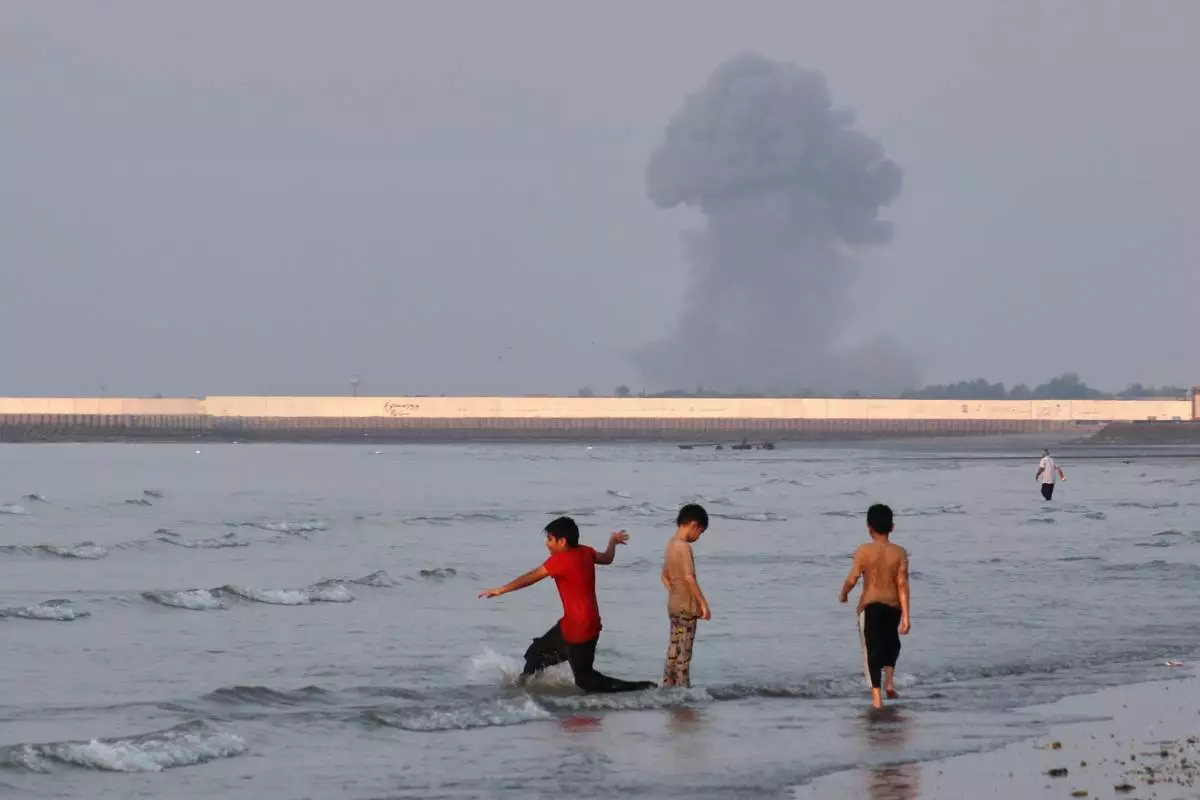
Three boys play in the shallow waters of the Strait of Hormuz, as a plume of smoke rises from an explosion in the background, off Bandar Abbas, Iran, Monday, July 13, 2026. (Razieh Poudat/ISNA via AP)
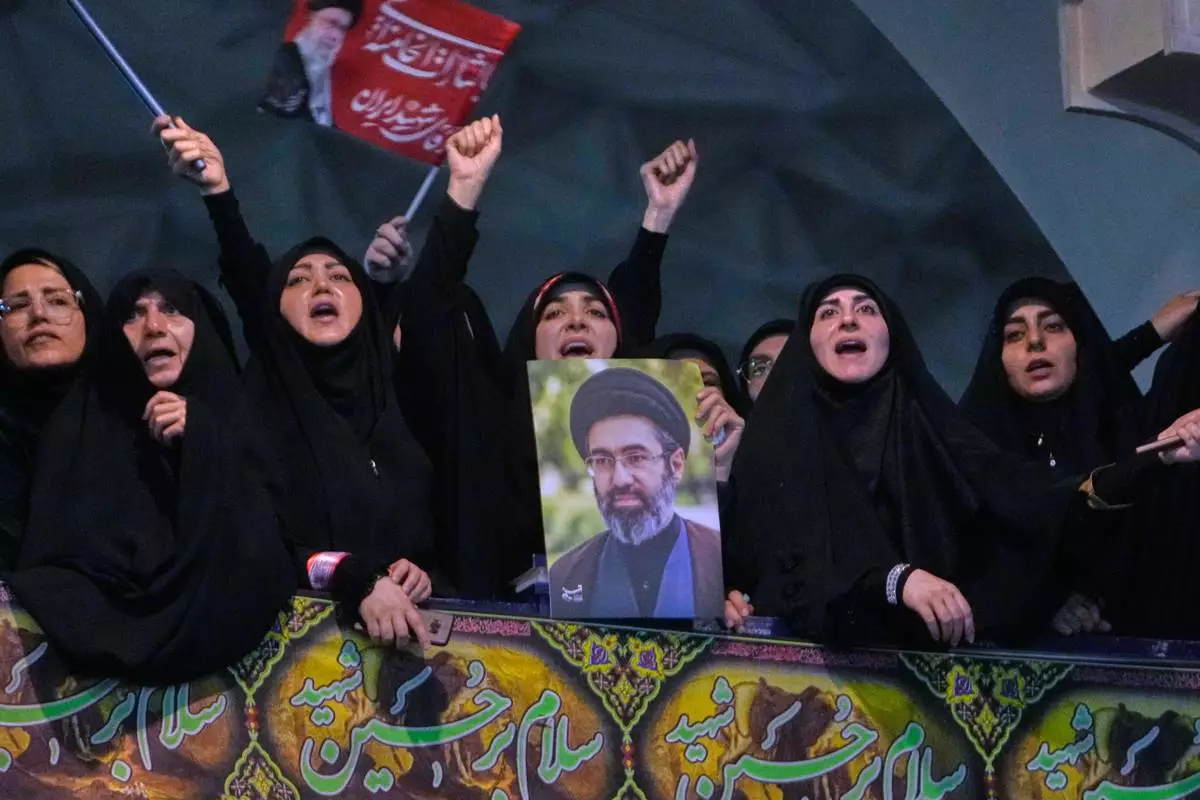
Mourners chant slogan as one of them holds a poster of the Supreme Leader Ayatollah Mojtaba Khamenei in a ceremony commemorating the late Supreme Leader Ayatollah Ali Khamenei at the Imam Khomeini Mosalla Grand Mosque in Tehran, Tuesday, July 14, 2026. (AP Photo/Vahid Salemi)