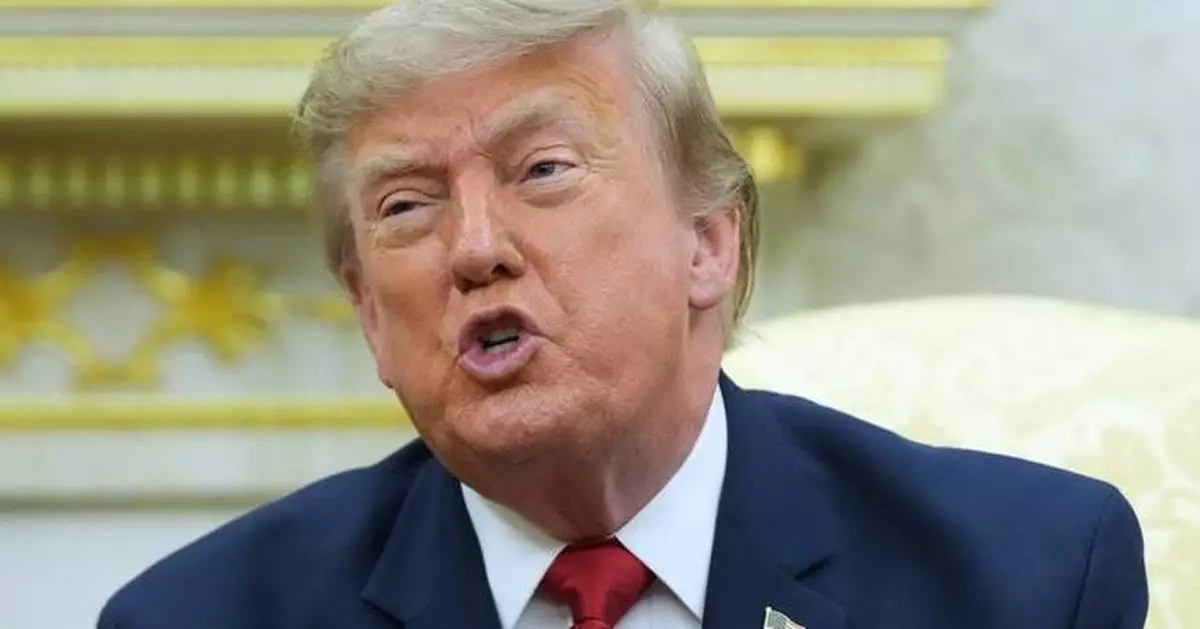
WASHINGTON (AP) — President Donald Trump says Immigration and Customs Enforcement should continue traffic stops after recent fatal shootings, seeming to contradict a new policy to halt them.
Trump wrote early Wednesday on his social media site ICE is “doing a GREAT job, one that has to be done.”
The Republican president says to remove criminals he says were let into the country under the previous Democratic administration “we must be strong, tough and smart and we CANNOT give up one of ICE’s most important and effective Crime Fighting tools, THE TRAFFIC STOP!” Trump says, “Once we do, we are playing right into the criminal’s hands.”
The policy change came after an ICE officer shot and killed a Colombian driver Monday in Maine and a week after one shot and killed a motorist in Houston, renewing criticism of the agency’s enforcement tactics that were widely condemned last winter after the killings of Alex Pretti and Renee Good in Minnesota.
In Florida on Tuesday, a third man in roughly a week died during an encounter with immigration officers. This time, a 28-year-old man was killed after he was hit by a tractor trailer while running from immigration and other federal officers, authorities said.
It’s a narrative that has been repeated again and again since the Trump administration’s immigration crackdown began, with federal officers confronting drivers then saying they opened fire when their vehicles became a danger. That’s despite decades of warnings from policing experts that shooting into moving cars presents a danger of its own and should almost always be avoided.
At least 10 people have been killed during immigration operations since the start of the Trump administration’s mass deportation campaign. At least four of those deaths involved people in vehicles, including one last week in Houston, a trend so troubling U.S. Sen. Susan Collins said Tuesday she urged DHS secretary Markwayne Mullin “to cease all non-urgent vehicle stops.”
John Sandweg, who was acting director at ICE, which is part of DHS, during the Obama administration, estimated recently that there have been roughly 18 traffic-stop shootings during the Trump immigration crackdown.
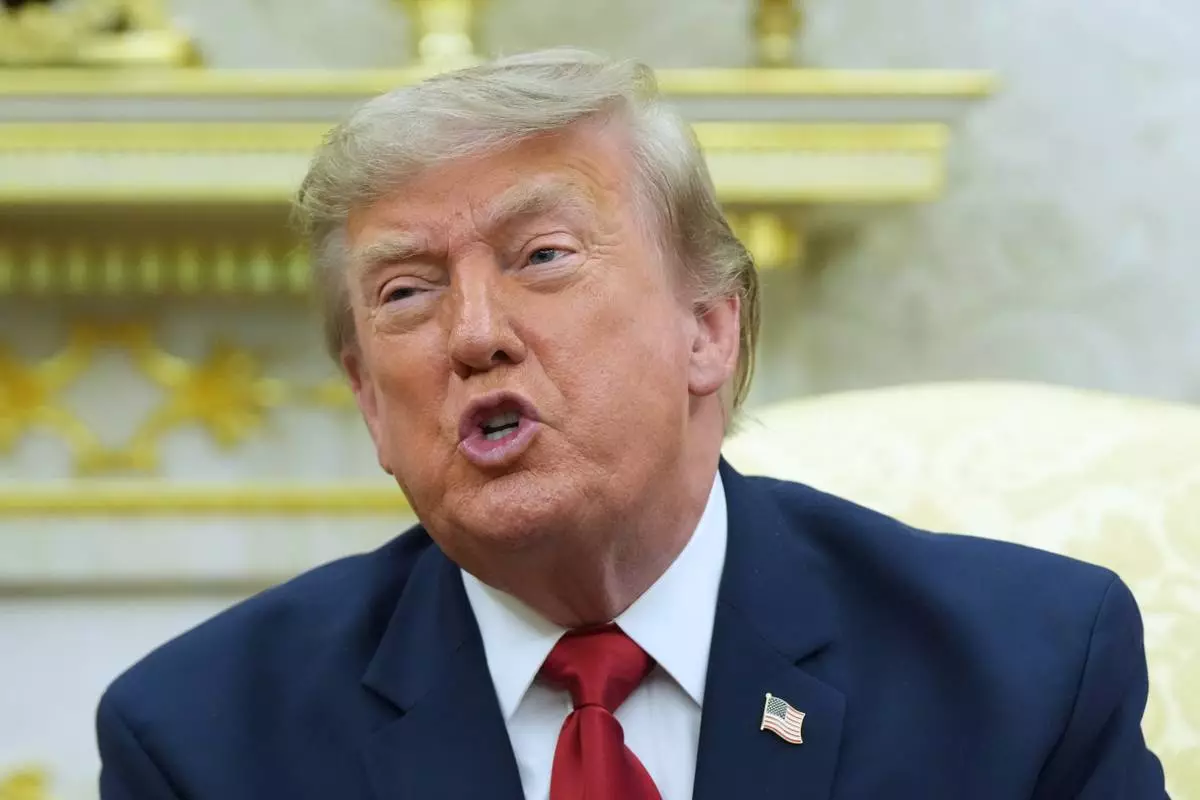
President Donald Trump speaks as he meets with Iraq's Prime Minister Ali al-Zaidi in the Oval Office of the White House, Tuesday, July 14, 2026, in Washington. (AP Photo/Julia Demaree Nikhinson)
DUBAI, United Arab Emirates (AP) — The U.S. military’s Central Command said Wednesday it launched airstrikes on Greater Tunb Island in the Strait of Hormuz, targeting Iranian defense and missile sites.
The island, seized by Iran since 1971 from what would become the United Arab Emirates, is viewed as a strategic point in the strait.
Central Command said it launched a 90-minute attack targeting the island.
“The strikes further degraded Iran’s ability to attack commercial shipping in the Strait of Hormuz,” it said.
THIS IS A BREAKING NEWS UPDATE. AP’s earlier story follows below.
DUBAI, United Arab Emirates (AP) — The U.S. reimposed a naval blockade on Iran and intensified its airstrike campaign Wednesday in retaliation for Tehran’s attacks on ships trying to pass through the Strait of Hormuz. The American strikes hit an Iranian army barracks, killed at least seven troops and wounded more than 260 people across the country, Iranian officials said.
Days of back-and-forth strikes by the U.S. and Iran across the Middle East — and renewed threats to the waterway crucial to global energy supplies — have shredded the interim deal to end the conflict and the region could tip back into all-out war.
The U.S. first imposed a blockade in April and then lifted it last month after signing the interim deal that paused the fighting and set a 60-day period for negotiations over issues like Iran’s nuclear program. Those talks have stalled as fighting over the Strait of Hormuz has intensified.
When the U.S. and Israel launched the war on Iran on Feb. 28, Tehran effectively closed the waterway to shipping traffic — a move that sent the price of oil, fertilizer and many other goods soaring far beyond the region and gave Iran major leverage in negotiations. Those rising prices pose a particular challenge to U.S. President Donald Trump and his Republican Party, which hopes to retain control of Congress in elections in November — but Washington has struggled to successfully reopen the waterway.
Iran’s paramilitary Revolutionary Guard threatened Wednesday to halt all energy exports from the Middle East over the blockade.
“The export of oil and gas from the region will be either for everyone or for no one,” it said.
The U.S. carried out a wave of strikes, hitting dozens of targets over seven hours overnight, the military’s Central Command said Wednesday. Later, it resumed striking Iran during daylight — an unusual move that further signaled the increasing tempo in attacks.
One strike targeted a barracks for Iran’s 388th Mechanized Infantry Brigade, which operates tanks and armored vehicles, in Sistan and Baluchestan province, Iranian state television reported. The report said the Americans fired at least 13 missiles in the attack and that the seven dead included conscripts and career soldiers. A number of troops were wounded.
Including those at the barracks, more than 30 people have been killed in recent days, Iranian government spokesperson Fatemeh Mohajerani said, without elaborating.
Hossein Kermanpour, a spokesperson for the Health Ministry, meanwhile, said over 260 people were wounded in overnight strikes alone — a figure far larger than for any other round of recent violence between Iran and the U.S. He did not say how many people were killed overnight.
The army said it would make “a decisive response to this aggressive action by the American enemy,” according to state TV.
Missile alert warnings sounded in Bahrain and Kuwait early Wednesday as they faced incoming Iranian fire — a daily occurrence in recent days. Jordan said it shot down three incoming Iranian missiles. Iran claimed attacks on the three nations, all of which host U.S. forces.
U.S. Navy Adm. Brad Cooper, who leads Central Command, said in a statement that Iran had launched dozens of missiles and drones at neighboring Gulf Arab countries.
Trump told the Fox News Channel on Tuesday night that more U.S. strikes against Iran would come over the next two days and that bridges and power plants could be targeted by next week unless negotiations resume. Already, the U.S. has struck at least one bridge.
“You better make a deal, or you’re not going to have anything left,” Trump warned.
Iran’s ambassador to the United Nations, Amir Saeid Iravani, criticized America’s attacks.
“The U.S. is the aggressor, not the victim,” he wrote to the world body’s leader, according to the state-run IRNA news agency.
The latest round of fighting is focused on the Strait of Hormuz, through which a fifth of the world’s oil and natural gas trade passes during peacetime. How to reopen the strait has bedeviled the U.S. since Iran choked it off in the early days of the war.
During the interim deal, some ships began moving through the passage using a route near Oman overseen by the U.S. military that is outside Tehran’s control.
In recent days, Iran attacked ships using that route — and back-and-forth attacks ensued. The U.S. has threatened to reopen the strait by force — but experts say that would require a much bigger armada if not tens of thousands of ground troops. Imposing the blockade is another way to put pressure on Iran.
But in the meantime, oil prices are rising. The price for Brent crude oil, the international standard, traded above $85 a barrel on Wednesday — more than 15% higher than the price before the war, but still well below the nearly $120 reached at the height of the conflict.
Analysts with the International Monetary Fund warned Wednesday that while a surplus of oil had kept prices low, “much of that room has now been used up.”
“As tensions flare again in the Strait of Hormuz, that room is now smaller and shrinking further as spare capacity has been deployed, demand has compressed, and inventories have been drawn down,” Azim Sadikov and Jean-Marc Natal wrote in a blog post. “Unless inventories are replenished, the world will start from a weaker position when the next shock comes.”
Regional mediators meanwhile are still trying to get the United States and Iran back to the negotiating table.
Associated Press writer Nasser Karimi in Tehran, Iran, contributed to this report.
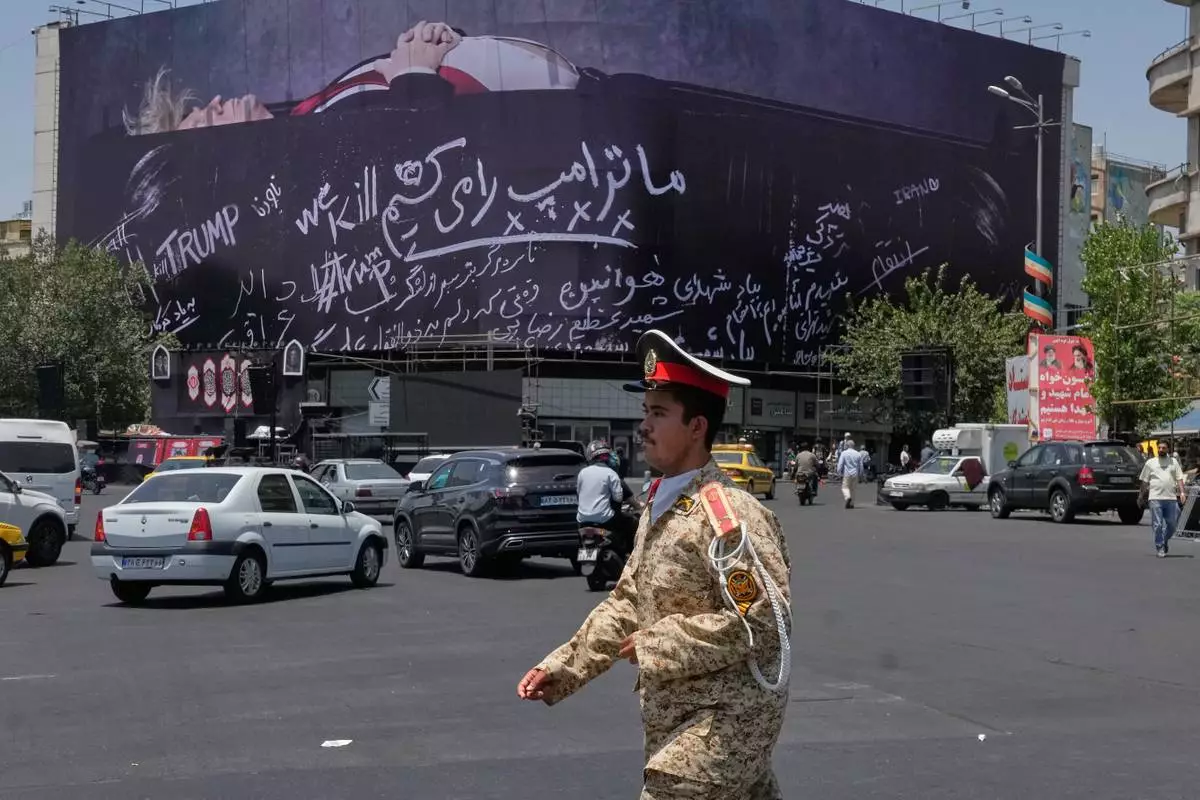
An army cadet walks past a billboard bearing anti-Trump messages, including the phrase "We Kill Trump," at Islamic Revolution Square in downtown Tehran, Iran, Wednesday, July 15, 2026. (AP Photo/Vahid Salemi)
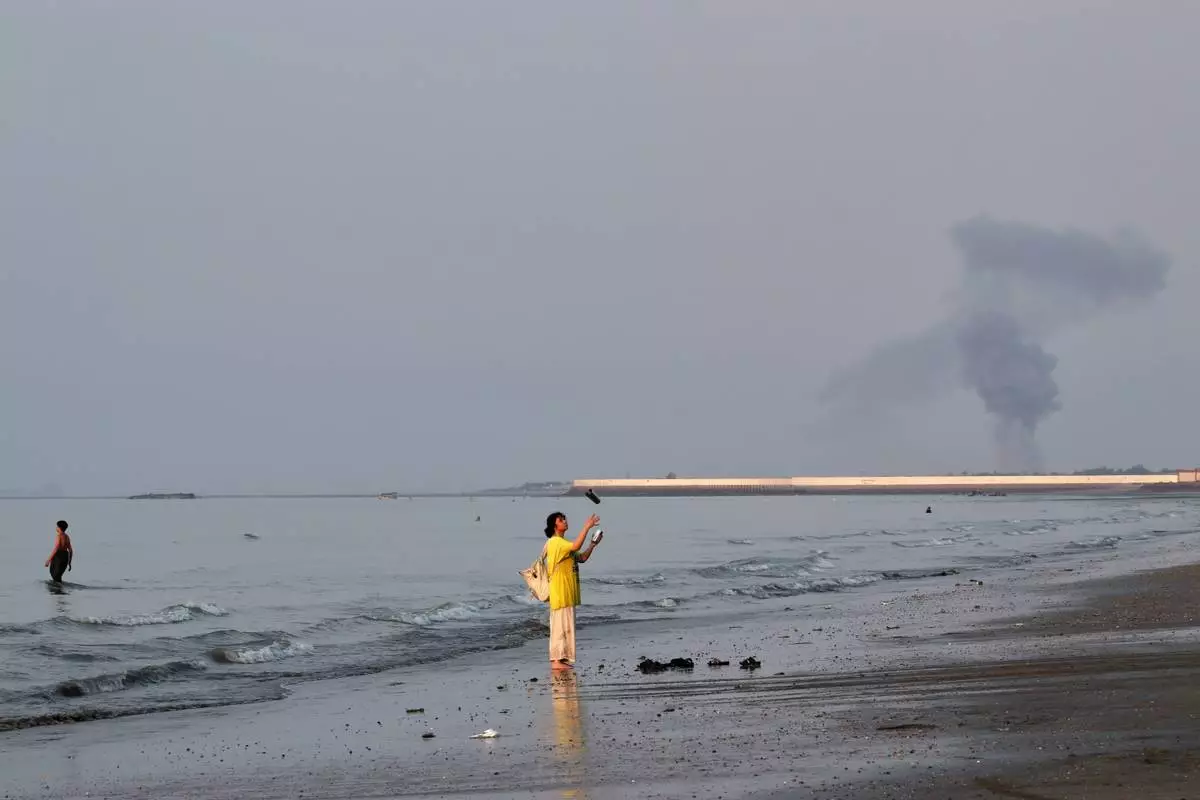
A woman stands at the water's edge along the Strait of Hormuz as a plume of smoke rises in the background following an explosion, off Bandar Abbas, Iran, Monday, July 13, 2026. (Razieh Poudat/ISNA via AP)
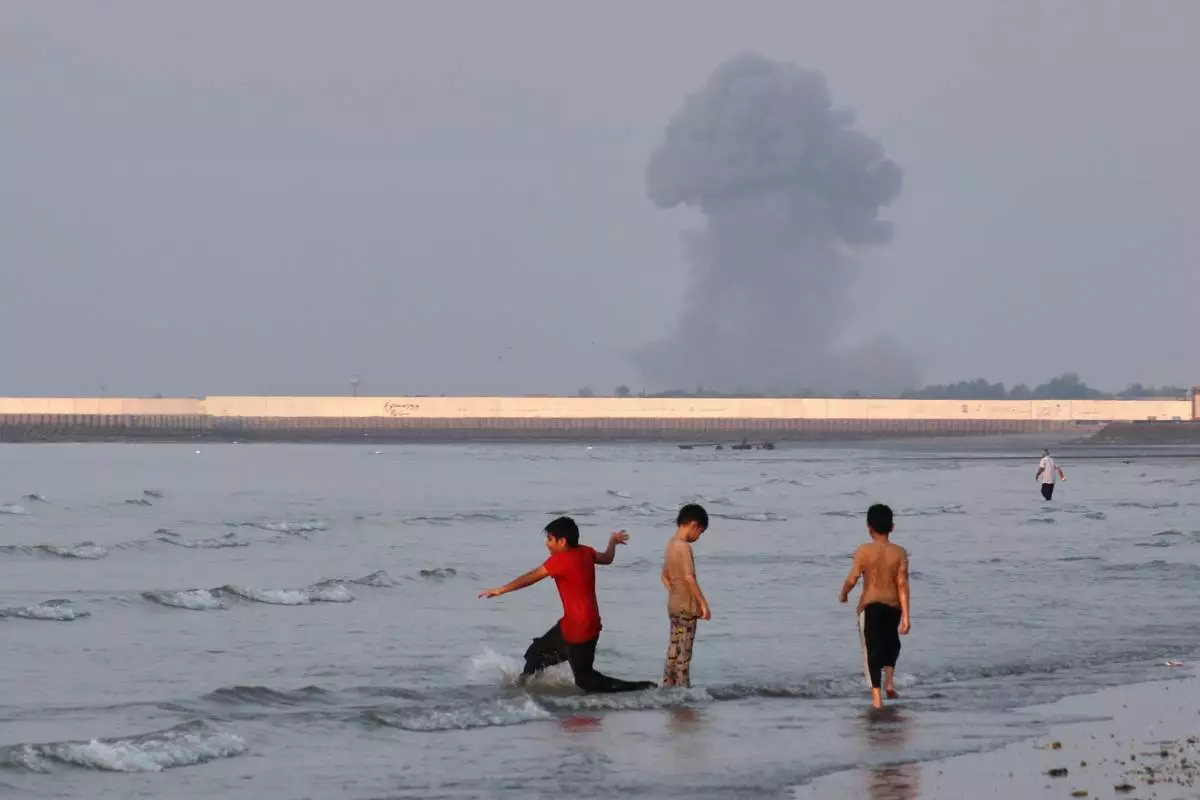
Three boys play in the shallow waters of the Strait of Hormuz, as a plume of smoke rises from an explosion in the background, off Bandar Abbas, Iran, Monday, July 13, 2026. (Razieh Poudat/ISNA via AP)
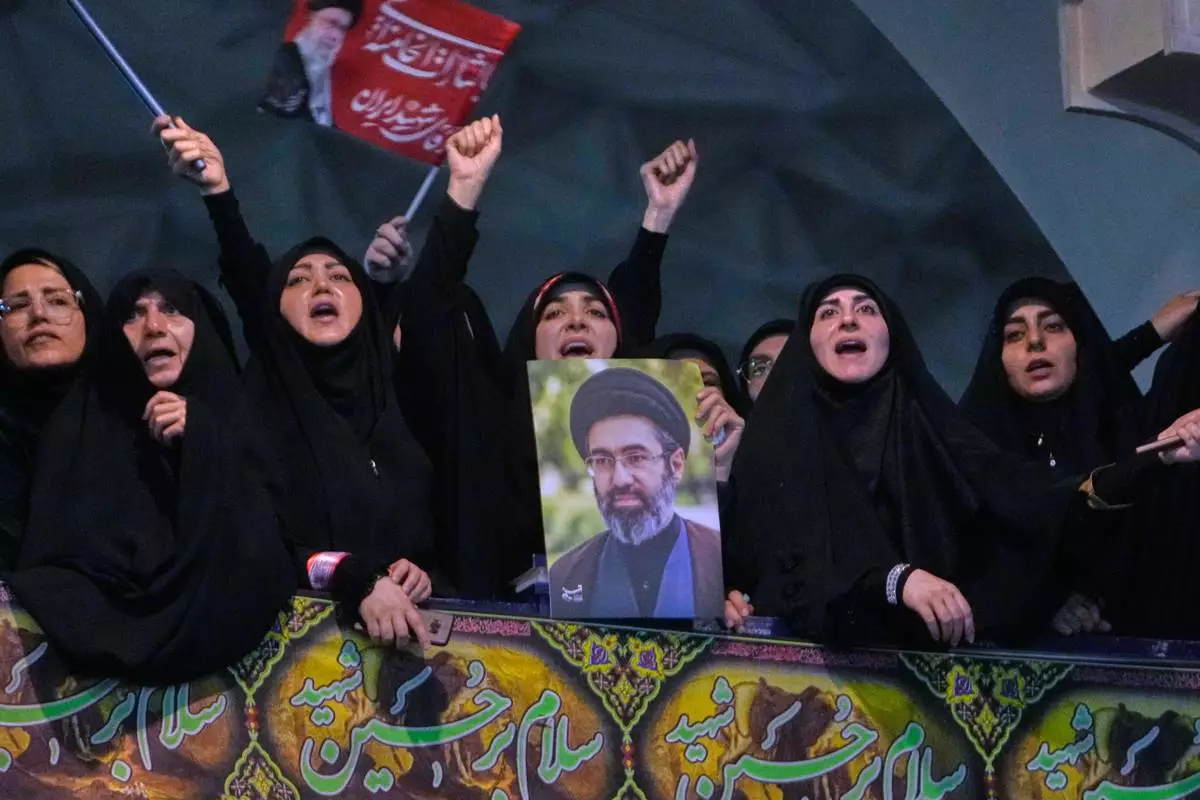
Mourners chant slogan as one of them holds a poster of the Supreme Leader Ayatollah Mojtaba Khamenei in a ceremony commemorating the late Supreme Leader Ayatollah Ali Khamenei at the Imam Khomeini Mosalla Grand Mosque in Tehran, Tuesday, July 14, 2026. (AP Photo/Vahid Salemi)