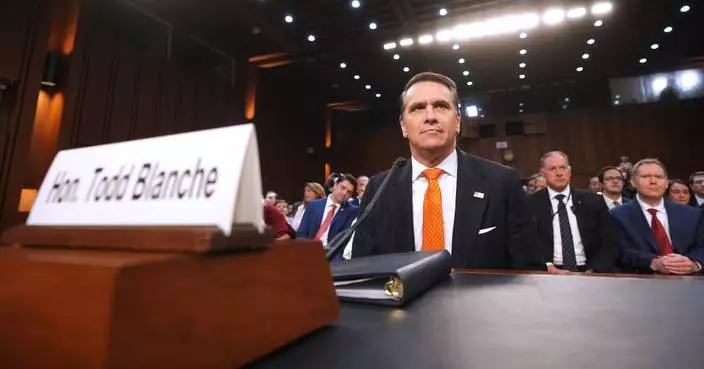
BEIRUT (AP) — After two days of U.S.-mediated talks in Rome, Lebanon and Israel took steps toward implementing “pilot zones” in southern Lebanon where Israeli forces would withdraw and turn over control to the Lebanese army, the U.S. State Department said Wednesday.
The latest Israel-Hezbollah war began when the Lebanese militant group fired rockets into Israel days after Israel and the U.S. launched their war on Iran on Feb. 28. Israel invaded Lebanon and has since occupied a large swathe of the country’s south. Hezbollah has been vehemently opposed to the direct Lebanon-Israel talks.
The State Department said in a statement that the talks were “productive” and the parties “agreed on the structure and guidelines for the pilot zone process, to be finalized and implemented in the coming days.”
There was no immediate statement from Lebanon or Israel on the outcome of the negotiations.
Lebanon and Israel announced a “framework agreement” on June 26, laying out a plan for Israeli forces to withdraw from southern Lebanon, in exchange for the disarmament of the Iran-backed Hezbollah militant group. It also envisions steps toward an eventual peace agreement between the two countries — which technically remain in a state of war nearly 80 years after Israel’s establishment.
The deal was supposed to begin with two “pilot zones” where the Israeli military is to turn over control to the Lebanese army, which would clear the areas of any Hezbollah presence. However, implementation on the ground had stalled ahead of this week’s talks.
Lebanese President Joseph Aoun, who is slated to visit Washington on July 21, said in a statement ahead of the Rome talks that instructions had been given to the Lebanese delegation “to demand the immediate withdrawal of Israeli forces from the two pilot zones before any further discussions.”
Wednesday's statement did not specify where the pilot zones would be, but Lebanese and Israeli officials previously said they would include the towns of Froun, Ghandouriyeh and Zawtar.
The designated zones generated some controversy in Lebanon because Israeli troops were not present in most of the selected area to begin with, raising questions about how a withdrawal could take place. The Lebanese army had pushed for pilot zones that were larger and included more area occupied by Israeli forces.
The State Department said Wednesday that following implementation of the pilot zones, “we will move to expanded technical talks ... with the aim of reaching a comprehensive agreement between Israel and Lebanon.
Hezbollah and Iran had sought to link the end of the war in Lebanon to the outcome of broader U.S.-Iran talks. The Lebanese government, trying to minimize Iran’s influence, aimed to keep the two tracks separate and negotiate a ceasefire directly with Israel.”
The Lebanese militant group has said it will not abide by the agreement and has no plans to disarm. Israeli officials, meanwhile, have said publicly that they plan an extended occupation of southern Lebanon.
U.S. President Donald Trump, in an interview with Fox News, a clip of which was aired Wednesday, said he wants to see Israel withdraw or “redeploy” forces from Lebanon as well as from a strip it is occupying in southern Syria.
“Southern Syria and from parts of Lebanon, yeah, it would be good to get out, I think, and I think you might see things get a little bit calmer,” Trump said, adding, “We have to focus our energy on the big leagues. The big leagues are Iran.”
Trump also once again repeated his proposal for Syrian President Ahmad al-Sharaa to send forces into Lebanon to “take care of” Hezbollah, saying that al-Sharaa “would be more precise” than Israel.
Al-Sharaa has said publicly that he wants Syria to stay out of the regional war and has no desire to intervene militarily in Lebanon.
——
Associated Press writer Farnoush Amiri in New York contributed to this report.

Reporters stand in front of the United States' Embassy in Rome, where ambassadors-level talks between Israel and Lebanon are expected to take place Tuesday, July 14, 2026. (AP Photo/Alessandra Tarantino)

Italian police patrols in front of the United States' Embassy in Rome, where Lebanese and Israeli delegations were set to meet Tuesday, July 14, 2026. (AP Photo/Alessandra Tarantino)

A motorcade arrives at the United States' Embassy in Rome, Italy, where ambassadors-level talks between Israel and Lebanon are expected to take place, Tuesday, July 14, 2026. (AP Photo/Alessandra Tarantino)
WASHINGTON (AP) — House Republicans on Wednesday unveiled a $95 billion legislative plan focused on boosting defense, aiding farmers and enacting stricter voter registration rules, a sequel to the massive tax and spending cut bill that President Donald Trump signed into law last year.
The 47-page outline, called a budget resolution, is a long-shot undertaking designed to supplement Pentagon funding for the Iran war and address Trump’s top priority of changing voter registration requirements. A more ambitious effort was narrowed to address concerns of conservatives about adding to the deficit. The resolution does not seek any offsets to pay for the new spending.
House Speaker Mike Johnson pushed ahead after meeting with Trump at the White House this week in what will be the Republicans’ calling card to voters this fall heading into the midterm elections, with control of Congress at stake.
“Safeguarding American elections and strengthening our national defense are the most basic responsibilities of Congress,” Johnson said in a statement.
Johnson welcomed the chance to again use a legislative process that will allow Republicans to overpower Democratic objections and eventually approve legislation on a party-line majority vote, saying the Democrats won’t be able to block the GOP priorities “any longer.”
Democrats, however, have argued against the sharply partisan path, particularly for matters of war funding.
The Budget Committee is expected to consider the outline Thursday, ahead of floor action in the House next week.
The bulk of the $95 billion would go for the U.S.-led war against Iran, reflecting the White House's request for supplemental spending to rebuild stockpiles and fund classified programs, among other expenses related to Operation Epic Fury.
The resolution calls for the House Armed Services Committee to craft legislation that will not increase deficits through 2036 by more than $60 billion; the Select Committee on Intelligence, $13 billion; the Agriculture Committee, $12 billion; and the House Administration Committee, $10 billion.
The latter funding would be focused on enacting aspects of an election law overhaul that requires those registering to vote to provide proof of citizenship and is a top Trump priority.
Overall, the plan is on par with a request the White House submitted to Congress last month, as the Iran war drags past four months. But it falls far short of the $350 billion increase the White House proposed in its budget request this year to beef up the Defense Department.
Approving extra war funding will be difficult, even among Republicans supporting the Iran effort, as the nation confronts staggering annual deficits reaching nearly $2 trillion this year.
Both the House and the Senate would have to pass the same budget resolution to launch the crafting of the party-line bill, which is politically difficult in the Congress where Republicans hold only narrow majority control.
Along with the war funds, the package Republicans are pursuing would include $10 billion for the GOP's effort to impose strict citizenship requirements in line with provisions of the SAVE America Act, which has been a top Trump priority.
Trump has insisted that Republicans approve the elections overhaul bill, which has passed the House but does not have the votes to overcome the 60-vote threshold in the Senate. So Republicans are looking to get parts of it through the arduous reconciliation process that allows both chambers to pass a bill with a simple majority.
It's unclear how the budget package would impose or fund voting law changes and if any alterations could be made before the midterm elections, with many state elections processes already underway.
Overall, passage of the package would be a lengthy process, with much of the action taking place after lawmakers return from their August recess and during the heart of election season. House Republicans hope to kick off the effort before they leave town at the end of this month.
The additional aid for farmers dealing with higher gas and fertilizer prices and retaliatory tariffs has become an election year priority for many lawmakers with large rural constituencies.
But even the addition of that type of farm aid is not likely to be an incentive for Democrats to lend support for what is essentially a Republican-only bill. Democrats are expected to overwhelmingly oppose whatever final product emerges and force Republicans to take votes on scores of difficult amendments.
Rep. Brendan Boyle, the lead Democratic lawmaker on the House Budget Committee, said the GOP’s budget plan would lead to tens of billions of dollars in additional debt to fund what he called the most unpopular war in American history.
“I’m going to fight like hell to make sure taxpayer dollars are being used to lower costs and make life better for American families, not to bankroll Trump’s giveaways to billionaires and endless wars overseas,” Boyle said.
Johnson, of Louisiana, applauded Budget Committee Chairman Jodey Arrington, R-Texas, and others on the panel for moving swiftly to advance the resolution and unlock what would be Republicans' third reconciliation bill this Congress.
Trump's big tax breaks bill last year and the Homeland Security funding bill this year both passed largely along party lines.
Arrington said several factors contributed to the decision not to offset some of the new spending Republicans will seek. First, the Trump administration’s call for more defense spending was winnowed to just meeting replenishment needs during a time of war. Second, he was concerned that some of the savings generated in last year’s party line bill could be relitigated and stripped out if the Senate Finance Committee had been instructed to find offsets.
Republicans could have tried to work with Democrats to pass more defense spending through the regular appropriations process or through an emergency supplemental spending bill, but that would require bipartisan support to get through the Senate. And Democrats likely would have sought commensurate spending increases for non-defense priorities.
“There’s no doubt that Democrats would exact a big price,” Arrington said. “… We avoided that, so I would say in this moment, with this scenario, that’s a win.”
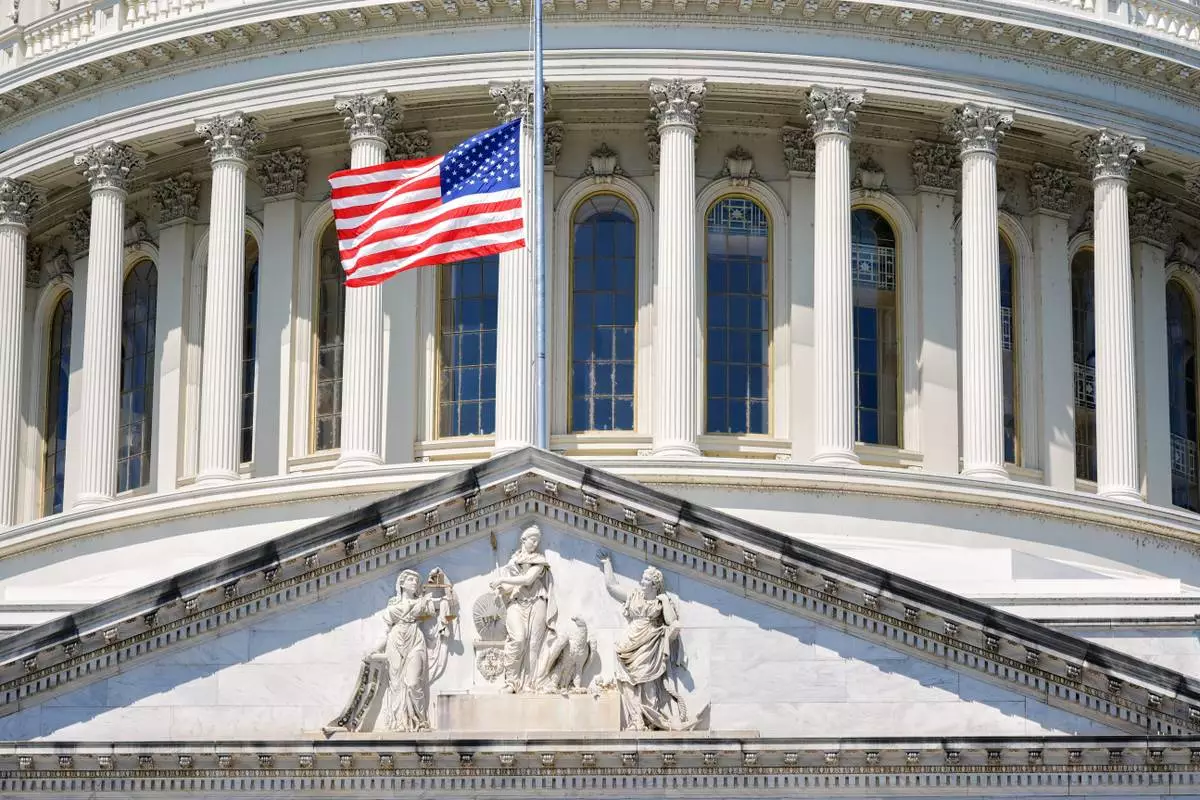
The U.S. flag flies at half-staff at the Capitol in Washington, Monday, July 13, 2026, after the sudden death of prominent Republican Senator Lindsey Graham of South Carolina. (AP Photo/Mariam Zuhaib)
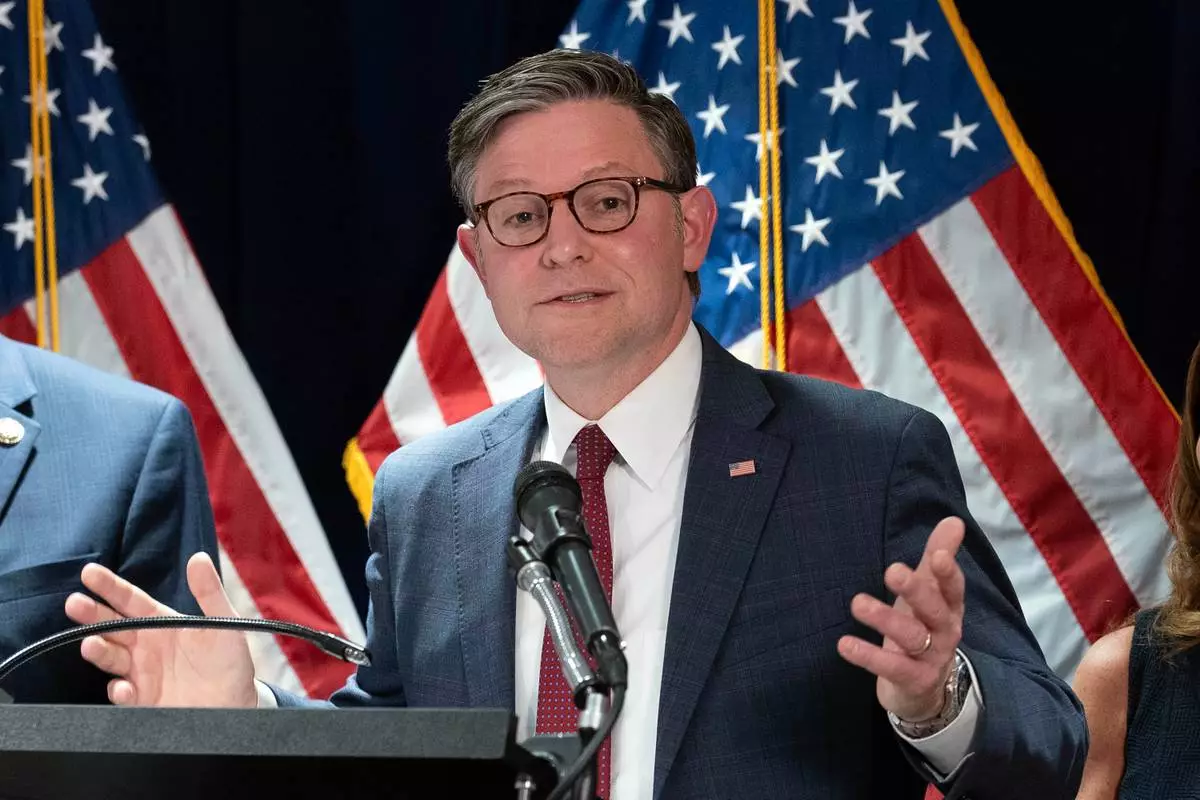
Speaker of the House Mike Johnson, R-La., speaks during a news conference on Capitol Hill, Tuesday, July 14, 2026, in Washington. (AP Photo/Jose Luis Magana)
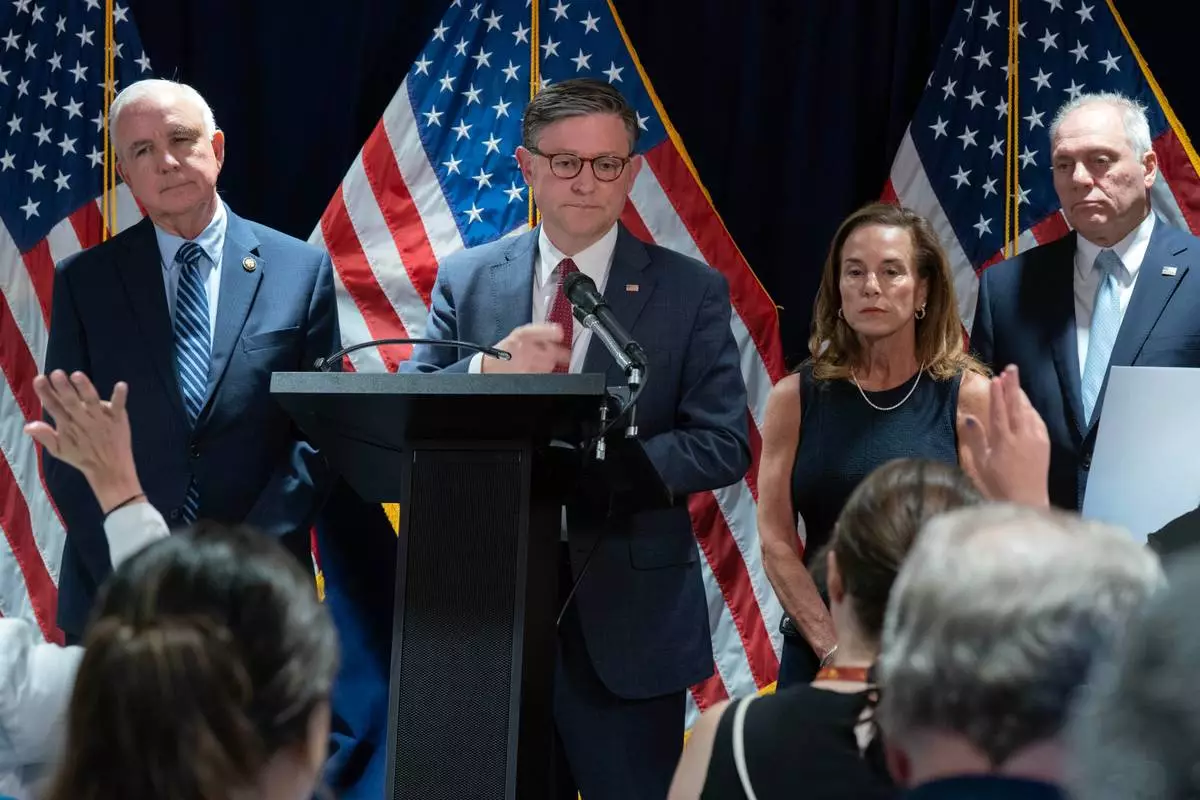
Speaker of the House Mike Johnson, R-La., flanked by Rep. Carlos Giménez R-Fla., from left, Chair of the House Republican Conference, Rep. Lisa McClain, R-Mich., and House Majority Leader Steve Scalise, R-La., speaks during a news conference on Capitol Hill, Tuesday, July 14, 2026, in Washington. (AP Photo/Jose Luis Magana)

Speaker of the House Mike Johnson, R-La., speaks during a news conference on Capitol Hill, Tuesday, July 14, 2026, in Washington. (AP Photo/Jose Luis Magana)