The United States expanded Ebola-related travel controls on Wednesday, adding new restrictions on Americans returning from the Democratic Republic of the Congo (DRC).
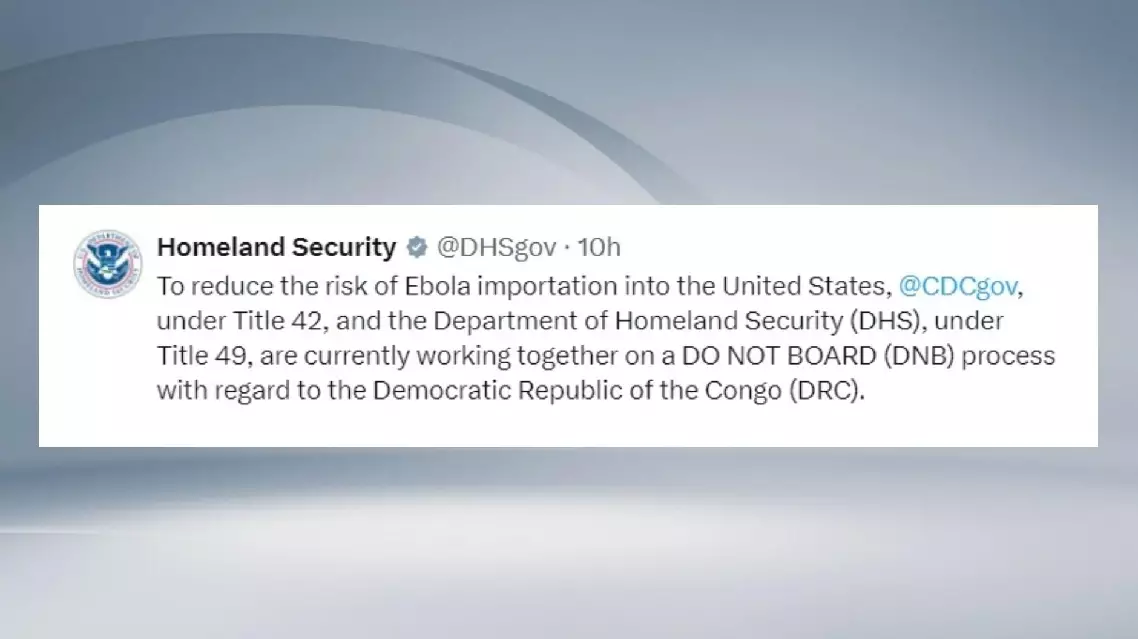
U.S. Centers for Disease Control and Prevention (CDC) and the Department of Homeland Security (DHS) are currently working together on a DO NOT BOARD (DNB) process with regard to the DRC, DHS said in a post on X.
American citizens who are departing from the DRC may be subject to a DO NOT BOARD (DNB) order. Americans are able to return to the United States 21 days after leaving the DRC, it added.
The latest announcement came one day after the CDC announced temporarily restricting U.S. entry for all travelers who were recently in DRC and certain travelers who were recently in Uganda or South Sudan.
Since May, the DRC has been fighting an outbreak caused by the Bundibugyo Ebola virus, for which there is no approved vaccine or specific treatment. As of Tuesday, the number of confirmed Ebola cases in the DRC has reached 2,011, including 754 deaths.
US renews travel controls for citizens leaving DR Congo over Ebola concerns

Yemen is once again teetering on the brink of a wider conflict, as military escalation between Yemen's Houthi group and Saudi Arabia threatens to unravel years of relative calm and complicate ongoing efforts led by the United Nations to revive the political process.
The Houthis, officially known as Ansar Allah, claimed to have shot down a Saudi surveillance drone early Tuesday in central Yemen's Bayda Province, following exchanges of cross-border strikes that ended a period of relative calm. Although the attacks have stopped for now, tensions remain high. The Houthis say they will continue efforts to end what it describes as the blockade on the Sanaa International Airport and at Yemen's ports, raising concerns that the conflict could escalate again.
"Our military operations against Saudi airports will continue, escalate, and expand until Saudi Arabia is forced to announce an end to the aggression and the blockade. Our demands are legitimate. They include ending the aggression, lifting the blockade, and withdrawing all foreign forces from Yemen. Keeping the current situation unchanged means the suffering of the Yemeni people will continue," said Mohammed Al-bukhaiti, a member of the Political Bureau of Ansar Allah (Houthis).
Concerns are not limited to continued cross-border strikes, with increasing fears that fighting on the ground could return after reports of military buildups near the Yemen-Saudi border.
Analysts say that a wider conflict could push Yemen back into a more complex phase of the war and undermine the de-escalation that has largely held since the UN-brokered truce in 2022.
"I believe what is happening now is the calm before the storm. Sanaa is continuing its escalation, and all indications point to that, including the ongoing tribal mobilization, military buildups, and Sanaa's repeated statements that it will continue escalating until all forms of the blockade on the Republic of Yemen are lifted. All these factors indicate that a major escalation could take place in the next phase. The situation is dangerous and could turn into serious problems if it is not addressed and political understandings are not reached to end this situation," said Ahmed Al-Mukhtafi, a political analyst. At the same time, the UN is trying to prevent the crisis from worsening, with UN Special Envoy for Yemen Hans Grundberg on Tuesday holding talks in the Omani capital Muscat with Omani officials and the chief Houthi negotiator Mohammed Abdulsalam.
The representatives reportedly discussed ways to reduce tensions and restart the political process, including covering military, security, and economic issues, in an effort to keep the chances of a comprehensive peace agreement alive.
Yemen edging closer to wider conflict as Houthis, Saudi Arabia trade strikes