REDWOOD CITY, Calif.--(BUSINESS WIRE)--Jul 16, 2026--
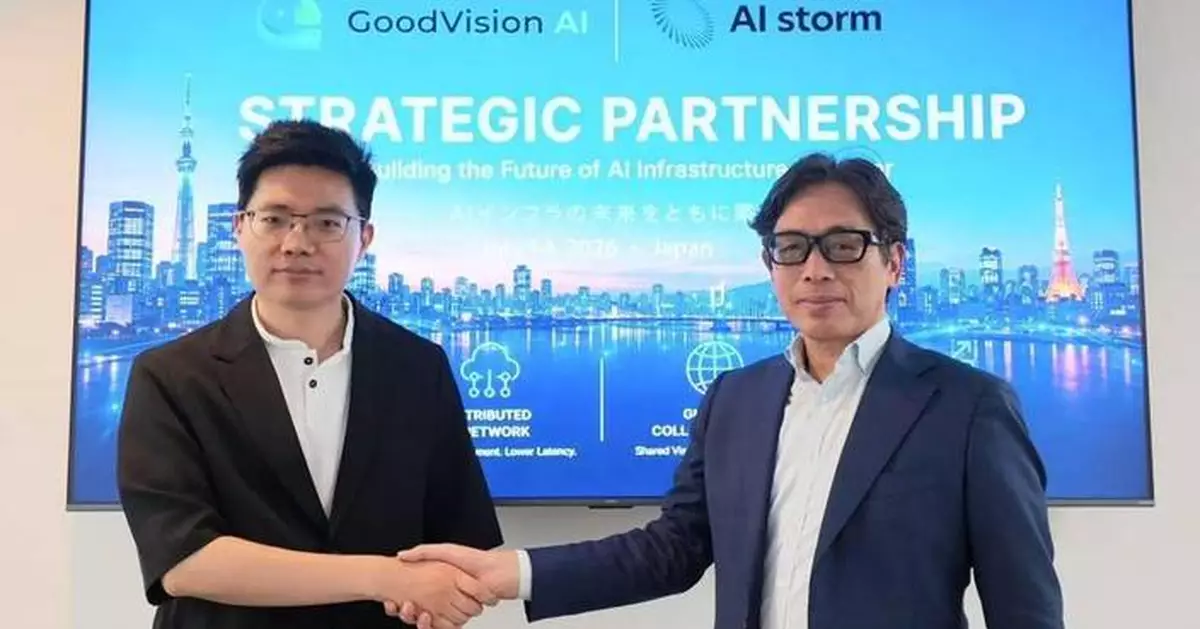
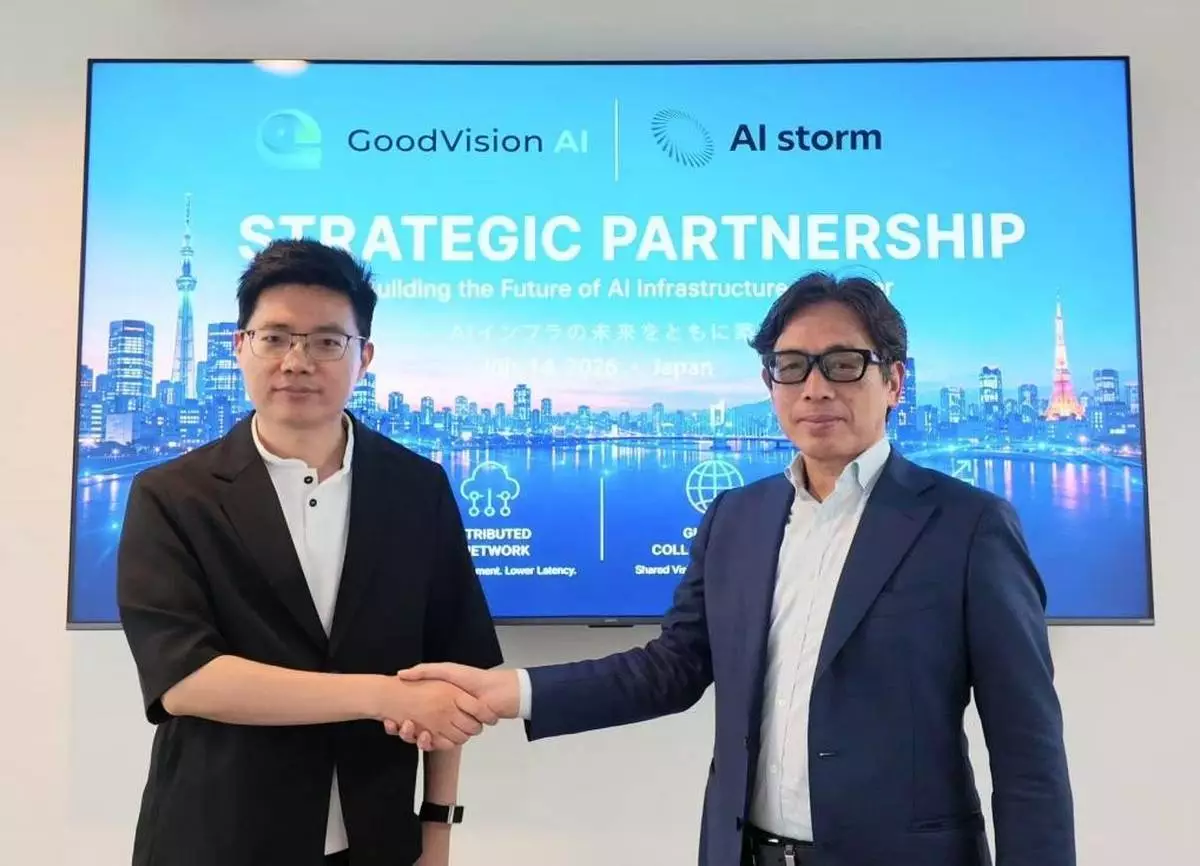
GoodVision AI (“GoodVision”), a developer of next-generation AI compute infrastructure purpose-built for inference, today announced the establishment of its first next-generation AI Factory in Japan following the signing of a strategic cooperation agreement with AI Storm Co., Ltd. (Tokyo Stock Exchange: 3719) (“AI Storm”), a Japan-based business and IT consulting company, to jointly develop, deploy, and commercialize high-performance AI infrastructure in Japan.
This press release features multimedia. View the full release here: https://www.businesswire.com/news/home/20260716201258/en/
AI Factory Japan Project Overview
The partnership establishes GoodVision’s foothold in Japan’s rapidly expanding AI infrastructure market, beginning with a flagship AI Factory in Fukushima.
The initial phase of the project will consist of a 2-megawatt (“MW”) liquid-cooled deployment supporting a cluster of 72 NVIDIA B300 servers with more than 500 GPUs, delivering high-density, enterprise-grade AI inference capacity, with the facility expected to be completed and operational within three months.
Through the initial project, GoodVision anticipates establishing a replicable commercial model for larger-scale AI Factory buildouts in Japan and other international markets.
Combining GoodVision’s leading AI infrastructure integration capabilities with AI Storm’s local market presence and enterprise service expertise, the partners plan to expand AI Factory capacity across Japan, with the Fukushima site serving as a flagship deployment and a core node in GoodVision's global network and infrastructure expansion strategy.
GoodVision's AI Factory platform delivers vertically integrated AI infrastructure solutions spanning GPU system integration, power provisioning, advanced liquid cooling, and ongoing operations. Its containerized architecture enables rapid deployment, capital-efficient scaling, and optimized performance for large-scale AI workloads. Additionally, GoodVision will connect its Smart Routing Engine software solution to AI Factory operations, optimizing AI workflows across available models and computing resources to balance performance, latency, cost, and data requirements.
Highly Competitive Scale Planning (100 MW)
The project is designed around a long-term expansion roadmap targeting a total installed AI compute capacity of 100 MW within the next three years. The deployment strategy follows a phased, capital-efficient model, beginning with the Fukushima flagship AI Factory and expanding through a network of strategically located edge AI Factory facilities across Japan. This modular approach enables GoodVision to scale capacity in alignment with customer demand, power availability, and infrastructure readiness, while reducing execution risk and accelerating time to market.
Specifically, the scaling roadmap is as follows:
Note: The planned expansion to 100 MW is expected to proceed in phases and will depend on factors including customer demand, power availability, equipment procurement, financing, regulatory approvals, and other customary development considerations.
Strategic Site Reserves in Core Metropolitan Areas
GoodVision and AI Storm have already secured and reserved more than fifty (50) potential sites across Tokyo and surrounding area, one of Japan’s most concentrated markets for enterprise, technology, research, and data center customers.
Locating AI factory capacity near these hubs reduces latency for inference workloads, positions the facilities close to the enterprise and research customers most likely to consume dedicated AI compute, and secures scarce, power-ready real estate ahead of intensifying competition for suitable sites. Securing available land and power resources in advance provides a meaningful first-mover advantage and de-risks the path to reaching the 100 MW target on schedule.
David Wang, CEO of GoodVision AI, said: “This partnership with AI Storm marks an important first step in scaling our AI Factory platform in Japan, one of our key strategic markets. The combination of high-density, liquid-cooled computing and a modular deployment model, positions us well to meet rising enterprise demand for dedicated AI inference capacity. We expect the Fukushima AI Factory to serve as a strategic foundation for future expansion in Japan and support the growth of recurring, infrastructure-based revenue over time.”
About GoodVision AI
GoodVision AI is building the global compute architecture for AI inference. Its platform pairs a real-time Smart Routing Engine with a network of purpose-built AI Factories to run AI efficiently at scale. The company is led by CEO David Wang. Learn more at goodvision.ai. GoodVision AI has entered into a Business Combination Agreement (the “BCA”) with Calisa Acquisition Corp, a Cayman Islands exempted company (Nasdaq: ALIS) whose business purpose is to effect a merger, capital stock exchange, asset acquisition, stock purchase, reorganization or similar business combination with one or more businesses. The parties intend to consummate the transaction in the second half of 2026.
About AI Storm
AI Storm Co., Ltd. (Tokyo Stock Exchange: 3719) is a Japan-based business and IT consulting company that provides technology, enterprise transformation, and strategic support services to corporate customers. Through its local market experience, enterprise relationships, and project coordination capabilities, AI Storm supports the development and commercialization of technology and digital infrastructure projects in Japan. For more information, please visit AI Storm’s official website: https://www.ai-storm.co.jp/
Cautionary Note Regarding Forward-Looking Statements
This press release contains forward-looking statements within the meaning of the federal securities laws, including statements regarding the proposed business combination between GoodVision and ALIS, the expected benefits and timing of the transaction, GoodVision AI's future business, operations, growth strategy, market opportunities, financial performance, and other expectations.
These forward-looking statements are based on current expectations and assumptions and are subject to risks, uncertainties, and other factors that could cause actual results to differ materially from those expressed or implied. Such risks include, among others, the possibility that the proposed business combination may not be completed or may be delayed, failure to satisfy closing conditions or obtain required approvals, changes in market or economic conditions, the ability of the combined company to execute its business strategy, maintain customer and supplier relationships, meet stock exchange listing requirements, and other risks described in ALIS' filings with the U.S. Securities and Exchange Commission ("SEC"), including the Registration Statement on Form S-4 to be filed in connection with the proposed transaction.
Forward-looking statements speak only as of the date of this press release. Neither GoodVision AI nor ALIS undertakes any obligation to update or revise any forward-looking statements, except as required by applicable law.
Additional Information and Where to Find It
In connection with the proposed business combination, ALIS intends to file with the SEC a Registration Statement on Form S-4, which will include a proxy statement/prospectus. Investors and securityholders are urged to read the Registration Statement, the proxy statement/prospectus, and other relevant documents filed with the SEC when they become available, as they will contain important information about the proposed transaction. These documents will be available free of charge at the SEC's website at www.sec.gov.
No Offer or Solicitation
This press release is for informational purposes only and does not constitute an offer to sell or the solicitation of an offer to buy any securities, or a solicitation of any proxy, vote, or approval, nor shall there be any sale of securities in any jurisdiction in which such offer, solicitation, or sale would be unlawful prior to registration or qualification under applicable securities laws.
GoodVision AI to Build 100 MW AI Factory in Japan via Strategic Partnership with AI Storm