Skip to Content Facebook Feature Image

Japan's imperial family is diminishing. Plan for male-only succession could make it worse

News

Japan's imperial family is diminishing. Plan for male-only succession could make it worse
News

News

Japan's imperial family is diminishing. Plan for male-only succession could make it worse

2026-07-17 08:02 Last Updated At:08:11

TOKYO (AP) — A law set to pass Friday by Japan's parliament could doom its 1,500-year-old hereditary institution by insisting that only men can be emperor, sparking worry about the shrinking, fast-aging imperial family.

Emperor Naruhito ’s 24-year-old daughter is hugely popular, and many Japanese want her to be his successor, but Princess Aiko is ineligible because she is a woman. Japan’s male-only succession rule means the line must move to the emperor's younger brother, then to his 19-year-old nephew Prince Hisahito. Next in line after him is the emperor's 90-year-old uncle.

More Images
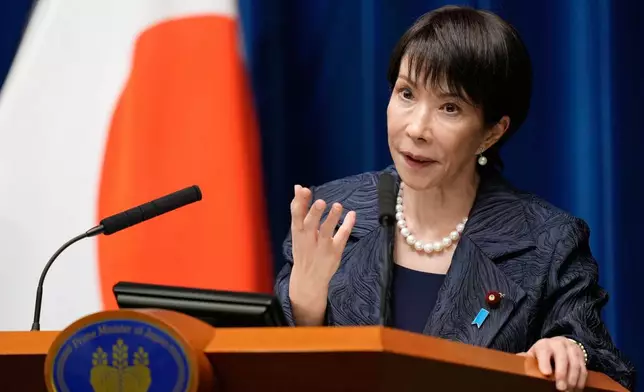
FILE - Japan's Prime Minister Sanae Takaichi speaks during a news conference at the prime minister's office in Tokyo, Oct. 21, 2025. (AP Photo/Eugene Hoshiko, Pool, File)
FILE - Japan's Prime Minister Sanae Takaichi speaks during a news conference at the prime minister's office in Tokyo, Oct. 21, 2025. (AP Photo/Eugene Hoshiko, Pool, File)

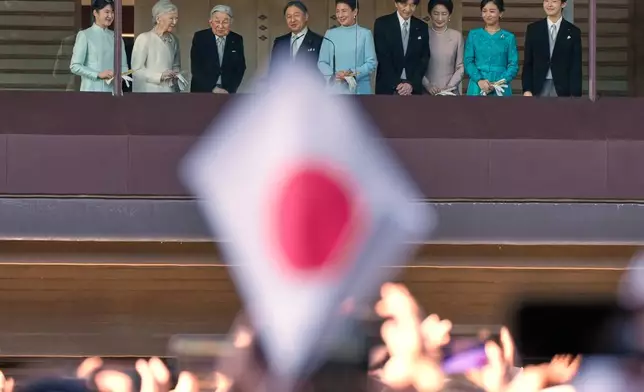
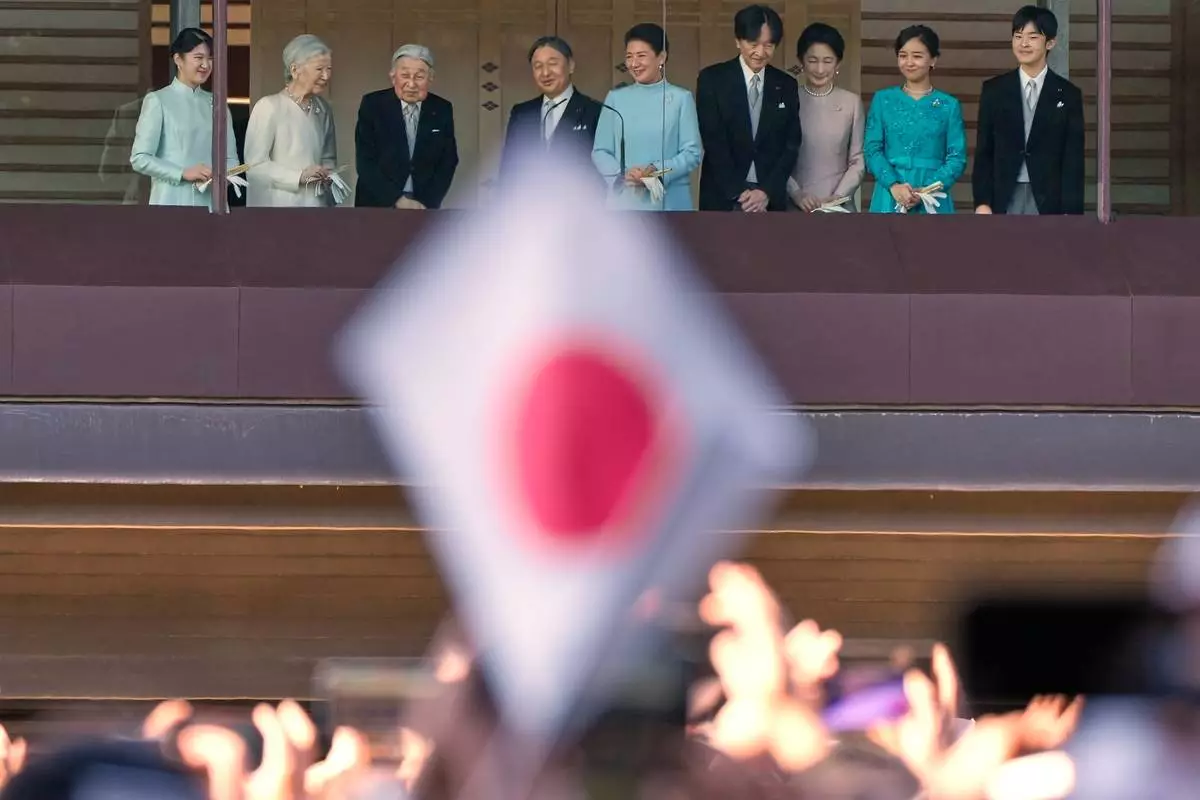
FILE - Japan's Emperor Naruhito, fourth left, Empress Masako, fifth left, and other royal family members greet well-wishers from the balcony during a public appearance for New Year's celebrations at the Imperial Palace, Jan. 2, 2026, in Tokyo. (AP Photo/Eugene Hoshiko, File)
FILE - Japan's Emperor Naruhito, fourth left, Empress Masako, fifth left, and other royal family members greet well-wishers from the balcony during a public appearance for New Year's celebrations at the Imperial Palace, Jan. 2, 2026, in Tokyo. (AP Photo/Eugene Hoshiko, File)

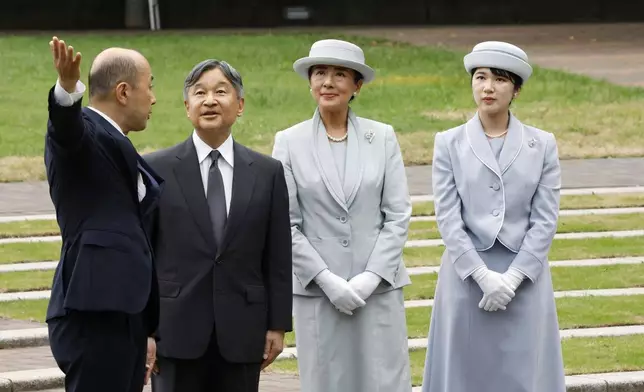
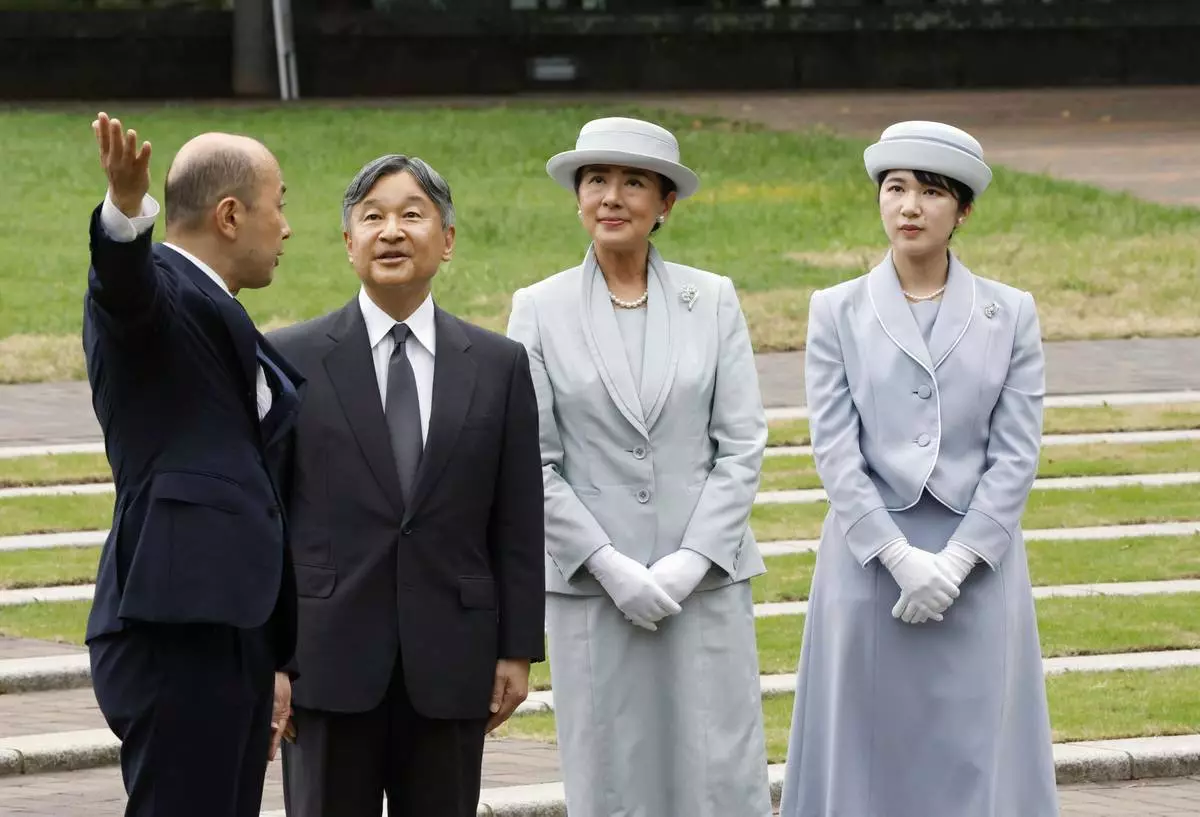
FILE - Japanese Emperor Naruhito, center left, Empress Masako center right, and Princess Aiko, right, listen to Nagasaki Mayor Shiro Suzuki as they visit the cenotaph for the atomic bombing victims at the peace park in Nagasaki. western Japan, Sept. 12, 2025. (Kyodo News via AP, File)

FILE - Japanese Emperor Naruhito, center left, Empress Masako center right, and Princess Aiko, right, listen to Nagasaki Mayor Shiro Suzuki as they visit the cenotaph for the atomic bombing victims at the peace park in Nagasaki. western Japan, Sept. 12, 2025. (Kyodo News via AP, File)

FILE - Japan's Prince Hisahito, right, attends his coming-of-age rituals on his 19th birthday at the Imperial Palace in Tokyo, on Sept. 6, 2025. (Japan Pool/Kyodo News via AP, File)
FILE - Japan's Prince Hisahito, right, attends his coming-of-age rituals on his 19th birthday at the Imperial Palace in Tokyo, on Sept. 6, 2025. (Japan Pool/Kyodo News via AP, File)

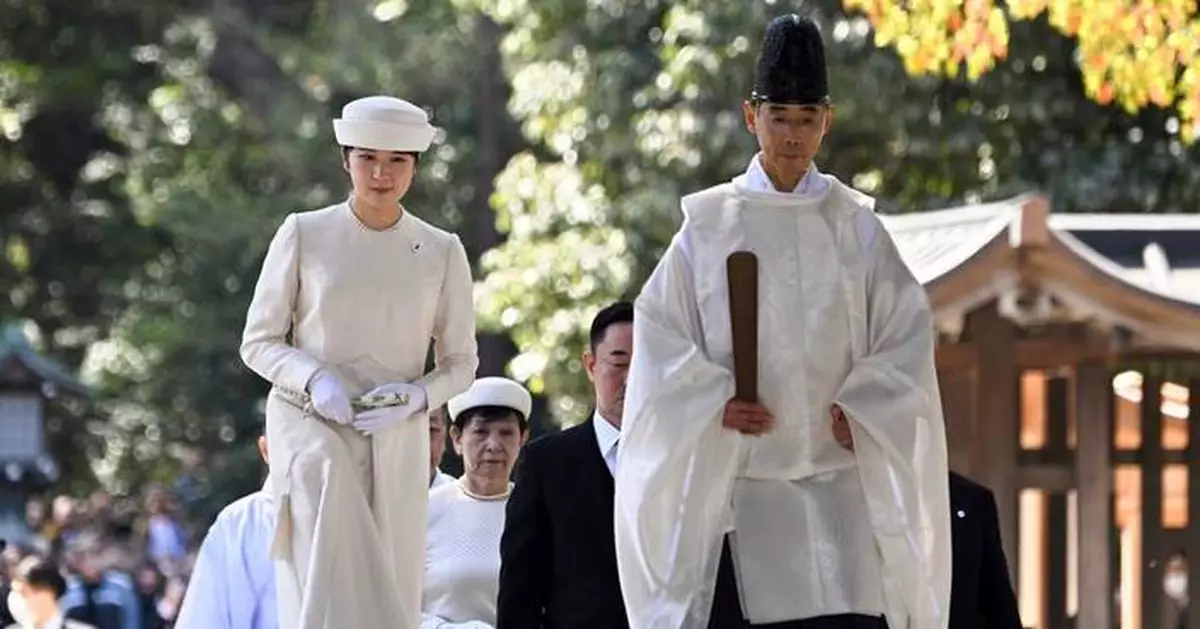
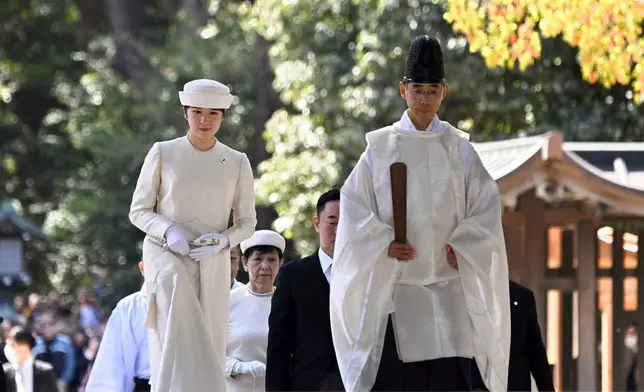
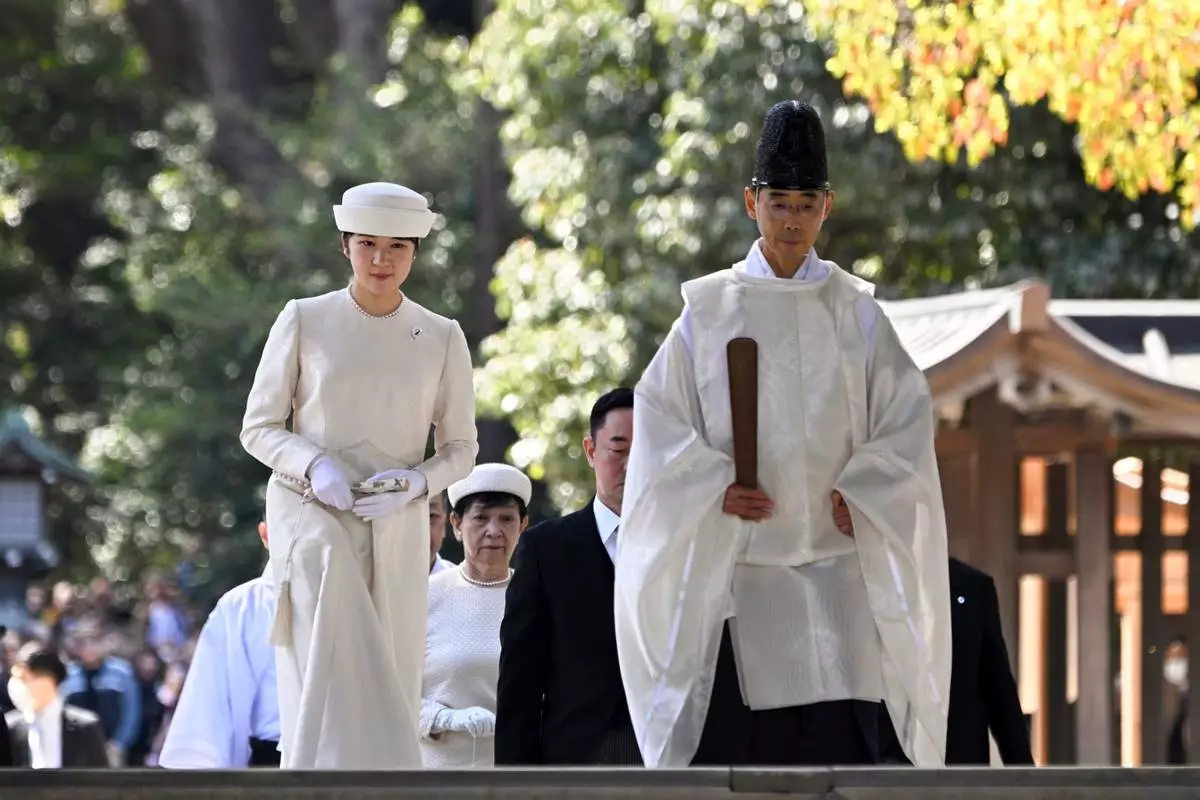
FILE - Japan's Princess Aiko, left, the daughter of Emperor Naruhito and Empress Masako, arrives to mark the 110th anniversary of the death of the wife of former emperor Meiji at Meiji Shrine in Tokyo, on April 10, 2024. (Kazuhiro Nogi/Pool Photo via AP, File)

FILE - Japan's Princess Aiko, left, the daughter of Emperor Naruhito and Empress Masako, arrives to mark the 110th anniversary of the death of the wife of former emperor Meiji at Meiji Shrine in Tokyo, on April 10, 2024. (Kazuhiro Nogi/Pool Photo via AP, File)

In an imperial family that places a premium on male royal babies, Hisahito is the first such boy to be born in four decades. Only five of the 16 adults in the imperial family — there are no children — are men.

This matters, as Prime Minister Sanae Takaichi and other conservatives insist the male bloodline is “the only source of the emperor’s authority and legitimacy,” which will be the basis for the upcoming measures.

While an emperor's mother can be a commoner, as is the case with the current one, only boys born to men with royal blood can be heirs to the throne, according to the Imperial House Law.

On Friday, the parliament was to pass a revision to the antiquated law meant to solidify the principle of that crucial bloodline by allowing the adoption of distant royal male relatives to father future heirs.

The new measures would also allow princesses to keep their royal status if they marry a commoner.

“It’s a declaration to prevent female monarchs ... and to defend the male-lineage at all costs,” said Hideya Kawanishi, a Nagoya University expert on monarchy. “They cannot say it’s male chauvinism, so they call it tradition.”

There have been eight female monarchs. The last was Empress Gosakuramachi, who ruled from 1762 to 1770.

The paternal-line male succession was stipulated for the first time in the 1890 Imperial House Law, when Japan promoted patriarchal systems. That law was largely carried over to the current 1947 version.

Friday’s proposal has led to protests from Japanese who see the government efforts as meant to eliminate Aiko from ruling and to justify discrimination against women and a patriarchal system.

“It’s very ironic that the first female prime minister herself is the leading proponent of the obsession with male-succession,” Chizuko Ueno, a prominent feminist scholar, wrote recently referring to Takaichi.

Ueno said the new measures “treat male royals as stallions and put female royals under pressure as ‘childbearing machines’ to produce male offspring.”

After Aiko’s birth, her mother Empress Masako, a Harvard-educated former diplomat and a commoner, developed a stress-induced mental condition, apparently over criticism for not producing a male heir.

Because of the male-only succession rules and the dismissal of princesses who marry commoners, the monarchy after Hisahito is “extremely unstable,” former Imperial Household Agency chief Shingo Haketa told Kyodo News recently.

Historians say the male-only system is unworkable today, as Japan more broadly faces a fast-aging, dwindling population.

It only worked in the past because concubines produced half the emperors until about 100 years ago, when the practice ended under Naruhito’s great-grandfather, Emperor Taisho.

There was a government proposal in 2005 to allow female monarchs, but it was scrapped following Hisahito’s birth.

Naruhito's two male heirs are his 60-year-old brother, Crown Prince Akishino, who is only six years younger than the emperor and has reportedly said he would be too old to serve, and Hisahito, Akishino’s 19-year-old son. Third in line is Naruhito's uncle, Prince Hitachi, who is 90.

The more controversial of the two measures allows unmarried male descendants, aged 15 or older, of distant imperial relatives — but only of paternal lineage — to be adopted into the royal family.

Fifty-one members from 11 branch families renounced their royal status in 1947, mainly to ease the postwar financial burden on the monarchy, Imperial Household Agency official Yoshimi Ogata told a recent parliamentary session.

These people are at least 36 generations removed from Naruhito because they split from a common male-line ancestor 600 years ago, Ogata said.

There is criticism of what some see as the government's extraordinary efforts to make sure that male royals are producing male emperors.

“Who wants the son of an adoptee who nobody knows to be emperor instead of Aiko?” asked Yoshinori Kobayashi, a cartoonist campaigning for Aiko’s succession.

It may also be unrealistic to ask former royals to reenter a very strict family known as “an enclave without human rights.” Royals cannot choose their jobs or homes, and must follow other serious constraints.

“I wonder if anyone would raise a hand,” 81-year-old Asahiro Kuni, whose family renounced its royal status when he was 3, told TBS television. “I imagine many people, by age 15, have some idea about their future. It’s cruel to tell them ... to change the course of their life.”

Kuni, who worked as an engineer at a major Japanese company, said he would tell his family to decline if asked by the palace. “You are asked to sacrifice your life for the happiness of the people. I can’t tell my family to choose such a difficult life.”

He also expressed support for female monarchs in interviews with other Japanese media.

Aiko, known for her engaging smile, enthusiasm and witty conversation, is a public favorite.

Five single princesses, including Aiko and her popular cousin Kako, 31, may be affected by the other main revision to the Imperial House Law, which would allow them to keep their royal status and continue serving official duties if they marry commoners, although their spouse and children wouldn't be accepted as royals.

Aiko’s elder cousin Mako renounced her royal status and moved to New York after marrying her college boyfriend, a commoner who now is a lawyer. The move was largely seen as her attempt to flee from the restrained imperial life.

Ueno calls the system inhumane and urges the princesses to follow Mako's example and leave when they can.

Hisahito, possible adoptees and their future wives will face enormous pressure to produce male offspring, Kawanishi said.

“The emperor is a symbolic figure, and I don’t see why women cannot serve in the role,” said 78-year-old Junichiro Tsujimaru, a sushi chain founder.

Yoshio Iwase, also 78, says Aiko, as the daughter of the emperor, is the legitimate successor. “I think it’s fine because there used to be female emperors in the past.”

There is worry that the government's push will upset former Emperor Akihito's legacy, which included making amends for the victims of World War II, fought in his father’s name.

Akihito, who abdicated in 2019, also tried to bring what was seen as an aloof monarchy closer to the people, an example followed by his son, Naruhito, and his family.

Akihito reportedly supports Aiko's succession. He avoided directly answering a question about the 2005 government proposal but said female royals served a major role in the monarchy and that its role was to work for the happiness of the people — a remark interpreted as his support for female monarchs.

Naruhito also said in June that he hoped discussions about the measures would reach a conclusion that “will gain understanding of the people,” a comment palace watchers said was his nuanced displeasure.

FILE - Japan's Prime Minister Sanae Takaichi speaks during a news conference at the prime minister's office in Tokyo, Oct. 21, 2025. (AP Photo/Eugene Hoshiko, Pool, File)
FILE - Japan's Prime Minister Sanae Takaichi speaks during a news conference at the prime minister's office in Tokyo, Oct. 21, 2025. (AP Photo/Eugene Hoshiko, Pool, File)

FILE - Japan's Emperor Naruhito, fourth left, Empress Masako, fifth left, and other royal family members greet well-wishers from the balcony during a public appearance for New Year's celebrations at the Imperial Palace, Jan. 2, 2026, in Tokyo. (AP Photo/Eugene Hoshiko, File)
FILE - Japan's Emperor Naruhito, fourth left, Empress Masako, fifth left, and other royal family members greet well-wishers from the balcony during a public appearance for New Year's celebrations at the Imperial Palace, Jan. 2, 2026, in Tokyo. (AP Photo/Eugene Hoshiko, File)

FILE - Japanese Emperor Naruhito, center left, Empress Masako center right, and Princess Aiko, right, listen to Nagasaki Mayor Shiro Suzuki as they visit the cenotaph for the atomic bombing victims at the peace park in Nagasaki. western Japan, Sept. 12, 2025. (Kyodo News via AP, File)

FILE - Japanese Emperor Naruhito, center left, Empress Masako center right, and Princess Aiko, right, listen to Nagasaki Mayor Shiro Suzuki as they visit the cenotaph for the atomic bombing victims at the peace park in Nagasaki. western Japan, Sept. 12, 2025. (Kyodo News via AP, File)

FILE - Japan's Prince Hisahito, right, attends his coming-of-age rituals on his 19th birthday at the Imperial Palace in Tokyo, on Sept. 6, 2025. (Japan Pool/Kyodo News via AP, File)
FILE - Japan's Prince Hisahito, right, attends his coming-of-age rituals on his 19th birthday at the Imperial Palace in Tokyo, on Sept. 6, 2025. (Japan Pool/Kyodo News via AP, File)

FILE - Japan's Princess Aiko, left, the daughter of Emperor Naruhito and Empress Masako, arrives to mark the 110th anniversary of the death of the wife of former emperor Meiji at Meiji Shrine in Tokyo, on April 10, 2024. (Kazuhiro Nogi/Pool Photo via AP, File)


FILE - Japan's Princess Aiko, left, the daughter of Emperor Naruhito and Empress Masako, arrives to mark the 110th anniversary of the death of the wife of former emperor Meiji at Meiji Shrine in Tokyo, on April 10, 2024. (Kazuhiro Nogi/Pool Photo via AP, File)

DUBAI, United Arab Emirates (AP) — The United States intensified its strikes against Iran on Thursday, hitting targets farther north and firing into a ship the U.S. accused of trying to break its naval blockade on the Islamic Republic. Iran retaliated by launching missiles and drones at U.S. allies in the region, and warned its attacks may escalate.

The interim ceasefire agreed to last month has collapsed, and the region has endured days of back-and-forth attacks by the U.S. and Iran as they battle for control of the Strait of Hormuz. Iranian officials say U.S. strikes have killed more than 35 people and wounded over 300 others.

For the first time in this latest round of violence, strikes also reached into areas around Iran’s capital, Tehran, showing a widening set of targets for the Americans. The U.S. launched a second wave of strikes late Thursday, saying it was aiming to “further degrade” Iran's military capabilities.

When the U.S. and Israel launched the war on Iran on Feb. 28, Tehran effectively closed the strait to shipping traffic, a move that sent the price of oil soaring and gave Iran major leverage in negotiations.

Col. Ebrahim Zolfaghari, a spokesperson for the Iranian military’s Khatam al-Anbiya Central Headquarters, threatened that Iran could launch widespread attacks on “all the infrastructure in the region” if the U.S. acts on President Donald Trump 's repeated warnings that America could hit Iranian bridges and power plants.

“Under no circumstances and in no way will we allow America, as a foreign and extraregional country, to interfere in the Strait of Hormuz,” he added. “This is Iran’s invincible red line.”

Iranian state media said the U.S. strikes Thursday hit around Tehran and Semnan province, home to Iran’s ballistic missile production and space program. State media also reported strikes around the provinces of Hamedan, Hormozgan, Khuzestan, Lorestan, Markazi, and Sistan and Baluchestan, as well as on Iran’s Qeshm island, near the Strait of Hormuz.

Seven people were wounded in a U.S. strike that hit the Allah-Akbar Hill residential neighborhood in the port city of Bandar Abbas, according to Iranian state media. Two more people were wounded in a U.S. attack on the Bandar Abbas railway junction station, state media said.

And just west of Bandar Abbas, witnesses reported that two bridges were struck in a U.S. attack, killing three people and wounding nine others, state media said.

An attack on Greater Tunb Island targeted Iranian defense and missile sites, U.S. Central Command said.

Greater Tunb Island is one of three small rocky islands that sit at the confluence of the Persian Gulf and the strait. The islands — seized in 1971 by Iran from what would become the United Arab Emirates — help the Islamic Republic exert significant control over the strait.

The U.S. military also said it disabled a Curacao-flagged oil tanker as it sailed toward Iran’s main oil export terminal, firing a missile after the ship “ignored multiple warnings.”

Another American strike Wednesday targeted a barracks for Iran’s 388th Mechanized Infantry Brigade, which operates tanks and armored vehicles, in Sistan and Baluchestan province, Iranian state television reported. The report said seven were killed in the attack, including conscripts and career soldiers.

Iran retaliated Thursday with missile and drone attacks on Bahrain, Jordan and Kuwait, authorities in those countries home to U.S. forces said. There was no immediate acknowledgment of damage or casualties from the attacks.

Iraqi Prime Minister Ali al-Zaidi condemned an overnight drone attack in Iraq’s semiautonomous northern Kurdish region. The drone, which authorities said had been intercepted, came during his trip to the U.S. in which he said Iraq would work to disarm non-state armed groups, including those backed by Iran.

A drone separately targeted a tanker Thursday in the Persian Gulf off the coast of Basra in southern Iraq, the state-run INA news agency reported. No casualties were reported.

The latest round of fighting is focused on the Strait of Hormuz, as Iran attacks ships using a U.S.-controlled route through the vital waterway.

Week-to-week cargo shipments through the strait dropped by almost a quarter at the beginning of the month, according to Maritime data firm Lloyd’s List Intelligence. And that was before the recent surge in tit-for-tat attacks.

Given the risks, some oil shippers are transiting the strait with their location devices turned off, but many are just staying put, Lloyd's said Thursday. A growing amount of the region’s energy is being shipped through pipelines, but not nearly enough to offset the decline in shipping through the strait.

U.S. forces have redirected three commercial vessels trying to run the blockade, disabled one that did not comply and boarded another “to ensure full compliance," U.S. Central Command said in a post on X.

“The Strait of Hormuz and the surrounding waters remain free and open, except for vessels attempting to violate America’s steel wall blockade,” the post said.

The U.S. has threatened to reopen the strait by force, but experts say that would require a much bigger armada if not tens of thousands of ground troops.

The price for Brent crude oil, the international standard, traded above $85 a barrel on Thursday, more than 15% higher than the price before the war, but still well below the nearly $120 reached at the height of the conflict.

Rising prices pose a particular challenge to Trump and his Republican Party, which hopes to retain control of Congress in elections in November.

The U.S. reimposed a naval blockade on Iranian ports Wednesday.

“They don’t like what we’re doing, and they do want to settle. We’ll find out whether or not we settle with them, or we just finish it off,” Trump said Wednesday at the U.S. Army War College in Pennsylvania.

Pakistan’s Foreign Ministry on Thursday said efforts were still underway to bring the U.S. and Tehran to the negotiating table but acknowledged that was becoming increasingly difficult.

Trump said on social media that Tehran made a goodwill gesture by releasing an American citizen wrongly detained in Iran since 2024. He did not release further details. Human rights lawyer Jared Genser released a statement identifying the detainee as his client Dena Karari, a U.S.-Iranian citizen who runs a nonprofit and was charged with espionage.

Iran did not immediately acknowledge the release, and her case was not publicly known, as sometimes happens with detentions in the Islamic Republic.

Associated Press writers Abby Sewell in Beirut, Mae Anderson in New York and Christopher Weber in Los Angeles contributed to this report.

Vehicles drive by a billboard reading in English, "Who is D nexT one?" and "#lindseygraham," referring to late U.S. Sen. Lindsey Graham and using the capital letters "D" and "T" in an apparent play on the initials of U.S. President Donald Trump, in downtown Tehran, Iran, Thursday, July 16, 2026. (AP Photo/Vahid Salemi)

Vehicles drive by a billboard reading in English, "Who is D nexT one?" and "#lindseygraham," referring to late U.S. Sen. Lindsey Graham and using the capital letters "D" and "T" in an apparent play on the initials of U.S. President Donald Trump, in downtown Tehran, Iran, Thursday, July 16, 2026. (AP Photo/Vahid Salemi)

A man waves an Iranian flag beneath a billboard reading in English, "Who is D nexT one?" and "#lindseygraham," referring to late U.S. Sen. Lindsey Graham and using the capital letters "D" and "T" in an apparent play on the initials of U.S. President Donald Trump, in downtown Tehran, Iran, Thursday, July 16, 2026. (AP Photo/Vahid Salemi)

A man waves an Iranian flag beneath a billboard reading in English, "Who is D nexT one?" and "#lindseygraham," referring to late U.S. Sen. Lindsey Graham and using the capital letters "D" and "T" in an apparent play on the initials of U.S. President Donald Trump, in downtown Tehran, Iran, Thursday, July 16, 2026. (AP Photo/Vahid Salemi)

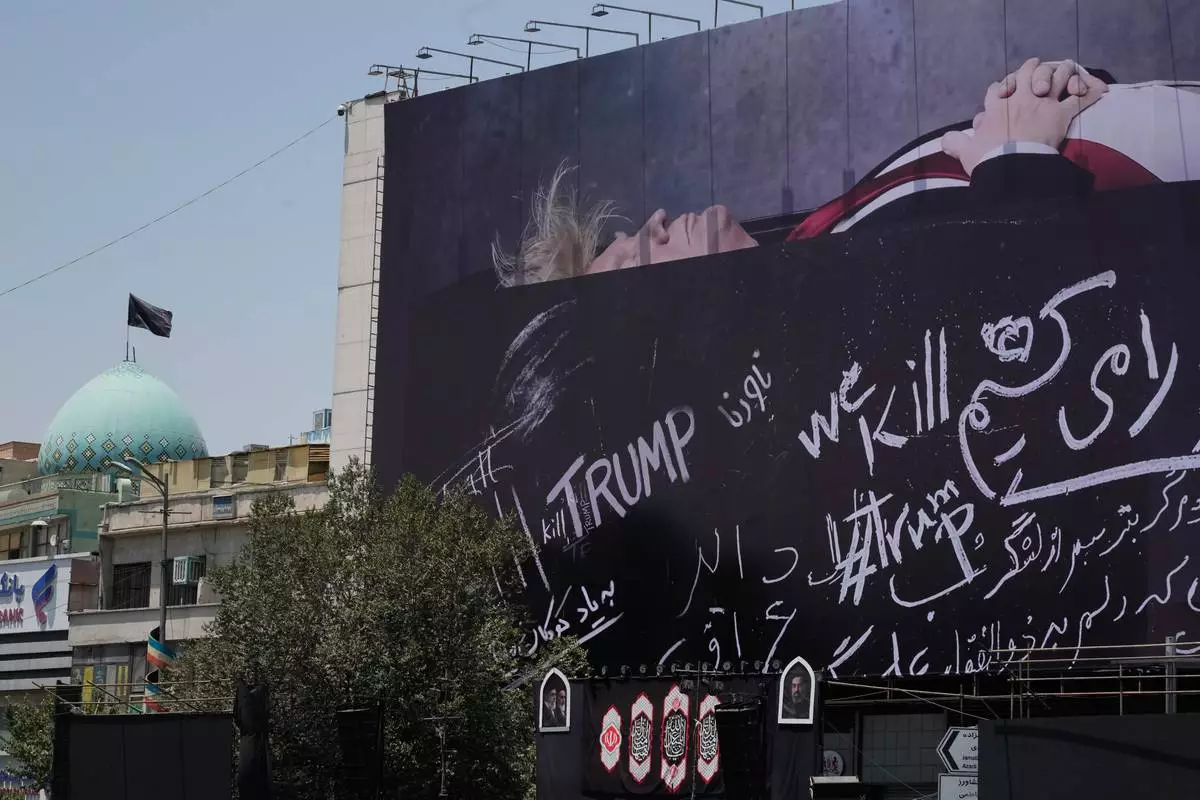
A billboard depicting U.S. President Donald Trump lying on what appears to be a coffin and bearing anti-Trump messages, including the phrase "We Kill Trump," is seen at Islamic Revolution Square in downtown Tehran, Iran, Wednesday, July 15, 2026. (AP Photo/Vahid Salemi)

A billboard depicting U.S. President Donald Trump lying on what appears to be a coffin and bearing anti-Trump messages, including the phrase "We Kill Trump," is seen at Islamic Revolution Square in downtown Tehran, Iran, Wednesday, July 15, 2026. (AP Photo/Vahid Salemi)

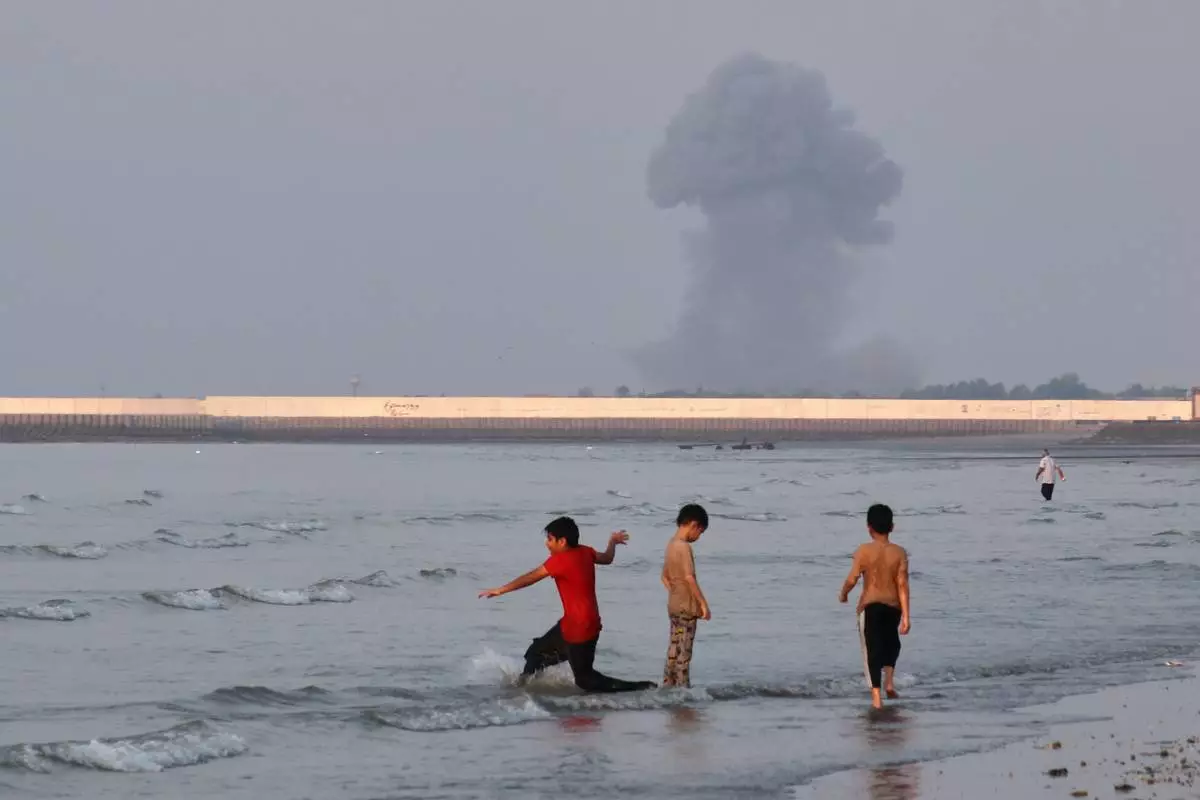
Three boys play in the shallow waters of the Strait of Hormuz, as a plume of smoke rises from an explosion in the background, off Bandar Abbas, Iran, Monday, July 13, 2026. (Razieh Poudat/ISNA via AP)

Three boys play in the shallow waters of the Strait of Hormuz, as a plume of smoke rises from an explosion in the background, off Bandar Abbas, Iran, Monday, July 13, 2026. (Razieh Poudat/ISNA via AP)

Recommended Articles