U.S. economic activity grew moderately in recent weeks, expectations varied across Federal Reserve districts, the Fed said in its Beige Book released Wednesday.
The beige book showed that economic activity increased at a slight to moderate pace for eleven of the twelve Federal Reserve Districts in late May and June, while one District reported no change. Most regions reported little to no change in employment.
It is predicted that the economy will continue to expand in the coming months, but several District reported elevated uncertainty in the outlook for fuel costs.
The survey said that the prices increased moderately overall, with nine Districts reporting moderate growth, two reporting robust growth, and one reporting slight growth.
Non-labor input costs climbed in multiple industries -- including services, construction, and manufacturing -- driven in part by higher spending on energy, transportation, and raw materials, it said.
The Beige Book noted that expectations for price growth over the coming months varied across Districts. Respondents in some Districts expected inflation to continue at its current pace, while respondents in others expected inflation to slow, in part due to falling fuel prices.
In terms of the labor market, seven out of twelve District experienced little to no change. A few Districts noted that firms had increased their usage of AI, either in the hiring and screening of potential employees or to boost worker productivity.
The Beige Book, a survey on economic conditions based on information collected from 12 regional reserve banks, is published eight times per year.
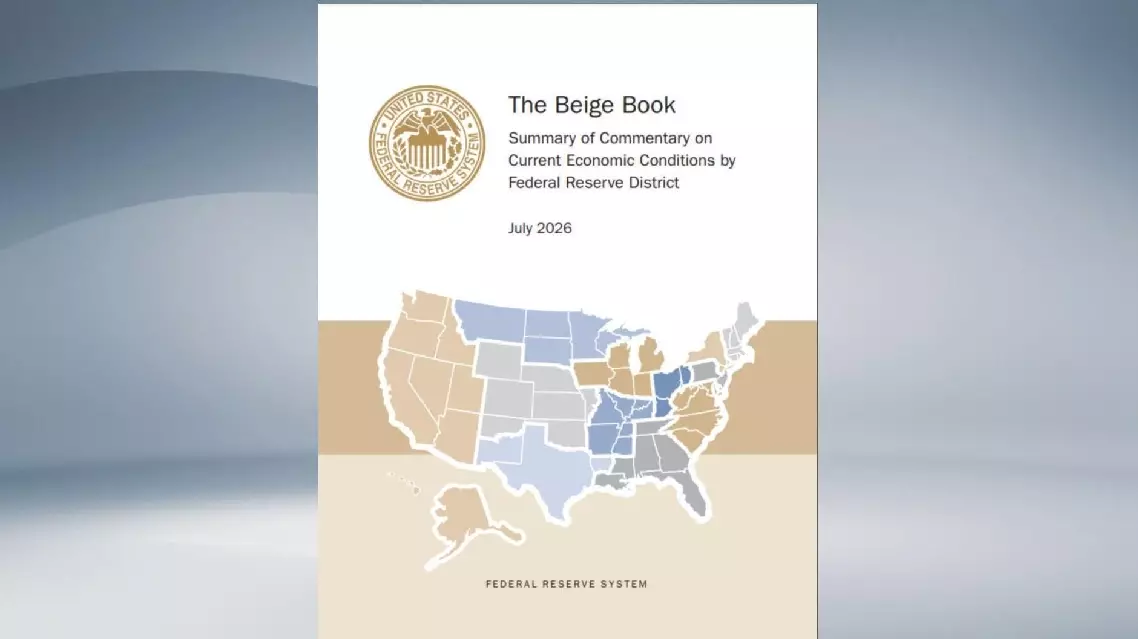
US economy registers moderate growth with mixed inflation expectations: Fed Beige Book
Japan's reliance on U.S. economic policy is allowing foreign funds to acquire Japanese assets at bargain prices, according to Japanese economist Kazuhide Uekusa.
He warned that the government's economic and defense strategies prioritize foreign capital and political profits over public welfare, failing to bring true prosperity to ordinary citizens.
The Bank of Japan (BOJ) on Friday raised its policy interest rate by 0.25 percentage points to 1.25 percent, the highest in about 31 years, following a two-day board meeting.
According to Uekusa, the timing of the shift aligns perfectly with the interests of large American funds.
"The Takaichi Cabinet has been reluctant to raise interest rates, thus allowing the yen to continue to depreciate. I think this is actually equivalent to helping foreign capital purchase Japanese assets at a low price. However, U.S. Treasury Secretary Scott Bessent has recently made a clear adjustment to the policy direction of the U.S. dollar against the Japanese yen, promoting the appreciation of the Japanese yen. The reason is that some large funds in the United States have basically completed their investment layout in Japanese assets," said Uekusa.
Uekusa also said Japan cannot attempt to revitalize its economy by expanding military spending and supporting the defense industry, and such a military buildup strategy is unlikely to bring about true prosperity and stability.
"I think it is true that the Japanese economy has been stagnant for a long time. However, to expand military spending in an attempt to revitalize the economy is, in my opinion, an extremely foolish and even crazy move. To achieve peace and stability in Japan, the foundation should be to establish friendly relations with neighboring countries rather than military expansion. The reason why the Japanese government attaches so much importance to the military industry is that it can generate huge profits, and a part of these profits may flow back to political parties or political figures through various means. I don't think this is at all for the benefit of the people," he said.

Japanese economist criticizes gov't policies for enabling cheap asset sales to foreign funds