BANGKOK (AP) — A court in Laos has brought charges against a distillery owner in connection with the deaths of foreign tourists in Laos in 2024. The charges will make the accused liable to a prison sentence of between three months and four years and a fine if found guilty, Denmark's foreign ministry announced Friday.
Two Danish women, Anne-Sofie Orkild Coyman, 20, and Freja Vennervald Sorensen, 21, were among six foreigners killed by drinking tainted alcohol at a tourist hostel in Vang Vieng in November 2024.
Click to Gallery
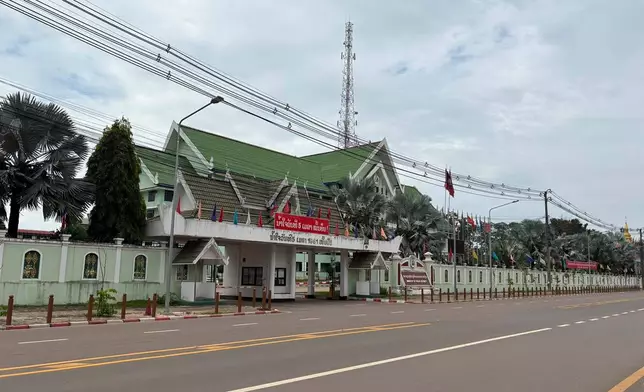
Exterior of the Ministry of Public Security is seen in Vientiane, Laos, Friday, July 17, 2026. (AP Photo)
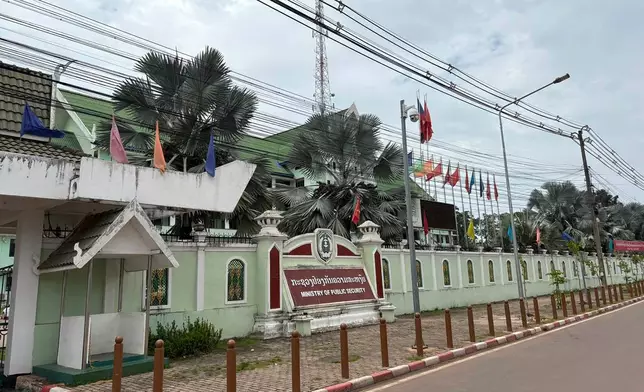
Exterior of the Ministry of Public Security in Vientiane, Laos, Friday, July 17, 2026. (AP Photo)
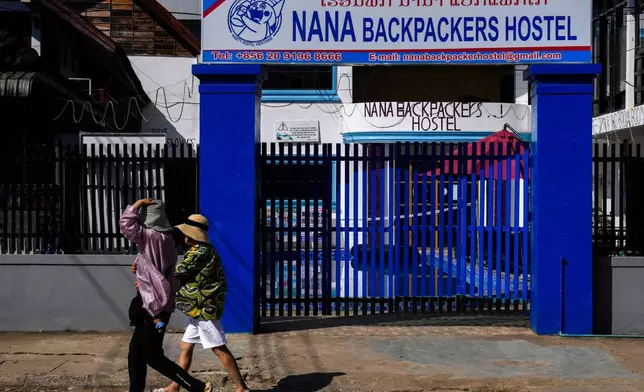
FILE -Foreign tourists walk past the closed Nana Backpackers hostel in Vang Vieng, Laos, Nov. 23, 2024. (AP Photo/Anupam Nath, File)
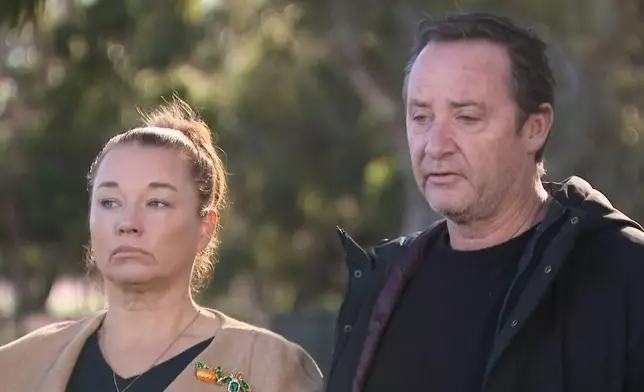
In this image made from video, Samantha Morton, left, and Shaun Bowles, the parents of Holly Morton-Bowles, speak during news conference in Melbourne, Australia, Friday, July 17, 2026. (Channel 9 via AP)
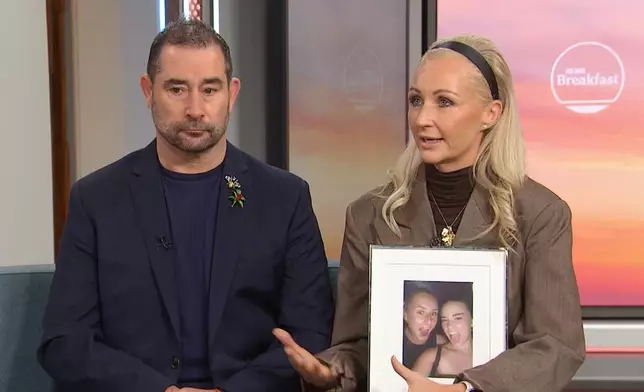
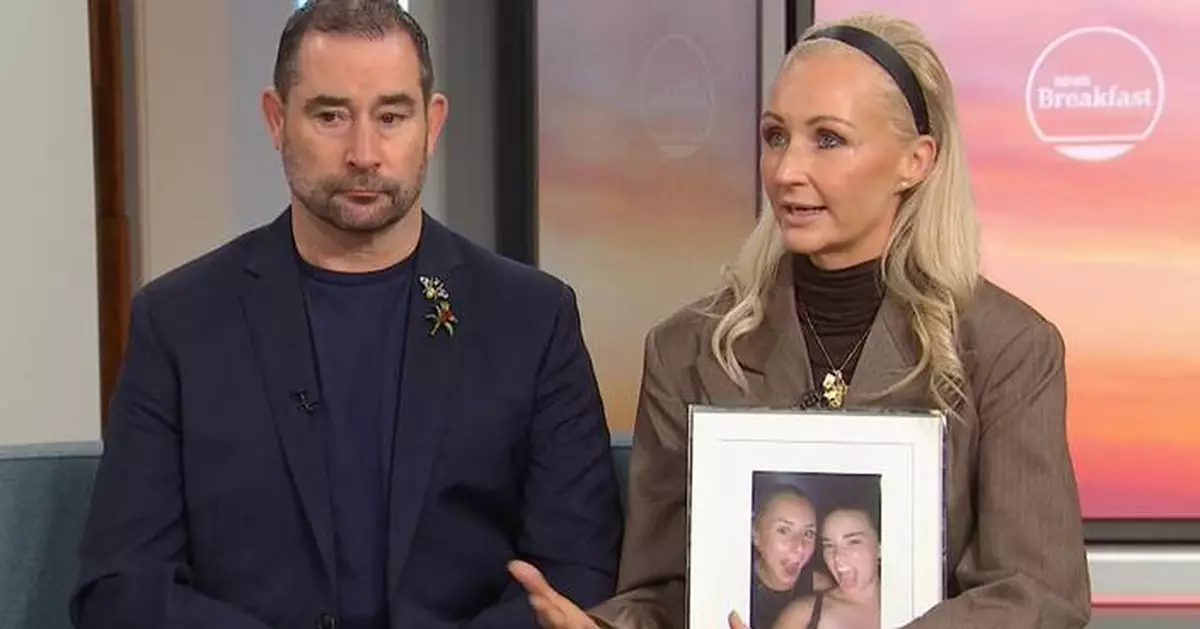
In this image made from video Michelle Jones, right, holds a photo of her daughter, Bianca, as Michelle and her husband Mark Jones appear on a news program in Melbourne, Australia, Friday, July 17, 2026. (Australian Broadcasting Corp via AP)
The ministry's statement, issued in Copenhagen and citing Lao authorities, said the charges were selling food that is harmful to health and operating an illegal business.
It also said the case will formally remain open for 15 years, and charges can still be brought for a more serious offense, such as negligent homicide, if proof is sufficient. It did not say if the charges were related to all the deaths.
The other victims were Australian teenagers Bianca Jones and Holly Morton-Bowles, both 19; British lawyer Simone White, 28; and according to Lao media, U.S. citizen James Louis Hutson, 57.
The Danish foreign ministry statement cited Foreign Minister Lars Løkke Rasmussen as declaring that he was deeply disappointed that the indictment didn’t reflect the seriousness and extent of the tragedy affecting so many families.
He acknowledged it can be complicated to meet the precise burden of proof required to bring the most serious charges in such a case, but also pointed out that it is difficult to come to terms with such a lenient indictment.
Rasmussen said that now his office will work with the relatives and other affected countries to discuss their next moves in the case.
Australia’s government and the families of the Australian teenagers who died of methanol poisoning in Laos had on Friday morning lambasted as inadequate the charges they anticipated from the authorities in the Lao capital, Vientiane.
The families held a news conference to announce that the charges were expected to be officially revealed and to express their anger that they were likely to be for minor offenses.
“It’s like their lives didn’t even matter," said Bianca Jones’ mother, Michelle. "We’re just really appalled by it all. You know, they were just going over to have a bit of fun and just doing the rite of passage that every, you know, child or teenager does. So for that outcome, it was just devastating.”
The announcement of charges was made at the Ministry of Public Security in Vientiane. A request from The Associated Press for entry to cover the proceedings was not approved, but cars from the embassies of at least two of the concerned countries, Australia and Britain, were seen leaving that location on Friday afternoon.
Vennervald Sørensen’s parents earlier said they have been left in the dark since the tragedy, Danish public broadcaster DR reported. No autopsy was performed on their daughter, they said, and the death certificate said she died of the natural cause of cardiac arrest.
The young women had taken precautions throughout their travels, Vennervald Sørensen’s parents said. Her parents told DR that they never knew methanol poisoning could happen and hope to raise awareness of it.
Methanol poisoning is a problem all over the world, not only for tourists but more so for local residents. In the latter case, it is found especially in countries where alcoholic drinks are hard to afford or illicit. Statistics of suspected cases compiled by the medical assistance group Doctors Without Borders show that Indonesia, India and Russia are countries with the most reported incidents.
Methanol is sometimes added to mixed drinks at disreputable bars as a cheaper alternative to ethanol, but can cause severe poisoning or death. It is also a byproduct of poorly distilled home-brew liquor, and could have found its way into bar drinks inadvertently.
The victims had been staying at the Nana Backpacker Hostel, where some reportedly consumed “free shots” of Laotian vodka before heading out to other venues.
When the Australian teens failed to check out as planned, they were found sick in their room and eventually evacuated to hospitals in neighboring Thailand, where they later died.
Speaking at the morning news conference along with the Jones family, Shaun Bowles, the father of Holly Morton-Bowles, had described Friday's anticipated legal development as “mind-boggling because (Laos) is a popular tourist destination for a lot of travelers, a lot of Australian, young Australian travelers and young people from around the world.”
He said he expected potential visitors to Laos to reconsider going “because they’ve demonstrated, the way that they act, and as I say, the value that they put on tourists’ lives over there and the way they’ve tried to cover this up.”
Reaction from the other victims' families was not immediately available.
Landlocked Laos is one of Southeast Asia’s poorest nations and a popular tourist destination. Vang Vieng is particularly popular among backpackers seeking partying and adventure sports.
Australian Foreign Minister Penny Wong said in a statement Friday morning that she was “deeply frustrated and bitterly disappointed" that authorities weren’t pursuing “the most serious charges” in relations to the women’s deaths.
Wong and Australia’s Prime Minister Anthony Albanese had dispatched an envoy to Laos on Friday “to convey the Australian Government’s objections and reinforce our expectations for an investigation that delivers justice for Holly, Bianca and the other victims of the methanol poisoning,” the minister said. Australian officials had also summoned Laos’ ambassador to Canberra, she added.
Laos is an authoritarian one-party communist state that tightly controls information. A text message from The Associated Press to the Lao Foreign Ministry asking for an official comment received the reply that information would be made available at a news conference that would be open only to local media and the foreign embassies concerned.
——
Graham-McLay reported from Auckland, New Zealand. Stefanie Dazio in Berlin contributed to this report.
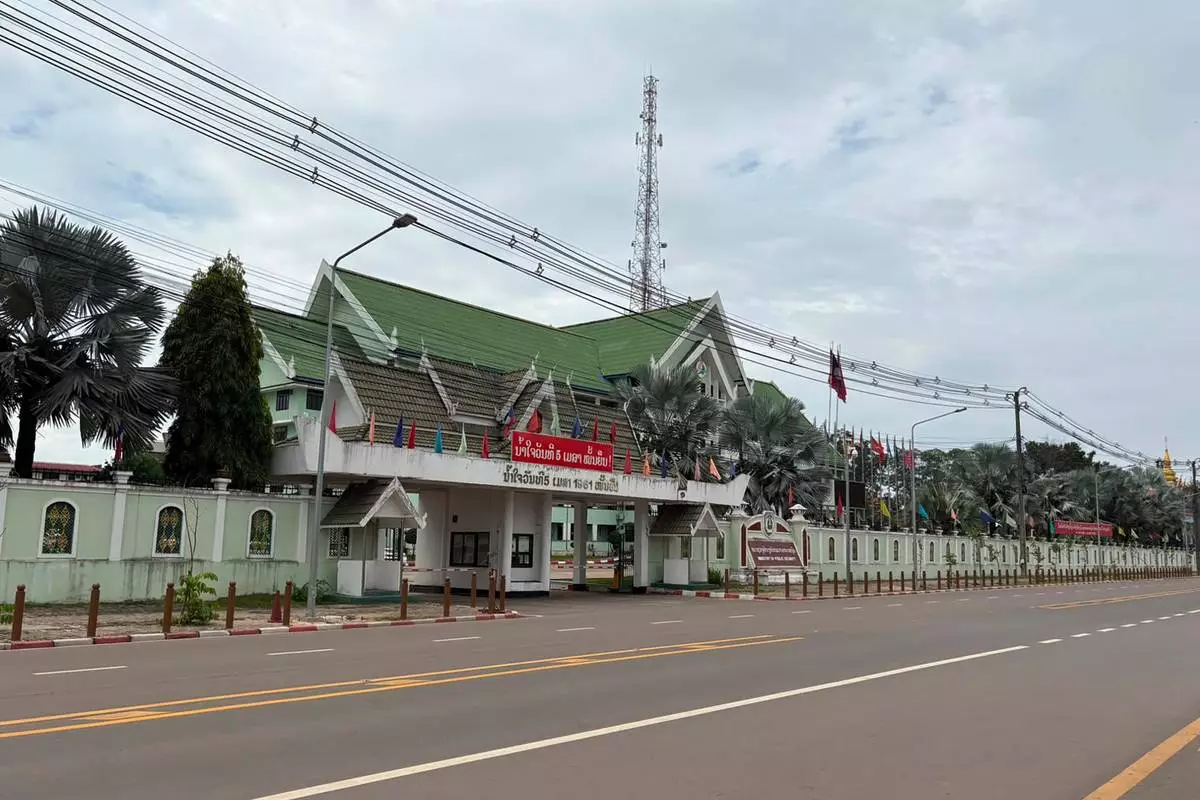
Exterior of the Ministry of Public Security is seen in Vientiane, Laos, Friday, July 17, 2026. (AP Photo)
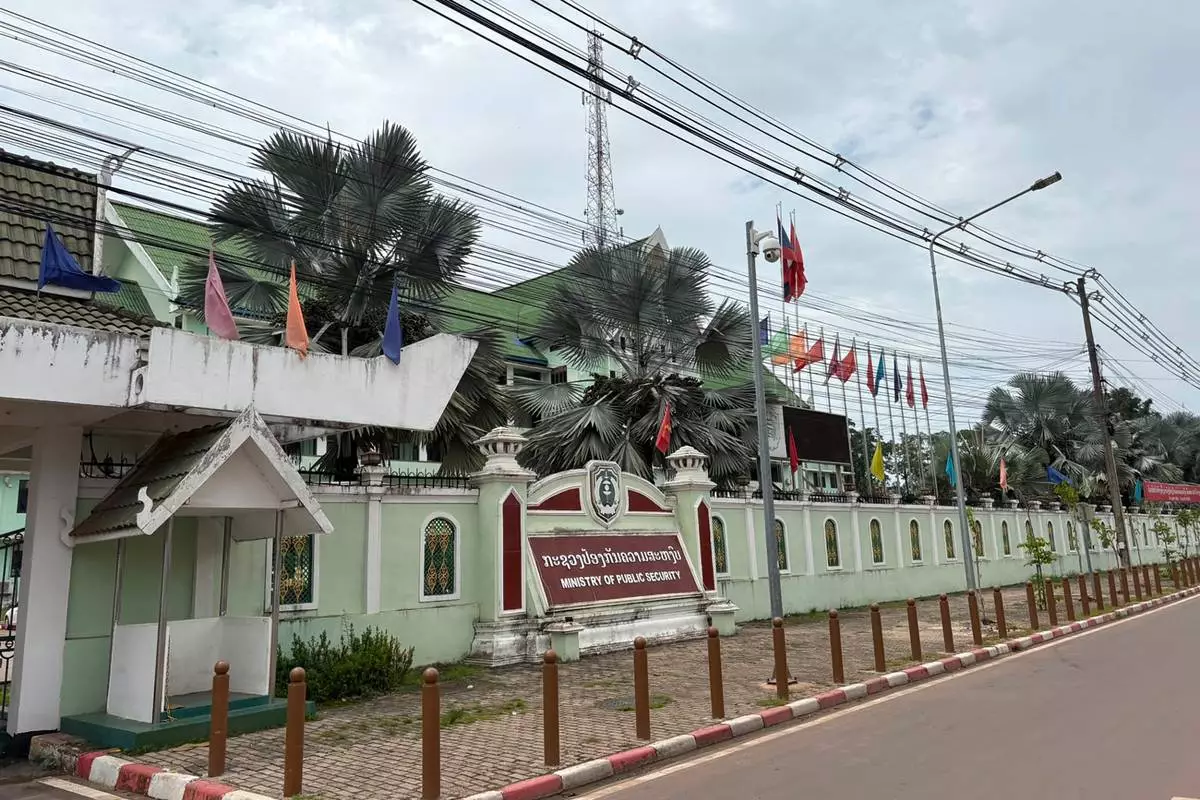
Exterior of the Ministry of Public Security in Vientiane, Laos, Friday, July 17, 2026. (AP Photo)
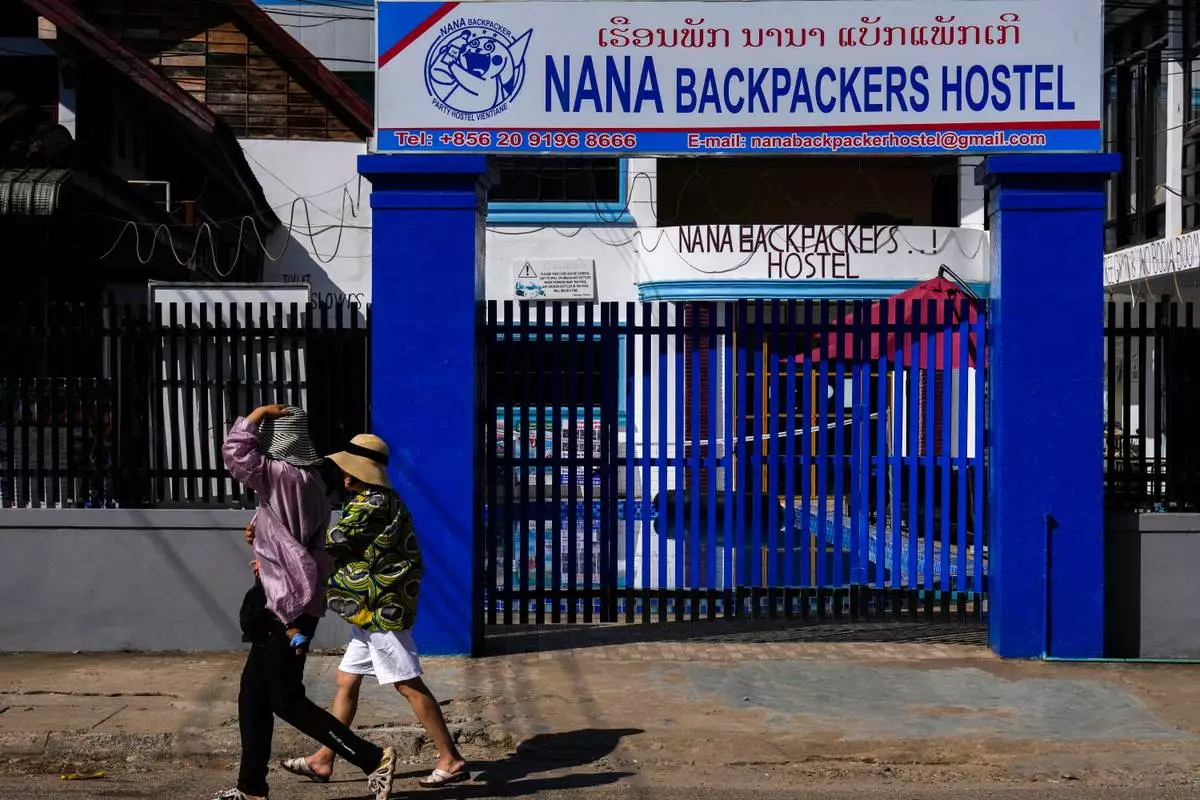
FILE -Foreign tourists walk past the closed Nana Backpackers hostel in Vang Vieng, Laos, Nov. 23, 2024. (AP Photo/Anupam Nath, File)
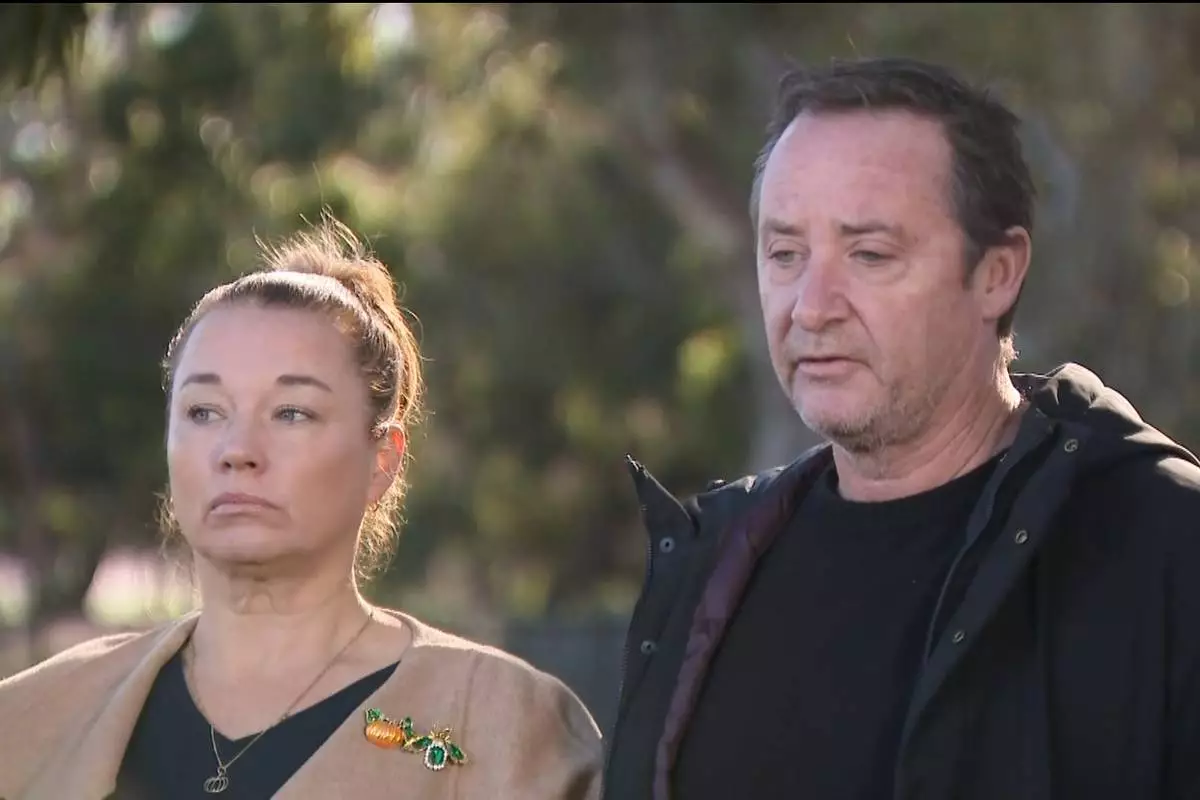
In this image made from video, Samantha Morton, left, and Shaun Bowles, the parents of Holly Morton-Bowles, speak during news conference in Melbourne, Australia, Friday, July 17, 2026. (Channel 9 via AP)
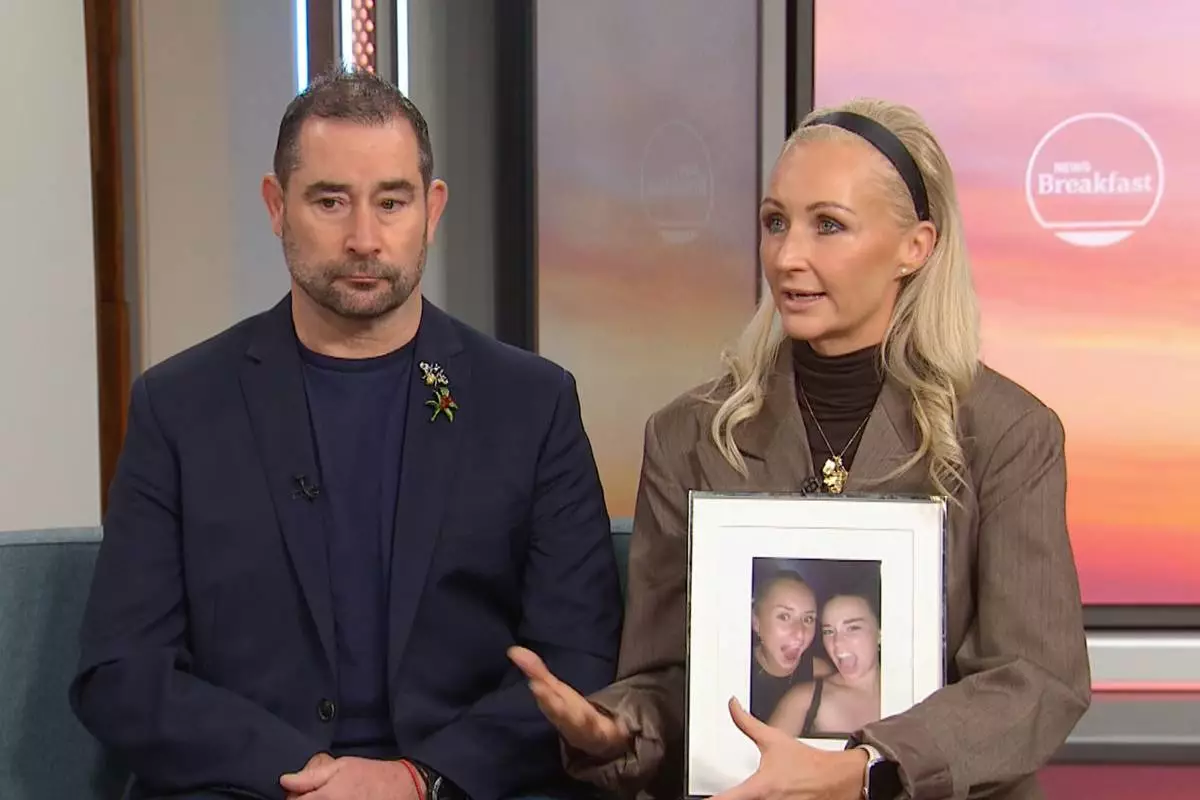
In this image made from video Michelle Jones, right, holds a photo of her daughter, Bianca, as Michelle and her husband Mark Jones appear on a news program in Melbourne, Australia, Friday, July 17, 2026. (Australian Broadcasting Corp via AP)

EASTERN UKRAINE (AP) — The commander leading Ukraine’s drone war says his country’s recent strikes in Crimea are the first phase of a campaign aimed at rendering the peninsula — illegally annexed by Russia in 2014 — unusable as a staging ground for Russian forces.
Maj. Robert “Magyar” Brovdi, one of Ukraine’s most prominent commanders among a new generation of soldiers, said his forces could strike seven times more military targets in Crimea if the money pledged by Western allies came faster.
“Crimea falls within the key conceptual pillars on the path to ending the war,” Brovdi told The Associated Press in an interview.
Despite that shortfall, Ukraine’s summer campaign in Crimea has already inflicted significant damage: striking rail bridges, oil depots and power infrastructure to disrupt supply lines and blind Russian air defenses as drones fly in.
Brovdi said his forces are equipped at just 14% of what they would need to carry out the Crimea campaign at full capacity.
A firm believer in numbers since his past life running an international grain trading business, Brovdi joined Ukraine’s territorial defense as a volunteer in the war’s opening days. He rose quickly, commanding one of the country’s most effective drone brigades before being tapped to lead a force with no precedent before this war — Ukraine’s Unmanned Systems Forces.
“It’s not that the production capacity of Ukrainian manufacturers doesn’t allow us to make the necessary quantities” of drones, Brovdi said. “It’s the banal problem of untimely financing, which our partners do allocate, but which moves significantly slower than our plans.”
A devoted patron of the arts, Brovdi's underground command post resembles a museum, with pieces of Ukrainian art on display, including by renowned painter Maria Prymachenko — each with small placards noting their titles and a QR code linking to more information. “Please don’t touch the sculpture,” reads a sign beneath one piece.
The artwork sits against a backdrop of dozens of screens streaming live footage from the front, along with real-time data that drives decisions on the battlefield. Soldiers can grab good coffee, pick a book, work out or rest in sleeping pods — a culture that feels closer to a Silicon Valley office than a war room.
They work around the clock to try to prevent Crimea from functioning as a staging ground for the Russian military, said Brovdi, whose call sign, Magyar, nods to his ethnic Hungarian roots in Zakarpattia, the western Ukrainian region bordering Hungary.
He pointed to one sign of progress — in four recent large-scale Russian missile barrages from the peninsula, only five missiles were launched in total, a drop he credited to the systematic destruction of Russian air defenses there. The AP couldn’t independently verify the claim.
To open that “window” for drones to strike the peninsula without being shot down en masse, his forces destroyed more than 300 air defense assets over recent months — surface-to-air systems, radar stations, electronic warfare equipment.
The window metaphor sends him into a sidetrack about something personal — he loves sleeping with one open, a pleasure he rarely gets anymore as one of Russia’s most hunted men, who spends most of his time in underground bunkers.
Much of Russia's Soviet-era air defense hardware runs on the power grid, which is one of the reasons Crimea's electrical infrastructure has become a recurring target. Russian soldiers become “blind,” left with just machine guns and rifles, he said. The tactic has also impacted access to power for civilians, and Brovdi said he has twice publicly apologized to Ukrainians living in Crimea for the disruptions.
Wherever Starlink connectivity reaches across Crimea, his forces can now destroy even the most heavily defended target using an average of just three drones, mixing munitions with different characteristics and warheads depending on what’s being hit. He described the strikes as deliberately calibrated — different munitions for a bridge pier than for a fuel truck or a moving train — and said his forces avoid hitting civilian infrastructure.
“Creating conditions that make it impossible for any kind of military capability … to remain there will make Crimea uninteresting ... as a military staging ground,” he said.
Ukraine is also working to dismantle Crimea’s role as a naval base — a blow to Russia’s presence near NATO’s borders, he added.
The campaign’s early results have not been made public, Brovdi said. But roughly two weeks into the offensive that began in late June, he said Ukrainian intelligence indicated Russian authorities had ordered all military commands and security services to relocate off the peninsula, along with a covert order to remove secret archives and artworks. The AP could not independently verify the account.
Meanwhile, Russia is working to counter Ukraine’s edge. It is installing jamming systems at a scale that will, to some degree, degrade Starlink connectivity, Brovdi said.
Russia is also building its own satellite communications system to rival Starlink, he said. “This is a risk for the entire planet,” Brovdi said, “because a dictatorship will gain access to information across the whole globe.”
He also pointed to other threats facing Ukraine. The concentration of jet-powered Shahed drones, which are much harder for Ukraine to shoot down, has increased two and a half times in recent weeks, he said.
Russia's military can currently fire a simultaneous salvo of 77 ballistic missiles, he said, and plans to increase that to 200. That is one of Ukraine’s most vulnerable points, since the country is running short of interceptors for the U.S.-made Patriot — the only system Ukraine has in its arsenal against ballistic missiles — meaning dozens fired by Russia during mass barrages get through and hit their targets.
“Even if they only manage half of that, it will all be flying at us,” Brovdi said. The only way to bring the number down, he said, is by striking every facility involved in producing those missiles — underscoring the importance of Ukraine’s long-range strikes deep inside Russian territory.
Ukraine has increasingly targeted Wildberries, Russia’s largest online marketplace sometimes described as the country’s answer to Amazon, and Brovdi named it as a target.
“Wildberries is, first of all, a supply platform — it’s the war’s quartermaster,” he said, noting the company runs a dedicated section selling goods for Russia’s military.
At the same time, he said, the strikes on the retail chain are meant to make ordinary Russians feel the war directly, in hopes the resulting desire to end it could weigh on Russia’s ability to keep fighting.
Brovdi declined to give a timeline for the Wildberries campaign, saying only that the strikes will continue “until it becomes impossible for it to recover quickly.”
“Ultimately, Wildberries is, forgive the expression, a consumer gambling addiction,” he said, arguing that losing access to it — like restrictions on social media — creates an intrusion on one's personal life that most Russians feel.
“It turned out to be a sensitive sensor of the comfort of Russia’s massive population — people who consider themselves completely untouched by the actions of the aggressor country," he said.
AP reporters Vasilisa Stepanenko in eastern Ukraine and Volodymyr Yurchuk in Kyiv contributed.
A Ukrainian "Chaklun" long-range strike drone takes off from a mobile launcher during an operational launch targeting Russian military installations in Crimea, from an undisclosed location in Ukraine on Thursday, Aug. 6, 2026. (AP Photo/Dan Bashakov)
A Ukrainian serviceman prepares a "Chaklun" strike drone used for deep-strike operations against Russian positions in Crimea, in an undisclosed location in Ukraine on Thursday, Aug. 6, 2026. (AP Photo/Dan Bashakov)
Maj. Robert "Magyar" Brovdi speaks during an interview with The Associated Press in an undisclosed location in Ukraine on Friday, Aug. 7, 2026. (AP Photo/Dan Bashakov)
Ukrainian servicemen prepare a "Chaklun" strike drone used for deep-strike operations against Russian positions in Crimea, in an undisclosed location in Ukraine on Thursday, Aug. 6, 2026. (AP Photo/Dan Bashakov)
Maj. Robert "Magyar" Brovdi stands in the control room during a long-range unmanned aerial vehicle operation targeting Russian positions in an undisclosed location in Ukraine on Friday, Aug. 7, 2026. (AP Photo/Dan Bashakov)