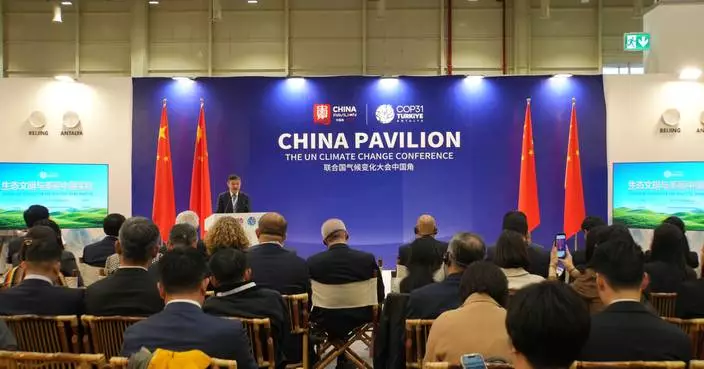
GENEVA, SWITZERLAND - Media OutReach Newswire - 17 July 2026 - Competition authorities from BRICS countries have established a task force to conduct a joint sector inquiry into the global grain trade, marking a new step in cooperation on competition policy across international agricultural markets.

BRICS Competition Authorities Establish Task Force to Study Global Grain Trade
The decision was announced during the discussion "Competition Development in Global Grain Trade: Joint Efforts of BRICS Countries", organized by the BRICS Competition Law and Policy Centre on the sidelines of the 23rd Session of the UNCTAD Intergovernmental Group of Experts on Competition Law and Policy in Geneva.
The event included a closed meeting of BRICS competition authorities and a public panel featuring researchers, academics and representatives of international organizations.
Discussions focused on competition in global grain markets, the growing influence of financialization and digitalization across agricultural value chains, and policy tools to improve market transparency. Participants also reviewed the findings of a joint report prepared by the BRICS Competition Centre and UNCTAD (link: https://www.bricscompetition.org/ru/grainreport) , first presented at the 9th BRICS International Competition Conference in Cape Town in 2025.
A coordinated market study
The central outcome of the meeting was the establishment of a BRICS task force that will coordinate a joint sector inquiry into global grain trade within the framework of the BRICS Working Group on Food Markets.
The task force will be co-chaired by Diogo Thomson, President of Brazil's Administrative Council for Economic Defense (CADE), and Mahmoud Momtaz, Chairperson of the Egyptian Competition Authority (ECA).
Thomson welcomed the initiative and proposed making competition in global grain trade a key topic at the next BRICS International Competition Conference, scheduled to take place in Brazil in 2027.
"Brazil is the only jurisdiction that has launched an investigation into digital grain trading platforms such as Covantis. I therefore strongly welcome this sector inquiry, which will help us better understand the impact of digitalization across grain supply chains and the risks it may create for competition. I also support using the BRICS Competition Centre as the coordination platform for this work," he said.
Momtaz said one of the main conclusions of the BRICS-UNCTAD report was the significant role speculative activity plays in global grain markets.
"One of the key findings of the report presented by the BRICS Competition Centre is the extent to which speculative factors influence global grain trade. The most effective response is greater market transparency. We should not accept a situation where farmers receive only a small share of the value they create while consumers in Egypt pay excessively high prices for bread. Where does this margin accumulate, and who ultimately benefits from it? These are the questions our sector inquiry should answer," he said.
He also proposed that the task force develop a common AI-powered price monitoring tool covering BRICS grain markets.
"Such a tool would provide the information needed for market analysis and become an important complement to the joint sector inquiry," Momtaz added.
From analysis to policy recommendations
Hardin Ratshisusu, Deputy Commissioner of the Competition Commission of South Africa, said the study should contribute to the implementation of the BRICS Grain Exchange initiative endorsed by BRICS leaders in the Kazan Declaration (2024) and the Rio de Janeiro Declaration (2025).
"The proposal to establish a BRICS Grain Exchange should become one of the key recommendations of the sector inquiry as an innovative mechanism for restoring competition in global grain trade. Our objective is not merely to identify market problems but to develop practical recommendations that can ultimately be submitted to the leaders of our countries," he said.
Alexey Ivanov, Director of the BRICS Competition Law and Policy Centre, said competition authorities should play a central role in designing the institutional framework of the future exchange.
"The BRICS Grain Exchange should not become another formal institution. It must serve as a practical mechanism for improving competition and market transparency. Competition authorities are uniquely positioned to identify the institutional features that will allow the exchange to achieve these objectives," he said.
Growing international role
Frédéric Jenny, Chairmanof the OECD Competition Committee, said the initiative demonstrated the growing international role of BRICS competition authorities.
"This project illustrates how BRICS competition authorities are becoming drivers of the global competition agenda. In the past, they largely followed the lead of developed jurisdictions. That is no longer the case. There are very few examples worldwide of such close cooperation between competition authorities. This applies not only to joint market studies, but also to enforcement cooperation and competition advocacy. Rather than acting individually, you have found both the mechanisms and the political will to work together," Jenny said.
The task force will now begin developing the methodology and work plan for the joint inquiry. Its findings are expected to provide policy recommendations aimed at strengthening competition, improving transparency in global grain trade, and supporting future BRICS initiatives in agricultural markets.
Hashtag: #BRICSCompetition
The issuer is solely responsible for the content of this announcement.
** This press release is distributed by Media OutReach Newswire through automated distribution system, for which the client assumes full responsibility. **
Family History of Eczema: Why a Diagnosis Before Age One is a Critical Warning Sign
HONG KONG SAR – Media OutReach Newswire – 10 November 2026 – Eczema is extremely common in Hong Kong, where approximately 1.5 million people have battled the condition—meaning 1 in 5 individuals has been affected1. When both parents have a history of eczema, the likelihood of their child developing it surges to 60–80%2, making it a constant worry for families.
Dr. Jiu-Yao Wang, Superintendent of China Medical University Children's Hospital, explains that the "Atopic March" is a cornerstone concept in allergy medicine. Most allergic conditions take root during infancy, with eczema (atopic dermatitis) typically acting as the first domino. This can progressively lead to food allergies, allergic rhinitis, and asthma3. Crucially, an eczema diagnosis before a baby's first birthday serves as a major red flag for future food allergies. Experts emphasise building a solid foundation for allergy prevention from the start through infant nutrition, prompting the international medical community to invest heavily in early-life allergy research—leading to today's breakthrough.
Large-Scale Clinical Evidence with Over 2,100 Infants: Karihome Whole Goat Milk Formula Substantially Reduces Eczema Risk by 64%
Recently published in the European large-scale clinical trial known as the GIraFFE Study4, the research was spearheaded by globally renowned German pediatrician, scientist, and child nutrition authority Professor Berthold Koletzko, in collaboration with multiple research centres across Spain and Poland. It stands as one of the most robust international clinical studies in infant nutrition to date. Conducted under a rigorous, randomized, double-blind, parallel-controlled design with over 2,100 participating infants, the study evaluated the impact of New Zealand whole goat milk formula on infant eczema while closely monitoring growth, safety, and overall health.
The results are noteworthy: continuous feeding with Karihome New Zealand Whole Goat Milk Formula for 12 months—compared to standard cow milk formula—lowered the incidence of doctor-diagnosed eczema in healthy infants during their first year by approximately 32%. For high-risk infants with a parental history of eczema, the reduction in eczema risk reached 64%. In addition, several studies indicate that Karihome Whole Goat Formula supports healthy digestion, gut health, and normal growth. These findings suggest that whole goat milk formula may be a viable, evidence-based alternative for parents transitioning from breast milk. However, as with any infant formula, it is important for caregivers to consult with healthcare professionals to ensure individual needs are met.
Karihome Whole Goat Formula: Three Natural Anti-Allergy Benefits for Happy, Healthy Growth
While many families default to cow milk, goat milk is actually a much more body-friendly option when moving away from breast milk. The GIraFFE study highlights that the protein and milk fat profiles in whole goat milk are naturally closer to breast milk than standard cow milk formulas. Plus, goat milk contains roughly 6 times the natural oligosaccharides of cow milk, which feed beneficial bifidobacteria, support a healthy gut microbiome, and naturally strengthen immunity.
Translating these natural and scientific advantages into everyday nutrition comes down to milk sourcing and processing. Karihome is among the very few formulas built on a whole goat milk foundation. Harvested from Karihome's proprietary pastures in New Zealand and processed locally following a strict "Farm-to-Can" philosophy, it meets New Zealand Food Safety Authority standards and arrives as an original-can import with complete supply-chain transparency. Exclusively sourced from natural liquid whole goat milk—skipping harsh skimming processes—it is tailored to an infant's nutritional needs and backed by the recommendation of 800 pediatricians5. Whole goat milk delivers three natural anti-allergy advantages:
- Low-Allergenic Protein: Compared to cow milk, goat milk contains lower levels of allergenic proteins like αS1-casein. Dominated by A2-type casein, its molecular structure is gentler on the system, minimizing tummy sensitivity.
- Easy Digestion and Absorption: Goat milk forms soft, loose curds during digestion that are easily broken down and absorbed, making it ideal for a baby's delicate digestive tract.
- Rare Natural Milk Fat: Karihome's A2 goat milk formula uses a natural-state manufacturing process that retains over 50% of the goat milk's natural milk fat, helping to calm skin inflammation. It also includes natural sn-2 palmitic acid and milk fat globule membranes (MFGM)—key components naturally found in breast milk—to support cognitive and learning development.
Parents often worry that the distinct taste of goat milk might put babies off during formula transition, but Karihome features a clean, natural milky aroma that babies genuinely enjoy. Clinical research confirms6 that infants fed Karihome show a better appetite response than those on standard cow milk formula, alongside more positive emotional and behavioral development7. Less tummy trouble, healthier skin, and a happier baby—it all adds up to natural, thriving growth.
References:
- Hong Kong Allergy Association and local epidemiological statistics.
- Genetics in Atopic Dermatitis: Historical Perspective and Future Prospects, Acta Dermato-Venereologica
- Tsuge, et al. Children 2021; 8(11):1067.
- Whole Goat Milk versus Cow Milk Formula and Atopic Dermatitis in Infants: A Randomized Clinical Trial, Clinical Nutrition
- In 2023, a questionnaire conducted at a Taiwan Pediatric Association event secured signed endorsements of Karihome goat milk powder from 800 paediatricians
- Jung C, González Serrano A, Batard C, Seror E, Gelwane G, Poidvin A, Lavallée I, Elbez A, Brussieux M, Prosser C, et al. Whole Goat Milk-Based Formula versus Whey-Based Cow Milk Formula: What Formula Do Infants Enjoy More? - A Feasibility, Double-Blind, Randomized Controlled Trial. Nutrients. 2023; 15(18):4057.
- The quality of life of the kids, including psychomotor and socio-emotional development, was assessed using the QUALIN questionnaire.
Hashtag: #Karihome #WholeGoatMilkFormula #EczemaRisk
The issuer is solely responsible for the content of this announcement.
** This press release is distributed by Media OutReach Newswire through automated distribution system, for which the client assumes full responsibility. **
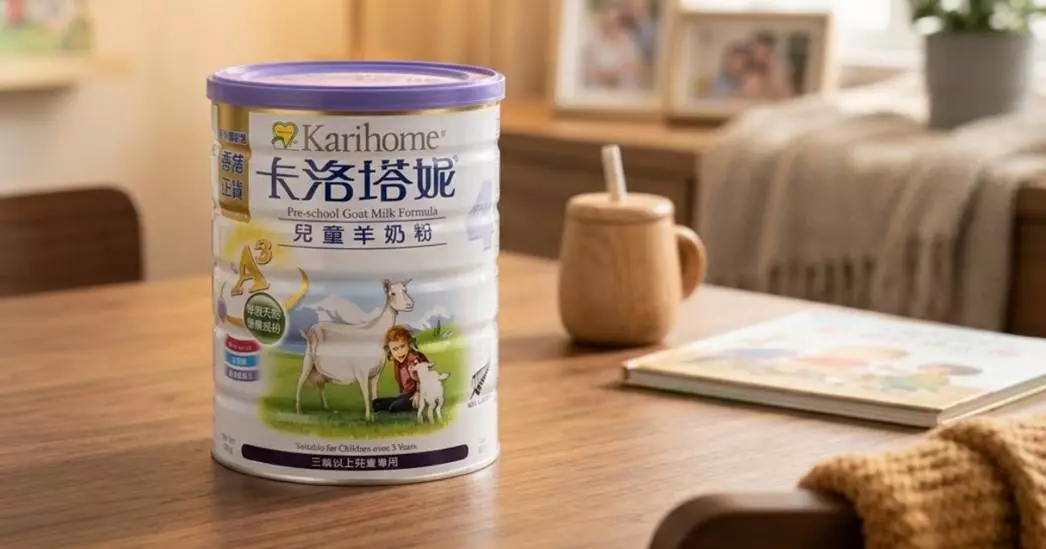
Karihome Goat Milk Formula is harvested and packaged at the brand'sown farms and facilities in New Zealand, ensuring a safe, traceable milk source. Its gentle manufacturing process preserves rare, natural milk fat to support your baby's development.
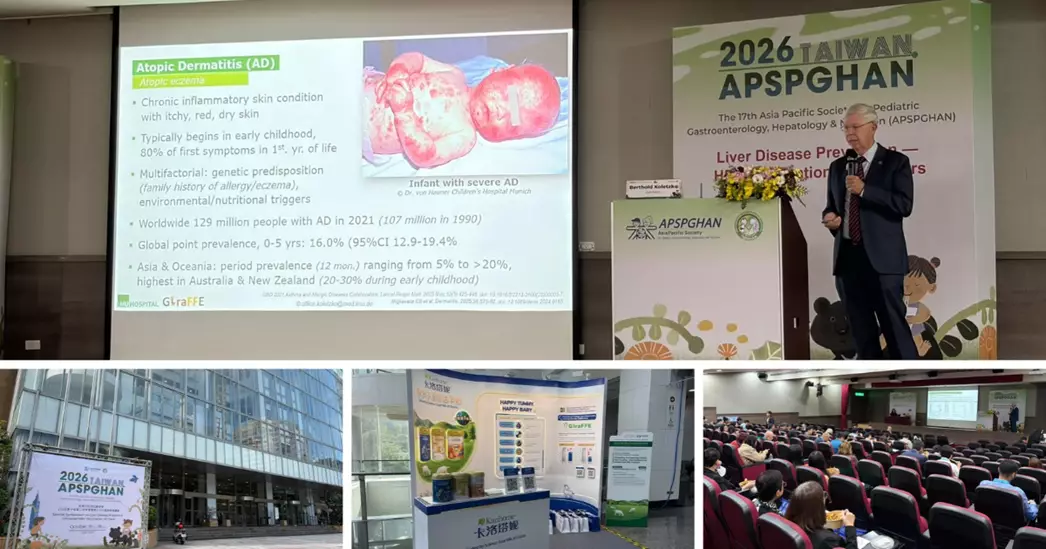
Globally renowned German paediatrician, scientist, and child nutrition authority Professor Berthold Koletzko presents the GIraFFE Study's scientific findings—comparing whole goat milk formula with standard cow milk formula on infant eczema—at the major international APSPGHAN symposium.