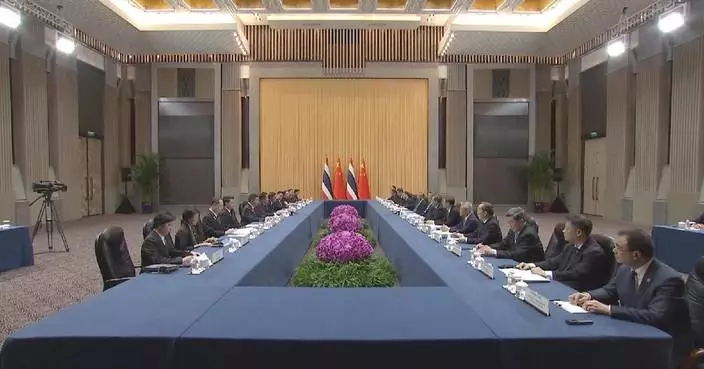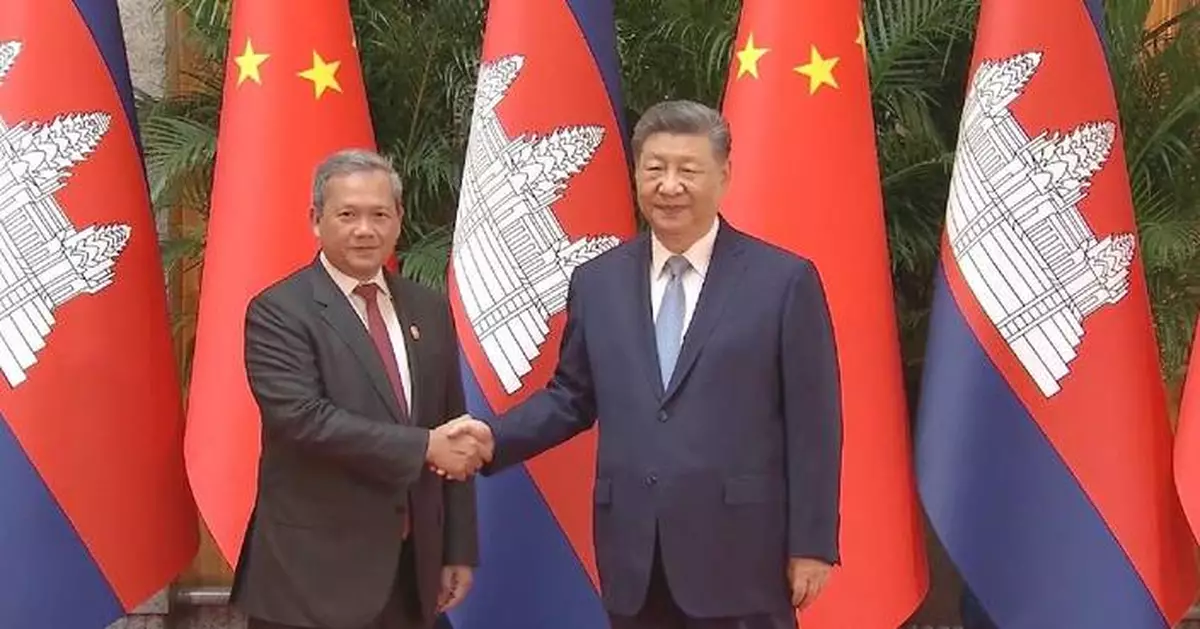
Chinese President Xi Jinping met with Cambodian Prime Minister Hun Manet in Shanghai on Friday to discuss bilateral ties and other issues of common interest.
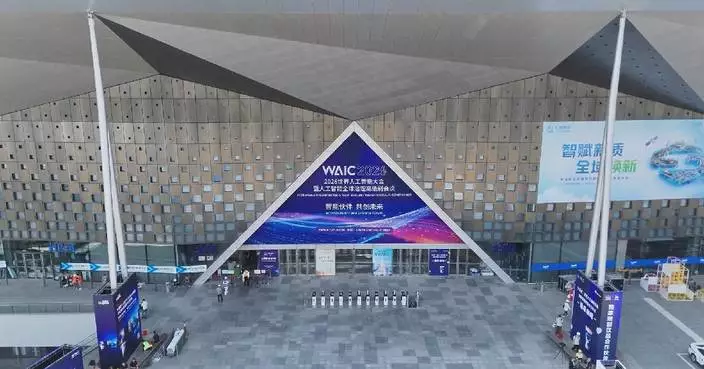
The meeting took place as Hun Manet is in Shanghai for the 2026 World AI Conference and High-Level Meeting on Global AI Governance and a working visit to China.
Xi said China and Cambodia have stood together through thick and thin, supporting each other in times of need, and the ironclad friendship has withstood the test of time and the trials of adversity.
History has proven that the China-Cambodia friendship is not a fair-weather bond, but a shared commitment that has been passed down through generations and survived the vicissitudes of time, Xi said, adding that it is a valuable asset cherished by both sides.
He called on both sides to carry forward the ironclad friendship forged by the older generation of leaders of the two countries, deepen strategic mutual trust, enhance solidarity and coordination, enrich the "Diamond Hexagon" bilateral cooperation framework, and strive for a higher-quality China-Cambodia community with a shared future in the new era, so as to deliver greater benefits to both peoples.
Noting that this year marks the 75th anniversary of the founding of the Cambodian People's Party, Xi said China stands ready to deepen exchanges of experience in party and state governance with Cambodia and firmly pursue friendly cooperation in the new era.
Both sides should give full play to the role of the China-Cambodia Intergovernmental Coordination Committee and accelerate the development of the Industrial Development Corridor and the Fish and Rice Corridor cooperation projects, he said.
The two countries should upgrade traditional industries such as power and agriculture, foster emerging industries including artificial intelligence and the digital economy, and coordinate the advancement of infrastructure projects that benefit Cambodia's national economy and people's livelihoods, Xi said.
He urged both sides to fully leverage the China-Cambodia "3+3" strategic dialogue mechanism, which encompasses diplomacy, defense and public security, to jointly combat transnational criminal activities such as counterfeiting and smuggling as well as online gambling and telecom fraud, thereby safeguarding the two countries' shared interests and security.
China is ready to work with Cambodia to jointly promote the implementation of the four global initiatives and push for a more just and equitable global governance system, the president said.
Consolidating the ceasefire and gradually building mutual trust between Cambodia and Thailand serve the long-term interests of both sides, Xi said, adding that China supports Cambodia and Thailand in reaching a resolution through dialogue and negotiation and will continue playing a positive role to that end.
Hun Manet congratulated China on successfully hosting the 2026 World AI Conference, saying that the important concept and propositions put forward by President Xi are of great significance to global AI governance.
He expressed gratitude for China's long-standing support and assistance for Cambodia's economic and social development.
No matter how the international landscape changes, Cambodia's policy of enhancing friendly cooperation with China will never change and the country will remain committed to building a Cambodia-China community with a shared future, he said.
Cambodia firmly adheres to the one-China principle and is willing to carry forward the traditional friendship with China, jointly implement the important consensus reached by the leaders of both sides, deepen political mutual trust, expand trade, advance cooperation on major projects such as infrastructure, and step up the fight against telecom fraud, the prime minister said.
Cambodia thanks China for its constructive role in promoting peace talks and facilitating the peaceful settlement of the Cambodia-Thailand border dispute, he added.
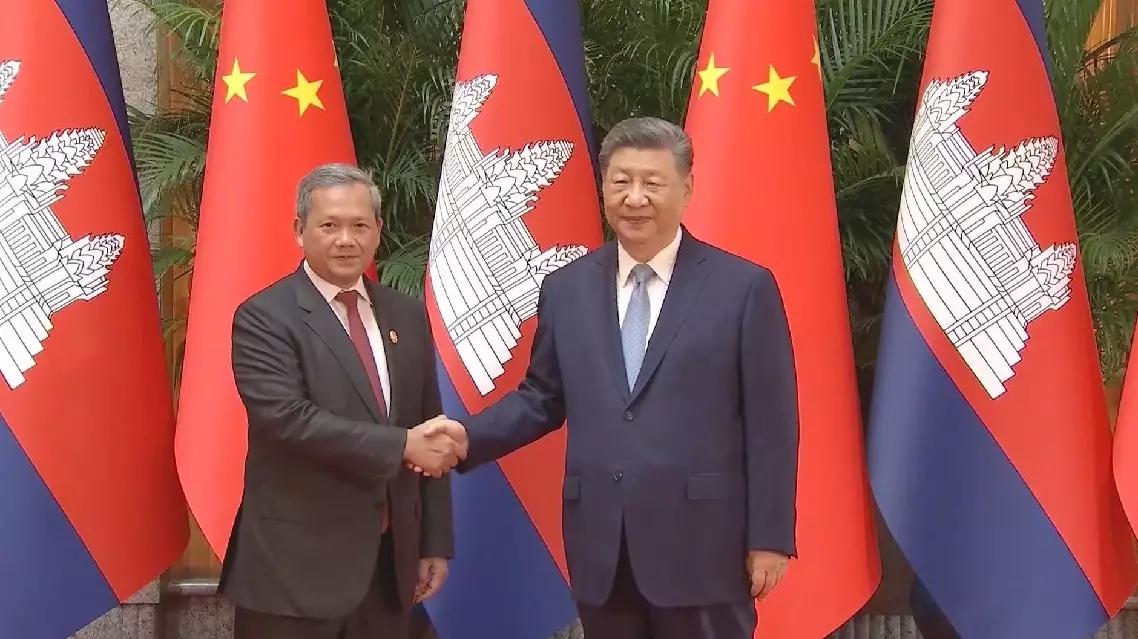
Xi meets Cambodian PM on bilateral ties