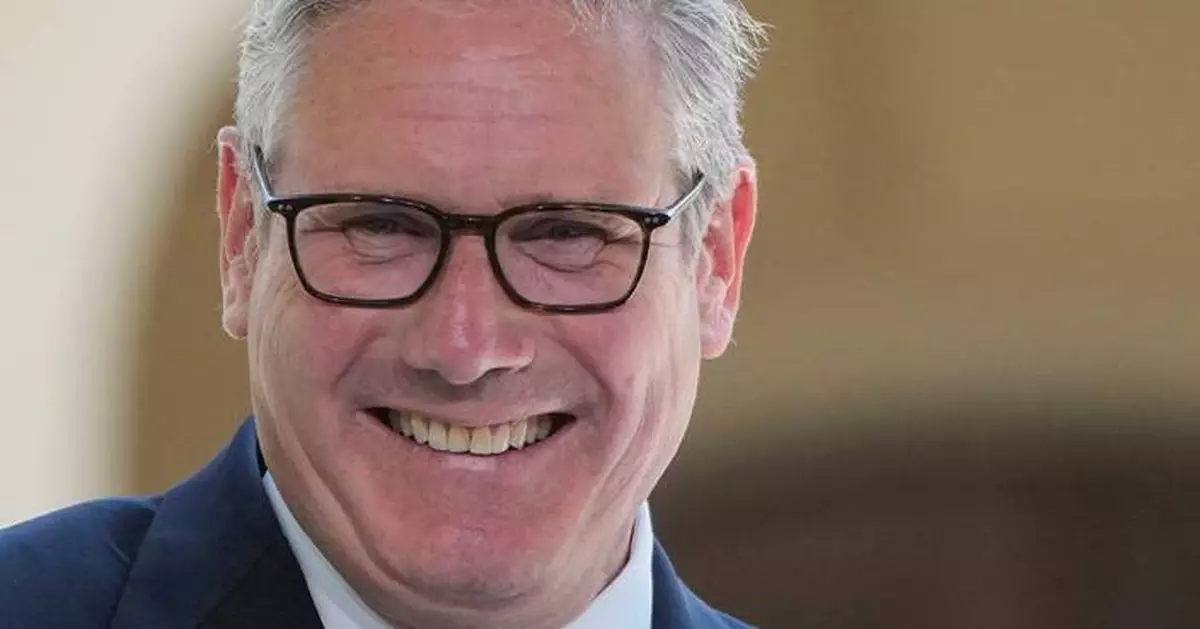
LONDON (AP) — Veteran Labour Party politician and popular former Greater Manchester mayor Andy Burnham is set to become Britain’s next prime minister on Monday, formally taking over from Keir Starmer, who announced his resignation last month.
Burnham was the only candidate to secure enough support from his fellow Labour lawmakers to replace Starmer as leader of the governing party. Because Labour holds a majority in government, its leader also becomes the U.K. prime minister.
Burnham received support from 349 out of 401 Labour Party lawmakers, and was announced Labour leader at a special party conference on Friday. He didn't officially become prime minister right away, though — that happens on Monday, when he meets King Charles III at Buckingham Palace for a formal go-ahead. Until then, Starmer remains caretaker prime minister.
A look at how and why Britain is getting a new prime minister just two years after Starmer led his party to a landslide election victory:
Britain’s parliamentary democracy allows governing parties to change leaders midterm, with the winner becoming prime minister without the need for a general election. Prime ministers can be replaced if one has resigned as leader of their party, or been forced out by a leadership challenge.
The next national election does not have to be held until 2029, five years from the last election in 2024.
Starmer announced he was quitting as Labour leader on June 22 after barely two years in power, ending a tenure marred by a series of political missteps -- most notably his decision to appoint a man with close ties to the late sex offender Jeffrey Epstein as Britain’s ambassador to the United States.
Heavy losses suffered by Labour in a midterm set of local elections in May prompted many lawmakers to demand Starmer's resignation. And when Burnham — favored by many within Labour to lead the party and the country — won a special election for a seat in Parliament, Starmer gave in to the mounting pressure to quit.
His resignation automatically triggered a Labour leadership contest. Under Labour rules, a lawmaker can challenge the leader if they have the backing of a fifth of the party's House of Commons lawmakers. There was no other contestant other than Burnham, who comfortably surpassed that threshold.
It’s not unusual for prime ministers to come to power without a broad election under Britain’s parliamentary system.
In fact, four of the six British prime ministers in the past decade took the top job by winning internal party leadership contests to replace their predecessors, not by public vote.
In the 2010s, both Theresa May and Boris Johnson became prime minister after winning Conservative leadership races when their predecessors resigned midterm.
When Johnson announced he was quitting in 2022, the Conservatives held a leadership contest and the party's members chose Liz Truss to replace him. And when Truss stepped down, just 49 days later, she was in turn replaced by Rishi Sunak via a similar process.
Burnham will thus become the seventh prime minister in a turbulent decade of U.K. politics, marked by a rapid succession of leaders who all, to some extent, failed to successfully manage the messy aftermath of Britain's decision to divorce from the European Union.
After years of leadership churn, the sequence of traditional events involved in the transfer of power has become familiar for many in Britain.
On Monday, Starmer will say his farewell speech to the public before going to Buckingham Palace to hold a short meeting with the king and formally resign.
After Starmer leaves, it's Burnham's turn to arrive at the palace, where Charles will formally ask him to form a government. The private ceremony is known as the “Kissing of Hands,’’ in accordance with historic tradition, though no hands are actually kissed and the men are more likely to shake hands.
When Burnham leaves the palace he will have become the 59th person to hold the office of British prime minister. He then rides in a car to his official home at No. 10 Downing Street, where he is expected to make his first statement in office.
The whole sequence is typically broadcast live on television — and will be over within hours.
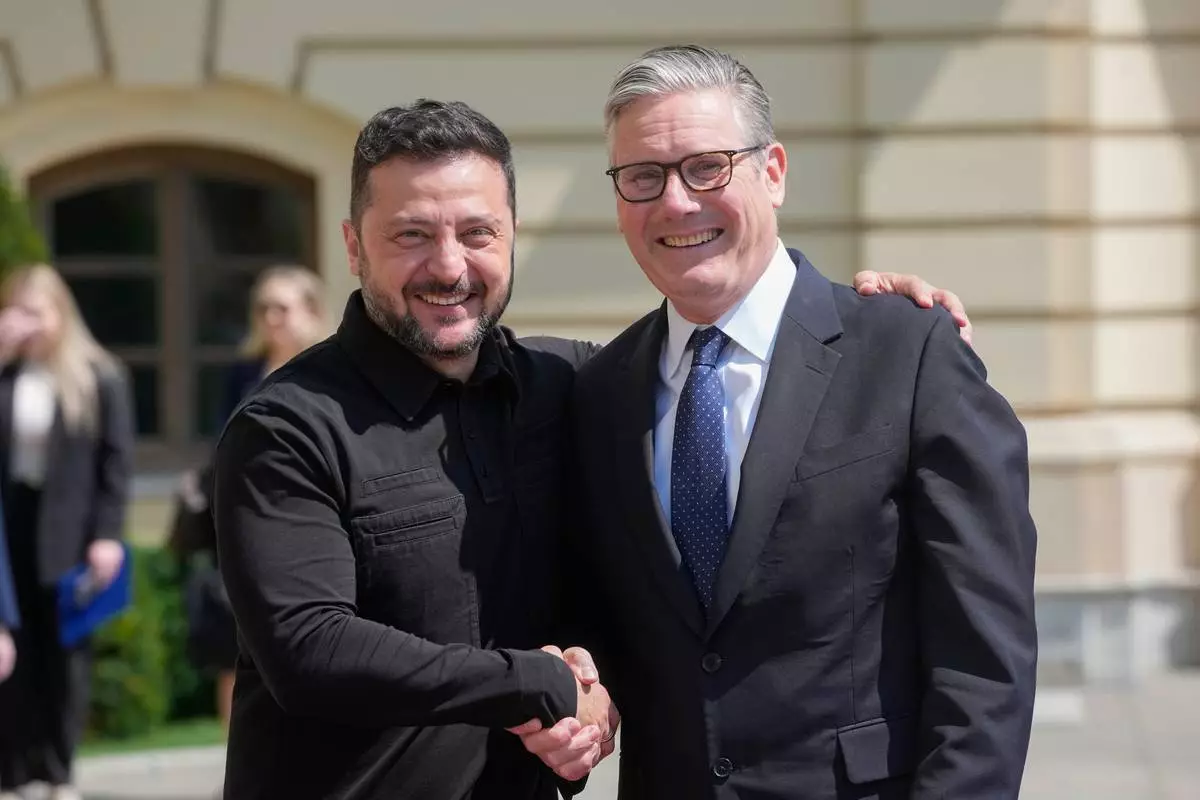
Britain's Prime Minister Keir Starmer, right, and Ukraine's President Volodymyr Zelenskyy greet each other in Kyiv, Ukraine, Thursday July 16, 2026. (AP Photo/Efrem Lukatsky)
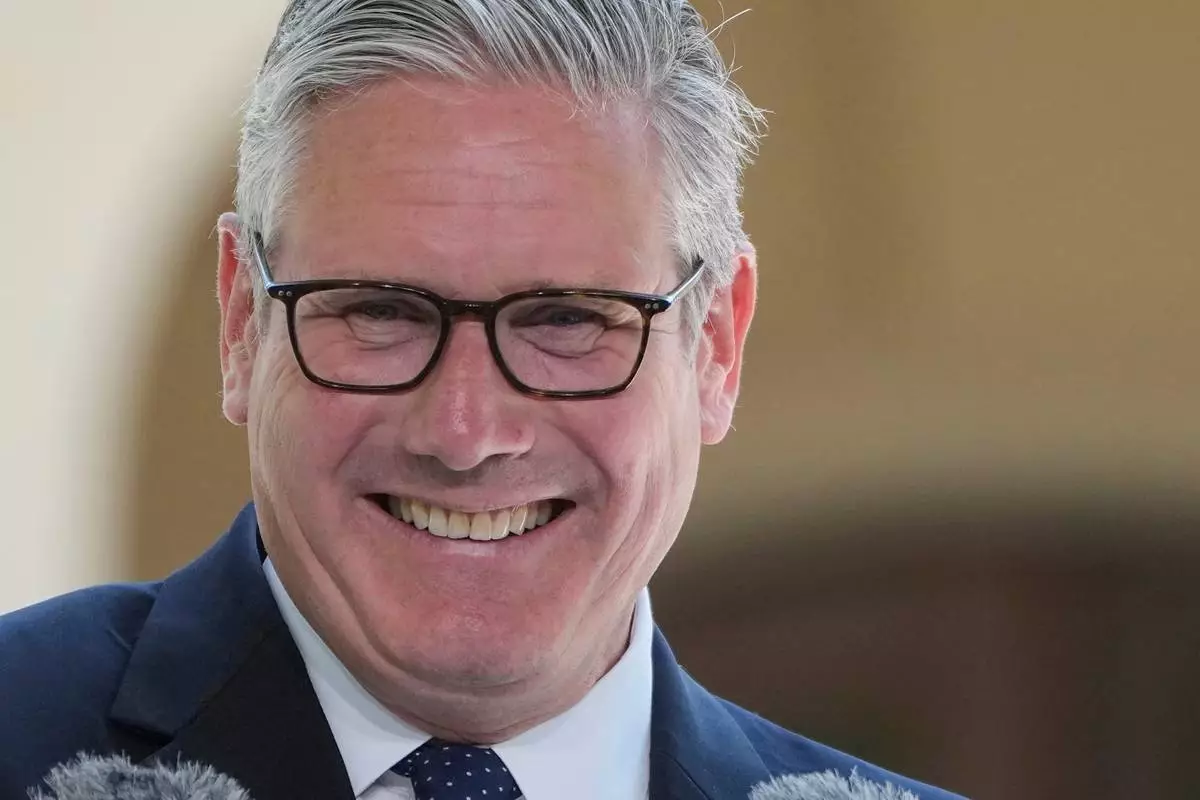
Britain's Prime Minister Keir Starmer smiles during a press conference with Ukraine's President Volodymyr Zelenskyy in Kyiv, Ukraine, Thursday July 16, 2026. (AP Photo/Efrem Lukatsky)