Skip to Content Facebook Feature Image

AI accelerates pace of scientific discovery: Nobel laureate

China

China

China

AI accelerates pace of scientific discovery: Nobel laureate

2026-07-18 21:49 Last Updated At:07-19 15:25

Nobel laureate Omar Yaghi, now a chaired professor at Tsinghua University, has highlighted the transformative role of artificial intelligence (AI) in scientific research.

Yaghi, who won the 2025 Nobel Prize in Chemistry, said in an interview with China Media Group (CMG) that AI accelerates the pace of discovery and is poised to redefine how fundamental research unfolds.

"It certainly will, not only will AI facilitate and speed up the discovery, but also, it will help us identify which materials are going to be better, cheaper and in the fullness of time, greener. Now, once you've done that, by that time, AI will be presenting us with new questions that we wouldn't have thought about. And science is all about questions. It's all about figuring out what is that important question," said Yaghi.

The essence of progress, Yaghi noted, is about posing the most significant and relevant questions, and in this, AI serves as a powerful tool.

"It's about asking the right question. And so AI will help us ask questions, the right questions, hopefully, that we otherwise would not have thought of asking. We see something we inquire about it. We try to see how it could be used to benefit. And in so doing you've collected data and knowledge and that knowledge helps you solve problems. And so AI is going to help us do that a lot faster, a lot better than we've ever done this before," said Yaghi.
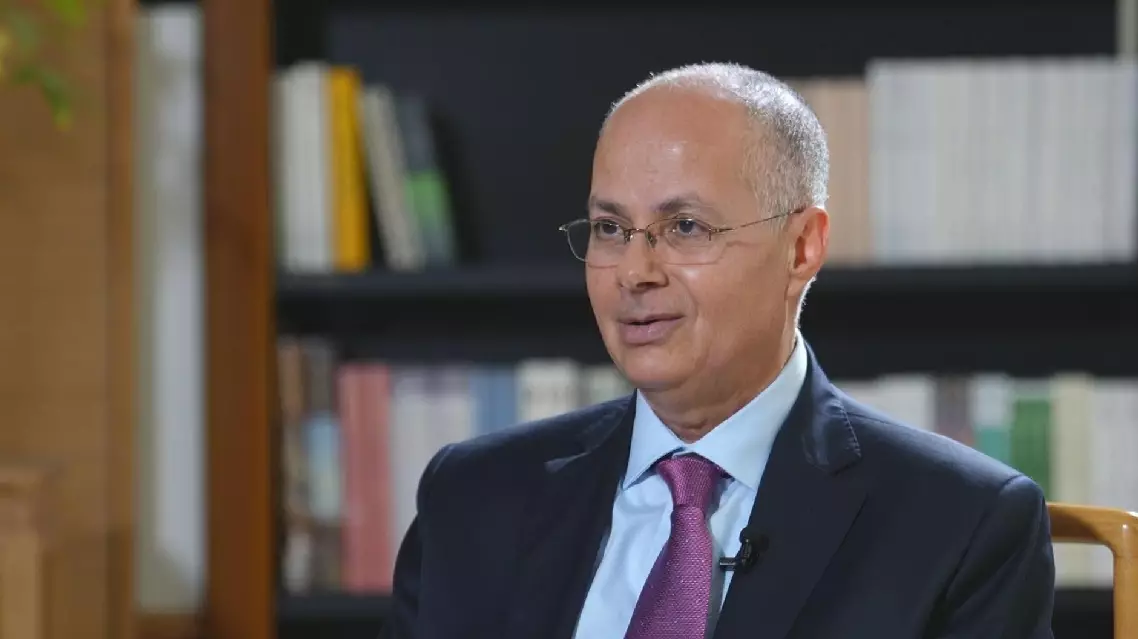
AI accelerates pace of scientific discovery: Nobel laureate
AI accelerates pace of scientific discovery: Nobel laureate

The death toll from the ongoing Ebola outbreak in the Democratic Republic of the Congo (DRC) has surpassed 3,000, as the World Health Organization (WHO) warned the risks of undetected chains of transmission.

As of Aug 31, the DRC had recorded 6,186 confirmed cases and 3,007 deaths, according to an official situation report. A total of 1,409 patients have recovered, while 830 others remain in isolation or Ebola treatment centers.

The outbreak has affected 60 health zones across the six provinces of Ituri, North Kivu, Haut-Uele, Tshopo, South Kivu and Bas-Uele. Ituri remains the epicenter, accounting for 81.9 percent of all confirmed cases nationwide.

WHO Director-General Tedros Adhanom Ghebreyesus said at a press briefing on Wednesday that the Ebola outbreak in the DRC is moving faster than any previous Ebola outbreaks in the country.

Tedros said that there are still undetected chains of transmission in the current outbreak, adding that many deaths are among people who were not on a list of known contacts.

Until every chain is found and broken, the epidemic will continue, he added.

During Tuesday's online briefing, Tom Fletcher, UN under-secretary-general for humanitarian affairs and emergency relief coordinator, warned that the virus was still outpacing the scaled-up response.

Unless the response efforts are stepped up urgently, more lives will be lost and the threat will grow, he said.

The UN official also revealed that over 40 health workers have died from Ebola while responding to the outbreak, while treatment centers and ambulances have also come under attack.

The current outbreak, declared in May, has since become the country's largest and deadliest Ebola epidemic on record and the second-largest globally, behind the 2014-2016 epidemic in West Africa.

DR Congo Ebola deaths top 3,000 as WHO warns risks of unclear transmission chains

DR Congo Ebola deaths top 3,000 as WHO warns risks of unclear transmission chains

Recommended Articles