Shanghai has launched China's first AI-powered autonomous laboratory in materials science, capable of conducting scientific research without human intervention, marking a major step toward AI-driven research and development in the field.
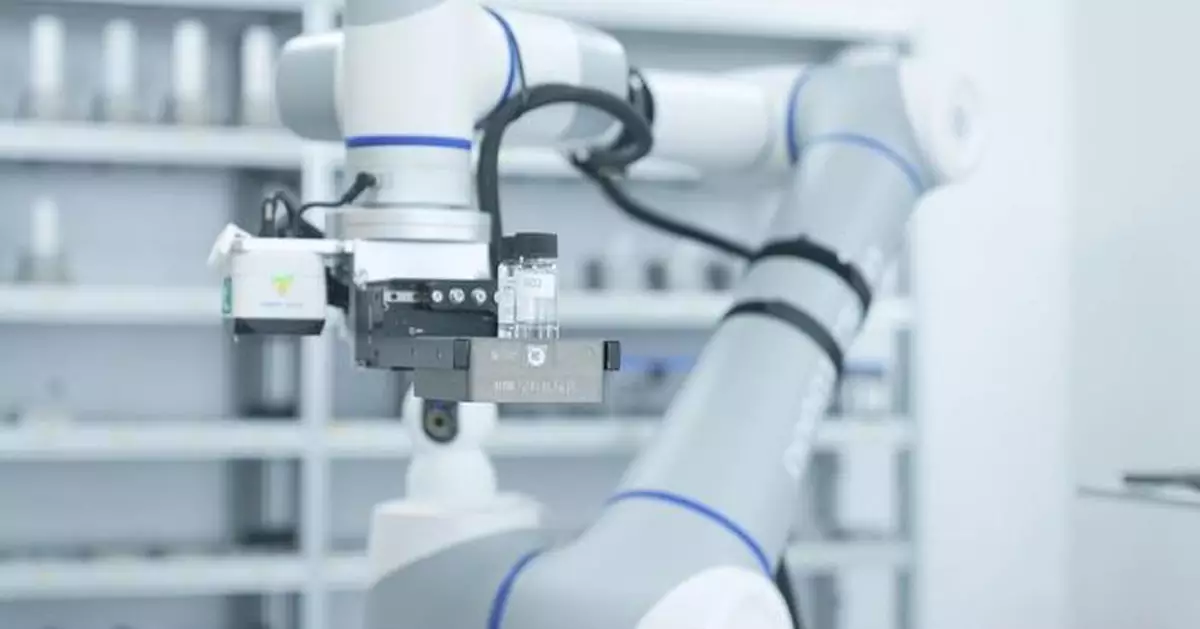
Developed by a team of young AI scientists backed by Fudan University, the laboratory integrates artificial intelligence with automated robotics to carry out the entire research process.
The system autonomously generates and screens molecular designs before sending them to an automated laboratory for compound synthesis, purification, and testing. The experimental results are then fed back into the AI model, allowing it to continuously improve its performance.
Unlike conventional laboratories, where researchers oversee experiments and analyze results, the AI-powered facility can complete the entire research workflow autonomously.
Ahead of the four-day 2026 World Artificial Intelligence Conference (WAIC), which opened in Shanghai on Friday, the laboratory completed a five-day trial run, independently carrying out 135 research tasks.
"Many complicated experimental procedures can now be fully automated. AI agents can also operate a wide range of laboratory instruments on their own. This significantly improves research productivity," said Cao Fenglei, an AI scientist with the Shanghai Academy of AI for Science (SAIS).
The team behind the laboratory is made up largely of university graduates. Fudan University said it hopes to cultivate more research teams capable of using AI to tackle fundamental scientific challenges.
"Teams coming out of universities place great emphasis on solving real scientific problems. They also have [a deep] understanding of materials science, enabling them to have deep expertise in materials science," said Wu Libo, a principal assistant from Fudan University.
At this year's WAIC, Fudan University also unveiled several other AI initiatives, including the Fuxi Constellation project, an AI-powered weather forecasting system. Its first satellite is expected to be launched before March next year.
The 2026 World AI Conference (WAIC) is running in Shanghai from Friday to Monday under the theme "AI Partnership for a Brighter Future."
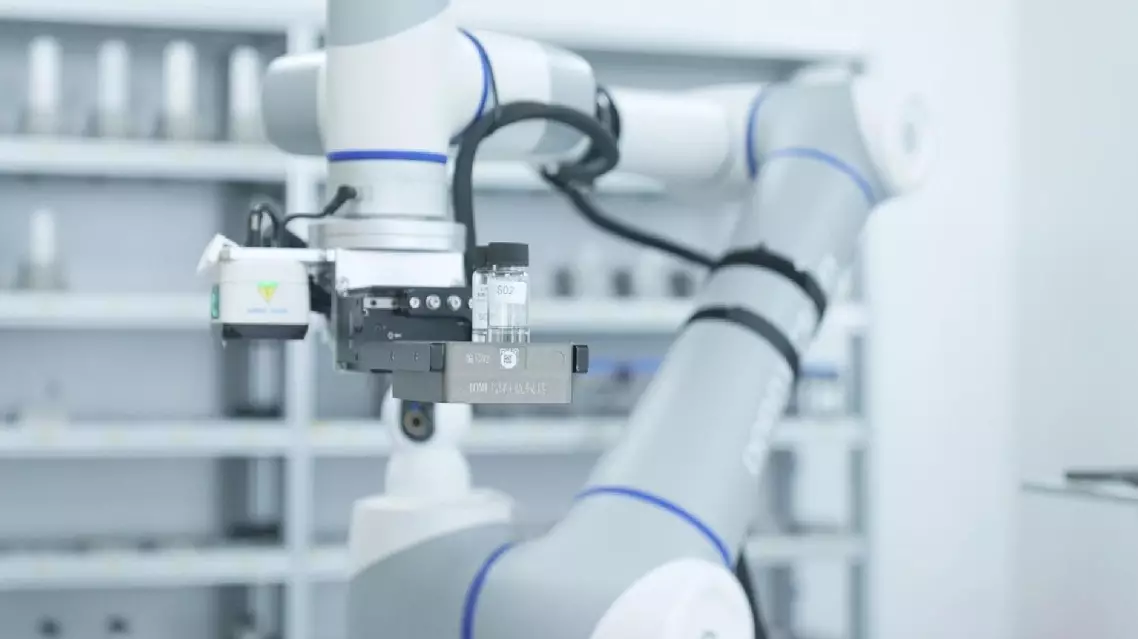
Shanghai launches China's first AI-powered autonomous laboratory for materials science
American firms no longer see China as just a vast market, but as a place to build meaningful partnerships that are essential to their global competitiveness strategies, said Sean Stein, president of the U.S.-China Business Council.
Stein, a former U.S. diplomat with decades of experience serving the interests of American companies in China, has witnessed a dynamic transformation in the way these firms operate and how they view collaboration with local enterprises.
In an exclusive interview with CGTN, Stein said that joint ventures, once a requirement for foreign companies to operate in some industries, are increasingly being formed voluntarily.
"When I first started coming to China 25 years ago, I don't remember any American companies who would say, you know what, I sure love my joint venture partner. I am so glad I have a joint venture partner. You didn't hear that very often because the Chinese partner didn't have very much to add. Now what we see is, we see American companies who come to China, and they could do it alone, they could do it as a WFOE (wholly foreign-owned enterprise), but they're like, why would we do that? We see some great strength in Chinese companies. We want the right partner, whether it's a joint venture partner or strategic partner," said Stein.
"So we used to say that companies would come to China for the China market. And I now scold people because companies, yeah, they're here for the market, but that's not what's important today in 2026. They're here because, as we saw in our most recent survey, they're here because China is an important part of their global competitiveness," he said.
The business council president stressed that these partnerships are now indispensable for securing an edge in the worldwide marketplace.
"You can't look at all of the developments that are happening here and say, you know what, we're not going to take part of that and somehow remain competitive globally. So the real trend that we see, that our companies are talking about, that our board is talking about, that our CEOs are talking about, and when they talk to each other, it's how can we leverage what's happening in China, learn from it, partner with it, and use that to maintain and grow our competitiveness globally. So I think we now see a whole lot more cooperation between American and Chinese companies or between European and Chinese companies than maybe a decade ago or two decades ago," he said.
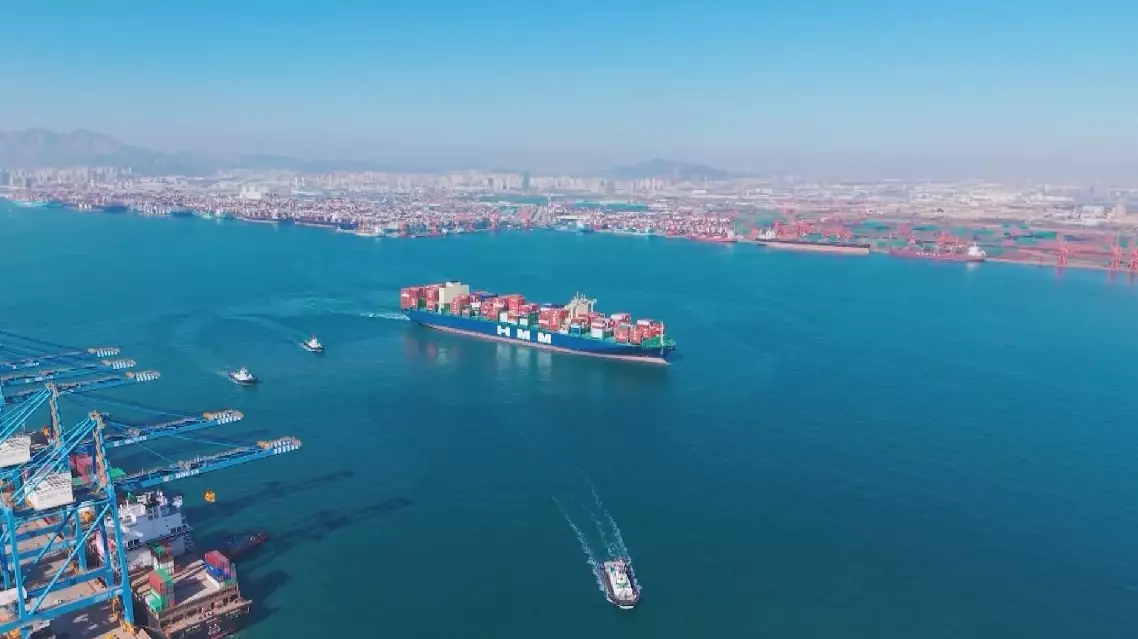
Joint ventures in China become crucial for competitiveness of American firms: US business leader