Skip to Content Facebook Feature Image

Japanese beetle advances through northern Italy's vineyards and orchards, frustrating farmers

News

Japanese beetle advances through northern Italy's vineyards and orchards, frustrating farmers
News

News

Japanese beetle advances through northern Italy's vineyards and orchards, frustrating farmers

2026-07-20 13:04 Last Updated At:15:11

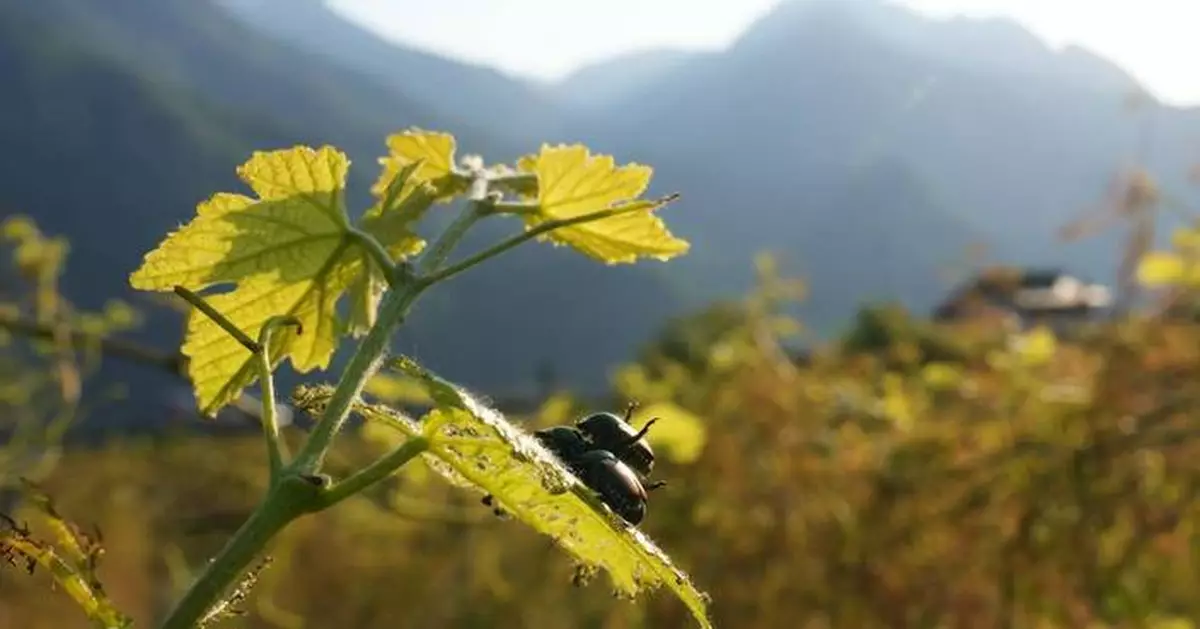
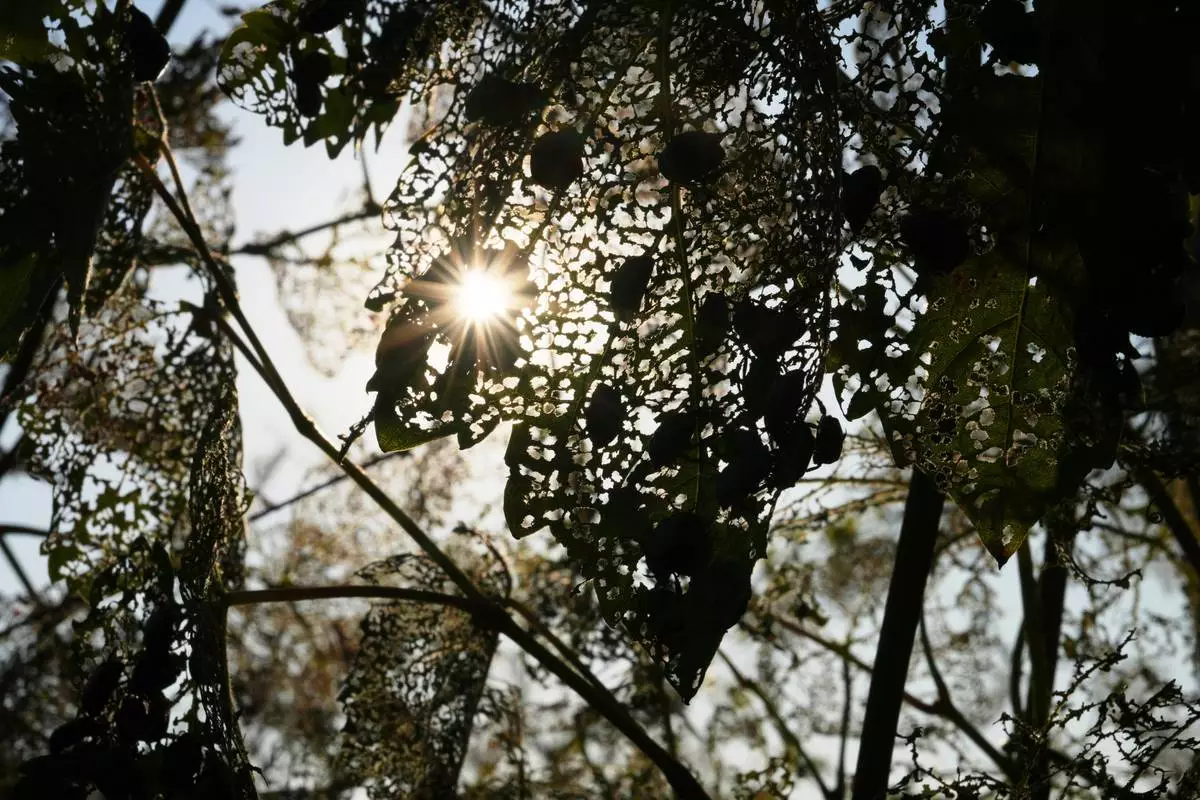
DONNAS, Italy (AP) — The iridescent green beetles native to Japan have become a growing menace in Italy, swarming through orchards and vineyards and leaving behind devastating lattice patterns in leaves that weaken the plants and reduce production.

The Popillia japonica, or Japanese beetle, is a familiar pest in the United States, where it arrived more than a century ago.

More Images
Japanese beetles (Popillia japonica) sit on a vine leaf in Pont-Saint-Martin, in Italy’s Valle d’Aosta region, Thursday, July 9, 2026. (AP Photo/Antonio Calanni)
Japanese beetles (Popillia japonica) sit on a vine leaf in Pont-Saint-Martin, in Italy’s Valle d’Aosta region, Thursday, July 9, 2026. (AP Photo/Antonio Calanni)

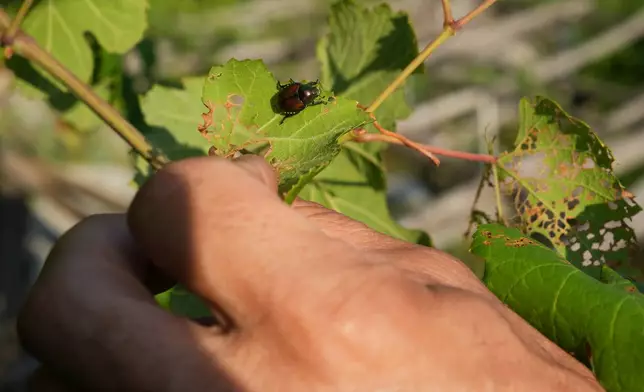
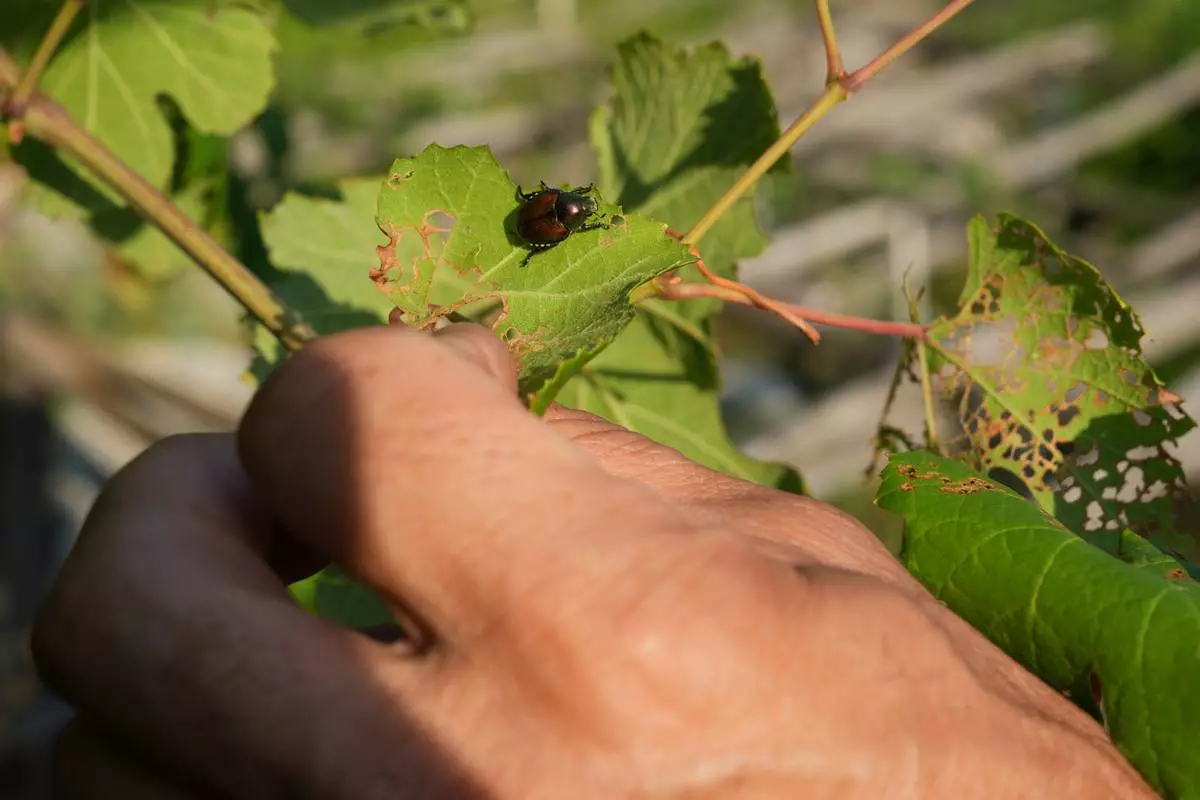
Vittorio Costabloz, vice-president of Caves de Donnas wine cooperative, points out a Japanese beetle (Popillia japonica) on a vine leaf in Donnas, in the Valle d'Aosta region, Italy, Thursday, July 9, 2026. (AP Photo/Antonio Calanni)
Vittorio Costabloz, vice-president of Caves de Donnas wine cooperative, points out a Japanese beetle (Popillia japonica) on a vine leaf in Donnas, in the Valle d'Aosta region, Italy, Thursday, July 9, 2026. (AP Photo/Antonio Calanni)

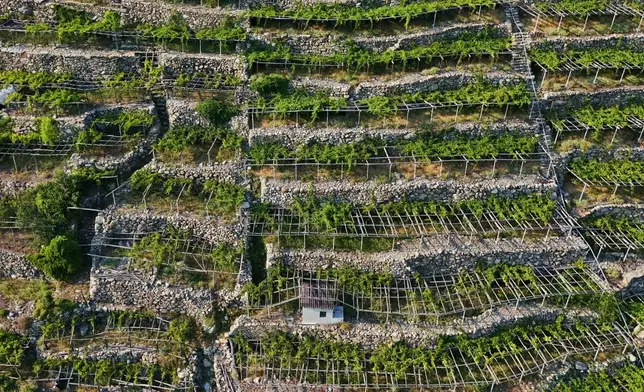
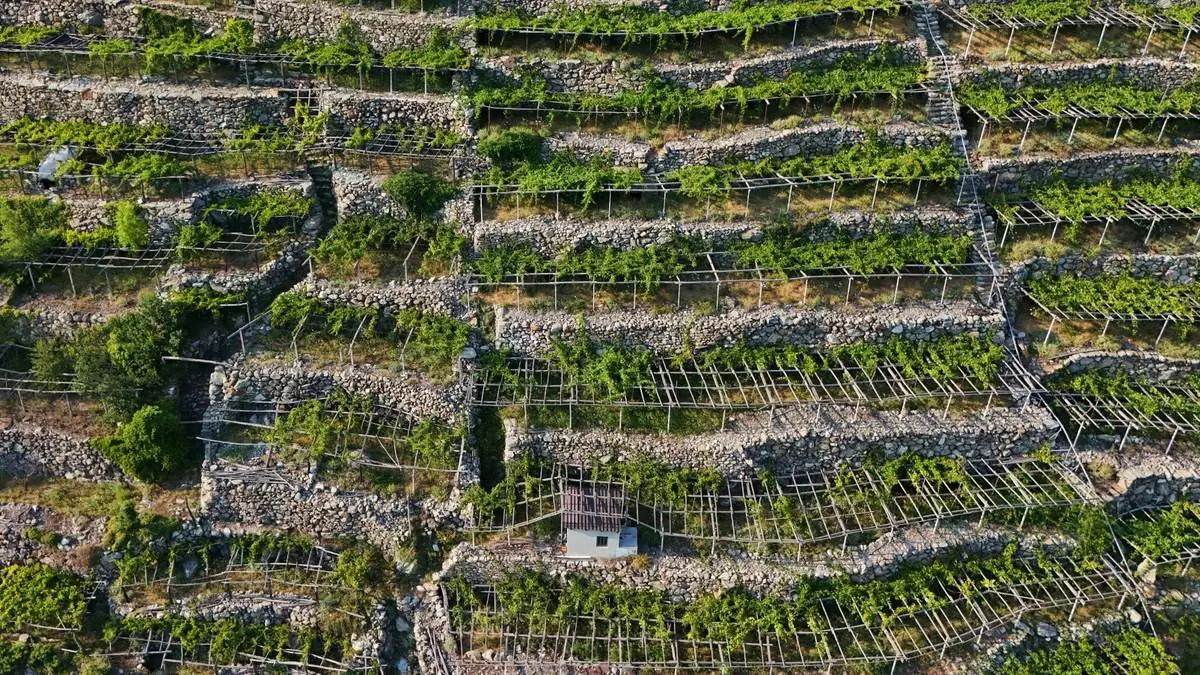
An aerial view of a vineyard in Donnas, in the Valle d'Aosta region, Italy, Thursday, July 9, 2026. (AP Photo/Antonio Calanni)

An aerial view of a vineyard in Donnas, in the Valle d'Aosta region, Italy, Thursday, July 9, 2026. (AP Photo/Antonio Calanni)

A Japanese beetle (Popillia japonica) sits on a leaf in Pont-Saint-Martin, in Italy’s Valle d’Aosta region, Thursday, July 9, 2026. (AP Photo/Antonio Calanni)
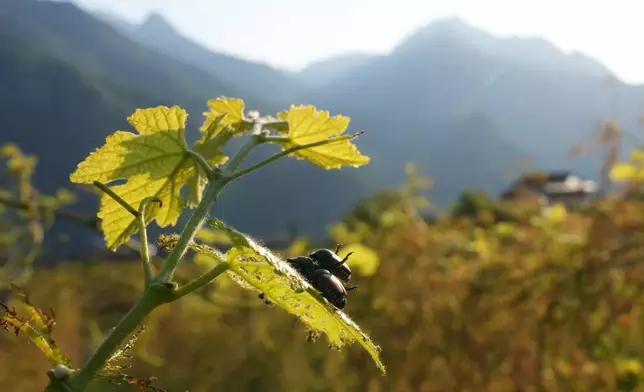
A Japanese beetle (Popillia japonica) sits on a leaf in Pont-Saint-Martin, in Italy’s Valle d’Aosta region, Thursday, July 9, 2026. (AP Photo/Antonio Calanni)

Japanese beetles (Popillia japonica) sit on a vine leaf in Pont Saint Martin, in the Valle d'Aosta region, Italy, Thursday, July 9, 2026. (AP Photo/Antonio Calanni)

Japanese beetles (Popillia japonica) sit on a vine leaf in Pont Saint Martin, in the Valle d'Aosta region, Italy, Thursday, July 9, 2026. (AP Photo/Antonio Calanni)

But it is a relative newcomer to the European continent, first detected near Milan’s Malpensa airport in 2014. In Italy, it has already swarmed through the northeastern regions of Lombardy, Piedmont and Valle d’Aosta, where it appeared last year in terraced vineyards above the town of Donnas.

“We’re seeing the popillia steadily advance from terrace to terrace across our historic vineyards," said Luciano Zoppo Ronzero, a winemaker who produces Nebbiolo from the terraced vines. “We’re now about the 10th terrace and can already see the popillia attacks. This means they’re consuming and gradually moving up the mountain.”

With no natural predators and an appetite covering over 300 plants and trees, the Japanese beetle has made the European Union's list of priority pests, meaning that efforts must be made to contain and eradicate outbreaks.

The beetle is already entrenched in Italy, Switzerland and Germany, where the focus is on managing and containing expansion, while the population levels in France and Spain still allow hopes of eradication, said Daniela Lupi, an entomologist at the University of Milan.

The Japanese beetle is voracious and travels en masse as it feeds. Adult beetles also hitch a ride on trains, cars and airplanes. After spending summer months feasting, the beetles mate and their larvae feed on grasses until reaching maturity, and launch the cycle anew.

The Coldiretti agricultural lobby says the pest poses a major threat to agriculture as it makes its way through the Po River Valley, Italy’s breadbasket. But damage so far has been hard to quantify because often the beetle’s pattern of eating away the pulp of leaves weakens the plant, lowering production, without necessarily killing healthy plants.

“In some areas, the beetle has destroyed the harvest,’’ said Lorenzo Bazzana, the head of economic affairs at Coldiretti. The larvae, known as grubs, also feed on grass roots, damaging lawns, golf courses and playing fields.

Zoppo Ronzero is concerned for both his historic terraced vineyards, carved into the mountainside and stabilized by centuries-old drystone walls, and for his production. By defoliating the vines, the beetles expose grape clusters to the sun while severely reducing the plants’ ability to photosynthesize.

“What scares me is the fact that in the end the grapes don’t ripen. If the grapes don’t ripen, it means we’re not bringing home a splendid harvest, as we had hoped, but something unusable,” Ronzero said.

The best hope for eradicating the pests is attacking the larvae, according to Bazzana. The beetles were recently detected near Verona’s Valerio Catullo airport, and experts are experimenting by introducing a microscopic parasite in the surrounding area to attack the grubs.

Pheromone traps are also widely used, while the wine producers in Donnas are relying on pesticide treatments, even though the effectiveness is short-lived and labor-intensive on the steep terrain.

“If we don’t counter it, the population will continue to rise and so there will be strong damage to the fruits plants, to the grasses, to the ornamental plants,” Lupi, the entomologist, said. “There are no problems for the human population, because they are not so dangerous, but the production is really, really lowered.”

Associated Press writer Colleen Barry in Milan contributed to this report.
Japanese beetles (Popillia japonica) sit on a vine leaf in Pont-Saint-Martin, in Italy’s Valle d’Aosta region, Thursday, July 9, 2026. (AP Photo/Antonio Calanni)
Japanese beetles (Popillia japonica) sit on a vine leaf in Pont-Saint-Martin, in Italy’s Valle d’Aosta region, Thursday, July 9, 2026. (AP Photo/Antonio Calanni)

Vittorio Costabloz, vice-president of Caves de Donnas wine cooperative, points out a Japanese beetle (Popillia japonica) on a vine leaf in Donnas, in the Valle d'Aosta region, Italy, Thursday, July 9, 2026. (AP Photo/Antonio Calanni)
Vittorio Costabloz, vice-president of Caves de Donnas wine cooperative, points out a Japanese beetle (Popillia japonica) on a vine leaf in Donnas, in the Valle d'Aosta region, Italy, Thursday, July 9, 2026. (AP Photo/Antonio Calanni)

An aerial view of a vineyard in Donnas, in the Valle d'Aosta region, Italy, Thursday, July 9, 2026. (AP Photo/Antonio Calanni)

An aerial view of a vineyard in Donnas, in the Valle d'Aosta region, Italy, Thursday, July 9, 2026. (AP Photo/Antonio Calanni)

A Japanese beetle (Popillia japonica) sits on a leaf in Pont-Saint-Martin, in Italy’s Valle d’Aosta region, Thursday, July 9, 2026. (AP Photo/Antonio Calanni)
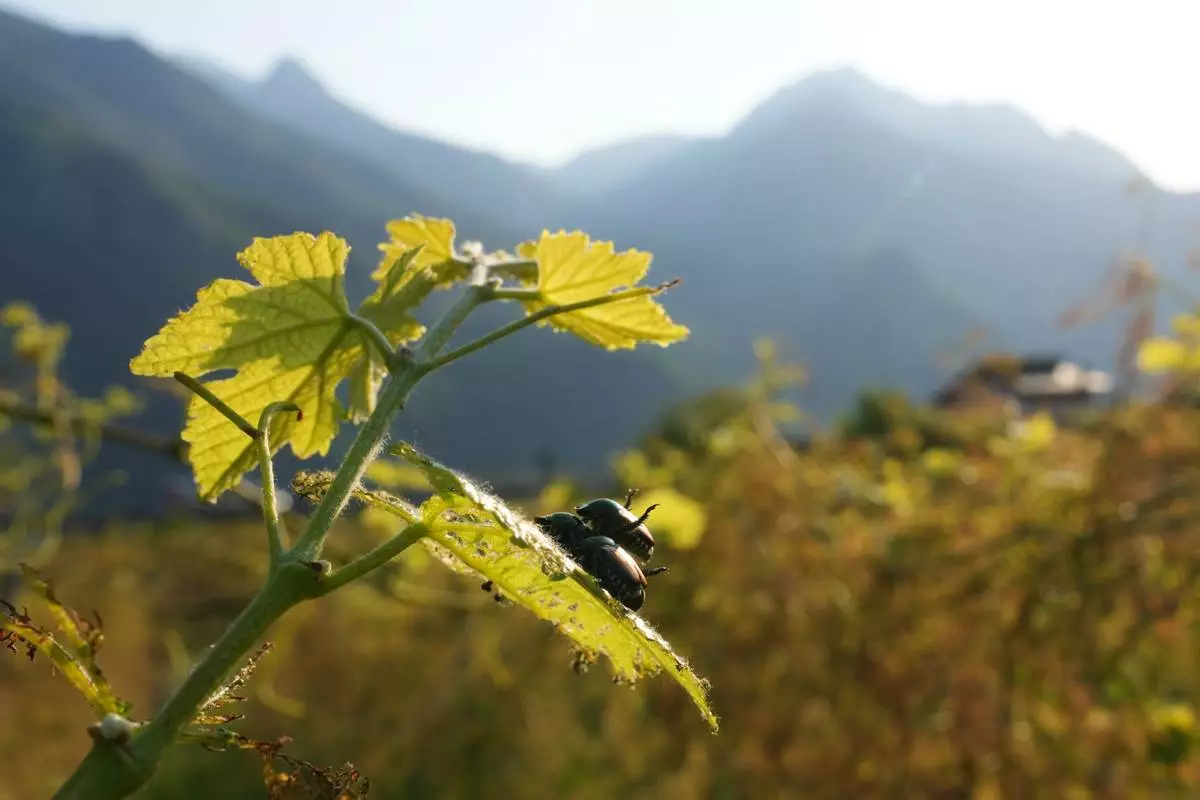
A Japanese beetle (Popillia japonica) sits on a leaf in Pont-Saint-Martin, in Italy’s Valle d’Aosta region, Thursday, July 9, 2026. (AP Photo/Antonio Calanni)

Japanese beetles (Popillia japonica) sit on a vine leaf in Pont Saint Martin, in the Valle d'Aosta region, Italy, Thursday, July 9, 2026. (AP Photo/Antonio Calanni)


Japanese beetles (Popillia japonica) sit on a vine leaf in Pont Saint Martin, in the Valle d'Aosta region, Italy, Thursday, July 9, 2026. (AP Photo/Antonio Calanni)

GEORGETOWN, Guyana (AP) — Rescuers in Guyana searched for survivors Monday as authorities launched an investigation after a ferry believed to have been overloaded capsized over the weekend. The government said at least 32 of the 67 people rescued were not listed on the passenger manifest.

Hopes of finding more survivors faded as Prime Minister Mark Phillips told reporters late Sunday that officials believe there were many more passengers than the documented 116 and 17 crew members aboard the decades-old ferry.

Passengers have complained for years that ticket clerks unofficially sell seats to friends and associates for cash without adding their names to the manifest, a practice that has persisted for decades at state-run ferry terminals.

Phillips also said the rescued captain and at least one other crew member tested positive for marijuana and remain in police custody as part of the criminal investigation.

The MV Barima capsized off the Essequibo coast late Saturday while en route from the capital, Georgetown, to Port Kaituma in northwestern Guyana, near Venezuela. Only 10 bodies had been recovered by Monday.

The prime minister said the government launched an urgent and comprehensive probe, concentrating on the accuracy of the manifest, cargo loading, compliance with safety rules and the conduct of the captain and crew before sailing, among other issues.

“Let me be absolutely clear: Where negligence, misconduct or criminal wrongdoing is established, those responsible will face the full force of the law,” he said. “There will be no exceptions and no tolerance for actions that placed innocent lives at risk.”

President Irfaan Ali traveled to the northern town of Mabaruma to meet with survivors, those who remain hospitalized and families.

"It was a deeply emotional experience. I listened to their stories, shared in their pain and anxiety, and assured them that every practical measure would be taken to provide the support and assistance they need,” he said.

Like other cabinet ministers, Ali promised a full and thorough probe into the capsizing: “Our priority remains to protect every life that can still be saved; to support those who have endured unimaginable trauma."

Public Works Minister Juan Edghill said he was devastated by what he described as the country’s worst marine disaster in decades and by the latest developments in the investigation.

“We have a zero tolerance for members of the crew drinking or smoking while at work. And for us to have positive tests from the captain, this is serious,” he said.

Edghill acknowledged that officials don’t know how many people were aboard the ferry because the manifest list is not accurate, calling that “a criminal action.”

Boats and ferries are commonly used across Guyana, a heavily forested country with scant road systems in its interior. Many people choose ferries because cargo rates are lower than air freight charged by domestic airlines serving those areas.

Several passengers said on social media that water had been seeping into the cargo area as the MV Barima limped along the North Atlantic coast on its now ill-fated voyage to Port Kaituma.

The vessel, built more than 80 years ago, was last dry docked for major repairs in 2024 and was due for additional major repairs in October.

FILE - People sit on the seawall as the sun sets in Georgetown, Guyana, Tuesday, Nov. 19, 2024. (AP Photo/Matias Delacroix, File)

FILE - People sit on the seawall as the sun sets in Georgetown, Guyana, Tuesday, Nov. 19, 2024. (AP Photo/Matias Delacroix, File)

Recommended Articles