Speech by SFST at MOU signing ceremony with Ministry of Finance of Laos
Following is the speech by the Secretary for Financial Services and the Treasury, Mr Christopher Hui, at the Memorandum of Understanding (MOU) signing ceremony with the Ministry of Finance of Laos today (July 20):
Your Excellency Deputy Prime Minister Phomvihane (Deputy Prime Minister and Minister of Finance of Laos, Mr Santiphab Phomvihane), distinguished guests, ladies and gentlemen,
It is my great pleasure to welcome you all to this very significant signing ceremony today. The Memorandum of Understanding we are about to sign marks a milestone in the deepening friendship and economic partnership between Hong Kong and Laos. Under the framework of the Belt and Road Initiative, our two sides are building upon warm and growing ties to create new opportunities for mutual interests and prosperity.
Hong Kong has long served as an international financial centre with world-class infrastructure, deep capital markets, and a robust regulatory environment. We are now accelerating our development as a leading gold trading, clearing, and reserve hub for Asia and beyond. Earlier this month, Hong Kong's new central gold clearing and settlement system commenced trial operation, and we have announced a comprehensive package of targeted initiatives to support our gold market development. These include a co-operation initiative with the Shanghai Gold Exchange, the launch of a new HAU price ticker in which AU is the reference to gold in the periodic table while H refers to Hong Kong, expansion of storage capacity to beyond 2 000 tonnes in three years' time, diversification of gold investment products such as ETFs (exchange-traded funds) and futures, exploration of tax incentives, co-ordinated insurance arrangements, and the establishment of an industry-led trade association. These steps closely align with our country's 15th Five-Year Plan, and will support Hong Kong in building and enhancing our commodity trading ecosystem. These initiatives will enhance physical delivery, risk management, connectivity with the Mainland, and our overall market depth - creating new investment opportunities and injecting fresh momentum into our financial sector.
Our MOU with Laos to be signed today on fostering gold market co-operation perfectly complements these developments. It represents our shared commitment to strengthen communication and knowledge exchange in financial services, with a particular focus on gold market development. Through this partnership, we will work together to realise a seamless, efficient, and trusted gold corridor that benefits producers, refiners, traders, and investors in both our economies.
The MOU outlines clear areas of collaboration. We will promote physical gold flows by facilitating access for qualified Lao gold owners to Hong Kong's accredited refining network and encouraging the use of refined gold bars meeting international standards in our market. We will strengthen financial market linkages - leveraging Hong Kong's capital markets and infrastructures - to provide Lao market participants with liquidity, efficient price discovery, and international capital. We will also pursue joint international promotion across Belt and Road partner countries, foster talent development and fintech collaboration including tokenisation solutions, enhance regulatory collaboration on AML (anti-money laundering) and best practices, and promote a conducive business environment. Hong Kong's competitive tax regime - with no sales tax nor import duty on investment-grade gold, and no capital gains tax - positions us as an efficient hub, and we look forward to exploring more targeted initiatives with Laos.
Co-operative activities will be flexible and practical, including exchange of best practices, joint projects, workshops and exchange visits. Each side may involve relevant regulators, institutions, and industry representatives as appropriate.
Ladies and gentlemen, today's signing is the beginning of a dynamic and evolving partnership. By combining Laos' natural gold endowment with Hong Kong's world-class infrastructure, expertise, and international connectivity, we can transform resources into investable, transparent assets that drive sustainable economic growth for both markets.
I extend my sincere appreciation to our Laos' counterparts for their vision and collaborative spirit. Thank you.

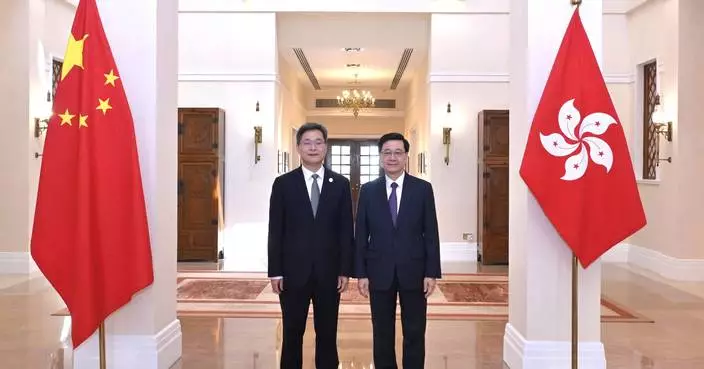
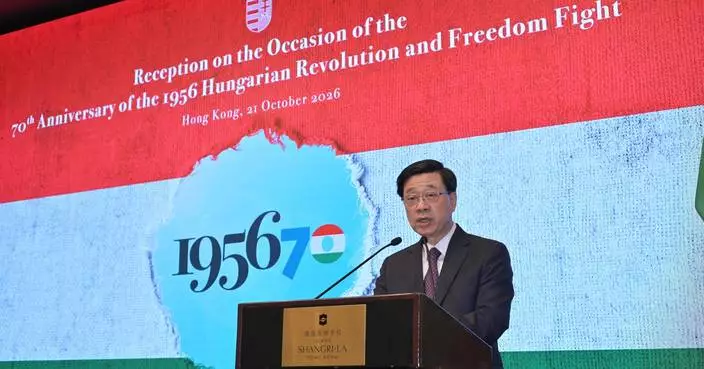
The Secretary for Financial Services and the Treasury, Mr Christopher Hui, started his visit to Vientiane, Laos, today (July 20) and signed a Memorandum of Understanding with the Ministry of Finance of Laos on fostering co-operation in gold market and financial services between the two places. Photo shows Mr Hui speaking at the signing ceremony. Source: HKSAR Government Press Releases
Speech by FS at welcome dinner of Asia-Pacific Financial Forum 2026 (with photos/video)
Following is the speech by the Financial Secretary, Mr Paul Chan, at the welcome dinner of Asia-Pacific Financial Forum (APFF) 2026 today (October 21):
Mr Furusawa (Chair of APEC Business Advisory Council (ABAC) Finance and Economics Task Force, Mr Mitsuhiro Furusawa), Ms Marjorie Yang (Hong Kong, China's representative to ABAC), Madam Tian (Division Director of the Ministry of Finance, Ms Tian Xueyun), distinguished guests, ladies and gentlemen,
Good evening, and welcome to Hong Kong. It is a pleasure to join you at the welcome dinner of the 2026 APFF Conference. My sincere thanks to ABAC and the APFF for organising the Conference and bringing us together this evening.
The APEC Finance Ministers' Meeting has brought finance ministers, senior officials and representatives of international organisations to Hong Kong. We are honoured to host it for the first time, and grateful to the Central Government for its trust and support. To our friends from fellow economies, thank you for your participation and friendship.
Over the past two days, we have discussed the shared challenges and priorities facing the Asia-Pacific. One common goal was clear: to strengthen social and economic development through better fiscal and financial policies and closer regional co-operation.
The task now is to turn discussion into action.
The global economy has shown resilience, but that resilience is uneven. AI is driving growth, yet concentrated exposure to AI-related assets, particularly where leverage is involved, could amplify market corrections. However, holding back investments is not an option. We cannot secure a better future by standing still.
Our task is to manage risk without closing the door to opportunity, and to direct capital towards productive investment with sound commercial prospects. That is what an international financial centre should do, and what Hong Kong is determined to deliver.
Building the confidence to invest
My view is simple: globally there is no shortage of capital. We need the trust that gives investors confidence to commit. That trust cannot rest only on promises, it needs sound institutions and clear rules.
Hong Kong is putting these foundations in place. Take financial innovation for example. We embrace its potential while establishing clear rules and safeguards.
Our licensing regime for stablecoin issuers took effect in August last year. We have also issued tokenised government bonds and are advancing trials involving wholesale central bank digital currency. Payment links with the Chinese Mainland and Thailand are already serving everyday needs.
Beyond sound institutional frameworks, we also need capital at scale. This is where Hong Kong is strong at. Last year, Hong Kong tops the global IPO league table. In the first nine months this year, the IPO market in Hong Kong raised some US$50 billion, more than double the amount in the same period last year. Companies across the AI value chain account for about two-thirds of those proceeds.
Our private equity and venture capital sector manages around US$250 billion in assets, second only to the Chinese Mainland in Asia.
The patient capital ecosystem is also expanding fast. The Hong Kong Investment Corporation has backed more than 250 companies. Every Hong Kong dollar invested has attracted over eight Hong Kong dollars in international long-term market capital.
Making investment count
Ladies and gentlemen, sound institutions and investment help businesses grow. But innovation also needs opportunities for practical application, so that ideas can become products and services that people can use. Our collaboration with the cities in the Greater Bay Area helps make that happen.
In the Hetao Shenzhen-Hong Kong Science and Technology Innovation Co-operation Zone, we are working to facilitate cross-boundary flows of people, goods, capital and data. This helps connect our strengths in frontier research, international finance and professional services with the manufacturing capabilities and comprehensive supply chains of our sister cities.
Together, we can help research move faster from the laboratory to production, and from ideas to markets. For businesses across the Asia-Pacific, Hong Kong is a gateway into the Greater Bay Area, and from the Greater Bay Area to the world.
The Government has a clear responsibility here: provide direction, remove unnecessary obstacles and create conditions in which businesses can invest. Businesses then bring the enterprise, expertise and willingness to take risks.
The First Five-Year Plan of Hong Kong (First Five-Year Plan for Economic and Social Development of the Hong Kong Special Administrative Region (2026-2030)) provides greater clarity about our long-term development. It gives businesses a stronger basis for planning, while preserving the role of the market in allocating resources.
Delivering benefits people can see
Ladies and gentlemen, for all the investment and growth, they need to serve a wider purpose: that is, more people must share in the gains from growth.
Spending that strengthens health, skills and economic participation is not simply welfare expenditure. It is an investment in human capital and future prosperity.
Infrastructure investment can also deliver both public benefits and commercial returns. We can make projects viable and connect them with suitable sources of capital.
For example, the securitisation of infrastructure loans by the Hong Kong Mortgage Corporation broaden the investor base and help recycle capital from existing projects into new developments. There is scope to work with multilateral development banks, drawing on their expertise in project assessment, financing structures, revenue models and risk management.
Meanwhile, fintech can also widen access to finance and create opportunities for more people. It can help small businesses secure funding, bring affordable financial services to underserved communities, and make cross-border payments faster and cheaper.
That is where this Conference can make a difference. The discussions tomorrow on digital finance, connectivity, financing innovation and insurance protection should help us move from common interests to practical collaboration.
Different economies will need different approaches. By sharing experience and adapting successful models, we can expand the range of solutions available across the region.
Tonight, we can begin with the people around us. Emails and video calls can keep us connected, but it is face-to-face conversations over dinner and during a conference that really deepen understanding and build lasting relationships.
I hope you will leave with fresh ideas, new friendships and partners you can call when it is time to act.
My thanks once again to ABAC and the APFF. I wish the Conference every success, andlook forward to stronger partnerships across our region. To everyone visiting Hong Kong, I wish you a rewarding and enjoyable stay. Thank you very much.

Source: AI-found images
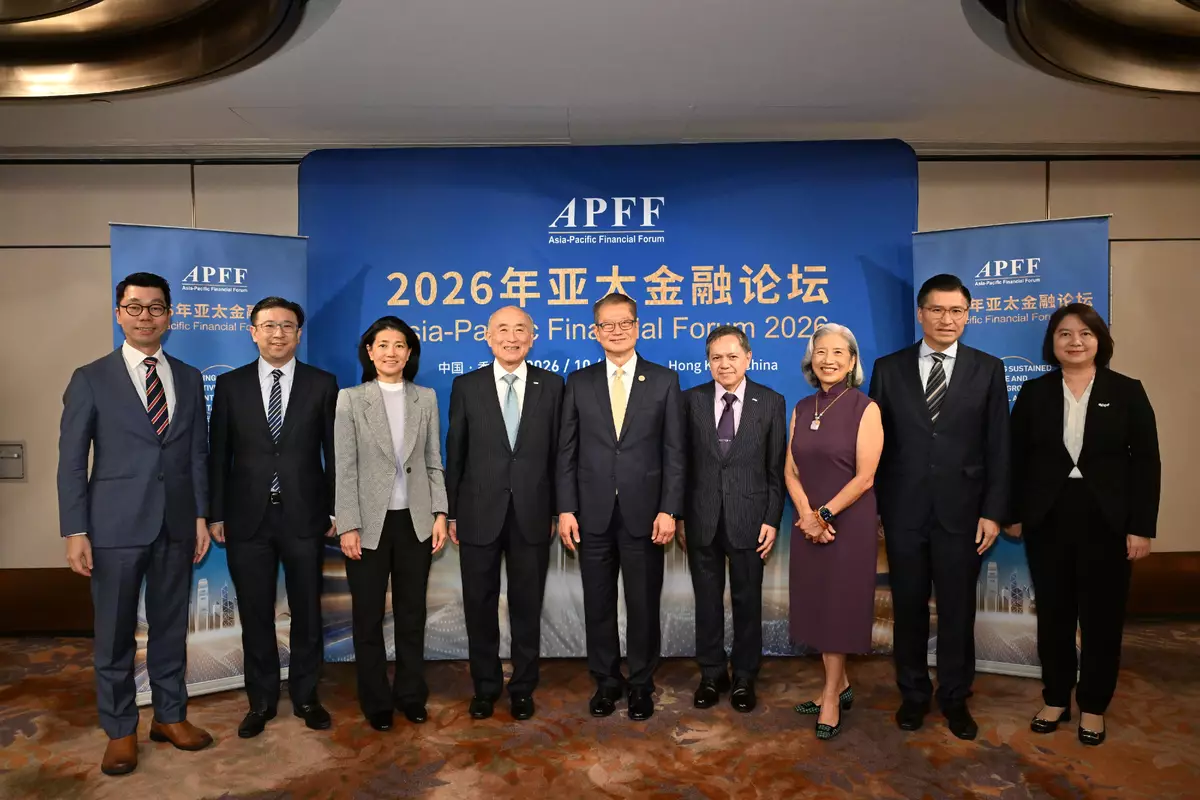
Speech by FS at welcome dinner of Asia-Pacific Financial Forum 2026 (with photos/video) Source: HKSAR Government Press Releases
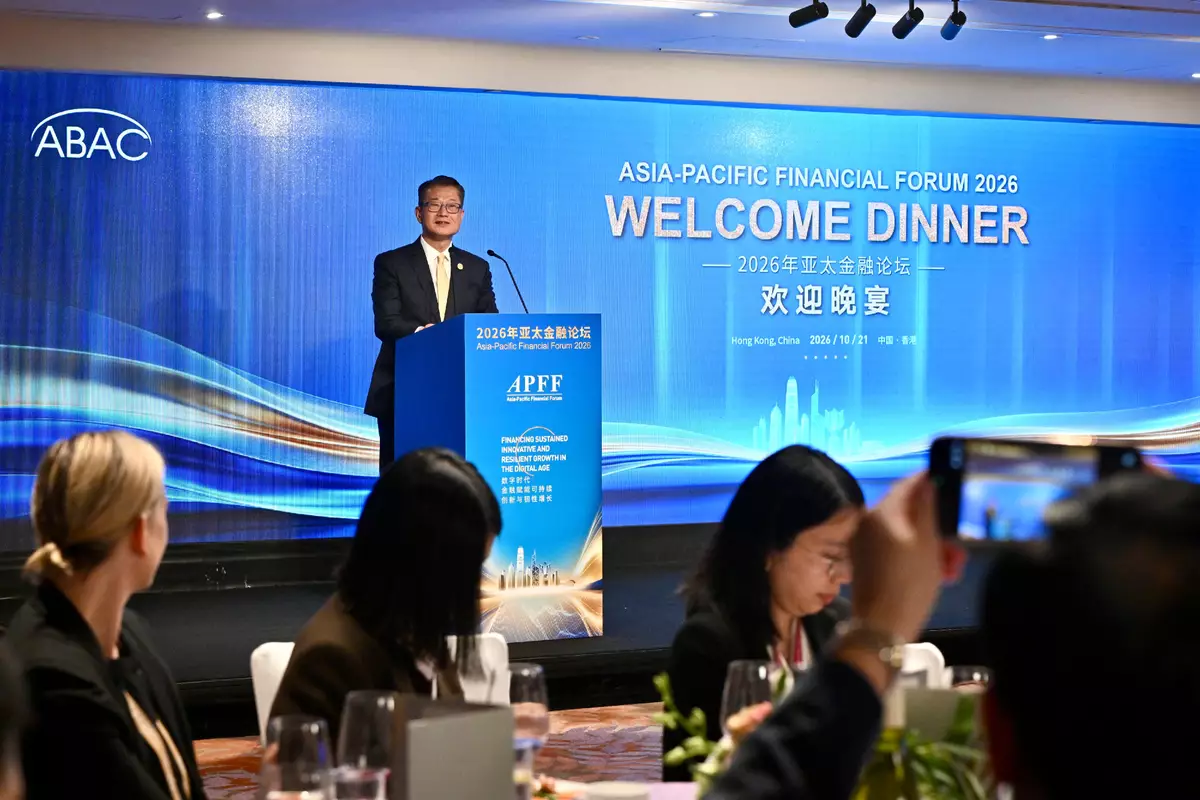
Speech by FS at welcome dinner of Asia-Pacific Financial Forum 2026 (with photos/video) Source: HKSAR Government Press Releases
Source: AI-found images