TAIPEI, July 20, 2026 /PRNewswire/ -- Jazz Hipster today unveiled its next-generation wireless audio platform strategy during HIGH END Vienna 2026, highlighting a broader move from standalone product development toward scalable audio ecosystem architecture for the streaming era.
Jazz Hipster Product Manager Ben Hsu said the new direction reflects how the premium audio market is evolving beyond traditional product categories. Streaming speakers, active speakers, soundbars, desktop audio systems, and multi-room products are increasingly converging into connected audio ecosystems where wireless transmission, streaming integration, low-latency synchronization, and software architecture are becoming as critical as acoustic performance itself.
Rather than treating wireless connectivity as an added feature, Hsu said Jazz Hipster is positioning wireless audio transmission as part of the core system architecture.
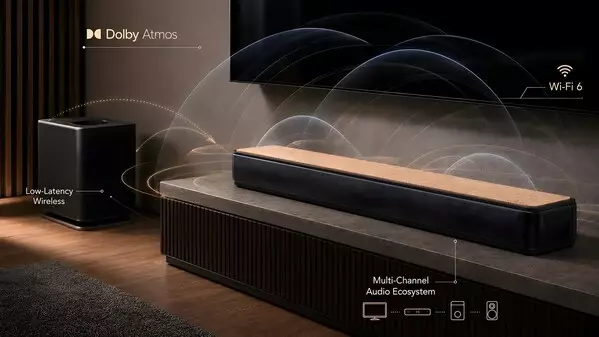
According to Hsu, Jazz Hipster's latest development framework combines Dolby Atmos system design, WiFi 6 low-latency wireless audio, Hi-Res wireless transmission, DSP processing, streaming service integration, and scalable speaker expansion into a unified platform architecture designed for next-generation home entertainment and premium audio products.
Hsu said the new platform strategy is intended to support a wide range of future product categories, including wireless bookshelf speakers, Dolby Atmos systems, streaming amplifiers, wireless audio hubs, active speakers, and installation audio products.
A Shift Toward Connected Audio Ecosystems
According to Hsu, the audio industry is entering a new phase where consumers increasingly expect audio systems to work seamlessly across music streaming, TV audio, desktop entertainment, gaming, and multi-room listening environments.
As a result, audio brands are facing a growing challenge: how to develop scalable product families that can share the same core architecture while adapting to different use cases, price segments, and industrial designs.
Hsu believes this shift is fundamentally changing how premium audio systems are developed.
Instead of building isolated hardware products, future development will increasingly depend on reusable system architectures capable of supporting streaming services, wireless synchronization, DSP-based acoustic tuning, HDMI integration, and high-resolution playback within a unified ecosystem.
Hi-Res Wireless Audio as a Core Technology Direction
Hsu said a central part of Jazz Hipster's platform strategy is high-resolution, low-latency wireless audio over WiFi.
The architecture supports wireless audio transmission ranging from 48kHz / 24bit to 192kHz / 24bit, depending on system configuration and application requirements. The wireless host-and-receiver structure is designed to support both stereo streaming products and multi-channel immersive audio systems.
Hsu sees Hi-Res wireless transmission as a key enabling technology for the next generation of premium audio products, particularly as wireless speakers and active audio systems continue moving into higher-performance market segments traditionally dominated by wired systems.
Expanding Dolby Atmos Beyond Traditional Soundbar Formats
Hsu also discussed broader development plans around wireless Dolby Atmos ecosystem integration.
He said Dolby Atmos applications are moving beyond fixed soundbar configurations toward more flexible wireless speaker architectures, where soundbars, satellite speakers, subwoofers, streaming speakers, and audio hubs can be developed from a shared platform logic.
By combining scalable multi-channel system architecture with streaming integration and wireless synchronization technologies, brands can develop multiple product tiers and ecosystem configurations while maintaining consistency in acoustic tuning, latency control, and user experience.
Streaming Audio and Home Entertainment Are Converging
Hsu further noted that streaming audio and home entertainment are becoming increasingly interconnected.
Modern consumers no longer view music streaming, TV audio, gaming audio, and desktop entertainment as separate product categories. Instead, users increasingly expect a single audio system to support multiple entertainment scenarios while maintaining premium sound quality and seamless connectivity.
To address this shift, Jazz Hipster's platform architecture integrates technologies including HDMI eARC, AirPlay, Chromecast, Spotify Connect, Bluetooth 5.4, DSP processing, and wireless multi-room synchronization into a unified development framework.
Hsu said this approach will allow global audio brands to accelerate product development while simplifying system integration across future product families.
From Product ODM to Platform-Based Audio Development
Hsu said the new strategy also reflects a broader evolution in Jazz Hipster's role as an ODM partner.
Rather than focusing solely on individual hardware projects, Hsu said Jazz Hipster is now investing in reusable audio system architectures that can scale across multiple product categories and market segments.
Future roadmap directions include Dolby Atmos systems, wireless speakers, streaming amplifiers, wireless audio hubs, active speakers, installation audio products, and PoE-based audio solutions.
According to Hsu, future competition in premium audio will depend less on standalone hardware specifications alone and more on ecosystem integration, wireless synchronization, streaming compatibility, acoustic optimization, and scalable platform development.
About Jazz Hipster
Jazz Hipster is a professional premium audio ODM partner with more than 40 years of experience in audio R&D and manufacturing. The company specializes in acoustic engineering, DSP integration, streaming audio, wireless audio platforms, Dolby Atmos systems, active speaker development, and precision manufacturing for global audio brands.
Original article: https://jazzhipster.com/next-gen-dolby-atmos-wireless-audio-ecosystem/
** This press release is distributed by PR Newswire through automated distribution system, for which the client assumes full responsibility. **
Jazz Hipster Unveils Next-Generation Wireless Audio Platform Strategy for the Streaming Era

Jazz Hipster Unveils Next-Generation Wireless Audio Platform Strategy for the Streaming Era