Any extradition of Andrew and Tristan Tate from the U.S. to the United Kingdom would ultimately rest with the State Department, but only after a judge determines whether the request complies with the law and a treaty between the countries.
The U.S. has agreed since 2020 to send more than 20 people wanted in the U.K. on various criminal charges, according to the U.K. Parliament. With possible appeals, the process could last a few years — if the accused wants to fight it.
“The government holds all the cards in an extradition proceeding because the rules of evidence allow the government to submit any evidence they wish,” said Jacques Semmelman, a New York-based lawyer and expert in the procedure.
“It is very hard for the defense to defeat an extradition,” he said.
The U.S. has a treaty that allows it to honor a U.K. extradition request if the alleged crimes would also be considered illegal in the U.S. The Tate brothers are accused of rape, assault, trafficking and other offenses in southeastern England, from 2010 to 2017.
“They’ve never done nothing wrong. They shouldn’t be extradited for crimes they did not commit,” defense attorney Joseph McBride said.
A federal judge will review arrest warrants, investigative documents and other information submitted by the U.S. government to show there was a “reasonable basis” to file charges against them in the U.K., according to the treaty.
The hearing would not be similar to a trial, said Semmelman of the Katten Muchin Rosenman law firm.
“A partial victory might mean a reduction in the charges to be extradited upon,” he said. “An across-the-board victory — no extradition — is very difficult to achieve.”
If a judge finds that the U.K. government has met the threshold, and any appeals fail, the final decision to extradite would rest with U.S. Secretary of State Marco Rubio, who has wide discretion, or his successor.
“In most cases the secretary of state will sign the warrant of extradition,” Semmelman said.
Some extradition requests have failed in the U.S. In 2015, a judge said there was insufficient evidence to show that an art dealer knew that an 18th-century painting taken from a Polish museum by the Nazis during World War II was stolen property when he inherited it.
In 2020, during President Donald Trump's first administration, the government declined to turn over an American woman who fatally struck a young man while driving in eastern England. Anne Sacoolas, who was the wife of a U.S. intelligence officer, subsequently returned to the U.S. She later admitted responsibility in a U.K. court by video.
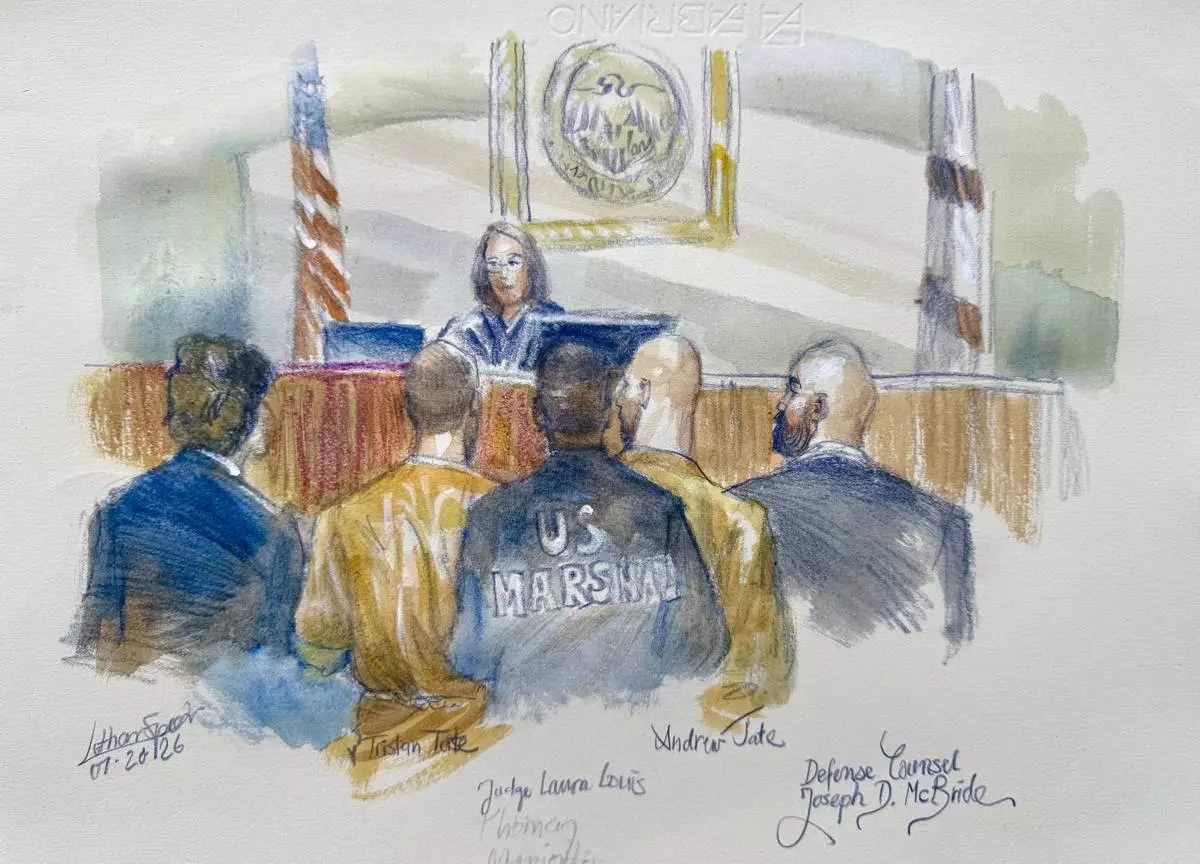
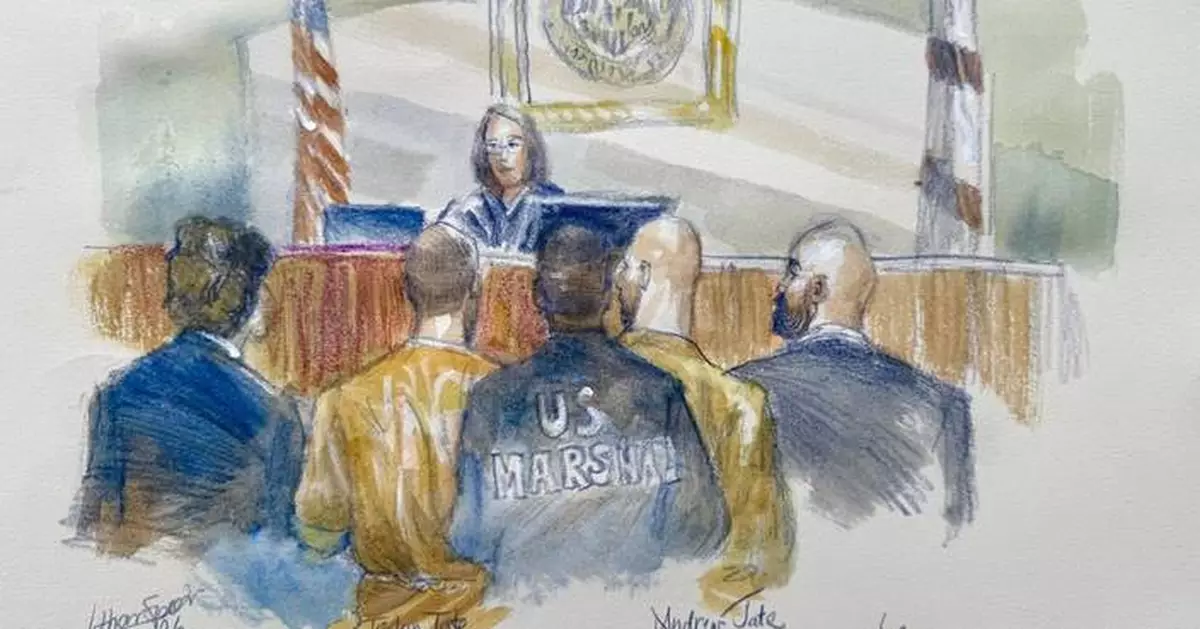
In this courtroom sketch Andrew and Tristan Tate appear with their attorneys before judge Lauren Louis in Miami federal court, Monday, July 20, 2026, in Miami. (Lothar Speer via AP)
BEIRUT (AP) — Lebanon's president will meet with U.S. President Donald Trump on Tuesday to wrap up a four-day visit to Washington, in a bid to bring about long-term calm in the war-torn country after months of war between Israel and the Iran-backed Hezbollah militant group.
Joseph Aoun's landmark meeting with Trump comes as Lebanon and Israel continue to hold rare direct talks mediated by Washington. Lebanon hopes they will result in Israeli troops withdrawing from large swaths of southern Lebanon that they currently occupy, and for the Lebanese military to receive support to assert full control in areas where Hezbollah militants had held sway.
Lebanon and Israel announced a “framework agreement” on June 26, setting a plan for Israeli forces to withdraw from southern Lebanon as well as the disarmament of Hezbollah, which for decades had a strong presence in the area. It also lays out steps toward an eventual peace agreement between both countries, which have never held formal diplomatic ties and have been nominally in a state of war for nearly 80 years after Israel’s establishment.
The U.S. State Department announced Monday that operations in three villages deemed part of a “pilot zone” had begun, without giving details on what that entailed. Two of the three villages, Froun and Srifa, are not under Israeli military control and the Lebanese army is present there, while Israeli forces are in part of Zawtar al-Gharbieh.
The Lebanese army in a statement said it was preparing for Israel to withdraw from Zawtar al-Gharbieh and that it had begun deploying troops to the area Tuesday. The Israeli military said it “will adjust its force posture in one of the pilot areas in order to enable the Lebanese Armed Forces to carry out their mission,” without specifying the location.
An Israeli military official, speaking on condition of anonymity in accordance with military guidelines said Tuesday that the withdrawal had not yet begun.
Abed Ezzeldine, Mayor of Zawtar al-Gharbieh said that they are waiting for the Lebanese military to tell him whether its safe for residents to check on their homes after they fully deploy and patrol the area. He is concerned about the safety of his village given that the Israeli military is still present in another village next door, while Israeli strikes continue nearby.
“The villages are intertwined, so we don’t feel safe because the Israelis are present there, they’re on our borders and are not very far from us,” Ezzeldine told The Associated Press, who said Zawtar al-Gharbieh is uninhabitable.
“Once the army gives us permission to enter Zawtar al-Gharbieh, we as civilians will go in, but only to check it out and see how things are and then we will leave,” he said. "We can’t stay because the infrastructure is completely damaged and houses have been leveled. They (the Israelis) have bulldozed the roads.”
Aoun met with Secretary of State Marco Rubio on Sunday, who said Washington will continue to endorse the Lebanese agreement and support the agreement's full implementation. Rubio described the meeting as “very positive” and warned that Lebanon will “never be fully at peace” as long as the Hezbollah issue is not resolved.
“How do you replace Hezbollah? You defeat and replace them with a government that is strong enough to be the sole force of arms in the country,” Rubio said after the meeting. Skeptics in Lebanon fear that a military confrontation with Hezbollah could lead to a civil war, as government officials have also urged for investment into the country's battered infrastructure to empower the weakened state, which Rubio echoed.
“This is not just about military stuff," he added. "This is about how can we attract more U.S. and international investment into Lebanon.”
The Lebanese military last week increased its presence in some of the areas expected to be included in the pilot zone, including the three villages, with troops patrolling and setting up checkpoints. Though recent talks in Rome have signaled that the agreement’s implementation will begin soon, Israeli troops have not withdrawn from the areas under control.
Israeli officials, meanwhile, have said they plan to keep forces long term in a “security zone” in southern Lebanon.
Hezbollah has dismissed the direct talks brokered by the United States and instead backed Washington’s talks with their key ally and patron Iran to end their war, which also includes ending the war in Lebanon as a condition to bring back calm.
Lebanon’s government came to power on a reformist platform in early 2025, vowing to disarm all non-state groups including Hezbollah. It blames Hezbollah for dragging the country into another war with Israel in March when the militant group fired several rockets toward northern Israel after the U.S. and Israel attacked Iran.
Beirut's leadership, however, has condemned Israel’s subsequent ground invasion and massive aerial campaign in the country, which killed over 4,000 people and displaced 1.2 million others. While grappling with stark political opposition from Hezbollah and allies within the deeply divided country, Lebanon's leadership insists that Israeli withdrawal and international financial support for Lebanon’s cash-strapped army is crucial for a sustainable security solution.
Associated Press writer Giovanna Dell'Orto in Jerusalem contributed.
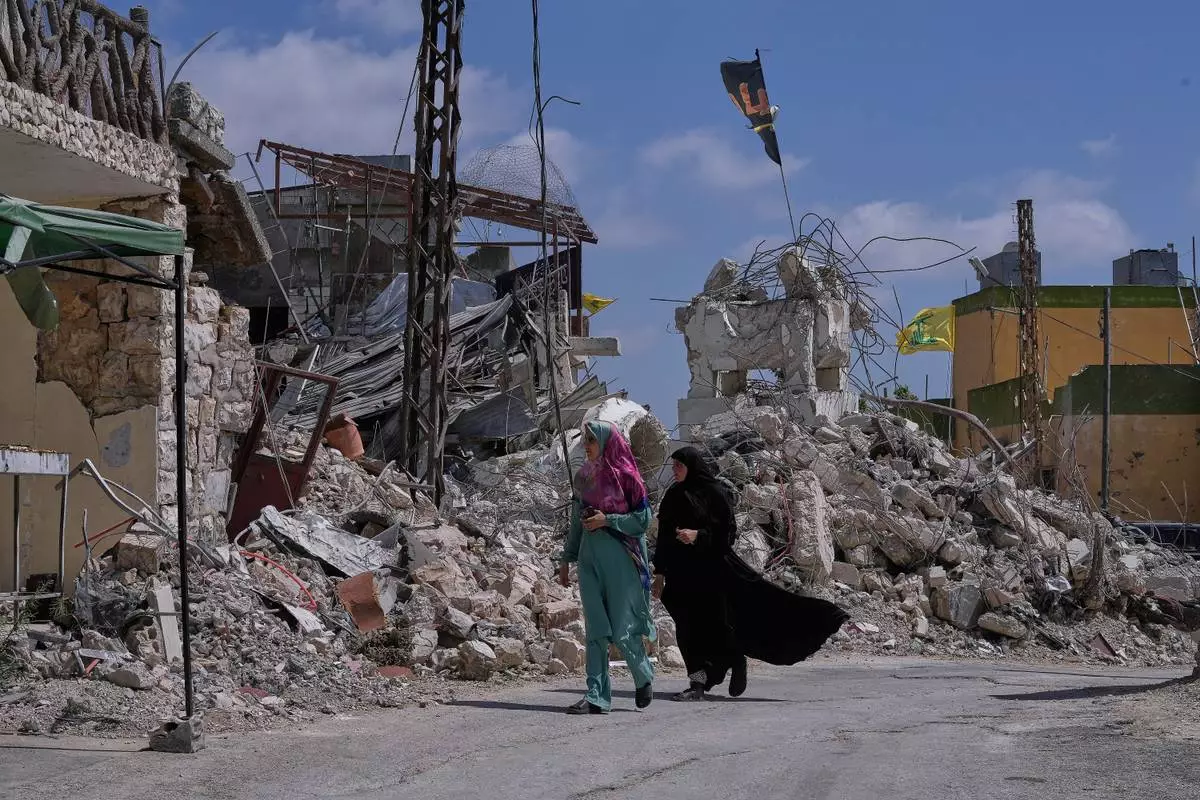
Lebanese women pass by houses that were destroyed in Israeli strikes during the war with Hezbollah in Froun village, southern Lebanon, Thursday, July 16, 2026. (AP Photo/Mohammed Zaatari)
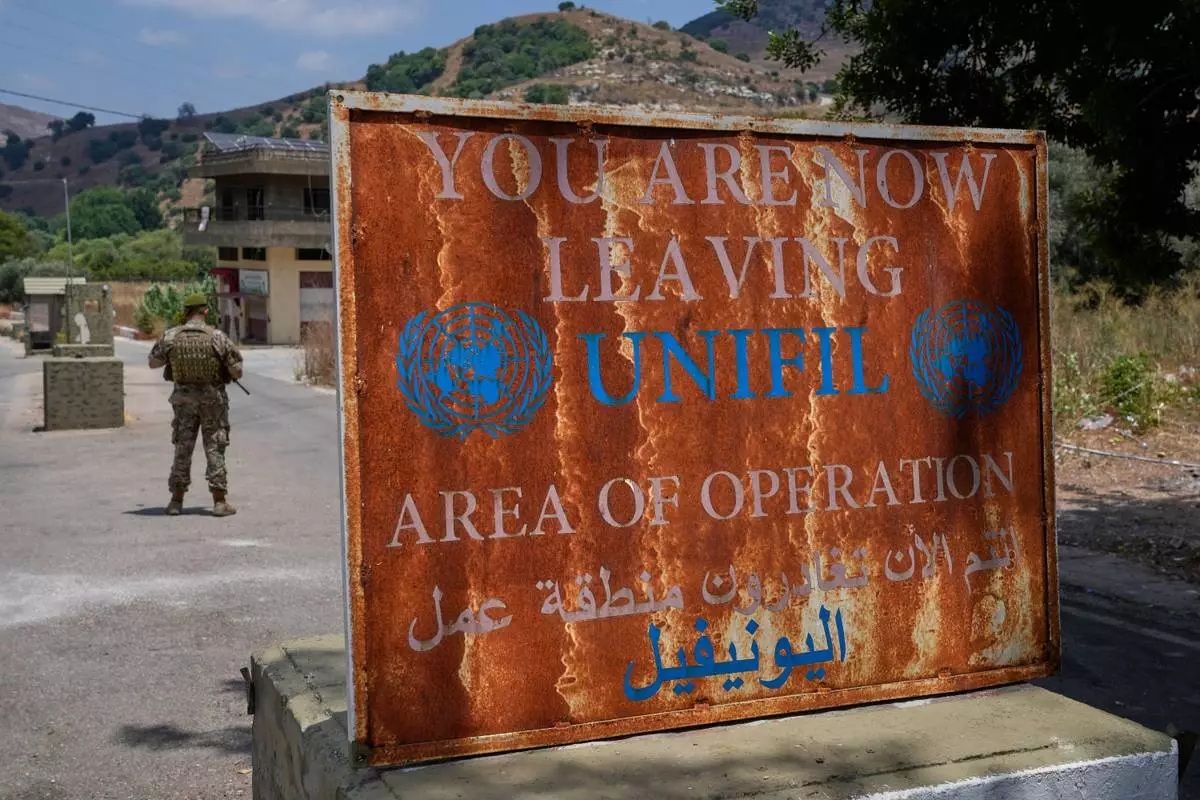
A Lebanese army soldier stands at a checkpoint in Froun village, southern Lebanon, Thursday, July 16, 2026. (AP Photo/Mohammed Zaatari)
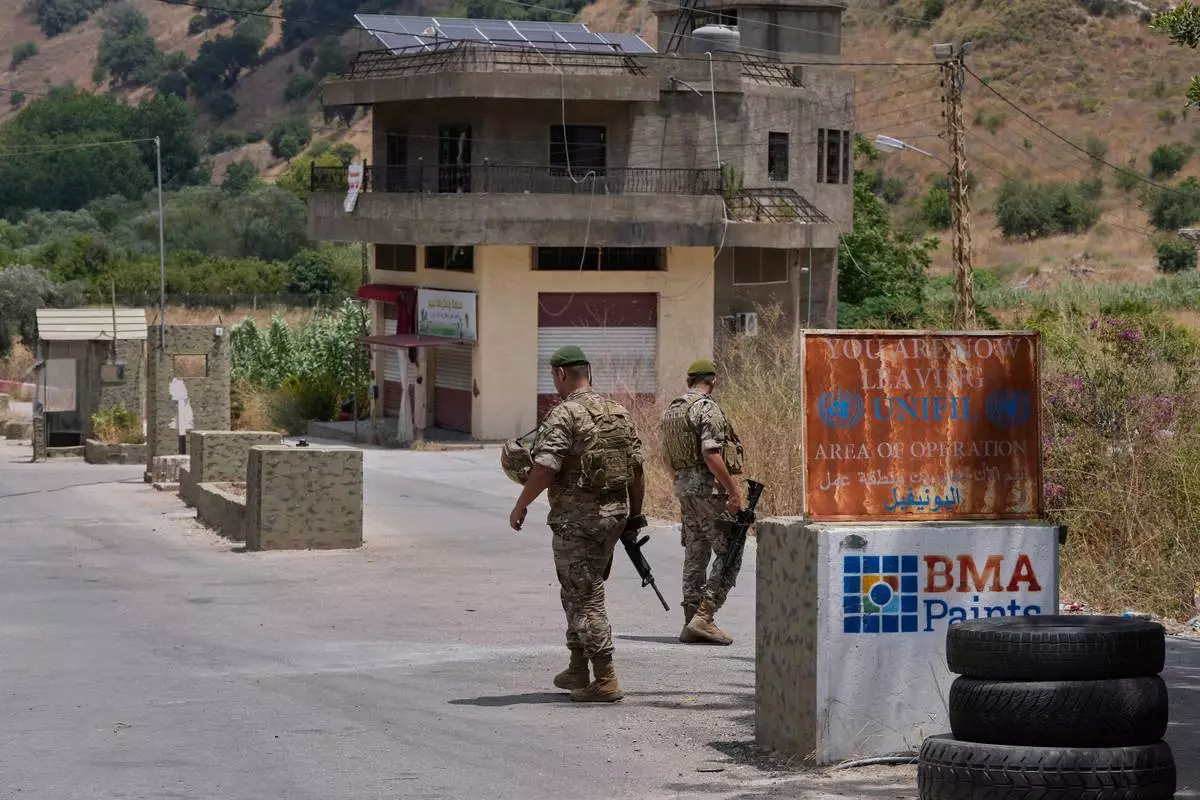
Lebanese army soldiers stand at a checkpoint in Froun village, southern Lebanon, Thursday, July 16, 2026. (AP Photo/Mohammed Zaatari)