LANZHOU, China, July 21, 2026 /PRNewswire/ -- A report by China Report ASEAN:
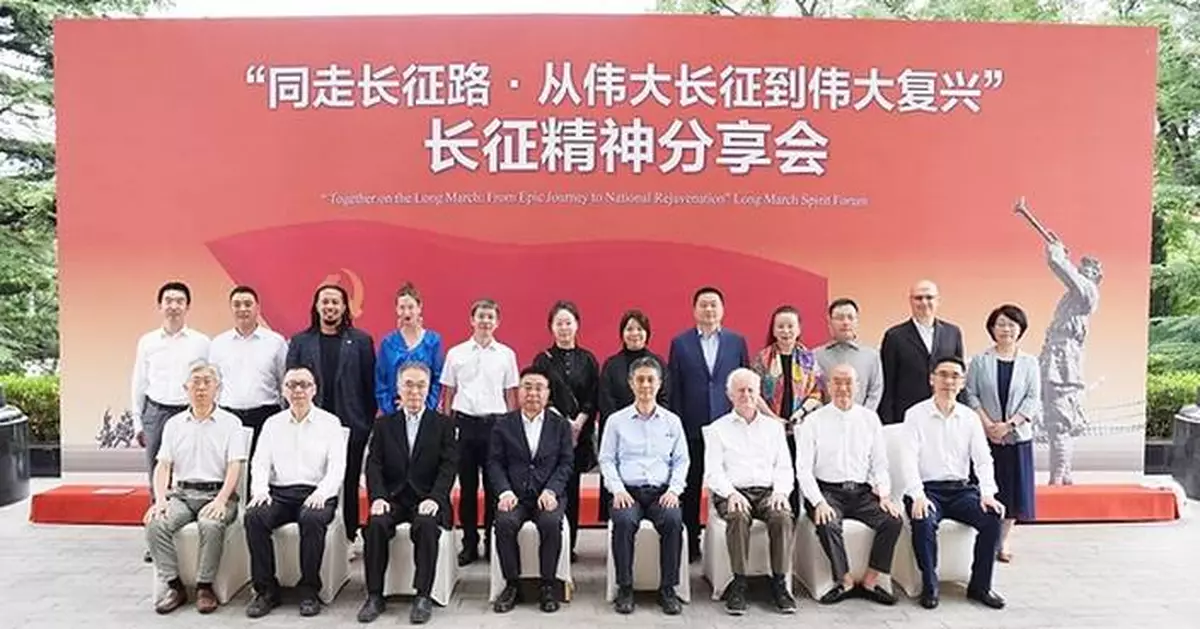
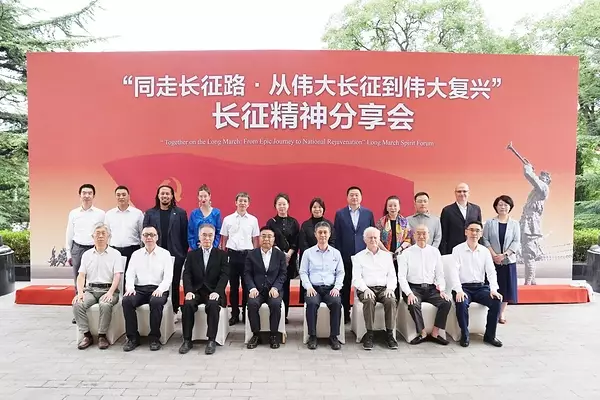
The "Together on the Long March: From Epic Journey to National Rejuvenation" Long March Spirit Forum was held in Lanzhou, Gansu Province, on July 18. Jointly organized by the China International Communications Group (CICG) Center for Asia-Pacific and the Gansu International Communication Center, the event marked the successful conclusion of the Gansu leg of the "Together on the Long March: 90th Anniversary of an Epic Journey" CICG International Communication Project. Gao Anming, editor-in-chief of CICG, attended and delivered a speech at the forum. The event brought together more than 50 Chinese and foreign experts and journalists.
In his speech, Gao noted that the important speech delivered by General Secretary Xi Jinping at the rally celebrating the 105th anniversary of the founding of the Communist Party of China (CPC) provides fundamental guidance for drawing strength from the Party's century-long history of struggle, understanding its original aspiration and founding mission through the Long March spirit, and telling the stories of the CPC and Chinese modernization in the new era.
Gansu served as a vital region along the Red Army's Long March. Huining and Jiangtaibao (now part of Ningxia Hui Autonomous Region) were the historic sites where the First, Second, and Fourth Front Armies of the Red Army successfully joined forces, marking a monumental milestone in China's revolutionary history. Gao noted that by retracing this historic route and experiencing China's development achievements over the past few days, the Chinese and foreign guests gained a more profound, tangible understanding of both the historical depth and contemporary relevance of the Long March spirit.
"Retracing the Long March allows us to understand from history why the CPC succeeds," Gao emphasized. "Sharing the Long March story means presenting an authentic, multidimensional, and panoramic picture of the Chinese spirit, and carrying forward the Long March spirit means gathering the strength to strive in unity toward a shared future in the new era."
As a comprehensive international communication organization, CICG will continue to uphold fundamental principles while pursuing innovation to deepen global exchanges, Gao said. He expressed hope that the international guests would use the trip as an opportunity to observe China with their own eyes, share China's stories in their own words, and connect China with the world in their own ways. Doing so will allow the Long March spirit to shine with renewed vitality and help China's narrative gain greater understanding, resonance, and recognition worldwide.
Beginning July 13, the international media delegation for the Gansu leg of the "Together on the Long March" project toured key historical locations, including Lanzhou, Minxian in Dingxi, Hadapu in Longnan, Lazikou in Gannan, and Huining in Baiyin. During the forum, nine Chinese and foreign guests drew upon their personal experiences and observations from the journey to share their insights into the history and enduring spirit of the Long March.
David Andrew Bromwich, a recipient of the Chinese Government Friendship Award and former president of the New Zealand China Friendship Society, said that the Long March succeeded not only because of an unwavering faith that defied hardships and embraced sacrifice, but also because of the CPC's ability to adapt its strategy to changing realities and seize the initiative in complex situations. Clear goals, flexible tactics, and the support of the people were critical to the Red Army's victory.
Kimura Tomoyoshi, a veteran Japanese journalist and former NHK anchor, said that the Long March embodied the essence of the Chinese revolution and marked a crucial turning point in the CPC's history. By relying on and fighting for the people, adhering to a fact-based approach, and promoting the establishment of the Chinese national united front against Japanese aggression, the Red Army proved that the victory of the Chinese revolution was deeply rooted in Chinese society and the power of its people.
Liang Xiaoyuan, executive vice president and secretary-general of the Fourth Field Army Soldiers Descendants Association, shared a personal story of his father, founding Lieutenant General Liang Xingchu. During the treacherous crossing of the marshlands, his father managed to recover his strength and survive thanks to a few highland barley cakes left behind by his comrade Zeng Guohua. Liang noted that choosing to give a comrade the hope of survival amid extreme scarcity epitomizes the profound solidarity, mutual aid, and big-picture mindset of the Red Army soldiers.
The question of how the Long March spirit transcends time to persist in contemporary China was a major point of discussion among the guests.
William N. Brown, a Chinese Government Friendship Award recipient and professor at Xiamen University's School of Management, remarked via video that "the Long March represents the ultimate form of striving—choosing to press forward even when hope is almost completely out of sight." From poverty alleviation to rural revitalization, and from grassroots officials to entrepreneurs returning home to start businesses, the Long March spirit lives on in the steady efforts of countless ordinary people who refuse to give up and keep moving forward.
Rafael Henrique Zerbetto, a Brazilian Esperanto expert at the CICG Center for Asia-Pacific and another recipient of the Chinese Government Friendship Award, noted that Gansu is transforming the Long March spirit of hard work and unity into a driving force for tackling challenges and promoting high-quality development. He cited the preservation of revolutionary sites, the boom in "red tourism," and local specialty industries such as Minxian danggui (angelica) which have boosted local incomes.
Zhavier Harris, marketing and communications manager at Springfield Urban League in the United States, who first travelled the Long March route a decade ago, said that this return trip deepened his understanding of the Red Army's spirit of sacrifice and unity and gave him a firsthand sense of Gansu's advancements in historic site protection, infrastructure, and public welfare. The resilience, unity, and hope embodied in the Long March are spiritual assets that transcend national borders.
On the topic of communicating the Long March story across linguistic and cultural barriers to reach global audiences and future generations, attendees offered diverse insights.
Zeng Jun, associate research librarian at the Institute of Party History and Literature of the CPC Central Committee, said that while the primary participants of the Long March were Chinese, some foreign figures actively participated. Thanks to the efforts of many international friends, the Long March has become a brilliant calling card for China's public diplomacy and national image.
Dutch Sinologist Elsbeth van Paridon, an expert at the CICG Center for the Americas, suggested that while international audiences are deeply interested in Chinese history and culture, the key is to find ways of expression that can resonate with them. She recommended combining revolutionary culture with interactive museum experiences and technological innovation to show, through narrative-driven storytelling, how the Long March spirit continues to guide the development of modern China.
Zhang Jiusheng, principal of Wenmiao Street Primary School in Tongwei County, Gansu Province, said his school has integrated the Long March spirit into campus life using a red culture corridor, classic readings, specialized curricula, and art forms such as calligraphy, painting, and revolutionary songs. By training student docents and organizing immersive educational tours, the school guides pupils from basic knowledge to deep comprehension, inspiring them to become a new generation defined by faith, responsibility, and fortitude.
Yang Jianping, president of the CICG Center for Asia-Pacific, chaired the forum and delivered the concluding remarks. He said that the nine Chinese and foreign speakers offered distinct and multifaceted perspectives as researchers, witnesses, communicators, and inheritors of this legacy. By revisiting history, illuminating the Long March spirit, and sharing practices in red culture inheritance and international communication, they provided highly valuable insights. Yang expressed hope that the participating experts and journalists would share their firsthand experiences with a wider global audience, enabling more people to discover China through the lens of the Long March, understand its modern development through the transformation of Gansu, and draw strength from the Long March spirit to overcome challenges and march forward together.
** This press release is distributed by PR Newswire through automated distribution system, for which the client assumes full responsibility. **
'Together on the Long March: From Epic Journey to National Rejuvenation' Long March Spirit Forum Held in Lanzhou