SUNNYVALE, Calif.--(BUSINESS WIRE)--Jul 21, 2026--
Jumio, the leading provider of AI-powered identity intelligence, today announced a strong second quarter for 2026. This period of rapid momentum was defined by platform innovation, executive leadership additions, and expanded customer adoption across financial services, gaming, and more. Growth in Q2 was fueled by the company’s vision to replace legacy identity verification with continuous, contextual and connected identity intelligence.
This press release features multimedia. View the full release here: https://www.businesswire.com/news/home/20260721162029/en/
Throughout Q2, Jumio expanded its platform to move beyond the limitations of static onboarding, ensuring that security is foundational, not an afterthought. Key innovation developments include:
“The innovations we brought to market in Q2 are already having a direct impact on our customers’ revenue and their user experience, which directly benefits the bottom line and reduces fraud,” said Jumio CEO Mark Lorion. “Legacy identity vendors provide only a single checkpoint, while Jumio’s identity intelligence ecosystem scales with our customers’ needs. It’s so much more than onboarding — we are providing the continuous, AI-powered protection necessary to navigate an era where digital trust is a competitive necessity.”
Other notable Q2 achievements include:
To learn more about Jumio and its award-winning, AI-powered identity intelligence solutions, visit jumio.com.
About Jumio
Jumio helps organizations to know and trust their customers online. From account opening to ongoing monitoring, the Jumio Platform provides AI-powered identity intelligence anchored in biometric authentication, automation and data-driven insights to accurately establish, maintain and reassert trust.
Leveraging powerful automated technology including biometric screening, AI/machine learning, liveness detection and no-code orchestration with hundreds of data sources, Jumio helps to fight fraud and financial crime, onboard customers faster and meet regulatory compliance including KYC and AML. Jumio has processed more than 1 billion transactions spanning over 200 countries and territories from real-time web and mobile transactions.
Based in Sunnyvale, California, Jumio operates globally with offices and representation in North America, Latin America, Europe, Asia Pacific, and the Middle East, and has been the recipient of numerous awards for innovation. Jumio is backed by Centana Growth Partners, Great Hill Partners and Millennium Technology Value Partners.
For more information, please visit www.jumio.com.

Jumio Accelerates the Shift to Identity Intelligence with Strong Q2 2026 Growth
KYIV, Ukraine (AP) — One is a tech-savvy drone innovator with no military experience who became Ukraine’s youngest defense minister six months ago and was credited with contributing to successes in defending against Russia's 4-year-old invasion.
The other is a seasoned, Soviet-trained general more at home with traditional top-down command culture who led Ukraine’s armed forces.
When their personalities and policies clashed, President Volodymyr Zelenskyy decided one of them had to go as part of a wider government reshuffle. He dismissed the popular young upstart, sparking protests across the country.
A look at the contrasting careers of Defense Minister Mykhailo Fedorov and commander of Ukraine’s armed forces, Gen. Oleksandr Syrskyi.
The 35-year-old Fedorov was credited with modernizing Ukraine’s drone program and changed military procurement rules in a crackdown on corruption. He argued that the military establishment was resisting changes demanded by the evolving war with Russia.
The former tech entrepreneur drove forward Ukraine’s innovative drone technology that has recently reshaped the battlefield and has earned the interest of other countries, including the United States, as well as those in Europe and the Middle East.
“We transformed Ukraine into a global tech leader and a defense powerhouse,” he said on social media after he lost his job last week in Zelenskyy's government shake-up.
Fedorov also took credit for restricting Russian military access to Elon Musk's Starlink satellite internet services.
Before becoming defense minister in January, Fedorov headed Ukraine’s digital transformation policies and introduced successful e-government platforms.
Fedorov got that job after running the digital operations of Zelenskyy’s presidential election campaign in 2019. Before that, he ran a digital marketing company.
After his dismissal, Fedorov publicly accused Syrskyi of blocking military reforms and insisting on a traditional command culture. That criticism echoed complaints from soldiers and veterans over heavy casualties in costly front-line assaults.
Appearing at a news conference in a dark T-shirt and jeans, Fedorov accused Syrskyi of blocking reforms needed because “the war has changed completely” due to new technology.
Protesters framed Fedorov’s removal as an example of Zelenskyy siding in the feud with an entrenched military old guard over a modernizer.
Syrskyi, 60, was born when Ukraine was still part of the USSR. He attended Moscow Higher Military Command School and served in the Soviet Artillery Corps. He has long been associated with a Soviet-style, top-down command culture.
He played a key role in some of Ukraine’s biggest victories in its war, overseeing the successful defense of Kyiv in the early days of the invasion in February 2022. Seven months later, Syrskyi was credited with orchestrating the counteroffensive in the Kharkiv region, one of the most significant Ukrainian victories in the war.
“I’m not fighting the (defense) ministry. I’m fighting Russia,” Syrskyi said in a column published Monday in the Ukrainian military outlet Militarnyi that defended his conduct.
“The General Staff has never opposed the ministry — we have cooperated and will keep cooperating with whichever minister the state appoints. Because in the army, you don’t get to choose who you serve with. In the army, you follow orders and do your job,” he said.
Within the military, Syrskyi earned the nickname of “Butcher,” a label that gained wider currency during his command of the ill-fated defense of Bakhmut, one of the war’s longest battles that killed tens of thousands of people.
His reputation took another hit after the Ukrainian outlet Babel published an investigation last month detailing allegations of abuse within the Skelia assault regiment, a unit closely associated with Syrskyi. It reportedly has suffered higher-than-average losses. The investigation documented dozens of deaths among recruits.
The protests of Fedorov's ouster and the backlash against Syrskyi reached into the military, with the air force’s deputy commander resigning and warning it would weaken Ukraine’s air defenses. Veterans and soldiers on leave joined the protests. Many demonstrators said they wanted a new generation of generals who would prioritize preserving soldiers’ lives.
The stakes are high for Zelenskyy. The outcry appeared to leave him open to accusations that by ousting Fedorov, he was trying to get rid of a possible political rival. The episode threatened to undermine his authority.
Ukrainian political analyst Volodymyr Fesenko called Syrskyi “a more convenient and more comfortable” choice for Zelenskyy to keep in his government, adding that it turned out to be a “major miscalculation.”
Zelenskyy “underestimated the extent to which part of Ukrainian society had come to see Fedorov as perhaps the main driver of the positive changes in Ukraine’s war against Russia,” added Fesenko, head of the Penta Center think tank.
Russian war bloggers responded to Fedorov’s dismissal with glee, noting his role in masterminding long-range drone strikes on oil facilities that have caused a fuel crisis and midrange attacks that disrupted military logistics.
Syrskyi, some noted with grudging respect, has built a string of defenses that have stalled Russian advances.
Many Moscow commentators voiced hope that the controversy would fuel political infighting in Ukraine and weaken its military.
——
Hatton reported from Lisbon, Portugal.
Follow the AP’s coverage of the war in Ukraine at https://apnews.com/hub/russia-ukraine
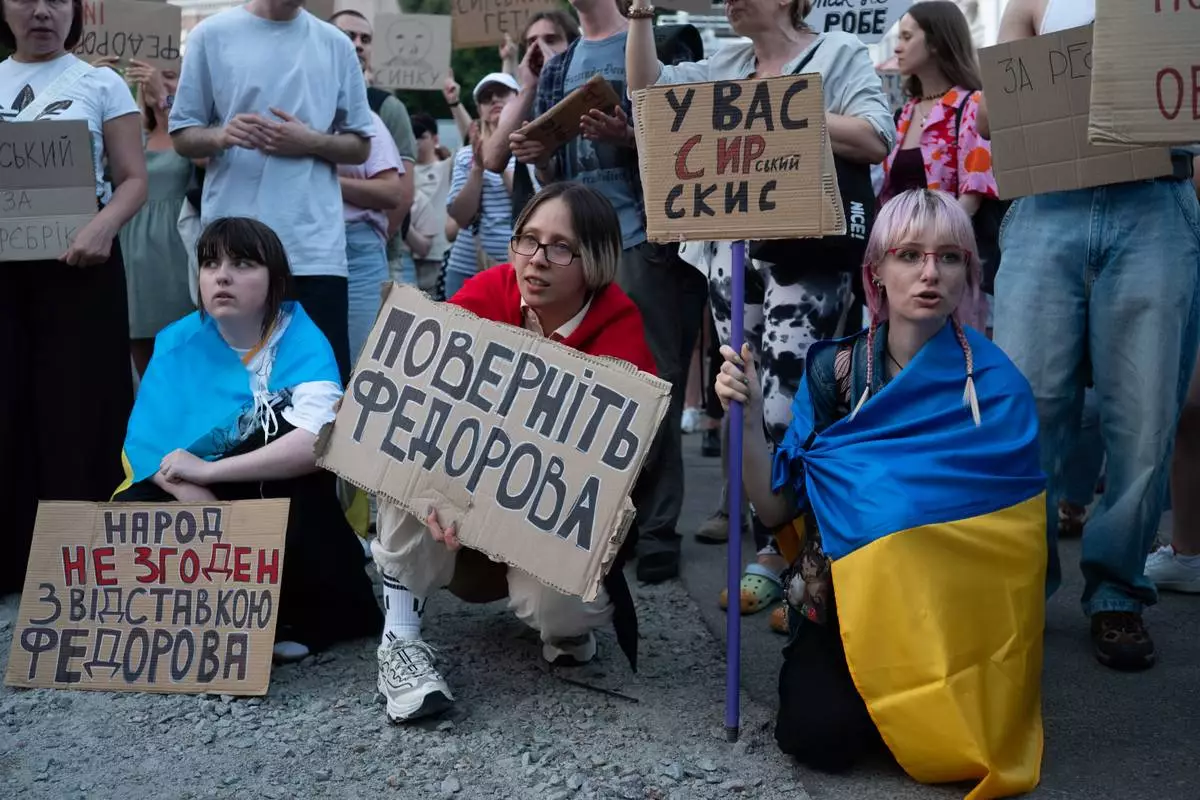
People gather to denounce President Volodymyr Zelenskyy's decision to dismiss Defense Minister Mykhailo Fedorov after six months in the post, Thursday, July 16, 2026, Kyiv, Ukraine. Placard reads "Bring back Fedorov. Do not destroy defense capability." (AP Photo/Danylo Antoniuk)
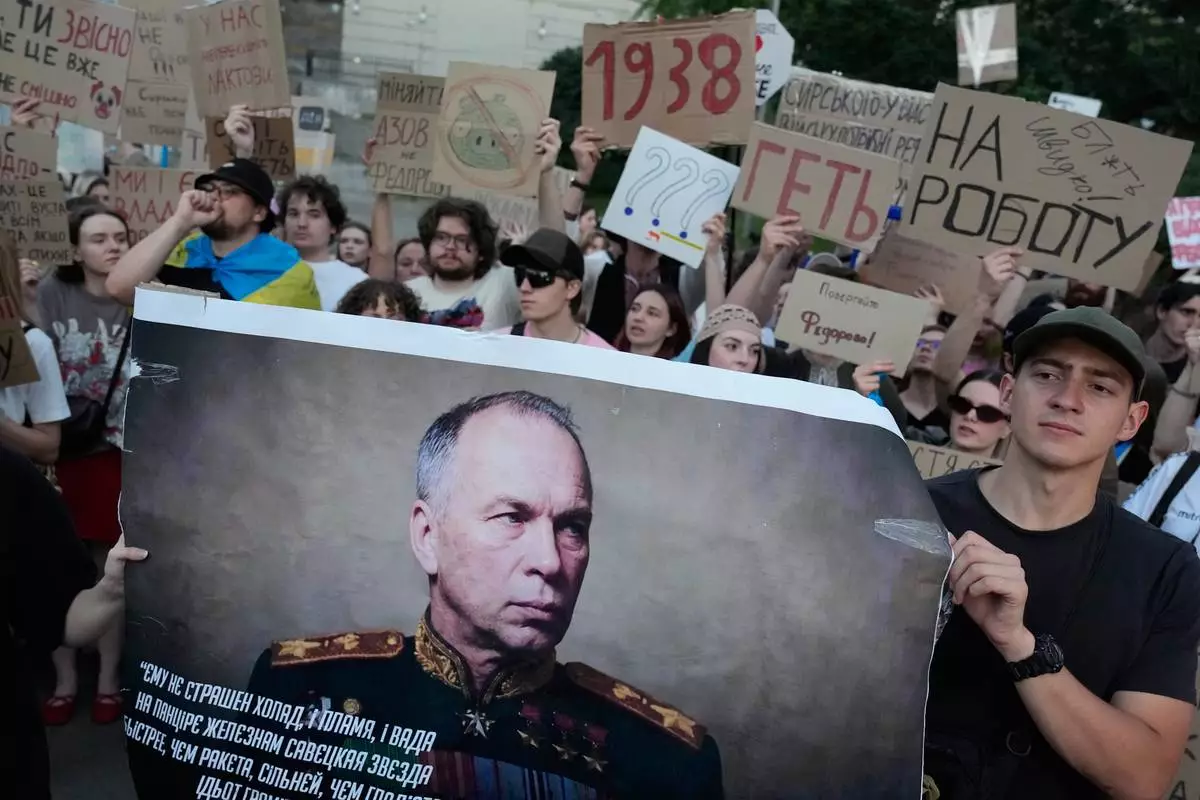
Activists hold a portrait of Ukraine's Armed Forces Commander-in-Chief Oleksandr Syrskyi demanding his resignation during a rally to denounce President Volodymyr Zelenskyy's decision to dismiss Defense Minister Mykhailo Fedorov after six months in the post, in Kyiv, Ukraine, Saturday, July 18, 2026. (AP Photo/Efrem Lukatsky)
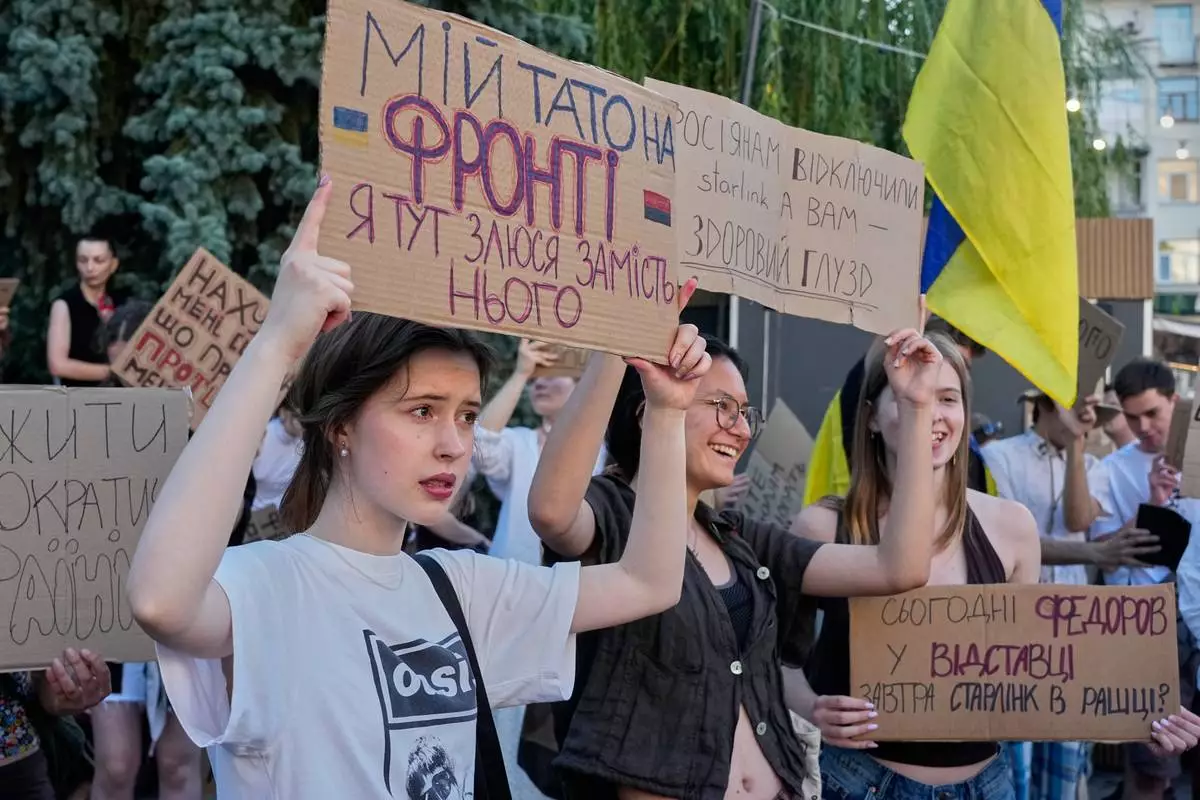
An activist holds slogan "My father is at the front. I am angry here on his behalf" during a rally to denounce President Volodymyr Zelenskyy's decision to dismiss Defense Minister Mykhailo Fedorov after six months in the post, Friday, July 17, 2026, Kyiv, Ukraine. (AP Photo/Efrem Lukatsky)
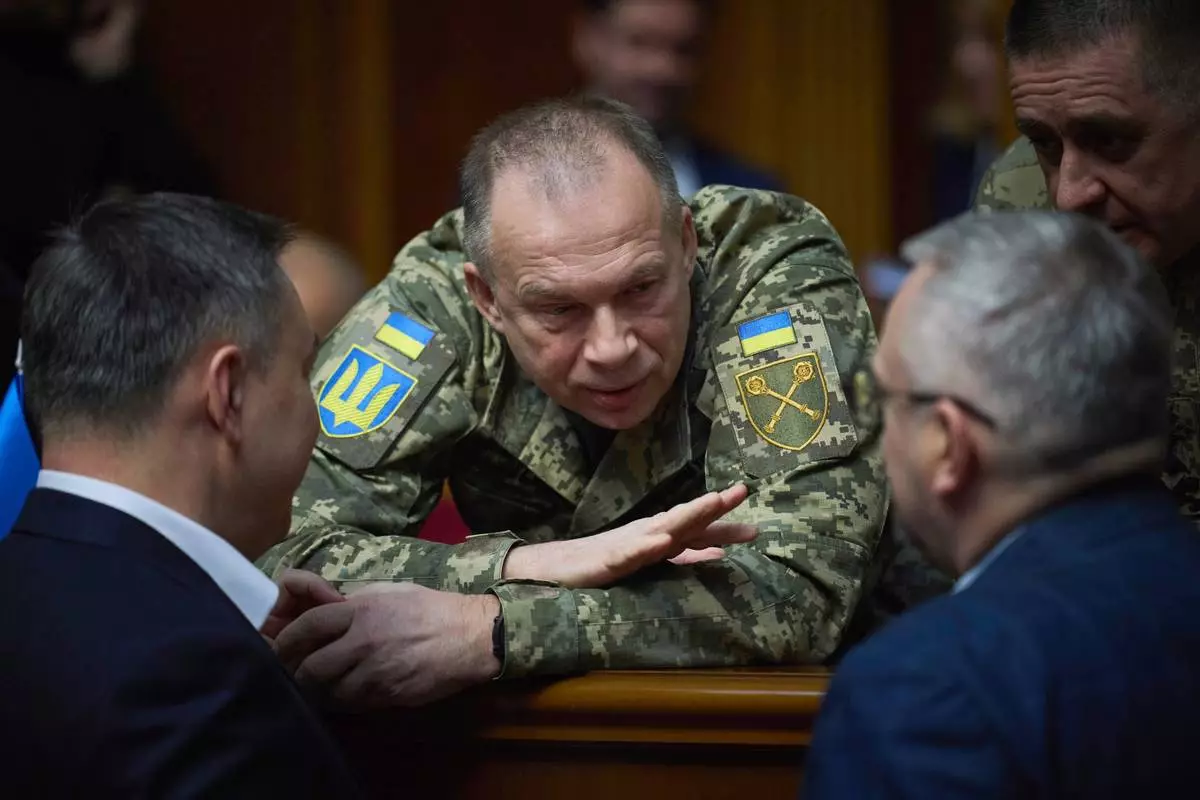
FILE - In this photo provided by the Press Service Of The President Of Ukraine on Nov. 19, 2024, Gen. Oleksandr Syrskyi speaks to parliamentarians at Verkhovna Rada in Kyiv, Ukraine. (Press Service Of The President Of Ukraine via AP, File)
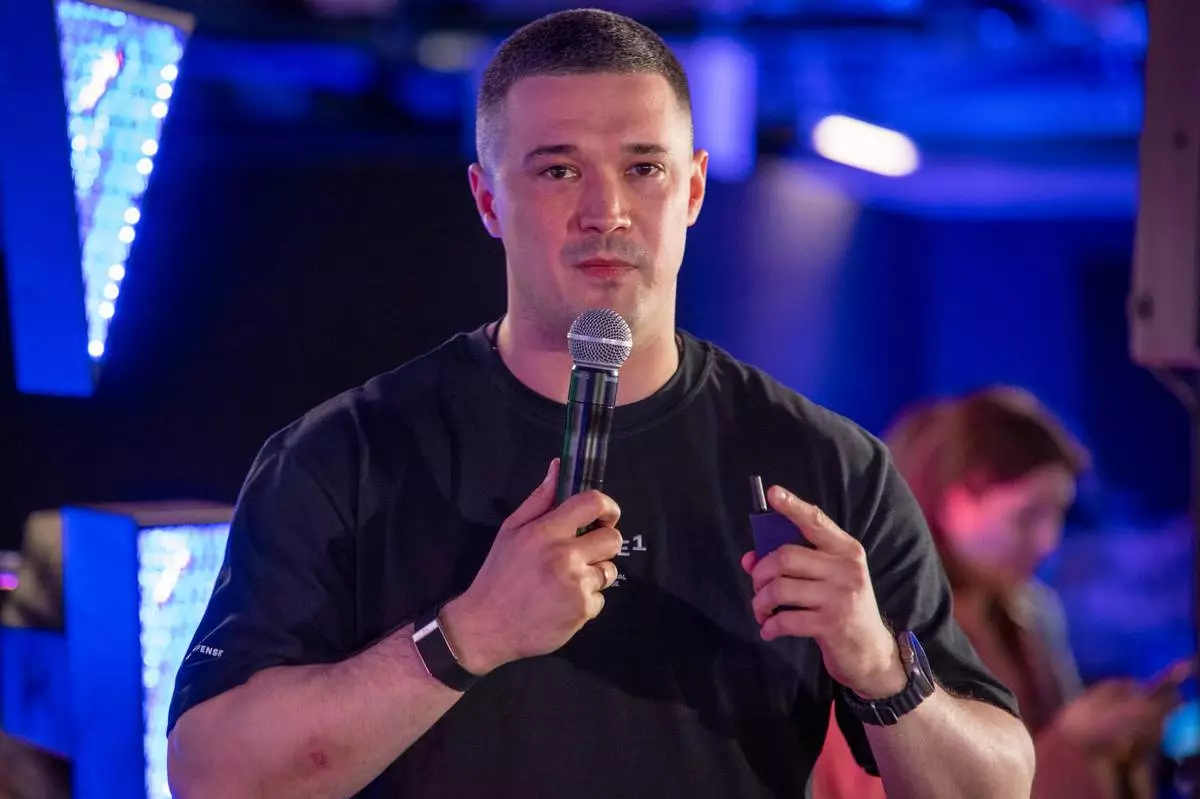
Outgoing Ukraine's Defense Minister Mykhailo Fedorov speaks during a briefing to journalists in Kyiv, Ukraine, Thursday, July 16, 2026. (AP Photo/Dan Bashakov)