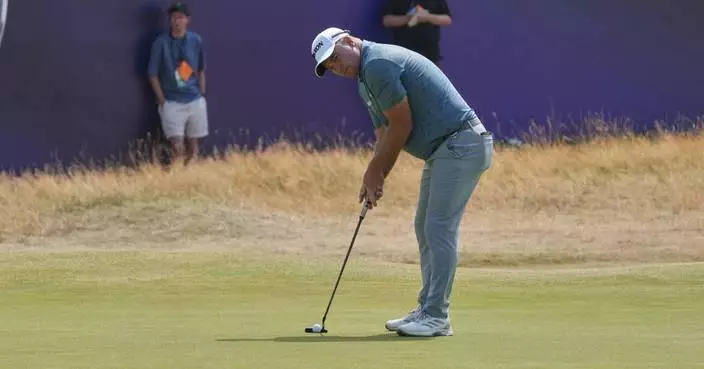
LIV Golf suffered a potential setback Tuesday when the PGA Tour, European tour and Asian Tour announced a strategic alliance aimed at global collaboration that is likely to affect the partnership the Asian Tour had with LIV.
In an alliance that takes immediate effect through 2029, the PGA Tour and European tour will partner with the Asian Tour to help provide commercial and playing opportunities and establish a path for Asian Tour members to join European circuits.
The PGA Tour and DP World Tour -- as it is known commercially -- have a separate alliance that has yet to be renewed, which includes 10 top European tour players earning PGA Tour cards. Officials from both tours met at the British Open. The alliance with the Asian Tour, along with the PGA Tour's involvement with the Australian Open, is seen as progress on a new deal.
The announcement was a blow to LIV Golf, which has had a relationship with the Asian Tour since before the rival league launched in 2022.
LIV invested $300 million in the Asian Tour to create the “International Series” with purses of up to $2 million. They have been won by LIV players such as Peter Uihlein, Carlos Ortiz and David Puig.
The Public Investment Fund of Saudi Arabia, the financial muscle behind LIV Golf, has said it will no longer fund the league after this season. Scott O’Neil, the CEO of LIV Golf, has been trying to find investors to keep the league alive for 2027 and beyond.
The European tour had an alliance with the Asian Tour from 2016 until 2021. It stopped co-sanctioning Asian Tour events in 2022.
Now that’s back in play under the alliance that is expected to have at least two co-sanctioned Asian Tour events each of the next three years. Other details, such as Asian Tour players having access to European and Challenge Tour events, are still being worked out.
“We feel the time is now right to collaborate with the DP World Tour and PGA Tour to enhance the Asian Tour for our members, fans and partners,” said Cho Minn Thant, commissioner and CEO of the Asian Tour. “Bringing the three tours together under one partnership will increase the bandwidth of the professional game in Asia.
“Not only will co-sanctioning events see our members competing regularly on the global stage, but we are excited to welcome players from the other Tours to our pinnacle events.”
The announcement comes one day after reports that Canadian-based Mobii Systems Group has sued LIV Golf in U.S. District Court in Miami, alleging LIV has not paid $925,100 in fees to the company that supplies the league’s “Any Shot, Any Time” technology during the LIV broadcasts.
Mobii Systems also claims $209,531 in lost revenue for the remaining six events in 2026.
ESPN reported that Nick Connor, LIV Golf’s senior vice president of technology, wrote in a May 25 email to Mobii Systems that LIV would no longer use the technology after the South Korea event that ended May 31 or the remaining events on the schedule as it evaluates its business model.
The PGA Tour recently announced a commercial partnership with the European tour involving the Australian Open as golf makes a push to recognize more national opens. The Masters this year added to its invitation criteria the winners of six national opens.
Christian Hardy, the senior vice president of international for the PGA Tour, said the three-tour alliance was an example of collaboration by tours “with a shared vision for the future of professional golf.”
“Through our strategic alliance with the DP World Tour, we have worked to build a more connected global golf ecosystem, and we are excited to welcome the Asian Tour into that effort,” Hardy said. “Together, we are creating new opportunities for players, enhancing key national opens around the world and continuing to evolve and strengthen pathways to identify and develop the next generation of elite talent.”
AP golf: https://apnews.com/hub/golf
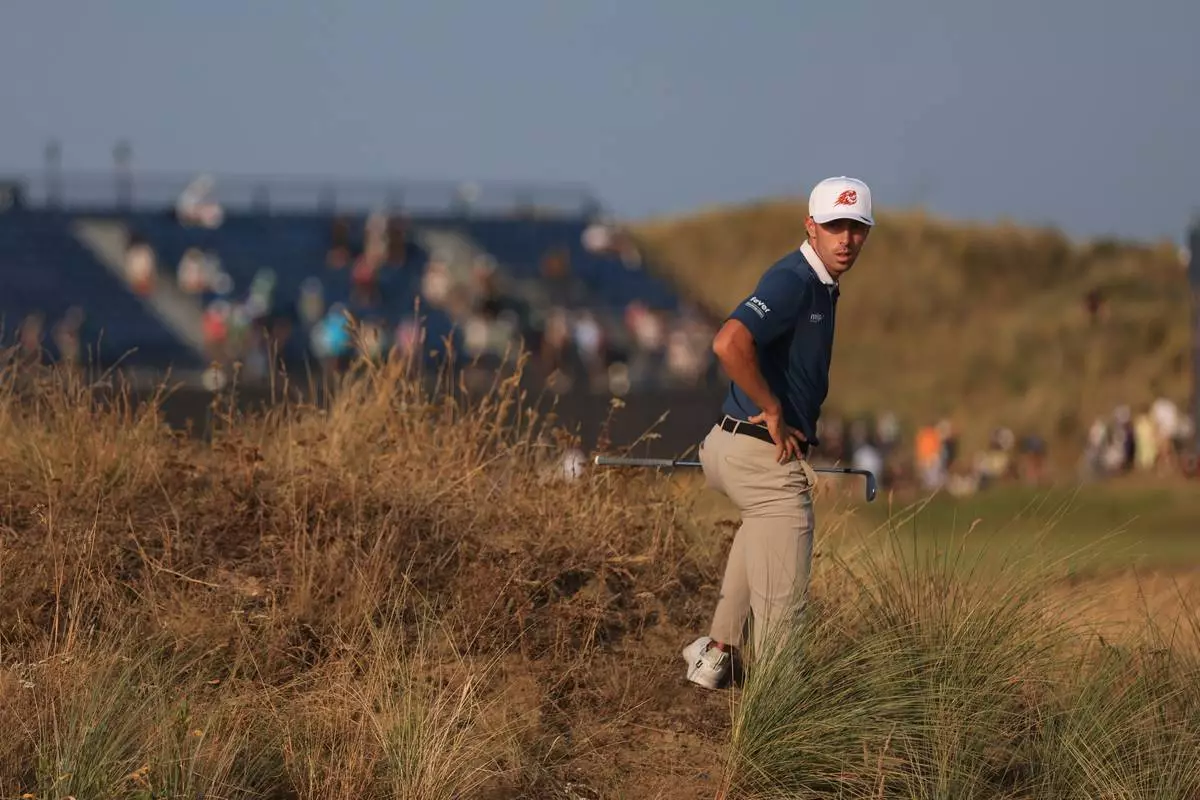
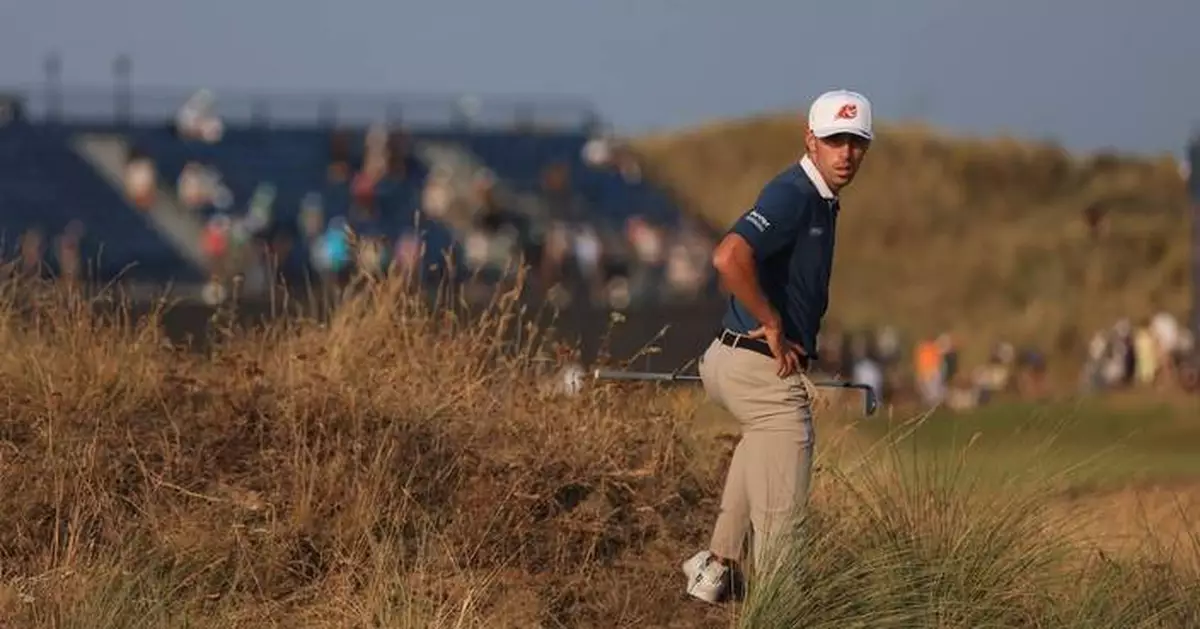
David Puig of Spain looks back before he plays on the 13th during the second day of the British Open Golf championships at Royal Birkdale golf club, in Southport, England, Friday, July 17, 2026. (AP Photo/Peter Morrison)
The U.S. and Iran are back to bombing every day in a bid to control the Strait of Hormuz. And neither is backing down, showing the limitations of President Donald Trump’s reliance on escalating airstrikes to bend Tehran to his will.
While the Trump administration says it is open to diplomacy, Iran so far has refused to loosen its grip over the crucial oil shipping corridor in the Persian Gulf. It is raising questions about the strategy for the conflict's next phase. The intensifying attacks have collapsed an interim ceasefire deal, killed more American troops and sent U.S. gasoline prices back up, posing more problems for Republicans hoping to get reelected.
The Latest:
The rebels have opened a new front against Saudi Arabia by declaring a naval blockade of the kingdom, threatening the flow of global oil supplies and trade through the Red Sea.
With the Strait of Hormuz blocked, Saudi Arabia has been relying on a pipeline to the Red Sea to get millions of barrels of oil to market.
Six ships in the Red Sea were forced to reroute on Tuesday after they received warnings from the rebels, according to the Houthi-run SABA news agency.
Separately, three Houthi officials told The Associated Press that the rebel group warned international shipping companies on Monday to avoid transiting in the Bab el-Mandeb Strait, the gateway to the Red Sea at the southern tip of the Arabian Peninsula.
— By Jon Gambrell and Munir Ahmed
The President’s Emergency Plan for AIDS Relief, known as PEPFAR, is credited with saving at least 26 million lives since its inception in 2003. But it’s been impaired by the dismantling of the U.S. Agency for International Development and cuts to thousands of global health grants.
These disruptions to the global AIDS relief program have forced organizations to close clinics, lay off staff and cut services, seriously impeding efforts to prevent and treat the disease in dozens of countries, according to a report released Tuesday by amfAR, the Foundation for AIDS Research.
Other research, published in the journal Nature Health in June, found a 10% decline in antiretroviral treatment — nearly two million fewer people living with HIV — getting the life-saving treatment through PEPFAR.
▶ Read more
The State Department has informed Congress that it plans to move ahead with the potential re-opening of the U.S. Embassy in Libya. It’s proposing to allocate nearly $41 million to restore America’s formal diplomatic presence in the North African nation.
The effort comes amid new warnings of Iranian-related attacks against U.S. facilities and interests around the world, particularly in the Middle East.
The department told lawmakers that the money would cover “a range of security-related activities associated with plans for the potential phased resumption of embassy operations in Libya.” The embassy in Tripoli was shuttered in July 2014.
The Trump administration reopened the U.S. Embassy in Caracas, Venezuela following the ouster of former President Nicolas Maduro in January and is also seeking to reopen the closed embassy in Damascus, Syria.
More gains for makers of computer chips and other winners of the artificial-intelligence boom are carrying Wall Street higher on Tuesday after tumbling the week before.
After rocketing higher because of the boom in investment in AI chips and data centers, they’ve come under pressure in recent weeks on worries that they shot too high. Concerns are also weighing that AI investments may fall off if they don’t produce as much profit and productivity as promised.
The gains came despite more climbs for oil prices, and Brent crude oil topped $90 per barrel because of continued attacks between the United States and Iran. It rose 2.2% to $91.17, up from less than $72 early this month.
The oil price hikes threaten a reacceleration of inflation, just as it was slowing more than economists expected. That in turn could push the Federal Reserve and other central banks to raise interest rates, which would slow economies and undercut prices for stocks and other investments.
▶ Read more
Secretary of State Marco Rubio will meet with Chinese Foreign Minister Wang Yi on Wednesday in Manila, the State Department said.
The top diplomats from the world’s two largest economies are attending annual talks of the Association of Southeast Asian Nations this week in the Philippine capital.
The ASEAN summit comes amid unfolding crises led by renewed fighting between the U.S. and Iran as well as a violent skirmish in the disputed South China Sea.
The Rubio-Wang meeting could help set up the next sitdown between Trump and Chinese leader Xi Jinping.
Rubio said ahead of the summit that he expects Xi to visit the U.S. in September and that “it’s incumbent on powerful, important countries like ours to continue to talk and have a relationship.”
Secret Service Police Officer Victor Gonzales will be given a special award for exceptional service at a rescheduled White House Correspondents’ Association Dinner, the association said Tuesday.
Gonzales was at a security checkpoint during the April dinner when it was interrupted by a gunman who prosecutors say was trying to assassinate Trump. The Secret Service said Gonzales was struck in his protective vest as he engaged the gunman, who was tackled outside the ballroom.
“His swift and decisive actions assisted in deterring the gunman from proceeding any further,” the Secret Service said.
A make-up event being held Friday at the Waldorf Astoria hotel at Trump’s encouragement will also honor Washington Hilton hotel staff who helped guests in the aftermath.
Swinton’s wife, Mia Gonzalez-Swinton, posted on social media that she was informed of his death on Sunday. The couple have a young daughter.
“I will never recover from this, you should be home. We had so many plans for when you got back, I’m sick to my stomach,” she wrote in a Facebook post Monday.
The military said it was investigating the death of Sgt. Michael Emmanuel Swinton of Fayetteville, North Carolina, during a controlled detonation of an Iranian drone on Sunday at an air base in Irbil.
Swinton, 30, will get a Bronze Star, Purple Heart and Combat Action Badge, and be promoted to staff sergeant, the military said in a statement.
He enlisted in the Army in 2017, and was assigned to the 55th Air Defense Artillery Regiment, 108th Air Defense Artillery Brigade, out of Fort Bragg.
Two U.S. Army soldiers were killed in Jordan on Friday while defending against Iranian ballistic missile and drone attacks. They were the first U.S. troop deaths from direct Iranian fire since the opening days of the war.
The landmark meeting between Joseph Aoun and Trump comes as Lebanon and Israel continue to hold rare direct talks mediated by Washington in a bid to bring about long-term calm in Lebanon after months of war between Israel and Hezbollah, the Iran-backed militant group.
Lebanon hopes the talks will lead to Israeli troops withdrawing from large swaths of southern Lebanon, and for the Lebanese military to receive support to assert full control in areas where Hezbollah militants had held sway.
Lebanon and Israel announced a “framework agreement” on June 26, setting a plan for Israeli forces to withdraw from southern Lebanon as well as the disarmament of Hezbollah.
Aoun is scheduled to arrive at the White House at 11 a.m.
Subpoenas for phone records of New York Times reporters now include the mother of one journalist and the spouses of two others as the Justice Department seeks to unmask the confidential sources of reporters who wrote about Trump’s Qatari-gifted Air Force One jet.
The Times’ lawyers have moved to quash the subpoenas, noting that the mother in question is a mental health professional with confidential client relationships and that one of the two spouses is the general counsel of a law firm.
The Justice Department has previously said that the reporters are not the targets of the investigation and asserted in a new legal filing Tuesday that it had followed its own protocols in issuing the subpoenas.
U.S. District Judge Arun Subramanian is scheduled to hear arguments Thursday.
The appellate panel’s 2-1 ruling late Monday found “substantial” public interest in disclosing what former President Joe Biden wants to keep under wraps. Redactions to the recordings would help protect Biden’s privacy, the majority noted.
The judges suspended their decision until Aug. 3 to allow more time for Biden to consider another appeal.
Mark Zwonitzer, who worked with Biden on his two memoirs, interviewed the Democrat at his home in 2016 and 2017, before his presidency. Biden’s lawyers say the conversations were candid, personal and intended to remain private.
The recordings were obtained by special counsel Robert Hur, who investigated Biden’s handling of classified documents from his time as a senator from Delaware and as vice president. Republicans demanded the material after Hur declined to file charges against the then-president.
Both sides have targeted civilian infrastructure relied on by millions of people.
Kuwait’s Electricity, Water and Renewable Energy Ministry said Tehran struck desalination and power plants for a fourth straight day on Monday night, causing fires and damage. Some 90% of Kuwait’s drinking water comes from desalination, making the attacks a matter of life and death for the tiny nation.
U.S. strikes have been hitting electrical equipment in Iran as well, and Iranian officials also have said Americans targeted water facilities.
The U.S. military’s Central Command said Tuesday it targeted “Iranian military command centers, maritime capabilities, missile and drone launch sites and air defense systems.” It released more footage of bombings that targeted sites in Iran.
“American forces remain postured and prepared to hold Iran accountable for unwarranted aggression toward civilian mariners seeking to freely and openly transit the strait,” the command said.
Iranian state media reported that explosions were heard in across six different provinces.
Traffic through the strait has slowed to a crawl during the latest violence. Lloyd’s List Intelligence said only three ships transited the strait on Sunday.
The British military’s United Kingdom Maritime Trade Operations center said a tanker came under attack early Tuesday in the strait off Oman, forcing the crew to abandon the vessel.
Iran’s paramilitary Revolutionary Guard claimed the attack, as well as two other attacks on ships Monday in the waterway.
The route around Oman has been the one the U.S. military has encouraged ships to travel to avoid Iran’s control. The UKMTO separately reported Tuesday that another previously unknown attack on a ship took place early the previous day.
An Iranian official began meetings Tuesday with mediators in Pakistan as diplomats sought to salvage the collapsed interim deal between Iran and the United States, even as both countries continued to launch attacks for a 10th day of renewed fighting.
The visit by Iran’s Interior Minister Eskandar Momeni comes as Pakistan has intensified diplomatic efforts in recent days to resuscitate the deal. However, it remains unclear just what new arrangement could be reached to end the fighting.
Momeni met Pakistan’s army chief Field Marshal Asim Munir, according to two officials who spoke on condition of anonymity to discuss the closed-door negotiations. Momeni later met Prime Minister Shehbaz Sharif. Pakistan’s political leadership and Munir, who serves as both the chief of army staff and defense forces, have worked to persuade the United States and Iran back to resume negotiations.
— By Munir Ahmed
The U.S. and Iran are back to bombing every day in a bid to control the Strait of Hormuz. And neither is backing down, showing the limitations of President Donald Trump’s reliance on escalating airstrikes to bend Tehran to his will.
While the Trump administration says it is open to diplomacy, Iran so far has refused to loosen its grip over the crucial oil shipping corridor in the Persian Gulf. It is raising questions about the strategy for the next phase of the conflict as intensifying attacks have collapsed an interim ceasefire deal, left additional American troops dead and sent U.S. gasoline prices back up — posing new problems for Republicans ahead of the midterm elections.
Even with glimmers of hope for talks, the sides could be headed back to all-out war, with Trump warning that “every time Iran kills an American Soldier” going forward, “they will pay for that killing many times over.”
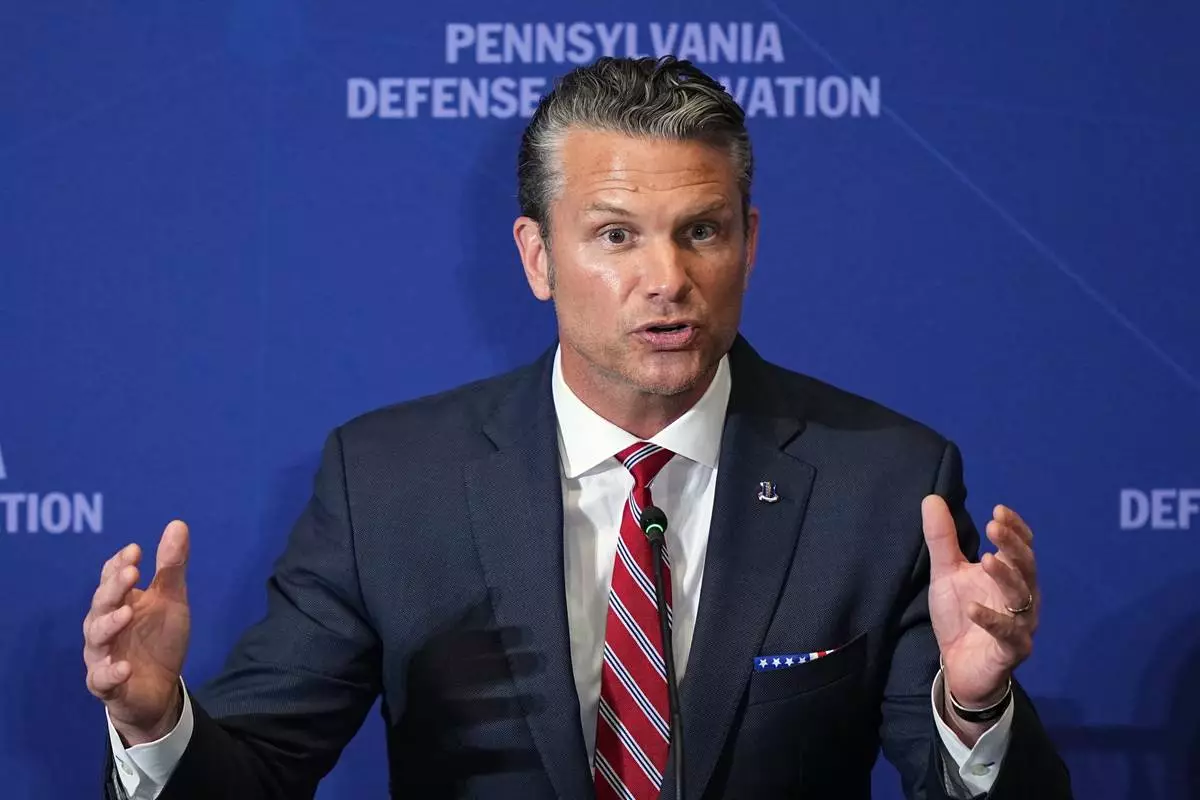
Defense Secretary Pete Hegseth speaks at the United States Army War College in Carlisle, Pa., during the Pennsylvania Defense and Innovation Summit, Wednesday, July 15, 2026. (AP Photo/Matt Rourke)
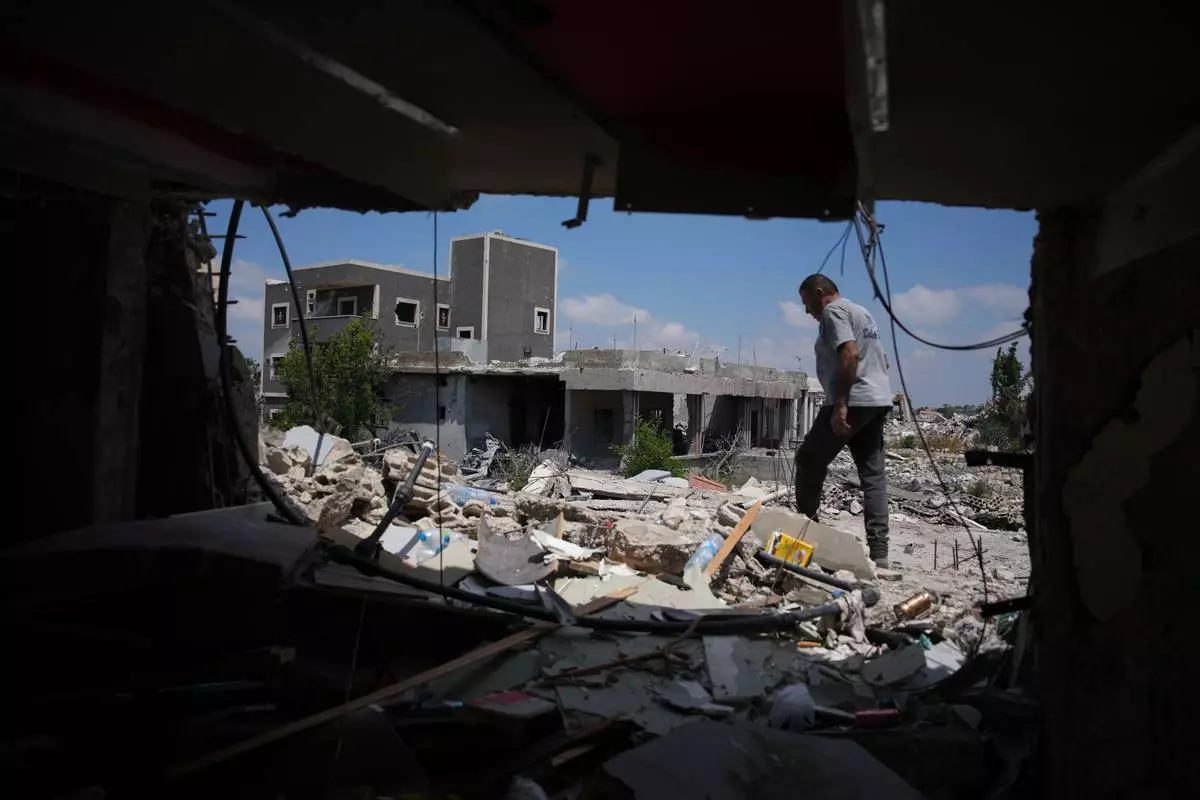
A resident inspects the damage to his home, destroyed in an Israeli airstrike during the Israel-Hezbollah war in Ghandouriyeh village, southern Lebanon, Tuesday, July 21, 2026. (AP Photo/Hassan Ammar)
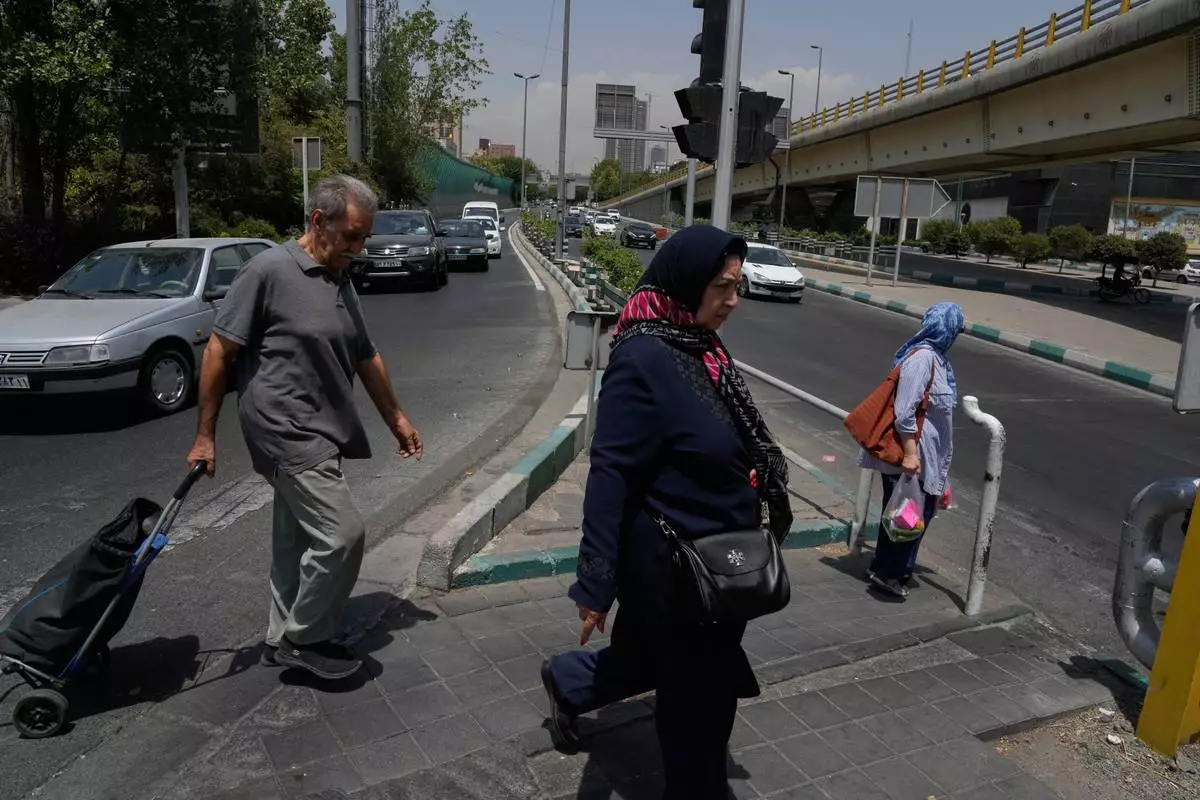
People cross a street in Tehran, Iran, Tuesday, July 21, 2026. (AP Photo/Vahid Salemi)