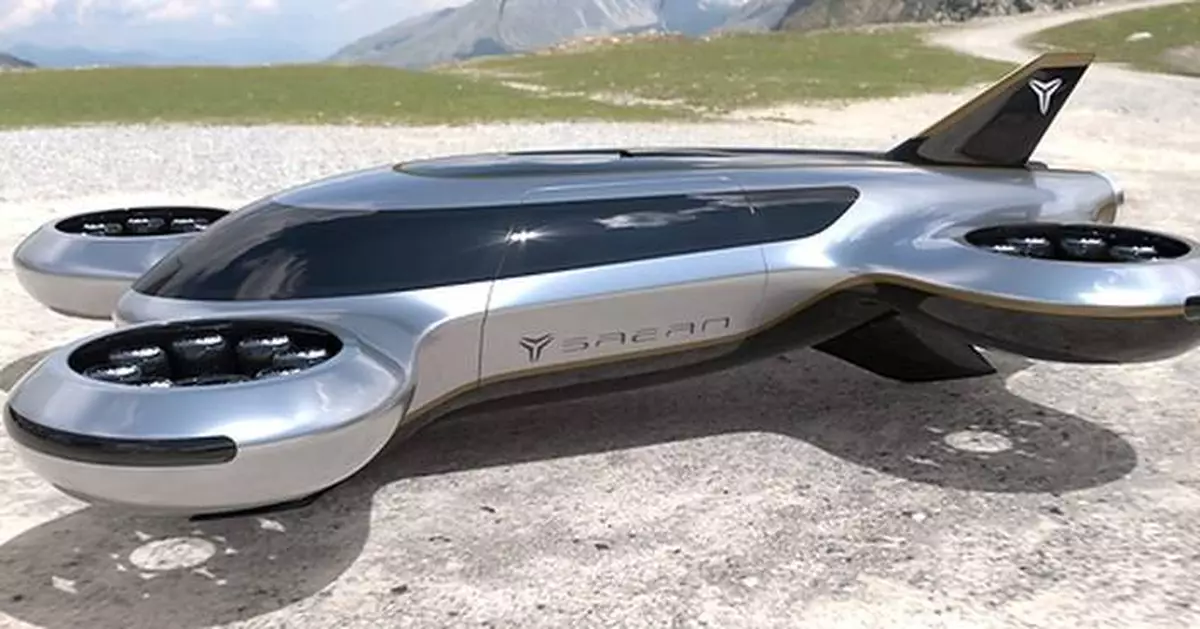
- Establishes a dense 'patent wall' spanning foundational structures, vortex guidance, and vortex generation
- Addresses limitations of conventional propeller systems with technologies designed for high-speed flight and lower urban noise
- Builds a proprietary technology ecosystem aimed at the UAM market, projected to reach $1.5 trillion (approximately KRW 2,000 trillion) by 2040
- AirJet Propulsion Apparatus for Urban Air Mobility and Air Jet Vehicle
- Air Jet Propulsion Apparatus Having Vortex Guiding Vane and Air Jet Vehicle
- Vortex Generation Type Jet Propulsion Apparatus and Air Jet Vehicle
HANAM, South Korea and LAS VEGAS, July 21, 2026 /PRNewswire/ -- As the global urban air mobility (UAM) market enters a period of rapid growth, Saean R&D Co., Ltd. (Inventor: Jung-yong Lee), a company specializing in eco-friendly future mobility, has secured an expanded portfolio of core air-jet propulsion patents designed to strengthen its competitive position in the next-generation UAM market. According to global financial services firm Morgan Stanley, the global UAM market is projected to reach approximately $1.5 trillion (around KRW 2,000 trillion) by 2040.
According to patent records from the Korean Intellectual Property Office (KIPO), Saean R&D recently secured three additional related patents covering air-jet propulsion vehicles and aerodynamic control technologies.
The secured patents include:
Based on a unified air-jet propulsion framework, these patents create an integrated technology platform that addresses key challenges in UAM commercialization, including structural stability, propulsion efficiency, and noise reduction.
Addressing Open-Propeller Limitations: A Foundational Air-Jet Propulsion Platform for High-Speed Flight
The first patent, which covers the foundational structural technology, is designed to address the technical limitations of the multicopter, or open-propeller, systems that currently dominate the UAM market. It introduces an internally integrated jet-propulsion system optimized for urban environments to improve high-speed cruise efficiency. An external housing also provides an initial layer of acoustic shielding. The company views the technology as a foundation for future expansion into Regional Air Mobility (RAM), which is intended to support high-speed travel between cities.
Preventing Flow Separation and Reducing Noise: Improving Efficiency Through Vortex Control
The second and third patents address energy efficiency and noise, two longstanding challenges associated with jet propulsion.
The Vortex Guiding Vane patent aligns and guides airflow during intake and exhaust to reduce flow separation within the propulsion system. Saean R&D expects the technology to improve propulsion efficiency and reduce battery and fuel consumption.
The Vortex Generation Type patent intentionally creates controlled micro-vortices around the aircraft, helping maintain control and reduce the risk of aerodynamic stall during high-angle flight or sudden maneuvers. It also disperses exhaust flow from the jet nozzle, which could help reduce jet noise, a major challenge for aircraft operating in urban environments.
Building a Dense 'Patent Wall' to Strengthen Technology Protection and Accelerate Market Expansion
The company says the coordinated patent portfolio is designed to form a robust 'patent wall' that makes it more difficult for competitors to design around or replicate the underlying technologies.
With this core air-jet-propelled UAM patent portfolio, Saean R&D aims to establish its own technology standards in advanced air mobility. The company plans to accelerate commercialization and technical cooperation with major domestic and international investors, as well as global aviation partners.
Business Description
Saean is pursuing new mobility projects including the high-performance EXOD electric sports car, 30-ton electric tipper trucks, and the midsize WiD-U electric SUV. The company has also developed the H-drone, an EV and ESS battery power pack equipped with an environmental sensor, and Hydro-LPG technology as part of its alternative-power program. Saean's primary R&D center is located in South Korea.
Saean Group Inc.
6280 Spring Mountain Rd, Suite 100
Las Vegas, NV 89146
Principal Executive Offices:
Saean R&D
Unit 906, Na-Dong, Skypolis
135 Misa-Gangbyeon-Hangang-Ro
Hanam, Gyeonggi-Do 12902
Republic of Korea
Website: www.saeanmotors.com
Phone: +82-31-791-0765
Email: saean@saeangroup.com
HANAM, South Korea and LAS VEGAS, July 21, 2026 /PRNewswire/ -- As the global urban air mobility (UAM) market enters a period of rapid growth, Saean R&D Co., Ltd. (Inventor: Jung-yong Lee), a company specializing in eco-friendly future mobility, has secured an expanded portfolio of core air-jet propulsion patents designed to strengthen its competitive position in the next-generation UAM market. According to global financial services firm Morgan Stanley, the global UAM market is projected to reach approximately $1.5 trillion (around KRW 2,000 trillion) by 2040.
According to patent records from the Korean Intellectual Property Office (KIPO), Saean R&D recently secured three additional related patents covering air-jet propulsion vehicles and aerodynamic control technologies.
The secured patents include:
- AirJet Propulsion Apparatus for Urban Air Mobility and Air Jet Vehicle
- Air Jet Propulsion Apparatus Having Vortex Guiding Vane and Air Jet Vehicle
- Vortex Generation Type Jet Propulsion Apparatus and Air Jet Vehicle
Based on a unified air-jet propulsion framework, these patents create an integrated technology platform that addresses key challenges in UAM commercialization, including structural stability, propulsion efficiency, and noise reduction.
Addressing Open-Propeller Limitations: A Foundational Air-Jet Propulsion Platform for High-Speed Flight
The first patent, which covers the foundational structural technology, is designed to address the technical limitations of the multicopter, or open-propeller, systems that currently dominate the UAM market. It introduces an internally integrated jet-propulsion system optimized for urban environments to improve high-speed cruise efficiency. An external housing also provides an initial layer of acoustic shielding. The company views the technology as a foundation for future expansion into Regional Air Mobility (RAM), which is intended to support high-speed travel between cities.
Preventing Flow Separation and Reducing Noise: Improving Efficiency Through Vortex Control
The second and third patents address energy efficiency and noise, two longstanding challenges associated with jet propulsion.
The Vortex Guiding Vane patent aligns and guides airflow during intake and exhaust to reduce flow separation within the propulsion system. Saean R&D expects the technology to improve propulsion efficiency and reduce battery and fuel consumption.
The Vortex Generation Type patent intentionally creates controlled micro-vortices around the aircraft, helping maintain control and reduce the risk of aerodynamic stall during high-angle flight or sudden maneuvers. It also disperses exhaust flow from the jet nozzle, which could help reduce jet noise, a major challenge for aircraft operating in urban environments.
Building a Dense 'Patent Wall' to Strengthen Technology Protection and Accelerate Market Expansion
The company says the coordinated patent portfolio is designed to form a robust 'patent wall' that makes it more difficult for competitors to design around or replicate the underlying technologies.
With this core air-jet-propelled UAM patent portfolio, Saean R&D aims to establish its own technology standards in advanced air mobility. The company plans to accelerate commercialization and technical cooperation with major domestic and international investors, as well as global aviation partners.
Business Description
Saean is pursuing new mobility projects including the high-performance EXOD electric sports car, 30-ton electric tipper trucks, and the midsize WiD-U electric SUV. The company has also developed the H-drone, an EV and ESS battery power pack equipped with an environmental sensor, and Hydro-LPG technology as part of its alternative-power program. Saean's primary R&D center is located in South Korea.
Saean Group Inc.
6280 Spring Mountain Rd, Suite 100
Las Vegas, NV 89146
Principal Executive Offices:
Saean R&D
Unit 906, Na-Dong, Skypolis
135 Misa-Gangbyeon-Hangang-Ro
Hanam, Gyeonggi-Do 12902
Republic of Korea
Website: www.saeanmotors.com
Phone: +82-31-791-0765
Email: saean@saeangroup.com
** This press release is distributed by PR Newswire through automated distribution system, for which the client assumes full responsibility. **
Saean R&D (Saean Group Inc - SEAN) Secures Three Additional Key Patents for Next-Generation Air-Jet-Powered UAM, Targeting the $1.5 Trillion Global Urban Air Mobility Market