China on Tuesday kicked off trial operations for the High Intensity Heavy-ion Accelerator Facility (HIAF) following its completion and official technological acceptance, marking a major milestone in the nation's quest to unlock the secrets of the universe's fundamental building blocks.
According to professor Yang Jiancheng, deputy director of the Institute of Modern Physics (IMP) of the Chinese Academy of Sciences and chief engineer of the HIAF project, this internationally leading mega-science facility, located in Huizhou, south China's Guangdong Province, is equipped with the world's highest pulsed heavy-ion beam intensity and the most precise ring spectrometer for nuclear mass measurement. It will serve as a powerful tool for scientists to explore the limits of atomic nuclei, reveal nuclear astrophysical processes, and advance nuclear energy development and multidisciplinary applications.
"We will attempt to synthesize the new elements 119 and 120. The creation of a new element is highly significant. For instance, if we succeed in producing long-lived superheavy elements, it could bring disruptive changes to the development of nuclear energy and materials worldwide," said Yang.
As a key national mega-science project built by the IMP, HIAF successfully generated its first beam in October 2025 following a seven-year construction period.
Yang explained that the high-speed heavy ions generated by the facility act as "microscopic cannonballs" that smash into targets, creating extreme conditions of high temperature and pressure.
During recent commissioning experiments, it achieved unprecedented intensity levels for both oxygen and bismuth ion beams, surpassing the previous international records by 3.0 times and 7.5 times, respectively.
"The heavy-ion accelerator has conducted nine on-site tests so far, evaluating beam intensity and energy for various types of ions. All six experimental terminals have undergone on-site testing. To date, the entire performance acceptance testing has been fully completed. Once operational, it will serve as a major scientific research platform, significantly contributing to our nation's self-reliance and strength in science and technology," said Hu Zhengguo, another deputy director of the IMP.
In terms of fundamental research, HIAF will help scientists find the boundaries of atomic nuclei. It can simulate extreme environments such as the interiors of stars, supernova explosions, and the early stages of the Big Bang, aiding in the exploration of the deep structure of matter, said Yang.
On the application front, HIAF can be used to test the radiation resistance of spacecraft, drive nuclear energy development, and facilitate the research of functional materials. In the medical field, the facility will significantly advance heavy-ion cancer therapy and the development of novel medical isotope drugs.
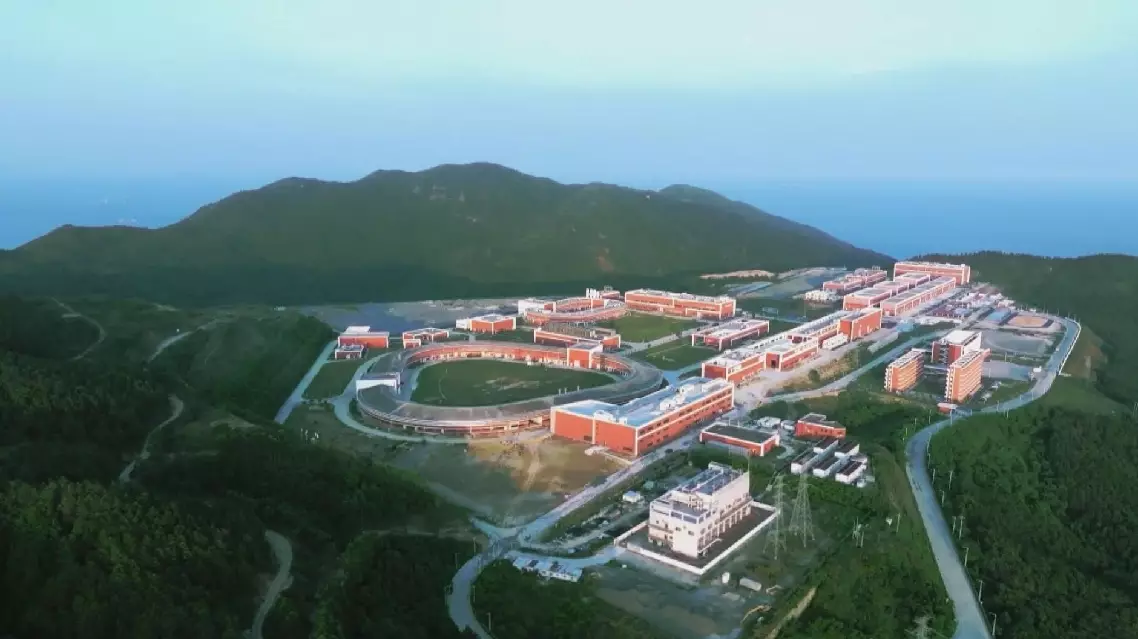
China unveils milestone heavy-ion accelerator to unravel universe's secrets