Artificial intelligence (AI), drones and autonomous weapons are taking center stage at the ongoing Farnborough International Airshow in the UK, shifting attention from aircraft orders to defense technologies.
Farnborough, the world's second-largest airshow after Paris, has long been a showcase for commercial aviation. But this year the five-day event, which opened Monday with more than 1,600 exhibitors, is dominated by defense firms and start-ups as manufacturers grapple with supply chain constraints and governments boost military spending.
Defense-related companies now account for nearly half of the record 1,600 exhibitors at this year's show, up from roughly 40 percent at previous editions.
The challenge facing global aviation is not demand but delivery, as supply chain disruptions, labor shortages and engine delays continue to slow production.
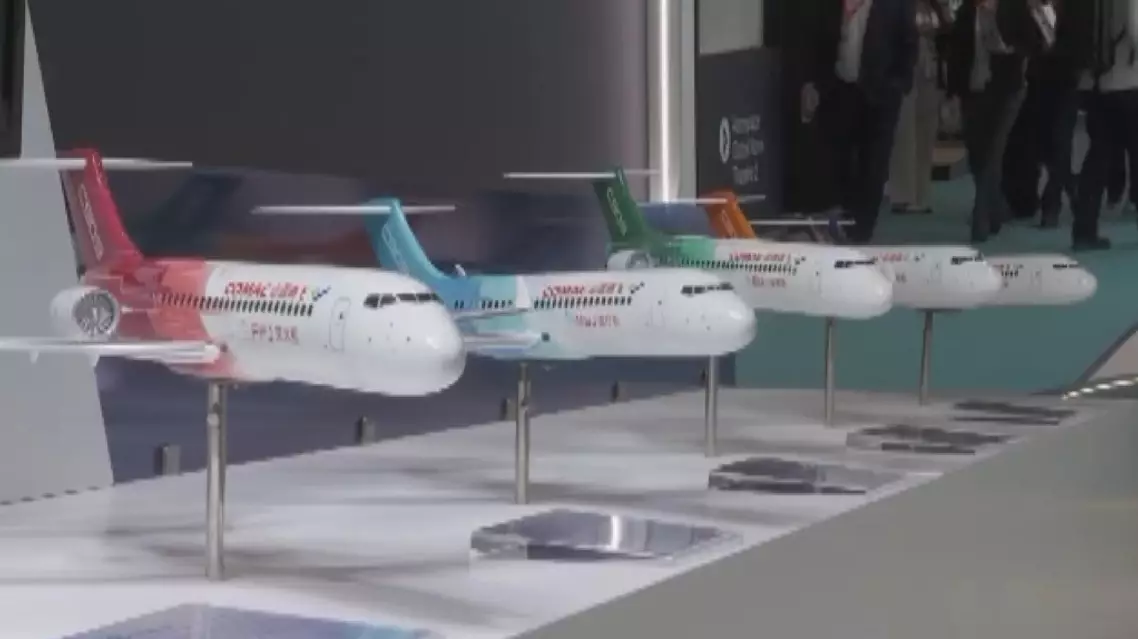
China has an increasing presence at the event, with its manufacturers emerging as key players in the industry.
"There is not a single country in the world that can make a commercial aircraft by itself. Airbus and Boeing are buying from China, and are selling to China. It's the same story in China," said Van Gao, Managing Director of IASC.
"Our Chinese titanium sponge could not go overseas in the last five years. But after the Ukraine crisis, a lot of companies, especially for the aerospace market, have approved some Chinese titanium sponge to come in. So for the aerospace market, titanium is increasing, especially in the three or five years," said Tony Liu, Vice General Manager of Hunan Xiangtou Goldsky Titanium Metal.
"In terms of landing gear, we are contributing a very large share for the global supply chain. And for aerostructures, we are also a very important supplier to the supply chain. But we have a long way to go maybe in terms of engines," said Lai Huihui, Project Manager with Erzhong Group Deyang Aviation Technology.
AI, defense tech dominate Farnborough Airshow in UK