TOKYO (AP) — Global shares were trading mixed Wednesday following a rally on Wall Street, despite concerns about higher oil prices and inflation.
France's CAC 40 edged up 0.6% in early trading to 8,410.68, while the German DAX rose 0.4% to 25,106.51. Britain's FTSE 100 gained 0.8% to 10,666.51. U.S. shares were set to drift lower with Dow futures down 0.2% at 52,366.00. S&P 500 futures lost 0.4% to 7,518.75.
Click to Gallery

Two men wade in the waters of the Strait of Hormuz with vessels anchored in the background, off Bandar Abbas, Iran, Sunday, July 12, 2026. (Razieh Poudat/ISNA via AP)

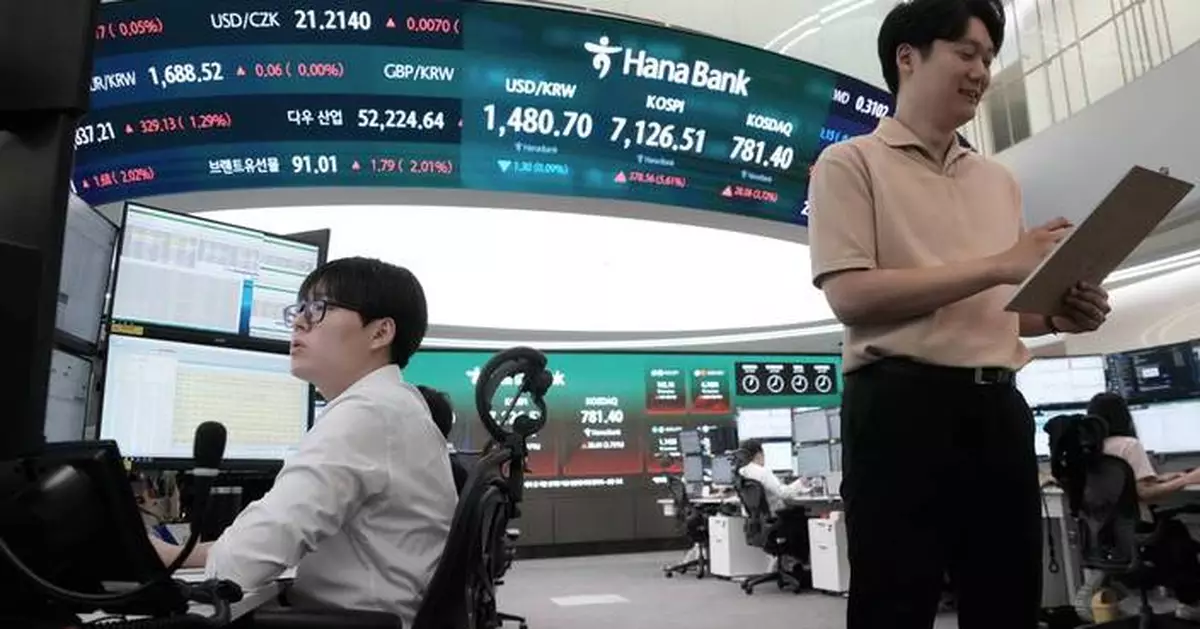
Currency traders work near a screen showing the Korea Composite Stock Price Index (KOSPI), SK Hynix and Samsung Electronics Co. stock price at the foreign exchange dealing room of the Hana Bank headquarters in Seoul, South Korea, Tuesday, July 21, 2026. (AP Photo/Ahn Young-joon)
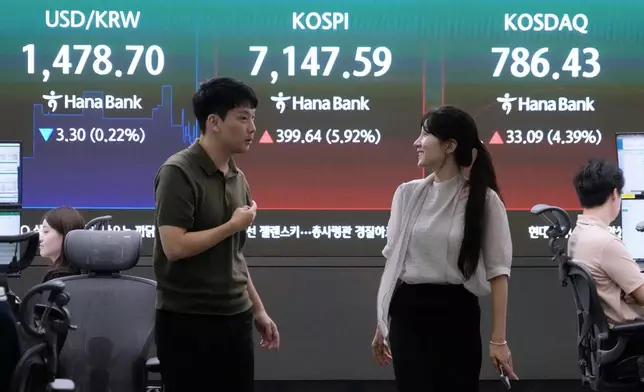
Currency traders work near a screen showing the Korea Composite Stock Price Index (KOSPI) and the foreign exchange rate between U.S. dollar and South Korean won at the foreign exchange dealing room of the Hana Bank headquarters in Seoul, South Korea, Wednesday, July 22, 2026. (AP Photo/Ahn Young-joon)

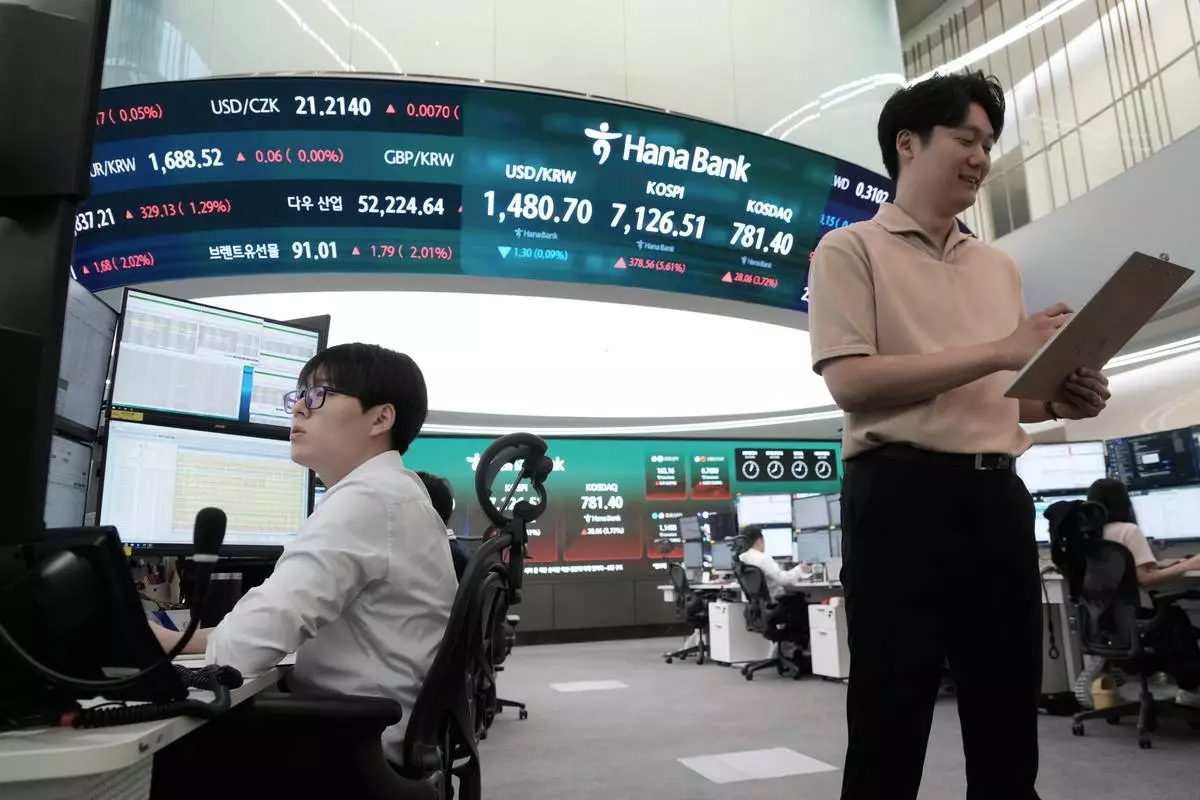
Currency traders walk by a screen showing the Korea Composite Stock Price Index (KOSPI) and the foreign exchange rate between U.S. dollar and South Korean won at the foreign exchange dealing room of the Hana Bank headquarters in Seoul, South Korea, Wednesday, July 22, 2026. (AP Photo/Ahn Young-joon)
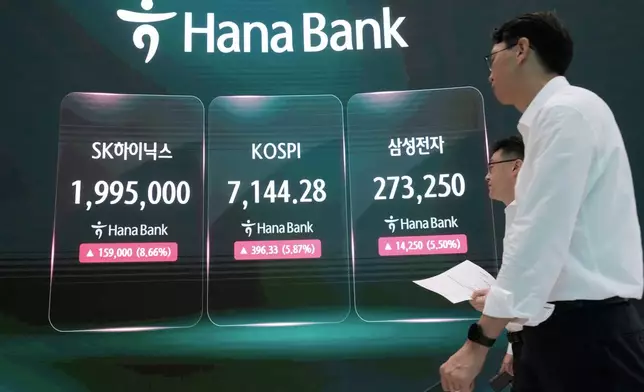
Currency traders walk by a screen showing the Korea Composite Stock Price Index (KOSPI), SK Hynix and Samsung Electronics Co. stock price at the foreign exchange dealing room of the Hana Bank headquarters in Seoul, South Korea, Wednesday, July 22, 2026. (AP Photo/Ahn Young-joon)

Currency traders work at the foreign exchange dealing room of the Hana Bank headquarters in Seoul, South Korea, Wednesday, July 22, 2026. (AP Photo/Ahn Young-joon)
Japan's benchmark Nikkei 225 fell 0.2% to finish at 66,115.60, after the government reported that both imports and exports rose last month from a year earlier, as the weakening yen raised the value of both when converted from dollars to yen.
Australia's S&P/ASX 200 added 0.3% to 8,823.00. South Korea's Kospi rose 0.7% to 6,797.70. The Hang Seng dipped nearly 1.0% to 24,892.66, while the Shanghai Composite was little changed, adding less than 0.1% to 3,867.03.
More climbs for oil prices have come after the continued attacks between the United States and Iran. Benchmark U.S. crude added $2.90 to $87.24 a barrel. Brent crude, the international standard, rose $2.91 to $93.92 a barrel.
“Oil makes the situation more difficult because Japan imports most of its energy. A weaker yen and higher crude prices arrive together like two waves hitting the same sea wall,” said analyst Stephen Innes, a former trader.
In currency trading, the U.S. dollar inched down to 163.11 Japanese yen from 163.14 yen. The euro cost $1.1409, up from $1.1404.
Rising oil prices are again pushing inflation higher, just as increases for prices were slowing more than economists expected. That in turn could push the Federal Reserve and other central banks to raise interest rates, which would slow economies and undercut prices for stocks and other investments.
AP Business Writer Stan Choe contributed to this report.

Two men wade in the waters of the Strait of Hormuz with vessels anchored in the background, off Bandar Abbas, Iran, Sunday, July 12, 2026. (Razieh Poudat/ISNA via AP)
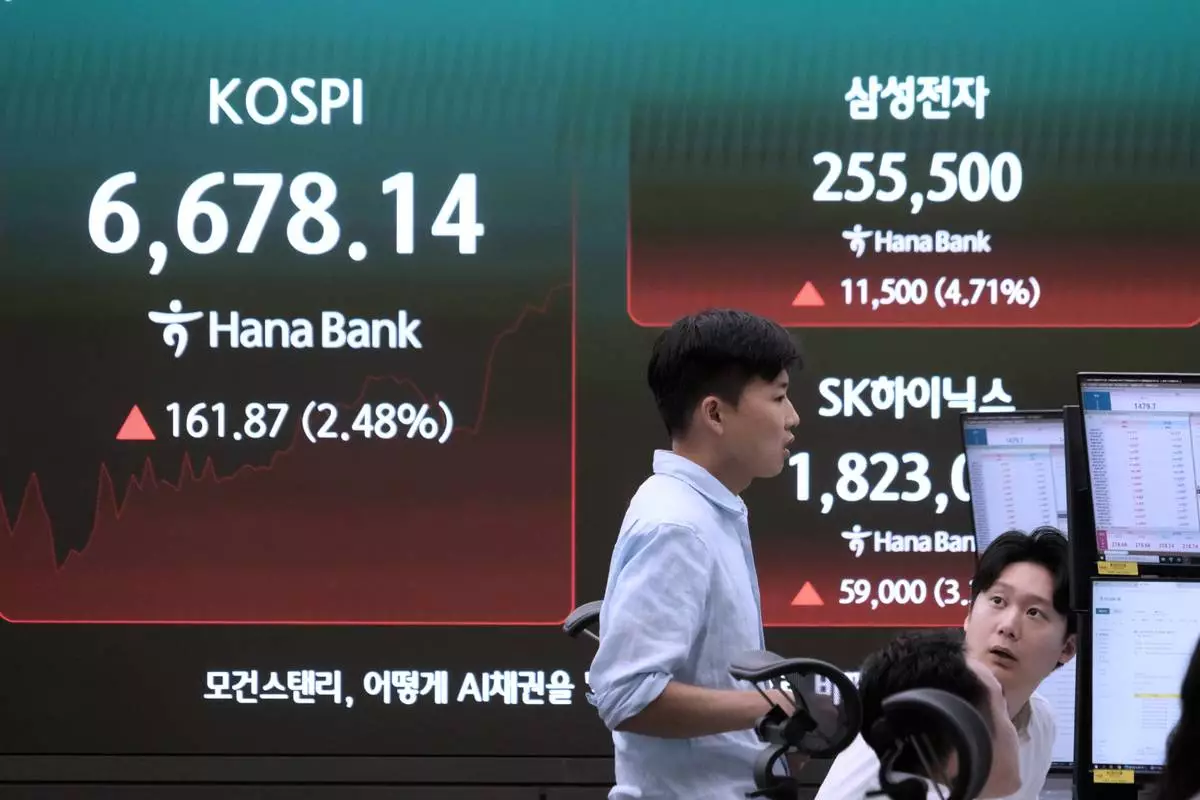
Currency traders work near a screen showing the Korea Composite Stock Price Index (KOSPI), SK Hynix and Samsung Electronics Co. stock price at the foreign exchange dealing room of the Hana Bank headquarters in Seoul, South Korea, Tuesday, July 21, 2026. (AP Photo/Ahn Young-joon)
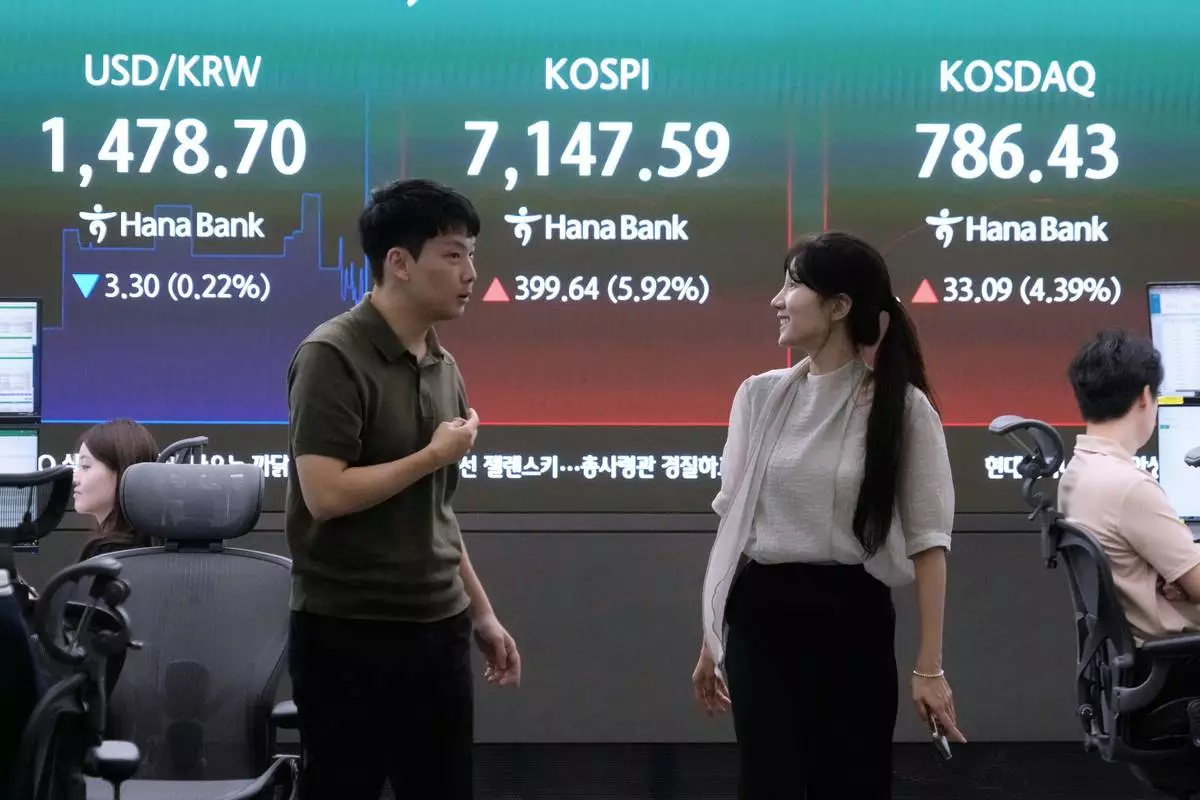
Currency traders work near a screen showing the Korea Composite Stock Price Index (KOSPI) and the foreign exchange rate between U.S. dollar and South Korean won at the foreign exchange dealing room of the Hana Bank headquarters in Seoul, South Korea, Wednesday, July 22, 2026. (AP Photo/Ahn Young-joon)
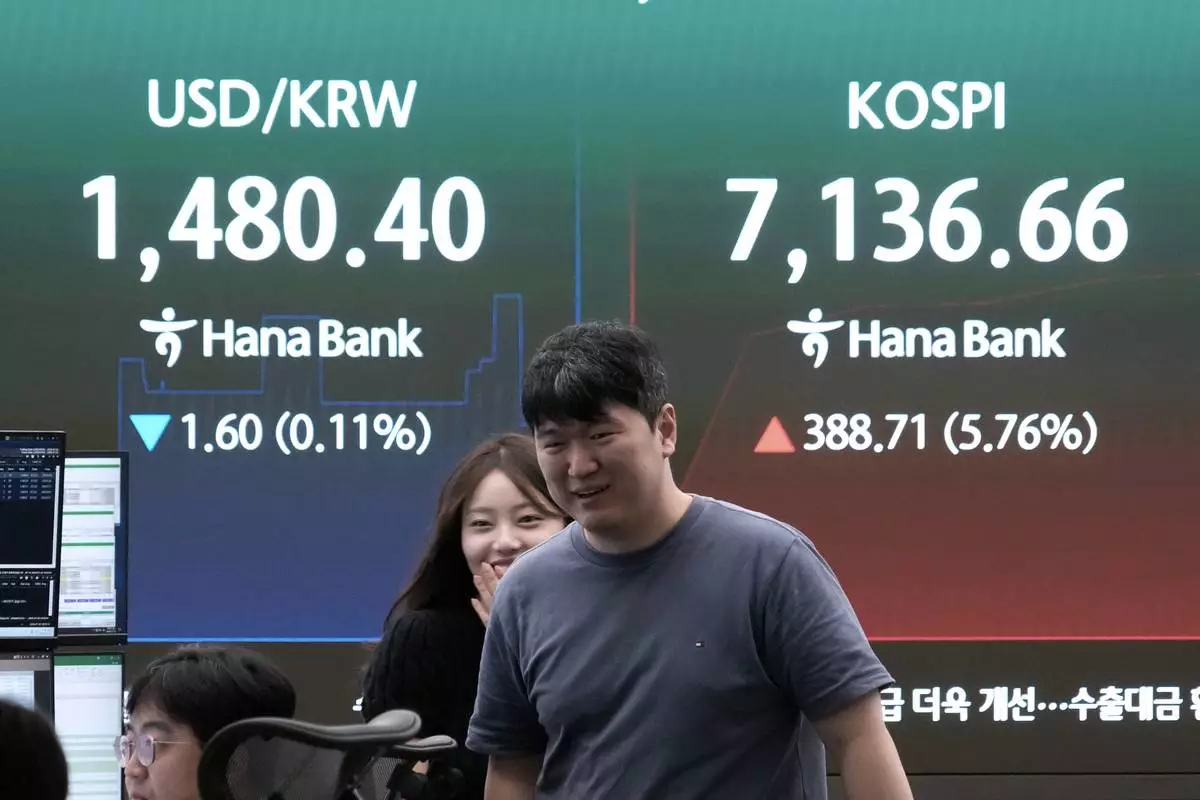
Currency traders walk by a screen showing the Korea Composite Stock Price Index (KOSPI) and the foreign exchange rate between U.S. dollar and South Korean won at the foreign exchange dealing room of the Hana Bank headquarters in Seoul, South Korea, Wednesday, July 22, 2026. (AP Photo/Ahn Young-joon)
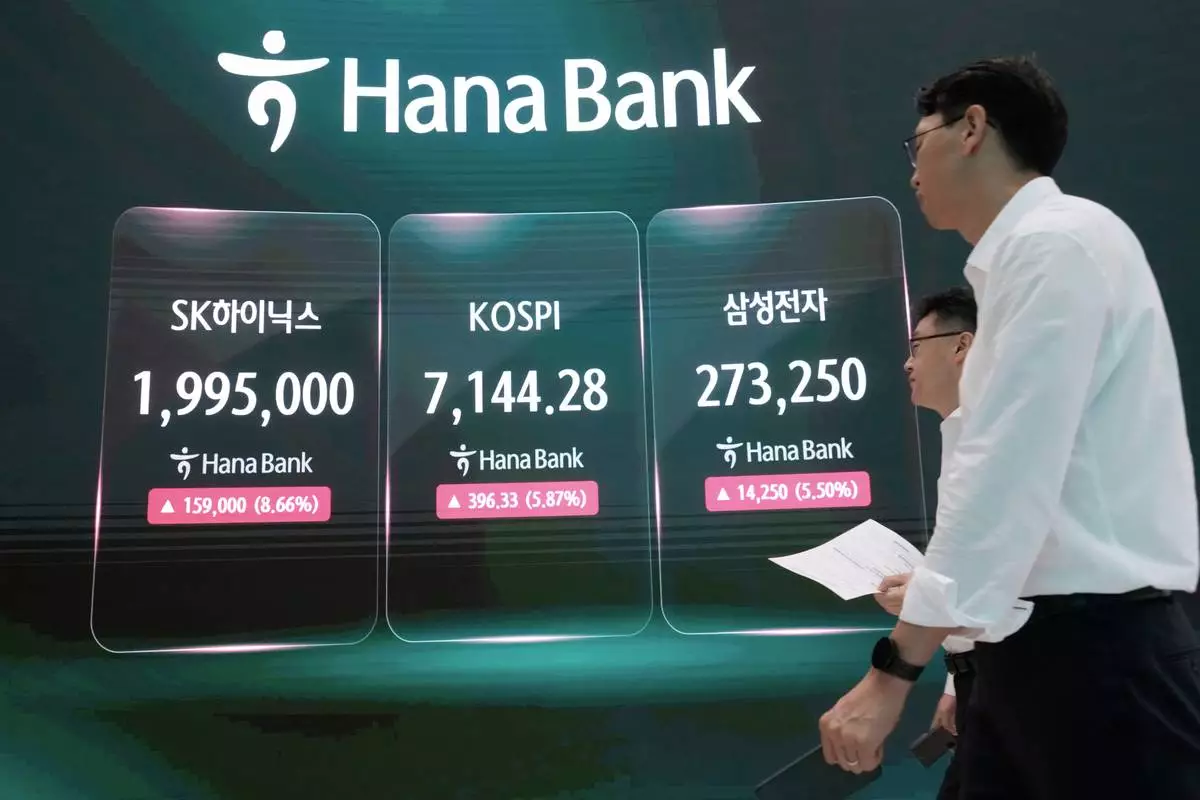
Currency traders walk by a screen showing the Korea Composite Stock Price Index (KOSPI), SK Hynix and Samsung Electronics Co. stock price at the foreign exchange dealing room of the Hana Bank headquarters in Seoul, South Korea, Wednesday, July 22, 2026. (AP Photo/Ahn Young-joon)
Currency traders work at the foreign exchange dealing room of the Hana Bank headquarters in Seoul, South Korea, Wednesday, July 22, 2026. (AP Photo/Ahn Young-joon)