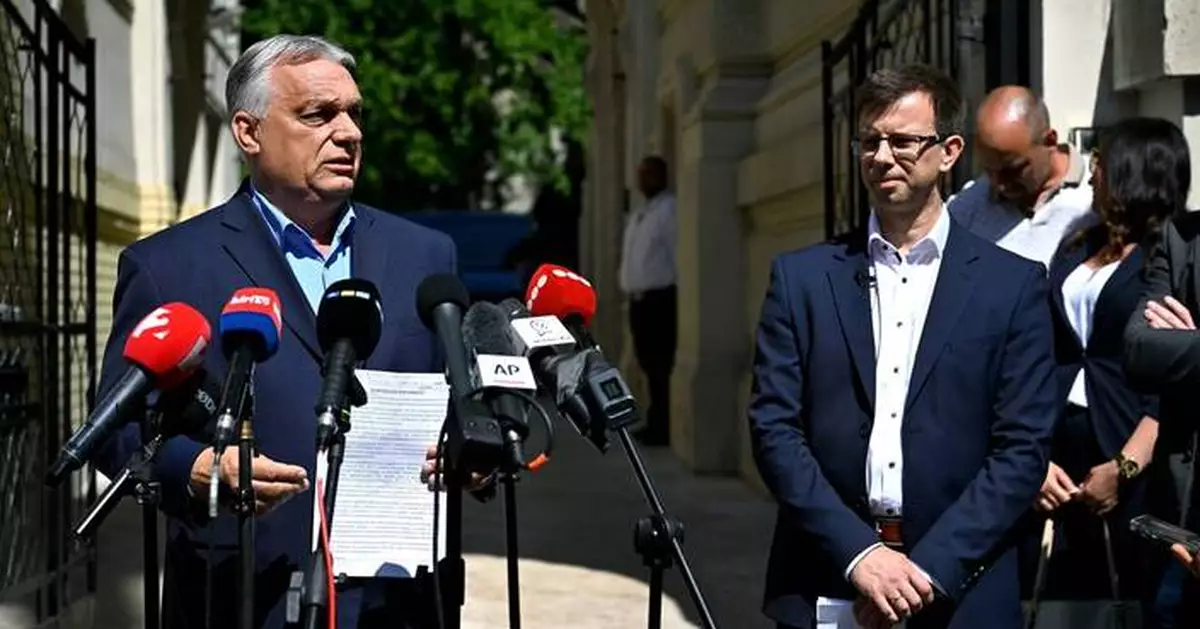
BUDAPEST, Hungary (AP) — Hungary's former prime minister Viktor Orbán declared on Wednesday that he and his far-right Fidesz party will lead a peaceful “resistance” movement against what he called the tyrannical exercise of power by the country's new center-right government.
Orbán was defeated in a blowout election in April by Prime Minister Péter Magyar and his pro-European Tisza party, ending his 16 years in office. Since then, Orbán's nationalist Fidesz party has struggled to recover.
At a news conference outside party headquarters in Budapest, Orbán said a constitutional amendment passed last week by Tisza's majority in Parliament — which removed Hungary's Orbán-era president and set a 12-year term limit for members of Parliament — had “dismantled the rule of law and eliminated the system of checks and balances.”
The term limit, which applies retroactively, returns Hungary to a status similar to the final years of its Communist dictatorship in the late 1980s, Orbán asserted, “when there was no democracy in Hungary, there was no rule of law."
He said the term limit would exclude around half of his party coalition's sitting members from running in the next national elections set for 2030.
“This new political system is not a democracy, it is tyranny," Orbán said.
Since taking office in May, Magyar’s administration has gone to work dismantling what he calls Orbán’s “mafia” by removing numerous political appointees as well as heads of institutions viewed as having facilitated Orbán’s autocratic government.
The new administration suspended the news service of Hungary’s public television and radio — which Magyar argued served as a “propaganda factory” for Orbán’s party — and closed the Sovereignty Protection Office, an authority seen by Orbán’s opponents as a tool for intimidating critics and silencing independent media.
Fidesz has portrayed the moves as assaults on democracy and warned of an authoritarian system in the making. Tisza argues it is using its overwhelming electoral mandate to fulfill campaign promises, combat corruption and restore the rule of law that was eroded under Orbán.
On Wednesday, Orbán said his party considers any officials Tisza appoints to replace earlier appointees “illegitimate,” and announced his party's “Declaration of Resistance” to Magyar's government.
In the declaration, which Fidesz publicized late Tuesday, the party says that “from this day forward, our mission is to restore the democratic rule of law.”
“Every citizen has the right to stand against tyrannical rule,” the declaration reads. “Fidesz ... will use every peaceful means, both inside and outside Parliament, to resist the arbitrary exercise of power.”
It had few details but said it would assist “victims of the authoritarian regime” and document violations of the law.
After dominating Hungarian politics for nearly two decades, Fidesz has spiraled since its election loss. According to a June survey by pollster Medián and published by news site HVG.hu, Tisza's support stands at 60% among the country's entire population while Fidesz support has shrunk to 18%.
On Tuesday, prosecutors and investigators with Hungary’s tax authority raided offices housing Fidesz's data servers as part of a probe into suspected embezzlement and other crimes during Orbán's rule. Orbán alleged Wednesday that the raid was “on political orders,” and said such an action could occur “only in severe dictatorships.”
Fidesz has seen some of its most prominent politicians take a back seat or leave politics. Last week, its parliamentary caucus leader Gergely Gulyás stepped down from his role, while Orbán-era foreign minister Péter Szijjártó announced he was resigning from Parliament to take an executive position with Chinese carmaker BYD.
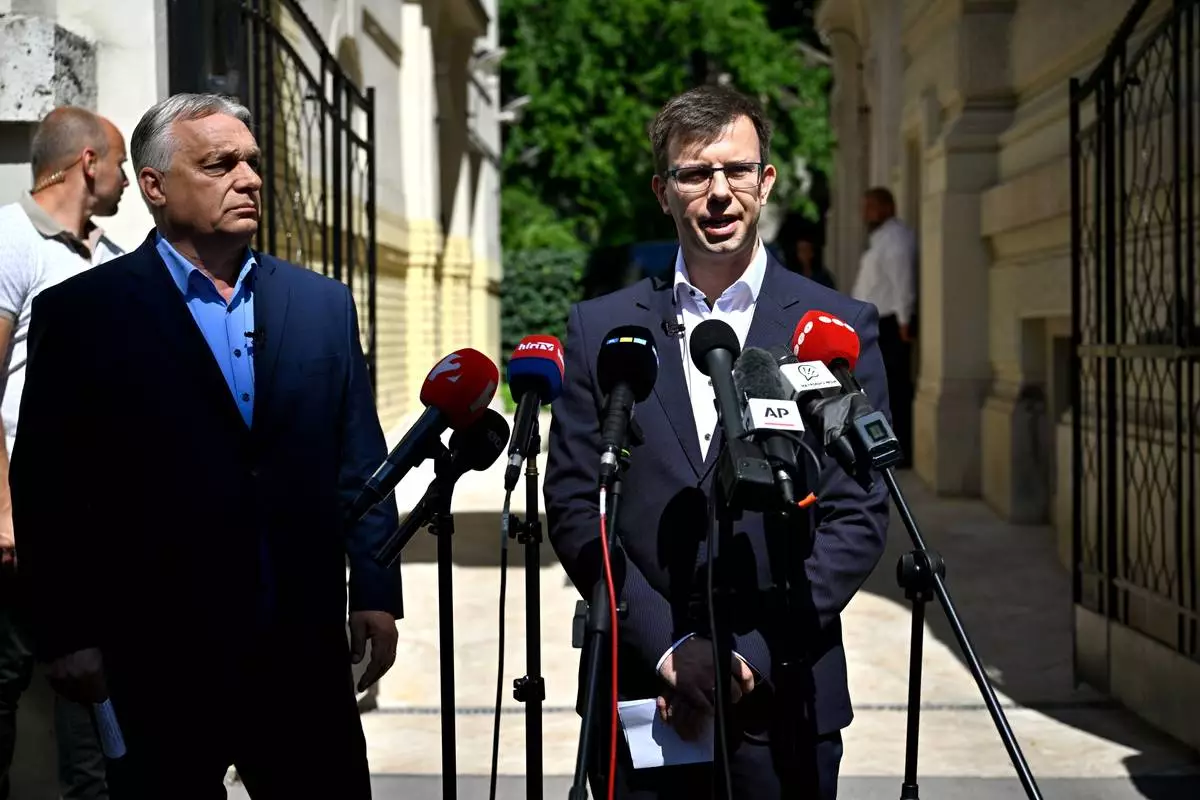
Former Hungarian Prime Minister and Chairman of the Fidesz party Viktor Orban, left, and new faction leader of the party Janos Boka hold a press conference in front of the Fidesz headquarters in Lendvay Street in Budapest, Hungary, Wednesday, July 22, 2026. (Robert Hegedus/MTI via AP)
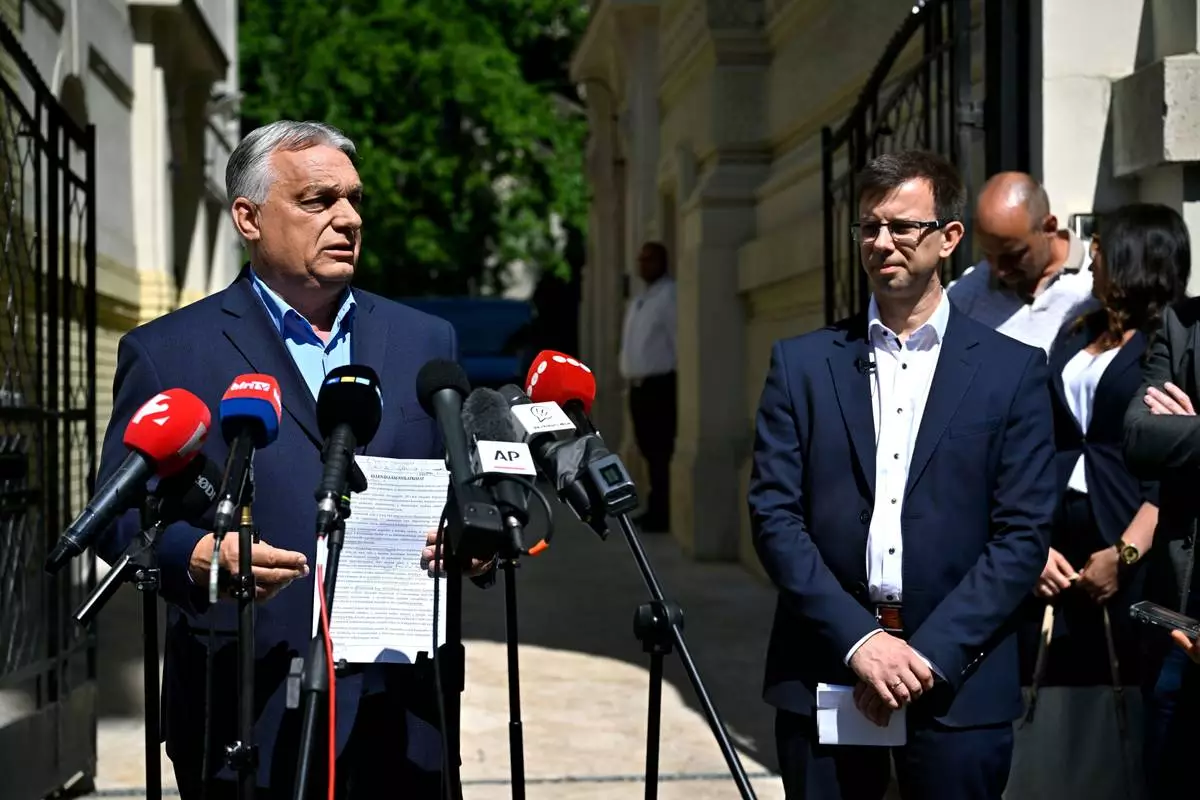
Former Hungarian Prime Minister and Chairman of the Fidesz party Viktor Orban, left, and new faction leader of the party Janos Boka hold a press conference in front of the Fidesz headquarters in Lendvay Street in Budapest, Hungary, Wednesday, July 22, 2026. (Robert Hegedus/MTI via AP)
BEIRUT (AP) — Lebanon's prime minister visited Wednesday a battered southern village as the implementation of a Washington-brokered Lebanese-Israeli agreement began, following months of war between Israel and the Iran-backed Hezbollah.
The latest conflict started March 2, when the Lebanese militant group fired rockets toward Israel after the U.S.-Israeli February attacks that set off the Iran war. In response, Israel launched an aerial campaign and ground invasion in Lebanon, killing more than 4,000 people and displacing 1.2 million others.
The two sides, technically in a state of war nearly 80 years after Israel’s establishment, started rare direct talks championed by Washington.
They reached an agreement by late June, setting a plan for the deployment of Lebanese military forces in areas in southern Lebanon, where Hezbollah had a military presence and influence, and the withdrawal of Israeli forces, while disarming the militant group.
Hezbollah has refused the talks and disarmament calls.
Nawaf Salam’s visit to Zawtar Al Gharbieh came a day after President Joseph Aoun’s landmark White House meeting with U.S. President Donald Trump, who made a surprise announcement, allowing American carriers to resume direct flights to Lebanon for the first time in 40-plus years.
Salam, alongside Lebanon’s defense minister and senior military officials, pitched a Lebanese flag near a destroyed building in the town, vowing the government will start rebuilding destroyed homes and infrastructure.
“We have insisted since the beginning that our goal is the complete Israeli withdrawal from all our territory,” Salam said. “What we are seeing today is just the beginning, but we remain determined and steadfast, and will continue to mobilize all political and diplomatic efforts to secure a full withdrawal from all of Lebanese territory.”
The army did not immediately allow civilians to enter as they cleared unexploded ordnance. Residents tried to storm the barrier in a desperate bid to enter the village and check on their homes and properties.
Some expressed frustration, downplaying the army’s deployment.
“The prime minister should have informed people that he was going to Zawtar and he should have taken the people, who have been waiting for the past two days, with him,” said Zaynab Ismail, a resident.
Lebanon and Israel agreed to establish two “pilot zones” in a series of villages in southern Lebanon where the Israeli military is to turn over control to the Lebanese army after clearing the areas of any Hezbollah presence.
Israel hasn’t occupied any of the newly assigned zones in the latest conflict, though it has struck them and conducted ground operations. The Lebanese army has a limited presence there.
Trump, in his meeting with Aoun, did not address the “pilot zones” entering their implementation phase, but pledged to support Lebanon without going into details.
Aoun and the Lebanese government have urged the international community to invest in the Mediterranean country and its army to help rebuild its infrastructure and military capacity.
Lebanon’s top political leadership has criticized the group for dragging the country into another war, but also condemned Israel for its widespread bombing and ground invasion.
Hezbollah has condemned the government for holding direct talks with Israel and rejected the agreement, but the militant group has not tried to sabotage it through military means. Its leadership believes Israel cannot be pressured to withdraw its troops by diplomatic means only, and that Lebanon lacks the leverage of its key ally Iran in negotiations.
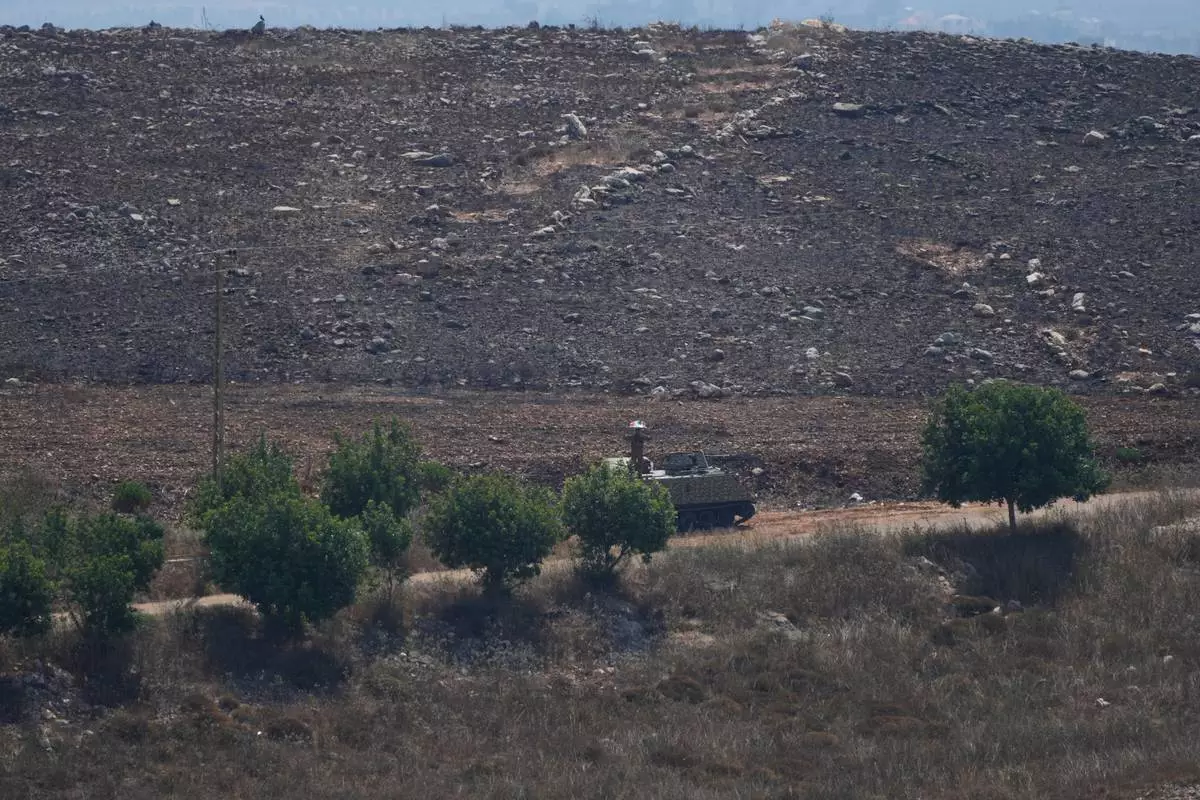
A Lebanese army armored personnel carrier deploys at the entrance to the southern village of Zawtar Al Gharbieh, Lebanon, Wednesday, July 22, 2026. (AP Photo/Mohammed Zaatari)
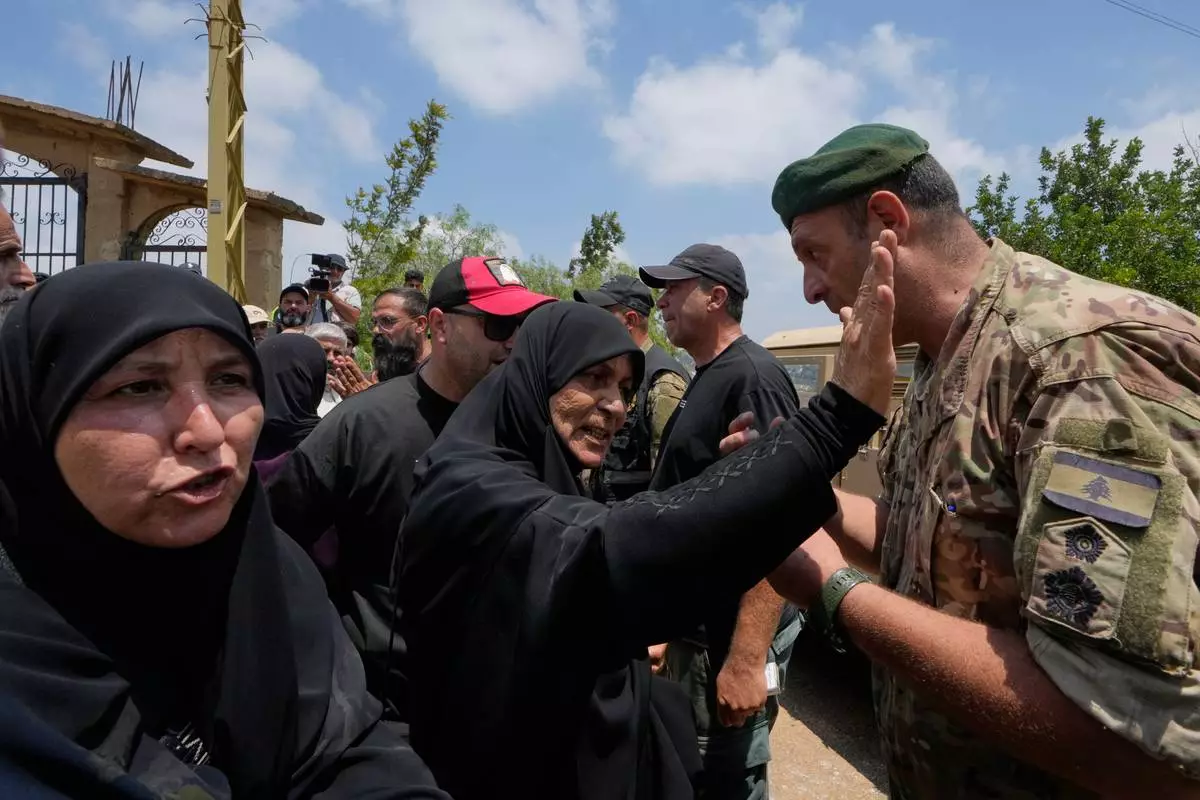
Lebanese army soldiers prevent residents from entering the southern village of Zawtar al-Gharbiyeh while deploying at the village entrance, Lebanon, Wednesday, July 22, 2026. (AP Photo/Mohammed Zaatari)

Lebanese army soldiers prevent residents from entering the southern village of Zawtar Al Gharbieh while deploying at the village entrance, Lebanon, Wednesday, July 22, 2026. (AP Photo/Mohammed Zaatari)
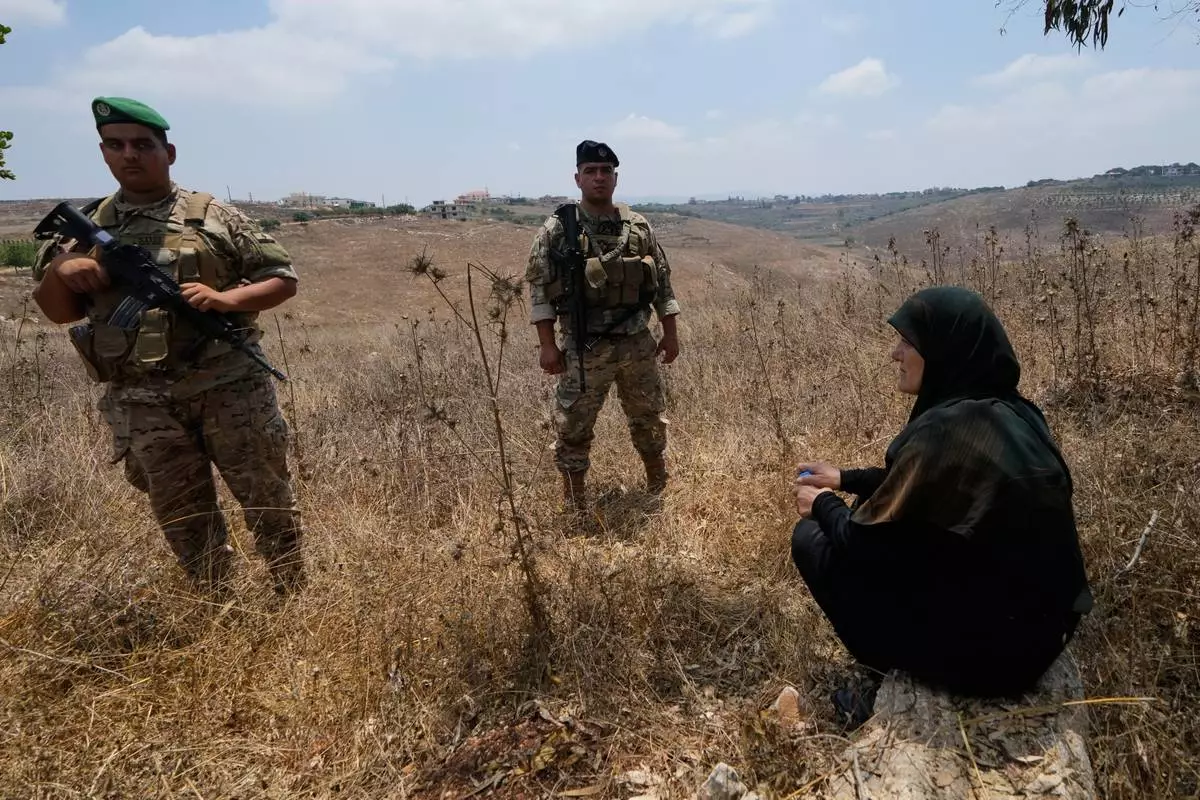
Lebanese army soldiers stand near a woman after preventing her from entering the southern village of Zawtar Al Gharbieh, Lebanon, Wednesday, July 22, 2026. (AP Photo/Mohammed Zaatari)
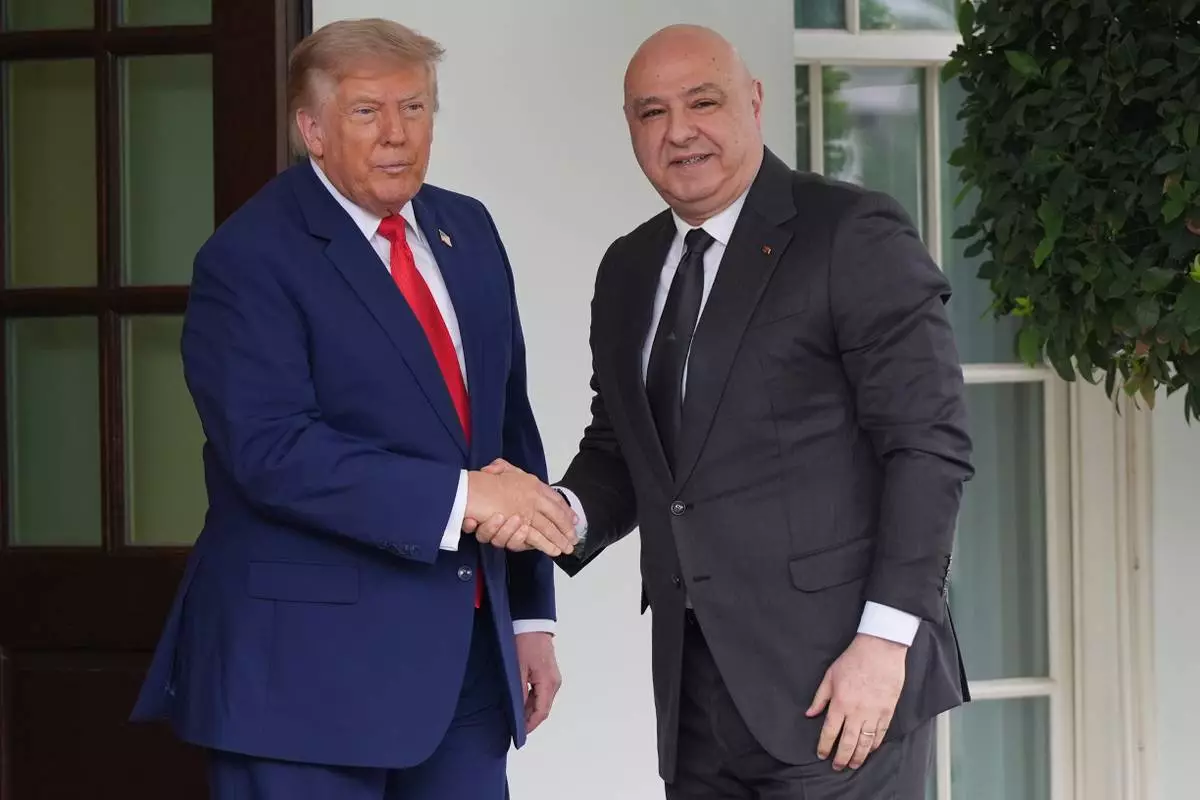
President Donald Trump greets Lebanon's President Joseph Aoun on his arrival at the White House, Tuesday, July 21, 2026, in Washington. (AP Photo/Julia Demaree Nikhinson)
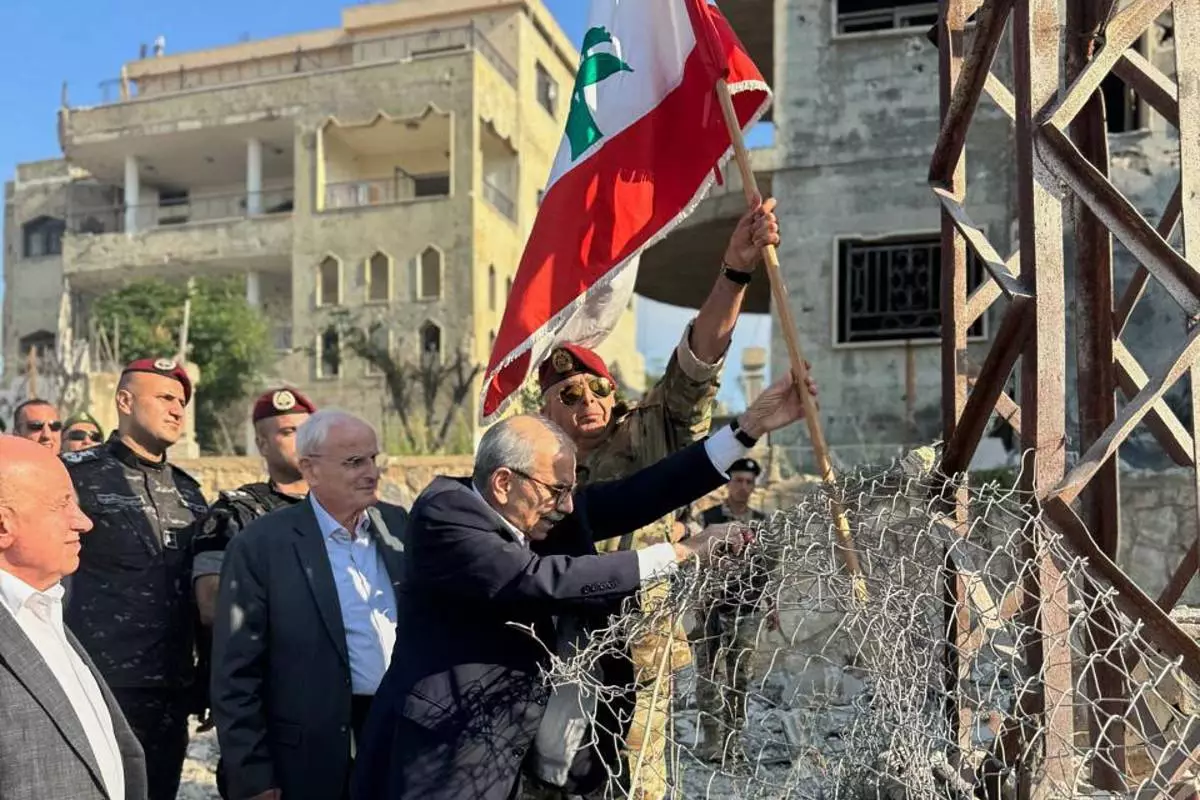
In this photo released by the Lebanese Government press office, Lebanese Prime Minister Nawaf Salam, center, raises a Lebanese flag during a visit to the southern village of Zawtar Al Gharbieh, Lebanon, Wednesday, July 22, 2026. (Lebanese Government press office via AP)