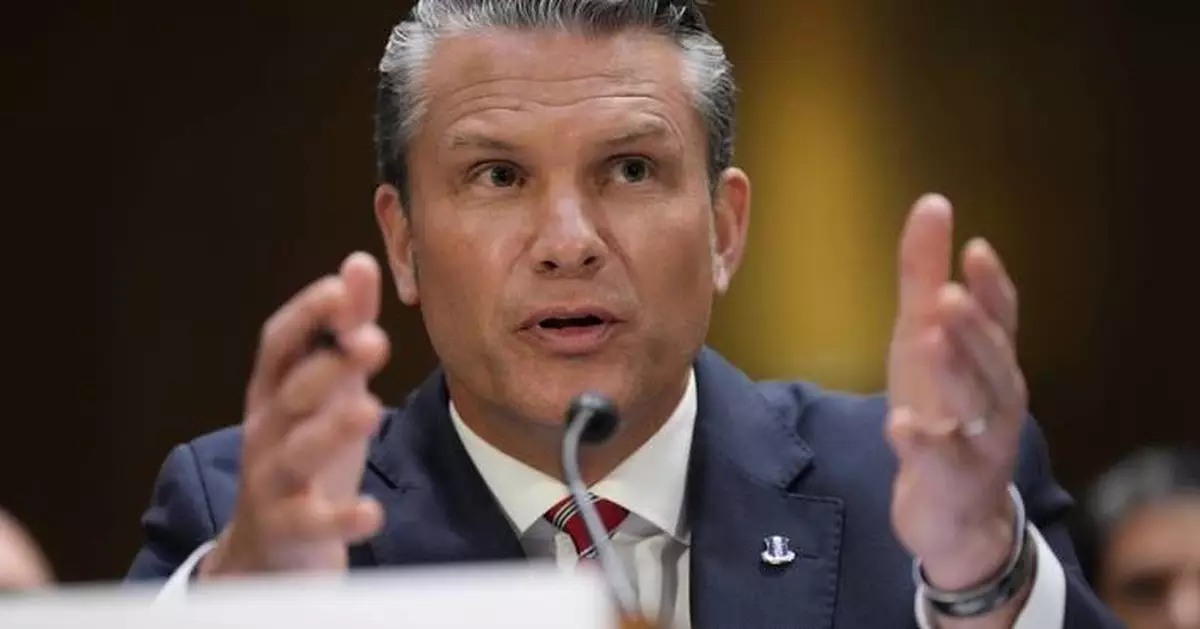
WASHINGTON (AP) — Defense Secretary Pete Hegseth's new initiative to test and treat troops for low testosterone has prompted a federal judge to question the differences between that kind of testosterone replacement therapy and hormone treatment for transgender men in the military.
U.S. District Judge Ana Reyes in Washington raised the question Wednesday in an ongoing lawsuit against President Donald Trump's ban on transgender troops. Reyes noted that Trump's ban says “the Armed Forces must adhere to high mental and physical health standards ... without the benefit of routine medical treatment or special provisions.”
Reyes ordered both parties in the lawsuit to address “the similarities and differences in administering TRT, both medically and logistically, for trans men compared to other service members, including cis individuals.” She was using the acronym for testosterone replacement therapy.
The judge also requested information on the Pentagon's “basis for treating trans men and other service members differently between this new policy and the Military Ban.”
Reyes' order comes a week after Hegseth announced that he is rolling out a new screening program for “testosterone deficiency” among troops, calling it necessary to allow them to operate at their “absolute best.”
The screenings will be conducted annually as part of service members’ required medical screenings for those 30 and older, he said. Troops under 30 can volunteer to be tested. In a video on social media, Hegseth said receiving testosterone replacement therapy would be voluntary.
Other Trump administration officials have begun to advocate for men to have easier access to testosterone replacement therapies, but the messaging from Hegseth and others blends known science on the hormone with broader, and less substantiated, claims.
Testosterone levels in men decline naturally with age and have long been linked to issues like erectile dysfunction, low libido, mood changes and weight gain. But experts have debated for years how to diagnose those problems and whether they should be treated by replacing the hormone.
Reyes, who was nominated by President Joe Biden, is overseeing one of the lawsuits against Trump's ban on transgender troops. Transgender active duty service members and former service members seeking to reenlist sued in late January 2025, shortly after the president returned for his second term in office.
Reyes ruled last year against Trump's executive order to exclude transgender troops. A divided panel of federal appeals court judges sent the case back to Reyes after partially upholding her order, finding that the ban was unlawful and service members who sued could not be kicked out.
Reyes has since given the case class-action status, which means the outcome could expand to all service members.
Trump's transgender military ban remains in effect, however. The U.S. Supreme Court has allowed the Pentagon to enforce it as litigation plays out.
Associated Press writers Lindsay Whitehurst and Michael Kunzelman contributed to this report.
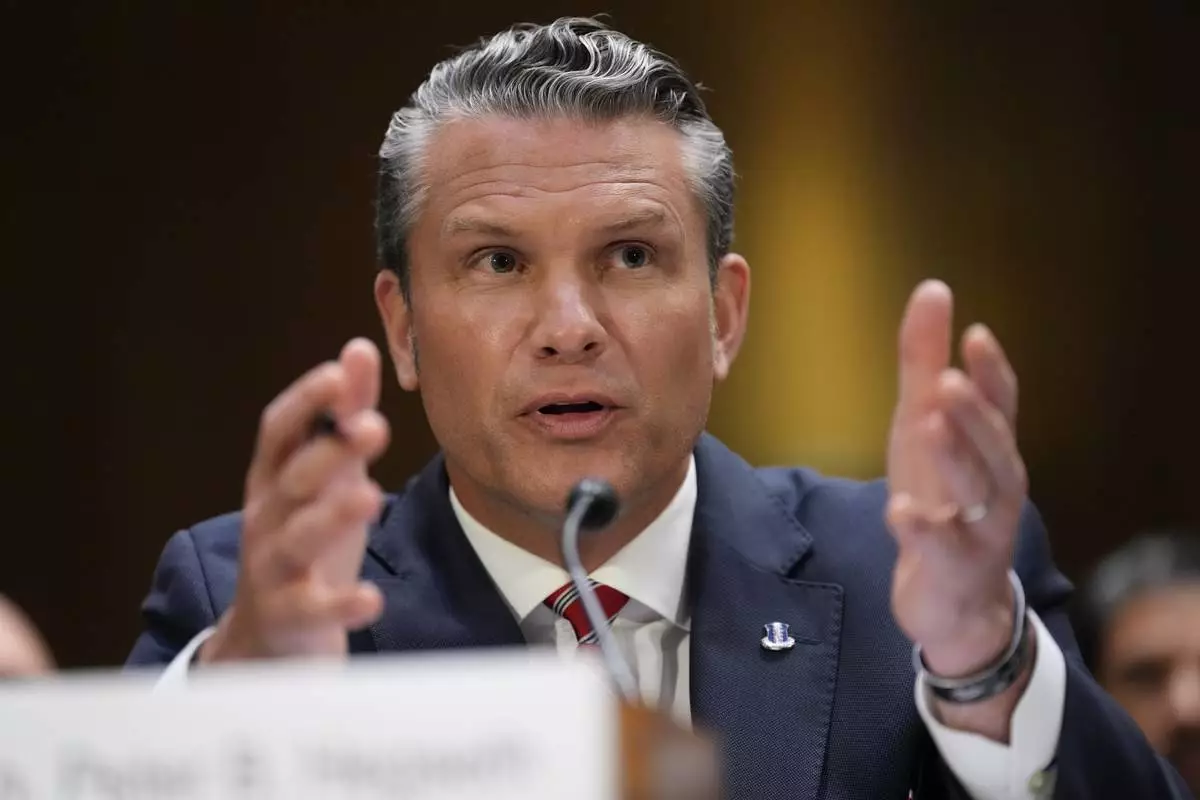
Defense Secretary Pete Hegseth testifies at a Senate Appropriations Committee hearing, Tuesday, July 21, 2026, on Capitol Hill in Washington. (AP Photo/Jacquelyn Martin)
WASHINGTON (AP) — One Immigration and Customs Enforcement officer has been referred for discipline over a use-of-force incident since the beginning of the Trump administration, said Democratic members of the House Homeland Security Committee after a briefing with ICE officials Wednesday about body cameras, vehicle stops and training.
The closed-door briefing for committee members comes in the wake of two shootings in which ICE officers shot and killed two immigrants that they were trying to arrest, raising concerns over the agency's tactics at a time that it is ratcheting up its arrests.
The shootings in Maine and Houston over the span of a week have led to fierce criticism that there's not enough oversight of the agency key to President Donald Trump's mass deportation agenda. At least 10 people have died in encounters with immigration agents since Trump launched the crackdown after retaking office, and in the Maine shooting, family members of the ICE officer who opened fire say he had a history of violent behavior and never should have been given a badge and gun.
Rep. Seth Magaziner, a Democrat from Rhode Island, said they were told during the briefing that there have been 56 complaints of excessive force against ICE officers; 32 were cleared, and one was referred for disciplinary action. Magaziner said they were told no discipline had yet been handed out. The rest of the incidents are still under investigation, he said.
“It just defies belief that an agency of 20,000-plus officers with all of the chaos that we’ve seen over the last year and a half through the surges and civilians being injured and killed, that no one would be found to have violated use of force with the exception of possibly one person,” Magaziner said.
Homeland Security said in a statement Wednesday that ICE officers who violate the agency's policies are held accountable, their officers are trained in de-escalation tactics and take an annual refresher course on use of force policies. The agency also defended its officers, saying they are operating in an environment where they are constantly being attacked.
“When faced with dangerous circumstances, DHS law enforcement professionals have used their training to protect themselves, their fellow officers, and the public,” the agency said.
The use-of -force numbers mark an increase since February, when then-acting director Todd Lyons said during Senate testimony that ICE had opened 37 investigations for excessive force; 18 of those were closed, 19 were still pending, and one was referred for “further action,” Lyons said.
The ranking Democrat on the committee, Rep. Bennie Thompson of Mississippi, said the ICE officials could not discuss the shootings in Maine or Houston, as those are both open investigations. Thompson, who said he came away with more questions than answers from the briefing, said he wanted to know who investigates use of force incidents: “Sometimes they said the FBI, sometimes they said HSI. Sometimes they said another entity.”
The officials said they were going to retrain officers who had gone through a shorter curriculum that was in place last fall, Thompson said. In June, Homeland Security Secretary Markwayne Mullin said the agency would be increasing the amount of training for new officers starting this month.
Thompson said he pressed for answers about how many officers had been brought back for retraining and how they're being retrained but couldn't get any clarity.
Thompson said he and the committee chair, Rep. Andrew Garbarino, R-N.Y., will follow up with ICE with a list of questions.
Garbarino said he appreciated ICE briefing the members.
“Today was an important opportunity for Members to receive timely answers on the status of body camera deployment for law enforcement in the field, training and vetting standards and requirements, and current guidance on the use of vehicle stops as part of immigration enforcement,” Garbarino said in a statement.
When it comes to vehicle stops, Magaziner said they were told that current guidance to ICE officers is to only do them when there’s no other alternative, and they’re supposed to use lights and sirens. But, Magaziner said, that guidance has only been passed along verbally to the staff as opposed to a written directive.
Both the shootings in Maine and Houston involved shootings of immigrants who were in moving vehicles, raising questions about ICE’s training and policies surrounding how it tries to apprehend people when they’re driving.
After the Maine killing, Trump administration officials told ICE officers to suspend most vehicle stops. But the next day, Trump announced on social media that he wanted ICE to keep doing them.

Notes of community support and sorrow are hung from a fence during a vigil for Johan Sebastian Duran Guerrero, a Colombian national who was shot and killed by an ICE agent, Friday, July 17, 2026, in Biddeford, Maine. (AP Photo/Charles Krupa)
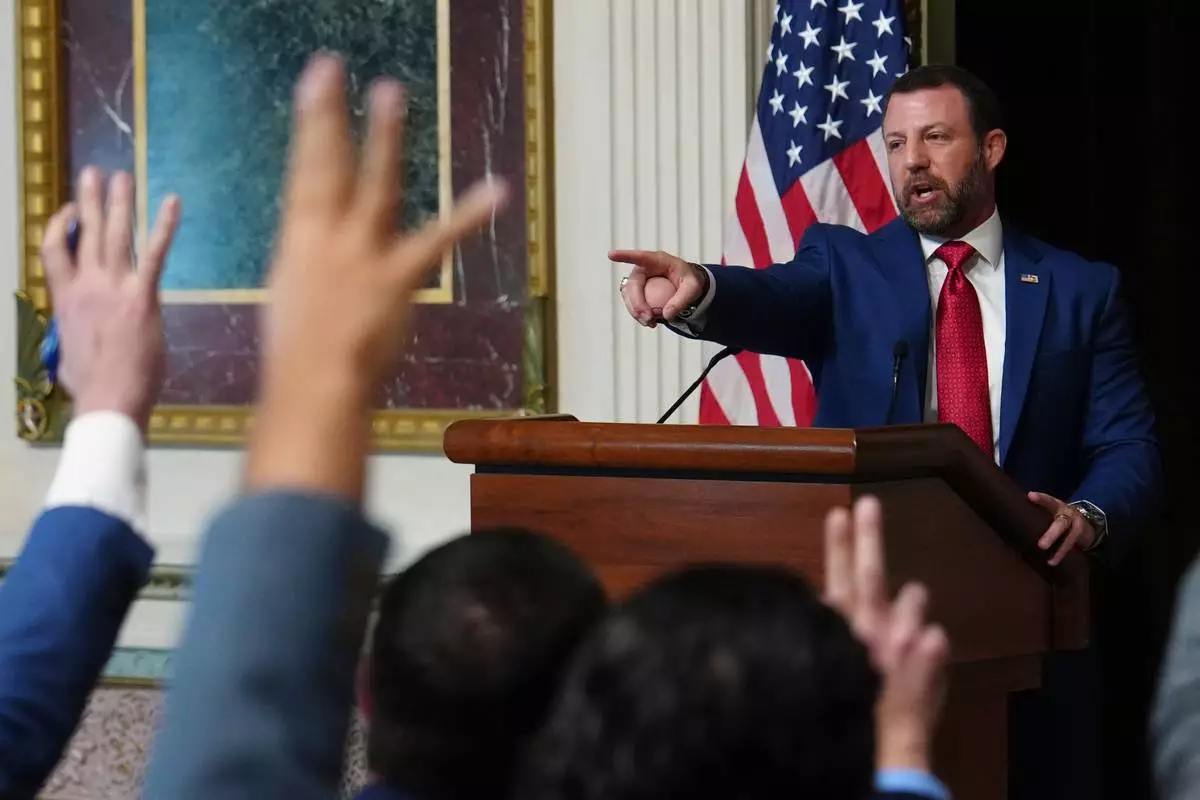
Reporters raise their hands as Homeland Security Secretary Markwayne Mullin speaks in the Indian Treaty Room at the Eisenhower Executive Office Building on the White House campus, Friday, July 17, 2026, in Washington. (AP Photo/Julia Demaree Nikhinson)