Platform connects marketing, operations, and guest engagement workflows for multi-unit operators, moving restaurant AI from pilot projects to everyday execution
RANCHO PALOS VERDES, Calif., July 23, 2026 /PRNewswire/ -- Converge AI today outlined how its AI-native workspace can support restaurant marketing, operations, and guest engagement, as the company advances follow-up conversations with industry leaders and multi-unit operators at CREATE 2026, the Nation's Restaurant News foodservice conference at Terranea Resort.
The restaurant industry is among the most operationally demanding sectors of the US economy. Multi-unit brands coordinate campaign calendars, limited-time offer rollouts, franchisee communications, guest feedback, and unit-level performance across dozens or hundreds of locations, often with lean corporate teams supporting field operations. Against this backdrop, industry conversation is shifting from whether AI can be applied in restaurants to where it can deliver measurable value in everyday operations.
Converge AI is built for that shift. Rather than adding another standalone tool to an already crowded technology stack, the platform brings specialized AI products into a shared context layer, allowing work and business knowledge created in one part of the business or organization to carry into the next.
For restaurant teams, that takes four forms:
- Framia Pro produces the full campaign asset for brand launches and limited-time offers, including short-form video, social content, in-store posters, ad creative, and menu visuals. Field and franchise teams can localize campaigns for individual markets while maintaining brand standards, reducing the time from idea to market.
- Enter Pro allows operators to build internal tools without engineering support. Operations directors and unit managers can turn working knowledge into workflows, connect siloed systems and surface data from across the business as usable insight rather than separate reports.
- Concat Pro functions as a growth layer across creator partnerships, paid media, and SEO, continuously learning from what performs for the brand and adjusting accordingly.
- Combos turns promotions, brand IP, and guest moments into lightweight branded games that operators can deploy without a game studio, extending campaigns into interactive experiences guests can play and share.
Converge AI is now working alongside restaurant leaders to evaluate how these workflows can be adapted to the needs of multi-unit organizations. These included localizing marketing for new market entries, analyzing performance across multiple locations, consolidating guest feedback from separate channels, onboarding new employees, and automating multilingual communications across front- and back-of-house teams.
These conversations reinforced a central challenge in restaurant technology adoption: operators are not short on tools, but they often lack the time, technical resources, and connected workflows to make those tools work together. Meaningful AI adoption therefore depends on understanding how restaurant businesses actually operate and translating that knowledge into repeatable processes that can scale across teams and locations.
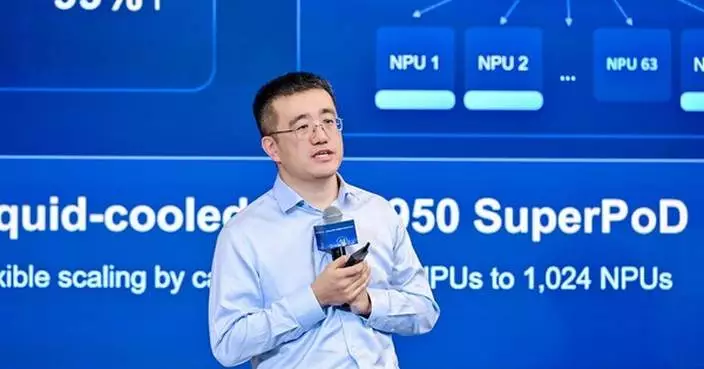
"CREATE 2026 may have come to a close, but the work is only beginning," said Oliver Zhang, founder and CEO of Converge AI. "As AI moves from technological innovation to broad industry adoption, the competitive gap will no longer be defined by how many AI tools an organization uses, but by how deeply AI is integrated into its business processes, team collaboration, and day-to-day operations. Our focus is to make that transition practical—lowering barriers to adoption, improving operational efficiency, and helping businesses turn AI into sustained growth and long-term competitive advantage."
Converge AI will continue working with industry partners and growing businesses to move AI beyond isolated experiments and into repeatable workflows across teams and locations.
About Converge AI
Converge AI is an all-in-one AI platform that helps businesses turn ideas into execution. Its specialized AI products share context across teams, automating workflows and delivering business results without adding headcount. The product suite includes Enter Pro for building tools and internal workflows without code, Framia Pro for campaign and creative production, Concat Pro for growth intelligence, and Combos for branded interactive experiences. Products currently in development will also be added to the platform soon. Together they help lean teams and enterprises work faster, stay consistent across teams and locations, reduce operational friction, and turn business knowledge into measurable outcomes. Learn more at converge.ai.
Media contact:
Eric Zhang
ericz@converge.ai
** This press release is distributed by PR Newswire through automated distribution system, for which the client assumes full responsibility. **
Converge AI Extends Its AI-Native Workspace to the Restaurant Industry