Skip to Content Facebook Feature Image

Salman Rushdie testifies at the terrorism trial of the man convicted of stabbing him

ENT

Salman Rushdie testifies at the terrorism trial of the man convicted of stabbing him
ENT

ENT

Salman Rushdie testifies at the terrorism trial of the man convicted of stabbing him

2026-07-24 00:12 Last Updated At:00:41

BUFFALO, N.Y. (AP) — Four years after being stabbed on an amphitheater stage, Salman Rushdie sat across a courtroom from his convicted attacker Thursday and told jurors for a second time about the ambush that nearly killed him.

The prize-winning author recalled feeling what he thought was a punch under his chin, not realizing at first that he was being stabbed.

Then “I was on the stage, lying down, with an enormous pool of blood all around me,” Rushdie testified. “It was an enormous and expansive lake of blood.”

A Buffalo federal court jury watched Rushdie fixedly as he testified — and at one point removed his glasses to show his unseeing right eye — at Hadi Matar's terrorism trial. He has pleaded not guilty.

Matar already was convicted of a state-level attempted murder charge in the 2022 attack at a cultural institution where Rushdie was poised to speak about threats to writers and artists. Federal prosecutors claim Matar was acting on such a threat — an Iranian leader's 1989 call for Rushdie's death because of his novel “The Satanic Verses.”

“I can’t say what his ambitions or his aim was, but the wounds were dispersed across my body,” Rushdie testified.

Rushdie, 79, was composed and straightforward during little more than an hour on the witness stand. He outlined the attack — which blinded him in one eye, damaged his liver and severed nerves in his arm — and his lengthy work to relearn daily tasks afterward. He described the stabbing and recovery previously during Matar’s earlier trial, in a memoir and in interviews with The Associated Press and other outlets.

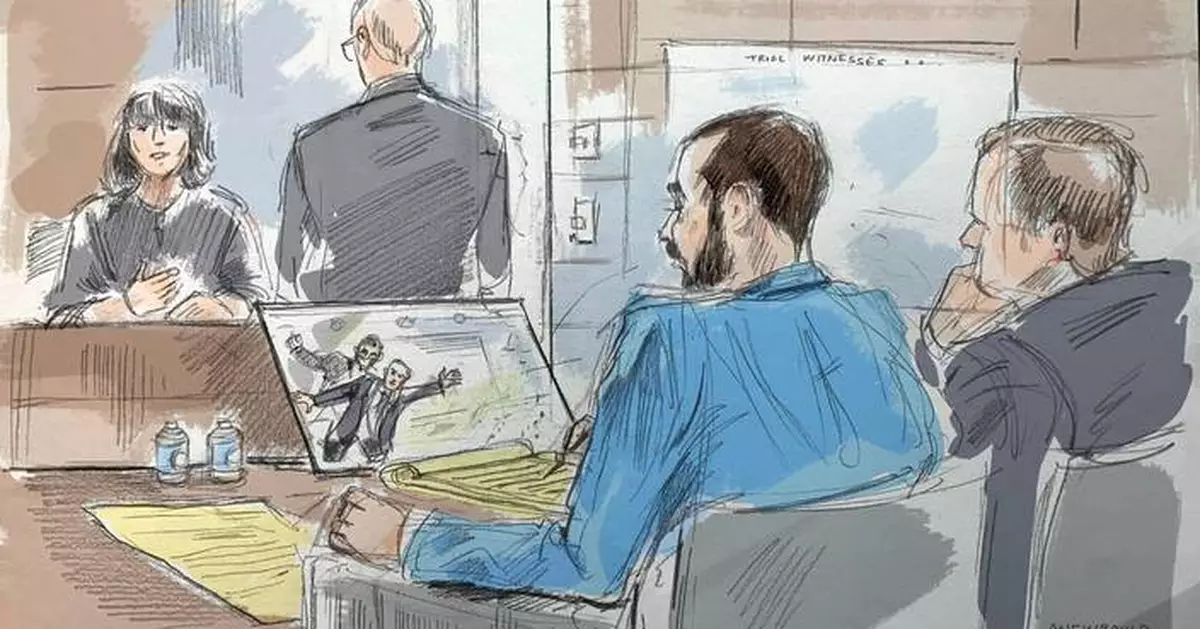
Matar, 28, looked down at the defense table as Rushdie began testifying. Matar at times rested his hand on his chin and sometimes turned to speak to his lawyer, but not toward the witness stand, though the defendant did watch the author walk out a door. Rushdie glanced at Matar fleetingly, if at all.

Matar's attorneys have argued that prosecutors can't prove his intent or mindset at the time of the attack — a key element in their claim that it was an act of terrorism motivated by allegiance to Iran's government and the Iranian-backed Hezbollah militant group.

When Matar’s lawyer asked whether Rushdie believed the defendant had ties to terrorism, the author replied: “I had no knowledge, but I had my suspicions.”

Matar faces charges that include engaging in an act of transnational terrorism. Currently serving a 25-year state prison sentence, he faces a potential life sentence if convicted in the federal case.

Iran’s late Ayatollah Ruhollah Khomeini issued the 1989 fatwa, or religious edict, calling for Rushdie to be killed over “The Satanic Verses,” which includes a dream sequence about Islam’s Prophet Muhammad that some Muslims considered blasphemous. The novel sparked often-violent protests against Rushdie, who was born into a Muslim family, and the fatwa drove him into hiding for years.

Barone, the defense lawyer, asked Rushdie Thursday whether he had anticipated blowback from the book.

“Probably, but I don’t believe the book to be on trial here. I believe someone else is on trial,” Rushdie said. At Barone's request, the judge struck the comment from the court transcript.

Prosecutors say Matar was animated partly by comments that a former Hezbollah leader, the late Hassan Nasrallah, made about Rushdie and the fatwa in 2006. The U.S.-born Matar also holds citizenship in Lebanon, where Hezbollah is based, and Matar's mother has said a 2018 trip there left him moody and withdrawn.

Matar started researching Rushdie in 2020 and eventually wrote to himself, “We need to kill him ASAP,” Assistant U.S. Attorney Timothy Lynch said in an opening statement Wednesday. He said Matar cast the killing as part of what he considered a jihad, or holy war.

Matar's New Jersey bedroom and electronics held photos and other material showing his regard for Hezbollah, and he carried a fake driver's license with a name similar to that of a Hezbollah figure, said Lynch. The U.S. government designates Hezbollah as a terrorist organization.

Matar declined to testify at his state court trial but may do so at the federal trial, Barone said outside court Thursday.

Rushdie was born in India, raised in Britain and is now a U.S. citizen. He won the Booker Prize in 1981 for his novel “Midnight’s Children.” His most recent work is “The Eleventh Hour,” a book of short stories and novellas published last year.

Iran's government denied involvement in the 2022 stabbing, but its Foreign Ministry's then-spokesperson suggested Rushdie invited trouble by insulting Islam. Hezbollah's Nasrallah did not comment on the attack.

Peltz reported from New York.
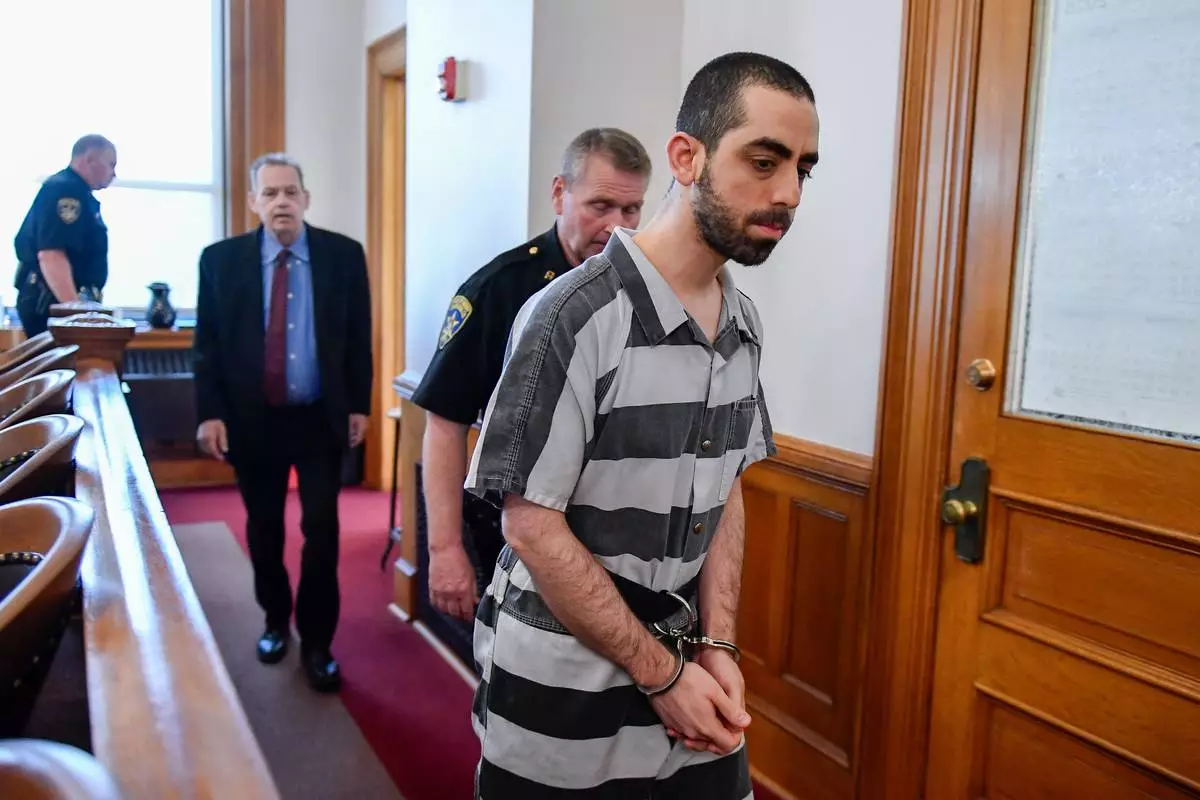
FILE - Hadi Matar walks in to the Chautauqua County court in Mayville, N.Y., May, 16, 2025. (AP Photo/Adrian Kraus, File)
FILE - Hadi Matar walks in to the Chautauqua County court in Mayville, N.Y., May, 16, 2025. (AP Photo/Adrian Kraus, File)

FILE - Novelist Salman Rushdie attends the premiere of the documentary film "Knife: The Attempted Murder of Salman Rushdie" during the Sundance Film Festival on Jan. 25, 2026, at The Ray in Park City, Utah. (AP Photo/Chris Pizzello, File)
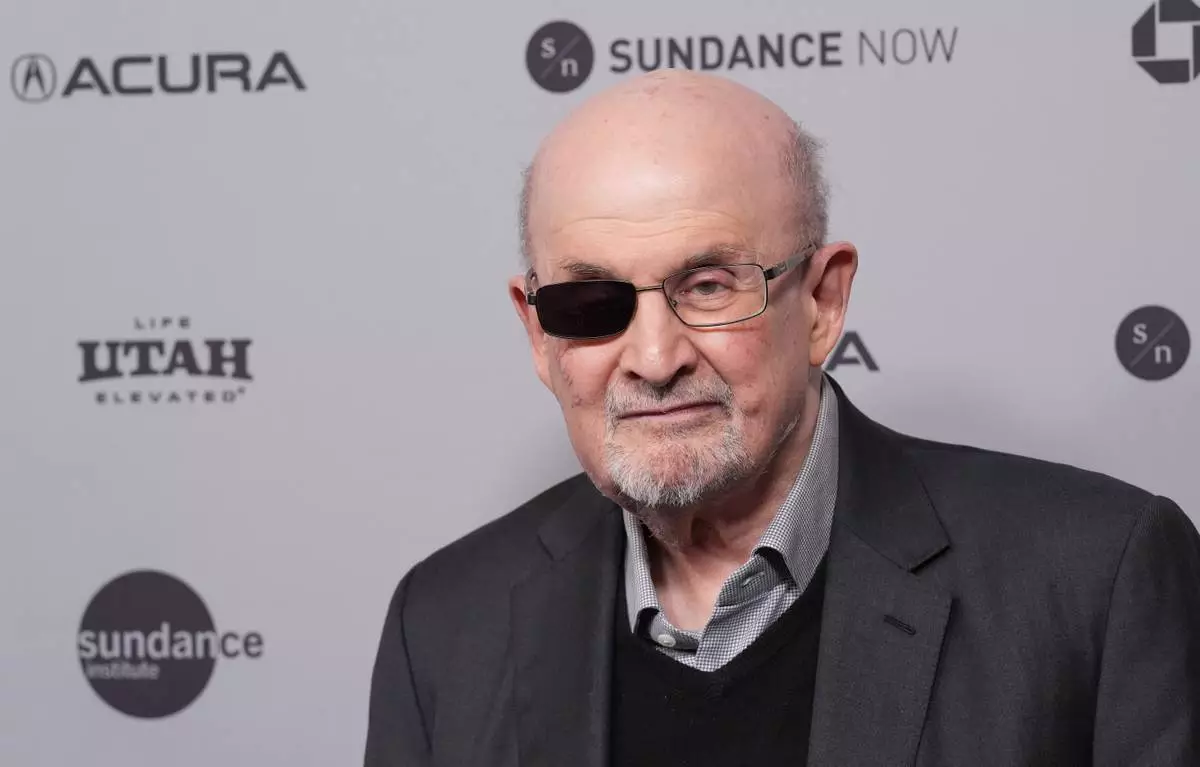
FILE - Novelist Salman Rushdie attends the premiere of the documentary film "Knife: The Attempted Murder of Salman Rushdie" during the Sundance Film Festival on Jan. 25, 2026, at The Ray in Park City, Utah. (AP Photo/Chris Pizzello, File)

In this courtroom sketch, a witness describes video of an alleged attack on Salman Rushdie by Hadi Matar, in federal court in Buffalo, N.Y., Wednesday, July 22, 2026. Matar, foreground, is seated with his lawyer's co-council. (Alexandra Newbould via AP)

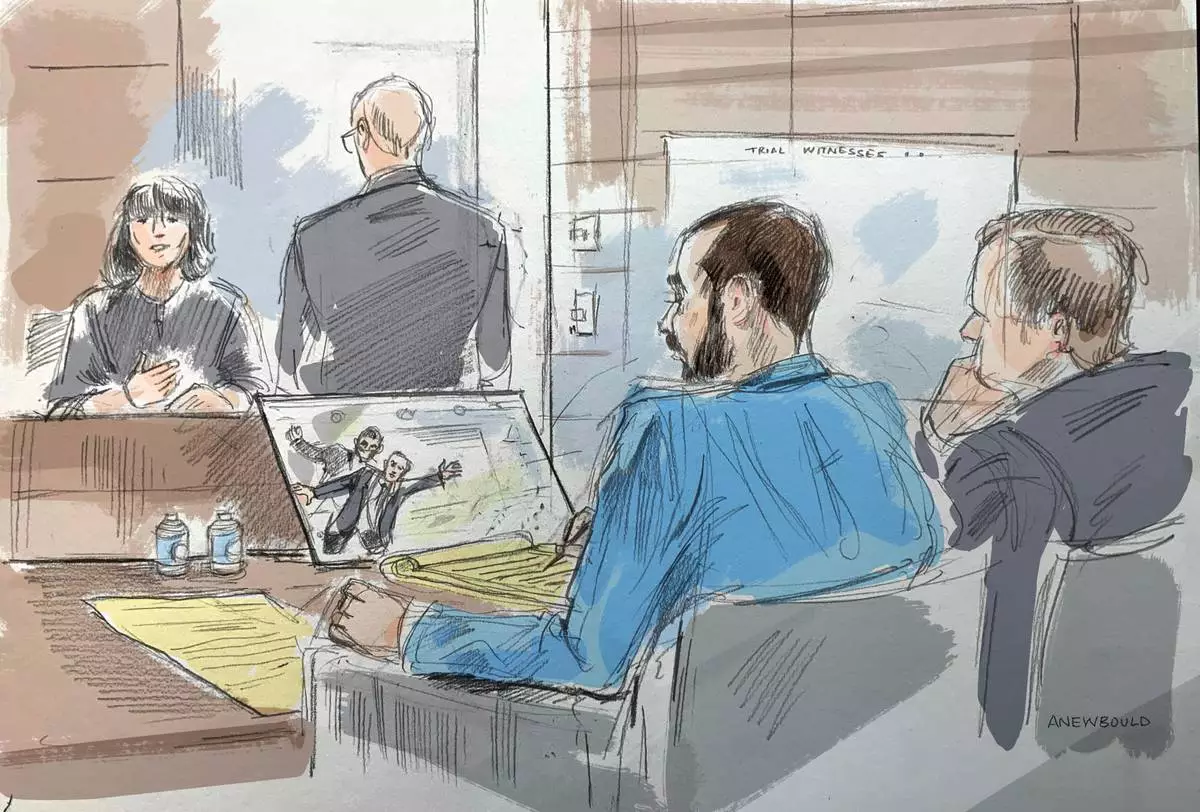
In this courtroom sketch, a witness describes video of an alleged attack on Salman Rushdie by Hadi Matar, in federal court in Buffalo, N.Y., Wednesday, July 22, 2026. Matar, foreground, is seated with his lawyer's co-council. (Alexandra Newbould via AP)
LOS ANGELES (AP) — Data collected from 30 American cities showed an 18% decrease in the homicide rate from 2025 compared to the same period in 2026, translating to about 215 fewer homicides this year, according to a new report from the independent Council on Criminal Justice.

Should the trend continue, it would push the annual homicide rate to the lowest levels in over a century once final numbers are released at the end of the year.

The report, released Thursday, tracked 13 crimes and recorded drops in nine of those categories, including carjackings, residential burglary and aggravated assaults. There was a small jump in shoplifting, domestic violence incidents, sexual assaults and drug offenses over the same period between 2025 and 2026, the report showed.

Experts say the broadly positive changes are exceeding expectations, improving on baseline crime rates from before 2020 and the COVID-19 pandemic, which brought historic surges in violence.

Democrats and Republicans across the country have tried to capitalize on the positive developments during a competitive midterm election year. But the trends documented in the report carry through in cities with leadership across the political spectrum.

That suggests the most significant factors contributing to the improvements are taking place nationwide and are not specific to a single local public safety measure, said Adam Gelb, the president and CEO of the Council on Criminal Justice, a nonpartisan think tank for criminal justice policy and research.

“Murder and other crime rates are falling across the map in cities with different political leadership, different housing and economic conditions, different policing and prosecution and violence reduction strategies and different levels of federal enforcement activity,” Gelb said.

The council collects data from police departments and other law enforcement sources. Some of the report categories include data from as many as 36 cities, while others include fewer cities in their totals because of tracking gaps or differences in definitions for specific crimes.

Notably, Gelb said that a significant number of violent crimes were less deadly: There was a 23% drop in the lethality of the crimes committed, which is measured by the share of serious violent crime that is fatal.

Many of the non-violent crimes tracked in the report also saw declines, including a 13% drop in residential burglaries year over year and a 50% drop in burglaries compared to pre-pandemic levels in 2019. At the same time, reported shoplifting bucked the trends of other property crimes, showing a 5% increase. And while there was a small increase in drug offenses, those were still lower than pre-pandemic levels.

Roughly a third of the 30 sampled cities defied average homicide rate declines across the country, recording an increase in deadly violence from the first half of 2025 to the same period in 2026. That includes Norfolk, Virginia, which saw a 64% increase in homicides, and San Francisco, which saw a 55% increase. The number of cities that saw a longer-term increase was far smaller: Only Norfolk, Austin, Pittsburgh and Minneapolis experienced more homicides in 2026 than in the same period in 2019.

There are many factors that could impact why a location sees increases or decreases in certain crimes when another doesn't, according to John Roman, director of the Center on Public Safety and Justice at the National Opinion Research Center from the University of Chicago.

Roman said that conservative politicians affiliated with President Donald Trump will point to intensified immigration crackdowns and the deployment of the National Guard in cities like Los Angeles and Memphis, whereas liberal politicians might point to former Democratic President Joe Biden's public safety legislation that strengthened background checks on firearm sales.

But ultimately, Roman said, the best explanations transcend specific administrations. That ranges from decreased drug usage and therefore fewer purchases from illegal markets, which are often linked to violence, to an influx of federal funding for localities after the pandemic that was spent on social programming.

Those programs, Roman said, often funded jobs like teachers and social workers who primarily work with “young people who are the highest risk of violence and victimization.”

While both Gelb and Roman concurred that there wasn't a single reason, Gelb said the outcomes should be studied for future insights and celebrated.

“This is one of the most significant public safety developments in decades. It means lives are being saved, families are spared trauma and communities are regaining stability,” Gelb said.

FILE - The west facade of the Supreme Court Building bears the motto "Equal Justice Under Law" on March 20, 2019, in Washington. (AP Photo/J. Scott Applewhite, File)

FILE - The west facade of the Supreme Court Building bears the motto "Equal Justice Under Law" on March 20, 2019, in Washington. (AP Photo/J. Scott Applewhite, File)

Recommended Articles