Chinese Vice Premier Zhang Guoqing said Thursday that China stands ready to work with all parties to deepen digital and artificial intelligence (AI) practical cooperation with a view to generating stronger momentum for the building of the Asia-Pacific community.
Zhang, also a member of the Political Bureau of the Communist Party of China Central Committee, made the remarks in a speech delivered at the opening ceremony of the 2026 APEC Digital and AI Ministerial Meeting held in Chengdu, capital of southwest China's Sichuan Province.
Zhang said China will stay committed to innovation-driven development, advance the AI sector's technological innovation, industrial development and application scenarios, and lead digital transformation in the Asia-Pacific region.
The country will advance the joint formulation of standards, rules and industrial collaboration, promote open-source and open cooperation in technology, and boost digital prosperity in the region, Zhang said.
China will also advance the construction of digital and AI infrastructure, facilitate the secure, orderly, and efficient flow and utilization of data, and deliver greater benefits to the people in the region, he added.
Meanwhile, China will strengthen coordination on development strategies, governance rules and technical standards, and work together to build a fair and equitable global AI governance system, Zhang said.
Themed "Digital Technologies and AI for the Empowerment of an Asia-Pacific Community," the meeting was attended by over 170 representatives from APEC member economies, the Secretariat, and observers.
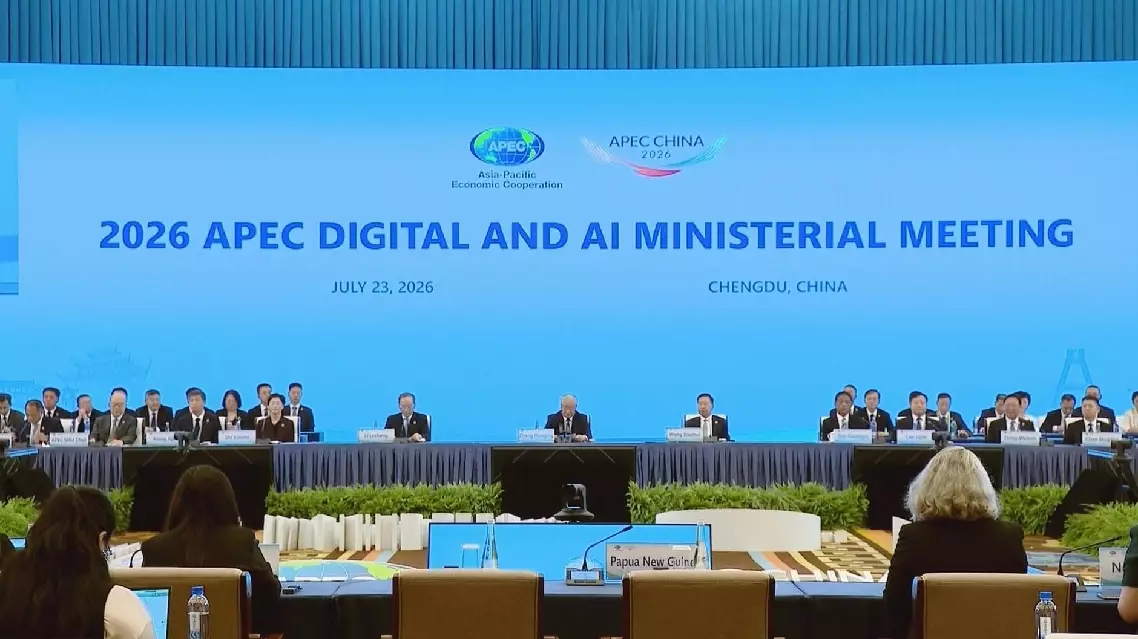
China stands ready to deepen digital, AI practical cooperation with all parties: vice premier
The 2026 APEC Digital and AI Ministerial Meeting wrapped up on Thursday with APEC economies pledging to deepen collaboration on digital transformation and artificial intelligence across the Asia-Pacific community.
The ministerial meeting, as an important platform for promoting exchange and cooperation in digital, information and communication technology sectors across the Asia-Pacific region, was held Thursday in Chengdu City, southwest China's Sichuan Province.
The meeting's host, China's Minister of Industry and Information Technology Li Lecheng, announced that the APEC ministers present had agreed on the Chengdu Declaration, committing to ensure digital and AI technologies were used for the benefit of the entire Asia-Pacific community.
APEC Executive Director Eduardo Pedrosa said that APEC had always been focused on how technology can enable trade and development.
"Over more than three decades, APEC economies have worked together to move from basic connectivity to broadband, to digital transformation, and now to AI empowered growth. Looking back at these achievements helps us to explain where we are today. APEC's work in this area has never been only about technology. It has always been about what technology enables. Trade, participation, productivity, services, resilience, development, connectivity, and opportunity. Digital and AI are woven into almost every part of APEC's agenda," he said.
Janet De Silva, Chairperson of APEC Digital and Innovation Working Group, highlighted the importance of government policy to ensure that the benefits of technology are widely shared.
"Our businesses are ready to innovate. Our people are ready to learn and adapt. Investment capital is ready. The question is whether our policies are ready to help every business and every worker succeed in the AI economy. APEC has always succeeded by anticipating economic change rather than reacting to it. The first digital era connected people. The AI era is transforming how people work. Our task now is to ensure every business and every worker can benefit from that transformation," she said.
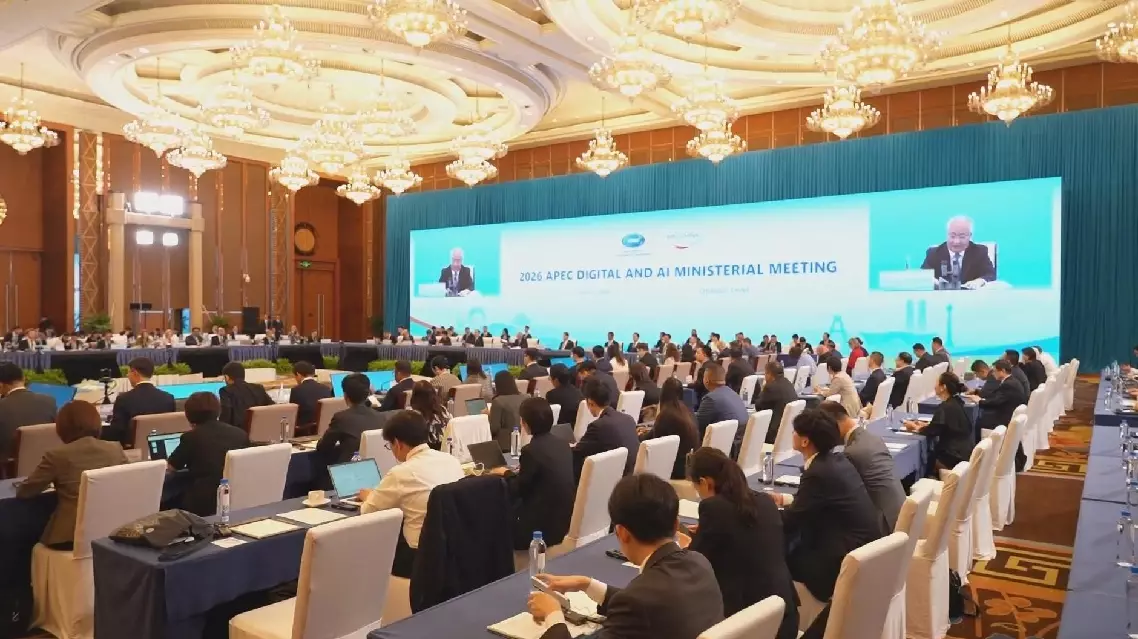
APEC economies pledge to deepen AI cooperation at Chengdu meeting